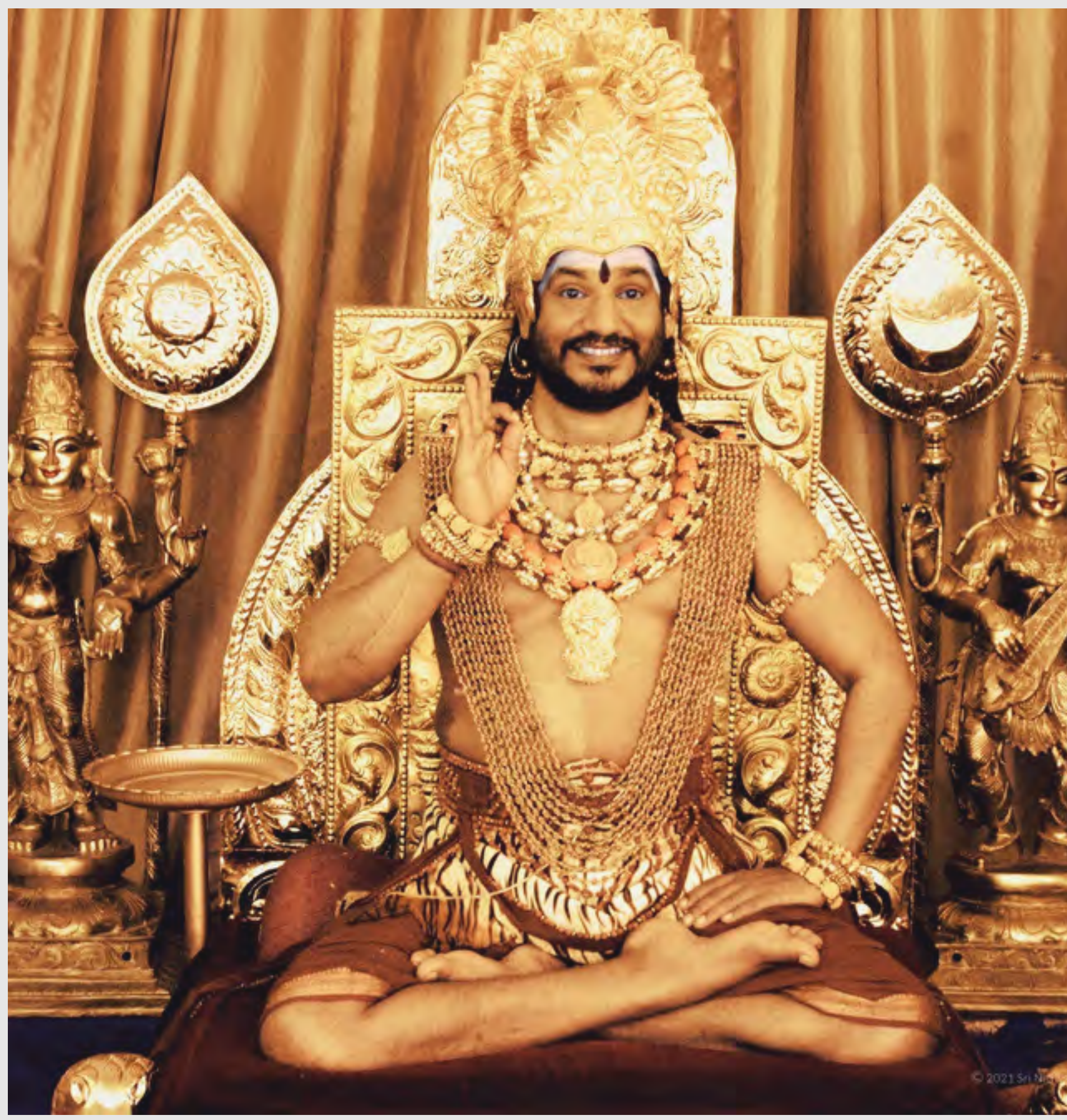
ENTERING INTO YOGA
This text was machine-transcribed from the printed book and may contain errors. Select the words and choose “Report a mistake”.
What is Yoga?
Before knowing what yoga is, it is important to know what yoga is not! Yoga is neither a set of physical exercises, nor is it breath control. These are all part of yoga, but they are not yoga. Traditionally, yoga means the union of the atma (the individual consciousness) with the paramatma (the divine or cosmic consciousness). But when we say ‘union’, it is like a product; something which can only be achieved at the end of your practices. No! Yoga is not a product; it is a process.
Yoga is the intense process that is happening every moment in your being!
Yoga is not union; it is ‘uniting’. It is a continuous, vibrant, ecstatic process which never ends! Understand, even enlightenment cannot be called the final experience. It is the ultimate experience, but not the final experience. It is a continuous, 360 degree explosion of ecstasy in your being!
Yoga has a much vaster meaning than what we know today. Traditionally, any path that can take us deeper within is known as yoga.
Any process that helps us unite with the divine consciousness is yoga. Yoga is both the path and the goal.
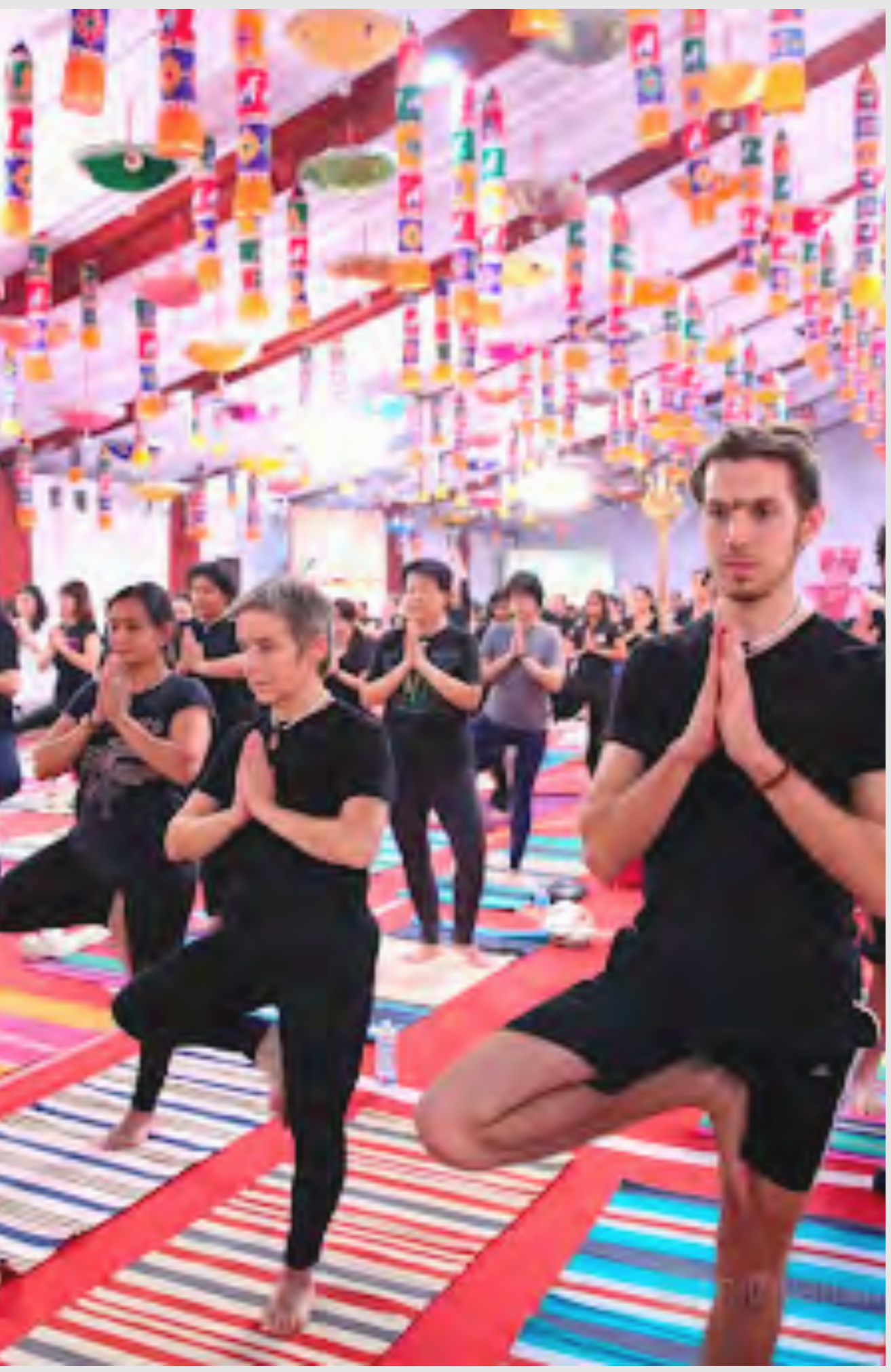
The four kinds of Yoga
Since ancient times, seekers have followed four different paths to the Divine, according to their individual nature and preferences: Jnana yoga – the path of wisdom Bhakti yoga – the path of devotion Karma yoga – the path of selfless action Raja yoga – the path of awareness
Understand, these four are not separate paths! The seeker enters into spirituality through one of these four doors, but all lead to the same experience. For example, the jnana yogi understands and then surrenders, the bhakti yogi surrenders and then understands, that’s all! The jnana yogi who experiences the Divine consciousness naturally surrenders to the experience, and the bhakti yogi who surrenders to the Divine ultimately realizes the Truth. In Karma yoga, the seeker surrenders his actions to the Divine, becomes a witness of his own actions and ultimately realizes the Truth. In Raja yoga, all these processes are united. The seeker, while working on his body, breath and mind, surrenders his spiritual practices to the Divine and strives for the experience of Truth.
Of these four paths, Raja yoga is the one which is popularly known as yoga today. The Patanjali Yoga Sutras, delivered by the ancient enlightened master Patanjali, is a brilliant treatise on Raja Yoga, and is the source of modern yoga.
Patanjali's Raja yoga is also known as ‘ashtanga yoga’ Ashtanga means eight limbs or eight parts:
Yama (ethics), Niyama (personal cleanliness) Asana (physical postures) Pranayama (breathing techniques) Pratyahara (integration – withdrawal from inner chatter) Dharana (concentration) Dhyana (contemplation) Samadhi (enlightenment)
These eight steps are not like a sequence, to be practiced one after another and finally leading to the last step of Samadhi. Rather, they are eight limbs of yoga, to be practiced simultaneously. Each of them is directly linked to the experience of Samadhi.
Today, the most popular aspects of yoga are the physical postures (asana) and breathing techniques (pranayama). Asana and pranayama are practiced as a separate discipline, known as hatha yoga, which focuses mainly on culturing the body. But if you read the Patanjali yoga sutras, you will be surprised! In the very first sutra, Patanjali declares: ‘yoga chitta vritti nirodhah’ Yoga is cessation of mind. Understand, he does not even mention that yoga can be practiced for physical health. Directly he says, Yoga is cessation of mind. Yoga is not to be practiced just to be healthy or look good! Yoga is purely a science for enlightenment.
In fact, the enlightened master Sankara says sharply in Vivekachoodamani, that seeking to realize the self while indulging the body is like trying to cross a river on the back of a crocodile! The truth is, when you work on your mind, when you go beyond mind, you will have physical health as well as a grace that is beyond beauty. You may not work for it, but it will happen. Both these will happen to you as a side effect, as a byproduct when you understand what is really meant by the word Yoga. So you see, at the deepest level, there is no difference between yoga and meditation. Any process that raises your consciousness and takes you into the experience of enlightenment can be called yoga or meditation.
YOGA IS AWARENESS IN ACTION!
As a young boy, I had the great fortune to be around a great yoga master called Yogiraj Yogananda Puri (Raghupathi Yogi). It was he who introduced me to the great science of yoga. At the time when I started studying under him, he was already about 105 years old! But he had a perfectly fit body, and he was an adept in all dimensions of yoga. He had mastered the whole science of yoga. Raghupati Yogi was well versed in the ancient scriptures on yoga, like Patanjali Yoga Sutras. Not only had he mastered the physical postures or hatha yoga, he had a deep understanding of the subtler aspects of yoga also - working with breath, working with the mind, working with visualization power, working with emotions. He also demonstrated many yogic powers like levitation.
Thanks to Raghupati Yogi, I had a deep insight into the core truths of yoga. I understood that without awareness, whatever yoga practices are followed, they are just kriya - physical movements. With awareness, even if physical movements are made, they become a tremendous meditation.
It was Raghupati Yogi who first made me aware of the power of intention. He used to make me bend my body in all possible ways - you cannot imagine. Not only that, he used to make me climb pillars the whole day! The temple where he used to teach me yoga had a beautiful hall with many stone pillars. Raghupati Yogi used to make me climb all the stone pillars, and that too using only one hand. I could never understand why he was making me do this, because in no book on yoga does it say that you are to climb any pillars!
So one day I asked him about it. He told me a beautiful truth. He said, with whatever intention you move your body, that memory, that purpose will be deeply recorded into your body and mind. Understand, this was a very shocking revelation! Whenever you bend the body with a particular intention, that idea, that samskara will start expressing in your body. The exact posture, the method, the way in which you bend the body is not so important! It is the intention which matters. If your intention is to have good health, just move your body with that intention, and good health will simply happen to you!
Understand, he did not mean just yogic postures. Any physical movement practiced with a particular intention will create that effect in your body! Even if you are just sitting, with a powerful intention to have good health, it's enough. You will see that good health is happening in you.
I asked him, how can this be? I was expecting an intellectual explanation from him. He said, that is the way it is! After all, your body itself is made out of your memory. Your idea of yourself, whatever you think of as you, actually makes up the building blocks of your body. You are an expression of your own self hypnosis. So when you move your body in any way with the faith that you will get a particular result, that change will simply start expressing in you. Every memory is recorded in your muscles. Your intention gets inserted into the very muscle memory and cellular intelligence. So when you change the memories, you can change your system also. Your system can respond to the memory which you create.
Nowadays, especially in the west, there is too much of a connection between the different asana (postures) and various diseases. Almost all the postures are being done for curing some disease or the other. Unconsciously, we link every posture to some disease or the other. This is unfortunate, because the imprint of that thought gets inserted into our system. On the other hand, there have been many recorded incidents where people have cured themselves of cancer or overcome tremendous physical handicaps by pushing their limits and going beyond what they thought was their capacity. These things have happened through the power of intention, which can transform basic cellular memory.
Have you come across a book called ‘The Biology of Belief’? In this book, Dr Bruce Lipton, a cellular biologist who has presented a new theory on how cells behave.
We have all been taught that we behave the way our genes are designed. Dr Lipton, after his research, says the opposite - our genes are designed the way we behave! He says, ‘We are what our perceptions are. As are our perceptions, so become our actions. As are our actions, so becomes our destiny.’ Our traditional scientific treatises emphasize that whatever we think deeply and continuously has a profound effect on us physically, mentally and spiritually. This ancient truth is now being proven with the support of modern scientific findings. It has been found that a powerful intention can actually become physical reality itself.
ASANA: MOVING THE BODY WITH THE RIGHT INTENTION
Since we are now working with the body, we will focus on asana or the physical postures used in yoga as aids to meditation.
What is asana? Asana literally means ‘seat’, the place where one sits. In the context of yoga, asana refers to the various postures or positions of the body whose practice results in physical, mental and spiritual well-being. When practiced with awareness, yoga asanas can become a meditation in themselves. Most of the asanas are based on a careful observation of the way different animals position and move their bodies. This is also evident from the names of many of the postures (eg. bhujangasana – snake position, ushtrasana – camel position, matsyasana – fish position, etc.) Therefore, according to Yoga philosophy, there are 8.4 million asanas of them (as many as are the kinds of living beings on the Earth). Of these, 84 asanas are considered to be the main postures.
The practice of asanas enhances health and awareness on all planes:
● Physical (improves blood circulation and health of inner organs, glands, muscles, joints and nervous system)
● Psychological (develops emotional balance, inner stability and harmony)
● Mental (improves memory and the ability to concentrate)
● Spiritual (purifies and clarifies consciousness/awareness)
How to enter into an asana:
1) Relax. The very first thing to do is shake off all the tension inside. A simple smile can make a big difference.
2) If your eyes are to be kept open, keep them wide, soft and always steady.
3) For sitting postures, keep your spine erect but relaxed. Your head, next and spine should fall in a straight line. Gently swaying your upper body back and forth and sideways will help you find your centre of gravity. This will naturally be the most comfortable and correct position.
4) When you are getting into a posture you need to maintain for a few minutes, be sure that your body feels balanced and comfortable. Once you are in the posture, don't move or fidget. If you are uncomfortable, come out of the posture and repeat it with more awareness.
5) Before you enter into any asana, take a moment to mentally visualize yourself in that particular asana. Remember the power of intention! Even if you can’t physically do the posture perfectly, your visualization can be perfect, can’t it? This can actually influence your body’s ability to perform the posture better. When you visualize the posture, you are awakening your body’s muscle intelligence. When the body is prepared in this way, it will flow harmoniously into the posture.
6) In every movement, keep the bliss alive! Experience your body as a cloud of bliss. When you are moving, you are just bliss moving the bliss!
MUDRAS: FINGER LOCKS THAT CAN ENHANCE MEDITATION
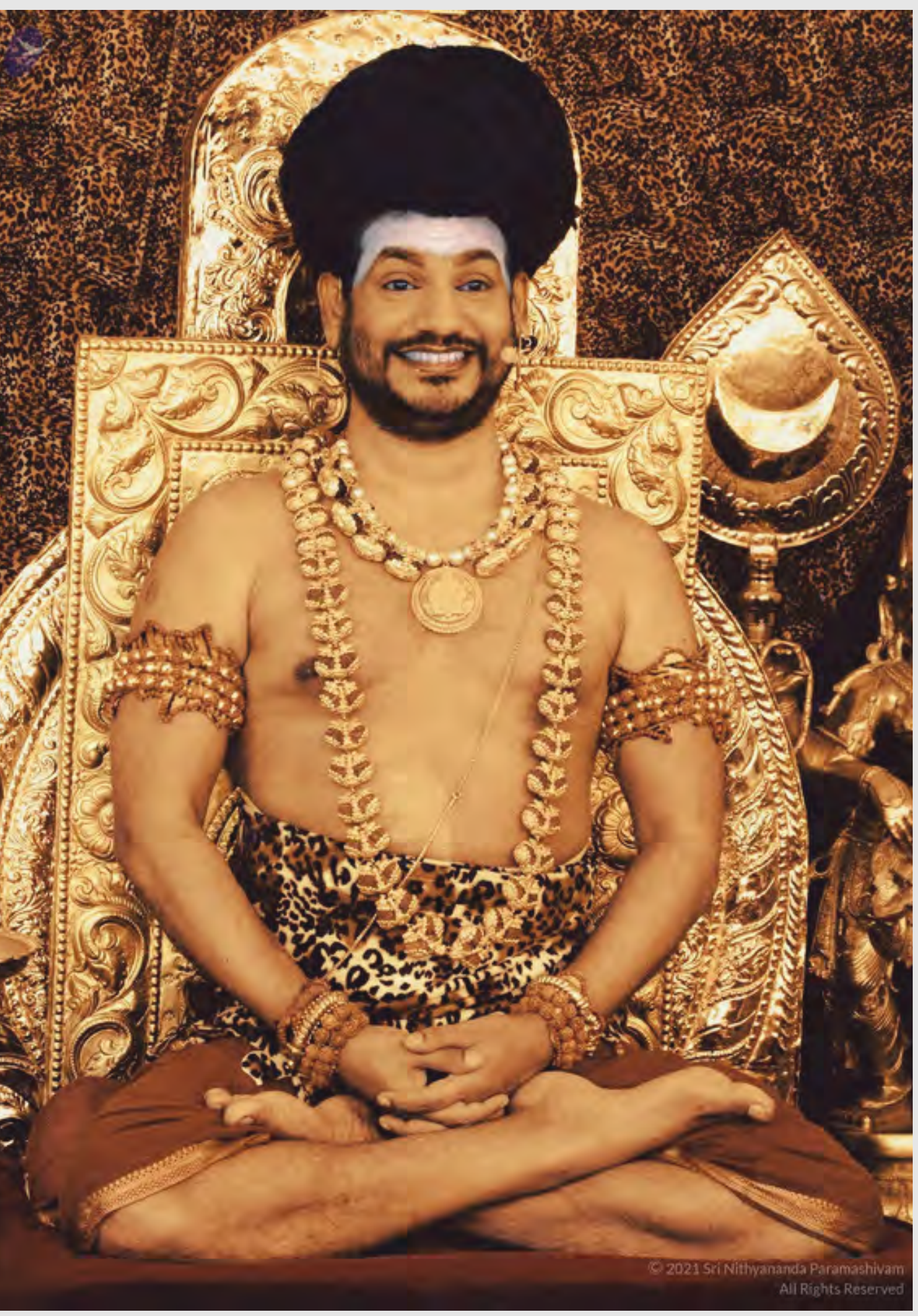
Mudra is the science of positioning the fingers to aid in concentration and awaken consciousness. These finger locks act as catalysts in meditation. According to mythology, Lord Shiva is said to have initiated the science of mudras. In Sanskrit, the word mudra literally means ‘seal’. It could also mean mud-ra (giver of joy?) because it gives the joy of heightened spiritual consciousness.
Mudras have primarily therapeutic effects, but they can be used to enhance awareness in meditation as well. They can act in different ways to close the internal energy circuit and release energy to different parts of the body. In fact, mudras act as the electric switchboard of the body! Not all mudras are finger-locks. Some of them could be facial gestures, or a combination of body postures, facial expressions and gestures of the hands. But the word ‘mudra’ as used today usually refers to the finger locks only.
Mudras work at the physical, subtle and spiritual levels. At the physical level, mudra meditation helps rejuvenate the body by harmonizing the various natural elements (panchabhoota) in the system.
The five elements that constitute the material universe are earth, water, fire, air and space. The human body is also composed of these five elements. The five fingers on our hand represent these five elements. The ring finger represents earth, the little finger represents water, the thumb represents fire, the index finger represents air and the middle finger represents space. Physical ailments are the results of the disturbance in the equilibrium of the five elemental forces of the body. This imbalance of the elements can be cured through the science of mudra.
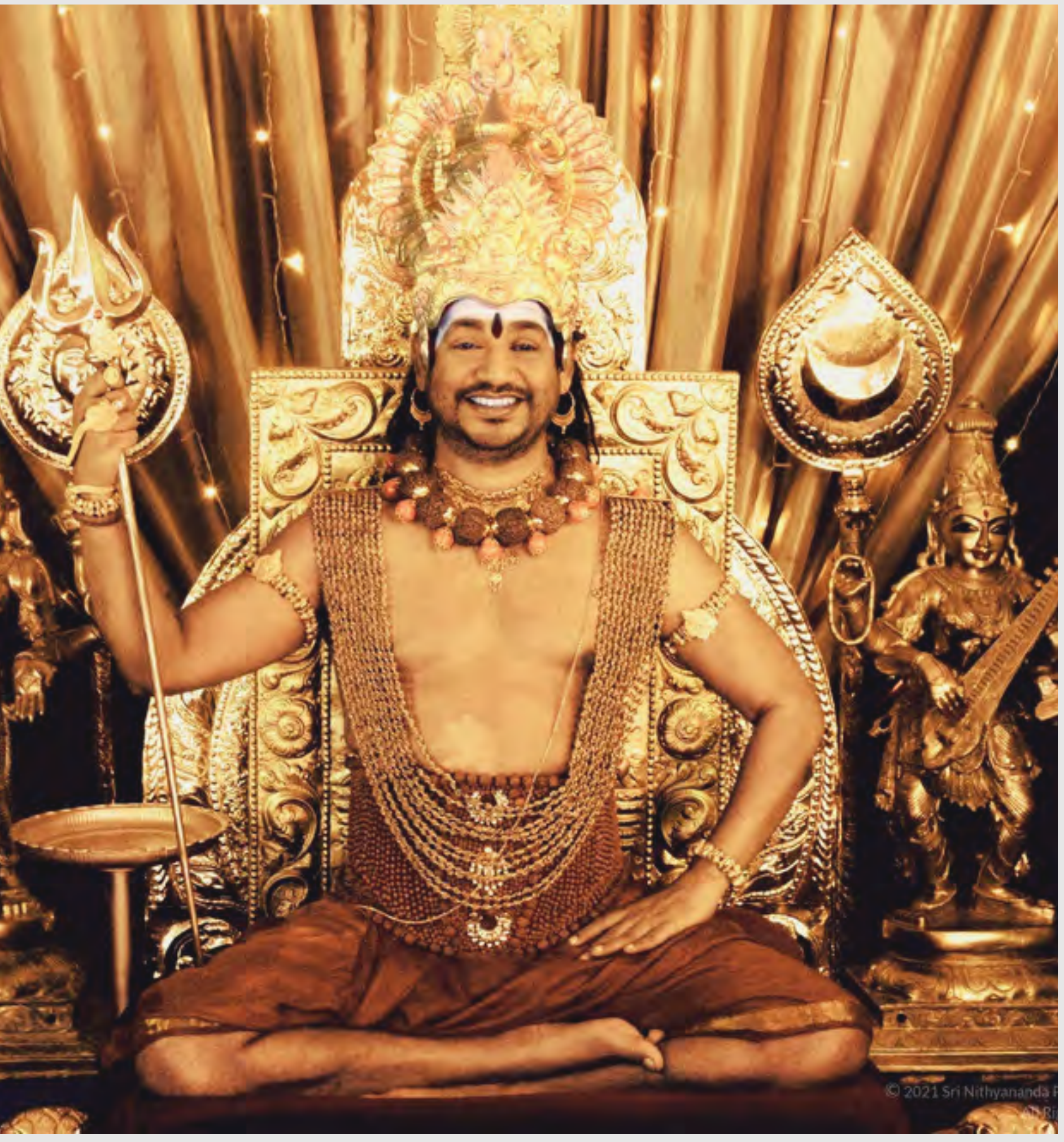
The hands also carry a ‘blueprint’ of the entire body. The science of mudras works on the ancient understanding (which is today being proved by medical science) that all the body parts are in some way represented in our hands. That is why working with mudras can directly heal ailments in distant parts of the body.
At the subtle level, mudras can help in linking individual life force (prana) with the universal life-force, thus regulating the flow of energy through the nadis, which are the subtle energy networks of the body. The five fingers also carry the energies of five chakras (subtle energy hubs that focus and channel the universal life-force into the body). So mudras can also be used to focus and balance the energies of the various chakras. Different mudras can be used to control breath flow, regulate emotions and influence the state of mind.
At the spiritual level, mudras can be a powerful aid in achieving elevated states of consciousness. Specific mudras help in awakening kundalini shakti, the cosmic energy which lies latent in each of us. When the kundalini is awakened, it opens the door to enlightenment.
The thumb and the forefinger are of special importance in mudra. The thumb is symbolic of the cosmic (divine) consciousness, and the forefinger represents the individual (human) consciousness.
There is a reason for this. If we lose our thumb, our other four fingers are as good as useless. Symbolically, this establishes the fact that if the divine energy were not present in our lives, then our lives are as good as not being lived!
Since mudras act in subtle ways to bring about powerful changes in body and mind, they must be always practiced with caution and under proper guidance. Mudra can be practiced by itself for a maximum of 21 minutes, which is the time taken for one energy cycle in the body. Mudras should never be overdone. When we are in tune with our bodies, we will know exactly when to come out of a mudra.