Working with Emotions
This text was machine-transcribed from the printed book and may contain errors. Select the words and choose “Report a mistake”.
Emotions and thoughts rise from the same source – the mind. Both are functions of the mind.
They are not altogether distinct from each other. Most thoughts have an emotional component, and most emotions will carry some hidden rationale. When the mental vibration is more like a ‘feeling’ than a logical process, we call it an emotion, that’s all!
Our emotions are in a state of constant flux. The same energy expresses itself as totally contradictory emotions at different times. To understand the chaos created in us by our emotions, all you have to do is take an honest look at your own mood swings! How many mood swings do you undergo in the course of a single day? In the morning, you may wake up feeling that life is beautiful – until you see your boss’ face!
In the meeting, you are in one mood, at lunchtime in one mood, when you come home and see your children, your mood changes altogether. Emotions are constantly rising, playing and falling in us, like waves on an ocean. Working on our emotions is a huge challenge, because emotions cannot be understood and handled in a logical way.
Usually, after the emotion passes, we try to give some logical explanation for it! Initially, the emotions is created by a conscious and logical process of association. For instance, suppose you are repeatedly insulted or abused by a certain person.
The first time it happens, you learn to connect that person with danger or disturbancе.
But if the same pattern of abuse is repeated two or three times, the fourth time you only have to see his face, and the whole negative emotion to come up! It no longer needs your conscious participation to express itself.
The emotion is no longer in your control! That is why, when working on emotions, we have to reach deep into the unconscious mind and remove the negativity by the root.
Chakras: the key to your emotions
Chakras are subtle energy centers in our body.
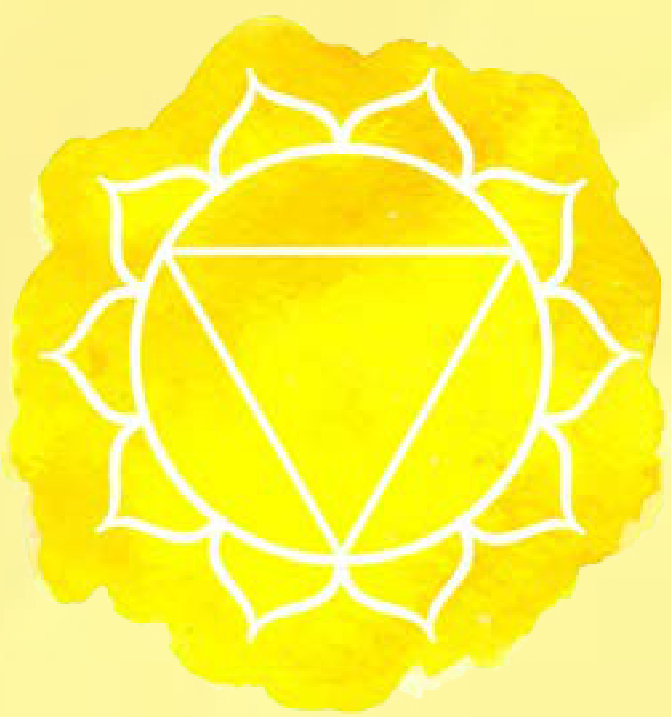
The word chakra literally translates as wheel or disk. Chakras are visualized as spinning wheels or flowers with different numbers of petals.
The main subtle energy channels of our body (nadis) are the ida (left), pingala (right) and sushumna (central) channel, which run along the spinal column. They correspond roughly to the sympathetic, parasympathetic, and central nervous system.
Since the nadis run in a curved path, they cross one another several times. At the points of intersection, they form strong energy centers. These are the chakras.
Chakras are subtle energy powerhouses which are responsible for spinning and drawing the universal life-force (prana) into the body. They also act as batteries to store this energy and distribute it to the surrounding areas of the body. Each chakra influences bodily functions near its region of the spine.
The chakras roughly correspond to, and influence the activity of, the important glands of the body. They interact with the body's ductless endocrine glands and lymphatic system by feeding in good bio-energies and disposing of unwanted bio-energies. They are linked to the nerve ganglia (plexus) of the body and influence nervous functions as well.
The seven major chakras also correlate with different states of consciousness, and are directly linked to the ascent of the kundalini shakti in the body.
The effort of all kundalini yoga is to awaken the tremendous kundalini shakti (the universal life-force which lies latent in us). The kundalini lies coiled and sleeping at the base of the spine. When aroused through yogic disciplines, the kundalini ascends up the spine, passing through the increasingly subtle chakras, until union with the Divine energy is achieved in the sahasrara chakra at the crown of the head.
Thus, the chakras are influential at every level of our functioning. They are responsible for keeping the spiritual, mental, emotional and physical health of the body in balance.
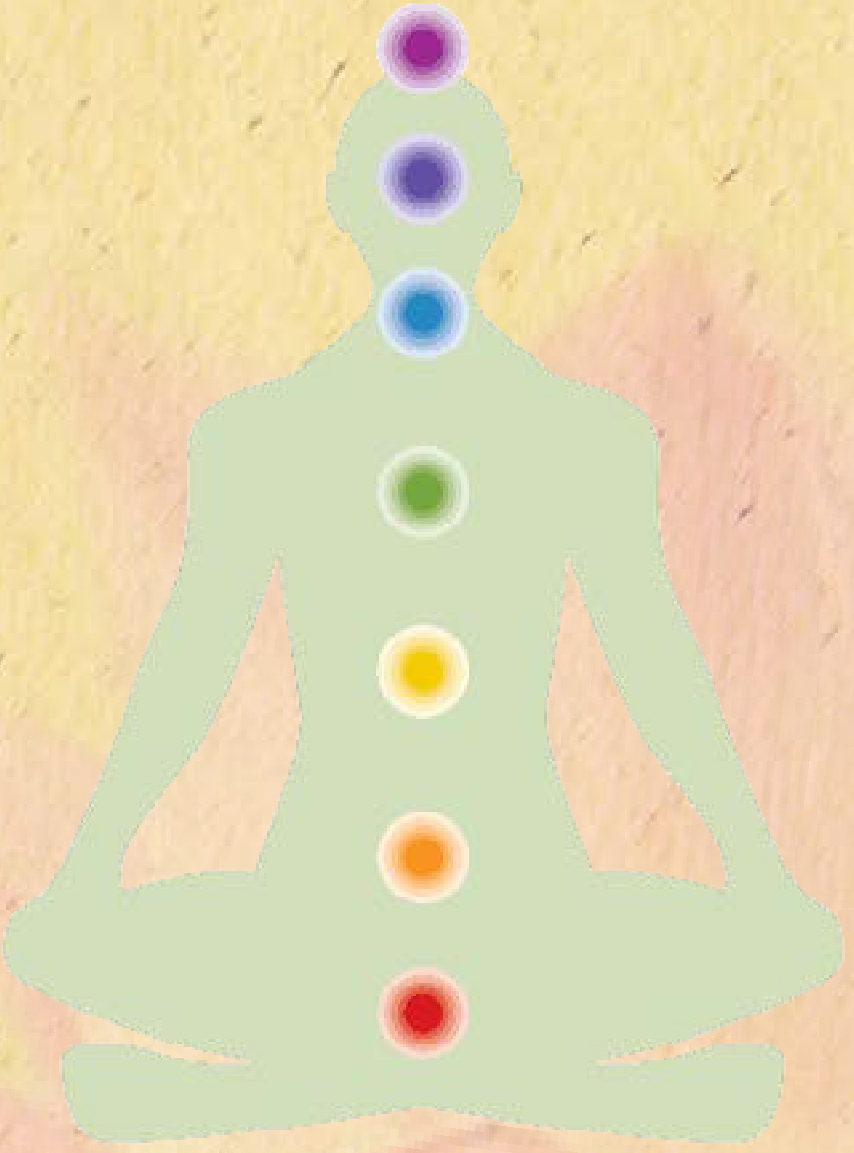
Although they have no definite physical location, these energy centers are represented in the physical body as aligned in an ascending column from the base of the spine to the top of the head. The seven major chakras are Mooladhara, Swadishthana, Manipuraka, Ana-hata, Vishuddhi, Ajna and Sahasrara. The mooladhara chakra (root center) is located in the sacral area, at the base of the spine.
The swadishthana chakra (spleen center) is located two inches above the mooladhara chakra and two inches below the navel The manipuraka chakra (navel center) is located at the navel, two inches above the swadishthana chakra. The anahata chakra (heart center) is located in the heat region, in the center of the chest. The vishuddhi chakra (throat center) is located in the hollow of the throat. The ajna chakra (brow center) is located on the forehead, between the eye-brows. The sahasrara chakra (crown center) is located on the crown of the head.
Chakras – a deeper understanding
Strictly speaking, the chakras are not present in the phys-ical body at all. They exist on the metaphysical plane, and link together our three shareeras or bodies.
Chakras – a deeper understanding
Strictly speaking, the chakras are not present in the physical body at all. They exist on the metaphysical plane, and link together our three shareeras or bodies.
The individual is made up of three shareeras - the physical or gross body (sthula sharira), the mental or subtle body (sukshma sharira) and the causal body (karana sharira).
While the five layers (body, breath, mind, intelligence and bliss layers) are categorized according to their functions, the three bodies are catego-rized according to the states of consciousness where they come into play. Each of the shareeras or bodies is associated with a particular state of consciousness.
The physical body is the body we know in the waking state, which eats, speaks, moves about and so on. This is the only body we are really familiar with. The mental body is that we use when we dream. While our body is lying fast asleep in our bed at home, in our dream we may be traveling in another country.
How does this happen? At this time, we are using the mental body to travel around! In the dream state, the mental body is as real and functional as the physical body in the waking state. We also use our mental body in the waking state to think, verbalize, visualize and so on. The causal body is the one we use when we are in deep restful dreamless sleep. It is made up of pure tamas (inertness). During our sleep cycle there are phases when the mind becomes dormant and there are no thoughts. This is the time when we experience the causal body.
These three bodies are not separate as we may think. They are tightly coupled. Consider two curved lines drawn on a piece of paper in such a way that they intersect at seven different points. If one of the lines represent the physical body, the other line represents the subtle body and the paper represents the causal body, the seven points at which the physical and the subtle body meet the causal body are the locations of the seven chakras or energy centers. So the seven chakras are present at the intersection of the physical, subtle and the causal body. Some recent research in aura photography has been able to even photograph these energy centers.
Chakras and emotions
The seven chakras are associated with particular emotions in our Being. What is the relationship between chakras and emotions?
All emotions, both good and bad, are nothing but the effect of the engraved memories or samskaras which we have accumulated in the past. When you are carrying too many negative samskaras, naturally the energy flow in the body will not be smooth. In particular, samskaras block the energy hubs or chakras, causing physical and mental disturbances. Most of our diseases are psychosomatic. They have their roots in the mind. What we see is just the effect and so we never really understand this mind-body connection. When a particular chakra gets blocked, the part of the body near that chakra gets affected. Kirlian photography has recorded the effect of emotions on the chakras. If an emotion is handled properly, the corresponding chakra functions well, expanding to the size of even a cartwheel! If the emotion is not handled properly, the corresponding chakra shrinks to the size of even a coat button, which causes low energy in the system. This low energy ultimately manifests as disease in the mind-body system Several factors like childhood problems, societal conditioning, improper hab-its, physical and emotional injuries, or even just lack of attention, affect the energy flow through the chakras. Ultimately, all these energy blocks are caused by the absence of awareness. When we flood awareness on the chakra, it is washed clean of negative emo-tions, and we start radiating positive emotions like love and compassion. Keeping the chakras clean and energized is essential not only for our physical health, but for our mental and emotional well-being, and spiritual growth as well.
The seven chakras and our primary emotions
Each of our major chakras is related to some primary emotion in us. If you see, all our emotions are just different facets of our seven primary emotions. The same basic emotion plays as anger and fear, the same emotion plays as desire and guilt. If we can understand these seven emotions, we can handle the whole spectrum of emotions that happens in us. For example, when you are angry, just look into the anger. At the root of it, you will find a deep fear. Try this for yourself: if you are feeling fear, express anger at that time. Throw your hands, stamp your feet and express the energy. You will see that the fear disappears. You will see for yourself how fear can simply transform to anger. Similarly, fear can also transform to hatred. You just need to be aware of yourself and witness how the emotions subtly change from one form to another. When you understand this play, you can easily get out of the game.
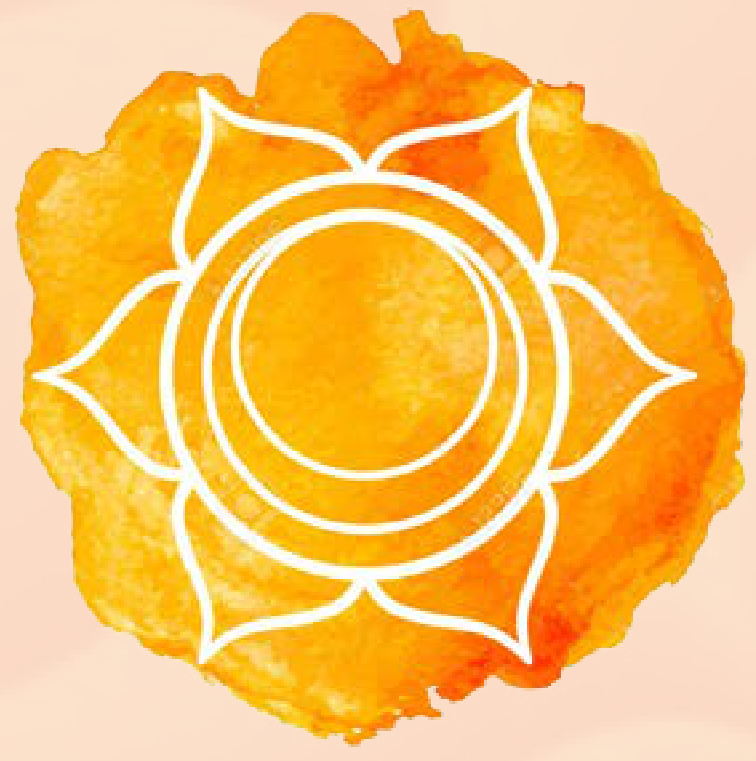
The swadishthana chakra and fear
Fear is life-energy!
Fear is a form of energy inside us. That is why it cannot be destroyed, only transformed. Understand, your fear is directly connected to your life energy! Whenever you are facing a survival threat, you will see your fear rising and the adrenalin release happening in your body, flooding your system with energy. That adrenalin release gives you enough energy for fight or flight. If you feel you can handle the fear, the energy is used to fight and come out of it. If the danger is perceived as being too strong, the energy can be used for flight or escape.
Fear is always of the unknown
Fear does not exist when things are definite and known. Fear exists only when the possibilities are unknown.
For example, death is a possibility. As an incident it is definite, but when and how it might happen is not clear. So there is always fear associated with it. If you are sure there is no possibility of achieving something, that you don't have the potentiality, you will not have fear. If you are sure that you can achieve something, then also, you don't have fear.
Fearlessness is not suppressing fear
Sometimes, just by switching your attention to something else, you can come out of fear. But that is not fearlessness. For example, when you are afraid to cross a dark area in the night, you start thinking of and repeating God's name. Because of fear, God's name will be topmost in your mind! You feel that you don't have fear because your inner chatter is en-gaged in something else! When you engage your inner chatter in something else, you feel that you are out of fear. But you have only diverted your attention, you haven't solved the problem completely. Fearlessness means taking a quantum jump into the consciousness where you will never experience fear of losing anything!
Fear strokes shake the swadishthana chakra
The swadhisthana chakra is the seat of the being. That is why, when your perceive any threat to life, this chakra gets completely shaken! Suppose you are walking in the garden in the dark, and you see a coil of rope. You start shivering, imagining it to be a snake. That sudden shock you get before realizing it is just a rope and not a snake, is what is called a fear stroke. A fear stroke is like shaking a rose plant from its roots. If you keep shaking it long enough, it will die. It is said that we undergo six to twelve fear strokes every day and night, both in dreams and also in wakefulness. Imagine what happens to our being! Fear strokes originate from unconsciousness. When they are viewed with awareness and consciousness, they can be substantially reduced. At the time of the fear stroke, you may not have any time to go into aware-ness, because it is just like a spike. But after the fear stroke passes, you can analyze the stroke and get a deeper understanding of your fears. This will help you dissolve the whole idea of fear. The intensity and frequency of fear strokes can be greatly reduced by re-ducing the intensity and depth of the basic level of fear in us. Only from this baseline fear, do the fear strokes arise. With deeper understanding and clari-ty, we can reduce the baseline fear, and the fear strokes will also reduce.
Fear can become a door to enlightenment!
People come and say to me, ‘I have too many fears. What can I do?’ I tell them, ‘If you have too many fears, the possibility for enlightenment is more. So many doors are available to you!’ For a person who doesn’t have too many fears, the possibility, the number of doors is also fewer because he leads a dull life. He has nothing much to lose, because he is not taking many risks. But a living being who is doing many things and making many decisions will experience fear. If you are experiencing too much fear, then so many doors are available for your enlightenment! One more thing: only if you can open it can it be called a door. If you don’t know how to open it, then it is more like a wall! If you know the right technique, all those fears can become doors and you can be liberated.
All fears are the fear of death
All our fears, be it fear of losing physical health, mental stability, wealth, name and fame or loved ones, are actually the fear of death under various disguises. The fear of failure, or the fear of not being accepted by society are just others form of the fear of death. It is the fear of the death of the ego. The biggest fear human beings have is the fear of losing their identity. The death of the ego is felt to be worse than the death of the body! Every act of ours is unconsciously related to death and the fear of dying. That is why, understanding death can change your entire perception of life. It can simply transform the way you handle all your fears.
There are two ways to overcome fear
One way is to block all possibility. When you feel that nothing can be achieved by your efforts, then there won’t be any more fear! The second way to escape fear is to break the boundary of possibilities. If there is infinite possibility, if there is no boundary, if there is nothing that lim-its you, then you become fearless.
Either nothing is possible, so you won't have fear because there is nothing to be taken away from you. Or everything is possible, so you won't have fear because you feel all-powerful.
Just by having this understanding, something will click in you and so many fears will disappear from your being!
These two possibilities are actually used as techniques by masters.
When masters say, 'Nothing can be done by you,' it is to create that deep surrender, a psychological death. When all possibilities are closed, you naturally relax. This is what Ramana Maharishi calls atma sharanagati or self-surrender. The second way to go beyond fear is by opening all possibil-ities. When everything is possible, again there is no cause for fear. You can explore and experience.
This is called atma gnana or self-realization.