BLISS CURRICULUM
This text was machine-transcribed from the printed book and may contain errors. Select the words and choose “Report a mistake”.
July: Week - 1 Alphabets of the Month: E, F, G, H
Theme: Birds Color of the Month: Yello, Bege Shape of the Month: Circle, Sphere, Cylinder
| Monday | Tuesday | Wednesday | Thursday | Friday | |
|---|---|---|---|---|---|
CIRCLE TIME | Talk about birds. | Bird food & claws. (feet) | Bird beaks & feathers. Singing birds. | Birds nest. | How birds dance. Flightless birds. | |
ART | Feathers painting. Straw blowing. | Constructing a nest Sticking peacock feathers. | Hand printing birds. Stick wool following the outline. | Painting using balloons. Alphabet stamp printing. | Sticking cloth shapes, punched dots. Owl craft | |
ACTIVITY | Making twigs in to small pieces. Making alphabets, shapes using twigs. | Crushing paper balls .Draw a bird on flour. | Dropping grains in to egg carton. Tying knots. | Rolling mats. Cotton peeling. Making thread. Sorting eggs from rice. | Blowing feathers using straws. Picking mustard-seeds from water. | |
GYM | Birds; hide and seek. Birdy touching nose | Fly, hop, eat like a bird Feather Dance. | Walk on line. I sent a letter game. | Birdy dance, squatting, wobbling. | Train game. Treasure hunt for birds. | |

A-Z OF BIRDS |
A- Albert / B- Bat, Bulbul / C-Crane, Cockatoo / D- Duck / E- Eagle, Emu / F- Finch, Flamingo / G- Goose, Goldfish / H- Hen, Heron, Hawk / I- Kiwi / J- Jay / K- Kite, Kookaburra / L- Lovebird / M- Macaw, Myna / Nightingale / O- Ostrich, Owl / P- Parrot, Pelican / Q- Quail / R- Robert, Rhea / S- Sparrow, stork, wan T- Tailor bird, Trutle dove / U- Toucan / V- Vulture / W- Weaver bird, Wagtail / Y- Sky lark
| | | | |
DAY : 1
Topic Birds
Vocabulary Feathers, warm blooded, wings, claws, flightless, beak, vertebrate, flap
Material required Picture books, models, charts.
Presentation • Explain to the children that birds are animals with feathers and wings. • They are warm blooded animals. They lay eggs. • Show them some birds that can fly high, flightless birds and some birds that live in water. • Birds live every where. • They are vertebrates with back bone. • Birds have claws, eye, throat, neck, beak, limbs, feathers and tail. • There are different types of beaks - hooked, hard beak, and flat beak. Beaks help them to eat or tear food and to protect them. • Most of the birds have claws and some have webbed feet to swim. • Birds have to flap their wings to fly and paddle their feet to swim. • Show them feathers of some birds. • Some of the birds are hen, albatross, hornbill, penguin, flamingo, ostrich, hummingbird, kiwi, sparrow, pigeon, crow, woodpecker, parrots, peacock, vulture, eagle, puffin, pelican, toucan, emu, kingfisher, falcon, nightingales, warblers, finches etc.
Assessment • Which is your favorite bird? • What special features do birds have? "(Birds are the largest group of vertebrates, warm blooded animals, which have feathers on their bodies, have beaks and lay eggs)" • Are bird's warm blooded or cold blooded animals? "(They are warm blooded animals)" • Can you name a bird that cannot fly? "(Kiwi, Ostrich, Emu, Hen etc.,)" • What are the birds that you see around in the neighborhood? • What do you understand by the word vertebrate? "(Animals with vertebral column (backbone))" • Name a bird which swims? "(Penguins)" • Do birds lay eggs or give birth to baby birds? "(Birds lay eggs)" • Which is the smallest bird? Which is the largest bird? "(Kiwi is the smallest bird and Ostrich is the largest bird)" • How do birds fly? "(They have a streamlined body, wings and flight feathers which helps them to fly)" • Why is "Bat" not a bird but a mammal? "(They do not have feathers and they give birth to young ones, they do not have a beak)" • What is the shape of bird's egg? "(Oval)" • Can you name a bird which stands on one foot? "(Flamingo)" • Which bird has the keenest sense of hearing? "(Barn Owl)" • Which bird has the keenest sense of smell? "(Kiwi)" • Which bird has the greatest wingspan? "(Wandering Albatross)"
Closing: Explain about different birds.
Evaluation: Pre math skills. Counting the eggs, birds Language skills. Learning vocabulary words Cognitive skills. Remembering, matching different names of birds Motor Skill. Picking and eating, walking and flying like a bird
DAY : 2
Topic Birds eyes, food and claws.
Vocabulary Nectar, decaying matters, scavengers, pelicans, pouches, peck
Material required: Picture books, models, charts.
Presentation ● Birds eat a variety of food. Some feed on nectar, fruits, seeds, plants, decaying matters, small animal like worms, fishes etc. ● They swallow their food as they do not have teeth. ● They peck the food grain one by one and store it in their throat sac. ● Large birds like Vultures, Gulls are scavengers as they feed on remains of animals. ● They use their beak to pick, tear, sift, crack, spear, and probe their food. ● Some birds capture/carry their food using their claws. They use claws to grip like we use our fingers. ● Some birds like Duck, Puffin, Swan and Goose have webbed feet to paddle through the water. ● Birds use their beak to drink water. ● Ostriches are known to eat metal cans, glass pieces, and stones. ● Birds have excellent eyesight, they can see their prey from several meters above the ground. ● Owl does not have eyelids so they just stare, which helps them to look clearly in the dark.
Assessment: ● What do hens eat? “(Grains and worms)” ● Have you seen any bird eat in the night? ● Name the birds that can be raised as pets. “(Parrots, Love birds, Toucan)” ● Have you seen birds doing tricks in the circus? ● What you can feed for a parrot? “(Fruits and chilies)” ● What do vultures, eagles and owl eat? “(They feed on other animals)” ● How do ducks swim in the water and why is their beak very flat? “(They use their webbed feet as pedal for swimming and they have a flat beak to feed on algae)” ● Which helps the Woodpecker to grip the tree? “(Their specially designed claws (two forward and two backward) and their tail)” ● How will a Vulture's claw be? “(Sharp pointed)” ● How do birds eat? “(Using their beak)” ● Why do owls stare? “(Owl does not have eyelids so they just stare, which helps them to look clearly in the dark)” ● How can the birds find their food when they are flying so far up in the sky?
Closing: Recollect the information about the food and claws of birds.
Evaluation: Language skills Learning new vocabulary words Cognitive skills Acquiring facts about different bird claws and food habits.
Extension: Making a bird feeder with a juice carton. Making different claws. Walking on different bird footprint
DAY : 3
Topic Birds beaks, feathers and introduce singing birds.
Vocabulary Beak, feathers, soft, multipurpose, pointed beaks, flat beaks, molting, flight feathers, peck
Material required: Toy birds, puppets, pictures, paper folding models of birds.
Presentation ● Show them different kinds of beaks ● Birds use their beaks to sift, suck, crack, crush, spear, tear, pick and probe their food. Birds also use their beaks to preen or clean themselves, to build nests, to defend their territory. ● A beak or bill makes up the lower and upper jaws of a bird. Insect- eating birds have thin pointed beaks. They use their bills as tweezers to pick insects off the leaves and twigs. Meat eaters like hawks, eagles and owls have sharp hooked bills for shredding their prey. ● The number of feathers that the bird has on its body depends upon how and where the bird is living. The feathers make up one third of the bird. They have flight feathers that make up the wing which helps the bird in flying. ● Birds grow and lose or molt their feathers every year. ● Explain how Pigeons were used to carry messages tied to their beaks. ● Some Parrots can say more than 300 words ● Some birds have vocal chords similar to trained opera singers. ● Black birds, Cardinals, Finches, Mocking birds, Sparrows, Robins, and Starlings are some of the song birds. Mocking birds, Mynahs, and Bowerbirds mimic others. ● Birds all over the world tend to sing mostly at dawn, when it is much quieter, allowing their sound to travel farthest.
Assessment: ● Do all the birds have beaks or mouth? ● What are the different kinds of beaks? “(Flat, pointed, hooked, sacked etc.,)” ● What are the uses of the beak? “(They use their beaks to sift, suck, crack, crush, spear, tear, pick and probe their food)” ● What is the use of flight feathers? “(Flight feathers make up the wing which helps the bird to fly)” ● Do penguins have feathers? “(They have thick leathery coated feathers to keep them warm)” ● Which bird has the most colorful feathers? “(Peacock)” ● Which bird dances opening their feathers fully? “(Peacock)” ● Which is our national bird? “(Peacock)” ● What is the difference between Parrots, Macaw and Parakeets? ● What is molting? “(Birds grow and lose or molt their feathers every year)” ● Have you heard any birds singing? “(Name some of the song birds)” ● Name the birds which can mimic. “(Myna and Parrot)” ● Which is the most talkative bird? “(African Grey Parrot)”
Closing: Show them different bird feathers and feet.
Evaluation:
Oral motor skills: By asking them to mimic, birds chirping sound.
Cognitive skills: Asking open ended questions.
Extension: Hiding and seeking the bird feet and beak to the body. Children can call for their partner using bird calls. Blowing feathers in the air so that the feather should not fall on the floor
DAY : 4
Topic Nest, materials with which the birds build their nests.
Vocabulary Habitat, live, nest, tree, migration, weave.
Material required: picture of nest, model of nest or real nest.
Presentation
- Present to the children a model of the nest, or a real nest.
- Most birds build their nests on trees. They also live in different kinds of places. Eagles for example live on rocky edges in the mountains.
- Cuckoo leaves its eggs in the nests of other birds.
- Birds lay eggs in their nests and develops their young ones by sitting on these eggs and keeping them warm.
- Their homes are designed to protect eggs and nestlings from predators and extreme weather conditions.
- Woodpecker builds its nest in the hole of trees.
- Some birds use their nests all the year round, while some others like Cuckoos, do not build nests at all.
- Birds use vegetation, leaves, twigs, rotten wood, mud, clay and feather to make nests.
- Humming birds, Tailor bird, Weaver bird all build hanging nests. Their nests are made from grass. These birds actually sew their nests with their beaks.
- Water birds like Coots build their homes in water.
- Birds sit on their eggs to keep the eggs warm.
Assessment:
- Where do birds live?
- What do they use to weave their nest? "(Beak)"
- What are the materials used by the birds to build nests? "(vegetation, leaves, twigs, rotten wood, mud, clay, grass and feathers)"
- Name the bird which does not build its own nest? "(Cuckoo)"
- Name the birds which build hanging nests? "(Weaver bird, tailor bird, humming bird)"
- Where do birds commonly build nests? "(On trees)"
- Name the bird which builds its nest in the hole of a tree? "(Woodpecker)"
- What is the use of a nest? "(For shelter and for raising young ones)"
- Why Cuckoo bird does not build a nest? "(It uses other birds nest for laying eggs)"
- Where do the parent bird feed their young ones and how? "(In their nest and with their beak)"
Closing: To make the children know and understand about different types of nest, with what materials they build their nests and about different places where birds live.
Evaluation Language skill: Learn new vocabulary words. Spatial Awareness: Building a nest - making a 3D model. Sensorial skill: Usage of different materials to construct the nest. Fine motor skills: Using their eye-hand co-ordination and fine muscles to appropriately stick the sticks. Cognitive skills: Understanding the pattern in building a nest.
Extension: Construct a nest using scrap materials. Try to give a modern look to the nest.
DAY : 5
Topic Talk about birds that dance, uses of birds, flightless birds.
Vocabulary Peacock, hen, egg, flightless birds, kiwi, penguin, ostrich, emu, seeds dispersal.
Material required: Toy birds, bird's pictures, puppets, egg, seeds.
Presentation ● Present to the children the model of birds such as penguin, ostrich, emu, kiwi and explain that they are flightless birds. ● Flightless birds are birds that cannot fly. They have a flat breast bone and smaller wing bones. The wing bones are used for movement. ● Flightless birds have symmetrical feathers. They have more feathers on their body than the flying birds. ● Show a real egg or a model egg and talk about the bird which gives us eatable eggs. ● Talk about peacock dance - when peacock senses a pleasant climate it dances beautifully spreading the feathers. ● Explain to the children how birds are helpful in seeds dispersal. ● Kiwis are flightless birds whose wings are so tiny that you cannot see them. ● Kiwi birds are named so because they have a shrill call "kee-wee, kee-wee". ● Penguins are excellent swimmers. ● Ostriches are the largest and the heaviest birds. They are very fast runners. ● Ostriches live in groups called herds. ● Ostriches drink water when they find it; they can live for a long time without drinking water. ● Emu is the second largest bird.
Assessment: ● Name some of the flightless birds. "(Ostrich, emu, kiwi, penguin)" ● Which bird gives us edible eggs? "(Hen, duck, Quail)" ● What are some uses of birds? "(They help to maintain balance in our food chain, as fowls for poultry and they help in seed dispersal)" ● Can a penguin swim? "(Yes)" ● Which is the largest bird? "(ostrich)" ● Which is the second largest bird? "(Emu)" ● Name the bird that can dance. "(Peacock)" ● Which is our national bird? "(Peacock)" ● Can peacocks fly? "(They are poor fliers)" ● What bone and feathers help the birds to fly? "(Wing bone and flight feathers)" ● Which bird is found in very cold places? "(Penguins)" ● How do birds help the plants? "(Birds are helpful in seeds dispersal)"
Closing: To facilitate children to know about those birds that cannot fly, birds that dance and the usefulness of birds, in general.
Evaluation: Cognitive skills; Listing the usage of the birds, arranging the birds from largest to smallest. Memory skill: remembering the names of the birds. Gross motor skill: Dancing, running and walking like different birds.
Extension: Freeze Dance like a peacock. Run like an Ostrich (run with lifting your knee up and forward). Walk like an Emu (walk moving your neck back and forth).
DAY 1 : ART
FEATHER PAINTING
Material required: Feathers, poster colors, uncolored birds picture.
Procedure: Children are requested to use the feather like a paint brush and color the uncolored bird picture with paint. Encourage the children to color inside the picture; let the children use the colors according to the variety of the birds picture.
Skills Developed: Texture skills, fine motor skills, Eye-Hand co-ordination, Cognitive skills of knowledge of birds.
STRAW BLOWING
Material required: Straws, different poster colors, uncolored birds picture.
Procedure: Each child is given a straw and they are asked to blow the paint using the straw on the picture.
The children are asked to observe the flow of paint when they blow.
Skills developed: Oral motor skills, cognitive skills of understanding cause and effect.
DAY 1 : ACTIVITY
PIECES OF TWIGS
Activity: To break the twigs into small pieces
Goals: To improve their Fine motor skills, Pre math skills of arranging and counting, Cognitive skills of exploring cause and effect, Sensory awareness skills (tactile).
Vocabulary: Twigs, Small, Long, Thin, Break, Arrange, Texture, Dry, Wet, Rough, smooth
Material required: Thin, dried twigs, new wet twigs
Presentation: Hold the twigs with one hand and use thumb and index finger to break the twigs in to small pieces and arrange it according to its length. Ask them to try breaking new twigs.
Assessment What is the color of the twig? Is the twig rough or smooth? Can you break new twigs which are not dry? Can you break a wet twig? Why only dried twig? How many pieces of twigs do you have? What is the texture of the twig?
Evaluation: Evaluate child's ability to count, their eye hand coordination, language skills, concentration and their knowledge.
Variation Ask the child to pluck the leaves, make a pattern using coconut leaves or mango leaves. Add flowers, twigs and leaves to make a beautiful pattern. They can also make shapes with these twigs and paint it.
MAKING ALPHABET USING TWIGS
Activity: To make structures, shapes, alphabets using twigs sticks.
Goals: To improve Fine motor skills, Pre math skills, Logical thinking, Visual discrimination
Vocabulary: Ice cream sticks, Structures, Arrange, Count, Shapes, Pattern, Letters, number or design
Material required: Ice cream sticks, Pattern sheet (if required)
Presentation: Keep the twigs ready before starting an activity. Make shapes, structures, alphabets using ice cream sticks. Ask them to try the same.
Assessment: How many twigs do you have? Can you make a circle by arranging twigs? If not why? What are the shapes you can make with it?
Evaluation: Pre-math skills, Patterning, Tactile skills, Tripod and pincer grasp fine motor skills
Variations: Arranging, Counting, Hitting the stick game. Giving them pre design pattern and ask them to stick on that. Ask them to paint the sticks inside or outside adding texture using sand or crushed leave dust. Making Photo Frame.
Conclusion: This activity can be modified and used in a variety of ways, and helps them to develop creativity and fine motor skills.
DAY 1 : GYM
BIRD HIDE AND SEEK
Goal To stimulate their curiosity, thinking skills and social skills, pre-reading skills
Presentation: Objects are taken according to the theme. Hide the objects in the outdoor play area before children come to play. Make some clue sheets with pictures to say which color objects the treasure are. Ask the children to search for the treasure (the hidden objects) with the clue sheets
Variations We can hide the items depending upon the theme (Eg: Birds, Animals, Vehicles) We can also play treasure hunt and seek game
Skills developed: This game develops their pre-reading skills when they track the object with the clue. Their cognitive skills, social skills when they work as a team to find the treasure. It will improve their curiosity and critical thinking skills too.
BIRDY TOUCHING NOSE
Goal: To encourage them to visualize their friends, who have been named as birds, when blind folded. This improves their memory skills, social skills, cognitive skills.
Presentation: Each child will be given a bird's name like Peacock, Parrot, Penguin, Ostrich, Duck, Flamingo etc. One child from a group will be called to sit in the middle of the circle and the mentor can close that child's eyes. All the other children will be sitting in a circle with the child in the middle. Mentor will call out one bird name, the child with that bird name will go and touch the nose of the child in the middle of the circle and get back to his/her place. The child sitting in the middle will then have to identify who touched his/her nose. Each child in a group will take turns.
Skills Developed: This game will develop their memory skills, cognitive skills, social skills, auditory skills.
Variation: Children can be named as flowers, fruits, vegetables, animals etc according to the theme.
DAY 2 : ART
CONSTRUCTING NEST
Material required: Jute or Hay, Cotton, Straws or Twigs, Woolen thread.
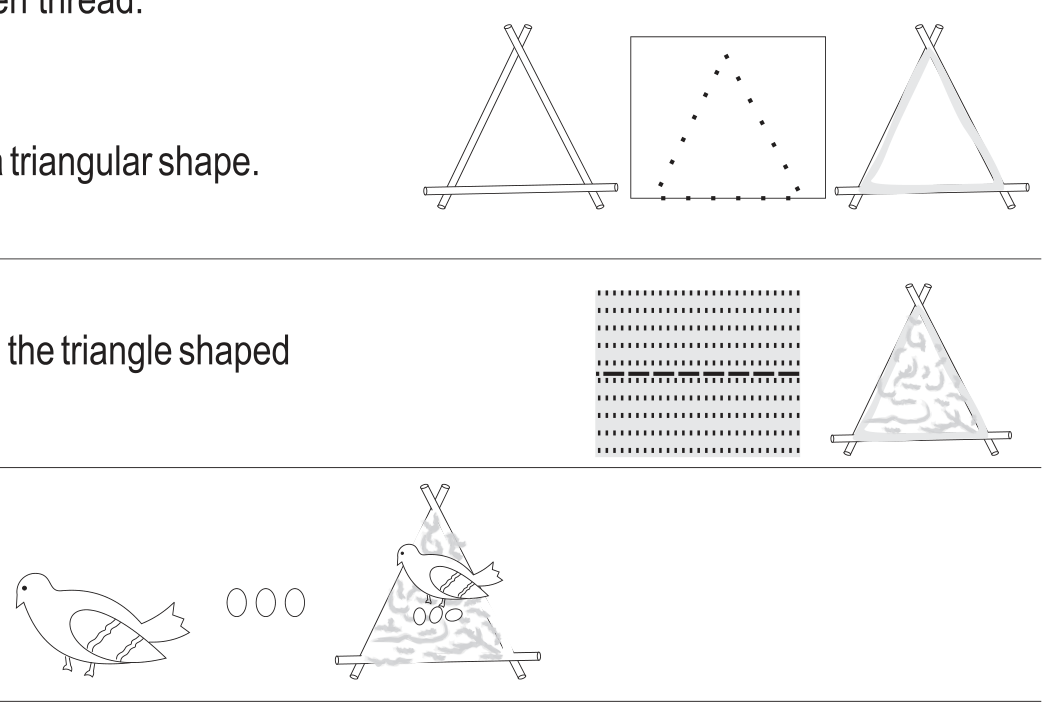
Procedure: Step 1: Tie the twigs in the corners using Woolen thread to form a triangular shape.
Step 2: Keep the triangle on a base and arrange the hay or jute on the triangle shaped twigs or straws.
Step 3: Make cotton balls like eggs and place it into the nest. Children are explained about the different kinds of nests.
Skills Developed: This will improve their fine motor and eye hand co-ordination. Cognitive skills of understanding the purpose of nests.
STICKING FEATHERS
Material required: Different colored feathers, gym, and bird picture. Procedure: Children are asked to stick the feathers on the bird picture. They can observe and feel the texture of birds. We can talk about the uses of feathers. Children are encouraged to stick the feather correctly in the picture. Skills developed: Fine motor skills, texture skills, cognitive skills of understanding the uses of feathers.
DAY 2 : ACTIVITY
CRUSHING PAPER
Activity: To clip the paper using paper clip or cloth pegs and to crush papers using whole hand grasp.
Goals: To improve their whole hand muscles movement, fine motor, cognitive skills of understanding cause and effect.
Vocabulary: Crushing, Paper clips, Pincer grasp, Pinning, Pressing, and Opening
Material required: Papers, Paper clips or cloth clips
Presentation: Keep papers, paper clips or cloth clips ready before starting an activity. Crush the paper using fingers and palm. Hold a piece of paper with one hand and pin the paper clip by opening it using thumb and index finger (pincer grasp).
Assessment: • How does the paper look? • What is the shape of the paper? • How do the cloth clips or paper clips look like? • Can we crush cardboard?
Evaluation: Pincer grasp, Eye hand coordination, Tripod grasp, Math skill
Conclusion: These activities improve fine motor skills of whole hand grasp, tripod grasp, and eye hand coordination.
BIRD ON FLOUR
Activity Writing and drawing patterns, alphabets, strokes, designs, numbers, and pictures with the kolam / rangoli powder on the floor or table.
Goals: To improve their fine motor skills, eye hand coordination, pre writing skills, creativity.
Vocabulary: Kolam, rangoli, designs, patterns
Material required: Kolam powder (rice flour), samples of some designs, pictures.
Presentation: Present the activity by drawing few strokes, designs, writing few alphabets and ask the kids to write and draw designs, make dots, patterns, alphabets, numbers, and pictures of their choice. Ask them to write their names, friends name, parent's name, school name.
Assessment: • What are the body parts we use for writing? • What are the materials we use for writing? • What is your favorite writing tool? • Can they write without using their thumb?
Variations: They can write with flour, sand and other kinds of material. Give them a pattern and then ask them to follow the same, Make maze paths to follow. Add some small stones so they can make a pattern of dots and stones. Add food color to get color patterns. As a variation they can draw pictures according to the theme. (Eg: Bird, Vehicles, etc..)
Evaluation: Evaluate each child's ability to draw, write, the coordination involved in writing, their creativity, their language skills, to explain what they drew.
Conclusion: Talk about the designs, patterns that the kids draw/write.
DAY 2 : GYM
FLY, HOP, EAT LIKE A BIRD
Goal: To develop their gross motor skill, symbolic or dramatic play.
Presentation: Children are encouraged to perform the flying action, waving their hands by their side and hopping on one foot, hopping on both feet and pretend to eat like a bird.
Skills Developed: Gross motor skill, Symbolic play.
FEATHER DANCE
Goal: To encourage children to improve their auditory skills, gross motor skills.
Presentation: Ask the children to stand in a circle, turn on the music and ask them to dance like the peacock with their hands spread like feathers and ask them to move it in and out shaking their bodies.
Skills Developed: It improves their auditory skills, gross motor skills, symbolic play
DAY 3 : ART
HAND PRINTING BIRDS
Material required: Plain sheet of paper, different poster colors.
Procedure: Apply posters colors on the children's hand and ask them to spread out their hands in such a way that thumb lies vertical and all the other four fingers are horizontal. Ask them to make the impression of their hands on paper. According to the impression that is seen children can complete the picture by drawing the beak, legs and claws for the bird. Children can make different impression of birds by spreading out their fingers in different ways.
Skills developed: Fine motor skills, symbolic thinking, and cognitive skills of knowledge of birds.
Variation: Children can also do tracing of finger and do this art work.
Sticking wool:
Material required: Different colored wool, gum, bird picture.
Procedure: Children are asked to stick the wool on the bird picture. They can observe and feel the texture of birds. We can talk about the uses of wool. Children are encouraged to stick the feather correctly in the picture.
Skills developed: Fine motor skills, texture skills, cognitive skills of understanding the uses of wool
DAY 3 : ACTIVITY
DROPPING GRAINS INTO EGG CARTON
Activity: Dropping grains into egg carton.
Goals: To improve their fine motor skills of whole hand grasp, cognitive skills of one to one correspondence, pre math skills of grouping.
Vocabulary: Grains, drop, hold, place.
Material required: Egg carton, grains.
Introduction and Presentation: Place the egg cartons on the table ask the children to be seated and give each child few grains and ask each child to hold all the grains in their hand and drop one by one each in one hole of the carton. And then ask them to drop two grains each in one hole of carton. Alternate with the number of grains.
Assessment:
• Where do we get grains from?
• Can we eat the grains?
• Which animals eat grains?
• Do birds eat grains?
Evaluation : Evaluate how they are able to drop the specific number of grains by holding the remaining grains in the hand.
Skills developed: Fine motor skills, Whole hand grasp., Cognitive skills of one to one correspondence, Pre math skills of grouping.
TIE KNOTS
Activity: To tie simple knot using ropes
Goal To improve their fine motor skill and eye hand coordination
Vocabulary knot, rope, loop
Material required: Rope
Presentation: Present the activity by placing the rope on the ground. Take one end of the rope and place it on the other side like a loop. Then show how to insert one end of rope under the loop and take it out then pull both the ends forming a simple knot. Make them to tie a knot and ask them to show how to tie a knot.
Assessment: • What materials can you use to tie a knot? • Can we tie a knot with one hand? • Can you tie a knot closing your eyes? • Why is it difficult without using sight? • What do we use knots for? • What happens if we tie knots very loose? • Is it difficult to loosen a tight knot?
Evaluation: Evaluate each child's ability to tie the knot, their coordination involved in tying, and their language skills, as well as self help skills.
Conclusion: Tying helps in a variety of ways, and this activity aids in development of fine motor skills.
DAY 3 : GYM
WALK ON LINE
Goal: To stimulate their balance and to increase their spatial awareness.
Presentation: Ask the children to close their eyes and walk some distance. Observe how they to walk, Their balance, and whether they are able to walk straight.
Skills developed: This develops their balance. Co-ordination and spatial awareness skills.
Variation: Backward walking closing eyes. They can walk some distance forward, drop an object, get back to position and they can find out the object. They can do walking in a zig-zag pattern, on a straight line. Walk on different footprints of a bird
I SENT A LETTER
Goal: To stimulate their alertness, auditory skills, gross motor skills, social skill of participating in group play.
Presentation: Children are asked to sit in a circle. One person will have an object and will be walking around the circle for the song. When he/she hears “Drop It” they can drop the object to one of them in the circle. The person who has the object should run and catch the person who dropped the object to him/her. The runner can sit in the catchers place. The catcher can now pass the object to another person. Similarly each one in the circle will in turn get to be the catcher by the end of the game.
Skills developed: This game improves their alertness, auditory skills, gross motor skills, social skill of participating in group play.
Song:
I sent a letter, to my father
On the way, I dropped it.
Post man came and picked it up
And put it in his pocket.
DAY 4 : ART
PAINTING USING BALLOONS
Material required: Blown balloons, different poster colors, uncolored birds picture.
Procedure: Ask the children to dip the balloon in the different poster colors and paint it on the bird picture. Children can observe the impression appearing on the paper.
Skills Developed: Develops their fine motor skills, cognitive skills of cause and effect.
ALPHABET STAMP PRINTING
Material required: Alphabet stamps, Stamp pad, Pictures of bird.
Procedure: Ask the children to press the Alphabet stamps on the stamp pad and do stamp printing on the picture. Children are asked to observe the prints appearing on the paper, when they press the alphabet prints on the paper. Children can make the words like birds name with the alphabet prints.
Skills Developed: Fine motor skills, cognitive skills of understanding cause and effect.
DAY 4 : ACTIVITY
ROLLING MATS
Activity: Rolling and unrolling mats, rug, towel, paper etc. Goals: To impart skills like fine motor, eye hand coordination and to expand their vocabulary by asking them open ended questions. Vocabulary: Roll, unroll, mat, rug, paper, towel, edges, forward, backward etc. Material required: Mat Introduction and Presentation: Place the mat on the table; hold two edges of the mat and roll it forward by moving your hands on it. Unroll the mat by following the same procedure in the opposite direction. Assessment: • What is the shape of the mat? • What shape is formed after you roll it? • What happens to the cylinder when you unroll? Evaluation: Language skills; Pre-math skills; Fine motor skills and eye hand coordination. Variation: We can include other variations with rug, towel, paper etc. Another variation would be get them to roll cotton and make thread out of it.
SORTING EGGS FROM RICE
Activity: To sort out the eggs from rice Goals: To improve their pre math skills of sorting, counting, eye hand coordination Vocabulary: Sort, rice, eggs, small, big, thin, thick, measure, more, less Material required: Rice, toy wooden eggs, tub Presentation: To present this activity first take a tub and pour sufficient rice to cover the toy eggs inside it and tell each kid to sort the eggs from rice. Assessment: • What did you sort from rice? • Can you sort from rice? • Can you count the egg? • Can we count the rice? • How can we measure rice? Evaluation: Evaluate each child's ability to sort, to count, their language skill, and their concentration. Pre-math skills, Sorting, Comparing, Measuring, Estimating, Language skills Variation: We can use sand, stones, grains, leaves, paper etc. Conclusion: Make each child do the activity and ask them about the details of the objects that they sorted.
DAY 4 : GYM
BIRDY DANCE
Goal: To encourage children to improve their auditory skills, gross motor skills. Presentation: We can make children follow the action sequence for the rhyme 'Come birdy birdy some body touch me elbows up, knees bend, bottoms up, tongues out, say quack quack turn around sit down' Skills Developed: It improves their auditory skills, gross motor skills, symbolic play Squatting: Goal: To develop their hip muscles and gross motor skills. Presentation: Ask the children to half sit from standing position and move in the same position Skills Developed: Hip muscles and gross motor skills.
WOBBLING
Goal: To develop their gross motor skills. Presentation: Enact to the children the waddling walk of a duck, ask them to make quack sound and make the children to repeat it. Skills Developed: Develops his gross motor skills and symbolic thinking.
DAY 5 : ART
STICKING CLOTH SHAPES, PUNCH DOTS, ETC.,
Material required: Different colored feathers, gum, bird picture. Procedure: Children can stick various cloth shapes, colored punched dots, crushed color papers, wool, cotton. Skills developed: Fine motor skills, texture skills, cognitive skills of understanding the uses of feathers.
OWL CRAFT
Material required: Paper plates 3 numbers, poster colors or water colors, plain sheet, fevicol or gum, safety scissors.

Preparation: Mix and paint the white sheet with brown color for the leg and mouth of the owl. Paint yellow in the middle and brown in the corners on two paper plate (like double color) and paint only yellow color on the third paper plate.
Procedure:
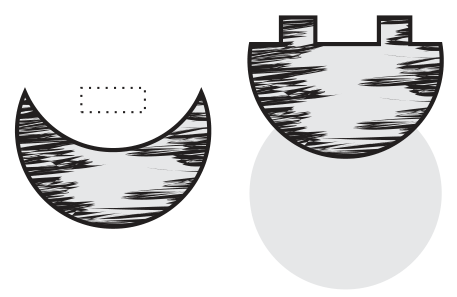
Step 1: Take a double color paper plate and fold 1/3 of it and cut unit a rectangular shape. Stick it on the top of the yellow color plate for the head of the owl.
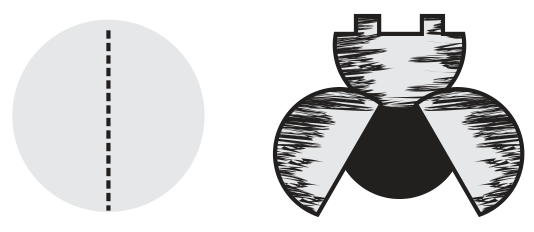
Step 2: Now take another double color paper plate. Cut it into two half pieces for the wings of the owl and paste it on the sides of the body of the owl.
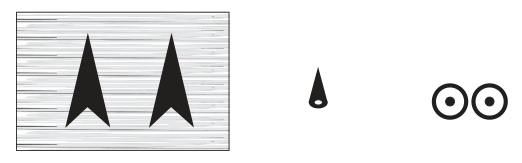
Step 3: Draw the shape of a triangle in the brown color paper and cut it as shown in Pic 5 for the legs of the owl. Then take a small piece of brown color paper, roll it into the shape of a cone for the beak of the owl. Similarly, draw and cut small circles in a white sheet fo the eyes and using black sketch put two dots on the circle.
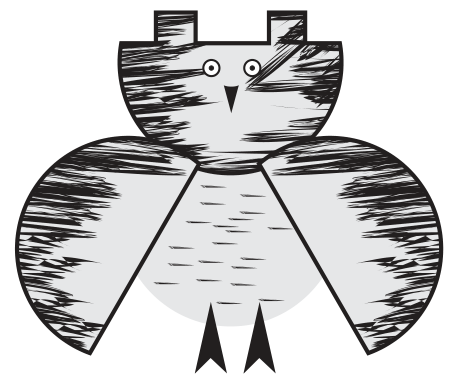
Step 4: Stick the eyes on the head of the owl near the eyes stick the mouth and similarly stick the legs on the bottom of the body.
DAY 5 : ACTIVITY
BLOWING FEATHER
Activity: To show how to blow feathers using straw.
Goals: To improve their oral motor skill, language skill, cause and effect.
Vocabulary: Blow, straw, feathers, air.
Material required: Straws, feathers.
Presentation: Make each child sit at the table. To present the activity, take a straw and put some feathers on the table. Holding one end of the straw to your mouth and the other end above the feathers, start blowing through the hole. Then demonstrate how when you blow the feathers move. Ask each child to blow into a straw. What happens when they blow? Give some heavy objects and ask them to blow it.
Assessment: • When we blow what comes out? • What happens when we blow the feathers with a straw? • Can we move heavy objects by blowing? • What happens when you blow a whistle?
Variation: They can even blow water, beads, wooden chips etc. We can also blow bits of paper as a variation.
Evaluation: Evaluate their oral motor skill, their concentration on the activity, their understanding of cause and effect.
Conclusion: This helps them understand the effects of air pressure and improves their oral motor skills and their understanding of cause and effect.
PICKING UP MUSTARD SEEDS FROM WATER
Activity Picking up mustard seeds from water.
Goals To develop their fine motor skills of pincer grasp and cognitive skills of showing persistence.
Vocabulary Pick, mustard, seeds.
Material required: A bowl of water, mustard seed in a cup, a plate, a towel to wipe.
Introduction and Presentation: Ask the children to sit down around a table. Give each child a bowl of water and keep a plate in the middle. Put some mustard seeds in each child's bowl of water. Ask the children to pick up the mustard seeds using thumb and index finger and keep it in the plate. Encourage them to pick up as much as possible but one mustard seed at a time.
Variation: They can also pick up the mustard seeds from the plate. Ask them whether the mustard seed floats or sinks.
Assessment • What is the shape of the mustard seeds? • What is the color of the mustard seed? • Is it easy to pick up mustard seeds? • Mustard seeds float or sink in water? Why? • Have you tasted the mustard seeds? • How does it taste? • From where do we get mustard seeds? • Are mustard seeds big or small?
Evaluation: Evaluate their fine motor skill. Cognitive skills of knowledge of big or small, float or sink.
Skill development: Fine motor skills of pincer grasp, Eye hand coordination, Cognitive skills of showing persistence in approaching tasks.
DAY 5 : GYM
TRAIN TRIP GAME
Goal: To develop their socio-emotional skills of seeking and giving companionship.
Presentation: Each child can hold the shoulder of another child and stand in a line. They can move like a train ,singing a song ,train rhymes. They can move in a zig-zag line, or in a curved line path. The train can move in different directions.
Skills developed: This activity develops their gross motor skills, social-emotional skills, direction sense, co-ordination, learning to be a member of a group, co-operative play.
CHICKEN DANCE
Goal: To develop their gross motor skills.
Presentation: Ask the children to keep their hands folded to their ribs like the wings and ask them to flap their arms and keep squatting along with the music.
Skills Developed: It will develop their gross motor skills, symbolic thinking.