BLISS CURRICULUM
This text was machine-transcribed from the printed book and may contain errors. Select the words and choose “Report a mistake”.
September : Week – 3 Alphabets of the Month: A, B, C, D
Theme: Amphibians Color of the Month: Blue, Indigo, violet Shape of the Month: Blue, Indigo, violet
| Monday | Tuesday | Wednesday | Thursday | Friday | |
|---|---|---|---|---|---|
| CIRCLE TIME | Talk about amphibians | Discuss about vertebrate and invertebrate | Talk about their habitat and life cycle | About their homes | About the babies and special features |
| ART | Sponge printing. Wax painting | Finger painting. Shape sticking | Collage with wool, bubble wrap painting | Brush painting, pond craft. | Making mini book, crayon coloring |
| ACTIVITY | Transfer grains using tongs and ladles, sorting grains. | Syringe play, squeezing sponge | Torch play, carry water across the room. | Flour mixing, add color, picking up sight words | Clean up, straw lacing. |
| GYM | Bowling, guess the animal. | Treasure hunt, I sent a letter | Marching, animal parade, hula hoop | In the pond on the bank, frog leap | Bubbles and obstacle course. |
| A-Z OF AMPHIBIANS |
A-Axolotl, army / B- Body / C-Caecilians / D- Dwarf tree frog / E-Eggs / F- Frog / G- Goliath frog /
H- Herpetology / I- Ichthyostega / J-Jungle / K- Knots / L- Larva, lizard / M- Metamorphosis /
N-Newt / O- P- Purple frog / Q- / R- Rough / S-Salamander / T-Toad / U-Outer surface / V- /
W-Western green tree frog / X-Extinct / Y-Yellow eyed ensatina salamander / Z-Zoologist
|
DAY : 1
Topic: General instruction of Amphibians.
Vocabulary: Amphibians, frog, toad, salamanders, environment, land and water, caecilian, newt.
Material required: Picture book of amphibians, toys, charts, puzzles.
Presentation: ● Present to the children general details about amphibians. ● Most amphibians spend their baby days in water and grow up to live on land. ● Amphibians mean lives both in land and water. ● Amphibians are half way between fish and reptiles. ● No amphibians live in the sea. ● Amphibians mean double life as they are hatched in water and as they grow they move to land. ● Amphibians have the same body as their environment. ● Frog, toad, salamanders, newts, caecilian are called amphibians. ● Amphibian's body does not have any hair, scales or feathers. ● Many amphibians breathe through their skin though some might have gills in their younger ones.
Assessment: ● What is an amphibian? ● How do amphibians breathe? ● Name few common amphibians. ● Have you seen an amphibian? ● Do amphibians live in the sea? ● Do amphibians have scales, hair or feathers? ● Do amphibians have the same body temperature as their environment?
Closing: Recollect the important details; ask them to name some of the amphibians.
Evaluation: Evaluate their listening skills by asking questions on the details discussed before. Evaluate their math skills by asking them to predict the number of toy amphibians.
Extension: Children can play a memory game with different toy amphibians.
DAY : 2
Topic: Vertebrate and invertebrate Amphibians.
Vocabulary: Vertebrate, invertebrate, vertebral column, frog, toad, salamander, caecilians.
Material required: Chart, pictures, toy amphibians, puzzles.
Presentation: • Talk to them about vertebrate and invertebrate amphibians. • Vertebrate are those animals which have backbone. • Invertebrate are those animals which have no back bone. • The backbone also called the spine or spinal column is made of several joining units known as vertebrae. • Vertebral supports the body and fastens the limbs; it also protects the nerves of the spinal cord. • Amphibians like frogs, toads, and salamander are vertebrate amphibians. • Amphibians like caecilians which resembles like earthworms are called invertebrate amphibians. • Salamander looks like a lizard. • Salamander can regenerate some of its body parts that mean if it loses its legs or tail; it can grow them back in a few days.
Assessment: • What are vertebrates? • Name some of the vertebrate amphibians? • What are invertebrates? • Name some of the invertebrates amphibians? • Name the amphibian which closely resemble with the lizard? • Why caecilians are called invertebrates?
Closing: Ask the children to differentiate between vertebrate and invertebrate animals.
Evaluation: Evaluate their listening skills by asking questions related to the topic.
Extension: Children can move like vertebrates and invertebrates.
DAY : 3
Topic: Habitat and life cycle of Amphibians.
Vocabulary: Environment, eggs, lay, breathe, tadpole, baby, adult, metamorphosis.
Material required: Chart depicting the life cycle of amphibians, toys, puzzles.
Presentation: • Amphibians when they are hatched they are in water and as they grow they move to land. • Some amphibians live in water all their lives. • Amphibians are cold blooded animals they change their body temperature according to the environment. • Most amphibian babies look completely different from their parents. • For example baby frogs and toads have tails and swim in water while their parents have legs and mostly live on land. • Baby newts and salamanders resemble their parents. • Mother frog lay about 100 eggs at a time. The eggs are called frog spawn, the eggs are clumped together. They look like little jelly balls with a black eye in the centre of each egg. • Metamorphosis is the process in which a tadpole is changed in to a frog. • Eggs Tadpole Baby frog Adult frog.
Assessment: • Which amphibian closely resembles frog? • Do amphibian lay eggs? • Where we can find amphibians? • Can you name few amphibians? • What is frog spawn? • What is tadpole? • What is metamorphosis? • Do baby amphibians resemble their parents?
Closing: Recall the important details and ask questions about the theme. Make them understand the Life cycle of frog and its habitat.
Evaluation: Evaluate their texture skills by asking them to feel the texture of the toy amphibians and talk about it. Evaluate their cognitive skills by asking them to explain the life cycle of frog.
DAY : 4
Topic: Homes and food habits of amphibians.
Vocabulary: Water, moist places, land, swim, algae, worms, insects, fishes, frog eggs.
Material required: Picture charts, toy amphibians, puzzles.
Presentation: • Talk about the homes of different amphibians and their eating habits. • Tadpoles live in water. • Tadpoles feed on algae. • Frog lives in wet places, moist places, garden. • As babies, most salamanders live in water. • Salamanders hunt other animals for food like insects, fish, frogs, frog eggs and even other salamanders. • Frogs eats insects and fishes. • Newts are semi aquatic animals. • Caecilians lives under ground.
Assessment:
• Where do adult frog lives?
• Where do tadpole lives?
• What do tadpole eats?
• Name the food of frogs?
• Where do salamanders live?
• Name an underground amphibian?
• Where do caecilian lives?
• What do salamanders eat?
Closing: Conclude this topic by reviewing the special information like the skin of a frog reflects an equal amount of ultraviolet light as its immediate surroundings. In this way, it can protect itself from snakes and other predators.
Evaluation: Evaluate their cognitive skills of listening by asking multiple questions related to topic.
Extension: We can play the game in the pond and on the bank by giving the instructions as tadpole and frog.
DAY : 5
Topic: Special features of amphibians.
Vocabulary: Vocal sac, gastric brooding frog, lungs, gills, metamorphosis.
Material required: Picture charts, puzzles, books, toy amphibians.
Presentation: • Present to the children the special features of amphibians. • Tadpole has tails and tails disappears and legs grow when the tadpole becomes a frog. • Tadpole breathes through gills and frog breathes through lungs. Gills change in to developed lungs. • Amphibian's body does not have any hair, scales or feathers. • Many amphibians breathe through their skin? • The gastric brooding mother frog swallows her eggs, the tadpoles grow inside the mother's tummy, and they come out of the mouth as tiny frogs. • When threatened tomato frogs puff themselves up with air so that they appear too big to be swallowed. • Salamanders do not make any sound at all they are completely voiceless animals. • A group of frogs is called an army, while a group of toads is called a knot.
Assessment: • How do amphibians breathe? • Name the amphibian which does not make any sound? • How we call a group of frogs as? • Name the amphibian which closely resembles each other? • Do frogs have gills? • Do tadpoles have lungs?
Closing: Recall the important details; ask them to share the information to us when they see any amphibians.
Evaluation: Evaluate their language receptive and expressive skills.
Extension: With bubbles we can make frog spawn and illustrate the life cycle of frog.
DAY 1 : ART
SPONGE PRINTING
Material required: Uncolored art sheet, paints of various colors, sponge cut in to various shapes.
Procedure: The children are asked to dip the sponge in the paint and do the sponge printing on the given picture. They can do printing with various shape or size or design sponges dipped in different colors. Encourage the children to do the printing only inside the picture.
Skills developed: fine motor skills, sensory skills, cognitive skills of knowledge of various colors and cause and effect.
WAX PAINTING
Material required: Uncolored art sheet, various color crayons, poster colors (different), brush.
Procedure: Ask the children to first color the picture with crayon and then paint on it with poster colors.
Skills developed: Fine motor skills, cognitive skills of understanding cause and effect.
DAY 1 : ACTIVITY
TRANSFER GRAINS USING TONGS AND LADLES
Goals: To improve their pre math skill of measuring and comparing, fine motor skills, cognitive skills, eye hand coordination
Vocabulary: Ladle, Measure, Tongs, Compare, Transfer, Quantity
Material needed: Grains, Tongs, Ladles, Bowls
Presentation: Place the grains, tongs, ladles, and bowls on the table Transfer the grains from one bowl to another using tongs. Measure the quantity of the grains being transferred. Transfer the grains from one bowl to other using ladles, measure the quantity and compare the quantity of grains of 2 bowls.
Objectives: How much grain can you transfer using tong, more or less? How much grain can you transfer using ladle more or less? Why only less grain comes when you use tong for transferring and why more grain comes when you use ladle?
Skills developed: Pre-math skills, Estimation, Predicting, Comparing, Fine motor skills, Eye hand coordination
Conclusion: By this activity we can improve their fine motor skills and whole hand grasp.
SORTING GRAINS
Vocabulary: Grains, shapes, colors, sizes.
Goals: To improve their: Cognitive skills, Pre math skills, Fine motor skills, Eye hand coordination
Material required: Grains of different types of colors, sizes and shapes.
Presentation: Have all the materials ready for the activity. Give each child the materials in a plate. Give each child different types of grains and show them how to sort according to their shapes/size/colors. Ask them to feel the different textures.
Assessment: Ask them whether we can count the grains when it is plenty. Ask them to name the colors and size of given materials. Ask them about the texture. Do we measure or count the grains.
Skills developed: Cognitive skills, Pre math skills, Fine motor skills, Eye hand coordination
Conclusion: By this activity they will be able to understand and classify the objects according to the colors, size, texture, and shape.

DAY 1 : GYM
BOWLING
Goal: To develop their fine motor skills, gross motor skills, eye hand coordination, focusing on an object.
Presentation: Plastic bottles can be filled with different colored water and arranged in row, one after the other or in a particular pattern. Children are asked to come one by one and roll a ball and bowl the bottle. Whoever bowling more bottles will be applauded.
Skills developed: Eye hand coordination. Fine motor skills. Focusing on an object Gross motor skills.
GUESS THE ANIMAL
Goal: To develop their auditory skills, observing skills, cognitive skills, thinking and memory skills.
Presentation: Divide the children in to two groups A and B. One child from group A makes an animal sound, roaring or barking or meowing etc. Team B children has to name animal which makes that sound. Then a child from group B will come and make an animal sound group A children has to identify it correctly.
Skills developed: Auditory skills. Observing skills. Cognitive skills. Thinking and memory skills.
DAY 2 : ART
FINGER PAINTING
Material required: Uncolored art sheet, paint of various colors.
Procedure: The children are asked to dip their fingers in the paint and do the finger painting on the given picture. They can do finger painting with various colors poster colors.
Skills developed: Fine motor skills, sensory skills.
SHAPE STICKING
Goal: To develop their fine motor skills, pincer grasp, eye hand coordination, cognitive skills of understanding shapes and their creativity, spatial awareness skills, sensory skills.
Material required: Different shapes cuts outs of color paper or cloth bits or foam sheet, glue, uncolored art sheet, related to the theme.
Procedure: Motivate children before starting the activity, keep required materials ready before starting an activity. Give each child an uncolored art sheet with outline of few shapes drawn on the plain sheet and describe about the picture and present them the way to stick the shapes inside the given space. Apply glue on the picture wherever required. Ask them to pick one shape cut out using the thumb finger and pointer finger and to stick inside the picture wherever required.
Skills developed: Develops their fine motor, pincer grasp, eye- hand coordination, cognitive skills of understanding shapes and their creativity, spatial awareness skills, sensory skills.
Variation: They can also create their imaginary pictures using shapes. For example fish with one oval and three triangles.
DAY 2 : ACTIVITY
SYRINGE PLAY
Goal: To develop their fine motor skills, eye hand coordination, direction sense.
Presentation: Give each child one syringe. Present to the children how to hold a syringe and fill water in it. Ask them to hold the syringe upside down pull in the upward direction. Ask them to observe the water gushing in. Now ask them to press and push the water out using thumb. Ask them to repeat this action by giving instructions like pull and push.
Skills developed: Develops their fine motor skills, eye hand coordination, direction sense and cognitive skills of understanding cause and effect.
Assessment: • Who uses syringe? • What happens when you pull the syringe knob upward? • How water gushes inside the syringe? • What happens when you push it back? • Can you try doing the same outside the water?
SQUEEZING SPONGE
Goals: To develops their whole hand grasp, fine motor, cognitive skills of exploring cause and effect.
Material required: Sponge, cups.
Presentations: Invite the children to the activity. Present them how to hold the sponge and squeeze them giving pressure using palm. Give each child one sponge and ask them to squeeze it using whole hand grasp.
Skills Developed: Develops their whole hand grasp, fine motor skills, cognitive skills of exploring cause and effect.
Variation: They can also fill the cup by squeezing sponge and describe about half, full, empty, quarter etc.
DAY 2 : GYM
TREASURE HUNT
Goal: To stimulate their curiosity, thinking skills and social skills, pre-reading skills
Presentation: Objects are taken according to the theme. Hide the objects in the out door play area before children come to play. Make some clue sheets with pictures to say which color object the treasure is. Ask the children to search for the treasure (the hiding objects) with the clue sheets Variations: We can hide the items depending upon the theme (Eg: Birds, Animals, Vehicles) We can also play hide and seek game
Skills developed: This game develops their pre-reading skills when they track the object with the clue, their cognitive skills, social skills when they work as a team to find the treasure, it will improve their curiosity and critical thinking skills.
I SENT A LETTER
Explanation: Make the children sit in a circle. Choose a child who walks around and outside of the circle and drops the handkerchief casually behind one of the child sitting in the circle. This child picks up the handkerchief and chases the child who dropped the handkerchief around the circle and sits in the second Childs place without being tagged. If he is tagged, then he has to again play for another round.
Skills developed: Gross motor skills.
DAY 3 : ART
COLLAGE WITH WOOL
Goals: To develop their fine motor skills, pincer grasp, eye hand coordination, spatial awareness, and tactile skills.
Material required: Glue, uncolored art sheet, wool.
Procedure: Keep the required materials ready before starting an activity. Explain to the children about the art sheet. Encourage them to apply glue inside the picture and ask them to pick the wool and stick on the glue inside the picture. Skills developed: Fine motor skills, pincer grasp, eye hand coordination, spatial awareness, tactile skills.
BUBBLE WRAP PAINTING
Material needed: Uncolored art sheet, bubble wrap paper, different poster colors.
Procedure: Children are asked to dip the bubble wrap in the different poster colors and print it on the given art sheet. They can absorb the impression on the paper.
Skills developed: Develop their fine motor skills, cognitive skills of understanding cause and
DAY 3 : ACTIVITY
TORCH PLAY
Goal: To improve their imagination, critical thinking, fine motor and to understand cause and effect.
Vocabulary: Shadow, faces, animals, flash light, paper holes, light, passing.
Material required: Flash light, paper with tiny holes, wall or table.
Presentation: Keep the room really dark and flash light using torch on the wall using fingers make different images, the shadow of your fingers appear as images of a man or like a deer, a dog etc.
Assessment: What is that formed on the wall? Can shadow be formed without light? How does the shadow of finger look? How will their shadow look like big or small.
Closing: Ask them to try making images on the wall with shadows.
Evaluation: Evaluate their critical thinking, their cognitive skills of explaining cause and effect, fine motor skills and record the observation.
Variation: place the paper with holes on the table in a dark room and flash light on the paper the light passed through the paper with resemble like stars on the table. Use glow stars to show them how the light is absorbed and reflected. Put your hand and close the torch making it red in your hand
CARRY WATER ACROSS THE ROOM
Activity: Carrying a cup/tumbler full of water walking across the room.
Goals: To improve their fine motor, eye hand coordination, balancing skills
Content:
Vocabulary: Carry, across, spill, balance
Material required: Glass/cup, water.
Introduction and presentation: To present this activity we need to fill the glass with water and hold it with both hands and walk across the room without spilling. If needed draw a line across the room, and ask them to walk on the line with the glass of water.
Assessment: What happens when you hold a glass of water and run? What happens when we walk carrying a glass of water? If the water spills what happens to the quantity of water in the glass. Can we close our eyes while carrying a glass of water? How should we walk when we have a glass full of water?
Closing: Make each child hold a glass of water and walk across the room or on the line without spilling water
Evaluation: Evaluate each child's ability to walk with the glass of water across the room without spilling. Evaluate their eye hand coordination, their balance.
Variation: They can even use colored water, flour, rice grams, carrying lamp or candle across the room. We can add color to the water, make it hot or cold water, or add some essence, place in a tray. Carry more than one glass of water. Carry in the left hand or one hand.
DAY 3 : GYM
MARCHING, ANIMAL PARADE
Goal: To develop their gross motor skills.
Presentation:
Hop: Children are asked to stand on one foot and move from one place to another by hopping.
Crawl: Children are asked to sit on their knee and to move using hands and knee.
Creep: Children are asked to lay down on the floor, on their tummy and move using hands and leg in laying position (like snake). Swim: Children are asked to lie on their tummy on the floor and they are asked to move their hands and legs and do swimming action.
Skills developed: Develops their gross motor skills.
HULA HOOP
Topic: Jump and tossing the ball inside the hula hoop.
Explanation: Arrange the hula hoops in a path on the floor. Encourage the children to jump from the centre of one hoop to another. Hold the hula hoop or suspend a hula hoop from the ceiling and encourage the children to toss balls through the hoop. You may also lay the hoop on the floor and have children toss the ball in to the hoop from behind a line.
Skills developed: Eye and hand coordination, gross motor skills.
Variation: You can also make them to hop, jump in and out of the hula hoop.
DAY 4 : ART
BRUSH PAINTING
Material required: Uncolored art sheets, different poster colors, paint pallets, paint brush.
Procedure: children can dip the paint brush in the paint (different colors) and paint the picture given holding the brush firmly. Children are encouraged to paint inside the picture.
Skills developed: Develops their fine motor skills, eye hand coordination.
POND CRAFT
Material required: News papers, fevicol, glass paper (blue), cello tape, green and blue poster color, paint brush, paint pallet, frog stickers or cut outs, chart paper, safety scissors.
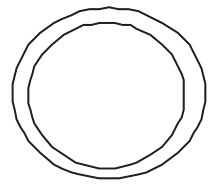
Preparation: Draw a circle on the chart paper and cut it using safety scissors.
Keep the required materials ready before starting the activity.
Procedure:
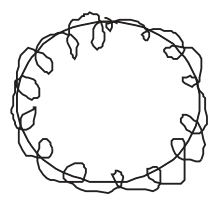
Step: 1 Take the newspaper twist it using opposite hand movement
Step: 2: Apply fevicol to the corners of the circle cut out and stick the twisted paper roll around.
Step: 3: Paint the circle blue let it dry and green lines in the corners like grasses. Stick stickers inside.
Step: 4: Cover the glass paper on the pond.
DAY 4 : ACTIVITY
FLOUR MIXING, ADD COLOR
Activity: To make dough with flour and water
Goals: To improve their Sensory awareness skills, Fine motor skills, olfactory skills
Vocabulary: Dough, flour, essence, wheat
Material required: Water, Flour (wheat/maida), Food color, Plates, Essence (if required), Small rocks or dried leaves (if required)
Introduction and Presentation: Get all the materials ready for the activity and give each child a plate and have them sit at the table. Put a small amount of flour on each plate and ask them to feel it. Add a small amount of food color and ask them to mix. Add little water and have them mix it with their fingers observe the color change and feel the texture. For good aroma add few drops of any essence to the dough.
Assessment: • What is the texture of the dough? • What is the color of the food color? • What happen when you add color to the flour? • Does the texture change when you add water to the flour? • How does the dough smell when you add essence? • How do you feel soft or rough? • Is it gooey and sticky or stiff and hard? • What is the different smell?
Evaluation: To evaluate their sensory awareness skills, tactile skills, olfactory skills, whole hand grasp.
PICKING UP SIGHT WORDS
Goals: To develop their pre reading skills, visual tracking skills, eye hand coordination.
Vocabulary: Highlight, sight words (a, in, the, this, where).
Material required: Cards with different sight words, Highlighter, news paper
Introduction and Presentation: Keep different cards with different words and sight words on the table and ask them to pick only the sight words.
Evaluation: Evaluate their knowledge of understanding sight words by asking which sight word they highlighted.
Skills developed: Visual tracking. Pre- reading. Eye hand coordination.
Variation: Provide a news paper cutting; give the children to identify sight words with highlighter. We can also make them highlight a simple sentence and try reading e.g. (This is a can).
DAY 4 : GYM
IN THE POND ON THE BANK
Goals: To develop their gross motor skills and balancing skills, auditory skills.
Presentation: Make children stand in a circle and place hoola hoop in the middle or draw a circle and make them stand around the circle. When we say in the pond all have to jump inside the circle and when we say on the pond all have to jump outside the circle.
Skills developed: develops their gross motor skills, balancing skills, auditory skills.
FROG LEAP
Goal: To develop their gross motor skills.
Presentation: Children are asked to half sit on the ground with their hands placed in the front on the ground. Children are asked to jump from half sitting position and get back to the same position ,leaping like a frog.
Skills developed: Gross motor skills. Symbolic play.
DAY 5 : ART
MAKING MINI BOOK
Goals: To develop their eye hand coordination, fine motor skills, logical thinking skills.
Material required: Any materials, pictures related to the theme can be chosen, a small book with plain sheet has to be made, glue, crayons.
Introduction and presentation: Children are given one book each and they can be explained about theme and they can stick the pictures or materials or children can draw related to the theme in their book.
Skills developed: Develops their eye hand coordination, fine motor skills, logical thinking skills.
CRAYON COLORING
Material required: uncolored art sheet, various color crayons.
Procedure: The children are asked to hold the crayon firmly and color inside the given picture if possible, they can use various colors of their choices related to the given picture.
Skills developed: Tripod grasp, pre writing skills, eye hand coordination.
DAY 5 : ACTIVITY
CLEAN UP
Goal: To improve their whole hand movement, fine motor, self help skills, pre math skills of grouping.
Vocabulary: Pick, broom, dustpan, clean, paper bits, dirty, messy, gravity, sorting, grouping.
Material required: Toy broom, dust pan, bits of paper.
Presentation: Drop bits of paper on the ground and sweep it using toy broom and dust pan.
Closing: Ask them to try the same.
Evaluation: Evaluate their self help skills and fine motor and whole hand movement and record the observation.
Skills developed: Gross motor skills, fine motor skills, Sensorial, problem solving and language skills.
Variation: They can clean up toys from different cubbies and sort it into right cubbies. Go out door and clean the garden. Tell them to sort the paper and leaves and other items into different bins. Mop after cleaning the dust using wet cloth or mop learning about squeezing the towel or the mop. What happens when we use dirty water or flour mixed water to clean?
STRAW LACING
Goals: To develop their fine motor skills, eye hand coordination, pincer grasp, pre math skills of patterning and understanding of one-one correspondence.
Content:
Material required: Different straws cut in to small pieces, long woolen thread cut equally for all the children.
Vocabulary: String, straws, lacing, pattern etc.
Presentation: Place the required materials on the table and distribute it to the children equally. Ask the children to hold the thread in one hand and pick one straw using thumb and index finger and ask them to insert the thread through the straw and string the straw one by one. They can also follow a particular pattern.
Assessment: • What is the shape of the straw? • How did the thread go through the straw? • If there is no hole will the thread go inside? • How many have you stringed?
Evaluation: Evaluate their skills by repeating the activity and observing the progress.
Skills developed: Fine motor skills, eye hand coordination. Pincer grasp. Pre math skills of patterning. One to one correspondence.
DAY 5 : GYM
BUBBLES
Goal: To develop their oral motor skills and eye hand coordination skills.
Presentation: Children are asked to blow bubbles. They can be asked to catch the bubble which flies higher. We can discuss about how it flies higher, shape of the bubbles, what is inside the bubbles to the children.
Skills developed: Oral motor skills Eye and hand coordination while catching the bubble or feather.
OBSTACLE COURSE
Goal: To improve their gross motor skills and listening skills, memory skills.
Presentation: Welcome the kids to gather in a place and multiple oral instructions will be given at once to them. For example: Take three jumps from position, crawl into the tunnel, climb the blue sliding board, balance on yellow beam, take the yellow ball drop it into the basket and get back to position. Observe how many commands they can remember and follow in the right sequence.
Skills developed: They develop gross motor skills, receptive language skills, memory skills, spatial awareness, listening skills, balancing skills.
Extension: They can try out different instructions including different games.