BLISS CURRICULUM
This text was machine-transcribed from the printed book and may contain errors. Select the words and choose “Report a mistake”.
Theme: Mammals September : Week -1 Color of the Month: Blue, Indigo, Violet Alphabets of the Month: A, B, C, D Shape of the Month: Triangle, Prism, Cone
| Monday | Tuesday | Wednesday | Thursday | Friday | |
|---|---|---|---|---|---|
CIRCLE TIME | Talk about mammals and favorite animals | Special features | Life cycle | Differentiate mammals and other | Talk about | |
ART | Thumb printing, collage with cotton. | Smell painting, paper folding. | Color pencil and coloring, elephant craft. | Spray painting, crayon coloring. | Making mini book, alphabet stamp printing. | |
ACTIVITY | Wrapping toy with color paper, tearing color paper on line | Kaleidoscope, dropping grams in to egg carton | Squeezing water packets and filling cups, float and sink | Passing secret, loud and soft sounds | Sand pouring, filtering and writing on it. | |
GYM | Follow the leader, musical chair. | Yoga exercise, dog and the bone | Toss the balloon the toy animal, ribbon exercise | Hop, jump, crawl, creep like an animal. Pass through hole. | Walk on foot print, Basket ball. | |
A-Z OF MAMMALS | A-Antelope / B-Bison / C-Chimpanzee / D-Donkey / E-Elephant / F-Fox / G-Giraffe / H-Hippopotamus / I- / J-Jackal / K-Kangaroo / L-Lion / Monkey / Nocturnal / O-Ox / P-Platypus / Q- / R-Reindeer / S-Sloth / T-Tiger / U-Upper limb / V- Vertebrate / W- Wolf / X-Axilla / Y-Yak / Z-Zebra / | | | | |
DAY : 1
Topic: Mammals and favorite animals.
Vocabulary: Mammals, warm blooded, ant eater, bison, tarsiers, skunk, meerkat, hamster, whales etc.
Material required: Picture, toys, and puppets etc.
Presentation: ● Animals are classified as mammals, reptiles, amphibians, fishes etc based on some features. ● Mammals are warm blooded animals they are vertebrates. ● Some of the mammals are elephant, monkey, hyena, anteater, beaver, bison, tarsiers, skunk, meerkat, hamster, whale, bat, dolphin etc. ● Human beings are also mammals. ● Discuss about their favorite animals. ● Talk about their experience in zoo. ● Animals they know in their neighborhood or at the zoo ● Their homes.
Assessment: ● Which is your favorite animal? ● What are mammals? ● Are you a mammal, why? ● What are vertebrates? ● Is mammal warm blooded animal or cold blooded animal? ● Have you been to a zoo? ● Are you a vertebrate or invertebrate? ● Have you seen a mammal in your neighborhood? ● Ask them about the homes of different animals?
Closing: Recollect the facts and special features in mammals. Ask them to identify animals from the pictures.
Evaluation: Language skills: Expressing their thoughts about the topic. Cognitive skills: Sorting the animals as herbivorous and carnivorous Tactile skills: Figuring out the animal by just feeling the shape and size with their fingers
Extension: Identify the animal by your sense of touch: Place many animals and other living things in a bag. Blind fold the children and ask them to pick an animal and say whether it is a mammal or fish or insect etc .
DAY : 2
Topic: Special features of mammals.
Vocabulary: Warm blooded, hair, birth, young ones, umbilical cord, placenta, uterus, platypus
Material required: Picture, toys, and charts etc.
Presentation: ● Mammals are wide spread on land. ● Mammals are warm blooded animals, with bodies completely or partly covered with hair. ● The new born young ones are fed on their mother's milk. ● They give birth to their young ones. ● All mammals have belly buttons. ● Some mammals stay awake in the night and are called nocturnal animals. They sleep in the day. ● Mammals stay in their mother's uterus till it is fully formed. ● Elephant is the only mammal that stays longest, for 22 months, in mother's uterus. Human stay about 9 months. ● The umbilical cord is the connection between the mother and the baby, when the baby is in the uterus. ● A mammal that lays an egg is a platypus. ● Some mammals give birth to one baby and some mammals have many babies at a time.
Assessment: ● Which mammal lays an egg? ● How do we get food when we are in our mother's tummy? ● What are the special features of mammals? ● Why do mammals have belly button? ● Can you name a mammal that feeds on mother's milk? ● Can you name a mammal which carries the baby in its pouch? ● Name a mammal that can fly? ● Which animal carries their baby for 22 months in their tummy? ● Do you have belly button? ● Name the mammals that live in the forest and water?
Closing: Recall the information, special features, and types of mammals about flying mammals, mammals that lay eggs.
Evaluation: Language skills: learn new words, comprehending the knowledge Cognitive skills: Sorting and matching different animals pictures by their features ( land / water)
Extension: Puppet show. Mammal walk(elephant, lion, giraffe, whale, bat, human, kangaroo, rabbit)
DAY : 3
Topic: Life cycle of mammals
Vocabulary: Seal, chimpanzee, platypus, adult, infant, twins, nurse, pouch, uterus, triplets.
Material required: Picture or books, toy animals
Presentation: • Life cycle of the mammal starts from mother's uterus. • The baby is formed in the uterus and the organs develop slowly. • The development takes for months together, after the full development the mother will give birth to the young ones. • Human beings, monkeys, seal, walrus gives birth to one young one at a time and sometimes twins or triplets. • Rodents, cats, hamsters, dogs, cats give birth to 3 to 7 babies at a time • Kangaroo gives birth to undeveloped baby that will climb into the mothers pouch and remain close to mother until they are able to live on their own. • They feed on mother's milk. • All mammals start walking immediately after they are born except for humans.
Assessment: • How does platypus give birth to young one? • How long elephants stay in its mother's uterus? • How long did you stay in your mother's uterus? • How many babies do rodents or hamsters give birth to? • What is the young one of different animals called? • Which mammal is born when it is not developed? • Where do baby kangaroos stay? • Which mammal cannot walk after they are born? • How do babies eat when they are in mother's tummy? • Can they hear us when they are in the mother's tummy?
Closing: Recall the facts of how many months we stay in our mother's uterus, young ones of animals.
Evaluation: Language skills: participate in conversation and answering to open ended questions Math skills: counting the babies of animals Cognitive skills: understand the life cycle of mammals
Extension: Guessing the animals based on the baby calls (sounds).
DAY : 4
Topic: Categorization of mammals
Vocabulary: Warm blooded, cold blooded, scaly skin, lay eggs, mammals etc.
Material required: Picture book of mammals and other animals like reptiles and amphibians.
Presentation: • Mammals have hairs on their body but reptiles have scaly skin. • Platypus can lay eggs like reptiles, amphibians and birds. • Bat is the only mammal that can fly like a bird. • Rodents/Rats build a nest in which they give birth to their young ones. • Mammals feed on mother's milk, reptiles and amphibians lay eggs and the young ones take care of themselves. • Talk about different reptiles, amphibians, birds, insects and how different they are from the mammals with respect to skin, life cycle, taking care of their young ones etc
Assessment: • Which mammal lays egg? • Can you name a mammal that flies? • Is whale a mammal or a fish? • Name some mammals that can swim in water? • How are mammals different from reptiles? • Which mammal constructs nest to give birth to baby? • Why is bat a mammal? • What are the mammals that live in water? • Which mammal can talk? • Are the lizards and insects mammals?
Closing: Recall the information about how mammals are different from other animals.
Evaluation: Language skills: answering questions Math skill: comparing and sorting mammals from other categories
Extension: Tossing a ring around the picture/toy of mammals, reptiles, fishes, birds etc. Have an animal parade
DAY : 5
Topic: Talk about herbivorous, carnivorous and omnivorous animals.
Vocabulary: Herbivorous, carnivorous and omnivorous, flesh, plants, herbs, jaguar, leopard, rhino, hippo.
Material required: Picture book of mammals, toys.
Presentation: ● Some of the mammals are herbivorous i.e. they eat plants and trees. ● Some are carnivorous i.e. they eat other animals. ● Some mammals are omnivorous i.e. they eat both animals, plants, trees, insects. ● Lion, tiger, hyena, fox, wolf, seal, whale and jaguar are some examples of carnivorous. ● Animals which feed on plants, leaves and grass are herbivorous. ● Animals which feed on both animals and plants are omnivorous. ● Elephant, hippo, rhino, cow, giraffe, deer, horse, etc are some examples of herbivorous. ● Human and monkey are few examples of omnivorous. ● Explain how the carnivorous and omnivorous animals have claws and tearing teeth to eat the meat. Assessment: ● What are herbivorous? ● What are carnivorous? ● What are omnivorous? ● Name an herbivorous animal that you know? ● Name some carnivorous animals? ● What do seals or whales eat? ● What do bats feed on? ● Is your favorite animal herbivore, carnivore or omnivore? ● Are the mammals living or non-living? ● Name some herbivorous animals which are huge and strong? ● Are the pet animals like rabbits, dogs, and cats herbivorous or carnivorous? ● Are the farm animals like cows, pigs, horse herbivorous or carnivorous? ● Names some animals which have paws? ● Can we have a carnivore as pet or farm animal?
Closing: Recall the facts about carnivorous, herbivorous, and omnivorous
Evaluation: Language skills: learn vocabulary words, answer questions Cognitive skills: classifying the animals in herbivorous, omnivorous and carnivorous by their features, eating habits or where they live
Extension: Demonstrate their food habits with toys and by matching animals to their food. Finding the mammals based on the pattern of their skin.
DAY 1: ART
THUMB PRINTING
Material required: Uncolored art sheet, paints of various colors.
Procedure: The children are asked to dip their thumb in to the paint and press the thumb print on the given picture. They can do thumb printing with various colors, poster colors. Encourage the children to do the printing only inside the picture.
Skills developed: Fine motor skills, sensory skills, cognitive skills of knowledge of various colors, cause and effect.
Variation: Children can use the thumb printing to make various designs and pictures. Children can also do finger printing as a variation.
COLLAGE WITH COTTON
Goals: To develop their fine motor skills, pincer grasp, eye hand coordination, spatial awareness, and tactile skills.
Material required: - Glue, uncolored art sheet, cotton.
Procedure: Keep the required materials ready before starting an activity. Explain to the children about the art sheet. Encourage them to apply glue inside the picture and ask them to pick the cotton and stick on the glue inside the picture.
Skills developed: Fine motor skills, pincer grasp, eye hand coordination, spatial awareness, tactile skills.
DAY 1: ACTIVITY
WRAPPING TOY WITH COLOR PAPER
Goals: To improve their fine motor skills, eye hand coordination, sensory awareness.
Vocabulary: Wrap, paper
Material required: Color paper, toys.
Introduction and Presentation: Make the children sit near the table, explain and show them how to wrap a toy using color paper. Encourage and help them to wrap a toy using color paper. Tell them for what occasion or purpose we wrap objects.
Assessment: • Can we the see objects which are wrapped? • With what you can wrap things? • Can you name the objects?
Closing: Tell them to wrap and unwrap the objects. Talk about how we wrap gifts using color paper.
Evaluation: Evaluate each child's ability to wrap and their coordination involved in the activity, and their creativity.
TEARING COLOR PAPER ON LINE
Goals: To develop their fine motor skills. pincer grasp and eye hand coordination.
Vocabulary: Tearing, paper.
Material required: Color paper, scale
Introduction and Presentation: Ask them to fold the paper first one fold and then repeat it multiple times and crease it using their fingers. Children can now unfold the color paper after unfolding they can see folded outline on the color paper. Children are asked to tear the color paper in the folded pattern. They can also tear the paper in to very thin stripes using scale or tear the paper randomly in to very small bits. Assessment: • Is it easy to tear paper? • Which is easier to tear large paper or small bits of paper? • Is paper hard or soft? • If paper is torn in to very small pieces can we get back the full paper again? • Where do we get paper from? • What are the uses of paper?
Evaluation: Evaluate the fine motor skills, eye hand coordination.
Skills developed: Fine motor skills, Eye hand coordination, Pincer grasp, Pre math skills of estimating, predicting, Cognitive skills of cause and effect.
DAY 1: GYM
FOLLOW THE LEADER
Goal: To develop their auditory skills, observing skills, following oral instructions, receptive language skills and gross motor skills.
Presentation: Children are given oral instruction like “Leader says to do flying action”. They have to listen carefully and follow the action. Instruction can be anything to stimulate children's interest.
Skills developed: Auditory skills, Receptive language skills, Gross motor skills.
MUSICAL CHAIR
Explanation: Arrange chairs in two rows back to back or in a circle. Use one less chair than the number of children playing in the game e.g. if 8 children then place 7 chairs). Start some music and have the children run around the chairs. When you stop the music, the children quickly find a chair and sit down. The child left without a chair is out. Continue the game, removing one chair each round, until there are two children and one chair left. The child who gets the last chair wins.
Skills developed: Auditory skills, gross motor skills
DAY 2: ART
SMELL PAINTING
Material required: Coffee powder or vinegar or different essence e.g. vanilla, different aromatic substance, poster colors, uncolored picture, paint brush.
Procedure: Children are asked to paint the picture with the poster colors mixed with coffee powder or vanilla essence etc. encourage the children to paint inside the picture. After the paint dries they can smell the picture and identify the smell. Children can paint with brush or fingers.
PAPER FOLDING
Goals: To develop their fine motor skills. pincer grasp and eye hand coordination.
Material required: Paper.
Procedure: Ask them to fold the paper first one fold and then repeat it in multiple times and crease it using their fingers. Children can now unfold the paper and predict the number of boxes. They can also fold the paper to make multiple designs and models by seeing a model. They can fold even chart paper.
Skills developed: Fine motor skills, Eye hand coordination, Pincer grasp, Pre math skills of estimating, predicting. Cognitive skills of cause and effect.
DAY 2: ACTIVITY
KALEIDOSCOPE
Activity: To watch the design in the kaleidoscope
Goals: To improve their visual discrimination, eye hand coordination, sustaining attention
Vocabulary: Kaleidoscope, prism, cylinder, mirror, pattern and design
Material required: Kaleidoscope
Introduction and presentation: Show how to hold the kaleidoscope and then by closing one eye how we have to see through it. As we keep on turning the kaleidoscope we can see different designs that are formed with different colors. Inside the kaleidoscope there are small pieces of colored glass and the pieces are reflected in the mirror forming the designs and patterns.
Assessment: ● What are the shapes of patterns that you see in the kaleidoscope? ● What is there inside the kaleidoscope? ● How does it make those designs? ● Why do you close one of your eyes to see the kaleidoscope?
Closing: Talk about the designs formed, different shapes of kaleidoscope, making of a kaleidoscope
Evaluation: Evaluate each kid's ability to hold the kaleidoscope and see through it by closing one eye, their attention, and language skills. How are they able to explain what they see inside.
DROPPING GRAMS IN TO EGG CARTON
Goals: To improve their fine motor skills of whole hand grasp, cognitive skills of one to one correspondence, pre math skills of grouping.
Vocabulary: Grams, drop, hold, place.
Material required: Egg carton, grams.
Introduction and Presentation: Place the egg cartons on the table, make the children to sit near the table and give each child few grams and ask each child to hold all the grams in their hand and drop one by one each in one hole of the carton. And then ask them to drop two grains each in one hole of carton. Alternate with the number of grams.
Assessment: ● Where do we get grams from? ● Can we eat the grams? ● What are the different varieties of grams?
Evaluation: Evaluate how they are able to drop the specific number of grams by holding the remaining grams in the hand.
Skills developed: Fine motor skills, Whole hand grasp, Cognitive skills of one to one correspondence, Pre math skills of grouping.
DAY 2: GYM
YOGA EXERCISE
DOG AND THE BONE
Goal: To stimulate their observing skills, auditory skills, gross motor skills, receptive language skills.
Presentation: Children are divided into two groups with equal members. They are numbered as 1-1, 2-2, 3-3 in both teams. When any number is been called (say for example-3) child numbered 3 from both the team will come and pick the object. Whoever picks the object that team will get points.
Skills developed: This game develops their auditory skills, attention, gross motor skills, receptive language skills and observing skills.
Variations: The same game can be changed as bird and grains.
DAY 3: ART
COLOR PENCIL COLORING
Material required: Color pencils of various colors, uncolored picture.
Procedure: Children can select the color pencils of their choice related to the picture and color the picture. Encourage the children to color mostly inside the picture holding the pencil firmly.
Skills developed: Tripod grasp, eye hand coordination, prewriting skills.
ELEPHANT CRAFT
Material required: Plain sheet or news paper, tissues, grey poster colors, glue, cello tape, safety scissors, cup of water, paint brush.
Preparation: Keep the required material on the table, and roll the paper and stick it. Cut the paper rolls in equal size as four pieces, keep cut out of ear for the elephant on a plain sheet. Twist two small plain sheets for the tail and trunk.
Procedure:
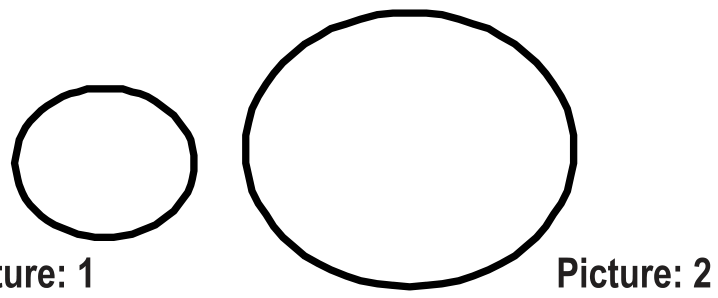
Step: 1 Crush the plain sheets or news paper to make one small ball and one big ball.
Picture: 1 Picture: 2
Step: 2: Stick tissue paper bits on the balls using glue and then wet the tissue with water gently tapping using the paint brush and leave it to dry.

Step: 3: Stick both the balls together using glue. Fill the neck portion using tissue bits.

Step: 4: Stick the trunk (twisted paper roll) using glue and cello tape.
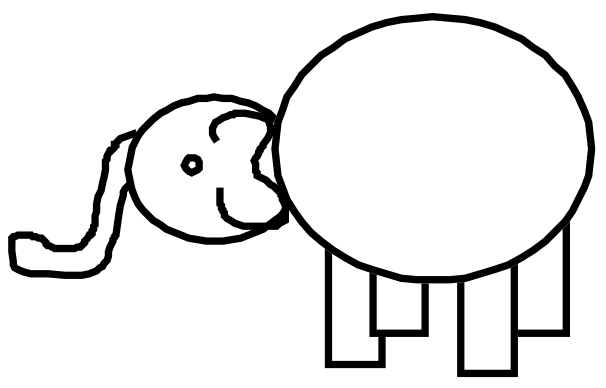
Step 5: Stick the cut out of legs, ears and tail using cello tape and paint it grey.
DAY 3: ACTIVITY
SQUEEZING WATER PACKETS AND FILLING CUPS
Goals: To develops their whole hand grasp, fine motor, cognitive skills of exploring cause and effect.
Material required: Water packets, cups.
Presentation: Invite the children to the activity. Present them to hold the water packets and squeeze them giving pressure in their palm. Give each child one water packet and ask them to squeeze it using whole hand grasp.
Skills Developed: Develops their whole hand grasp, fine motor skills, cognitive skills of exploring cause and effect.
Variation: They can also fill the cup by squeezing water packets and describe about half, full, empty, quarter etc.
FLOAT AND SINK
Activity: To show and demonstrate the different objects which float and sink in the water.
Goals: To improve their cognitive skill of understanding cause and effect, pre-math skills, comparing.
Vocabulary: Sink, float, heavy, light, water pressure, buoyancy, and dissolve
Material required: Water, tub, leaves, paper, stones, marbles, salt
Presentation: Present the activity by taking water in a tub and making the children sit around it, then drop objects that float like leaves, paper, sponge etc and drop objects that sink like stones, marbles etc. Talk about heavy and light objects. Talk about density, the objects that have less density float and other objects that have more density sink.
Assessment: ● Why some objects float and some sink? ● What happens when plastic paper, leaves, flower are dropped in water? ● What happens when rocks, marbles etc are dropped in water? ● Does salt float or sink? ● What is buoyancy? ● What is dissolve?
Evaluation: Evaluate each child's ability of understanding cause and effect. Whether they understood why does it float or sink? Evaluate them by asking "What are some things that float and sink?" How they explain density.
Skills developed: Cause and effect, Logical thinking skills, Language skills, pre math skills.
Conclusion: Make the children do the activity and talk about the density, what sinks and floats.
DAY 3: GYM
TOSS THE BALLOON ON THE TOY ANIMAL
Goal: To develop their eye hand coordination, fine motor skills, gross motor skills.
Presentation: Ask the children to hold the ball firmly with one or both hands and toss the ball on the toy animal. Encourage them to toss it correctly on the toy animal.
Skills developed: Eye hand coordination, fine motor skills and gross motor skills.
RIBBON EXERCISE
Goal: To develop their gross motor skills, Follow direction, social and emotional skills, memory skills.
Presentation: Motivate the children to hold the colored ribbons in their hands. Direct them to do simple hand movements like up, down, right side, left side. Make them to shake their both hands holding the ribbons. Ask them to shake hands and also jump simultaneously. Direct them to hold each other and dance with ribbons. Make the children do different steps with music and song holding the ribbon. They can follow some rhythm and pattern and dance.
Skills developed: Develops their gross motor skills, social/ emotional skills and direction skills and memory skills of following the rhythm and pattern.
DAY 4: ART
SPRAY PAINTING
Material required: uncolored art sheet or plain sheet, different poster colors alphabet stencils or number stencils related to the theme example flowers, fruits, and animals etc, tooth brush.
Procedure: children are asked to keep the stencil in the appropriate place on the art sheet or the plain sheet. They have to dip the toothbrush in the paint and hold the tooth brush upside down with one hand, above the art sheet and move the bristles of the tooth brush with other hand on the comb held in the other hand. Children are asked to observe that the paint is sprayed by this movement in the paper. Now they can take the stencil and observe the design.
Skills developed: fine motor skills, eye hand coordination, cognitive skills of observing cause and effect.
CRAYON COLORING
Material required: uncolored art sheet, various color crayons.
Procedure: The children are asked to hold the crayon firmly and color inside the given picture if possible, they can use various colors of their choices related to the given picture.
Skills developed: Tripod grasp, pre writing skills, eye hand coordination.
DAY 4: ACTIVITY
PASSING SECRET
Goals: To develop their auditory skills, social skills, sustaining attention.
Presentation: Make children sit in a circle and mentors can also join them in a circle. Mentor can pass a secret or any saying in one child's ear. That child will pass it to another child by whispering in ears. They can follow the same and finally the last person will tell the secret aloud.
Skills developed: Develops their auditory skills, social skills and sustaining attention.
LOUD AND SOFT SOUNDS
Activity: Identifying, making loud sounds, soft sounds, various different sounds.
Goals: To improve their auditory discriminatory skills, fine motor skills, eye hand coordination, concentration, ability to change the activity.
Content:
Presentation: Invert a metal bowl and tap it with a metal spoon and ask the kids to listen to the sound -loud sound. Invert a plastic bowl and tap it with a plastic spoon and ask the kids to listen to the sound - soft sound. Invert a metal bowl under a plastic bowl and move it around and ask the kids to listen to the sound - mechanical sound. After demonstration give each child the material. required and ask them to make different sounds.
Assessment: • What are the sounds you can hear in the nature? • Which is your favorite sound? • Why are we able to hear different sounds using the same size cups? • What is the difference between music and noise? • Which is the sense organ that helps us in hearing? • What is tune? • How will you feel when you hear a very loud sound?
Vocabulary: Sound, noise, tapping, wood, granite, metal, plastic.
Material required: Metal bowl, plastic bowl, metal spoon, and plastic spoon.
Evaluation: Evaluate each child's ability to make different sounds with the material given, their ability to identify and discriminate the sounds, their coordination involved in listening to instructions and producing the appropriate sounds.
Closing: Show them that different material can make different sounds. Show them different levels of water in the same size metal cups also bring different sounds.
Variation: Ask them to make noise when the bowls are filled with varying quantity of water. Use different types of bowls as wooden or granite varying the sizes.
DAY 4: GYM
HOP, JUMP, CRAWL, CREEP LIKE AN ANIMAL.
Goal: To develop their gross motor skills.
Presentation: Hop:-Children are asked to stand on one foot and move from one place to another by hopping. Crawl: - Children are asked to sit on their knee and to move using hands and knee. Creep: - Children are asked to lie down on the floor, on their tummy and move using hands and leg in lying position (like snake). Jump: Children are asked to stand and encourage jumping by lifting their both legs.
Skills developed: Develops their gross motor skills.
PASS THROUGH HOLE.
Goal: To develop their gross motor skills, spatial awareness.
Presentation: Children can build a hole with the blocks and they can pass through it by crawling, creeping, knee walking etc. They have to pass carefully without knocking down the hole.
Skills developed: Spatial awareness, Gross motor skills.
DAY 5: ART
MAKING MINI BOOK
Goals: To develop their eye hand coordination, fine motor skills, logical thinking skills.
Material required: Any materials, pictures related to the theme can be chosen, a small book with plain sheet has to be made, glue, crayons.
Introduction and presentation: Children are given one book each and they can be explained about theme and they can stick the pictures or materials or children can draw related to the theme in their book.
Skills developed: Develops their eye hand coordination, fine motor skills, logical thinking skills.
ALPHABET STAMP PRINTING
Material needed: Alphabet stamps, Stamp pad, Pictures of mammals.
Procedure: Ask the children to press the Alphabet stamps on the stamp pad and do stamp printing on the picture. Children are asked to observe the prints appearing on the paper, when they press the alphabet prints on the paper. Children can make the words like mammals name with the alphabet prints.
Skills Developed: Fine motor, cognitive skills of understanding cause and effect.
DAY 5: ACTIVITY
SAND POURING AND FILTERING
Goals: To develop their fine motor skills, eye hand coordination,
Vocabulary - Pouring, transferring, sand, bowl, filtering, full, half, empty, quarter, more, less, plenty, few, many etc.
Materials Required: Spoons, measuring cups, sand, various utensils.
Introduction and presentation: Children can transfer the sand from one container to another; they can learn which is more, less, full, empty, is half, full, quarter. They can filter the sand using sieve.
Assessment: ● Can we lift a bowl with one finger? ● Can we pick sand with one finger? ● Can we count the sand? ● Is it possible to carry sand in hand with out spilling? ● Can we pick the sand when spilled? ● Which is more, half cup or full cup?
Closing: Ask them which is full, half, empty etc.
Evaluation: Evaluate how each child is transferring with or with out spilling, record the results for further analysis. Evaluate which all terms they learnt.
WRITING ON SAND
Activity: Writing and drawing patterns, alphabets, strokes, designs, numbers, and pictures on the sand.
Vocabulary: Sand, designs, patterns, math, fine motor, gross motor, pre-writing,
Material required: Sand, samples of some designs, pictures.
Goals: To improve their fine motor skills, eye hand coordination, pre writing skills, creativity.
Assessment: ● What are the body parts we use for writing? ● What are the materials we use for writing? ● Which is your favorite writing tool? ● Can they write without using their thumb?
Introduction and presentation: Present the activity by drawing few strokes, designs, writing few alphabets and ask the kids to write and draw designs, make dots, patterns, alphabets, numbers, and pictures of their choice. Ask them to write their names, friend's name, parent's name, school name.
Closing: Talk about the designs, patterns which the kids draw, write.
Evaluation: Evaluate each child's ability to draw, unite, their coordination involved in writing, their creativity, their language skills, to explain what they drew.
Variation: They can write with rava. Give them pattern and then ask them to follow, make maze paths to follow. Add some small stones so they can make a pattern of dots and stones. Add food color to get color pattern.
DAY 5: GYM
WALK ON FOOT PRINT
Goal: To develop their gross motor skills, eye and foot coordination and balancing print.
Presentation: A straight line or a zig zag line or a crooked line or animal foot prints, bug prints, floral prints can be drawn on the ground. Children are asked to walk on it with balance.
Skills developed: Eye foot coordination. Balancing skills. Gross motor skills.
BASKET BALL
Goal: To develop their eye hand coordination, whole hand grasp, gross motor skills, social skill of sharing, emotional skills of waiting and turn taking.
Presentation: Children are asked to form a line; each child is given turn to hold the ball and asked to throw it into the basket placed little higher than their level. They are asked to jump and try to drop ball in to the basket.
Skills developed: Develops their eye hand coordination, whole hand grasp, gross motor skills, social/ emotional skills.