JAIN SUTRAS DISCOURSE 2
This text was machine-transcribed from the printed book and may contain errors. Select the words and choose “Report a mistake”.
BEYOND DESIRES
Namo Arihantanam: I bow to the enlightened souls Namo Siddhanam: I bow to the liberated souls Namo Ayariyanam: I bow to religious leaders Namo Uvajjayanam: I bow to religious teachers Namo Loe Savva Sahunam: I bow to all monks of the world Eso Panch Namukkaro: These five salutations are capable of Savva Pava Panasano: destroying all the sins and this is Mangalancha Savvesin: the first happiness among all forms Padhamam Havai Mangalam: of happiness.
I welcome you all with my love and respects. Today's subject is 'Beyond desires'. Every Master has to speak on a few things; he has to give his ideas, opinions, definitions on a few basic things. This is the basic need - one is death, another one is life, and the third important thing is how to escape from death and the problems of life. All enlightened beings have to touch these subjects, they can escape even from talking about god. For example, Buddha never said yes or no to questions about god. Whenever people asked about god he would tell, 'Hey, why are you bothered about god? Let us bother about you and me.
Desire is something which is
related to all these three.
Desire is life. If you don't
know how to handle desire
you will face death. And if you
know how to handle you will
go beyond this cycle, that's all.
Understand, there is no
Master who did not talk about
desire. It is an important
subject that every Master has
to address; in some way he has
to touch this subject.
Today we will see the great
Master Mahāvīra handles this
subject of desire from
different dimensions, different
angles, that empowers you to
create more wealth and handle
it. These are beautiful sutras
(verses); when you practice
them, the result will be totally
life-transforming.

Aparigraha - Non-possessiveness
Understand, when Mahāvīra says drop your desires and don't possess – aparigraha - live in non-possessiveness, if you don't practice it and directly start arguing, 'How can I live without possessing things? It is life negative, it is not possible,' you will create all words. But if you really understand Mahāvīra and start living in non-possessiveness, if you clear your inner space and make yourself a non-possessive being, suddenly you will see so much of inner space is available.
You will take many risks, because as long as a person thinks that the wealth he is having is too valuable to lose, as long as he possesses, he will never take any step in life, he will not allow the flow happening in his life.
Understand, currency means that which is flowing, it will stay only with people who are allowing it to flow; if you stop the flow, it will stink.
The teachings of these great Masters should be applied in life, then you will see the results are totally different and surprising. You can't imagine the followers of the Master who is teaching non-possessiveness are the richest people! The reason is, when you really understand and create enough inner space, you will have enough courage and energy to take risks.
I tell you, maybe rarely one or two may fail in business, but constantly if you are thinking about it and if you are possessive of a few things which you are having, you are not going to take any risk, you will not allow life to flow. So you will never expand. And to tell you honestly, any desire you have, if you are possessing something, if you are holding something, if you think that that is the most important thing in your life, be very clear, you are holding something smaller than your capacity.
Possessiveness means putting
boundary to yourself, it means
you are underestimating your
efficiency.
Possessiveness comes to you only
when you are afraid, only when
you are in fear, only when you
face insecurity.
Again insecurity means
you are underestimating
your ability, your capacity.
When a person starts thinking
and living with non-
possessiveness, suddenly he
feels so much of space is
available for him -
he can play with so many decisions,
he can play with so many choices,
he can manipulate his life,
his boundary expands.
Responsibility to Become Enlightened
One important thing, if you are
enjoying the wealth created by
the Jain forefathers, be very
clear, it is your responsibility to
become enlightened, because that
wealth is created by the
technology which is created by an
enlightened being. If you are
enjoying the wealth which is
created by Jain forefathers you
are bound to work towards
enlightenment - it is your
responsibility to keep that
science alive on the planet earth.
See, the other day, in one of our
ashramites' meeting, I was telling
the ashramites, 'As long as you
run this whole organization with
the ideology, with the Truth, this
will flourish. Even if I am not in
the body, I will see that you all
flourish and things happen
beautifully. But the moment I see
that the Truth or the spiritual
ideology is not protected, I will
be the first person to destroy this
organization.'
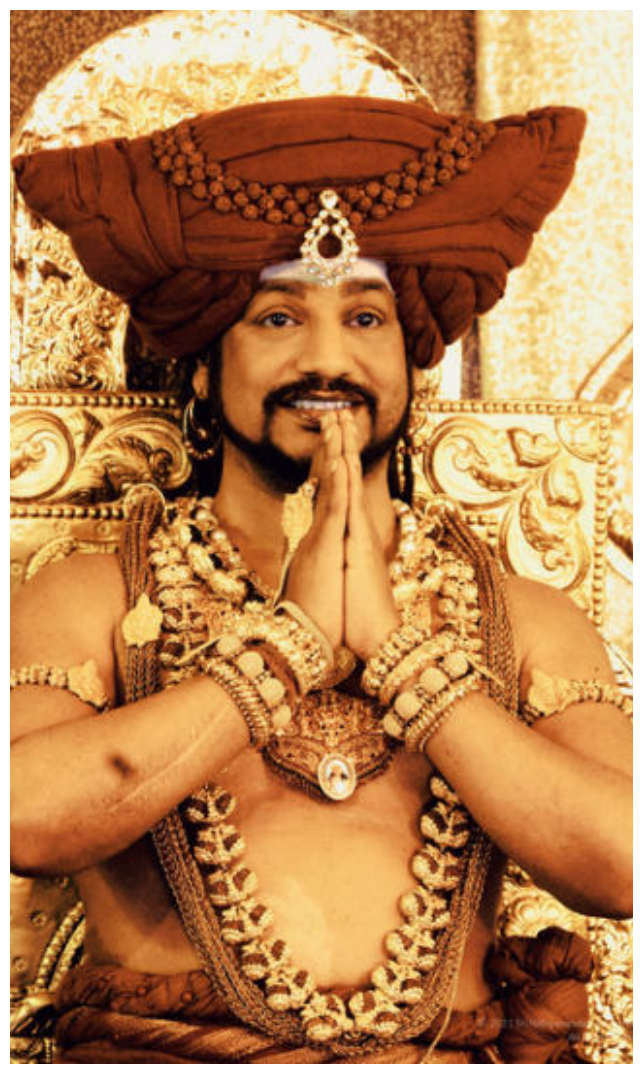
Copyright © 2021 Sri Nithyananda Paramashivam All Rights Reserved
I told very clearly, all the disciples were shocked; they said, 'What is this Swamiji? You are saying you will destroy the whole organization!' I said, 'Yes, for the spiritual ideology only the whole organization is getting created, this whole infrastructure is getting created. If the spiritual ideology is not maintained, you are not worthy of and you don't have the right to use that infrastructure.'
One more thing, Mahāvīra tried a great mystical thing: he tried to create a society in which the souls which want to get liberated take birth with the full opportunity to get enlightened, where all the possibility for enlightenment is available. Enlightenment is the priority for that society, so that any soul which wants to get liberation can choose this community to take birth.
Be very clear, if you have chosen a Jain father or mother, whether you believe it or not, you had a deep thirst for enlightenment. Of course, once you assume the body, you forget it, that is the difficulty. When you assume the body, you forget, because your inner space is filled with different objects.
Surrender the 'I' and 'mine'
And the next line, beautiful line, this five-fold salutation destroys all sins. Naturally, when you respect the great Masters, the idea to respect their teachings also starts going in you and those teachings will naturally destroy all the sins, engrams in your life. Understand, sins does not mean the acts which you committed. It is engrams which you carry, samskaras which you carry. When you bow down, when you offer the 'I' and 'mine' to arihantas, simply the samskaras which you carry will be destroyed.
Patanjali says beautifully, 'You don't have to create a canal to get water, just remove the obstruction.' Just remove the obstruction, the water will flow towards you. So you don't have to achieve enlightenment, just remove the obstructions which you are having, the 'I' and 'mine', and you will have enlightenment. It will simply happen in you. You are only stopping it.
The 'I' and mine is the blockage, surrender it at the feet of arihantas. One more thing, when the arihanta is alive, it is difficult to surrender. You will be afraid that he may take your 'I' and 'mine' away. It is very difficult to surrender when a Master is living.
Let me tell you a small story: A blind man was trying to find a stick for walking. He was searching for something to hold on to; somehow by mistake he got a frozen snake. He was staying in the Himalayas; in the cold a snake had frozen. He thought that was a stick and he started using it for walking.
An enlightened Master saw this and told him, 'Hey, drop that. In one hour when the sun comes up, the snake will come back to life and it will bite you. You will be killed, please drop the snake. You are not carrying a stick, you are carrying a snake.' The blind man said, 'No, no, I know it is a stick, you take care of your work, leave me.' The Master said, 'No, no, you are carrying a snake, leave it.' Then the man started shouting, 'I think you don't have a stick, that's why you are asking me to drop mine. The moment I drop it, you will pick up this stick!'
But the Master felt it wasHis responsibility to protect the blind man fromHis ignorance. So he forced him to drop the stick even though the blind man beat the Master with the same snake.
Understand, in the same way when an arihanta says drop 'I' and 'mine', you may think, 'He doesn't have what I have. That is why he is asking me to drop it so that he may pick it up when I drop. If I drop my 'I' and 'mine' he might take it away!' No.
The arihanta is not asking you to drop for himself. And now we don't even have that problem, because we have only the presence of Mahāvīra. So understand, sincerely offer yourself at the feet of these great Masters. You will see the conscious transformation starts from this moment. From this moment, whatever samskaras, sins you have will be washed away, will be destroyed.
Understand, the best thing you can ever do in your life is dropping your 'I' and 'mine' at the feet of enlightened beings. The sutra says the best thing which can happen to your life is dropping the 'I' and 'mine' at the feet of arihantas.
So now maybe we will take a few minutes, integrate the whole being and offer the whole thing at the feet of the great enlightened Masters, arihantas, siddhas, acharyas, upadhyayasyas and sādhus. Let us do it with full sincerity.
Understand, do not think, 'I chanted this mantra lakhs of times, what is going to happen now? I know this mantra.' No. Now do it with intensity. Tell the Masters, 'Please use this body, radiate in this body. I have abused this body enough. I abused whatever I have, 'I' and 'mine', it is time you all take charge of this, and let you all use this. Let me offer the 'I' and 'mine' at your disposal, at your feet. Let you all fill this body and mind, whatever I have, 'I' and 'mine'.'
Invite the Most Auspicious
Please let us sincerely offer ourselves at their feet. You will see this destroys all samskaras. The ultimate thing, the best thing which can happen to a human being, which can happen to you, will happen this moment. It says, manglananch savvesim, padhamam havei mangalam - the most auspicious amongst all auspicious things. The best thing which can happen to your being will happen the moment you bow down and you surrender the 'I' and 'mine' at the feet of these great Masters.
Let us take a few moments, a few minutes. Close your eyes. If you know this mantra you can repeat or at least offer yourself with intense devotion. First feel connected to these great Masters, all the twenty-four tirthankaras and arihantas, siddhas, acharyas, upadhyayasyas, sādhus. First feel deeply connected towards all of them for bringing the science of enlightenment to the planet earth and keeping it alive for so many thousands of years through which we are enriching our life, our inner space.
| Namo arihantanam | I bow in reverence to arihantas | | Namo siddhanam | I bow in reverence to siddhas | | Namo ayariyanam | I bow in reverence to acharyas | | Namo uvajjhayanam | I bow in reverence to upadhyayas | | Namo loe savva-sahunam | I bow in reverence to all sādhus |
| Eso panch namokaro | This five fold salutation | | Savva-pavappanasano | Destroys all sins | | Manglananch savvesim | And amongst all auspicious things | | Padhamam havei mangalam | This is the most auspicious one |
Carry this one feeling, this one Truth with you now. Just try to retain this attitude that you offered everything at the feet of the great Masters. Just next twenty four hours try to be in the same inner space. Try to retain the same consciousness. Try to retain this same mood for the next twenty four hours till you come back for the next sutra, the next words from these great Masters.
You will see all these sutras do a great alchemy in your being and transform you and lets you all achieve. Let us pray to the great Masters to bless us all to achieve the same eternal bliss, the same higher consciousness. Let us all achieve and radiate the eternal bliss, nithyananda. Thank you.
JAIN SUTRAS DISCOURSE 2
BEYOND DESIRES
Namo Arihantanam: I bow to the enlightened souls Namo Siddhanam: I bow to the liberated souls Namo Ayariyanam: I bow to religious leaders Namo Uvajjayanam: I bow to religious teachers Namo Loe Savva Sahunam: I bow to all monks of the world Eso Panch Namukkaro: These five salutations are capable of Savva Pava Panasano: destroying all the sins and this is Mangalancha Savvesin: the first happiness among all forms Padhamam Havai Mangalam: of happiness.
I welcome you all with my love and respects. Today's subject is 'Beyond desires'. Every Master has to speak on a few things; he has to give his ideas, opinions, definitions on a few basic things. This is the basic need - one is death, another one is life, and the third important thing is how to escape from death and the problems of life. All enlightened beings have to touch these subjects, they can escape even from talking about god. For example, Buddha never said yes or no to questions about god. Whenever people asked about god he would tell, 'Hey, why are you bothered about god? Let us bother about you and me.
Desire is something which is
related to all these three.
Desire is life. If you don't
know how to handle desire
you will face death. And if you
know how to handle you will
go beyond this cycle, that's all.
Understand, there is no
Master who did not talk about
desire. It is an important
subject that every Master has
to address; in some way he has
to touch this subject.
Today we will see the great
Master Mahāvīra handles this
subject of desire from
different dimensions, different
angles, that empowers you to
create more wealth and handle
it. These are beautiful sutras
(verses); when you practice
them, the result will be totally
life-transforming.
Aparigraha - Non-possessiveness
Understand, when Mahāvīra says drop your desires and don't possess – aparigraha - live in non-possessiveness, if you don't practice it and directly start arguing, 'How can I live without possessing things? It is life negative, it is not possible,' you will create all words. But if you really understand Mahāvīra and start living in non-possessiveness, if you clear your inner space and make yourself a non-possessive being, suddenly you will see so much of inner space is available.
You will take many risks, because as long as a person thinks that the wealth he is having is too valuable to lose, as long as he possesses, he will never take any step in life, he will not allow the flow happening in his life.
Understand, currency means that which is flowing, it will stay only with people who are allowing it to flow; if you stop the flow, it will stink.
The teachings of these great Masters should be applied in life, then you will see the results are totally different and surprising. You can't imagine the followers of the Master who is teaching non-possessiveness are the richest people! The reason is, when you really understand and create enough inner space, you will have enough courage and energy to take risks.
I tell you, maybe rarely one or two may fail in business, but constantly if you are thinking about it and if you are possessive of a few things which you are having, you are not going to take any risk, you will not allow life to flow. So you will never expand. And to tell you honestly, any desire you have, if you are possessing something, if you are holding something, if you think that that is the most important thing in your life, be very clear, you are holding something smaller than your capacity.
Possessiveness means putting
boundary to yourself, it means
you are underestimating your
efficiency.
Possessiveness comes to you
only when you are afraid, only
when you are in fear, only
when you face insecurity.
Again insecurity means
you are underestimating
your ability, your capacity.
When a person starts thinking
and living with non-
possessiveness, suddenly he
feels so much of space is
available for him -
he can play with so many decisions,
he can play with so many choices,
he can manipulate his life,
his boundary expands.
Responsibility to Become Enlightened
One important thing, if you are
enjoying the wealth created by
the Jain forefathers, be very
clear, it is your responsibility to
become enlightened, because that
wealth is created by the
technology which is created by an
enlightened being. If you are
enjoying the wealth which is
created by Jain forefathers you
are bound to work towards
enlightenment - it is your
responsibility to keep that
science alive on the planet earth.
See, the other day, in one of our
ashramites' meeting, I was telling
the ashramites, 'As long as you
run this whole organization with
the ideology, with the Truth, this
will flourish. Even if I am not in
the body, I will see that you all
flourish and things happen
beautifully. But the moment I see
that the Truth or the spiritual
ideology is not protected, I will
be the first person to destroy this
organization.'
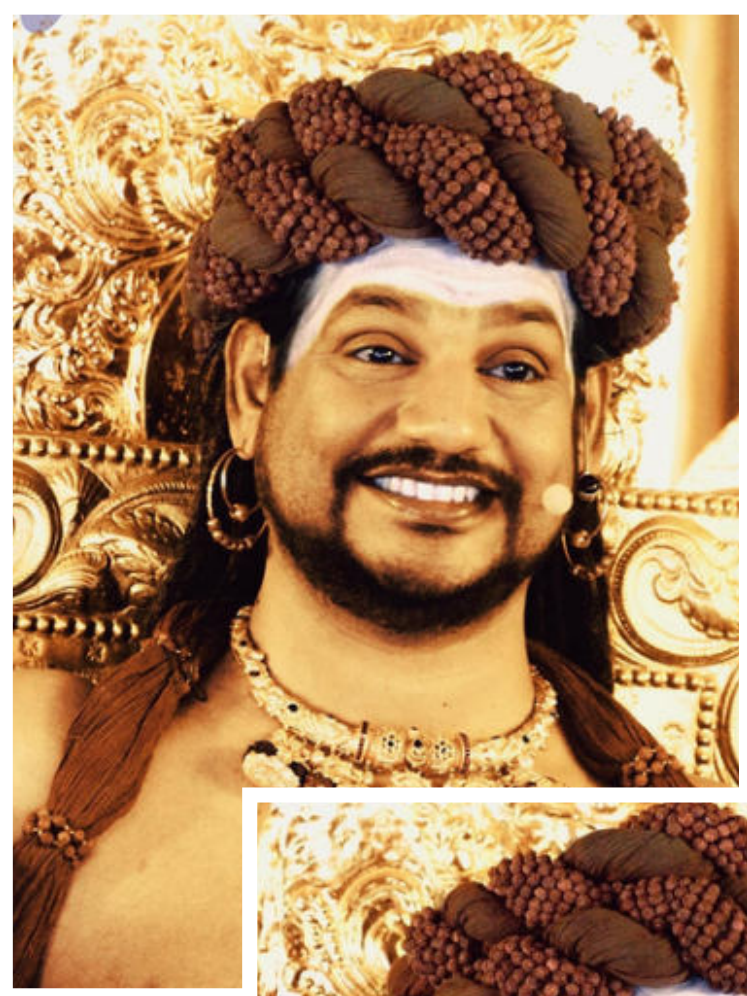
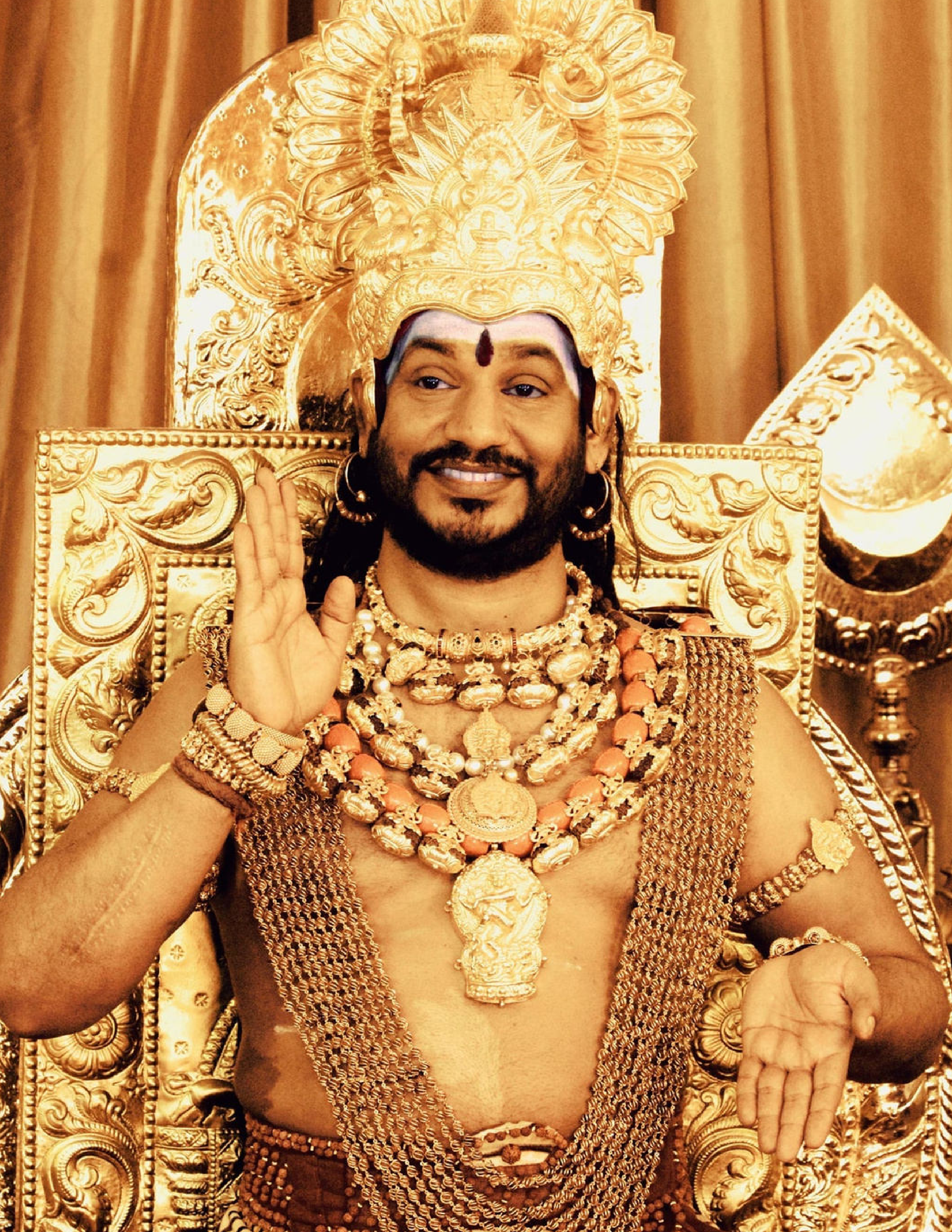
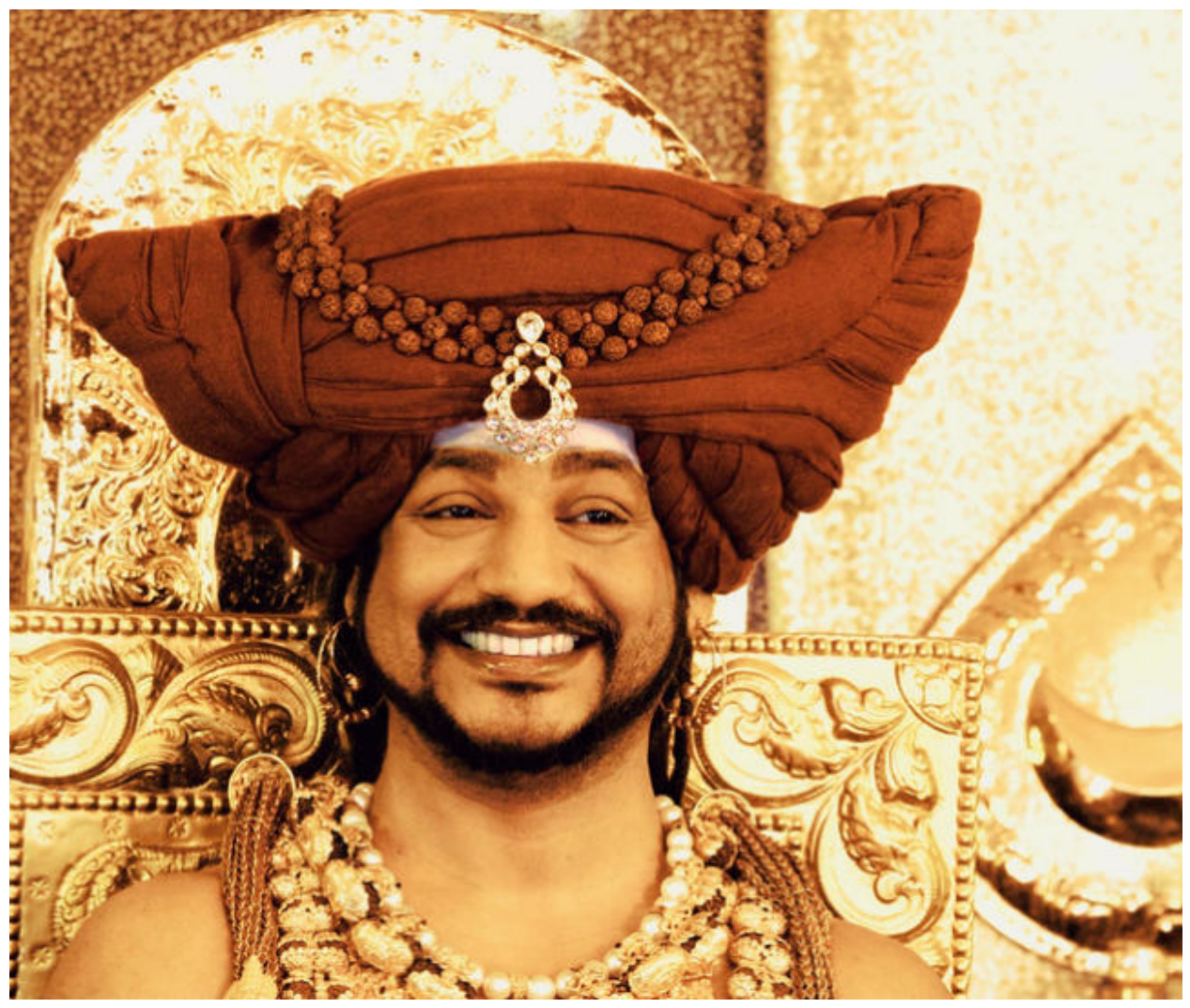
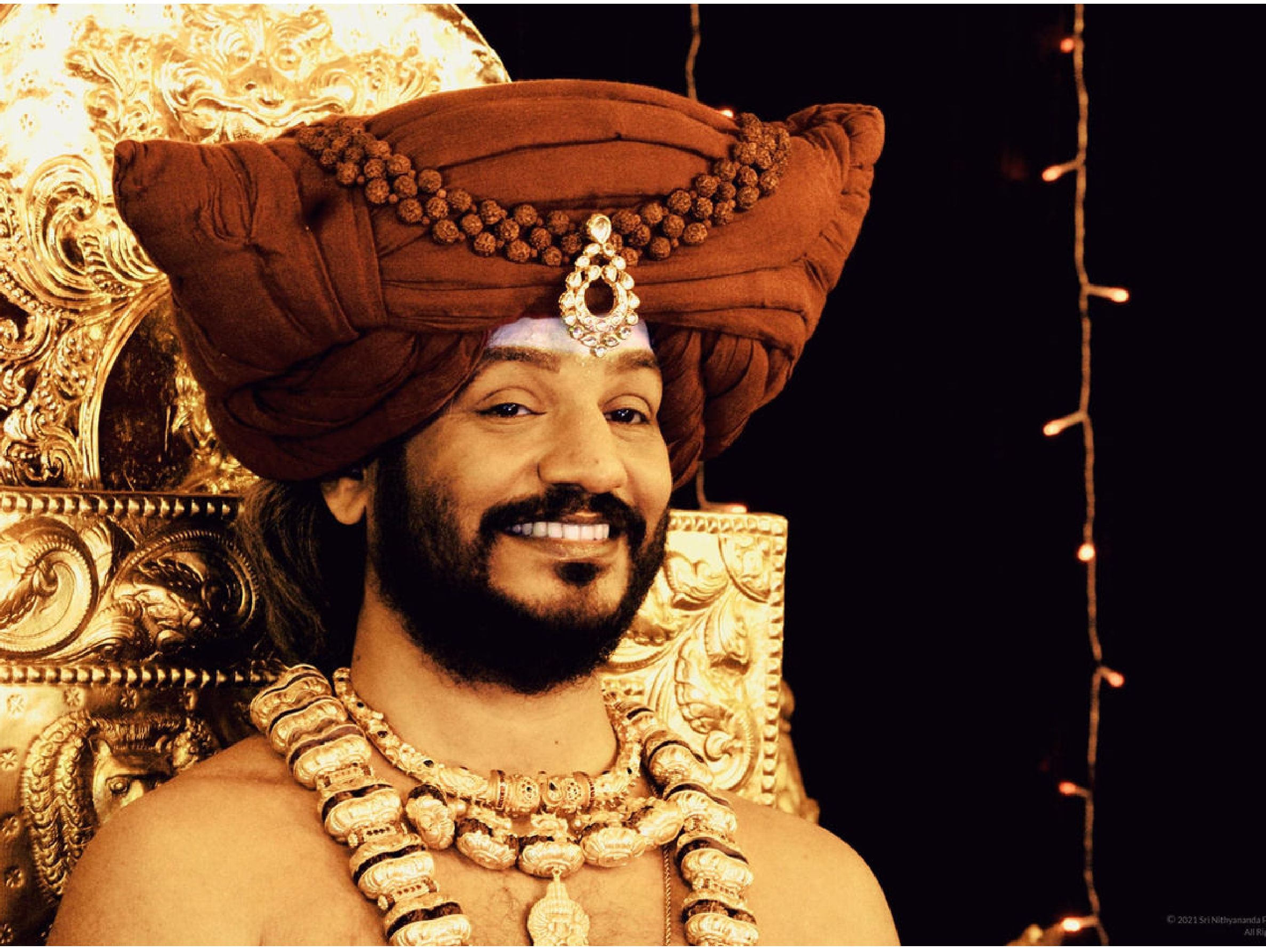
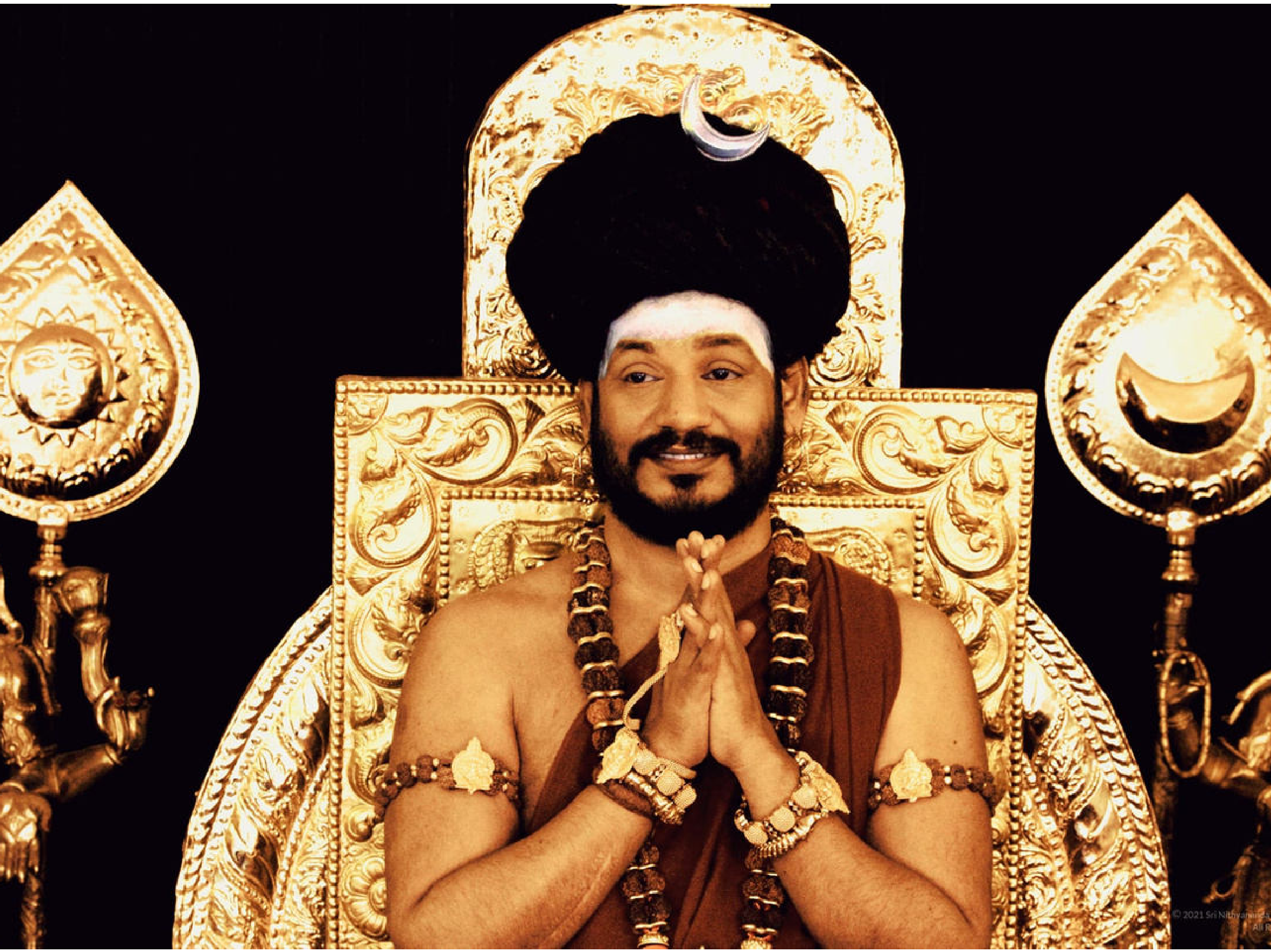
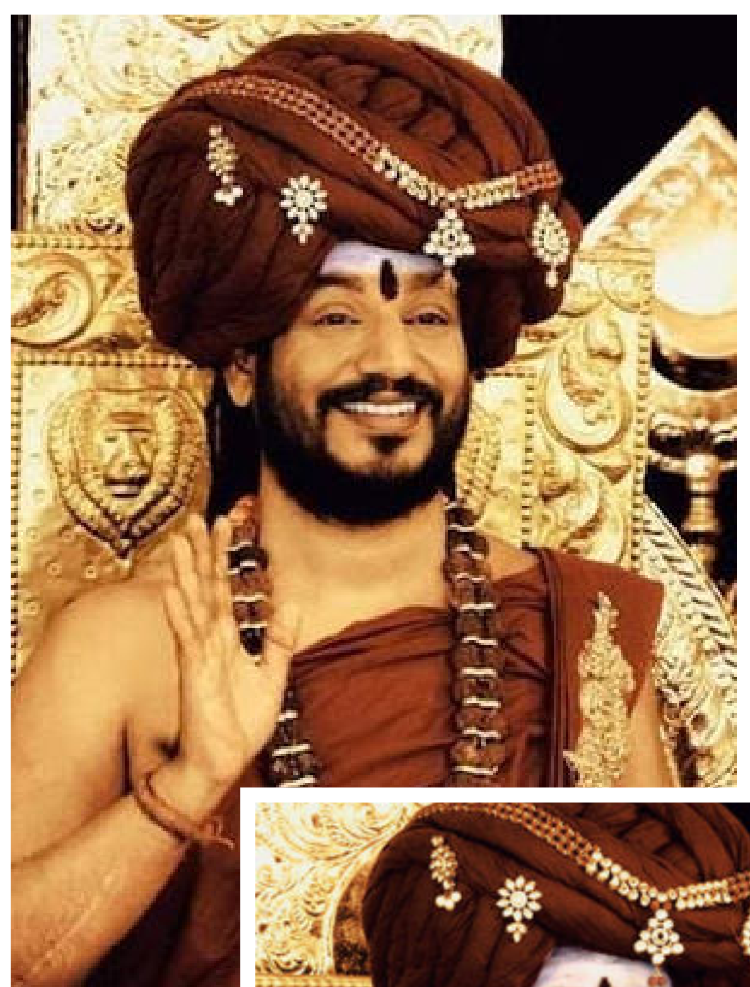
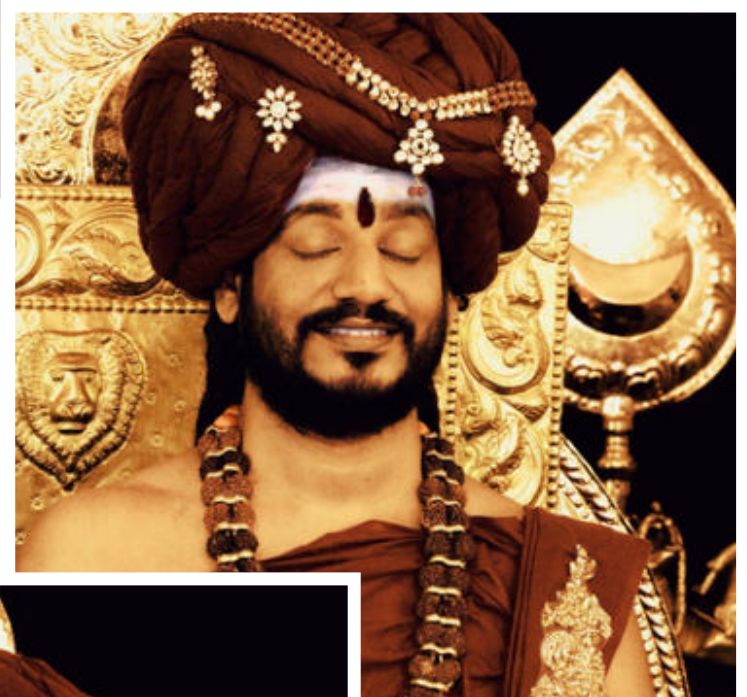
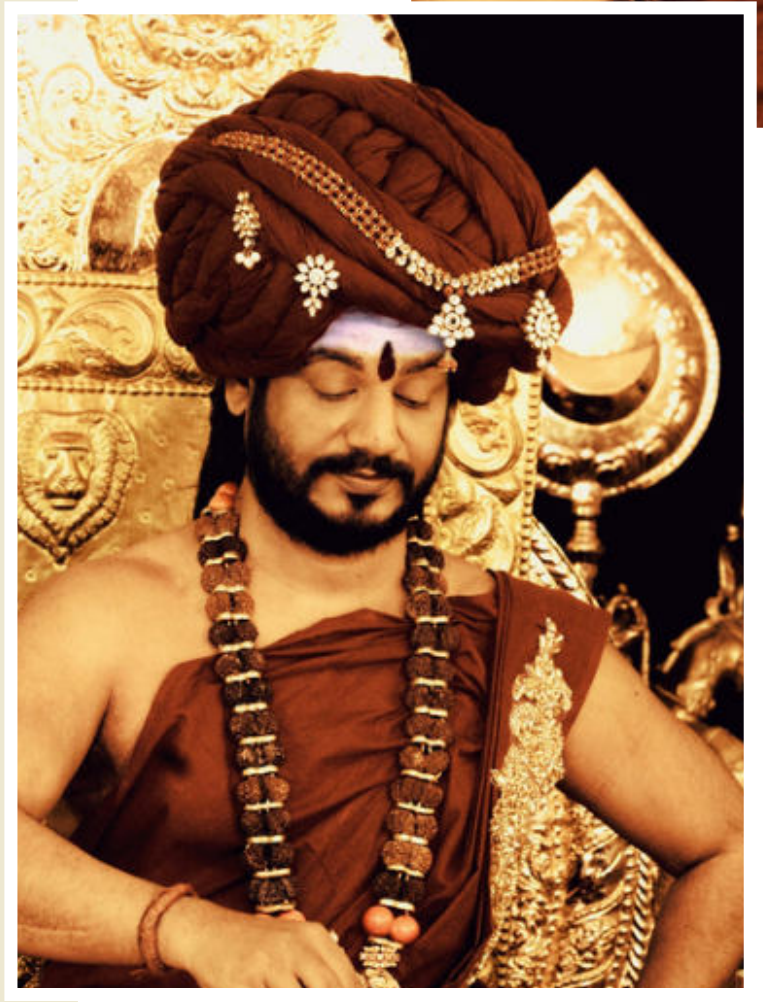
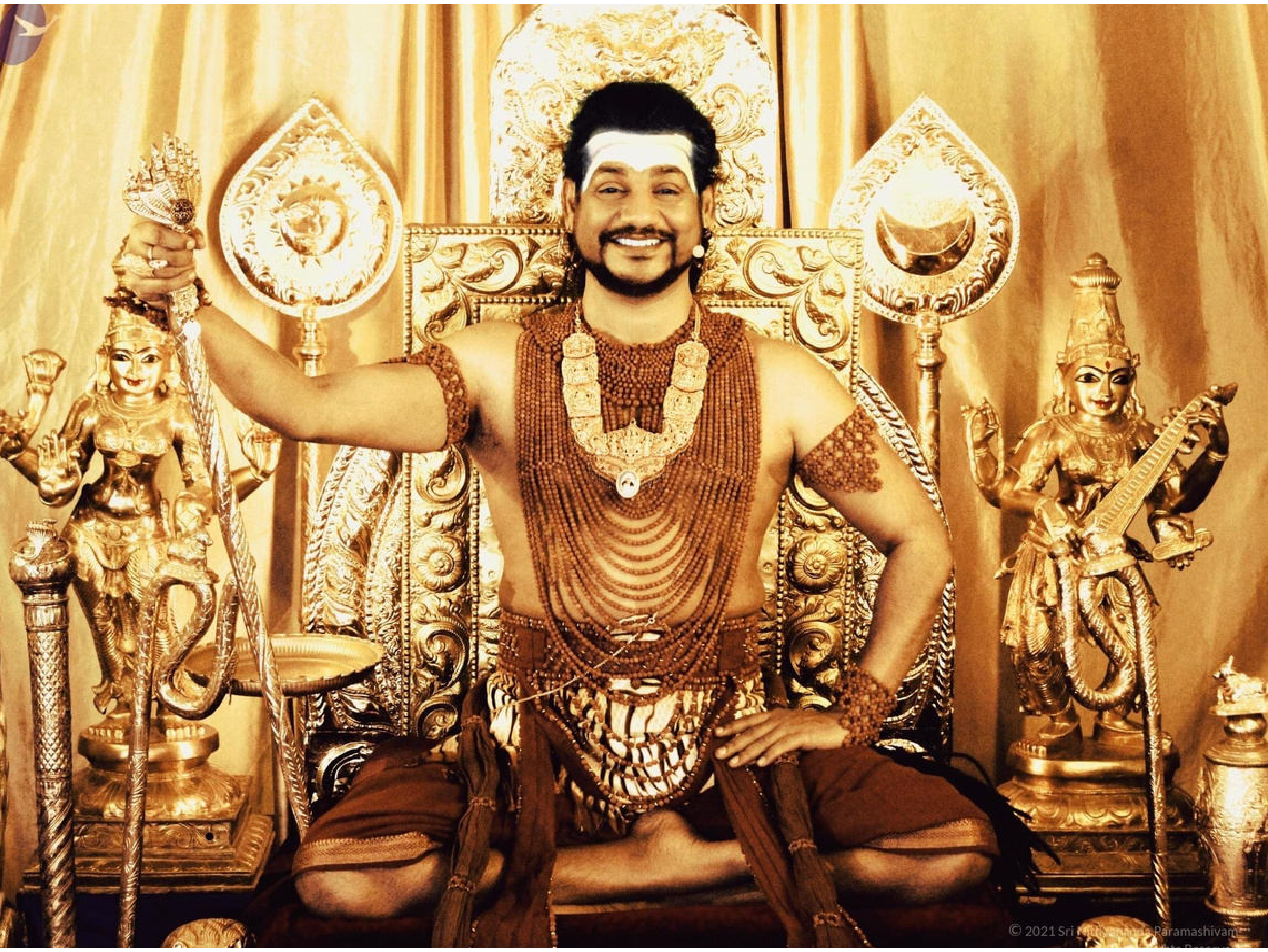
[Figure: Nithyananda Paramashivam]
I told very clearly, all the disciples were shocked; they said, 'What is this Swamiji? You are saying you will destroy the whole organization!' I said, 'Yes, for the spiritual ideology only the whole organization is getting created, this whole infrastructure is getting created. If the spiritual ideology is not maintained, you are not worthy of and you don't have the right to use that infrastructure.'
One more thing, Mahāvīra tried a great mystical thing: he tried to create a society in which the souls which want to get liberated take birth with the full opportunity to get enlightened, where all the possibility for enlightenment is available. Enlightenment is the priority for that society, so that any soul which wants to get liberation can choose this community to take birth.
Be very clear, if you have chosen a Jain father or mother, whether you believe it or not, you had a deep thirst for enlightenment. Of course, once you assume the body, you forget it, that is the difficulty. When you assume the body, you forget, because your inner space is filled with different objects.
Realize the Purpose of Your Birth
Patanjali says, when you achieve non-possessiveness, you get the true realization about your past and what for you took birth on the planet earth. Understand, Mahāvīra says he created this community especially for the souls who want enlightenment to take birth. He says that non-possessiveness will expand you and talks about how the non-possessiveness leads you to enlightenment.
Patanjali gives a beautiful sutra, 'If you start living in non-possessiveness, you will experience the Truths of your past life and the decisions which you made before you took birth, about the purpose of your birth.'
If you just understand this idea of non-possessiveness and start living with it, you will realize you took birth in this family to a Jain father and mother, for enlightenment - because this community is created for that purpose, keeping that as a priority. And the wealth which you are enjoying is a byproduct of that great ideology, so it is your responsibility to hold the dharma (right way of living) and work towards enlightenment.
You will be surprised to see step by step how this great ideology is revealed and how he created this whole system. Let us enter into the first sutra. The first sutra is about ahimsa - Damma sutra, Ahimsa sutra.
Let us enter into the first sutra. The first sutra is about ahimsa -
Damma sutra, Ahimsa sutra.
Dammo mangala mukkitam
Ahimsa sanchamodavo Devavi Tam
Tamas shanti jessadammey
Shaya mano
Beautiful! It is not actually Sanskrit, it was the Sanskrit which was used in those days by common people. It is like spoken Sanskrit, we call it with different words - Pali, all these words are used to name this language. There are few more names but this is not Sanskrit, it is a common man's language. Sanskrit was used only by pundits. Buddha and Mahāvīra both used the language used by common people. They wanted to reach the common people, they wanted to express the Truth. See, they are not interested in showing themselves as great people, they are interested only in the Truth, so they have worked towards reaching the Truth to more and more people.
The Supreme Dharma
What is the most superior dharma? Ahimsa is the most superior dharma. A person who has established himself in ahimsa, even the devatas salute.
See, I started with non-possessiveness, aparigraha and I said that we will enter into the sutras. But the first sutra is about ahimsa. Understand, ahimsa is the first step towards non-possessiveness, that is why Mahāvīra is speaking about ahimsa, and then he goes to aparigraha. Let us analyze this ahimsa a little deeply.
Dammo mangala mukkitam ahimsa sanchamodavo devavi tam
Tamas shanty jessadammey shaya mano
What is the most superior dharma? Ahimsa is the most superior dharma. A person who is established in ahimsa, even the devatas salute. Ahimsa is the most superior dharma, that is the Truth.
Understand, you can drop any dharma, but ahimsa is the dharma which you can't drop. It is the basic understanding for human beings to co-exist, to live together. Without ahimsa, no human being can live on the planet earth.
Please understand, even the people who have committed hundreds of murders, at some point they had ahimsa, that is why they have not murdered some other people. See, from a young age at some point they were with ahimsa or non-violence; otherwise the day they were born they would have started killing people starting right from their parents.
Ahimsa is the basic Truth of life. One important thing which you should understand, all the great Masters, whether Buddha, Krishna, Mahāvīra, Shiva, all of them are talking more about ahimsa. All the Eastern Masters talk about ahimsa more than about love. Love comes only second, ahimsa is emphasized.
But for a Western mind, the word 'love' looks more appropriate, because it is a positive thing; non-violence is more negative. All the Eastern Masters emphasize more on non-violence than love, because in love slowly you become aggressive. Not only that, when you say 'I love you,' you give some promise to the other person. And all promises are failures; the moment you give a promise to somebody and you don't fulfill, that is also violence.
You give a promise to somebody, 'I love you and I am going to create heaven around you,' the moment you say that you love somebody directly or indirectly you have given many promises - sharing roses, and giving them the idea that you are going to create heaven for the other person, and you are really going to make the other person happy. You have given so many ideas to the other person, and if you don't fulfill them, it is violence. With nonviolence when you start itself you are very clear, 'I can say only one thing, I will not hurt you, that's all.'
So the right way to start love is nonviolence and not love. Love will happen when you really experience nonviolence. You cannot make love happen. No, you can only work in the direction of nonviolence. Love will happen as a byproduct. If you try to work directly in the direction of love, you will mess up, and you will end up creating troubles for you and for the other.
Ahimsa is such a powerful dharma. I always tell people even in my ashram, there is nothing, no rule which will take you away from enlightenment. To tell you honestly, even all the so-called morality is only a social rule.
There is only one dharma , one rule, which is directly connected to consciousness. Understand, all dharmas are based on conscience. Conscience will change in every century - in some part of the planet earth eating vegetarian food is the only right thing, and in some other part you can eat non-vegetarian food. That is perfectly alright as the social rules always change.
Morality has no solid base on consciousness. There is no dharma which is directly connected to consciousness. All dharmas, all morality, are only related to your conscience, means society. If you change the place where you live, the morality changes.
It is just like the constitution of a country, it is just a social law. But there is one dharma, one Truth, which is directly related to consciousness, which is universal - that is ahimsa. That is why we say 'Ahimsa paramo dharmah', that is the ultimate dharma, more superior dharma. Nonviolence is the 'Paramodharma'.
Unless you learn, unless you imbibe the idea of nonviolence, you can't live on the planet earth. It is a simple, basic, preliminary understanding to live and let live, to coexist on the planet earth.
Ahimsa Dissolves Enmity
There is a beautiful sutra in Patanjali Yoga Sutras which says,
‘Ahimsa pratishthayam tat vaira-tyagah’.
Amazing sutra! He says, if you are
established in ahimsa, in front of
you all enmity disappears. There
are thousands of stories of animals
or people dropping their negativity
and enmity in front of enlightened
Masters.
In Buddha’s life we can see so
many stories like there was a mad
elephant sent to kill Buddha by
one of His cousins, and when the
elephant came in front of Buddha,
it just stopped and bowed to
Buddha and did pradakshina
(circumambulation) and went
away.
The other day I was reading an
article. A scientist was trying to
fix some electrodes on the brains
of animals and manipulate them.
He activated an electrode which
creates anger, and the bull became
mad.
After few minutes, when it was about to jump on him, he just activated another one electrode which made the bull silent and it just sat.
When you are really established in nonviolence, no animal can experience violence in front of you. The part of the brain which aggravates anger or violence simply disappears; it stops working in front of you.
One important thing you should understand, whether you believe it or not, whatever you strongly experienced you radiate that quality, you express that quality. Even if you try to cover, you can't cover, you can't hide, you radiate it. In Sanskrit we have a word called darshan which means to see.
They say even seeing negative people will create negativity in you. You may think how that can happen. It can happen because they are constantly radiating the same kind of waves, the same kind of thoughts.
Let me tell you an incident which happened in my life:
I was staying in a forest in South Hinduism after my experience of spiritual enlightenment. One evening I was sitting and just relaxing.

There was a big snake in front of me, lying just one foot away for more than 3-4 hours. But I did not have a thought it was a snake or it was dangerous to my life. As long as I did not have the thought it was a snake, the snake did not have the thought that I am a man and dangerous to its life.
After a few hours, slowly the
mind came down from that
beautiful and intense silence.
Slowly when the thought
started rising, when the
mind started clutching, the
first thought came, 'Oh
there is a snake.'
The moment I got the idea
that there was a snake I saw
very clearly the snake got the
idea that there was a man.
Only when I felt threatened, I
felt I was in danger, so naturally
there was a possibility of attack,
there was a possibility for
violence.
In the same way the snake also
felt that there was a possibility
for violence.
See, only when you are afraid
you attack. Be very clear, all the
people who think they are great
warriors are all cowards.
Only cowards attack, Mahāvīra
never attacks. Mahāvīra means
the ultimate warrior; he never
attacks.
If you attack the other person,
you are afraid that he may kill
you. You want to kill him before
he kills you, that's all.
See all the wars, wars are created
only by cowards, not by
courageous people who want to
kill the other person before they
are killed, that's all.
Even in your life, be very clear, if
you are threatened by somebody,
sit and analyze, that person must
be feeling threatened by you. Try
to sort out that issue, you will
never be disturbed. Whenever
people come to me and say, 'I am
threatened and I am in danger,' I
tell them, 'No, wait, just see , you
must be threatening the other
person in some way directly or
indirectly.
Find out and remove the fear
from him. You can send him a
message directly or indirectly
that you are not going to be a
threat for him, you will attack
only when you are threatened.'
This incident taught me a big
lesson - only when I had the idea,
the thought, that there was a
snake, the snake had the idea that
there was a man.
Natural Vs Conditioned Beings
One important thing: this is a law of nature; this happens only with natural beings, never with so-called conditioned human beings. Conditioned human beings have moved away from nature, they have moved away from the Truth. If this is Truth, Mahāvīra shouldn't have been stoned, Buddha shouldn't have been poisoned.
See, Patanjali says, ‘Ahimsa pratishthayam tat vaira-tyagah’, means when you are established in nonviolence, enmity disappears in front of you, but this is only with the natural things, this can happen with animals or people who are living in a natural way like tribals.
There is a beautiful story in Buddha’s life of His meeting Angulimala:
Angulimala was a big serial killer. He killed 999 people and cut their thumbs and made a garland for himself. He was living in a forest. Buddha was advised not to enter into the forest because Angulimala was living there. Buddha said, ‘No, it is ok,’ and he walked.
The story says, Angulimala saw Buddha and was about to kill him. Buddha said, ‘Wait, you can kill me, but answer a few questions.’ Buddha asked a few questions, Angulimala was not only not able to answer them but he was transformed and became a disciple of Buddha. This can happen with Angulimala, because he didn’t have any religious beliefs, any social conditionings. He was not corrupted; he was with nature. He killed just out of His animal instincts.
Understand, a person who kills because of his animal instincts can be transformed. But a person who kills because of his belief systems is difficult to transform - that is the ultimate corruption, the worst thing. -Gandhi
When you really establish yourself in ahimsa you become enlightened, and even devatas, the angels, worship you, respect you and they offer their very being and surrender at your feet. There are so many stories of devatas coming and respecting and serving the enlightened beings.
Ahimsa is such a dharma, actually you can live without any dharma if you hold on to just ahimsa - not hurting others physically, mentally and verbally. Just this one dharma is enough, nothing else is necessary. Be very clear, ‘I will not hurt others physically, mentally or verbally.’
Jain Sutras Decoded | page 78
I think the greatness of Mahāvīra is that he took this ahimsa to the extreme -His followers don't even do agriculture because it is related to killing the plants which do have life. Forget about the question of non-vegetarian food, they don't even kill plants, and they even tie a cloth in front of their face, so that the insects or worms or bacteria in the air don't die when they speak.
Mahāvīra has taken ahimsa to the extreme - they do not wear silk, they do not wear shoes, they do not encourage directly or indirectly any industry based on violence. Anything based on violence is not encouraged by the followers of Mahāvīra. All they do directly or indirectly is only towards ahimsa, nonviolence. When you really enter into ahimsa, aparigraha, the next step starts happening.
Attachment is Possessiveness
Let us see that sutra, the aparigraha sutra:
Naso parigraha uddho naaya buddena thayina mucha pariggo,
buddhi eiyebuddham, mahessina loyissesa anukkosi manney
annaramavi jesiyo sannihkamey gihi bavvaeeay nazsey
Let me give you the translation. Parigraha does not mean to have clothes and other items of basic need, but to have attachments towards these is parigraha.
First thing he is telling, parigraha or possessiveness means, don't think having clothes and other items of basic need; that is not possessiveness. But having attachment towards it is possessiveness.
This is the one sutra which created so much wealth around the followers of Mahāvīra. They were successful socially just because of this one sutra, this one teaching. This is the ultimate technique to create and enjoy wealth.
Understand, when you become non-possessive, the capacity, the capability to enjoy increases. The power to enjoy, the intensity to enjoy becomes more. You can see in your life, whenever you are enjoying something of which you are really possessive, you will be so suffocated. The fear that it may leave you will never allow you to enjoy it. Only when you are with the non-serious attitude, playfulness, the intensity with which you are enjoying will be so beautiful, amazing. You will create more wealth, and live it and experience it.
Non-Possessiveness Leads to Insight into the Purpose of Life
Parigraha does not mean to have clothes and other items of basic need but to have attachment towards these is parigraha. Again Patanjali says beautifully, 'When you achieve the non-possessiveness, you get the insight, you experience the Truth of why you took birth and the knowledge about your past lives.' See, as of now, you are not able to have the knowledge of your past life, because you are too much caught by the things you are having, you are too much filled by the possessions which you are having, your inner space has forgotten to move beyond the things which you have in your life. Understand, the few things which you have now like the few cars and your home and few relationships, occupy your inner space so much, you do not have enough space to look further, to look beyond.
One more important thing, whenever you are possessive of something, be very clear, you are binding yourself, you are putting a boundary for yourself, you are not allowing further expansion. You are stopping, you are curtailing the possibility for growth.
Possessiveness Leads to Violence
Ahimsa and possessiveness, these two are very closely connected. When you really become nonviolent, you will not possess people. If you possess somebody you will be violent towards that person. Be very clear, any possessiveness is violence, because the moment you possess, you reduce that person from energy to matter.
Only matter can be possessed. You can possess this chair, you can possess this table, you can keep it wherever you want, and it will be there as it is, but you can't possess a living being. If you do, you are reducing that living being from energy to matter. Possessiveness is violence. Parigraha is himsa (violence), that is why Mahāvīra touches ahimsa first before talking about aparigraha.
Create Enough Inner Space to Accommodate Your Desires
See, two things, not having desires or suppressing your desires means suicide. It is just suicide, because desire is the energy which moves your body. Desire is prana, fuel for your system. Having desire is the only way to move your system, so not having desires or killing the desires is not the goal. Create enough of inner space to accommodate all your desires, so that the desire does not torture you or suffocate you, so that you don't feel disturbed by the desires.
Understand, not having desire is not the goal, because without desires we can live like a buffalo, without being disturbed.
People ask me, 'An enlightened person should not have a desire, so don't you really have a desire?' I tell them, be very clear, the word 'enlightenment' should be very clearly understood; only then you will understand the enlightened person also. See, as of now, if a normal human mind has 10 acres, in all 10 acres they are growing something, some rice or wheat or sugarcane or something - it is filled, occupied. In the case of an enlightened being, he has 1 million acres, only 10 acres is used for agriculture - will he even know that agriculture is going on in some place? No.
I have a million acres, so even if
agriculture is going on in 10
acres, I will not even know. The
enlightened being has so much
of inner space that 10 acres is
negligible, the inner chattering
which is happening is
negligible. All you need to do is
expand the inner space.
I am not telling you to kill or
destroy all the agriculture
which is happening in the 10
acres. No, that will lead you to
tamas means depression and
inertia. That will lead you to
tamas and depression. I am not
telling you to destroy the
agriculture which is happening
in 10 acres.
No, I am telling you to expand
the inner space so that the
sound in the 10 acres will not
disturb you, the noise which is
being created in that 10 acres of
agriculture will not disturb you.
Technique to Achieve Aparigraha - Unclutch
How to create a bigger inner space? Whenever you feel that you are possessing something, decide very clearly to unclutch from it consciously. Visualize how your life will be without that object or that person. Sometimes you may think, 'Oh, I can do without it,' then perfectly alright. Sometimes you may have little suffering; then go through that suffering. That moment itself the suffering itself will purify you.
Understand, when you feel that you are too much attached or possessive of some person or object, sit and visualize your life without that person or that object. If you feel you can do without it, relax, nothing to worry. If you feel suffering, 'Oh god, I can't do without him or her or that object,' then sit and meditate on your life without that person.'
Create that pain, allow that suffering. Suddenly you will see that suffering itself is so powerful, the pain is so powerful, it will teach you , it will purify you. When you come out, when that suffering disappears from your inner space - because you can't be constantly suffering, at the most you can suffer for a few hours - slowly that suffering will settle down, that depression will leave you, that pain will leave your inner space. When that pain leaves your inner space, already you would have learnt a lesson of aparigraha. This is a powerful technique to achieve aparigraha.
Understand, this technique is a very powerful technique. Try it. Whenever you feel you are possessive of somebody or something, sit, unclutch, disconnect, allow the pain, allow the suffering - now what can be done? Because anything can be taken away from you. It is not that the product or the person is going to be with you forever. No.
So just meditate on the non-possessiveness,
meditate on aparigraha,
and be without that person or object.
You will see the pain itself teaches you
and you are free from the pain,
you are free from the suffering,
you are free from the parigraha,
you are free from the possessiveness.
Non-Possessiveness Enables Risk-taking
A constant struggle to hoard
stuff is an indication of the greed
within a person. A person who
continuously struggles to hoard
stuff is just a householder, not a
sādhu (saint). Understand,
Mahāvīra is telling, having a
constant struggle to hoard stuff
is an indication of the greed
within a person. When you are
greedy, you will be constantly
remembering even the things
which are in your garage. You
can't forget even the things
which are under your control,
which are inside your locker -
you will be afraid that somebody
will take it away, 'Who knows if
it will be there when I go back?'
Too much greed constantly
creates fear, and you struggle to
hoard. When a person is non-
possessive he is ready to take the
risk, that is why all the majority
of Mahāvīra's followers have
become business people, because
that needs risk, you need to take
risk.
This great teaching of aparigraha gives you the courage and inner space to take that risk, to take bold steps.
See, only when you are non-possessive, you can do calculation. Usually doctors don't treat their own family because they will be too possessive, they can't see the Truth, the objectivity will be lost. In the same way if you are possessive of something you can't put that thing at stake. A person who is too possessive aboutHis life will not do anything which expands his life, he will not do anything which is risky. When we don't do anything which is risky we are nothing more than buffaloes - we will just be vegetating, just sitting and sleeping like couch potatoes, nothing else.
I have seen many people, they will not even climb some 100- 200 steps, they will tell, 'No, no, I have little pain, I may get wheezing, I may get breathing problem.' This idea that you may get this disease or that will completely put you in prison. I call this as psychological prison - not able to take risks. And the life without risks is not worth living. Life without risks means you are not living, you are just waiting for death to happen. Because you don't have the courage to commit suicide, you just wait till it happens - now nothing can be done, death has to happen only by itself, so why not wait, that's all.
Aparigraha, the non-possessiveness, gives you such a big inner space to take risks whether it is related to business or related to your life. So I tell you, ahimsa is the greatest dharma. If you follow ahimsa others will live happily, if you follow aparigraha you will live happily - these two are the greatest Truths. If you practice nonviolence people around you will live happily, if you practice non-possessiveness you will live happily.
Plan for Miracles - Relax from the Possessiveness of Life
One more thing, to really achieve non-possessiveness you need to understand one thing - life is not too valuable as you think. Don't be too serious about life. See, because we are constantly living in cities, we become too serious about our life. Everyday we think about too many things and too much, 'How to avoid this? How to avoid that? What will happen to this? What will happen to that?' and you clearly design life.
Look into your life everyday from morning till night. If you tell somebody to do a video recording of your whole day, you will see and realize few important things - you will come out of your bedroom through the same path, you will sit on the same sofa, you will go to the living room through the same steps, and you will come out and take your car in the same way
- the whole thing will be the same.
Look into your life everyday from morning till night. If you tell somebody to do a video recording of your whole day, you will see and realize few important things - you will come out of your bedroom through the same path, you will sit on the same sofa, you will go to the living room through the same steps, and you will come out and take your car in the same way - the whole thing will be the same. And you will not even be using some parts of your house for one year or two years, you will not even be using corners of your house.
I tell you, really if you see you will understand, almost your whole day’s routine is under your control. Even if you face an accident there is insurance, so everything is clearly preplanned and visualized. So there is no place for God, because you did everything. Now where is the place for Him? You do not allow the Divine to intervene.
People ask me, ‘Swamiji, we are seeing so many miracles in your life, why is it not happening in our lives?’ Especially the people who live around me become jealous of the miracles that happen around my life - because whatever I tell comes true. Every other day it is happening.
If it happens once you can say it is a coincidence, but everyday when this happens, these people become a little jealous, ‘What is this? How are so many miracles happening around you but not around us?’
It is because I am allowing God to intervene, I am not planning out and out, I leave little gaps, so that He can do something. Miracles do not happen in your life because you plan for your life completely thoroughly.
Living non-seriously is the plan for miracles. Living in a playful way is the plan for miracles. Understand, if you live a little playfully, it is ok. If you live a little non-seriously you will attract so many beautiful miracles in your life.
Patanjali says, aparigraha is the way to achieve the memory of the past life and to know about your decisions like why you took birth and what for you came down. I tell you, aparigraha is the amazing way, the best way to create miracles in your life, to attract miracles in your life.
A person who lives in a non-serious way, playful way, attracts again and again miracles in his life, because he has some inner space and outer space where god can intervene.
Live little playfully, do little less planning, you will see the miracles happening in your life. With a person who is non-possessive, not only miracles happen in His life, but anything happens inHis life he feels it as a miracle. Because he doesn’t possess anything, he doesn’t take anything for granted, he doesn’t claim anything is his birthright.
Understand, even taking birth is not your right, what about birthright! The word ‘birthright’ is a wrong word. Nothing can be birthright, because even taking birth itself is not your right, it is not under your control, then how can you say something as your birthright? There is nothing for which we have a right or claim.
The Same Game Once Again
A person who is established in non-possessiveness, aparigraha, not only regains the past memory, but he realizes again and again and again he is doing the same nonsense - of catching some people and catching some property and saying, 'This is my house, this is my boundary, this is my husband, this is my wife, this is my son and this is my daughter,' and suddenly he dies, goes to another place and again catches everything.
One more psychodrama, and again you die and catch one more setup. By the time you are almost ready with your husband, wife, daughter, son, grandson, enough property, and everything, life says, 'Now go, enough. Relax,' and it is over.
You realize again and again you are doing the same thing. The moment you understand again and again you are doing the same thing, you decide strongly to jump out of this cycle. Anybody who decides to strongly jump out of this cycle is liberated.
Understand, for liberation all you need is only one thing - the strong decision to jump out, clear 'no' to society, clear 'no' to the same cycle of birth and death. Aparigraha directly leads you to enlightenment, aparigraha can happen only with matured souls.
You don't possess now all the toys you played with. You don't possess the toy car with which you played, but at the age of 6 or 7 that was your life. If your mother snatched it away from you and said, 'Hey, go and eat. It is time to eat. You played enough!' You say, 'I don't want food, I don't want you also, get lost! Give me my toy, give my car.' That time it was more near and dear to you than your mother and food. Now you have grown out of it, simply the aparigraha has happened.
It is not that you don't have the toys, even now you may have them in your house, but you don't remember about them, you are not possessive about them. You are possessive of a little bigger car, you have grown out of the six inch car and now you are caught with the six feet car. If you expand your inner space, you will grow out of this also.
Bliss for You and Others
Just when you are alone, sit for half an hour and visualize your life without the objects and the persons about which you are possessive. If you are possessive of some person or some object, just remove that from your life and sit. For half an hour visualize your life without that person or object, and allow any suffering or pain which comes to you. Go through it consciously, face it.
Suddenly you will see, that pain,
that suffering becomes tapas for
you. Tapas means burning,
purifying. That becomes tapas for
you and you will come out as a new
being, you will experience a
different maturity; that maturity
will naturally lead you to
enlightenment.
Understand, if you practice ahimsa,
people around you will be blissful
and if you practice aparigraha you
will be blissful. Tomorrow we will
see the important sutras about satya
(Truth) and brahmacharya vrata
(vow of celibacy), so we will talk
about all the major vows which any
follower of Mahāvīra is supposed to
take and practice.
Today, with this we will conclude:
understand this one thing, ahimsa
makes all the people around you
blissful, aparigraha makes you
blissful. Let you understand this,
and experience and radiate, achieve
and radiate eternal bliss,
nithyananda. Thank you.