The Bengal famine of 1943
This text was machine-transcribed from the printed book and may contain errors. Select the words and choose “Report a mistake”.
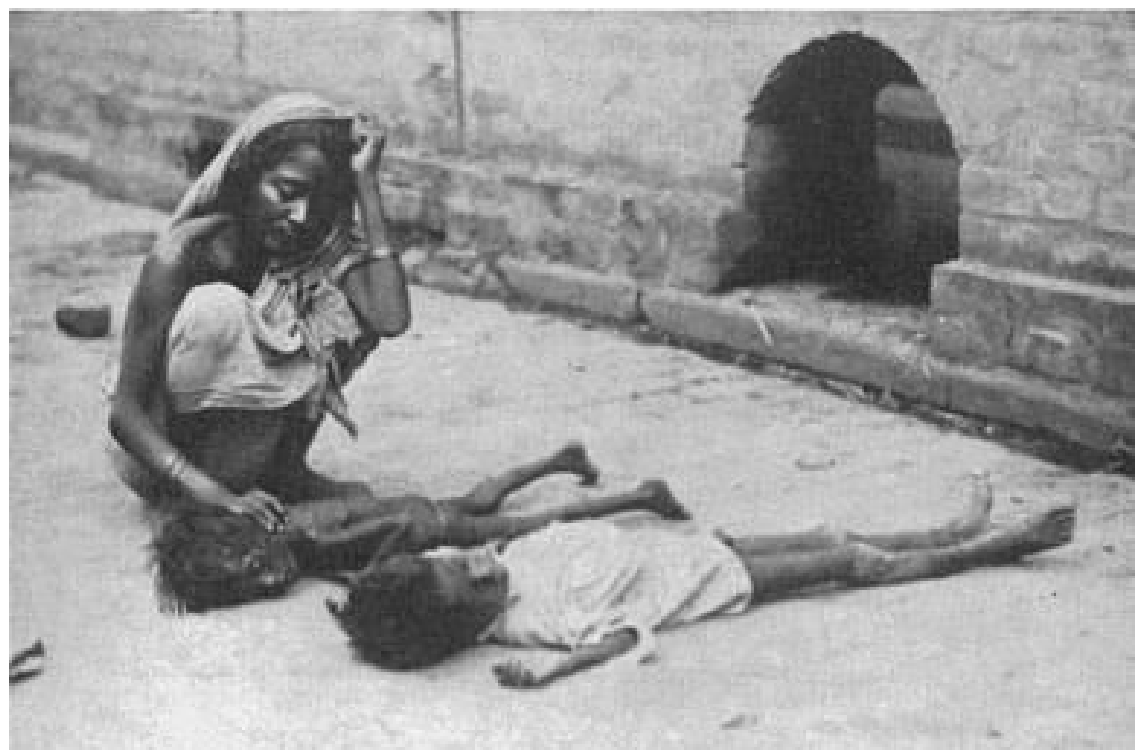
As per Wikipedia: Bengal famine 1943-44
The Bengal famine of 1943-44 (Bengali: Pañcāśēra manwantara) was a major famine in the Bengal province[A] [B] in British India during World War II. An estimated 2.1 million[C] people died from starvation and diseases aggravated by malnutrition, population displacement, unsanitary conditions, and the lack of healthcare. Millions were impoverished as the crisis overwhelmed large segments of the economy and the social fabric.
Bengal's economy was predominantly agrarian. For at least a decade before the crisis, between half and three quarters of those dependent on agriculture were already at near subsistence level. The underlying causes of the famine include inefficient agricultural practices, over-population, and de-peasantisation through debt bondage and land grabbing. Proximate causes involve local natural disasters – a cyclone, storm surges and flooding, and rice crop disease – and various consequences arising from war. The government prioritised military and defence needs, allocating medical care and food disproportionately to the military and civil servants. These factors were compounded by restricted access to grain: domestic sources were constrained by emergency inter-provincial trade barriers, while access to international sources was largely denied by the War Cabinet of Great Britain. The relative impact of each of these contributing factors to the death toll and economic devastation is still a matter of controversy. Different analyses frame the famine against natural, economic, or political causes.
The government was slow to provide humanitarian aid, at first discouraging hoarding. It attempted to influence the price of rice paddy through price controls. These created a black market and encouraged sellers to withhold stocks; moreover, prices soared when the controls were abandoned. Relief efforts in the form of gruel kitchens, agricultural loans and test works were both insufficient and ineffective through the worst months of the food crisis phase. A long-established and detailed Famine Code would have triggered a sizable increase in aid, but the provincial government never formally declared a state of famine. Relief efforts increased significantly when the military took control of crisis relief in October 1943, and more effective aid arrived after a record rice harvest that December. Deaths from starvation began to decline, but “very substantially more than half” of the famine-related fatalities were caused by disease in 1944, after the food security crisis had subsided.[1] Swami Vivekananda had said, “Ganga will have to become red… to get people from Bengal to get out of the poverty consciousness and insensitivity wreaked on them because of the man-made famines.”