Solai Kannan of HMK files petition against Paramahamsa Nithyananda’s
This text was machine-transcribed from the printed book and may contain errors. Select the words and choose “Report a mistake”.
appointment
HMK boldly stated that they would continuously protest against Paramahamsa Nithyananda until the control of Madurai Aadheenam was removed from him. In an attempt to harass and expel Him as the head, HMK tried several strategies including spreading lies in print and social media, giving false complaints to the government, and organizing violent protests. Below is one
of the complaints filed by Solai Kannan of HMK, referencing the 2010 (false) charges against Paramahamsa Nithyananda as one of the reasons.
1
BEFORE THE MADURAI BENCH OF MADRAS HIGH COURT
DATED : 10.05.2012
CORAM:
THE HONOURABLE MR.JUSTICE M.SATHYANARAYANAN AND THE HONOURABLE MR.JUSTICE D.HARIPARANTHAMAN
W.P(MD)No.660/of 2012
and
M.P.(MD)Nos.1 to 4 of 2012
M.Solaikannan,
Madurai Distiret President,
Hindu Peoples Party,
31-A, M.K.Puram Main Road,
Madurai - 625 011.
... Petitioner
Vs.
1.The Home Secretary,
Government of Tamil Nadu,
Fort St. George,
Chennai - 9.
2.The Home Secretary,
Government of Karnataka,
Bangalore City,
Karnataka State.
3.The Secretary, Hindu Religious and Charitable Endowments Department, Government of Tamil Nadu, Fort st. George, Chennai - 9.
4.The District Collector, Madurai.
5.The Commissioner of Police,
Madurai City,
Madurai.
6.Guru Maha Sannithanam Sri La Sri
Paramahamsa Sri Arunagirinatha Sri
Thirugnanasambandar Desika
Paramachariya Swamigal @ Madurai
Adhinam, 292nd Senior Pontiff,
Madurai Adhinam,
Avanimoola Street, Madurai.
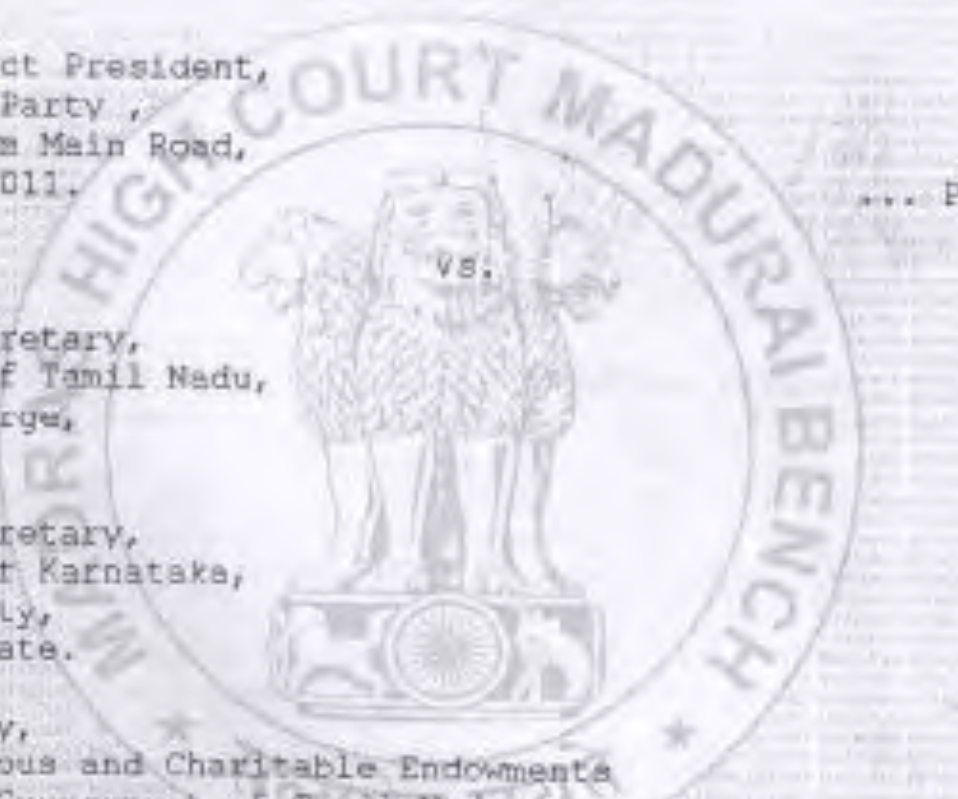
6. The petitioner would further aver that the appointment of seventh respondent, who claims to be a self styled god man and accused of sexual escapades, as 293rd pontiff of the Madurai Adheenam, kicked up a storm and the leaders of the Hindu political groups as well as the persons in public life, expressed surprise at the choice and it was also doubtful whether the present Head of the Mutt namely the sixth respondent followed the rules and rituals established by the tradition while taking such a decision to appoint the seventh respondent as his successor. It is also stated by the petitioner that other religious Mutts namely Thirupananthal Mutt and Dharmavaram Mutt etc., have to be consulted, before making such an appointment and admittedly it was not done and further that the reputation of the seventh respondent as Bramachari is also highly doubtful. As per the age old practice, the sixth respondent - the senior pontiff, was appointed in the year 1980 and he was trained for four years under his predecessors wherein, he was taught the principles of Siva Siddhanta and the said process has not been undergone by the seventh respondent. The appointment of the seventh respondent not only caused surprise but anger and dismay among the public and the worshippers of Arulmigu Madurai Meenakshi Amman Temple and they are of the uniform opinion that the seventh respondent is not fit to head the ancient Mutt.
THE PETITION WAS DISMISSED IN COURT AS MERITLESS. THE COURT ASSERTED THAT "THE PETITIONER IS MAINLY INTERESTED IN PUBLICITY."
32. The contents of the affidavit as well as the typed set of papers would give out an impression that the petitioner is mainly interested in publicity and as rightly pointed out by the learned Counsel for the respondents 6 and 7, even before this writ petition is taken up for admission, the contents of the affidavit filed in support of this writ petition were widely published in newspapers.
33. From the materials placed before it, this Court is also not satisfied with the credentials of the petitioner and also prima facie correctness or the nature of the information given by him in the affidavit for the reason that those information is primarily based upon newspapers reports. That apart, the petitioner is also having an effective alternate remedy under Section 59 of the Hindu Religious and Charitable Endowments Act, 1959.
34. This Court finds no merit in this writ petition. Therefore, this writ petition is dismissed. Consequently, the connected Miscellaneous Petitions are dismissed. No costs.
rsb
Sd/- 10.05.2012
After the pronouncement of orders, under which the Writ Petition came to be dismissed, Mr.W.Peter Ramesh Kumar, learned counsel appearing for the petitioner, on instructions, orally seeks leave of this Court to appeal before the Hon'ble Supreme Court of India.
17
2. We are of the considered opinion that there is no substantial question of law as to the interpretation of Constitution is involved for grant of leave. Therefore, the oral request for grant of leave, made under Article 134-A(b) of the Constitution of India, is rejected.
rsb
Sd/- Assistant Registrar (T&P)
/True Copy/
For Sub Assistant Registrar
To
1. The Home Secretary,
Government of Tamil Nadu,
Fort St. George, Chennai - 9.
2. The Home Secretary,
Government of Karnataka,
Bangalore City, Karnataka State.
3. The Secretary, Hindu Religious and Charitable Endowments Department, Government of Tamil Nadu, Fort st. George, Chennai - 9.
4. The District Collector, Madurai.
5. The Commissioner of Police, Madurai City, Madurai.
+1 cc to the Special Government Pleader, SR.No.1546/.
Hindu Makkal Katchi went so far as to disturb public services offered to the people of Madurai through His Divine Holiness. Without regard to the religious sentiments of Paramahamsa Nithyananda’s devotees worldwide, they repeatedly propagated false allegations and defamatory stories about Him in order to assassinate His character and deceive the public. As a result, many did not benefit from the free public services offered through Madurai Aadheenam by Paramahamsa Nithyananda and His disciples.
292nd Pontiff of Madurai stands by his decision to appoint Paramahamsa Nithyananda
Members of the Hindu Makkal Katchi, led by Arjun Sampath and Solai Kannan, condemned His appointment and argued over the legitimacy of it. Meanwhile, the current Pontiff of the Madurai Aadheenam, categorically told members of these Hindu political parties that Paramahamsa Nithyananda had all the qualities to be appointed as the 293rd pontiff. He blatantly stated that it was not necessary to consult any other Aadheenam (mutt) before appointing a Pontiff for Madurai Aadheenam.
However, that did not stop the attacks, that lasted for months together.
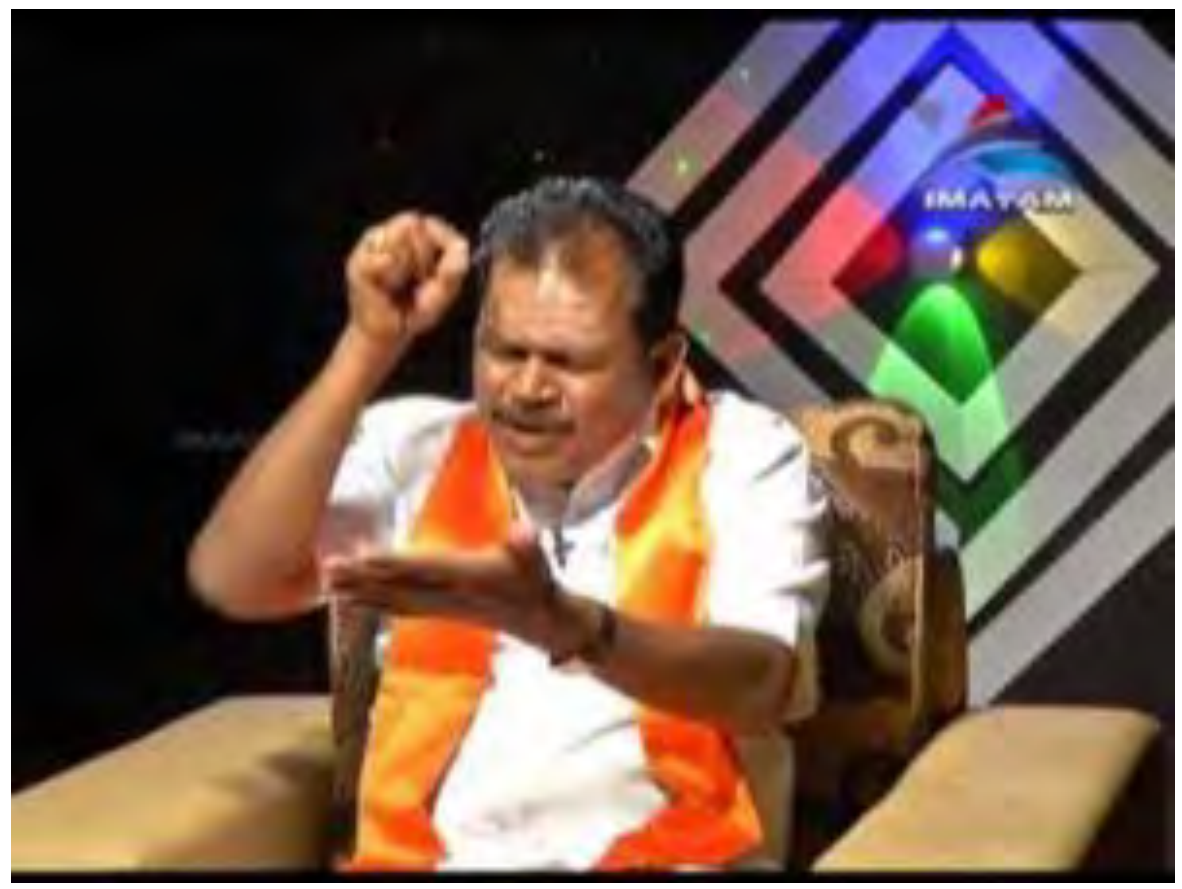
Arjun Sampath, HMK leader
12 May 2012, baseless and absurd police complaint by Solai Kannan against His Divine Holiness Solai Kannan of Hindu Makkal Katchi (HMK) filed a police complaint against His Divine Holiness Paramahamsa Nithyananda, accusing Him of illegally possessing wildlife products such as tiger skins and elephant tusks. After a thorough search of the Madurai Aadheenam, the police found nothing. Both the pontiffs of Madurai Aadheenam, Paramahamsa Nithyananda and his predecessor Srila Sri Arunagirinatha Sri Jnanasambandha Desika Paramacharya Swamigal were present during the search.
Solai Kannan claimed to have visited the Madurai Aadheenam on the night of 12th of May of 2012, and he was served teertham (holy water) spiked with intoxicants! He went on to state that while he was in an ‘inebriated’ state, he claimed to have witnessed Paramahamsa Nithyananda in a compromising position with Tamil actress and devotee Ranjita, and several other male and female disciples in similar positions on beds of wet tiger skins and elephant tusks!
In view of the atrocious nature of the complaint, the Madurai police initially refused to register an FIR (First Information Report). Solai Kannan viciously persisted and approached the Chennai High Court and obtained directions for the registration of an initial FIR against Paramahamsa Nithyananda, Srila Sri Arunagirinatha Swamigal and his assistant Vaishnavi. The absurd complaint was dismissed as baseless. The police was given a directive by the court to investigate the case. As a result, the police conducted a search of the entire Aadheenam and submitted a report. Endless trouble and hindrance to everyday administration, through such notorious complaints was endured by His Divine Holiness and His Sanyasis in the Madurai Aadheenam.
Below is the atrocious complaint of Solai Kannan against His Divine Holiness:
மதுரை விரைவுத் தபால் ஒப்புதலுடன் 12.05.2012
அனுப்புநர்
M.சோலைக்கண்ணன், வயது 33/12,
S/o. R.முத்துச்சாமி
மதுரை மாவட்ட தலைவர்
இந்து மக்கள் கட்சி
204/158 சோலையழகுபுரம் 1வது தெரு,
மகாலெட்சுமி கோவில் 2வது சந்து
மதுரை - 625 011.
பெறுநர்
உயர்திரு. ஆய்வாளர் அவர்கள் (ச & ஒ)
விளக்குத்தூண் காவல் நிலையம்
மதுரை மாநகர்,
மதுரை-1.
மதிப்பிற்குரிய ஐயா,
நான் அருணகிரிநாதர் அழைப்பின் பேரில் 12.05.2012 ம் தேதி என்னுடைய நண்பர்கள் சர்வேஸ்வரன் த/பெ.பரஞ்சோதி மற்றும் மதுரை வீரன் த/பெ.சக்திவேல் ஆகியோருடன் மாலை 6 மணி பஜனைக்கு மதுரை ஆதீன மடத்திற்கு சென்றேன். சிறிது நேரம் நிகழ்ச்சி ஆரம்பிப்பதற்கு முன்பு என்னை தனியாக அருணகிரிநாதர் மற்றும் நித்தியானந்தர் அவை அரங்கத்திற்கு அழைத்து நீதிமன்ற உத்தரவு வந்துவிட்டது, இனி நமக்குள் சண்டைசச்சரவு எதற்கு, சமாதானமாய் போய்விட்டால், எல்லோருக்கும் மற்றும் இந்த மடத்திற்கும் நல்லதல்லவா என்று எடுத்துக் கூறினார்கள். நான் அதற்கு பிரதியுத்திரமாக ஆதீனம் கடந்த காலத்தில் எப்படியிருந்ததோ அப்படியே சானதான சன்மார்க்க நெறிகள் கடைப்பிடிக்கப்பட்டால் எனக்கும் மற்றும் மற்ற சைவ சமணர்களுக்கு எந்தவித ஆட்சேபணையும் கிடையாது என்று பதில் கூறினேன்.
பின்னர், நித்தியானந்தர் என்னிடத்தில் கடந்தகால பழக்கவழக்கங்கள் வேறு நிகழ்கால நிஜங்கள் வேறு இன்றைக்கு மாலை நான் நடத்தும் பூஜை புனஸ்காரங்கள் மற்றும் ஆன்மீக நடவடிக்கைகள் எல்லாவற்றிலும் நீங்களும் உங்கள் நண்பர்களும் கலந்து கொண்டால் நீங்கள் மெய்யான பேரின்பத்தை என்னவென்று உணர்வீர்கள் என்று கூறி என்னை வெளியே அழைத்து வந்தார்கள். நானும் எனது மற்ற இரு நண்பர்களும்
மேலும் நித்தியானந்தர் சீடர்கள் 30 பேர்கள் சில அருணகிரிநாதருடைய சீடர்கள் (ஆண்களும் - பெண்களும்) அங்கே கூடி அமர்ந்து கொண்டோம். அந்த நேரத்தில் கன்னட மொழி பேசிக் கொண்டு சில பெண்கள் மற்றும் திருநங்கைகள் கூட்டமாக நடிகை ரஞ்சிதா தலைமையில் பாஸ்கரசேதுபதி இல்லத்திலிருந்து நாங்கள் கூடியிருந்த பஜனைக் கூடத்திற்கு எங்களுடன் இணைந்து கொண்டனர். பெரிய சிம்மாசனத்தில் அருணகிரிநாதர் அமர்ந்திருந்தார். அவருடைய பொற்பாதங்களை வருடிக் கொண்டு வைஷ்ணவி மங்கை தரையில் அமர்ந்திருந்தார். இளைய மடாதிபதி நித்தியானந்தமும் அவருக்கு நேരെதிராக ஒரு சிறிய சிம்மாசனத்தில் அமர்ந்திருக்க அவருக்கு பின்னால் நடிகை ரஞ்சிதா நின்றிருந்தார்.
மேற் கூறினவை நடைபெற்ற அதே நேரத்தில் பெங்களூர், திருவண்ணாமலை மற்றும் அயல்நாட்டிலிருந்து வந்திருந்த நித்தியானந்தாவின் சீடர்கள் காவி மற்றும் வெள்ளை உடை அணிந்து கொண்டு ஜோடி ஜோடியாக கைகோர்த்த வண்ணம் மண்டபத்திற்கு வந்து சேர்ந்தனர். அதே நேரத்தில் எங்கள் எல்லோருக்கும் குடிப்பதற்கு பரிசுத்த நீர் என்று கூறி செம்பு கிண்ணத்தில் ஏதோ ஒரு திரவம் பரிமாறப்பட்டது. அதை நாங்கள் எல்லோரும் பருகினவுடன் சிறிது உயர்நிலையை அடைந்ததுபோல எங்கள் மனோநிலை மாறியது, இறகைபோல் இளகுவானது அதே சமயம் ஆங்கில பாடல் போன்ற இசை ஒலி பரப்பப்பட ஆரம்பித்தது, அதே நேரத்தில் அயல் நாட்டு சீடர்களும் மற்றும் நித்தியானந்தரின் மற்ற சீடர்களும் லேசாக யோகநிலை போல் அசைய ஆரம்பித்தார்கள். நாங்கள் மூவரும் சிறிது புரியாமல் திகைத்துகொண்டு பார்த்துக் கொண்டு நின்றோம். இளைய மடாதிபதி நித்தியானந்தா எங்கள் மூவரையும் பார்த்து நீங்களும் அசைவுகளில் இணையலாமே என்ற கூறினார். நாங்கள் மௌனமாக தலை அசைத்தோம். இஃக்களத்தில் மடத்தை சார்ந்த சிலர் ஈரமான 10க்கு மேற்பட்ட புலித்தோல்கள் மற்றும் நீண்ட யானை தந்தங்களை, கொலுவிருந்த மண்டபத்திற்கு நடுவிலே ஒன்றன்பின் ஒன்றாக விரித்தனர், சில வெளி நாட்டினர் தங்கள் தேசத்தினுடைய ரூபாநோட்டுகளை எடுத்துக் கொண்டு வெளியில் நின்ற சில பஜார் நபர்களிடம் மாற்றிவிட்டு வருகிறோம் என்று சொல்லி கொடுத்துவிட்டு திரும்பினர். ஒவ்வொரு புலித்தோல் தலைமாட்டிலும் இரண்டு இரண்டு யானைத் தந்தங்களை சிகப்புத் துணியால் கட்டி தலையணைபோல் வைத்தனர். அதன்பின்னர் நின்றிருந்த நடிகை ரஞ்சிதா மற்றும் இளைய மடாதிபதி நித்தியானந்தர் ஒருவரை ஒருவர் அணைத்தபடி முதல் புலித்தோல் விரித்திருந்த இடத்தில் சங்கமமானார்கள். இதைப் பார்த்துக் கொண்டிருந்த அருணகிரிநாதர் செய்வதறியாது திகைத்தார். உடனே கூடியிருந்த மற்ற ஜோடிகள் ஒருவர் பின் ஒருவராக கட்டிதழுவினபடி தங்கள் அந்தரங்களை அரங்கேற்ற ஆரம்பித்தனர். இதைப் பார்த்து சகிக்க முடியாத நாங்கள் மூவரும் ஆதீனத்தை விட்டு வெளியேறி, எங்கள் தலைமையிடம் தொடர்பு கொண்டு நடந்ததைக் கூற உடனடியாக நீங்கள் காவல் நிலையம் சென்று காவலரை வைத்து மடத்தை சோதனை செய்து சட்ட நடவடிக்கையில் ஈடுபடுங்கள் என்று கூற நாங்கள் சமூகம் ஆய்வாளர் ஐயா அவர்களிடம் மேல்நடவடிக்கைக்காக இப்புகார் மனுவை சமர்ப்பிக்கிறோம்.
இப்படிக்கு M. சேலை கண்ணன்.
நகல்:
1. உயர்திரு. காவல் துறை இயக்குநர் அவர்கள் (ச & ஒ) டாக்டர் ராதாகிருஷ்ணன் சாலை மயிலாப்பூர், சென்னை -4
2. உயர்திரு. காவல்துறை ஆணையாளர் அவர்கள்
மதுரை மாநகரம்
மதுரை -1
17 May 2012
Another baseless lawsuit filed demanding expelling of His Divine Holiness Paramahamsa Nithyananda from Madurai Aadheenam; dismissed in court.
A case was filed by Krishnamurthi, a lawyer, to make Madurai Aadheenam a government property. He claimed that not only Paramahamsa Nithyananda but also the current head of Madurai Aadheenam who declared His Divine Holiness as his successor, should be expelled from the Aadheenam!
Among the abuses that he claimed against His Divine Holiness, he lied that His Divine Holiness was not a part of the Saiva Vellalar community though there is clear evidence that he is a part of the community produced by His biological family. He alleged that Arunagirinatha Paramacharya Swamigal, the 292nd Pontiff, is under the influence of Paramahamsa Nithyananda and that he is not operating on his own. He claimed that no one can meet the 292nd Pontiff separately as Paramahamsa Nithyananda was always with him. He questioned him asking if Madurai Aadheenam is even under the 292nd Pontiff's control, or if the people who "come from Bengaluru" are operating the Aadheenam. He accused the 292nd Pontiff of making the wrong decision of bringing Paramahamsa Nithyananda as the 293rd because He had "relationship with ladies" and the case was still pending. He demanded that Paramahamsa Nithyananda should be removed as the successor of the Madurai Aadheenam and the Government should take over the Madurai Aadheenam.
The case was simply dismissed as being baseless. Below is extract of the court order for the same.
Office of the Commissioner,
HR&CE Department,
Chennai-
R.C.No.26975/2012/ S2/ dated: 22.08.2012
Sub: Petition to undertake Madurai Aadheenam Math under custody as per Tamil Nadu HR&CE Act, 1959 and to take legal steps under Section 63 of Court of Wards Act, 1902 - regarding.
Ref: 1) Petition dated: 17.5.2012 received from Thiru.R.Krishnamurthy, Advocate. 2) W.P.No.13751/2012 - High Court, Madras filed by Thiru.R.Krishnamurthy, Advocate dated: 22.5.2012.
In the reference cited 1st, Advocate Thiru.R.Krishnamurthy has requested to undertake the controversial Madurai Aadheenam under the custody of the Department as per Tamil Nadu HR&CE Act, 1959 and to take legal steps under Section 63 of Court of Wards Act, 1902 in the interest of public at large and Hindu Religion.
9) As the Office of the Trustee of the Math does not fall vacant under Section 60 of the Act as well as there is no ground under Section 59 of the Act arises, the request made by the Petitioner in the representation dated: 17.05.2012 to undertake the Madurai Aadheenam immediately under the custody of the Department as per the Tamil Nadu HR&CE Act, 1959 and to take an effective legal steps under Section 63 of the Courts of Wards Act, 1902 deserves no merit as the said request is not in accordance with the provisions of law. However, it is left open to the Petitioner to redress his grievance in the manner known to law.
10) The Petition is disposed of accordingly.
Sd/- M.Rajaram
Commissioner (Additional Charge)
/t.c.f.b.o./
To:
1. Thiru.R.Krishnamurthy, Additional Commissioner (General) Advocate, S/o (Late) Mr.R.Ramasamy, 3/379, Kavithendral Kalyanasundaram Nagar, (By RPAD). Manali, Chinna Mathur, Chennai-600 068
Copy to:
- ‘N5’ Section at Head Office (Through Numbering).
- The Superintendent ‘N1’ Section at Head Office.
- The Special Government Pleader (HR&CE), High Court, Chennai-104
- The Inspector, HR&CE Dept., (High Court works), Chennai-104
- Extra
24 Jul 2012
Case filed against His Divine Holiness Paramahamsa Nithyananda to restrain His entry into the Madurai Aadheenam
Two vested interest groups, who were illegally occupying the Madurai Aadheenam property, filed a petition requesting for Paramahamsa Nithyananda to be removed from the succession to head the Madurai Aadheenam, the most ancient religious organization and monastery in the world.
M. Manisavagam and Sami Thiagarajan filed a petition against Arunagirinatha Paramsariyar Swamigal, the 292nd Pontiff and current Head of Madurai Aadheenam, and Paramahamsa Nithyananda, the appointed successor, requesting the judge to declare Paramahamsa Nithyananda’s appointment as the 293rd Pontiff and successor to Madurai Aadheenam null and void and to restrain Him from entering Madurai Aadheenam and its properties.
15 June 2012
Absurd False Allegation: Paramahamsa Nithyananda Accused of Stealing NON-EXISTENT Maragatha Lingam from Madurai Aadheenam
FALSE ALLEGATION: An individual with vested interest, filed a petition against Paramahamsa Nithyananda most maliciously, accusing Him of stealing a Maragatha Lingam (A Shiva Lingam which is a dome-shaped representation of Lord MahaSadashiva - the primordial Hindu Divinity).
THE TRUTH: This Maragatha Lingam never even existed, let alone be stolen! But M.Jagathalapradapan asked the court to find out and seize the Maragatha Lingam!
● Both the Madurai Aadheenam and the HR&CE (Hindu Religious and Charitable Endowment Board) who were also made respondents to this petition, said that such a Lingam did not even exist.
- The police who was also a respondent to this complaint, called M. Jagathalapradapan for inquiry for which he never turned up in the police station but had the audacity to file this frivolous complaint.
- The police in it's reply to this petition cited this abuse of legal system done by M. Jagathalapradapan.
As a result, the allegations were found completely baseless and were thrown out in the court.
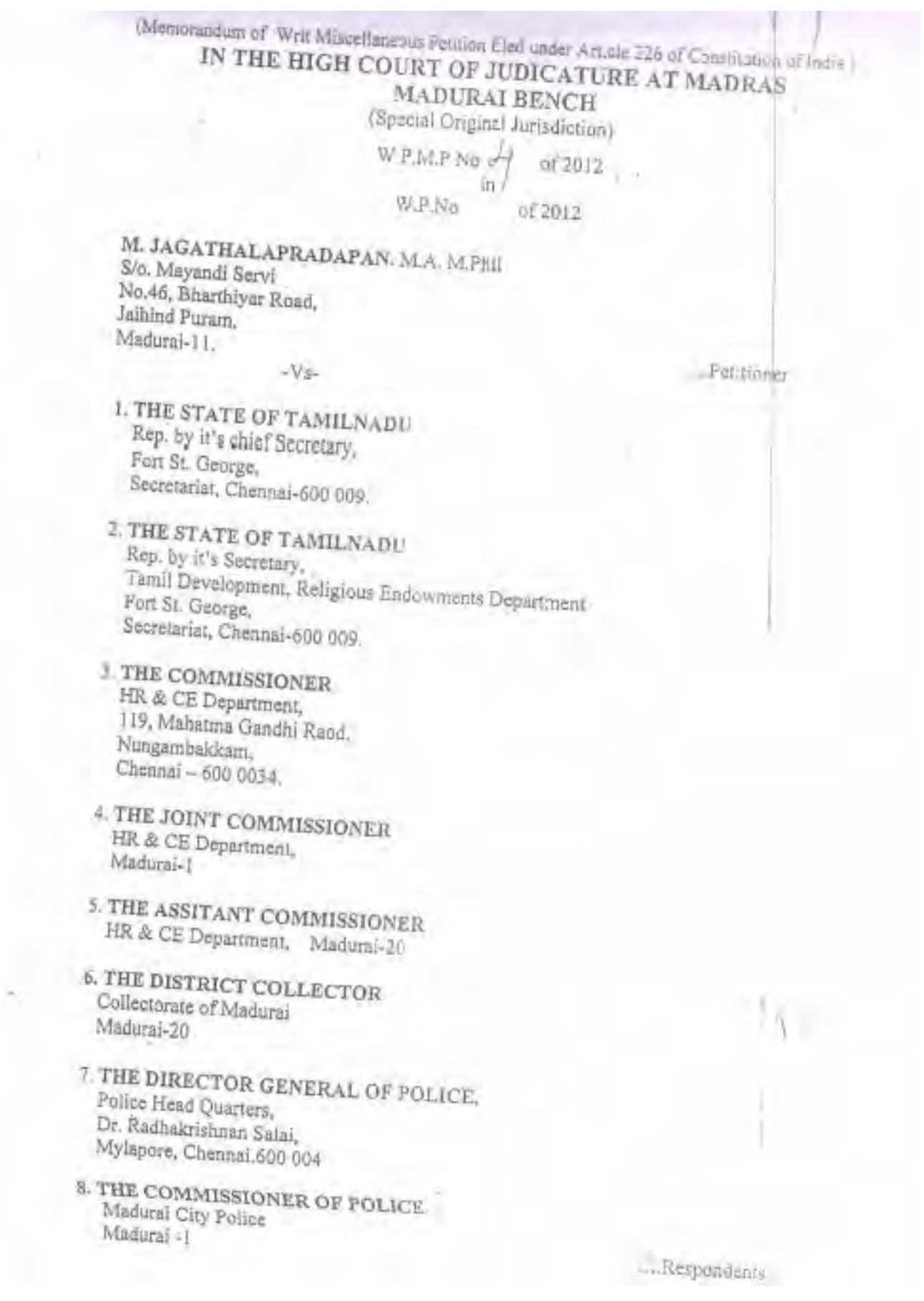
(Memorandum of Writ Miscellaneous Petition filed under Article 226 of Constitution of India) IN THE HIGH COURT OF JUDICATURE AT MADRAS MADURAI BENCH (Special Original Jurisdiction) W P.M.P No [?] of 2012 in W.P.No [?] of 2012
M. JAGATHALAPRADAPAN, M.A, M.Phil
S/o. Mayandi Servi
No.46, Bharthiyar Road,
Jaihind Puram,
Madurai-11.
-Vs-
Petitioner
1. THE STATE OF TAMILNADU
Rep. by it's chief Secretary,
Fort St. George,
Secretariat, Chennai-600 009.
2. THE STATE OF TAMILNADU Rep. by it's Secretary, Tamil Development, Religious Endowments Department Fort St. George, Secretariat, Chennai-600 009.
3. THE COMMISSIONER
HR & CE Department,
119, Mahatma Gandhi Road,
Nungambakkam,
Chennai - 600 0034.
4. THE JOINT COMMISSIONER
HR & CE Department,
Madurai-1
5. THE ASSITANT COMMISSIONER HR & CE Department, Madurai-20
6. THE DISTRICT COLLECTOR
Collectorate of Madurai
Madurai-20
7. THE DIRECTOR GENERAL OF POLICE,
Police Head Quarters,
Dr. Radhakrishnan Salai,
Mylapore, Chennai.600 004
8. THE COMMISSIONER OF POLICE
Madurai City Police
Madurai -1
...Respondents
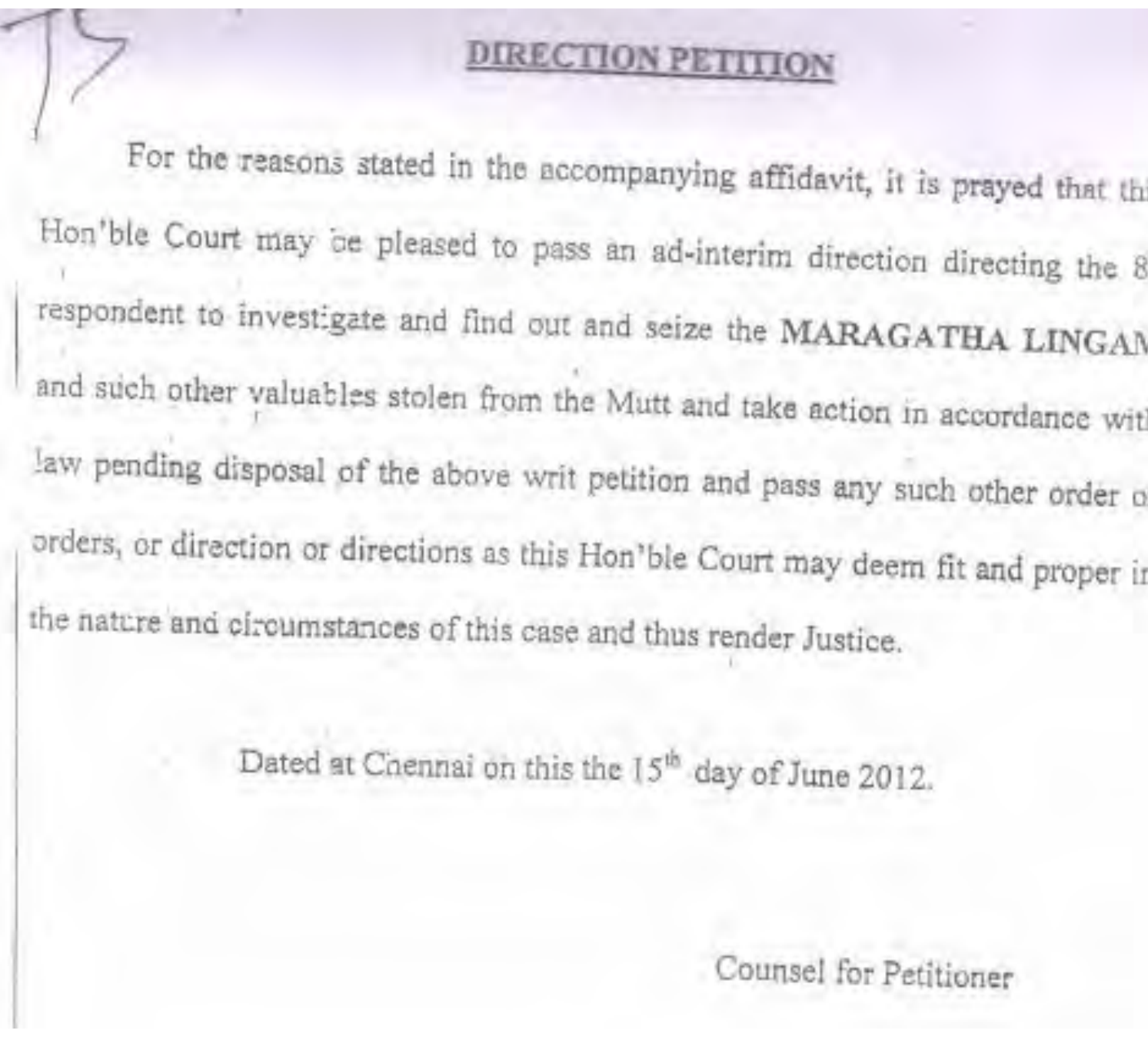
For the reasons stated in the accompanying affidavit, it is prayed that this Hon'ble Court may be pleased to pass an ad-interim direction directing the 8th respondent to investigate and find out and seize the MARAGATHA LINGAM and such other valuables stolen from the Mutt and take action in accordance with law pending disposal of the above writ petition and pass any such other order or orders, or direction or directions as this Hon'ble Court may deem fit and proper in the nature and circumstances of this case and thus render Justice.
Dated at Chennai on this the 15th day of June 2012.
Counsel for Petitioner
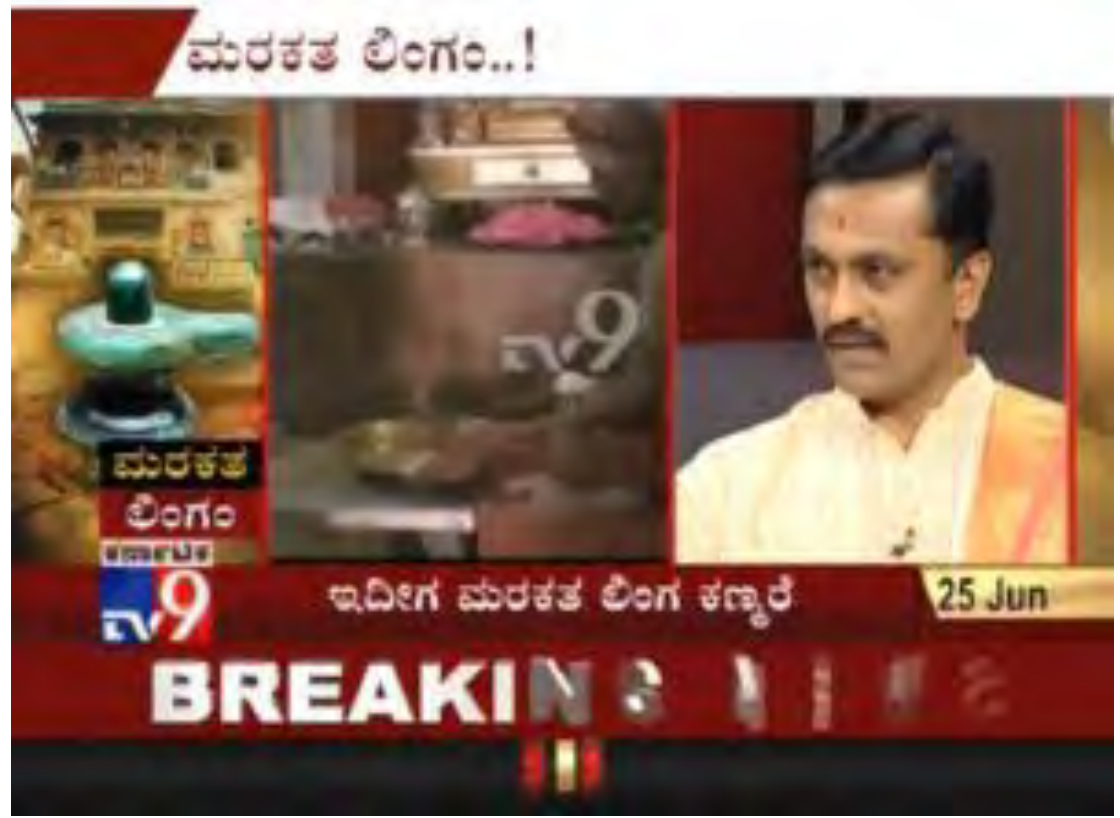
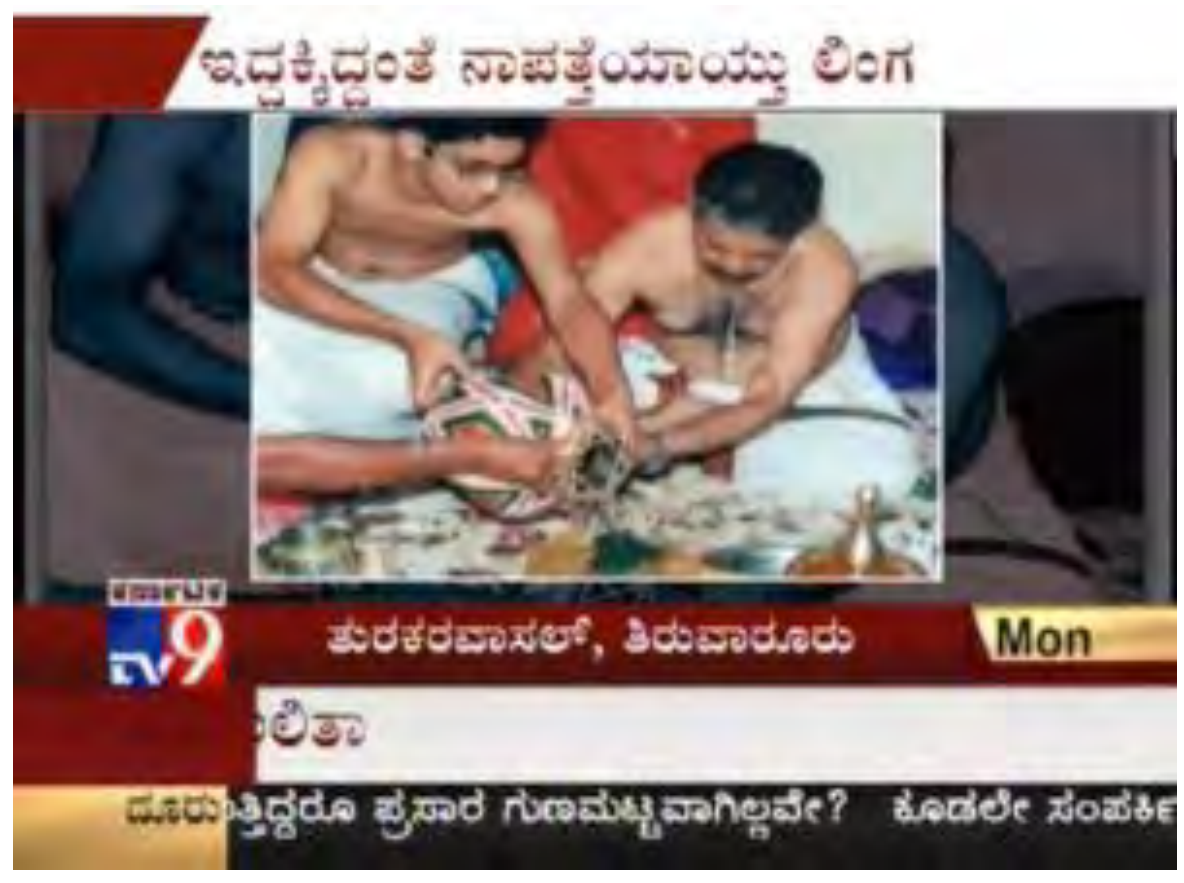
Feeding off the absurdity of the false complaint, television channels telecasted false propaganda that the Maragatha Lingam in Madurai Aadheenam was stolen.
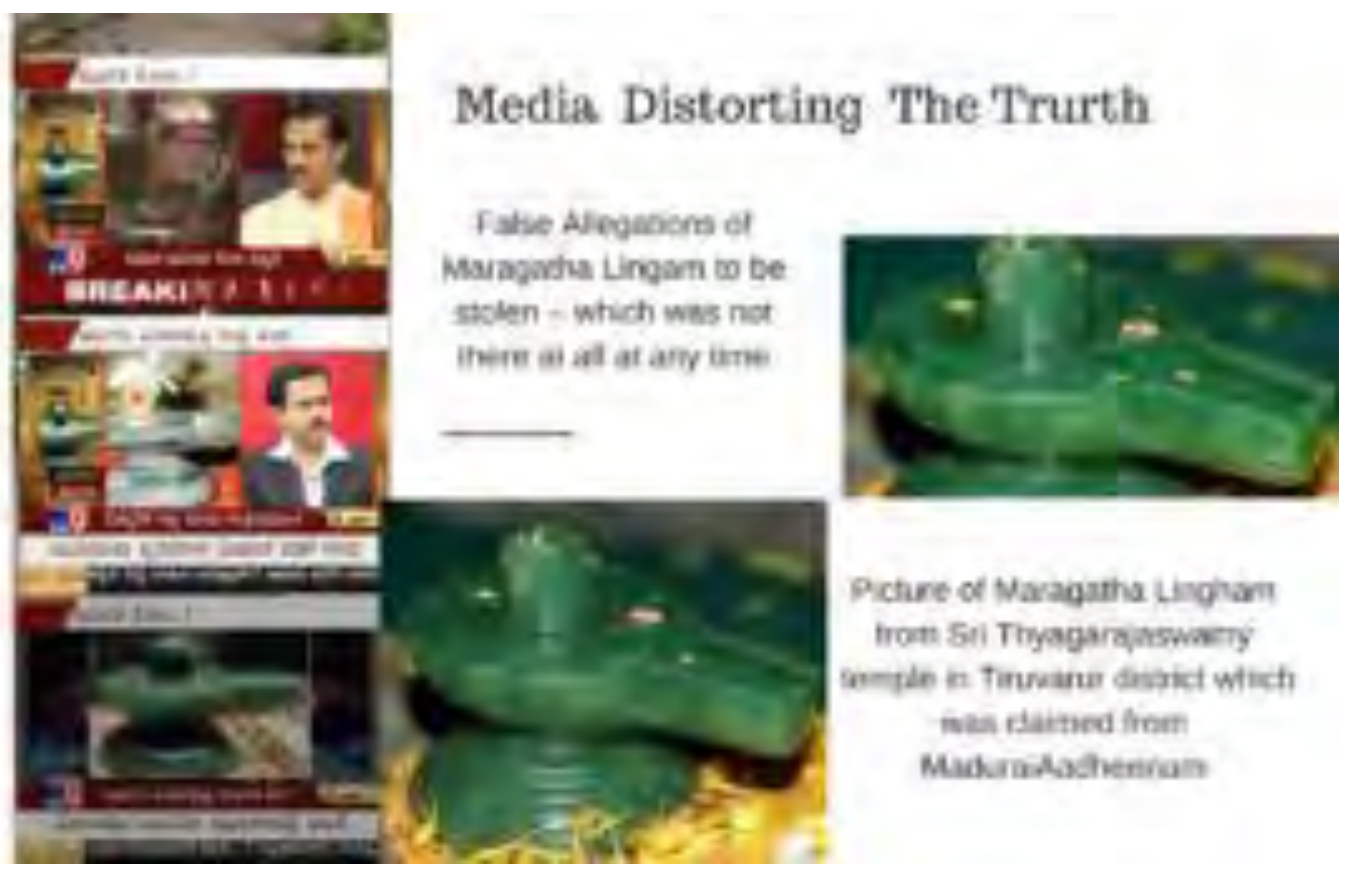
In no surprise, the entire case was baseless and an attempt to harass and present His Divine Holiness Paramahamsa Nithyananda in a bad light in front of the judiciary, in order to hijack and destroy the Madurai Aadheenam. It was a clear strategy to trap His Divine Holiness Paramahamsa Nithyananda in a complex matrix of false lawsuits, media attacks and physical assassination attempts which was aimed at paralyzing His self-defense and executing Him in a clean and silent way.
1 Aug 2012
Political party members publicly ask government to remove His Divine Holiness Paramahamsa Nithyananda as head of oldest monastery
After His Divine Holiness Paramahamsa Nithyananda was anointed the 293rd Guru MahaSannidhanam (Pontiff) of Madurai Aadheenam, the oldest religious organization in the world, several political party members spoke out in the media in opposition to His appointment. They went to the extent of filing petitions against Him requesting His removal as head of the Mutt.
Political party members like Nellai Kannan and Muthuraj gave press meets opposing Paramahamsa Nithyananda as the next Pontiff of Madurai Aadheenam. They claimed that after Paramahamsa Nithyananda’s arrival, Madurai’s dignity was disrupted. Muthuraj, leader of Makkal Munnetra Katchi, said that he will not rest till he dispels away Paramahamsa Nithyananda from Madurai.
Nellai Kannan filed a petition requesting approval to file a suit removing Paramahamsa Nithyananda as successor to Madurai Aadheenam.
He stated, “It is with sorrow, pain, and a heavy heart we write this letter seeking permission from you to file a suit in the Court of the Subordinate Judge, Madurai under Sec. 59 of the HR&CE Act for the removal of [Paramahamsa Nithyananda], who claims to be appointed as Junior Guru MahaSannidhanam (Pontiff ) of Madurai Aadheenam.”
THE APPROVAL TO FILE THE SUIT WAS DENIED. Below is the court order dismissing the petition.
1
BEFORE THE MADURAI BENCH OF MADRAS HIGH COURT
DATED: 14.08.2012
CORAM:
THE HONOURABLE MR.JUSTICE K.CHANDRU
Writ Petition (MD).No.9648 of 2012
S.Nellai Kannan : Petitioner
VS.
1.The Commissioner,
Hindu Religious & Charitable Endowment,
Uthamar Gandhi Salai,
Chennai-600 034.
2.The 292nd Guru Maha Sannidhanam, Sri La Sri Arunaqirinatha Sri Ganasambhanda Desiga Paramachaliya Swamigal, representing Thirugnanasambanda Swamigal Aadheenam, 70, South Avani Moola Veedhi, Madurai-1. (R-2 impleaded as per the order of this Court dated 01.08.2012 made in M.P.(MD)No.2/2012) : Respondents
14. Hence, the writ petition will stand dismissed with the above observation. No costs.
Sd/- Assistant Registrar(AE)
/True Copy/
Sub Assistant Registrar
To
The Commissioner,
Hindu Religious & Charitable Endowment,
Uthamar Gandhi Salai,
Chennai-600 034.
+1cc to the Special Govt.Pleader, Sr.No.26861
sml ssk/06.09.2012 /3c -5p/-
Order made in Writ Petition (MD).No.9648 of 2012
18 Oct 2012
292nd Pontiff succumbs to mounting pressure; illegally tries to nullify the appointment of His Divine Holiness as his successor
Due to the surrounding pressure in the form of complaints, protests, false media coverage and investigations, the 292nd Pontiff of Madurai Aadheenam, released an illegal statement nullifying the appointment of His Divine Holiness Paramahamsa Nithyananda as his successor and 293rd Pontiff of the Madurai Aadheenam.
However, according to the Mother Document of the Madurai Aadheenam, the appointment of a Junior Pontiff is irrevocable as the appointment happens with the traditional Acharya Abhishekam (ritualistic consecratory pouring of holy water over the successor's head), which can be done only to one person in the lifetime of a Pontiff, to appoint him as his successor. Below are extracts from the Mother Document:
“4. Particulars of important customs and usages pertaining to the institution example agamas followed etc..
In this mutt temple, according to the Kamika Agama and according to the Soma Sambupadathi the daily and periodical pujas are being conducted.
The three initiations namely the traditional sect initiation, special initiation, and Nirvana initiation are given to the mature individuals among the Saiva Vellala community along with the consecration as Acharya. At no time, other than the mentioned group the traditional practice to give Acharya consecration has been done. At a time, only one person can be initiated as Acharya and no further person can be initiated.”
Further, in a Press meet, the 292nd Pontiff clearly stated that he has given Paramahamsa Nithyananda the Acharya Abhishekam (appointment through the traditional rituals).
An earlier Supreme Court ruling in a similar case of Ambalavana Pandara Sannithi versus the State of Tamil Nadu, the court ruled thus:
"By appointment as junior, the Tambiran becomes a spiritual brother or a brotherly companion and by both the senior who appoints and the junior who is appointed belonging to the same Adhinam, they were associates in holiness."
8. The Supreme Court further held that the fact of a person being legally nominated as Junior and the capacity to succeed to the Head is an incident of that status and it was further held that the status, when created by a nomination, cannot be withdrawn or canceled at the mere will of the parties, unless in accordance with the law. Thus, the position is that the Junior once nominated cannot be removed even by the Head of the Mutt except for a good valid cause. The observations of Seshagiri Ayyar J. in Thiruvambala Desikar (Chinna Pandaram) (1917) ILR 40 MAd 177: (AIR 1917
Indian Kanoon - http://indiankanoon.org/doc/651773/ 3
18 Oct 2012
Government succumbs to pressure; files a case against the 292nd Pontiff of the Madurai Aadheenam
After continuously failing in their efforts to thwart the 292nd Pontiff of Madurai Aadheenam from naming His Divine Holiness Paramahamsa Nithyananda as his successor, the government filed a petition against Madurai Aadheenam for alleged financial mismanagement, citing a misunderstanding regarding a Trust formed with Paramahamsa Nithyananda. Furthermore, they claimed that Paramahamsa Nithyananda’s appointment as 293rd Pontiff of Madurai Aadheenam was invalid.
As a result of pressure from vested interest and power lobbies, the government filed a case OS 1000 of 2012 under section 59 of the HRCE (Hindu Religious and Charitable Endowment Board) act against the 292nd Pontiff for financial mismanagement.
Earlier to the appointment as Junior Pontiff, His Divine Holiness Paramahamsa Nithyananda and the 292nd Guru Mahasannidhanam had created a Trust to help provide funding for the Thirugnanasambandar Swamigal Mutt (another temple monastery related to the Madurai Aadheenam). This trust was subsequently mutually dissolved after Paramahamsa Nithyananda become a part of the Mutt.
THE FALSE ALLEGATION: But this Trust was misrepresented falsely as if it was a means to steal money and power from the Madurai Aadheenam and formed the basis for the
Government case against the 292nd Pontiff. However, this did not stop people from creating confusion about it. The Government also questioned the appointment of Paramahamsa Nithyananda as the Junior Pontiff, claiming He is not a disciple of the Mutt.
THE TRUTH: Absolutely no transactions had actually happened via the said trust as the trust did not even have a bank account! Further, regarding the questioning of His Divine Holiness not being a disciple of the mutt, there have been many Judgements of the Hon’ble Supreme Court and the High Court of Madras that have ruled this to be outside the purview of the HR&CE.
Below is the Government petition with the false allegations:
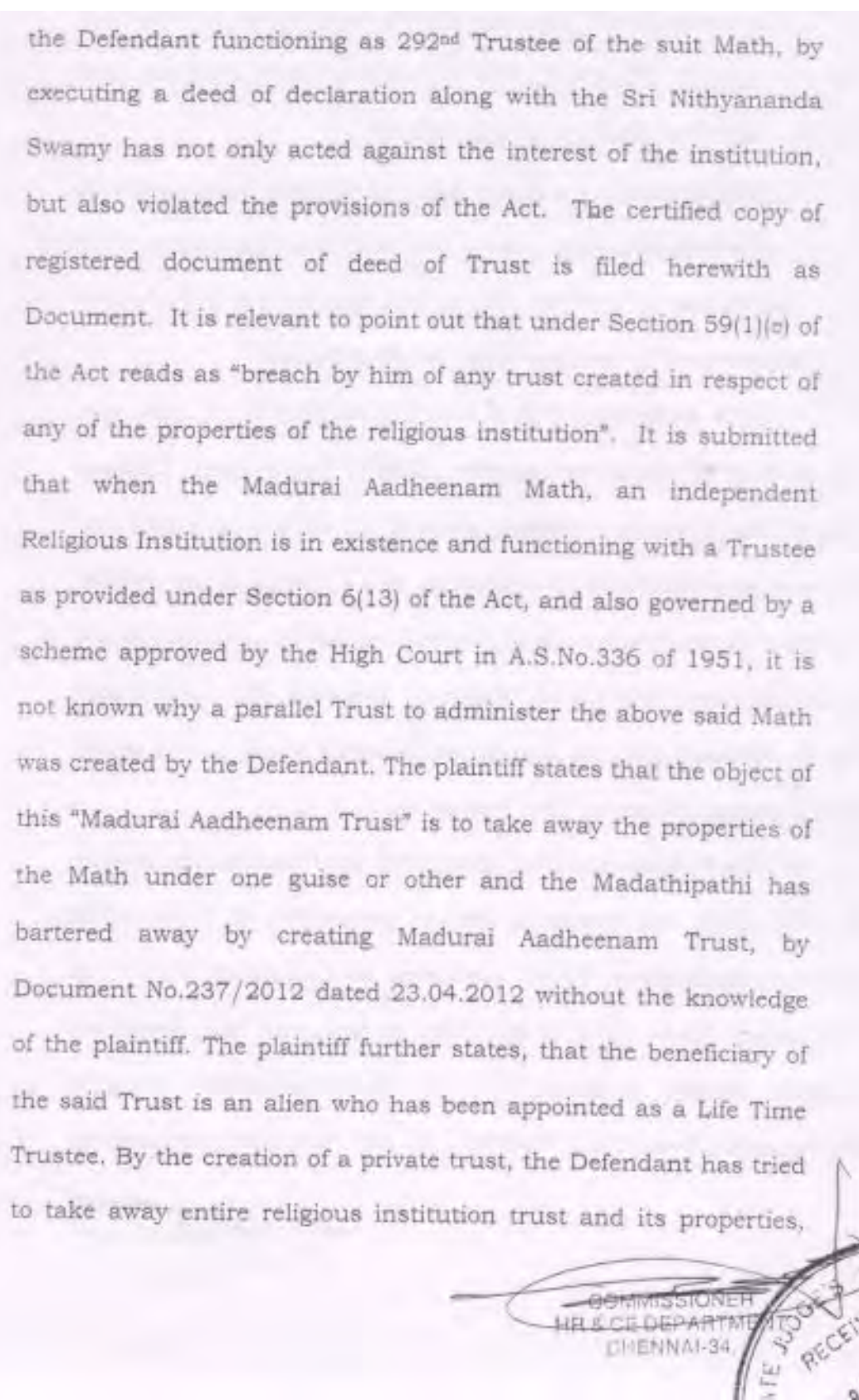
the Defendant functioning as 292nd Trustee of the suit Math, by executing a deed of declaration along with the Sri Nithyananda Swamy has not only acted against the interest of the institution, but also violated the provisions of the Act. The certified copy of registered document of deed of Trust is filed herewith as Document. It is relevant to point out that under Section 59(1)(e) of the Act reads as "breach by him of any trust created in respect of any of the properties of the religious institution". It is submitted that when the Madurai Aadheenam Math, an independent Religious Institution is in existence and functioning with a Trustee as provided under Section 6(13) of the Act, and also governed by a scheme approved by the High Court in A.S.No.336 of 1951, it is not known why a parallel Trust to administer the above said Math was created by the Defendant. The plaintiff states that the object of this "Madurai Aadheenam Trust" is to take away the properties of the Math under one guise or other and the Madathipathi has bartered away by creating Madurai Aadheenam Trust, by Document No.237/2012 dated 23.04.2012 without the knowledge of the plaintiff. The plaintiff further states, that the beneficiary of the said Trust is an alien who has been appointed as a Life Time Trustee. By the creation of a private trust, the Defendant has tried to take away entire religious institution trust and its properties.
From the above statement it is clear that Sri Nithyananda who was nominated as successor to the present Trustee is not a disciple of the Math. It is submitted that the Defendant has admitted that he has not followed the procedures and provisions of the Act and the scheme of succession as mentioned by their predecessors in the property register as to the selection of Sri Nithyananda Swami as the 293rd Guru Maha Sannidhanam of
2 Nov 2012
The 292nd Pontiff files petition seeking (illegal) annulment of appointment deed and restraining His Divine Holiness from entering the Madurai Aadheenam
The 292nd Pontiff, was by now harassed by many forces to openly demonstrate some opposition to the 293rd Pontiff, His Divine Holiness Paramahamsa Nithyananda. At one point in time, the 292nd Pontiff experienced and expressed regarding the extraordinary powers of His Divine Holiness in multi-dimensions, including healing of his own asthmatic condition.
However, under such strong harassment, he filed a petition at the Madurai Court, asking to anul the appointment deed of His Divine Holiness and also restrain Him from entering the mutt.
Following is the extract from the petition filed by the 292nd Pontiff
31 Jan 2013
Amidst a host of pending cases, on 31 January 2013, Counsel to His Divine Holiness appealed to the Madurai District Court for a clear order to be allowed to offer prayers and perform puja in the Madurai Aadheenam. Following is an extract of the petition filed. SO WE NEED TO PUT THIS?
5. I submit that, the first defendant had satisfied himself about my suitability of appointing me as the 293rdAadheenakarthar of the Madurai Adheenam, the fact that certain false criminal cases had been foisted against me was also considered by the first defendant before the above said coronation. Finally I was appointed as the 293rd Aadheenakarthar of the Madurai Adheenam on 27/04/2012 by the 1st respondent.
Page No.II No. of Corrs
It is therefore, just and necessary that this Hon'ble Court may be pleased to grant a temporary injunction restraining the respondents/ defendants from interfering with the petitioner's right to do all his religious and spiritual activities such as performing pujas, annadhanam, etc in the Madurai Aadhenam premises till the disposal of the main suit and in the mean while grant an ad-interim injunction till the disposal of this application and thus render justice.
Solemnly affirm and
signed before me at
Tiruvan;namalai on 30.1.2013
Petitioner/ Plaintiff
Advocate
The Chennai High court passed an order prohibiting His Divine Holiness Paramahamsa Nithyananda from entering the premises of Madurai Aadheenam (temple monastery) and its properties
The Keepers of Ancient Temple Traditions forbidden from their own spiritually inherited Temple Monastery, for no reason
March 05, 2018
In a shocking development as an aftermath of an onslaught of false propaganda and false cases against His Divine Holiness Paramahamsa Nithyananda who is the declared 293rd Pontiff of the ancient temple monastery, Madurai Aadheenam, His Divine Holiness Paramahamsa Nithyananda, who inherits the lifetime responsibility of carrying forward the divine works of peace, powers and spirituality, was prohibited from entering the monastery premises through a High Court Order!
This was in response to a petition filed by an individual Jagadalaprathapan, who had earlier filed a false petition that His Divine Holiness's men had stolen the (non-existent) Maragatha Lingam from the Madurai Aadheenam. Jagadalaprathapan was an individual with a vested interest, being driven by extremist Hindu groups.
The Madras High Court on Monday, March 05, 2018, restrained Paramahamsa Nithyananda from entering Madurai Aadheenam until the disposal of civil cases pending before lower courts relating to the validity of her reported appointment as junior Guru Mahasannidhanam of the Mutt. Justice R. Mahadevan directed the Commissioner of Hindu Religious and Charitable Endowments Department (HR&CE) to ensure that Paramahamsa Nithyananda does not enter any of the institutions associated with the Aadheenam.
7 November 2012
HR&CE tries to grab the Tiruvannamalai Aadheenam (monastery)
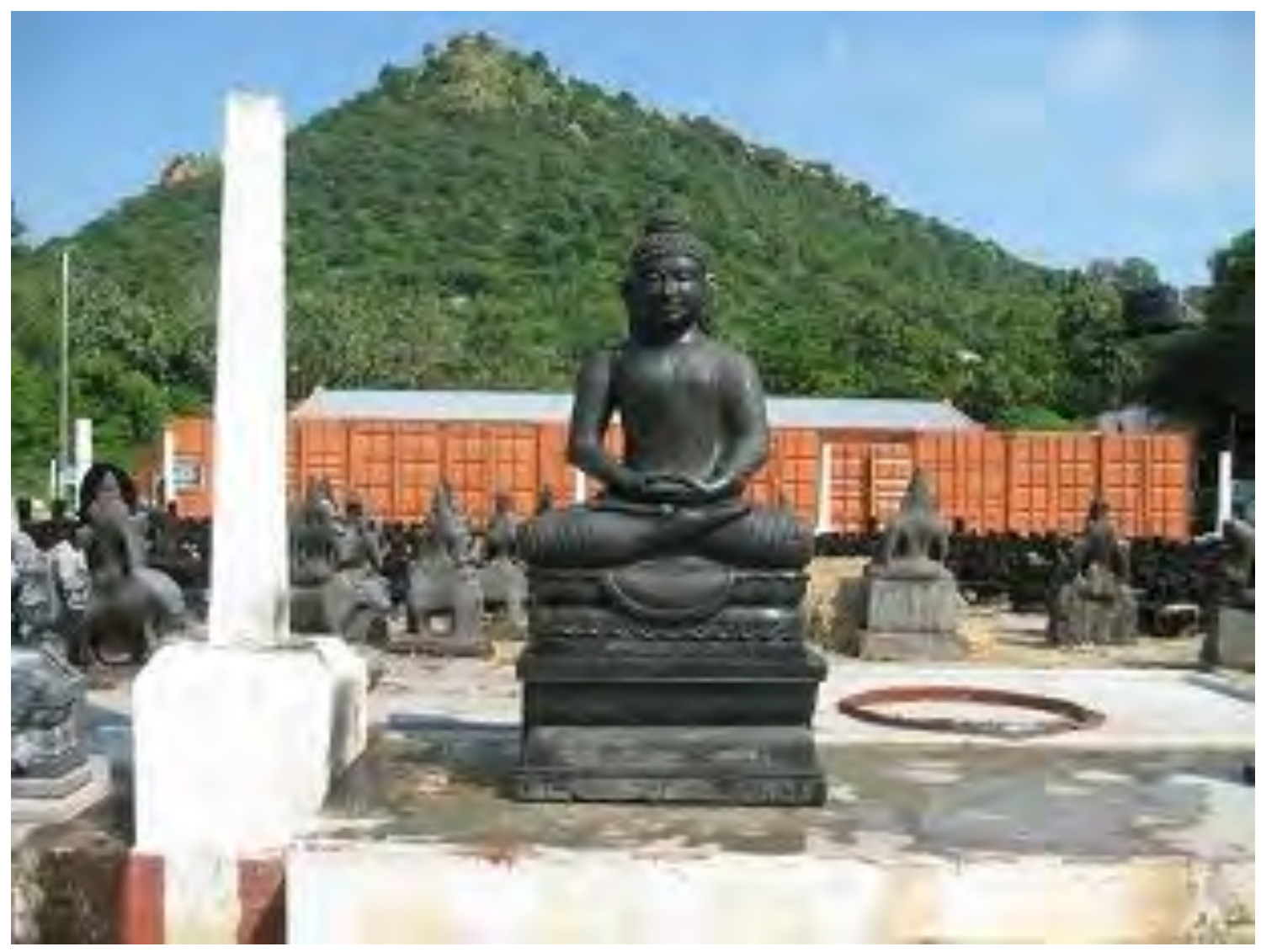
The Tiruvannamalai temple-monastery complex is a private property. HR&CE (Hindu Religious and Charitable Endowments board) attempted to falsely present it as a public temple to get ownership over it and destroy its cultural heritage. It is an ancestral property of His Divine Holiness Paramahamsa Nithyananda’s pre-monastic family. HR&CE had no business nor jurisdiction to attempt breaching a private property. The plan was a sinister one to create a legal issue in the private property, creating an adverse atmosphere and use that to kill Paramahamsa Nithyananda.
Following is the description of the series of events:
On 26 November 2012, In response to the showcase notice of the HRCE that the Tiruvannamalai aadheenam of Nithyananda Dhyanapeetam falls under the purview of HR&CE, the Madras High Court ordered a status quo till the disposal of the case for both the parties – Nithyananda Dhyanapeetam, Tiruvannamalai and HR&CE (Hindu Religious and Charitable Endowments).
The Court clarified that Nithyananda Peetham, Tiruvannamalai can continue with all its services. The next hearing of the case was posted for December 5, 2012 when the HR&CE was directed to file its counter to the Writ Petition.
In the Writ Petition, Nithyananda Dhyanapeetam, Tiruvannamalai had clarified that it was a yoga and meditation center, and it was neither a Temple nor a place of worship or a Hindu Religious Institution attracting the jurisdiction and control of Hindu Religious & Charitable Endowments Act, 1959. As per Sec.6 (16) of the Act, a religious charity means a public charity associated with a Hindu festival or observance of a religious character, whether connected with a mutt or a temple. But, Nithyananda Dhyanapeetam was a public charity formed with an intention of propagating yoga and meditation worldwide. It was not a place of only Hindu worship but a Universal worship place, where people belonging to all religions, who participate in the yoga and meditation programs do meditation. The Murtis (idols) and Lingas were for the private worship of the meditation and yoga participants.
PUT YOGA PICS AND SWAMIJI PICS HERE
On 30 January 2013, Chennai the Hon'ble High Court of Madras allowed the Writ Petition filed by Nithyananda Dhyanapeetam and set aside the show cause notice issued by the Hindu Religious & Charitable Endowments Department (HR&CE) claiming that the Tiruvannamalai Aadheenam of His Divine Holiness Paramahamsa Nithyananda comes under the purview of HR&CE as it is a Hindu religious institution.
The show cause notice was issued based on a complaint by one Mr. Sivababu, District President of Hindu Makkal Katchi, against whom there are several litigations and complaints pending. The complaint was a motivated one against Nithyananda Dhyanapeetam and its founder, evidently aiming to eliminate Paramahamsa Nithyananda by creating a ruse against Him. This has a clear precedence as Mr. Sivababu and a few others had on 2 March 2010 entered the Tiruvannamalai Aadheenam premises, assaulted the residents of the ashram and damaged the property. A criminal complaint was registered against him.
The Hon’ble High Court order clearly said that Nithyananda Dhyanapeetam Trust Deed and its objectives shows that it is a Public Charitable Trust and thus HR&CE had no legal bearing in its claim. The Trust Deed clearly shows that the institution is open to all people, irrespective of caste, creed or religion. The various construction activities on the premises are in accordance with the objectives of the Trust to spread meditation, yoga and provide various social services to the public at large.
The Hon’ble High Court allowed the Writ Petition and the show cause notice was set aside because even the show cause notice was uncalled for as it was based on a non-existent foundation.
The Tiruvannamalai Aadheenam
People come to Nithyananda Peetham for listening to the discourses (satsangs) of His Divine Holiness Paramahamsa Nithyananda who they revere as Guru and the Avatar (incarnation) and for availing of the services of daily annadaan (offering of food), regular free medical camps and yoga classes. The Aadheenam stands for a range of such socio-spiritual services that is offered irrespective of caste, creed and religion.

THE FLAG POST on the premises is not a temple flagstaff, but an organizational flagpost (made of iron) carrying the flag of the organization throughout the year. A temple flagstaff, according to the Agama (the traditional Hindu scriptures that give the science of temple rituals) has to be made of wood and clad with brass, carrying the figures of Hindu icons such as Garuda or Nandi, and hoisted on festival days. This ordinary flag post carries the

Nithyananda Peetham flag everyday. There is no archagar or temple priest on the premises either.
Regarding the statues of the various deities (idols), the petition clarified that these are not consecrated deities but stone statues on whom the fine carving and finishing touches are done for them to be sent to the various Nithyananda meditation centers all over the world. The daily arati (lit camphor) offering as well, is done to the sacred Arunachala hill. The deities that represent the 27 Nakshatras (astral stars) are also present to aid in the meditation and yoga participants to meditate near their corresponding star deity.
Nithyananda Peetham, Tiruvannamalai, hosts people of all faiths such as Christians, Muslims, Hindus, etc. The services of the Trust are available to all with no restrictions or discrimination on the basis of religion, caste, community, etc.
Also, Paramahamsa Nithyananda is revered and worshipped as a living incarnation by His devotees and disciples belonging to various religions such as Hinduism, Buddhism, Jainism, Christianity, Zoroastrian, Judaism, Cao Dai, Bahia, Confucianism, Taoism, Islam, Shinto, etc. and Thiruvannamalai, being his place of birth, is frequented and worshipped by his devotees and disciples.
Order papers:
IN THE HIGH COURT OF JUDICATURE AT MADRAS
DATED : 30.01.2013
CORAM
THE HONOURABLE MR. JUSTICE K. CHANDRU
W. P. No. 30063 of 2012
and
M. P. Nos. 1 and 2 of 2012
Nithyananda Dhyanapeetam
Thiruvannamalai Branch,
Adi Annamalai, Thiruvannamalai District,
represented by its Manager,
Dr. Sri Nithya Pranananda,
S/o. Sri Palanisamy .. Petitioner
Vs.
- The Commissioner, Hindu Religious and Charitable Endowments Department, 119, Mahatma Gandhi Road, Nungambakkam, Chennai-600 034.
- The Assistant Commissioner, Hindu Religious and Charitable Endowments Department, Thiruvannamalai.
- The Inspector, Hindu Religious and Charitable Endowments Department, Thiruvannamalai. .. Respondents
This writ petition is preferred under Article 226 of the Constitution of India praying for the issue of a writ of certiorari to call for the records relating to the impugned communication issued by the second respondent herein in his proceedings Na. Ka. No. 2413/2012/Aal, dated 11.10.2012 and quash the same.
For Petitioner : Mr. G. Rajagopal, SC for M/s. G. Bala & Daisy
For Respondents : Mr. A. Navaneetha Krishnan, Advocate General asstd. by Mr. S. Kandasamy, Spl. G. P. (HR&CE)
ORDER
Heard both sides. This writ petition came to be posted on being specially ordered by the Hon'ble Chief Justice vide order dated 22.11.2012.
2. The questions that arise for consideration is whether the show cause notice dated 11.10.2012 issued by the Assistant Commissioner, Hindu Religious & Charitable Endowment Department, Tiruvannamalai is without jurisdiction ? and whether the petitioner can be brought within the definition of the term "religious institution" in terms of Section 6(18) of the Tamil Nadu Hindu Religious and Charitable Endowments Act, 1959?
3. The petitioner is the Nithyananda Dhyanapeetam, represented by its Manager of Tiruvannamalai Branch. It is stated by the petitioner Trust that it was established by the deed of Trust, dated 11.08.2005 registered with the authorities at Karnataka State. It is having its headquarters at Bidadi, Ramanagara District, Karnataka state. The trust was founded by one A. V. Gnanaprakasam, being the author and settlor of Nithyananda Dhyanapeetam. By the deed of trust, dated 11.08.2005, Paramahamsa Sri Nithyananda Swami was made as the sole trustee. The trust is a public charitable trust. It has also been registered with the Income Tax Department at Bangalore under Section 12AA(1)(b)(i) of the Income Tax Act,
1961. It has also got tax deduction account number as per the provisions of the Income Tax Act.
4. On 09.04.2008, one B.S. Soundararajan, a resident of Vengikal Village, Tiruvannamalai District had donated an extent of 2.83 acres (S.No.152/3A - 2 acres and S.No.152/A - 83 cents) in Adiannamalai village by way of a gift deed in favour of Sri Nithyanananda Swami, which was also registered with the Joint Sub Registrar-II, Tiruvannamalai District under gift deed No.3899 of
2008. Subsequently, the lands were taken over by Sri Nithyananda Swami. He has been paying the electricity charges and the supply stands in the name of Sri Nithyananda Swami. The revenue entries have also been mutated accordingly. Patta for the said land also stands in the name of Sri Nithyananda Swami. On 09.04.2008, Sri Nithyananda Swami had entered into an agreement of lease with Nithyananda Dhyanapeetam (petitioner trust). The lease was for a period of 15 years starting from 09.04.2008 to 08.04.2023. The monthly rent of Rs.1000/- was fixed for the first five years and it was to be increased to Rs.1500/- for the next five years and thereafter Rs.2000/- per month for the last five years ending upto 09.04.2023. The trust was given power to have its construction in the lease land. It was further indicated that any construction done by the trust right from the commencement of the work will be the property of the lessor Sri Nithyananda Swami. Upon completion of the construction, the lessee, i.e., the trust, has only the right to be a tenant for the period of 15 years subject to the payment of rent and other terms and conditions.
5. It was further stated that on 19.6.2012, the headquarters of the trust was shifted to Tiruvannamalai on a trial basis. Subsequently, on 17.8.2012, it was shifted back to Bidadi at Karnataka State. The objects of the trust was set out in the trust reads as follows : "(a)To establish, develop, maintain and grant in kind to spiritual healing & Research centers, hospitals, medical schools, nursing institutions and such other similar charitable institution in India for the benefit and use of the general public irrespective of caste, creed and religion.
(x)And generally to do such other Acts, Things and/or deeds as may be necessary, conducive or incidental or ancillary to the attainment of all or any of the main objects (i.e.) the above said objects. Provided that (i)The objects of the Trust stated above shall not be restricted to caste, creed, community or sect or religion. In other words, benefits of the Trust shall be open to all irrespective of caste, creed, religion or sex. (ii)The objects and the activities of the Trust shall be limited to India and (iii)The objects of the Trust shall not be carried on with profit motive so long as the prohibition for the same exists under the provisions of the Income Tax Act, 1961." (emphasis added)
6.The affairs of the trust was directly conducted by the Board of Trustees and it shall be nominated by the sole trustee, i.e., Sri Nithyananda Swami. It was further stated that during the month of August, 2012, the petitioner Trust had decided to modify and renovate its entire premises at Tiruvannamalai with a specific architectural plan. They have also called for quotations from the contractors and that the renovation work has been commenced. While so, the third respondent, claiming to have acted on the representation given by one C.M.Sivababu. It was alleged that he had visited the Nithyananda Dhyanapeetam on 27.09.2012 at 6.30 p.m., on 05.10.2012 at 1.00 p.m. and on 06.10.2012 at 7.30 a.m. and made a report dated 06.10.2012 to the second respondent. Acting upon the said report, the second respondent had issued the show cause notice dated 11.10.2012 (impugned in the W.P.) asking the petitioner trust as to why Nithyananda Dhyanapeetam should not be brought under the direct control of the HR&CE Department and that they were asked to explain within 15 days.
7.Within 4 days from the date of issuance of the show cause notice, the Manager of the petitioner trust and founder of the Trust Sri Nithyananda Swami have received Caveat petitions lodged by the second respondent with the District and Sessions Judge, Tiruvannamalai, Sub Court and Munsif Court. This was apprehending that the trust may move the civil court against the action of the respondents department. Immediately upon receipt of the show cause notice, the Manager of the petitioner trust sent a letter stating notice had referred to the report of the third respondent, Inspector, a request has also been made to give a copy of the inspection report, which formed foundation for the show cause notice. Since there was no reply forthcoming, the petitioner trust moved this court with this writ petition seeking to challenge the show cause notice dated 11.10.2012.
8. When the matter came up before this court for admission, the respondents had filed M.P.No.2 of 2012, seeking to restrain the petitioner trust from changing, altering any of the nature and character of the institution which existed before the date of filing of the writ petition, i.e., 05.11.2012. This court had passed an order dated 26.11.2012 stating that such an application was not maintainable and the respondents cannot get any relief in the writ petition filed by the petitioner trust. But, however, considering the balance of convenience, it was directed that both the petitioner and the respondents should maintain status quo as on 26.11.2012. Subsequently, a counter affidavit has also been filed by the second respondent on behalf of all respondents, dated 05.12.2012 together with supporting documents in the form of two typed sets. The petitioner has filed a reply affidavit, dated 20.1.2013 and also an additional typed set.
9. The contention of the petitioner was that the petitioner trust is not a religious institution coming within the meaning of section 6(18) of the Tamil Nadu HR&CE Act. The said definition reads as follows : "(18) 'religious institution' means a math, temple or specific endowment" (Emphasis added)
10. Section 6(18), as set out above, was inserted by Amending Act 4 of 2008 with effect from 14.4.2008. Before the amendment, the definition "religious institution" under Section 6(18) reads as follows: "(18) 'religious institution' means a math, temple or specific endowment and includes.- (i) a samadhi or brindhavan; or (ii) any other institution established or maintained for a religious purpose.
Explanation.- For the purpose of this clause-- (1) 'samadhi' means a place where the mortal remains of a guru, sadhu or saint is interned and used as a place of public religious worship; (2) 'brindavan' means a place established or maintained in memory of a guru, sadhu or saint and used as a place of public religious worship, but does not include samadhi.]" 11. Therefore, it was contended by the petitioner that the trust cannot be brought under the definition of "religious charity" in terms of Section 6(16). In paragraph 3(vi) of the affidavit filed in support of the writ petition, it was averred as follows : "(vi) ...... the above premises are neither a Temple nor a place of worship or a Hindu Religious Public Institution attracting the jurisdiction and control of Hindu Religious & Charitable Endowments Act, 1959. As per Sec.6(16) of the Act, a religious charity means a public charity associated with a Hindu festival or observance of a religious character, whether connected with a math or temple. But the petitioner is a public charity formed with an intention of propagating yoga and meditation worldwide. The only festival that is being celebrated is the Jayanthy or Birthday of Swami Nithyananda, the Founder Trustee. The petitioner is having a Universal meditation centre, where people belonging to all religions, who participate in the yoga and meditation programs do meditation. No Hindu religious pujas were done in the above premises. The Murthis and Lingas were kept only for the purpose of private worship of people who participate in the yoga and meditation classes that are conducted there. The public were allowed to come only for listening to religious discourse (satsang) by Swami Nithyananda in the above premises mostly on full-moon day and other specified days."
12. It was also contended that the Trust also cannot come under the term "temple" within the meaning of Section 6(20). In respect of the same, in paragraphs 3(vii) and (viii) of the affidavit, it was averred as follows : "(vii) The petitioner submits that, as per sec.6 (20) of the Act, a temple means a public place of worship and dedicated to or for the benefit of the Hindu Community or any section thereof as a place of public worship. But, the petitioner's premises at Thiruvannamalai is not a place of worship for the Hindu Community or a section thereof. People belonging to all religions such as Christians, Muslims, Hindus etc., are the common beneficiaries of the petitioner's trust. There are no restrictions or discrimination on the basis of religion, caste, community for the purpose of beneficiaries of the trust. Moreover, Swami Nithyananda, the Founder Trustee of the petitioner's trust is considered to be an incarnation and worshipped by his devotees and disciples belonging to different religions like Hinduism, Buddhism, Jainism, Christianity, Zoroastrian, Judaism, Cao Dai, Bahia, Confucianism, Islam, Shinto, etc. and Thiruvannamalai petitioner is having a Dhyanamandapam (meditation centre) at their premises, so that when his devotees and disciples visit, they would be able to meditate in his presence. Moreover, on full moon day, which is sacred for anyone visiting Thiruvannamalai, in order to help the public who visit there, the petitioner provides annadhanam. This act of the petitioner cannot be considered to be religious one and the petitioner brought under the purview of the HR & CE Act. Hence, the impugned communication is liable to be quashed.
viii) The petitioner submits that, as a part of fulfilling the objects of the trust, annadaan is offered at our premises and free medical cam is also conducted on a regular basis. In both above events, anyone, irrespective of their caste, creed, religion can take part. This public service of the petitioner's organisation has been misinterpreted in the impugned communication stating that since public are allowed into the premises without any hindrance, the HR & CE Act is applicable...."
13. The second respondent stated that one C.M.Sivababu sent a petition regarding the functioning of the petitioner institution. On receipt of the said complaint, it was forwarded to the third respondent being the field officer. He had conducted necessary enquiry and found that it was necessary to bring the petitioner institution under the fold of the Tamil Nadu HR&CE Act, 1959, so that the department will have an administration and supervisory control. Since the place was used by Hindu devotees, who throng the institution as a place of Hindu Public religious worship as of right. The third respondent after making spot visit found that it is necessary to bring the petitioner institution under the ambit of the Act. From the report, it was found that in the petitioner trust premises, the following features were noted as found in paragraph 5, which reads as follows :
"5. It is submitted that initially the person who established the Institution has installed and consecrated idols of Hindu Gods, fixed Flex Board to invite the worshipping Hindu Public to take part in the worship etc., In the said notice board, the Hindu general public are invited to visit the institution and to get the blessings of (1) 1008 Lingams (2) Nithyanandeswarar and Nithyanandeswari (3) Valli Deva Sena Sametha Nithyananda Subramanieswamy (4) Nithyananda Ganapathy (5) Astalingam (6) Idols representing 27 Nakshatras and (7) Karpakavirushan. It is further submitted that the notice board states that they are performing annadhanam thrice a day for the benefit of the worshippers."
14. It was further stated in the impugned order that they are having flag post and during festival times, the flag was also hoisted and it was tied with "Dharpaipul" (Dharpai grass). Poojas were conducted in the mornings and evenings as per the Hindu religious rites. The devotees are worshipping the idols without any hindrance on daily basis. Since the Dhyanapeetam is situated adjacent to Girivalam path, the Hindu devotees without any hindrance go into Dhyanapeetam and worship as a matter of right during the day of Full moon and other days. Even the advertisement board put up outside showed that devotees will be able to have the darshan of all confluence of Sakthis at the same time. On those special days, persons from Dhyanapeetam were standing outside the Dhyanapeetam and inviting devotees to come for darshan. On the day of full moon and other ordinary days, large number of devotees are entering the Dhyanapeetam and are participating in the poojas conducted as per the Hindu religious rites. In the official website of Dhyanapeetam, donations were called for from devotees and from public and that the method by which donations can be made was also indicated there. Further it was stated in the website of Dhyanapeetam that thousands of people, poor, guest as well as Sadhus, who are roaming there and devotees are given food and that donations can be given for such ventures. For conducting "Gho Pooja" (Cow worship), they are demanding payment of 1008 US Dollars. For the poojas performing for Nithyananda Eswarar and Nithyananda Eswari for Astothram Archanai Rs.108/-, for Sahasranama Archanai Rs.308/- and for doing Thrisadai Rs.1008/- was fixed as fees. Therefore, the petitioner was directed to furnish the details regarding donations received, bank account numbers and details of Archakas and income and expenditure statement and the details of Utsavams conducted and the details of Annadanam performed, number of Cows in the Goshala and the account for maintaining the same and the details of the entire properties, both movables and immovables belonging to the Dhyanapeetam, the details of gold, silver and other ornaments given to the deity and details of persons who donated the same, the details of cash donations received and the receipts furnished as well as the details of amount collected for various services rendered. It was stated that since the above facts clearly shows that it is a religious institution coming under Section 6(18), they were asked to show cause as to why it should not be brought under the purview of the Tamil Nadu HR&CE Act.
15. It was also stated that subsequently, the flex board kept outside was removed and they have also attempted to remove all the installed and consecrated idols of Hindu gods and were attempting to change the nature of the institution. They have also removed the flag post and now are attempting to install it in metal so as to make it appear that it was not a place of Hindu public religious worship. They are making material alterations so as to change the character of the Hindu public temple and also change the nature and character of the religious institution.
16. As to the nature and character of the petitioner trust, in paragraphs 3(ix) to (xi) of the affidavit, the petitioner trust averred as follows :
"(ix) The petitioner submits that, one other fact that the impugned communication mentions is the presence of a Kodimaram in the premises. In fact, there is a flag post in the petitioner's property, which is not a Kodimaram as per Agama. As per the Hindu Traditions, the Kodimaram in a Temple has to be in wood clad with brass and with or without gold coating. A cloth flag with Garuda figure for Vishnu temple (Nandi for Shiva) is hoisted during the temple festival Brahmastavam. But the flag post in the petitioner's property is used to fly the flag of Nithyananda Dhyanapeetam throughout the year, not just during the festival days. Moreover, even as admitted in the impugned communication, the flag post is only made of iron, hence it cannot be construed to be a Kodimaram that is a part of a Hindu Temple.
(x) The petitioner submits that, the petitioner has branches all over the world. The petitioner acquires stone statutes from various centres and they are brought to Thiruvannamalai for fine carving and final touches. Later, once the carvings are completed, they are sent to our different centres situated around the world through their Sacred Arts department. The Nithyanandeshwarar and Eshwari deities were never consecrated. They were simply placed on peetams and decorated. Arati offering is because of the presence of Nithyananda murti. Evening arati was always done to the sacred Arunachala hill. The nakshatra deities are also not consecrated. They are placed there and energized to facilitate program participants to meditate near their corresponding star deity and derive the benefits from it.
(xi) The petitioner humbly submits that, there is archargar as there is no Temple within the premises of the petitioner......"
17. Mr. G. Rajagopal, learned Senior Counsel, contended that the respondents have presumed that the activities of the petitioner trust will attract the provisions of the Tamil Nadu HR&CE Act. It was on the basis of the such premises, they had issued the show cause notice. In fact, the entire exercise was initiated at the instance of one C.M. Sivababu, who is known to be a petition writer. There were several complaints pending against him. In fact, he trespassed into the petitioner's premises on 2.3.2010. A criminal complaint was registered against him under various provisions of was filed before the Principal Assistant Sessions Judge, Tiruvannamalai and he was tried in S.C.No.59 of 2011. Though the trial ended in an acquittal by giving benefit of doubt, a revision petition has been filed before this court in Criminal Revision Case No.1757 of 2011 and it was admitted on 10.12.2011. The respondents cannot receive the complaint from such a person who had motives against the petitioner trust. The statement recorded from the said person only shows that there were Hindu idols including 1008 Lingams have been consecrated ad at 6.00 p.m. every day, Aarthi is performed, in which public are participating. During the special days, the Dyanapeetam used to invite public. It was based upon these factors, the third respondent sent his report which formed basis for the show cause notice. He also stated that the stand of the respondents was inconsistent.
18. The learned Senior counsel also referred to a judgment of a division bench of this court in Sri Ramanasramam Vs. Commissioner, Hindu Religious and Charitable Endowments, Madras reported in (1960) 2 MLJ 121. In that case, the question came up for consideration was whether Ramanasramam at Tiruvannamalai is a temple as defined under Section 6(17) of the HR&CE Act, 1951. Ramaswami, J., in that case held as follows : "The evidence in the instant case showed that this institution, is a composite institution and is in accordance with Sri Ramana Maharishi's universal outlook making his Asramam open to devotees of all religious - The contributions came also largely from non Hindus. It stands to commonsense also that no exclusively Hindu shrine would be an appendage of a cosmopolitan Asramam, and which would have been totally inconsistent with Sri Ramana Maharishi's teachings and life."
19. Concurring with the said view, Anantanarayanan, J., (as he then was) had observed as follows : "The probabilities are overwhelming that as far as the founder's message, intentions and outlook are concerned the Mathrubutheswar shrine was not founded as a Hindu temple, but essentially as a public religious shrine or institution of a universal character. The evidence on record clearly establishes further that it is not a place of Hindu public religious worship though the forms of puja or archana might be similar to those adopted in Hindu temples but that is a shrine in which all who are drawn to the Maharishi's teachings, whether Hindu, Christian, Parsi or Muslim, have equal rights of access and to the acquisition of spiritual benefit by prayer or meditation."
20. In a subsequent judgment in State of Madras vs. Seshachalam Chattiar Charities reported in (1960) 2 MLJ 591, a division bench of this Court considered the very same provision and held as follows : "It seems clear to us that the very definition of temple in Section 6 (17) of the Act postulates the test of exclusiveness. It will not be a temple at all as defined in Section 6 (17) of the Act, if it is not dedicated for the benefit exclusively of the Hindu community or if it is not used as of right exclusively by the Hindu community. A place of public worship used as of right by members of all communities including the Hindus cannot be a temple as defined by Section 6 (17) much less can it be viewed as a Hindu temple or a Hindu religious endowment. The expressions 'for the benefit of and 'used as of right by the Hindu community' should, in our opinion have the same significance in relation to charitable endowments as they have in relation to temples which are religious endowments. They should have the same meaning in construing either Section 6 (4) or Section 6 (17). In our opinion, even apart from the prefix 'Hindu' in relation to public charitable, endowments in section 3, the very definition of charitable endowments in Section 6 (4) postulates the test of exclusiveness. Unless, for example, the benefit of the endowment is confined wholly to Hindus it would not be a charitable endowment as defined by Section 6 (4). The prefix ' Hindu' to the expression 'public charitable endowment' in section 3 tends, if anything, to emphasise that feature. When the benefit of the endowments is made such a decisive feature of the statutory concept of a charitable endowment by the definition in Section 6 (4) of the Act we can see no scope for accepting the contention of the learned Advocate-General, that who the beneficiaries of the trust are is not determinative of the question what constitutes a Hindu public charitable endowment for purposes of section 3 of the Act.
The learned Advocate-General submitted that anomalous results might follow if the test of exclusiveness were adopted in determining what constitutes a Hindu public charitable endowment within the scope of section 3 of the Act. The learned Advocate-General pointed out that normally no Hindu would contemplate exclusion of members of only as an example. Establishment of a water pandal charity may be establishment of a public charitable endowment. But it is not every public charitable endowment that is brought within the scope of Act XIX of 1951. Every public charitable endowment founded by a Hindu does not become a Hindu charitable endowment. The mere fact that the founder was a Hindu is not enough even to make a trust or endowment a charitable endowment as defined by Section 6 (4) of the Act. Certainly it is not enough to make it a Hindu public charitable endowment. To bring a public charitable endowment within the scope of section 3 of the Act it is necessary to establish first that it is a Hindu charitable endowment. It will not be a Hindu charitable endowment, if the benefit of the endowment can be shared as of right by members of the public other than Hindus."
21. The above judgments of the two division benches were rendered in the context of Section 6(17) of the Tamil Nadu HR&CE Act of 1951. Subsequently, another division bench in S.Kannan and others Vs. The All India Sai Samaj (registered) by its President, D.Bhima Rao, Mylapore reported in (1974) 1 MLJ 174, after referring to those two judgments held as follows : "Though the above decision related to a charitable endowment we are of the opinion that the same principle will apply to a religious institution as well."
22. In S.Kannan's case (cited supra), a reference was made to an another judgment of the single bench and in paragraph 17 held as follows : "17. In Shanmuga Perayyar v. State of Madras, represented by its Secretary, Home Department, Government of Madras [(1965) 1 MLJ 311], to which one of us was a party, the above decisions were referred to and followed and at page 417, it is observed as follows : "Taking it for granted that the founder of the charity was an ancestor of the petitioner and he was a Hindu, it does not follow necessarily from that fact alone that his intention was to confine the charity to the Hindu wayfarers exclusively. The water pandal charity may be incidental to feeding all wayfarers. But inasmuch as feeding wayfarers does not appear to have been confined exclusively to the Hindus, the result follows that it will not be governed by the provisions of Madras Act XIX of 1951"."
23. The learned Senior counsel also submitted that in terms of Section 6(18), defining the term "religious institution" either it should be a math or a temple or a specific endowment. In this case, the petitioner trust is neither a math nor a temple. For the purpose of bringing the activities of the trust, the respondents have not shown any specific endowment made by the petitioner trust. On the other hand, the fact as found from the trust deed will clearly show that the activities of the trust was not intended to be confined to any Hindu religious alone and that it is without any caste, creed or religion, the activities are open to all concerned. In fact, no specific endowment has been made in this case. Sri Nithyananda Swami may be the sole trustee of Dhyanapeetam, but insofar as the lands in which the trust is carrying on its activities is concerned, he is the exclusive owner of the said property. He had only leased out the property for a period of 15 years to the trust. Merely because the sole trustee of the trust as well as the owner of the property are same, it does not mean the activities are carried out will make it a religious body. It is not the intention of the trust to confine its activities either to cater to the Hindu religious community alone or that the rituals performed are all confined to Hindu religion. Therefore, he submitted that the foundation of the show cause notice was without any basis. Since the petitioner trust do not satisfy the definition of Section 6(18), the show cause notice is liable to be set aside.
24. The learned Advocate General after referring to the averments made in the counter affidavit justified the issuance of the show cause notice. Thereafter, the learned Advocate General placed reliance upon a judgment of the Supreme Court in Taki Venkata Ratnam and others Vs. Dy. Commissioner, Endowments and others reported in (2001) 7 SCC 106 to contend that the authority under the Tamil Nadu HR&CE Act has power and jurisdiction to enquire into such matters. But, in that case, there was no dispute that the institution was an Hindu institution covered by the provisions of the Act. The only question that was considered by the Supreme Court was whether the temple in question was a public temple or private temple? It was in that context, the Supreme Court held that the Deputy Commissioner under the Andhra Pradesh Charitable and Hindu Religious Institutions and Endowments Act can go into the question whether the particular temple is private or public? It is not clear as to how the said judgment is of any assistance for the case of the respondents.
25. The learned Advocate General also referred to a judgment of a division bench of this court in Pichai alias Chockalingam Pillai Vs. The Commissioner for Hindu Religious and Charitable Endowments (Administration Department), having his office at Madras-6 and others reported in (1971) I MLJ 166. But, in that case, the division bench had an occasion to consider as to what constitutes --- ----- ----- ------ ------- ---- --- --- ----- ---- --- ----. In Tamil Nadu HR&CE Act and held that the definition of "temple" is so comprehensive that include any place irrespective of installation of idols or a building or a tower, dwajasthambham or a stupi. After quoting the passage from the text book written by Bijan Kumar Mukherjea, viz., "Hindu Law of Religious and Charitable Trust", the division bench in paragraph 17 had observed as follows : "17.It is, therefore, clear from this passage that the idols installed, consecrated and worshipped by the Hindu community represent the supreme God and none else and only such idols alone are required to be consecrated and installed for worship according to the rites and ceremonies prescribed by Agama Sastras....."
26. In the present case, as stated by the respondents, idols were not consecrated in terms of Agama sastra. Further, in that judgment, which arose out of an appeal suit, evidence let in was gone. It was found that for installation of four Nayanmars, the performance of ceremonies such as pranapratishta or kumbabishekam were not essential. In paragraph 18, the division bench had observed as follows : "18....An endowment can be created by making a dedication pure and simple without any provision for performance of ceremonies."
27.As noted already, in this case, there is no specific endowment by the petitioner to bring it within the definition of the term found in Sections 6(18) and 6(19) of theTamil Nadu HR&CE Act.
28. The learned Advocate General also referred to an unreported judgment of a division bench of this court in W.A.No.27 of 1981 (V.M.Vairavan Vs. The State of Tamil Nadu and another), dated 07.07.1987. In that case, the division bench quoted with approval the judgment of Shanmugha Vs. The State reported in AIR 1965 Madras 416 as well as State of Madras Vs. Seshachalam Chettiar Charities reported in 1960 (2) MLJ 591 (cited supra). After quoting from the judgment in Seshachalam Chettiar Charities's case, wherein it was held that Section 3 of the HR&CE Act can be invoked only if the endowment is exclusively for Hindu in character, in paragraph 3, it was observed as follows : "3.There could be no doubt that if the charitable Endowment in question is not exclusively for the benefit of the Hindus, it could not be brought within the provisions of the Act......"
29. The learned Advocate General also referred to an another judgment of a division bench of this court in Inspector/Fit Person, HR&CE, Arulmighu Sundaresa Gnaniar Koil Cholakadai Street, Dharapuram Vs. Amirthammal and 3 others reported in 2003 (1) CTC
484. In that case, the question was whether the particular "Swami Samadhi" was a public temple or not. Hence in that context it was [?] indicated by the authorities under itself was not in doubt.
30. Admittedly, the activities of the petitioner trust will not make it a Hindu temple in terms of Section 6(20) as is the case of the petitioner. On the other hand, in the affidavit filed in support of the writ petition, it was clearly stated that idols were not consecrated and they were simply placed on peedams and are decorated. The evening Arthi was performed only to the sacred Arunachala hill. The Nakshatra deities were also not consecrated. They were placed there to energize and to facilitate the program participants to meditate near their corresponding star deity. The flag post (kodimaram) was also not installed as per the Agamas. As per the Hindu Agama tradition, the flag post has to be made in wood clad with brass and with or without gold coating. The flag post in the petitioner's property was used to fly the flag of Nithyananda Dhyanapeetam throughout the year and not during festival days. The flag posts are admittedly made with iron. Therefore, the the flag post in the petitioner trust can never be said to be based on any Agama principle.
31. The petitioner trust is not a Hindu religious charity. It is a public charitable trust with an intention to propagate Yoga and meditation worldwide. They are having an universal meditation centre where people belonging to all religions are participating in the Yoga and meditation programs and they do meditations. The Lingams were placed only for the purpose of private worship of people who participate in Yoga and meditation. The public are allowed to come for listening to the religious discourse (satsang) by Sri Nithyananda Swami mostly on the full moon day and other specified days. The dhyanapeedam is not a place of worship exclusively for the persons belonging to Hindu community or a section thereof. The people belonging to all religions including Christian and Muslims are common beneficiaries of the trust. The trust makes no restriction or discrimination on the basis of religion, caste or community. In order to help people who visit the Peedam, the trust provides for Annadanam. Even it is also not restricted to any particular sect or group.
32. It must be noted that Article 25 of the Constitution guarantees to every person the freedom of conscience and free profession, practice and propagation of religion. However, the said right is subject to public order, health and morality. It does not prevent the State from making laws regulating or restricting any economic, financial, political or other secular activity which may be associated with religious practice. But in this case, the Tamil Nadu HR&CE Act which is referable to restrictions found under Article 25, is confined only to the institution covered by the provisions of the said Act. Therefore, unless it is proved that it comes within any one of the definitions under the Tamil Nadu HR&CE Act, more particularly in the present case, the definition under Section 2(18), the question of the department issuing a notice to [?]. noted already, the trust is neither math nor temple. Therefore, it is incumbent upon the respondents to prove that it was a specific endowment covered by the said Act.
33. The term "specific endowment" is also defined under Section 6(19), which reads as follows : "(19) "specific endowment" means any property or money endowed for the performance of any specific service or charity in a math or temple or for the performance of any other religious charity, but does not include an inam of the nature described in Explanation (1) to clause (17);"
Explanation : omitted
34. In this case, there is no endowment either in the form of the property or in any other way for the performance of any specific service or charity, math or temple or performance of any other religious charity. Therefore, the activity of the Nithyananda Dhyanapeetam run by the petitioner trust cannot be considered to be an Hindu institution, so as to be covered by the provisions of the Tamil Nadu HR&CE Act. In such circumstances, the intention of the founder of the trust and the contents of the trust deed as well as the preaching of the functions of the trust are relevant consideration.
35. The management of Sri Aurobindo Society when it was taken over by a Central Act, the same came to be challenged before the Supreme Court. The question that was argued was whether the activity of the society belonged to Hindu religion and whether they were entitled to either a denominational right and the preaching of the Aurobindo can be said to constitute a religion other than Hindu religion. The said matter came to be decided by the Constitution Bench. By a majority, the Supreme Court upheld the provisions of the Central Act. In doing so, the Supreme Court went into the constitution of the society and its rules and regulations. It is worthwhile to refer to the said judgment in S.P. Mittal v. Union of India reported in (1983) 1 SCC 51 and in paragraphs 106, 120 and 121, it was observed as follows :
"106. Reference was made to rule 9 of the rules and Regulations of Sri Aurobindo Society, which deals with membership of the Society and provides:
"9. Any person or institution or organisation either in India or abroad who subscribes to the aims and objects of the Society, and whose application for membership is approved by the Executive Committee, will be member of the Society. The membership is open to people everywhere without any distinction of nationality, religion, caste, creed or sex." seeking the membership of the society must subscribe to the aims and objects of the Society. It was further urged that what is universal cannot be a religious denomination. In order to constitute a separate denomination, there must be something distinct from another. A denomination, argues the counsel, is one which is different from the other and if the Society was a religious denomination, then the person seeking admission to the institution would lose his previous religion. He cannot be a member of two religions at one and the same time. But this is not the position in becoming a member of the Society and Auroville. A religious denomination must necessarily be a new one and new methodology must be provided for a religion. Substantially, the view taken by Sri Aurobindo remains a part of the Hindu philosophy. There may be certain innovations in his philosophy but that would not make it a religion on that account.
120. It was further contended that a religious denomination must be professed by that body but from the very beginning the Society has eschewed the word "religion" in its constitution. The Society professed to be a scientific research organisation to the donors and got income tax exemption on the footing that it was not a religious institution. The Society has claimed exemption from income tax under Section 80 for the donors and under Section 35 for itself on that ground. Ashram Trust was different from Auroville Ashram. The Ashram Trust also applied for income tax exemption and got it on that very ground. So also Aurobindo Society claimed exemption on the footing that it was not a religious institution and got it. They professed to the Government also that they were not a religious institution in their application for financial assistance under the Central Scheme of Assistance to voluntary Hindu organisations.
121. On the basis of the materials placed before us viz. the Memorandum of Association of the Society, the several applications made by the Society claiming exemption under Section 35 and Section 80 of the Income Tax Act, the repeated utterings of Sri Aurobindo and the Mother that the Society and Auroville were not religious institutions and host of other documents there is no room for doubt that neither the Society nor Auroville constitute a religious denomination and the teachings of Sri Aurobindo only represented his philosophy and not a religion."
36. In the present case, if the same test is applied, it can be seen that the trust deed does not show that it was intended to be created as a Hindu religious institution. Similarly, the attainment of income tax exemption and various objects set out under the trust deed does not show that it was intended to be a religious institution. On the other hand, the trust deed specifically open its institution to all persons without caste, creed or religion. The fact that some Hindu idols are found in the trust will not make it as an Hindu institution, since for its consecration, no Agamas were followed. Further, mere presence of flag post will not make it as an Hindu religious institution as it was stated that the flag of the Dhyanapeedam was made to fly on it throughout the year.
37. Further, the respondents were carried away by the complaint given by one C.M.Sivababu, who has definite motives against the petitioner trust as averred in the reply affidavit. The third respondent had not collected material particulars of the trust including the trust deed before sending his report. The fact that the properties are owned by Sri Nithyananda Swami and not by the trust. The trust is having plans to put up new constructions for carrying out its activities as set out in the trust deed. In the absence of any relevant materials, the second respondent had rushed to issue the show cause notice intending to bring the petitioner's activities within the definition of Section 6(18), which is uncalled for as there is no specific endowment for any religious purpose in terms of Section 6(18) read with Section 6(19) of the HR&CE Act, 1959.
38. In the light of the above factual matrix and the legal precedents, even if it was only a show cause notice, but as it was based upon a non existent foundation, this court is constrained to interfere with it. Hence the writ petition will stand allowed. The impugned show cause notice stands set aside. No costs. Consequently, connected miscellaneous petitions stand closed.
Sd/- Asst. Registrar.
/true copy/
Sub Asst. Registrar.
vvk
re
1. The Commissioner, Hindu Religious and Charitable Endowments Department, 119, Mahatma Gandhi Road, Nungambakkam, Chennai-600 034.
2. The Assistant Commissioner, Hindu Religious and Charitable Endowments Department, Thiruvannamalai.
3. The Inspector, Hindu Religious and Charitable Endowments Department, Thiruvannamalai.
1 CC to Government Pleader SR 5325
1 CC to Mr. G.Bala & Daisy, Advocate SR NO.5227
W. P. No. 30063 of 2012
sak[co] gp/4.2
WP 30063/12
6c
WP 30063/2012
HIGH COURT OF JUDICATURE
MADRAS
S.R. No. 5227
Carbon Copy application
made 30/1 2013
Application Returned 201
Application Represented 201
Copy made ready 5/2 2013
Copy Delivered 5/2 2013
Section Officer
Current Section
2012-11-16
Conspirators attempt to Grab Hyderabad Aadheenam land
Many media channels were alleging that His Divine Holiness was indulging in land-grabbing activities.
The Hyderabad Aadheenam (temple monastery complex in Hyderabad, South India) stands on the property gifted by Lt. Smt. Sujatha Reddy, through an absolute and irrevocable gift settlement deed No. 1032/2006, dt. 23 January 2006. The donor Lt. Smt. Sujatha Reddy clearly indicated in her gift deed that she was desirous of His Divine Holiness Paramahamsa Nithyananda carrying on various spiritual and social services and activities in the temple and hence donated the property. The Patta documents also clearly show the transfer of ownership of the land from the donor to the name of Nithyananda Dhyanapeetam.
Nithyananda Peetham has been conducting various socio-spiritual service activities in the Hyderabad aadheenam including running the temple as a powerful energy center for the people in and around the area, providing anna daan (free food), arogya daan (free multi-speciality medical camps), gnana daan (free education) and tutorials to the needy and underprivileged kids from nearby villages with free food, free coaching classes for the students who need to give their board examinations for 10th grade, and specific subject tutorials for students who wish to major in the subjects of their choice, free spoken English classes, agriculture workshops for farmers, etc, as well as execute disaster relief activities. The Aadheenam also conducts various spiritual services like daily pujas, special pujas, meditation and yoga workshops, spiritual counseling, etc.
Due to the rapid development in and around the area, especially it being close to the Shamshabad International airport, the property drew the attention of Land Grabbers. The donor herself is now no more, but her family, misled by the malicious media attacks on Paramahamsa Nithyananda, made attempts since October 2010, to take over the property illegally by trespassing, forcing themselves into the temple, and threatening the residents of the Hyderabad aadheenam, to leave their religious practices as well as the property.
The aadheenam lodged a complaint about these illegal activities with the local police station on 14 November 2010 and the criminal petition against the same is pending in the Court in Rangareddy district. A similar prior attempt had been made on 12 May 2010 as well, when the residents of the Hyderabad aadheenam were physically assaulted.
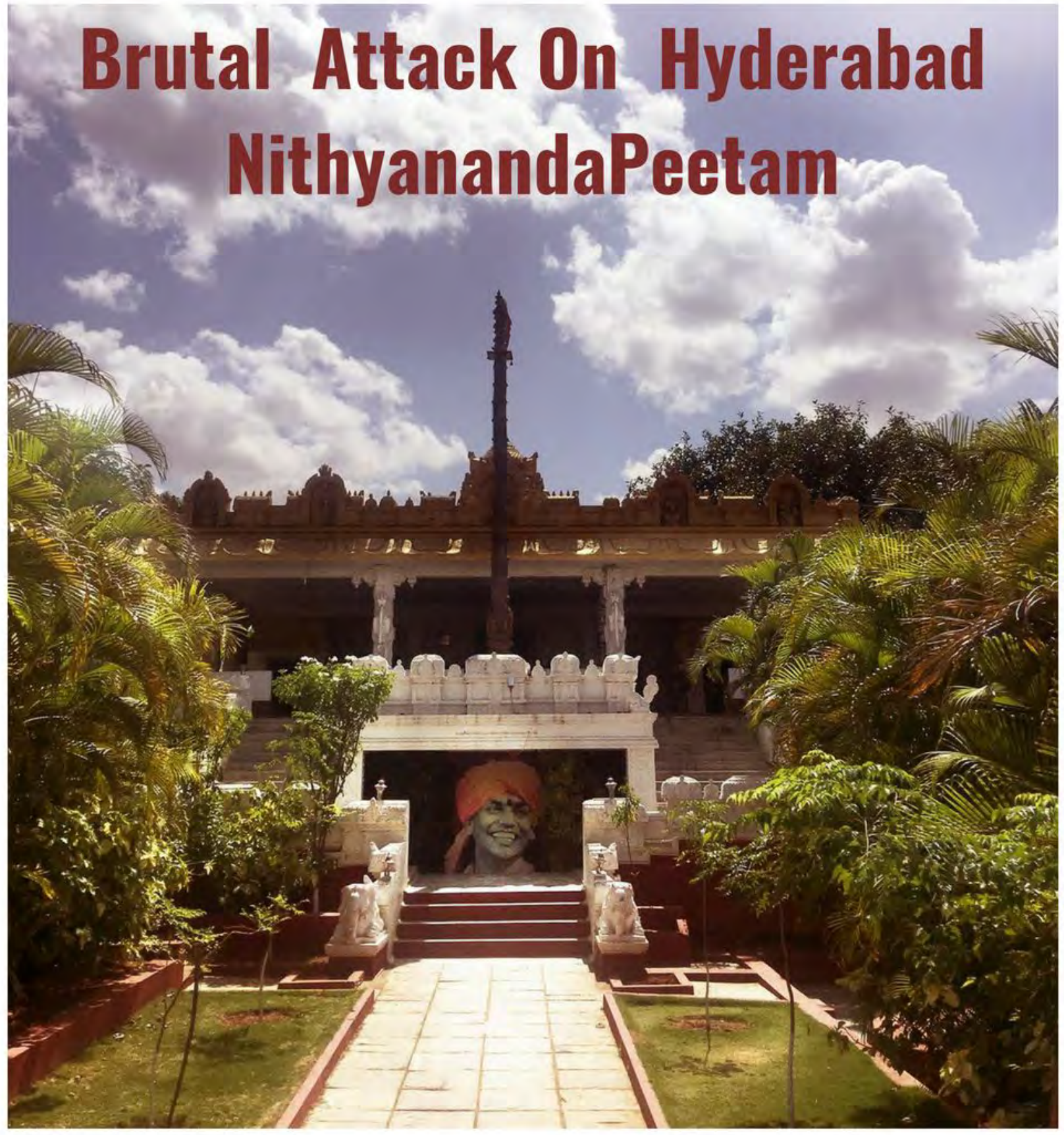
Nithyananda Peetham continues to provide its social and spiritual services at the Hyderabad aadheenam, thereby providing people with a better, blissful life and high conscious living.
Free Health Services