LESSON: 1
This text was machine-transcribed from the printed book and may contain errors. Select the words and choose “Report a mistake”.
Introduction: Introduce the topic 'guilt' to the children and give an explanation as to how our desires lead to guilt.
Goals: To make the kids aware of the topic of guilt, talk about any incident which they felt guilty.
Click of the topic: Guilt the residue
About the topic: Guilt is the opposite face of desire, when you have the desires you have guilt as well. We can call guilt as shadow of desires. Sometimes you feel guilty of desiring something because you feel it is not right to desire it. Other times you feel guilty when your desires are fulfilled because you feel you are not deserving of what you receive. When your desires do not come true you feel guilty because you feel you have not done what you ought to have. Desires invariably lead to guilt. Guilt is something which you did not complete in the past. It is the residue. We usually instead of being with the experience, we immediately move to the next without completely experiencing the present. This creates a residue in us which leads to guilt. For example –when you eat the ice cream be with the ice cream completely, fully enjoy the ice cream then you will not have any residue of eating ice cream. Babies when drinking milk will completely enjoy drinking milk .They will not have any other thoughts. Guilt is nothing but your past decisions and actions being reviewed with your updated intelligence. What is gone is gone, what has been done is done you cannot undo it, now if you constantly think about past and feel guilty, you destroy your present and your future too, nothing can be done about it, so guilt is useless. What can you do? All that you can do is not to repeat the same pattern again, that's all. The past is always past, it is always dead, and that is why it is called past. The problem is that your being is a crowd of voices that don't belong to you. It is the totality of your mother's voice, your teacher's voice, your neighbour's voice and what not. All these voices are in there. If there is only one voice, you will never have any problem. You mind will move like a river. But there are so many voices telling you so many things and creating the rocks of guilt in your path. Guilt makes you feel disconnected within yourself.

When we feel guilty we empower the society. If you make mistakes the treatment is to first to forgive yourself. Let you be very clear: all your guilt, all your pain, everything is a pure imaginary shaft you create inside your head. Awareness causes you to spontaneously take the right action in the right situation. Once you integrate yourself, you will be centred upon awareness, you won't feel disconnected. Every time we try from inside, we feel completed.
Assessment: • What is guilt? • What is past? • What is desire? • How do desires lead to guilt? • Can we change the past? • When do you feel guilt? • Can you see it or smell it or touch it? • Why do you feel heavy when you feel guilty? • Why do you cry or justify when you are guilty?
Evaluation: Evaluate the children's knowledge by asking multiple questions on the topic; ask them their experiences when they felt guilty. Make a note of all the answers.
Conclusion: Conclude the topic by reviewing the important details. Do everything in awareness to feel free from guilt.
[Figure: GUILT graphic]
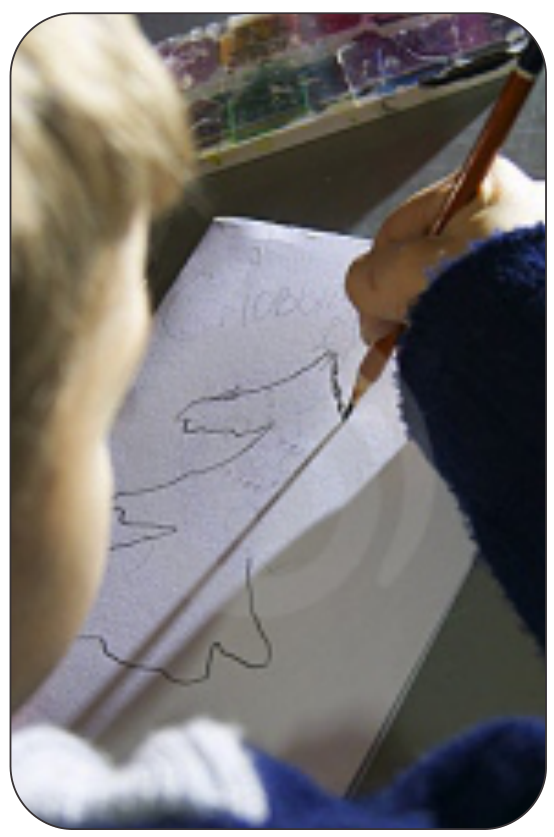
Art of the Day - Shadow drawing
Materials needed: Paper, Pen (or) Sketch (or) Pencil, Pictures
Procedure: Give each child the material required. Explain to the children that they can draw the shadow of the picture given. Encourage each one can to select the picture of their choice and draw the shadow of that picture.
Inference: Explain to the children that guilt is the shadow of the desires. Borrowed desires invariably lead to guilt. When we live our desires completely we will not have guilt. When we are not fully in the moment it leads to the guilt.
© 2011 Copyright Nithya Gnanadhan Trust
Activity -Bluff Game
Here is a group game that can be played together for the representation of guilt.
Materials needed:
A non-transparent bag and one small object (e.g. small piece of paper, button or coin.)
Presentation:
1. Gather the class in a circle and sit. Explain the topic and the game.
2. Take the bag and show the object that will be hidden inside.
3. One person will get to put their hand in the bag. They can either take the object or pretend to take it. They remove their hand with their fist closed and place it behind their back. They have to do this such that no one can see if they have taken the object or not. Everyone takes turns to do the same.
4. Now each person takes turn to guess who has the object in their hand.
5. Watch the facial expression of the people.
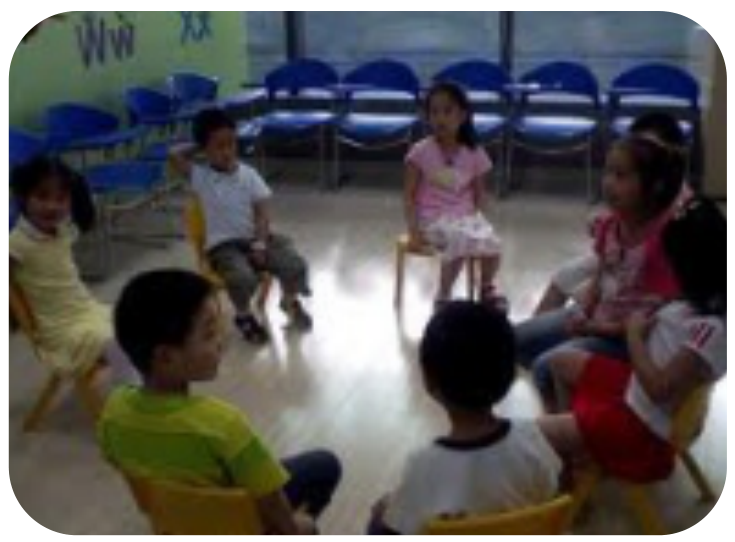
Conclusion:
All others will find it easy to point fingers randomly at someone they think has the object. The person who has the object would find it difficult to point fingers at someone else because they know they have the object. That is guilt!
© 2011 Copyright Nithya Gnanadhan Trust