3 TYPES
This text was machine-transcribed from the printed book and may contain errors. Select the words and choose “Report a mistake”.
OF
GUILT
© 2020 Sri Nithyananda Paramashivam. All Rights Reserved
INTRODUCTION
The three main contributors to Guilt are:
- Guilt created by immediate family.
- Guilt created by social laws.
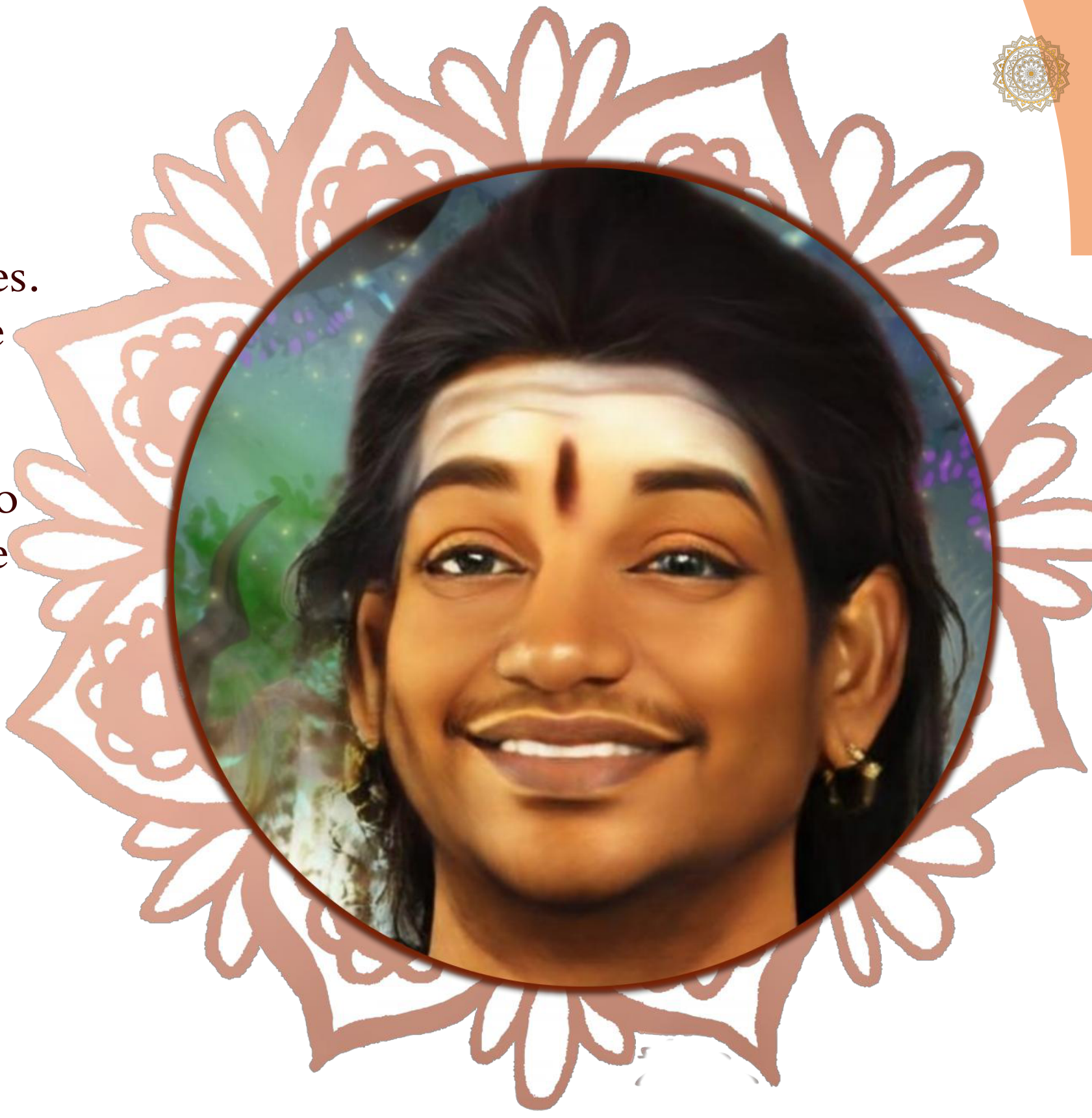
- Guilt created by ourselves. Guilt created by immediate family: Parents tell us that we should respect their wishes, if we are not able to follow their instructions we feel guilty of making them unhappy. Family sows the first guilt in us that passes on from generation to generation.
© 2020 Sri Nithyananda Paramashivam. All Rights Reserved
Children love to twirl but
parents instill the fear in the
child that they might fall and
get hurt because of tumbling.
'No' by the mother actually has
a deep impact on the child. It
creates guilt in the child. If the
mother says 'No' for playing in
the rain and jumping, the child
forces himself to stay in, or if he
goes out without telling his
parents, he will feel guilty, he
will be afraid that somebody
might spot him. As the child
grows, this deep ingrained sense
of guilt will actually settle inside
him. Small incidents like this
collect and make guilt your
natural way of life. For example
when you pour milk if mother
shouts at you, learn from this
incident to be more careful and
aware.
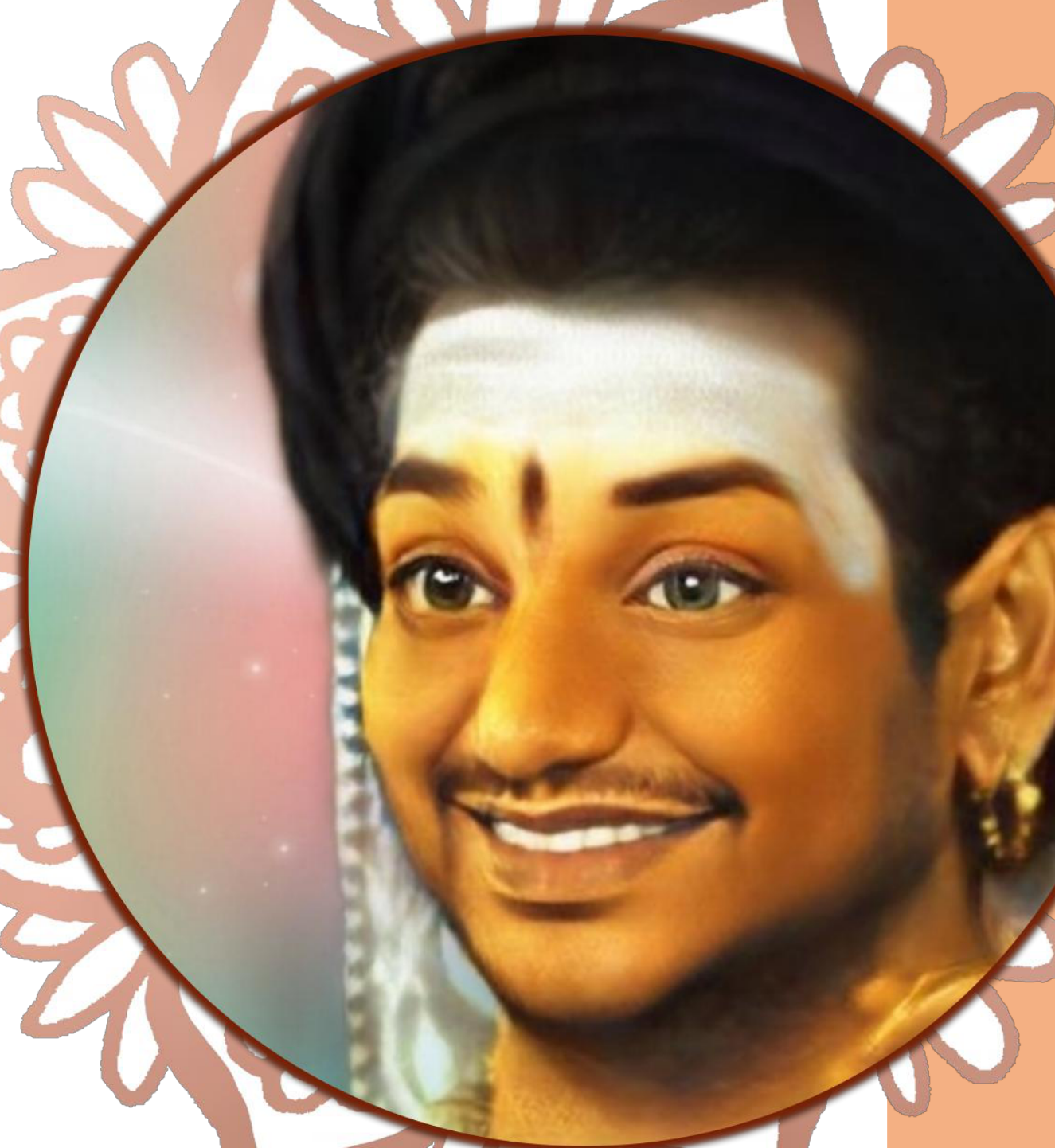
Guilt created by the society:
From seven to fourteen,
society creates guilt in you
through its rules. The guilt
based on fear is created by
social laws. Follow rules by
understanding. Society instils
in you the feeling that you
are not enough unto yourself.
It makes you feel guilty of
what you are and what you
do. The guilty person can
never be at ease with himself.
He will always lack self
confidence. This is where
society steps in and exploits
him. Society functions on
your guilt, the more you feel
guilty, the more society
becomes powerful.
© 2020 Sri Nithyananda Paramashivam. All Rights Reserved
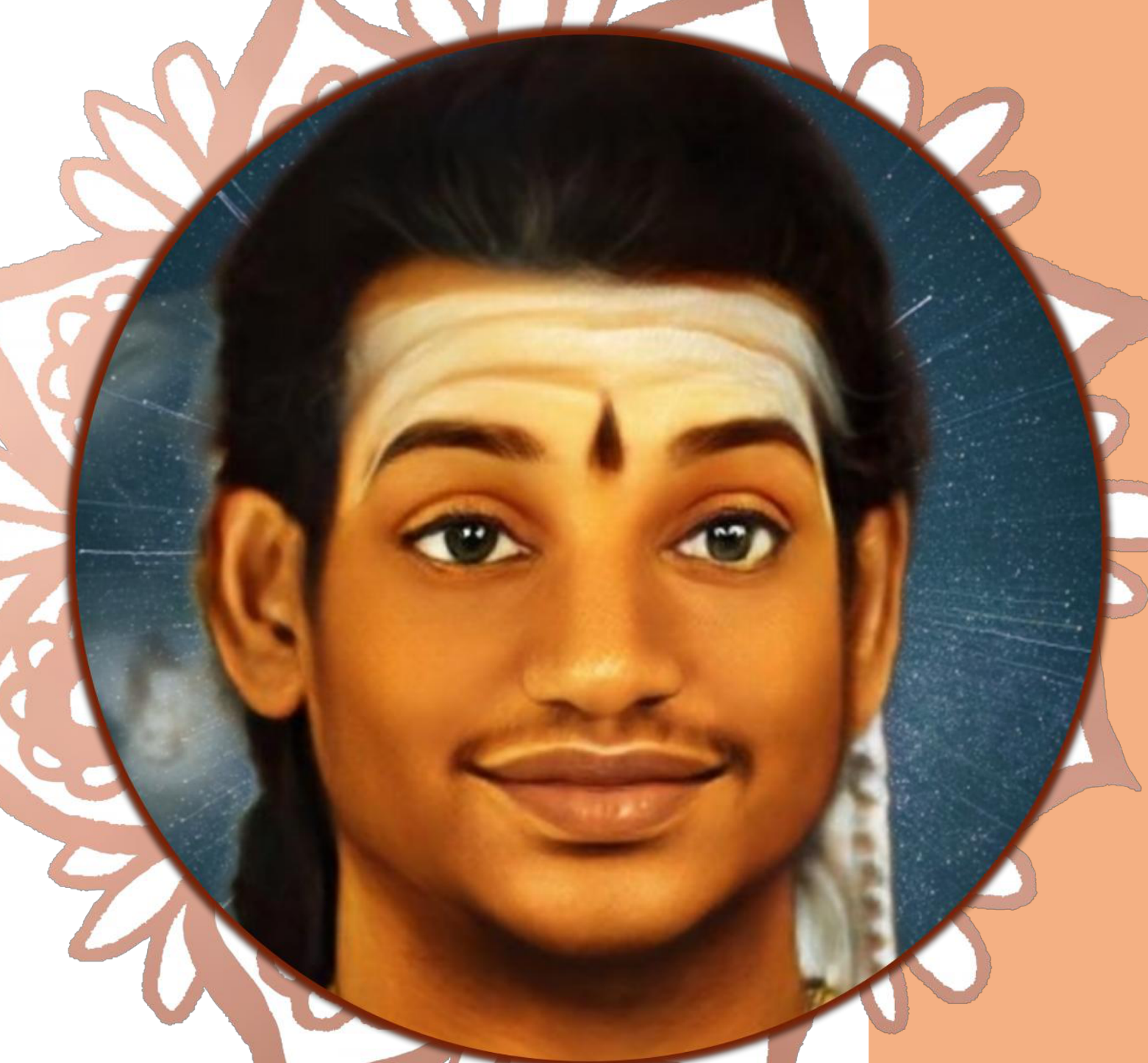
Guilt created by you
(ourselves): The guilt sown in
you by family and society grows
roots inside you. Then you start
creating guilt for yourself
without any reason. The guilt
created by family and the guilt
created by the society are
imposed guilt. They are like a
crown that is passed on from
one generation to another. But
the third guilt is the one which
we create for ourselves. When
you internalize guilt based 'on
greed and fear', you create new
types of guilt for yourself
© 2020 Sri Nithyananda Paramashivam. All Rights Reserved
GOALS:
Make the children aware of different types of guilt.
© 2020 Sri Nithyananda Paramashivam. All Rights Reserved
ASSESSMENT:
- Name the three kinds of guilt?
- How will you feel when not allowed to do things you like the most?
- What happens when we point at somebody for mistakes?
- Can we change the past?
- Can a guilty person be at ease?
- How do we feel when somebody blames us for the mistakes that we didn't do?
- Have you felt guilty on any occasion? How did you overcome the guilty feeling? Can a person be happy and guilty at the same time?

CONCLUSION:
Guilt is a manifestation of ego. We
have to remember when we point at
somebody for some mistakes we have
to understand only one finger points
at them the other three fingers points
at us.
ART OF THE DAY
© 2020 Sri Nithyananda Paramashivam. All Rights Reserved
ART OF THE DAY:
DiSASTER DRAWING
MATERIALS NEEDED:
Paper, Pen (or) Sketch pen, Picture of disaster
PROCEDURE Give each child the material needed. Encourage each child to view pictures of disasters like cyclones, tsunamis and floods and draw that on the paper. Each child will get a turn to explain what they have drawn.
Interpretation: Guilt corrupts our inner space. Guilt is a disaster caused either by our family, or by ourselves or by society. Guilty persons can never be at ease, He can never enjoy life as he is never fulfilled.
© 2020 Sri Nithyananda Paramashivam. All Rights Reserved
ACTIVITY OF THE DAY
© 2020 Sri Nithyananda Paramashivam. All Rights Reserved
ACTIVITY OF THE DAY:
Dissolve salt in water This activity illustrates Ego, Guilt and Love; The water is love, and the salt is Guilt. The way to be in bliss is to dissolve the Guilt in the water of love
MATERIALS NEEDED:
Salt, Water, Container, Spoon.
PRESENTATION
1. Gather the class and discuss the topic. 2. Show them the materials that illustrate the concept. The salt is ego, and the water is love. Ask them what will happen when we add salt to the water? - It dissolves. In the same manner we can dissolve our ego by using love. 3. Demonstrate the activity and show them how proud and white the guilt is on its own, but when added to the water, it dissolves. Love overcomes guilt 4. Each child can add a bit of salt and stir it into the water watching it dissolve.
ACTIVITY OF THE DAY:
CONCLUSION:
Loving and forgiving can overcome negative effects and guilt will disappear.
© 2020 Sri Nithyananda Paramashivam. All Rights Reserved
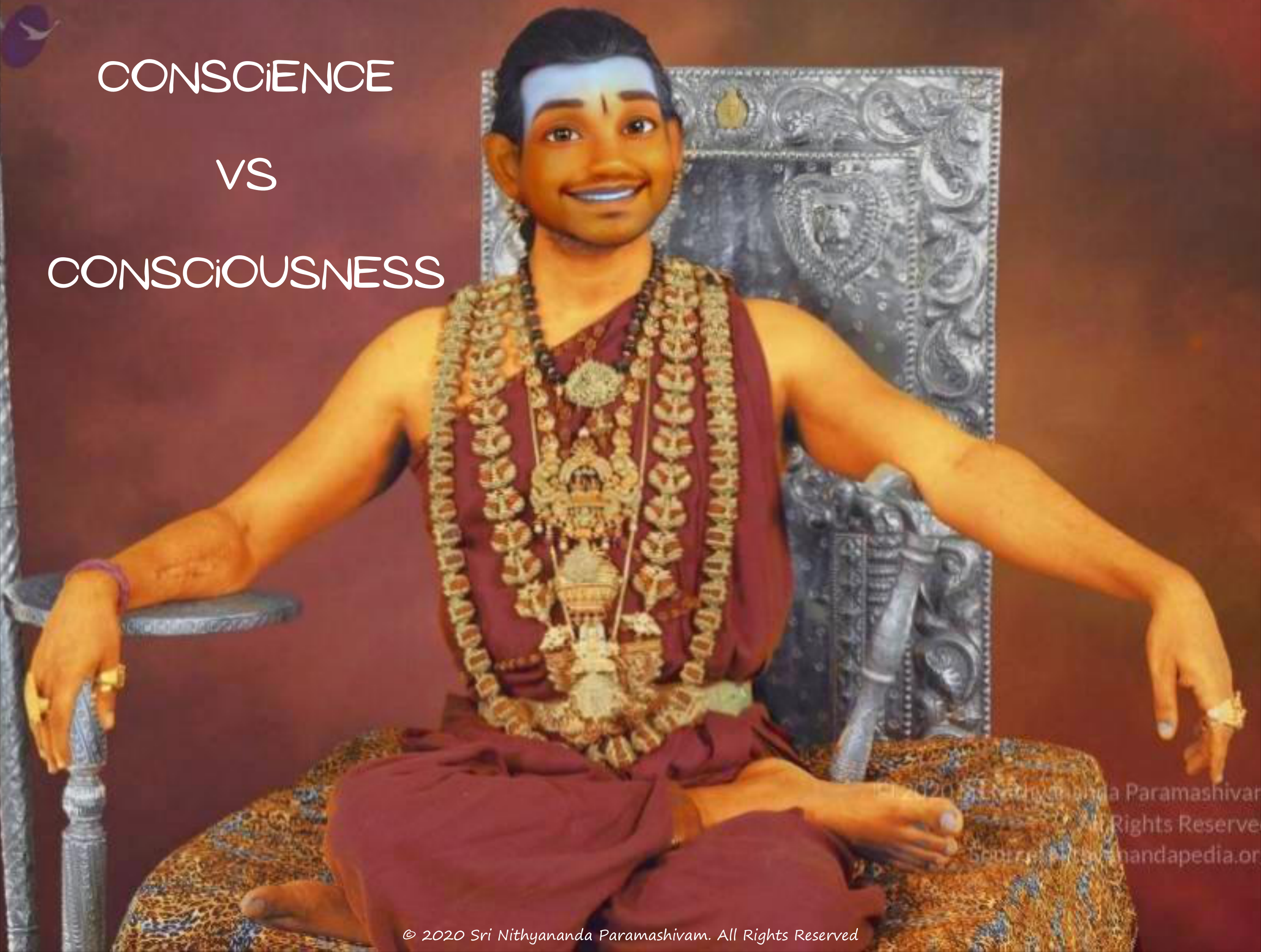
CONSCIENCE
VS
CONSCiOUSNESS
© 2020 Sri Nithyananda Paramashivam. All Rights Reserved
CONSCIENCE
VERSES
CONSCIOUSNESS
When you start internalizing the
laws of society, you create a deep
wound in your being. You
destroy your innate intelligence.
According to me, children can be
given a set of rules initially so
they don't move from the path of
consciousness. But soon they have
to be given the understanding of
life and the need to operate from
consciousness instead of
conscience. If you live with
consciousness, you will
automatically live a moral life. To
start understanding the need to
live with consciousness, just look
into your morality.
Morality is only skin
deep, whereas
consciousness comes
from the very being.
Your consciousness tries
to break through your
conscience. Your
consciousness
continuously fights with
your conscience.
Conscience is societal.
Consciousness is natural.
Conscience is a poor
substitute for
consciousness.
© 2020 Sri Nithyananda Paramashivam. All Rights Reserved
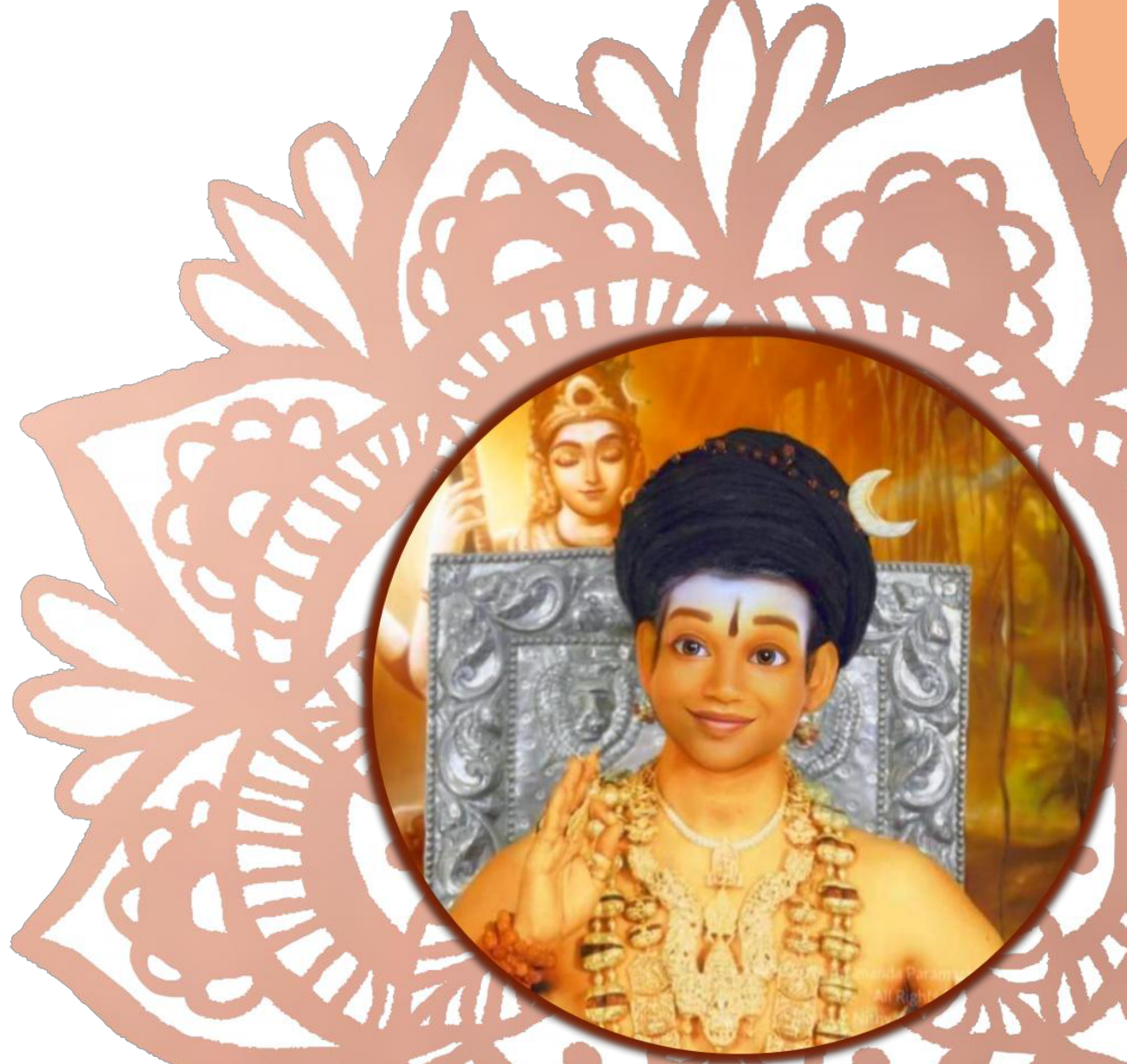
IN SWAMIJI'S OWN WORDS:
People ask me, 'Swamiji, what is
this? You are pulling down the
whole social structure. Then
how can we all live morally?' I
tell them, 'Be very clear, it is
only for kids that you need a
forced morality. For them you
need to say, 'Keep quiet, I will
give you candy.' Of course,
nowadays kids reply, 'I am
happy. I don't need your candy.
Who cares for your candy!' For
a child you can say that you will
give candy and restrict him. You
can impose morality on him
based on fear or greed. But for
you, it is time to grow up. You
are not kids anymore. Just stand
up with consciousness.
© 2020 Sri Nithyananda Paramashivam. All Rights Reserved
“When I say
consciousness, I
mean the
intelligent energy
of your being”
© 2020 Sri Nithyananda Paramashivam. All Rights Reserved
GOALS:
Make them aware of the
importance of rules; and
the necessity of
understanding why we
are following it.
© 2020 Sri Nithyananda Paramashivam. All Rights Reserved
ASSESSMENT:
• What happens when we do not follow rules? • What is the importance of following the rules? • What happens when we follow the rules • without understanding the rules? • What is consciousness? • What is conscience?
CONCLUSION:
If we live with consciousness we will
automatically live a moral life.
Follow the rules by understanding
the reason behind it.
ART OF THE DAY
© 2020 Sri Nithyananda Paramashivam. All Rights Reserved
ART OF THE DAY: FORGIVE YOURSELF DRAWING
MATERIALS NEEDED: Paper, Pen (or) Sketch (or) Pencil, Pictures
PROCEDURE Give each child the materials needed. Ask them to draw the pictorial representation of how they feel when they forgive themselves for what they have done wrong. Let each child be given a chance to explain what they have drawn.
INFERENCE: Guilt is the original sin. Accepting the mistake and forgiving yourself is the only way to overcome guilt and enjoy life.
© 2020 Sri Nithyananda Paramashivam. All Rights Reserved
ACTIVITY OF THE DAY
ACTIVITY OF THE DAY:
STRETCH YOUR HAND AND
SPEAK A LIE
To make the children understand when we speak & lie we will never be confident, when we speak through our whole body supports us.
INTRODUCTION: To make the children understand when we speak & lie we will never be confident, when we speak through our whole body supports us.
PREPARATION: Make the children sit in pairs facing each other
© 2020 Sri Nithyananda Paramashivam. All Rights Reserved
ACTIVITY OF THE DAY:
STRETCH YOUR HAND AND SPEAK A LIE
PRESENTATION:
Ask each child to stretch his hand out and tell two things one is true and the other one is fake (a lie) and now ask the other child to press the palm of the child with his one finger at who is telling the two things. Ask the other child to take a turn & repeat this activity
INTERPRETATION:
When the child is telling a lie when his friend applies pressure on his pattern his palm will go down. But when the child is telling a truth when his friend applies pressure his palm will not go down. Because when we tell a child we will always take confidence because we feel guilty but when we talk truth we will very confident and our whole body will support us for the truth.
WORKSHOP OF THE DAY
© 2020 Sri Nithyananda Paramashivam. All Rights Reserved
WORKSHOP OF THE DAY
VAAKHYAARTHA SADDHAS RE-LIVING IS RELIEVING
Writing down the whole painful episode (worst episode)- Writing down the worst personal incidents of life. Children can be put in pairs and write and discuss it with their friends
EXPLANATION:
Explain to the children that they can write down the entire painful episodes that have occurred in their lives and they can talk it out with their close friends or pairs.
WORKSHOP OF THE DAY
VAAKHYAARTHA SADDHAS RE-LIVING IS RELIEVING
INFERENCE
When we talk about the whole worst episode we re-live the moment, we relive the incident that makes our thoughts complete about that incident. When we re-live that incident we get relieved of the emotional pain of the worst incident.
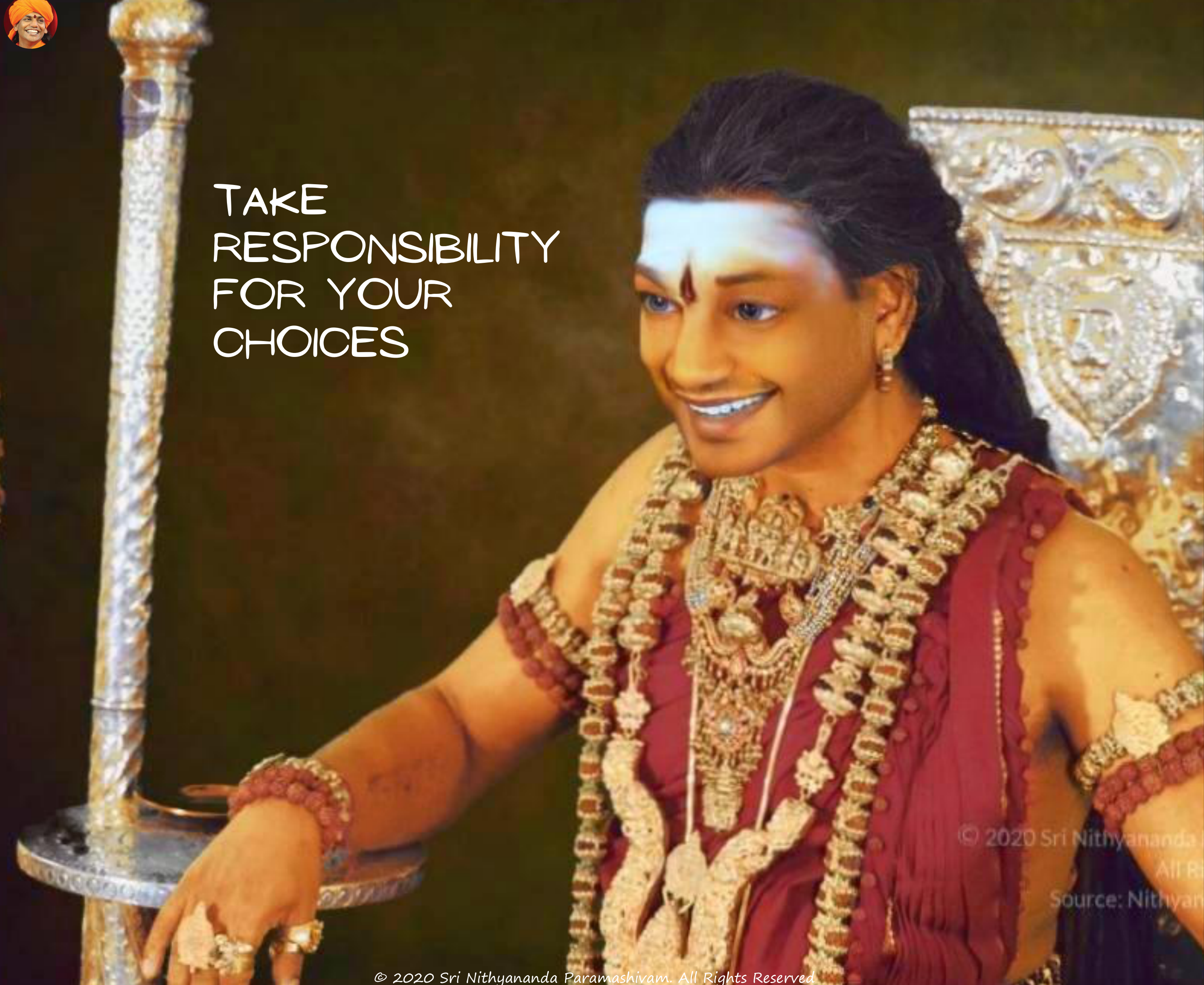
TAKE
RESPONSIBILITY
FOR YOUR
CHOICES
© 2020 Sri Nithyananda Paramashivam. All Rights Reserved
FOLLOWING RULES BY
BEING INSPIRED AS A
NATURAL OUTCOME OF
FEELING RESPONSIBLE
When anything is a forced rule,
you always try to get around it.
For example, you always speed
when you don't see the
policeman. When you follow
rules blindly without
understanding their spirit, this is
what happens – you just wait for
an excuse to break them
© 2020 Sri Nithyananda Paramashivam. All Rights Reserved
Honestly answer
yourself: if there were
no rules, no regulating
authority to keep a
check on what you did,
would you be the same
person as you are now?
Would you be doing
things in the same way
as you do now? If your
answer is no, be very
clear that the rule is
coming from your
conscience, not from
your consciousness. You
have not internalized the
spirit of the rule or you
do not agree with the
rule. That is the reason
you are not doing things
in a way natural to you.
© 2020 Sri Nithyananda Paramashivam. All Rights Reserved
THE THRILL OF
'NO'
You can see, when you tell
children not to do
something, they will be
most tempted to do it. As
long as you don't mention
anything about doing it or
not doing it, they may not
even be bothered about it.
But the moment you tell
them not to do something,
they will be looking to do it.
© 2020 Sri Nithyananda Paramashivam. All Rights Reserved
A Small Story:
One man says, ‘I found three
ways to get things done.’ His
friend asks, ‘What are the three
ways?’ The man replies, ‘First,
do it yourself. Second, hire
someone to do it. Third, tell
your kids not to do it. That’s all,
it will be done!’
Actually there is a taste, a thrill
in doing what you are not
supposed to do. Most of the
time, you develop an instant
urge for something if you are
asked not to do it. You feel a
kind of joy or satisfaction by
doing it. That is the basic
tendency in every human being.
© 2020 Sri Nithyananda Paramashivam. All Rights Reserved
ONLY LIFE CAN TEACH
People come and ask me, ‘How do I make my son do what I advice him to? I know it is good for him but he won’t listen to me.’ You have to understand two things. First thing, if they feel that something is giving them happiness, just let them be. Only life can teach them, you cannot teach them. You cannot teach anybody, only life can teach. You can put a few words into them so that it echoes when life teaches them the same thing, that’s all.
Second thing, unless
they need help, your
help cannot help them.
When they need your
help they will come. See,
your idea of happiness
and unhappiness has
come out of your
experience. Just think,
did you listen to your
father when you were
young? No. You did not.
Taking Responsibility for
your choices-The only
way to raise
consciousness of self and
others. When something
is told to you, if you
take full responsibility of
deciding whether it is
right or wrong, you can
avoid all guilt feelings
© 2020 Sri Nithyananda Paramashivam. All Rights Reserved
If you don't take
responsibility for your
decision, you will feel
discontented whether you
do the action or not. If you
do as you are told, you will
feel that you are being
dominated, that you are not
being assertive, that you are
being exploited. If you
don't do as you are told,
you start feeling guilty that
maybe it was the right thing
to do.
© 2020 Sri Nithyananda Paramashivam. All Rights Reserved
There is no need for this
unnecessary dilemma. Just be
simple. Respond intelligently.
Take responsibility for doing
whatever you are going to do.
Then there is no question of
guilt. If you are not going to do
it, explain clearly to the person
why you are not going to do it.
When you explain, the other
person may agree with you and
may even be thankful to you
for it
Or he may have stronger and
better reasons than you to justify
what he is saying, then you will
be thankful to him for raising
your intelligence. In this way, you
could use every opportunity,
every moment in life to raise your
intelligence, to raise you
consciousness.
GOALS:
Instilling I'm each child
that taking responsibility
for your choices is The
only way to raise
consciousness of self and
others.
© 2020 Sri Nithyananda Paramashivam. All Rights Reserved
ASSESSMENT:
- What is the best rule in life?
- What do we mean when we say "participate with yourselves"?
- What is proving?
- Where is it coming from?
- What should we accept?
- When should we unclutch?
- How to use 'Thank you'? Are we using 'Thank you' to be polite or is it helping us to melt down?
- How can we express compassion? Why shouldn't we compare?
ART OF THE DAY
© 2020 Sri Nithyananda Paramashivam. All Rights Reserved
ART OF THE DAY: BLIND FOLD DRAWING
MATERIALS NEEDED: White sheet, Pencil (or) Sketch pen
PROCEDURE Give each child the materials needed. Encourage the children to draw any picture blind folded. Children then can see the picture which they have drawn and talk about it.
INFERENCE: Connect to the concept that guilt makes us blind so that we cannot see the real picture Explain to the children when we are in guilt we will not make correct decisions, we cannot see the real picture
© 2020 Sri Nithyananda Paramashivam. All Rights Reserved
ACTIVITY OF THE DAY
© 2020 Sri Nithyananda Paramashivam. All Rights Reserved
ACTIVITY OF THE DAY:
CHEAT OTHERS - 1, 2 OR NONE STONE
GOAL:
Make the children understand about the concept of guilt.
PREPARATION:
Get some beads/ stones and ask the children to sit in a circle
PRESENTATION
Ask the children to sit it a circle and explain to the children that one child has to take few beads without showing others with their fist closed and must ask others whether they are having even, or odd beads/stones. They can also avoid taking any beads and have empty fist and ask the other children whether they have odd, even or none. Each child will take turns and play this game.
ACTIVITY OF THE DAY:
CHEAT OTHERS - 1, 2 OR NONE STONE
INTERPRETATION:
A child when showing empty closed fist sometimes, cannot hide because their face will show as they may laugh or keep very quiet. Connect it to the concept if we do something which leads to guilt we cannot hide it.
KAILASA's NITHYANANDA RAJAVIDYA GURUKUL Presents