TRUE DESIRES CARRY THE ENERGY FOR THEiR FULFiLLMENT
This text was machine-transcribed from the printed book and may contain errors. Select the words and choose “Report a mistake”.

INTRODUCTION
When you have a headache, you are not comfortable with that state, because you know that it is not your true nature. Your true nature is having no headache. In the same way, when you have some desire, you immediately want to come out of it, because deep fulfillment is your very nature and desire causes an imbalance in that fulfillment
Two important truths you need to understand:

Your whole life is a long chain of events performed towards the one goal of fulfillment. Whatever you may do, whether it is eating or drinking or having relationships, wealth or joy, it is all to experience fulfillment. You seek fulfillment in different directions instead of seeking it directly.

Fulfillment is within you, it is your very nature. That is why you are trying to come out of non-fulfillment. The fact that you are searching for fulfillment means that fulfillment is known to you. Otherwise you would not search for it! In the instances in your life when you have felt some fulfillment, there is also a hope that you will experience it again. That is why you extend your life

What the outer world lures us into are not the right desires to run behind. How we can recognize our innate desires? If you understand which desire is innate and which is borrowed, happiness happens automatically.
The innate and genuine desires carry the energy for their fulfillment and are the true desires. These desires are always selfless desires. They benefit both individual and humanity. Only such desires carry the energy of the universe for fulfillment

Every desire which drives us is nothing
but the desire to experience that ever
living presence. We sometimes have so
many desires, but there is a difference
between out true desires, and our
"borrowed" desires.
Borrowed" desires are called 'wants' and
our true desires are our 'needs'. When
our desires are our own true desires,
when they reflect our real needs, when
they depress themselves in our inner
energy we don't feel any desperation
about trying to achieve them.


Wants are not our true desire; we just want something especially because others have it and even after getting what we want we won't be happy. We will see somebody else and borrow another want from them. When our desires are our own true desires, they reflect our real needs and when they express themselves in our inner energy, we don't feel any desperation about trying to achieve them. The realization comes, that as an of natural course of events, these desires will be fulfilled. We are not driven and we are not troubled. There is deep peace within us.
ASSESSMENT
- How can we recognize our true desires?
- Do we feel like we need energy for fulfillment of our true desires?
- Are the true desires coming from the outer world?
- What are some true desires? Give examples.
CONCLUSION
To understand what are true desires - Needs.
ART OF THE DAY
ART OF THE DAY
PLAY DOUGH MODELLING OF THEIR NEEDS AND WANTS
MATERIALS NEEDED
Play dough
PROCEDURE
Explain to the children to make models of the wants and needs with the play dough. Give each child enough play dough materials. Encourage each child to make models of their different needs and wants.
CONCLUSION
Instead of chasing outer objects and things that we 'want' trying to make ourselves happy. We need to focus on the things that matter, the true desires which can fulfill us.
ACTIVITY OF THE DAY

ACTIVITY OF THE DAY
ROCK WATER AND SAND
This is a wonderful illustration that represents that every moment is wisdom, that we can learn something new every day and in different ways through opening the mind.
Material required: Rocks or stones, Sand transparent container, Water
Variation: You can have the kids draw an illustration of the concept on paper and make a collage.
Or if those materials are not available or if you want to illustrate the concept quickly or reiterate it, you can draw the materials and do the activity with pictures drawn illustrating the activity and labeling what they represent on a whiteboard or on paper.

Presentation:
Gather the class together and discuss the activity and topic. Explain how every second we can learn things and observe if we are in the present and now. Explain that humans only use 8 to 13% of our brains and this is an illustration that will help us understand
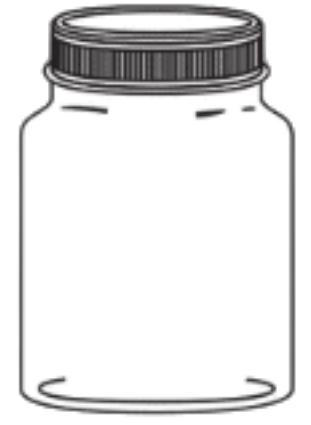
2. Take the transparent container and ask the class if it full? Or empty?".
2. Take the rocks and stones and fill it to the top and ask again. "Is it full?"
3. Next take the sand and pour it in letting it filter through the stones and all the way into the container ask again" Is it full?".
4. Next take the water and shake the container letting it all filter down and the water filling up all the empty spaces Ask again "Is it full?".
6. The point of this illustration is that we are constantly learning, always getting inputs. Our brains are always working and finding new things, we just have to be open to it. One more interpretation of this activity is that our wants and wishes keep on changing and it is very difficult to satisfy all our wants. Our mind always wants more and more, when we understand this we can easily differentiate our true needs from borrowed desires.