BLISS iS BEING SATISFiED
This text was machine-transcribed from the printed book and may contain errors. Select the words and choose “Report a mistake”.
© 2020 Sri Nithyananda Paramashivam. All Rights Reserved
INTRODUCTION
There are seven layers in the pyramid leading up to bliss. We are going to explore the different levels and decide where we are and discuss how to go into bliss. These energy centre or layers in the pyramid correspond with the seven centers of energy in the Vedic system. Each Centre represents an emotional state as well as a state of the desire. As we fulfill the needs of each Centre, we move up in energy till we reach a state of fulfillment. This is also known as self-actualization

Instead of starting at the bottom of the pyramid and trying gradually go up and up in life, we can turn our focus inward and experience our true state, which is bliss. When we are in bliss, top of the pyramid, all our true desires will be fulfilled, everything in the pyramid automatically comes to us. Bliss is experiencing, being happy, being satisfied.
We always go from down to top because we listen to ego. When we are with our self, not trying to prove, when we listen to our heart, we can come from top to bottom. When you have oneness and compassion we can achieve bliss. Changing the object is never a solution. Changing the attitude is the solution. By understanding ourselves, we will understand the world
GOALS
❖ To understand and realize
that some things we need,
and some things we only
desire. Looking within will
help us to find bliss.
❖ To go through the seven
layers and understand what
they mean and why we need
or want them.
ASSESSMENT
- What are food and medicine?
- Are they need/ want? Do we need clothing and shelter?
- Is education a need?
- Why do we need to study? In what ways does education help us in our lives?
- What is the difference between needing and wanting money?
- Do we need millions of rupees? Or only want? Does money make us happy?
- Can we buy love or friends with money?
- What good things can we do with money?
- What is name and fame?
ASSESSMENT
- Doesn't everyone want to be special and important?
- Will it make us happy if we are famous?
- What is intellect?
- Does being very intellectual make us happy?
- If we knew everything and had all the answers and were so smart, would that lead us into bliss?
- What is bliss?
- What does that word bliss mean to you?
ART OF THE DAY
ART OF THE DAY
MIRROR iMAGE
MATERIALS NEEDED
- Paper
- Sketch (or) Pencil
- Mirror picture or object.

PROCEDURE
Keep a picture or object in front of the mirror and ask each child to see the image in the mirror and draw the picture on the paper with pencil or sketch. Explain to the children we see our friends, relatives and mirror their desires as our desires
ACTIVITY OF THE DAY
ACTIVITY OF THE DAY
MAKE A PYRAMID OF DESIRE

MATERIALS NEEDED
- Paper
- Pencil (or) Sketch (or) Pencil
- Chart paper
PROCEDURE
Explain to the child about the pyramid of desire. Encourage each child to cut a triangular shape in the chart with safety scissors and ask them to divide the triangle and write the components of the pyramid of desire.
DESiRE
KNOWLEDGE AND
ACTiON SHOULD
ALWAYS BE iN
TUNE WiTH THE
DESiRE ENERGY.
INTRODUCTION
When you are honest and integrated with the desire, there is no conflict. When we have a true desire, we must channel it properly, put it into action and use it for the good of all.
The knowledge and action should also be in tune with the desire energy. Then it forms a circle of desire leading to better knowledge and action, which in turn leads to clearer desires!

We need to think about our desires, and find out if what we desire is in tune with what is good for us, what is the right thing and important thing for our lives? The desire that is pure and not directed towards any particular object or person is simply an overflowing energy that is called the "desire energy".
From the navel center comes the pure energy. In the heart region, this energy gets converted to the power of desire. This further gets converted into words in the throat region. When this energy gets converted into words, it is called the speech energy.

The speech energy moves further to the brain, there it stays as the power of knowledge and the option is for the energy to get converted into a command and get executed. This is the power of action. If the energy is not processed and changed properly, the knowledge and action become disconnected.
The difference between need and desire is complicated with greed. We may need clothing and shelter, but to have greed is to always want more and more of each item, or greed to live in a big mansion which is not necessary.

If the desire energy gets converted as
too much knowledge and less action,
then we will end up only thinking more
and more, building castles in the air.
On the other hand if the desire energy
gets converted as too much action and
less knowledge then we will end up
working blindly. When you are honest
and integrated with the desire, there is
no conflict and the conversion happens
properly.
GOALS
❖ Causing the
child to
choose Right
over Pleasant
ASSESSMENT
- Can you give examples of some desires?
- What are true desires?
- How can we tell the difference between true desires and wants?
- How can we make desires become reality? What is knowledge?
- What is responsibility?
- Can you get some examples of responsibility?
- What are some things you are responsible for your actions?
- Do we desire things that are good for us?
ASSESSMENT
- If we do not accomplish the things we are to do, how will things be completed?
- If our parents play with toys instead of going to the office, how will we get money?
- Are all desires good?
- How can we be sure we have true desires?
- Where does the desire energy come from?
- Where does the pure energy begin from?
- The energy from our throat becomes what energy
- What is the difference between greed and need?
ART OF
THE DAY

ART OF THE DAY
BUD PAINTING
MATERIALS NEEDED
○ Paper
○ Poster colors
○ Cotton buds.
PROCEDURE
Encourage the children to talk about their desires. Give each child the required materials. Explain to the children that we keep on adding our wants list by seeing at others. Explain to the children and ask them to do bud painting on the plain sheet or on the sheet related to the desires.
Connect to the child the fact that like how in bud painting it starts with individual dot and then progresses to many similarly we also keep on adding to our wants lists new desires.
ACTIVITY OF THE DAY

ACTIVITY OF THE DAY
MAKE A PYRAMID OF DESIRE
MATERIALS NEEDED
○ Paper ○ Pencil (or) Sketch (or) Pencil
PROCEDURE
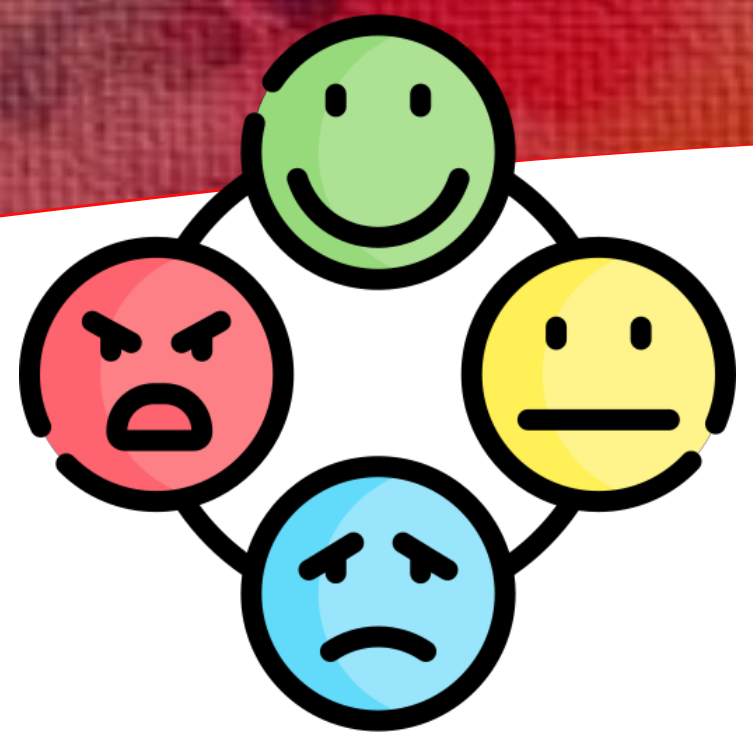
Give each child the materials needed. Encourage the children to draw pictures related to desire emotion. Each child gets the turn to talk about what they have drawn.