LESSON: 2
This text was machine-transcribed from the printed book and may contain errors. Select the words and choose “Report a mistake”.
Introduction: Discuss the difference between wants and needs, the components of comparing.
Goals: To make them understand borrowed desires, what are the needs and what are the wants of an individual.
Click: Comparison is pure illusion.
About the topic: We will discuss about wants and needs
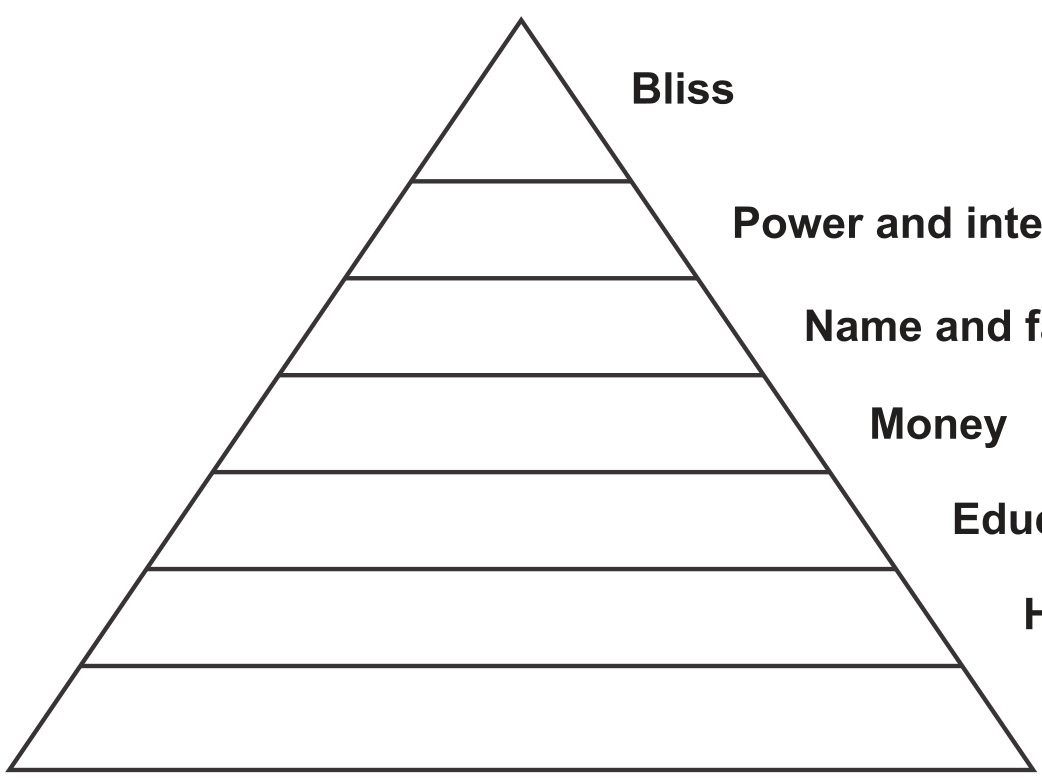
Clothes, food and shelter are our basic needs, next comes health and medicine. Education comes next in the pyramid and then comes money followed by name and fame. Next in the pyramid is power and intellectual knowledge and finally at top of pyramid stands the bliss- which everyone wants to achieve and reach.
[Figure: COMPARE]
COMPARE
When we see others we see the best things about them and want to be like them. The very nature of the mind is to be unsatisfied, not to be happy, and not to be in the present moment. The mind can exist only in the past or future. It cannot exist in the present because you cannot have thoughts in the present moment. Ask the children to name their special features, the features they love a lot. The other extreme of comparison is we feel very proud that we are the best and start discouraging others. Everyone is unique and special; no one is inferior to anybody in any way. Discuss the major areas where we normally compare- wealth, name and fame, power and prestige, knowledge and health. We can group these under four major categories. Money, knowledge and beauty; which includes health and status. Comparison is pure illusion. Contentment will flower when you understand the negative existence of comparison and jealousy. Borrowed desires happen very subtly in our mind; that is why although they happen continuously, we continue to state that we are not bothered by others.
Assessment: • Name some of your special features • Which feature of yours do you like a lot? • What happens when you compare with others? • How do your friends feel when you discourage them? • How will you feel when you encourage your friend to achieve something? • What happens when you always say I am the best and I know everything? • How do our friends feel when we are too proud? • Can we have a huge friend circle if we are very egoistic? • What is the best way to live happily?
Evaluation: Evaluate their language skills by asking them to talk about their special features.
Conclusion: We will not compare with others when we are happy with ourselves and satisfied with what we have. It is only when you don't respect your uniqueness that you start comparing yourself with others.
© 2011 Copyright Nithya Gnanadhan Trust
Art of the Day - Chakra Drawing
Materials Needed: Picture of Vishuddhi chakra, Paper, Pencil (or) Sketch.
Procedure: Talk to the children about the Vishuddhi chakra and show the picture of the Vishuddhi chakra to the children. Encourage the children to see the picture of Vishuddhi chakra and draw the chakra. The Vishuddhi chakra is located in the throat area. In Sanskrit, Vishuddhi means 'beyond purity and impurity'. This chakra is locked by comparison and jealousy and it can be made to flower, when we exhibit our individuality without worrying about others, and express fully our capacity, uniqueness and creativity. This Vishuddhi chakra is all about winning yourself.

© 2011 Copyright Nithya Gnanadhan Trust

Activity of the day - List of qualities
Each of us is perfect- why compare? This activity illustrates and reminds us of the qualities we possess and make us thankful for what we are.
Activity: making a list of qualities that make us special.
Materials needed: paper, pencils.
Presentation: Discuss the activity and what they have learned about the topic of comparison. Talk about how each of us is different and unique. Give some examples such as Susan is very sweet and thoughtful, she is very sharing and loves her friends. Have them think about their own special qualities, and give them each a paper and pencil and make them write their list of qualities.
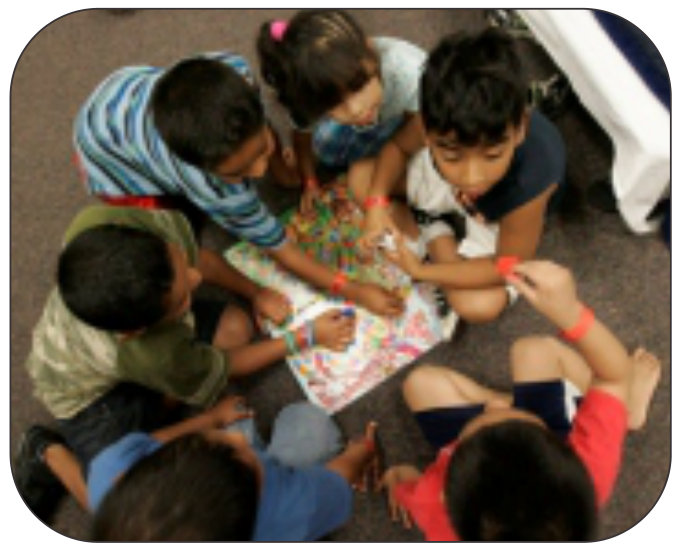
Variation: With paper and a pencil, they can all draw a picture and instead of comparing their pictures, they can each admire and compliment each other on the beauty of the different pictures.
Conclusion: If we had no one to compare with, we would not compare! Comparing leads to jealousy and hurt feelings, so we should be content and happy with whom we are.
Workshop 1 - ice cream sticks
Topic of discussion: Ask them to narrate where they picked up the various ice cream sticks from.
Explanation: Ask each child to discuss their habits and give each child a turn to explain where exactly they picked it up.
For example: One child might say 'I like green colors, because from my young age I have seen my mother's fondness for green colors. I do not like cockroaches because my brother always hates cockroaches and so on. Ask each child to pick up an ice cream stick and write on it, where they picked each of their habits from.
Inference: All our desires and habits are actually not our original desires. We have mainly picked them up from parents, relatives and friends.
© 2011 Copyright Nithya Gnanadhan Trust