Bhagavad Gita Demystified
This text was machine-transcribed from the printed book and may contain errors. Select the words and choose “Report a mistake”.
Ābharaṇa: adornment; vastrābharaṇa is adornment with clothes
Abhyāsa: exercise; practice
Ācārya: teacher; literally 'one who walks with'
Advaita: concept of non-duality; that individual self and the cosmic SELF are one and the same; as different from the concepts of dvaita and viśiṣṭādvaita, which consider self and SELF to be mutually exclusive
Āhāra: food; also with reference to sensory inputs as in pratyāhāra
Ājñā: order, command; the third eye energy centre
Ākāśa: space, sky; subtlest form of energy of universe
Amṛta, amṛt: divine nectar whose consumption leads to immortality
Anāhata: that which is not created; heart energy centre
Ānanda: bliss; very often used to refer to joy, happiness etc.
Angulimaal: a highway robber and murderer who wore a garland with the fingers of his victims. He was later transformed by Buddha and became a monk in Buddha's monastery
Añjana: collyrium, black pigment used to paint the eye lashes
Annamalai Swamigal: enlightened disciple and personal assistant of enlightened master Bhagavan Ramana Maharshi.
Āpas: water
Ārati: worship of the deity using lit lamps
Ārti: worshipping with a flame or light, as with a lamp lit with oiled wick, or burning camphor
Ashtavakra: An enlightened sage of ancient India, authored Ashtavakra Samhita
Āśīrvād: blessing
Ashtanga Yoga: Eight fold path to enlightenment prescribed by Patanjali in his Yoga Sutra
Āśraya: grounded in reality; aśraya doṣa: defect related to reality
Ātma, ātman: individual Self; part of the universal Brahman
Atma Shatakam: Poem of six stanzas composed by enlightened master Adi Sankara , summarizing the concept of Advaita or Non-dualistic philosophy
Aurangazeb: one of the last Mughal emperors; greatest of all the Mughal emperors who ruled India; a despotic ruler
Beedi: local Indian cigarette
Bīja: seed; bīja-mantra refers to the single syllable mantras used to invoke certain deities
Bhagavān: literally god; often used for an enlightened Master
Bhāvana: visualization
Brahma: The God of creation in the Hindu Trinity of Brahma (Creator), Viṣṇu (Preserver) and Śiva (Rejuvenator)
Bhakti: devotion; bhakta, a devotee
Bhagavatam: Devotional stories on Lord Krishna, compiled by Veda Vyasa.
Big Bang: One of the cosmological models of the Universe; proposed by Georges Lemaitre, a Roman Catholic priest
Brahma: the Creator; one of the Hindu trinity of supreme gods, the other two being Vishnu and Shiva
Brahmacārī: literally one who moves with the true reality, Brahman, one without fantasies, but usually taken to mean a celibate; brahmacarya is the quality or state of being a brahmacārī
Brahman: ultimate reality of the Divine, universal intelligent energy
Brāhmaṇa: person belonging to the class engaged in Vedic studies, priestly class
Buddhi: mind, intelligence; mind is also called by other names, manas, citta etc.
Buddhu: a fool
Buddha: Enlightened master who preached of the ‘eight fold path’ to achieve ‘nirvāṇa’ or salvation.
Cakra: literally a ‘wheel’; refers to energy centres in the mind-body system
Cakṣu: eye, intelligent power behind senses
Candāla: an untouchable; usually one who skins animals.
Chandana: sandalwood
Chaitanya Mahaprabhu: An enlightened sage from West Bengal, believed to be an incarnation of Lord Krishna
Chitragupta: a character in the Hindu mythology who keeps account of the events in one’s life to reveal at the time of person’s death.
Citta: mind; also manas, buddhi.
Dakṣiṇāyana: Sun’s southward movement starting 21ˢᵗ June
Darśan: vision; usually referred to seeing divinity
Dharma: righteousness
Dhee: wisdom.
Dīkṣa: grace bestowed by the master and the energy transferred by the master to the disciple at initiation or any other time, may be through a mantra, a touch, a glance or even a thought
Doṣa: defect
Dhyāna: meditation
Dr. Brian Weiss: a Pshychotherapist, famous for his book, ‘Many Lives, Many Masters.’
Dṛṣṭi: sight, seeing with mental eye
Gada: weapon similar to a mace; also gadhāyudaḥ
Gāṇḍīva: Divine bow presented to Arjuna by Agni, god of Fire, in the epic Mahabharata
Gopī, gopikās: literally a cowherdess; usually referred to the devotees who played with Krishna, and were lost in Him
Gopura, gopuram: temple tower
Govindapada: Adi Sankara’s master of enlightened master Adi Sankara
Gṛhasta: a householder, a married person; coming from the word griha, meaning house
Guṇa: the three human behavioral characteristics or predispositions; satva, rajas and tamas
Guru: Master; literally one who leads from gu (darkness) to ru (light)
Gurukul, Gurukulam: literally ‘tradition of guru’, refers to the ancient education system in which children were handed over to a guru at a very young age by parents for upbringing and education
Hammurabhi: Ancient king of Mesopatamia, known for his Hammurabhi’s code, one of the first writteen bookbs on codes of Law
Homa: ritual to Agni, the god of fire; metaphorically represents the transfer of energy from the energy of Ākāśa (space), through Vāyu (Air), Agni (Fire), Āpas (Water), and Pṛthvī (Earth) to humans. Also yāga, yagna
Icchā: desire
I Ching: one of the oldest of Chinese classical texts, describes Cosmology and philosophy
Idā: along with piṅgala and suṣumṇa, the virtual energy pathway through which pranic energy flows
Itihāsa: legend, epic, mythological stories; also purāṇa
Jāti: birth; jāti-doṣa: defect related to birth
Jāgrata: wakefulness
Japa: literally ‘muttering’; continuous repetition of the name of divinity
Jīvasamādhi: burial place of an enlightened master, where his spirit lives on
jīva: means living
Jyotiṣa: Astrology; jyotiṣi is an astrologer
Kaivalya: liberation; same as mokṣa, nirvāṇa
Kāla: time; also mahākāla
Kalpa: vast period of time; Yuga is a fraction of Kalpa
Kalpanā: imagination
Karma: spiritual law of cause and effect, driven by vāsana and samskāra
King Janaka: a noble and benevolent king who ruled Mithila;, father of princess Sita in the epic Rāmāyaṇa.
Koan: Zen parables, an anecdote or riddle without any solution to show the inadequacy of logical reasoning
Kośa: energy layer surrounding body; there are 5 such layers. These are: annamaya or body, prānamaya or breath, manomaya or thoughts, vignānamaya or sleep and ānandamaya or bliss kośas
Kriyā: action
Kṣaṇa: moment in time; refers to time between two thoughts
Kṣatriya: caste or varṇa of warriors
Kumbh Mela: Large spiritual gathering in India that occurs four times every twelve years, attracting millions of people. The four locations of Kumbh Mela are Prayag in Allahabad at the confluence of Ganga, Yamuna and the underground Saraswati river; Haridwar on the banks of Ganga; Ujjain along the Kshipra river and Nasik along Godavari.
Kusha grass: Sacred grass used in the Vedic tradition for various religious ceremonies. The seat made of kusha grass and covered with a skin and a cloth is considered ideal for meditation.
Kuṇḍalini: energy that resides at the root chakra 'mūlādhāra'
Lao Tzu: enlightened master and father of Taoisman ancient Chinese philosopher, referred as 'One of the Three Pure Ones.'
Mahā: great; as in maharṣi, great sage; mahāvākya, great scriptural saying
Mālā: a garland, a necklace; rudrākṣamālā is a garland made of the seeds of the rudrākṣa tree
Mālā: garland
Manana: thinking, meditation
Manas: mind; also buddhi, citta
Mandir: temple
Maṅgala: auspicious; maṅgala sūtra, literally auspicious thread, the yellow or gold thread or necklace a married Hindu woman wears
Mantra: a sound, a formula; sometimes a word or a set of words, which because of their inherent sounds, have energizing properties. Mantras are used as sacred chants to worship the Divine; mantra, tantra and yantra are approaches in spiritual evolution
Manickkavasagchakar: One of the main Nayanmars or Tamil Saivite poet., He compiled ‘Thiruivasagam’, a collection of hymns in praise of Lord Shiva.
Māyā; that which is not, not reality, illusion; all life is māyā according to advaita
Mimamsa: a system of ancient Indian philosophy
Mokṣa: liberation; same as nirvāṇa, samādhi, turīya etc.
Mūlādhāra: the first energy centre, mūlā is root; ādhāra is foundation, here existence
Nachiketa: lead character in Kathopanishad, believed to have learnt the secret of death from Lord Yama (god of death) himself.
Nadi: river
Nāḍi: nerve; also an energy pathway that is not physical
Nāga: a snake; a nāga-sādhu is an ascetic belonging to a group that wears no clothes
Namaskār: traditional greeting with raised hands, with palms brought together
Nānta: without end
Nārī: woman
Nataraja: a depiction of Lord Śiva as the cosmic dancer, main deity in the famous temple at Chidambaram
Nididhyāsana: what is expressed
Nimitta: reason; nimitta-doṣa, defect based on reason
Nirvāṇa: liberation; same as mokṣa, samādhi
Nisargadatta Maharaj: An enlightened master who lived in Mumbai. Passed away on 8th September 1981, at the age of 84.
Niyama: the second of eight paths of Patanjali’s Ashtanga Yoga; refers to a number of day-to-day rules of observance for a spiritual path
Pāpa: sin
Paramahamsa Yogananda: an enlightened master, advocated practice of Kriya Yoga to attain Self-realization.
Patanjali: Father of Yoga, famous for his treatise on yoga called Patanjali’s Yoga Sutras
Prakashananda Saraswati: a Rasik saint in the tradition of Chaitanya Mahaprabhu, his teachings are mainly based on the Bhagavad Gita.
Phala: fruit; phalasruti refers to the assumed benefits of worship
Paramahamsa: literally the ‘supreme swan’; refers to an enlightened being
Parikrama: the ritual of going around a holy location, such as a hill or water spot
Parivrājaka: wandering by an ascetic monk
Piṅgala: please see iḍā
Prāṇa: life energy; also refers to breath; prāṇāyāma is control of breath
Pratyāhāra: literally ‘staying away from food’; in this case refers to control of all senses as part of the eight fold Ashtanga Yoga
Pṛthvī: earth energy
Purohit: priest
Pūjā: Form of ritual worship
Puṇya: merit, beneficence
Purāṇa: epics and mythological stories such as Mahabharata and Ramayana etc.
Pūrṇa: literally ‘complete’; refers in the advaita context to reality
Rajas, rajasic: the second characteristic of the three human guṇa or behaviour modes, referring to passionate action
Putra: son; putrī: daughter
Rakta: blood
Rāmāyaṇa: Famous Indian epic, authored by Valmiki
Rātrī: night
Ramkarishna Paramahamsa: An enlightened master from Dakshineshwar, West Bengal, India.
Ramana Maharshi: an enlightened master from Tiruvannamalai; composed ‘Aksharamanamalai’, the famous hymn on Arunachala hill
Ravana: Mighty emperor of Lanka, the villain in Ramayana, who abducted princess Sita in the Indian historical epic Ramayana.
Rene Descartes: French philosopher and mathematician, Father of Modern philosophy
Ṛṣi: a sage
Sādhana: practice, usually a spiritual practice
Sādhu: literally a ‘good person’; refers to an ascetic; same as sanyāsi
Sahasranāma: 1000 names invoking a particular deity which devotees recite
Sahasrāra: lotus with thousand petals; the crown energy centre
Śakti: energy; intelligent energy; Parāśakti refers to universal energy, divinity; considered feminine; masculine aspect of Shakthi is Shiva
Samādhi: state of no-mind, no-thoughts; literally, becoming one’s original state; liberated, enlightened state.
Saṁśaya: doubt
Saṁskāra: embedded memories of unfulfilled desires stored in the subconscious that drive one into decisions, into karmic action
Saṁyama: complete concentration
Sankalpa: decision
Sāṅkhya philosophy: One of the six schools of classical a system of orthodox Indian philosophy. Sāṅkhya philosophy regards the universe as consisting of two realities: puruṣa (self) and prakṛti (matter).
Sanyās: giving up worldly life; sanyāsi or sanyāsin, a monk, an ascetic
Sanyāsinī, refers to a female monk
Śāstra: sacred texts
Satva, satvic: the highest guṇa of spiritual calmness
Siddhi: extraordinary powers attained through spiritual practice
Shankara: an enlightened master from Kalady, Kerala. Exponent of Advaita vedānta
Śiṣya: disciple
Siṁha: lion; Siṁha svapna: nightmare
Śiva: rejuvenator in the trinity; often spelt as Siva. Śiva also means ‘causeless auspiciousness’.
Smaraṇa: remembrance; constantly remembering the Divine
Smṛti: literally 'that which is remembered'; refers to later day Hindu works which are rules, regulations, laws and epics, such as Manu's works, Purāṇas etc.
Śraddhā: trust, faith, belief, confidence
Śravaṇa: hearing
Sṛṣṭi: creation, which is created
Śruti: literally 'that which is heard'; refers to the ancient scriptures of Vedas, Upaniṣads and Bhagavad Gita; considered to be revealed scriptures
Stotras: devotional verses, to be recited or sung
Śūdra: caste or varṇa of manual labourers
Sumerian civilization: an ancient civilization that existed in the Mesopatamia till the 2nd millennium BC
Sūtra: literally 'thread'; refers to epigrams, short verses which impart spiritual techniques
Śūnya: literally zero; however, Buddha uses this word to mean reality
Suṣumṇa: Please see 'ida'
Svādiṣṭhāna: where Self is established; the groin or spleen energy centre
Svapna: dream
Svatantra: free
Tamas, tamasic: the guṇa of laziness or inaction
Tantra: esoteric techniques used in spiritual evolution
Tapas: severe spiritual endeavour, penance
Thatagata: Buddhahood, a pali word
Tīrtha: water; tīrthaṁ is a holy river and a pilgrimage centre
Trikāla: all three time zones, past, present and future; trikālajñāni is one who can see all three at the same time; an enlightened being is beyond time and space
Turīya: state of samādhi, no-mind
Upaniṣad: literally 'sitting with an enlightenend master'
Uttarāyaṇa: Sun's northward movement
Vaiśya: caste or varṇa of tradesmen
Valmiki: author of the famous epic, Rāmāyaṇa.
Vānaprastha: the third stage in one’s life, (the first stage being that of a student, and the second that of householder) when a householder, man or woman, gives up worldly activities and focuses on spiritual goals
Varṇa: literally colour; refers to the caste grouping in the traditional Hindu social system; originally based on aptitude, and later corrupted to privilege of birth
Vāsana: the subtle essence of memories and desires, saṁskāra, that get carried forward from birth to birth
Vastra: clothes
Vastrābharaṇa: removal of clothes, often used to refer to Draupadi’s predicament in the Mahabharatha, when she was attempted to be disrobed.
Vāyu: Air
Veda: literally knowledge; refers to ancient Hindu scriptures, believed to have been received by enlightened ṛṣi at the being level; also called śruti, along with Upaniṣad
Vibhūti : sacred ash worn by many Hindus on forehead; said to remind themselves of the transient nature of life; of glories too
Vidhi: literally law, natural law; interpreted as fate or destiny
Vidyā: knowledge, education
Viṣāda: depression, dilemma etc.
Viṣṇu: The Preserver in the trinity; His incarnations include Krishna, Rama etc. in ten incarnations; also means ‘all encompassing’
Viśvarūpa: universal form
Vivekananda: An enlightened monk from West Bengal, India; was also Ramakrishna Paramahamsa’s leading disciple
Yama: discipline as well as death; One of the eight fold paths prescribed in Patanjali’s Ashtanga Yoga; refers to spiritual regulations of satya (truth), ahiṁsā (non violence), aparigraha (living simply); asteya (not coveting others’ properties) and brahmacarya (giving up fantasies); yama is also the name of the Hindu god of justice and death
Yantra: literally ‘tool’; usually a mystical and powerful graphic diagram, such as the Śrīcakra, inscribed on a copper plate, and sanctified in a ritual blessed by a divine presence or an enlightened Master
Yoga: literally union, union of the individual self and the divine SELF; often taken to mean Haṭha yoga, which is one of the components of yogasana, relating to specific body postures
Yuga: a period of time as defined in Hindu scriptures; there are four yugas: satya, tretā, dvāpara and kali, the present being kali yuga.
Zarathustra: founder of the religion of Zoroastrianism followed by Parsis

Appendix
About Paramahamsa Nithyananda
Paramahamsa Nithyananda is an enlightened master living amidst us today. With a worldwide movement for meditation and inner bliss, Nithyananda offers solutions for situations as practical as every day stress to the quest for something as profound as enlightenment.
Nithyananda left home at a young age and traveled the length and breadth of India, visiting holy shrines, associating with several yogis and mystics during this period. He realized his intrinsic knowledge through the paths of meditation, yoga, knowledge, devotion, Tantra and other Eastern metaphysical sciences. With an enlightened insight into the core of human nature, Nithyananda has defined his mission for humanity at large.
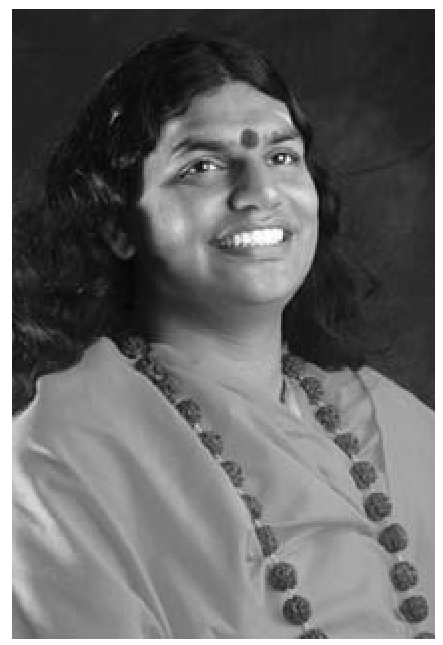
Rooted in the vedic tradition and embracing all world religions as paths to the ultimate Truth, Nithyananda draws people from around the globe, crossing all societal, cultural, language, age and gender barriers.
Since its inception, Nithyananda Dhyanapeetam in Bidadi, Bengaluru, India has been a spiritual center for devotees from all over the world. The organization renders innumerable services and programs. The worldwide ashrams and centers offer programs in Quantum Spirituality, where material and spiritual worlds merge to create blissful living.
The services provided by the organization include ◼ meditation ◼ yoga ◼ corporate leadership programs ◼ free energy healing through the Nithya Spiritual Healing system ◼ free education to youth ◼ promoting art and culture ◼ satsangs (spiritual gatherings) ◼ free medical camps and eye surgeries ◼ free meals at all ashrams worldwide ◼ a holistic system of education for children through the ashram gurukul ◼ a one-year residential spiritual training program in India and more. The Life
Bliss Foundation, located in Los Angeles, USA spreads the powerful teachings and meditations cognized by Nithyananda to centers in North America, Europe and other parts of the world.
Nithyananda says, "Enlightenment flowers when individual consciousness disappears into Universal Consciousness. When you start living enlightenment, you automatically raise the human consciousness around you. Living enlightenment holds the key to global peace and inner bliss. Every individual should be a pioneer in the transition of human consciousness to Divine Consciousness."
Programs and Workshops
Nithyananda Mission offers specialized meditation programs worldwide, to benefit millions of people at the levels of body, mind and spirit. A few of them are listed below:
Inner Awakening
An enlightenment intensive program for sincere seekers offering yoga, powerful teachings, meditation, initiation and more. This program is an intense experience to prepare the body-mind system to hold and radiate the experience of 'living enlightenment'.
Life Bliss Engineering
Life Bliss Engineering program is an intense 3-month program with Nithyananda in the energy field of the Bengaluru ashram. It aims at awakening every participant to Living Enlightenment. It trains them to imbibe a vedic mind and a yogic body. It offers:
• Long-hour sessions in the presence of the master
• Powerful talks from the master
• Eye opening Question and Answer sessions directly with the master
• Specially designed meditation techniques in the presence of the master
• A vedic lifestyle with hands-on exposure to vedic culture and arts
• Short trips with the master to powerful temples of India and much more...
Life Bliss Program Level 1 (LBP Level 1)
— Energize yourself
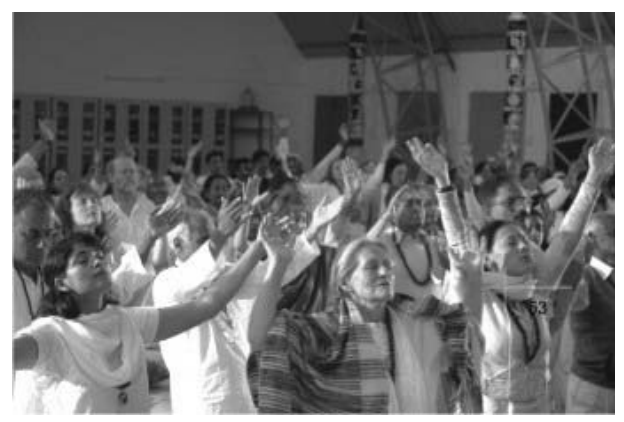
A chakra based meditation program that relaxes and energizes the seven major chakras or subtle energy centers in your system. It gives clear intellectual and experiential understanding of your various emotions such as greed, fear, worry, attention-need, stress, jealousy, ego, and discontentment. It is designed to create a spiritual effect at the physical level. It is a guaranteed life solution to experience the reality of your own bliss. When you are liberated from a particular emotion, you experience a new world, a new energy. It is a highly effective workshop, experienced by millions of people around the globe.
Life Bliss Program Level 2 (LBP Level 2)
— Death demystified!
A meditation program that unleashes the art of living by demystifying the process of dying. This program creates the space to detach from ingrained and unconscious emotions like guilt, pleasure and pain, all of which stem from the ultimate fear of death. It is a gateway to a new life that is driven by natural intelligence and spontaneous enthusiasm
Life Bliss Program Level 3 - Atma Spurana Program (LBP Level 3 - ATSP)
— Connect with your Self!
An indepth program that analyzes clearly the workings of the mind and shows you experientially how to be the master of the mind rather than be dictated by it. It imparts tremendous intellectual understanding coupled with powerful meditations to produce instant clarity and integration.
Life Bliss Program Level 3 - Bhakti Spurana Program (LBP Level 3 - BSP)
— Integrate your Devotion
A program that reveals the different dimensions of relating with others and with your deeper self. It clearly defines relationship as that which kindles and reveals your own unknown dimensions to you. It allows you to experience the real depth and joy of any relationship in your life.
Life Bliss Technology (LBT)
- A free residential life sciences program
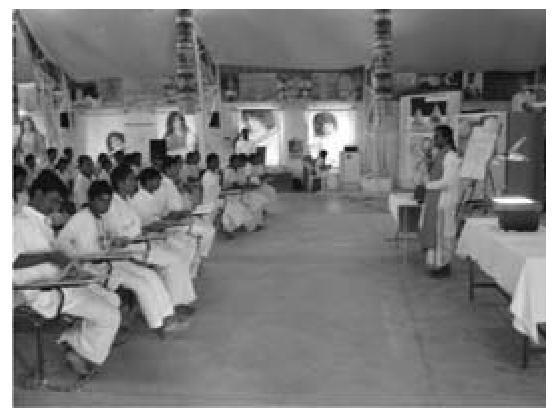
Life Bliss Technology (LBT) is a residential program for youth between 18 and 30 years of age. With its roots in the Eastern system of vedic education, this program is designed to empower modern youth with good physical, mental and emotional health and practical life skills. By nurturing creative intelligence and spontaneity, and imparting life skills, it creates economically self-sufficient and spiritually fulfilled youth. Above all, it offers a lifetime opportunity to live and learn under the tutelage of an enlightened master.
Nithyanandam
An advanced meditation program for seekers where the presence of the Master and the intense energy field lead one to the state of nithya ananda – eternal bliss. It offers a range of techniques from meditation to service to sitting in the powerful presence of the master.
Kalpataru
An experiential meditation program sowing in you the seed of:
Shakti, the Energy to understand and change whatever you need to change in life,
Buddhi, the Intelligence to understand and accept whatever you don't need to change in life,
Yukti, the Clarity to understand and realize that however much you change, whatever you see as reality is itself a continuously changing dream,
Bhakti, the Devotion, the feeling of deep connection to That which is unchanging, eternal and Ultimate, and
Mukti, the Ultimate Liberation into Living Enlightenment when all these four are integrated.
This program empowers you with the energy to align your actions with your intentions so you move with success and inner bliss.
Nithyananda Mission Highlights
• Meditation and de-addiction camps worldwide: Over 2 million people impacted to date
- Nithya Spiritual Healing: A system of cosmic energy healing administered free through 5000 ordained healers, through our worldwide ashrams and centers, touching 20,000 people globally every day – healing both mind and body
- Anna Daan (free food program): 10,000 nutritious meals distributed every week through all the ashram anna mandirs for visitors, devotees and disciples thus improving health standards
- The Nithyananda Order and its training: Spiritual aspirants ordained as Sannyasis, Brahmacharis and Brahmacharinis: who undergo years of intensive training in yoga, meditation, deep spiritual practice, Sanskrit, vedic chanting, life skills, and who run the 100% volunteer based ashrams of Nithyananda Mission worldwide, working in all Mission activities
- Nithya Yoga: A revolutionary system of yoga in the lines of sage Patanjali’s original teachings, taught worldwide.
- Nithyananda Vedic Temples and Ashrams: Over 30 Vedic temples and ashrams worldwide.
- Meditation Programs in prisons: Conducted in prisons and juvenile camps to reform extremist attitudes – resulting in amazing transformation among the inmates.
- Medical Camps: Free treatment and therapies in allopathy, homeopathy, ayurveda, acupuncture, eye check-ups, eye surgeries, artificial limb donation camps, gynecology and more
- Support to children in rural areas: School buildings, school uniforms and educational materials provided free to rural schools.
- Life Bliss Technology: A free two year / three month program for youth teaching Life Engineering and the science of enlightenment
- Nithyananda Gurukul: A modern scientific approach to education combined with the vedic system of learning – protecting and developing the innate intelligence of the child who flowers without repression, fear or peer pressure
- Corporate Meditation Programs: Specially designed and conducted in corporate firms worldwide including Microsoft, AT&T, Qualcomm, JP Morgan, Petrobras, Pepsi, Oracle, American Association of Physicians of Indian Origin (AAPI) – with focus on intuitive management, leadership skills and team work.
• Nithyananda Institute of Teachers’ Training: Over 300 teachers trained to teach: transformational meditation programs, Quantum Memory Program, Nithya Yoga, Health and Healing Programs, Spiritual Practice Programs and more
• Media: Articles in national and international newspapers and magazines, carrying transforming messages from Nithyananda
• Nithyananda Publishers: Over 5000 hours of Paramahamsa Nithyananda’s discourses transcribed, edited and published in-house and made available in stores through books, DVDs and CDs
• Life Bliss Gallerias: Worldwide stores and mobile shops retailing recordings and books of Nithyananda’s discourses and Nithya Kirtan recordings in 23 languages
• Nithyananda Meditation & Healing Centers: Worldwide, offering meditation and healing services
• Nithyananda Sangeeth Academy: Music, dance and other forms of art taught and encouraged in youth and elderly alike - live and through internet
• Free Discourses on YouTube: Over 500 free discourses on www.youtube.com – wisdom from the Master, easily accessible. Ranked top in viewership
• Support to scientists and researchers: Continually bridging gaps between science and spirituality through researches on spiritual energy and healing.
• Nithyananda Youth Foundation: A collection of inspired youth, building a divine and dynamic society with a common ideology of peace and enlightenment
• Nithya Dheera Seva Sena: Through transformation of self, this volunteer force of Ananda Sevaks trains and functions in the service of humanity, also serving as relief wing working towards disaster recovery management.