Verses Of Gita Chapter 13
This text was machine-transcribed from the printed book and may contain errors. Select the words and choose “Report a mistake”.
अर्जुन उवाच
प्रकृतिं पुरुषं चैव क्षेत्रं क्षेत्रज्ञमेव च।
एतद्वेदितुमिच्छामि ज्ञानं ज्ञेयं च केशव।।१३.१।।
arjuna uvaca
prakrtim purusam caiva ksetram ksetra-jnam eva ca etad veditum icchami jnanam jneyam ca kesava 13.1
arjunah uvaca: Arjuna said; prakrtim: nature; purusam: the enjoyer; ca: also; eva: certainly; ksetram: body; ksetra-jnam: knower of the body; eva: certainly; ca: also; etat: all this; veditum: to understand; icchami: I wish; jnanam: knowledge; jneyam: the object of knowledge; ca: also; kesava: O Krsna.
13.1 Arjuna said: O Krishna, I wish to know and understand about prakriti and purusha, passive and active energies
The field and the knower of the field, and of knowledge and of the end of knowledge.
श्री भगवानुवाच
इदं शरीरं कौन्तेय क्षेत्रमित्यभिधीयते।
एतद्यो वेत्ति तं प्राहुः क्षेत्रज्ञ इति तद्विदः।।१३.२।।
sri-bhagavan uvaca idam sariram kaunteya
ksetram ity abhidhiyate etad yo vetti tam prahuh
ksetra-jna iti tad-vidah 13.2
sri-bhagavan uvaca: the Personality of Godhead said; idam: this; sariram: body; kaunteya: O son of Kunti; ksetram: the field; iti: thus; abhidhiyate: is called; etat: this; yah: anyone; vetti: knows; tam: he; prahuh: is called; ksetra-jnah: knower of the body; iti: thus; tat-vidah: one who knows.
13.2 Lord Krishna replies to Arjuna saying: This body, O son of Kunti, is called the field, Anyone who knows this body is called the knower of the field.
क्षेत्रज्ञं चापि मां विद्धि सर्वक्षेत्रेषु भारत।
क्षेत्रक्षेत्रज्ञयोर्ज्ञानं यत्तज्ज्ञानं मतं मम।।१३.३।।
ksetra-jnam capi mam viddhi sarva-ksetresu bharata
ksetra-ksetrajnayor jnanam yat taj jnanam matam mama 13.3
ksetra-jnam: the knower; ca: also; api: certainly; mam: Me; viddhi: know; sarva: all; ksetresu: in bodily fields; bharata: O son of Bharata; ksetra: field of activities (the body); ksetra-jnayoh: the knower of the field; jnanam: knowledge; yat: that which is taught; tat: that; jnanam: knowledge; matam: opinion; mama: that.
13.3 O Bharata, we should understand that I am the Knower in all bodies, the Creator.
In my opinion knowledge means to understand this body or the field of creation as well as the creator, one who knows this field.
तत्क्षेत्रं यच्च यादृक् च यद्विकारि यतश्च यत्।
स च यो यत्प्रभावश्च तत्समासेन मे शृणु ।। १३.४ ।।
tat ksetram yac ca yadrk ca yad-vikari yatas ca yat
sa ca yo yat-prabhavas ca tat samasena me srnu
tat: that; ksetram: field of activities; yat: as; ca: and; yadrk: as it is; ca: and; yat: what is; vikari: changes; yatah: from which; ca: and; yat: which; sah: he; ca: also; yah: one; yat: which; prabhavah ca: influence also; tat: that; samasena: in summary; me: from Me; srnu: understand.
13.4 Understand my summary of this field of activity and how it is constituted, what its changes are, how it is produced, Who that knower of the field of activities is, and what his influences are.
ऋषिभिर्बहुधा गीतं छन्दोभिर्विविधैः पृथक् ।
ब्रह्मसूत्रपदैश्चैव हेतुमद्भिर्विनिश्चितैः ।। १३.५ ।।
rsibhir bahudha gitam chandobhir vividhaih prthak
brahma-sutra-padais caiva hetumadbhir viniscitaih
rsibhih: by the wise sages; bahudha: in many ways; gitam: described; chandobhih: Vedic hymns; vividhaih: in various; prthak: variously; brahma-sutra: the Vedanta; padaih: aphorisms; ca: also; eva: certainly; hetu-madbhih: with cause and effect; viniscitaih: ascertain.
13.5 That knowledge of the field of activities and of the knower of activities is described by various sages in the scriptures It is presented with all reasoning as to cause and effect.
महाभूतान्यहङ्कारो बुद्धिरव्यक्तमेव च।
इन्द्रियाणि दशैकं च पञ्च चेन्द्रियगोचराः।।१३.६।।
maha-bhutany ahankaro buddhir avyaktam eva ca indriyani dasaikam ca panca cendriya-gocarah 13.6
इच्छा द्वेषः सुखं दुःखं सङ्घातश्चै्तना धृतिः।
एतत्क्षेत्रं समासेन सविकारमुदाहृतम् ।।१३.७।।
iccha dvesah sukham duhkham sanghatas cetana dhrtih etat ksetram samasena sa-vikaram udahrtam 13.7
maha-bhutani: great elements; ahankarah: ego; buddhih: intelligence; avyaktam: the unmanifested; eva: certainly; ca: also; indriyani: senses; dasa-ekam: eleven; ca: also; panca: five; ca: also; indriya-go-carah: objects of the senses; iccha: desire; dvesah: hatred; sukham: happiness; duhkkham: distress; sanghatah: the aggregate; cetana: living symptoms; dhrtih: conviction; etat: all this; ksetram: the field of activities; samasena: in summary; sa-vikaram: interaction; udahrtam: exemplified.
13.6,7 The field of activities and its interactions are said to be: the five elements of nature, ego, intelligence, the mind, the formless, the ten senses of perception and action, as well as
The five objects of senses and desire, hatred, happiness, distress, the aggregate, the life symptoms, and convictions.
अमानित्वमदम्भित्वमहिंसाक्षान्तिरार्जवम्।
आचार्योपासनं शौचं स्थैर्यमात्मविनिग्रहः॥१३.८।।
amanitvam adambhitvam ahimsa ksantir arjavam
acaryopasanam saucam sthairyam atma-vinigrahah
amanitvam: humility; adambhitvam: pridelessness; ahimsa: nonviolence; ksantih: tolerance; arjavam: simplicity; acarya- upasanam: approaching a bona fide spiritual master; saucam: cleanliness; sthairyam: steadfastness; atma-vinigrahah: control;
इन्द्रियार्थेषु वैराग्यमनहङ्कार एव च।
जन्ममृत्युजराव्याधिदुःखदोषानुदर्शनम्।।१३.९।।
indriyarthesu vairagyam anahankara eva ca
janma-mrtyu-jara-vyadhiduhkha dosanudarsanam
indriya-arthesu: in the matter of the senses; vairagyam: renunciation; anahankarah: being without egoism; eva: certainly; ca: also; janma: birth; mrtyu: death; jara: old age; vyadhi: disease; duhkha: distress; dosa: fault; anudarsanam: observing;
असक्तिरनभिष्वङ्गः पुत्रदारगृहादिषु।
नित्यं च समचित्तत्वमिष्टानिष्टोपपत्तिषु।।१३.१०।।
asaktir anabhisvangah putra-dara-grhadisu
nityam ca sama-cittatvam istanistopapattisu
asaktih: without attachment; anabhisvangah: without association; putra: sons; dara: wife; grha-adisu: home, etc.; nityam: eternal; ca: also; sama-cittatvam: equilibrium; ista: desirable; anista: undesirable; upapattisu: having obtained;
मयि चानन्ययोगेन भक्तिरव्यभिचारिणी।
विविक्तदेशसेवित्वमरतिर्जनसंसदि।।१३.११।।
mayi cananya-yogena bhaktir avyabhicarini vivikta-desa-sevitvam aratir jana-samsadi 13.11
mayi: unto Me; ca: also; ananya-yogena: by devotional service; bhaktih: devotion; avyabhicarini: constant, unalloyed; vivikta: solitary; desa: place; sevitvam: aspiring; aratih: without attachment; jana: to people in general; samsadi: mass;
अध्यात्मज्ञाननित्यत्वं तत्त्वज्ञानार्थदर्शनम्।
एतज्ज्ञानमिति प्रोक्तमज्ञानं यदतोऽन्यथा।।१३.१२।।
adhyatma-jnana-nityatvam tattva-jnanartha-darsanam etaj jnanam iti proktam ajnanam yad ato 'nyatha 13.12
adhyatma: pertaining to the self; jnana: knowledge; nityatvam: eternity; tattva-jnana: knowledge of the truth; artha: the object; darsanam: philosophy; etat: all this; jnanam: knowledge; iti: thus; proktam: declared; ajnanam: ignorance; yat: that which; atah: from this; anyatha: others.
13.8,9,10,11,12 Humility, absence of pride, nonviolence, tolerance, simplicity, service to an enlightened spiritual Master, cleanliness, steadiness and self-control; renunciation of the objects of sense gratification; absence of ego, the perception of the pain of the cycle of birth and death, old age and disease;
Nonattachment to children, wife, home and the rest and even-mindedness amid pleasant and unpleasant events; constant and unalloyed devotion to Me, resorting to solitary places, detachment from the general mass of people; accepting the importance of self realization, and philosophical search for the absolute truth:
All these I thus declare to be knowledge and anything contrary to these is ignorance.
ज्ञेयं यत्तत्प्रवक्ष्यामि यज्ज्ञात्वाऽमृतमश्नुते।
अनादिमत्परं ब्रह्म न सत्तन्नासदुच्यते।।१३.१३।।
jneyam yat tat pravaksyami yaj jnatvamrtam asnute anadi mat-param brahma na sat tan nasad ucyate 13.13
jneyam: knowable; yat: that; tat: which; pravaksyami: I shall now explain; yat: which; jnatva: knowing; amrtam: nectar; asnute: taste; anadi: beginningless; mat-param: subordinate to Me; brahma: spirit; na: neither; sat: cause; tat: that; na: nor; asat: effect; ucyate: is called.
13.13 I shall fully give you the understanding about the knowable with which one can taste eternal bliss or the being or the Consciousness that has no beginning. A life beyond the law of cause, effect and the material world.
सर्वतःपाणिपादं तत्सर्वतोऽक्षिशिरोमुखम्।
सर्वतः श्रुतिमल्लोके सर्वमावृत्य तिष्ठति।।१३.१४।।
sarvatah pani-padam tat sarvato 'ksi-siro-mukham
sarvatah srutimal loke sarvam avrtya tisthati 13.14
sarvatah: everywhere; pani: hands; padam: legs; tat: that; sarvatah: everywhere; aksi: eyes; sirah: head; mukham: face; sarvatah: everywhere; sruti-mat: hearing; loke: in the world; sarvam: everything; avrtya: covering; tisthati: exists.
13.14 With hands and feet everywhere, with eyes, heads and mouths everywhere, with ears everywhere, He exists in the worlds, enveloping all.
The Paramatman (supreme Spirit) is all pervading.
सर्वेन्द्रियगुणाभासं सर्वेन्द्रियविवर्जितम्।
असक्तं सर्वभृच्चैव निर्गुणं गुणभोक्तृ च।।१३.१५।।
sarvendriya-gunabhasam sarvendriya-vivarjitam
asaktam sarva-bhrc caiva nirgunam guna-bhoktr ca 13.15
sarva: all; indriya: senses; guna: qualities; abhasam: original source; sarva: all; indriya: senses; vivarjitam: being without; asaktam: without attachment; sarva-bhrt: maintainer of everyone; ca: also; eva: certainly; nirgunam: without material qualities; guna-bhoktr: simultaneously master of the gunas; ca: also.
13.15 The Paramatman is the original source of all the senses. Yet, He is beyond all the senses. He is unattached. Although the Consciousness is the maintainer of all the living beings, yet He transcends the modes of the nature and at the same time He is the Master of the modes of our material nature.
बहिरन्तश्च भूतानामचरं चरमेव च।
सूक्ष्मत्वात्तदविज्ञेयं दूरस्थं चान्तिके च तत्।।१३.१६।।
bahir antas ca bhutanam acaram caram eva ca suksmatvat tad avijneyam dura-stham cantike ca tat 13.16
bahih: outside; antah: inside; ca: also; bhutanam: of all living entities; acaram: not moving; caram: moving; eva: also; ca: and; suksmatvat: on account of being subtle; tat: that; avijneyam: unknowable; dura-stham: far away; ca: also; antike: near; ca: and; tat: that.
13.16 The Supreme Truth exists both internally and externally, in the moving and nonmoving. He is beyond the power of the material senses to see or to know. Although far, far away, He is also near to all.
अविभक्तं च भूतेषु विभक्तमिव च स्थितम्।
भूतभर्तृ च तज्ज्ञेयं ग्रसिष्णु प्रभविष्णु च।।१३.१७।।
avibhaktam ca bhutesu vibhaktam iva ca sthitam bhuta-bhartr ca taj jneyam grasisnu prabhavisnu ca 13.17
avibhaktam: without division; ca: also; bhutesu: in every living being; vibhaktam: divided; iva: as if; ca: also; sthitam: situated; bhutabhartr: maintainer of all living entities; ca: also; tat: that; jneyam: to be understood; grasisnu: devours; prabhavisnu: develops; ca: also.
13.17 Although the Paramatman appears to be divided, He is never divided. He is situated as one. Although He is the maintainer of every living entity, it is to be understood that He consumes and creates all.
ज्योतिषामपि तज्ज्योतिस्तमसः परमुच्यते।
ज्ञानं ज्ञेयं ज्ञानगम्यं हृदि सर्वस्य विष्ठितम्।।१३.१८।।
jyotisam api taj jyotis tamasah param ucyate
jnanam jneyam jnana-gamyam hrdi sarvasya visthitam 13.18
jyotisam: in all luminous objects; api: also; tat: that; jyotih: source of light; tamasah: of the darkness; param: beyond; ucyate: is said; jnanam: knowledge; jneyam: to be known; jnana-gamyam: to be approached by knowledge; hrdi: in the heart; sarvasya: of everyone; visthitam: situated.
13.18 He is the source of light in all luminous objects. He is beyond the darkness of matter and is formless. He is knowledge, He is the object of knowledge, and He is the goal of knowledge. He is situated in everyone's heart.
इति क्षेत्रं तथा ज्ञानं ज्ञेयं चोक्तं समासतः।
मद्भक्त तद्विज्ञाय मद्भावायोपपद्यते।।१३.१९।।
iti ksetram tatha jnanam jneyam coktam samasatah
mad-bhakta etad vijnaya mad-bhavayopapadyate 13.19
iti: thus; ksetram: the field of activities (the body); tatha: also; jnanam: knowledge; jneyam: the knowable; ca: also; uktam: described; samasatah: in summary; mat-bhaktah: My devotee; etat: all this; vijnaya: after understanding; mat- bhavaya: My nature; upapadyate: attains.
13.19 Thus the field of activities, knowledge and the knowable has been summarily described by Me. It is only when we can understand the true nature of our supreme Self and the material world with which we have created false identities that we can go beyond this and attain the supreme Self itself.
प्रकृतिं पुरुषं चैव विद्ध्यनादी उभावपि।
विकारांश्च गुणांश्चैव विद्धि प्रकृतिसंभवान्।।१३.२०।।
prakrtim purusam caiva viddhy anadi ubhav api
vikarams ca gunams caiva viddhi prakrti-sambhavan 13.20
prakrtim: material nature; purusam:living entity; ca: also; eva: certainly; viddhi: must know; anadi: without beginning; ubhau: both; api: also; vikaran: transformations; ca: also; gunan: three modes of nature; ca: also; eva: certainly; viddhi: know; prakrti: material nature; sambhavan: produced of.
13.20 Prakriti or the field and its attributes and the purusha or the knower or the supreme consciousness are both without beginning.

All the transformations of nature that we see are produced by the field or prakriti.
कार्यकारणकर्तृत्वे हेतुः प्रकृतिरुच्यते।
पुरुषः सुखदुःखानां भोक्तृत्वे हेतुरुच्यते।।१३.२१।।
karya-karana-kartrtve hetuh prakrtir ucyate
purusah sukha-duhkhanam bhoktrtve hetur ucyate 13.21
karya: effect; karana: cause; kartrtve: in the matter of creation; hetuh: instrument; prakrtih: material nature; ucyate: is said to be; purusah: the living entity; sukha: of happiness; duhkhanam: and distress; bhoktrtve: in enjoyment; hetuh: the instrument; ucyate: is said to be.
13.21 In the production of the body and the senses, prakriti is said to be the cause; In the experience of pleasure and pain, purusha is said to be the cause.
पुरुषः प्रकृतिस्थो हि भुङ्क्ते प्रकृतिजान्गुणान्।
कारणं गुणसङ्गोऽस्य सदसद्योनिजन्मसु।।१३.२२।।
purusah prakrti-stho hi bhunkte prakrti-jan gunan
karanam guna-sango 'sya sad-asad-yoni-janmasu 13.22
purusah: the living entity; prakrti-sthah: being situated in the material energy; hi: certainly; bhunkte: enjoys; prakrti- jan: produced by the material nature; gunan: modes of nature; karanam: cause; gunasangah: association with the modes of nature; asya: of the living entity; sat-asat: good and bad; yoni: species of life; janmasu: birth.
13.22 The living entity in the material nature follows the way of life, enjoying the moods of nature. Due to association with the material nature it meets the good or evil among various species.
उपद्रष्टाऽनुमन्ता च भर्ता भोक्ता महेश्वरः।
परमात्मेति चाप्युक्तो देहेऽस्मिन्पुरुषः परः।।१३.२३।।
upadrastanumanta ca bharta bhokta mahesvarah paramatmeti capy ukto dehe ‘smin purusah parah 13.23
upadrasta: overseer; anumanta: permitter; ca: also; bharta: master; bhokta: supreme enjoyer; maha-isvarah: the Supreme Lord; parama-atma: Supersoul; iti: also; ca: and; api uktah: is said; dehe: in this body; asmin: this; purusah: enjoyer; parah: transcendental.
13.23 Yet, in this body there is a transcendental energy. He who is divine, who exists as a owner or the witness, supporter, enjoyer and the pure witnessing Consciousness, is known as the Paramatman.
य एवं वेत्ति पुरुषं प्रकृतिं च गुणैःसह।
सर्वथा वर्तमानोऽपि न स भूयोऽभिजायते।।१३.२४।।
ya evam vetti purusam prakrtim ca gunaih saha sarvatha vartamano ‘pi na sa bhuyo ‘bhijayate 13.24
yah: anyone; evam: thus; vetti: understands; purusam: the living entity; prakrtim: material nature; ca: and; gunaih: modes of material nature; saha: with; sarvatha: by all means; vartamanah: situated; api: in spite of; na: never; sah: he; bhuyah: again; abhijayate: takes his birth.
13.24 One who understands this philosophy concerning material nature, the living entity and the interaction of the modes of nature is sure to attain liberation. He will not take birth here again, regardless of his present position.
ध्यानेनात्मनि पश्यन्ति केचिदात्मानमात्मना।
अन्ये सांख्येन योगेन कर्मयोगेन चापरे।।१३.२५।।
dhyanenatmani pasyanti kecid atmanam atmana
anye sankhyena yogena karma-yogena capare 13.25
dhyanena: by meditation; atmani: self; pasyanti: see; kecit: one; atmanam: Supersoul; atmana: by the mind; anye: others; sankhyena: by philosophical discussion; yogena: by the yoga system; karma-yogena: by activities without fruitive desire; ca: also; apare: others.
13.25 Some perceive the Paramatman in their inner psyche through mind and intellect that have been purified by meditation Or by metaphysical knowledge or by karma yoga.
अन्ये त्वेवमजानन्तः श्रुत्वाऽन्येभ्य उपासते।
तेऽपि चातितरन्त्येव मृत्युं श्रुतिपरायणाः।।१३.२६।।
anye tv evam ajanantah srutvanyebhya upasate
te 'pi catitaranty eva mrtyum sruti-parayanah 13.26
anye: others; tu: but; evam: thus; ajanantah: without spiritual knowledge; srutva: by hearing; anyebhyah: from others; upasate: begin to worship; te: they; api: also; ca: and; atitaranti: transcend; eva: certainly; mrtyum: the path of death; sruti-parayanah: inclined to the process of hearing.
13.26 There are those who, although not conversant in spiritual knowledge, begin to worship the supreme personality upon hearing about Him from others.
Through the process of hearing about the supreme Self, they also transcend the path of birth and death.
यावत्सञ्जायते किञ्चित्सत्त्वं स्थावरजङ्गमम्।
क्षेत्रक्षेत्रज्ञसंयोगात्तद्विद्धि भरतर्षभ।।१३.२७।।
yavat sanjayate kincit sattvam sthavara-jangamam
ksetra-ksetrajna-samyogat tad viddhi bharatarsabha 13.27
yavat: whatever; sanjayate: takes place; kincit: anything; sattvam: existence; sthavara: not moving; jangamam: moving; ksetra: the body; ksetra-jna: knower of the body; samyogat: union between; tat viddhi: you must know it; bharata-rsabha: O chief of the Bharatas.
13.27 Bharata, know that whatever that is movable or immovable is born, It comes into existence by combination of kshetra and kshetragna.
समं सर्वेषु भूतेषु तिष्ठन्तं परमेश्वरम्।
विनश्यत्स्वविनश्यन्तं यः पश्यति स पश्यति।।१३.२८।।
samam sarvesu bhutesu tisthantam paramesvaram vinasyatsv avinasyantam yah pasyati sa pasyati 13.28
samam: equally; sarvesu: in all; bhutesu: living entities; tisthan-tam: residing; parama-isvaram: the Supersoul; vinasyatsu: in the destructible; avinasyantam: not destroyed; yah: anyone; pasyati: sees; sah: he; pasyati: actually sees.
13.28 One who sees the supreme Spirit accompanying the individual soul in all bodies, Who understands that neither the individual soul nor the supreme Spirit is ever destroyed, actually sees.
समं पश्यन्हि सर्वत्र समवस्थितमीश्वरम्।
न हिनस्त्यात्मनाऽऽत्मानं ततो याति परां गतिम्।।१३.२९।।
samam pasyan hi sarvatra samavasthitam isvaram na hinasty atmanatmanam tato yati param gatim 13.29
samam: equally; pasyan: seeing; hi: certainly; sarvatra: everywhere; samavasthitam: equally situated; isvaram: Supersoul; na: does not; hinasti: degrade; atmana: by the mind; atmanam: the soul; tatah yati: then reaches; param: the transcendental; gatim: destination.
13.29 When one does not get degraded or influenced by the mind and when he can see the supreme Spirit in all living and non-living things, One reaches the transcendental destination.
प्रकृत्यैव च कर्माणि क्रियमाणानि सर्वशः।
यः पश्यति तथाऽऽत्मानमकर्तारं स पश्यति।।१३.३०।।
prakrtyaiva ca karmani kriyamanani sarvasah
yah pasyati tathatmanam akartaram sa pasyati 13.30
prakrtya: by material nature; eva: certainly; ca: also; karmani: activities; kriyamanani: engaged in performing; sarvasah: in all respects; yah: anyone who; pasyati: sees; tatha:so also; atmanam: himself; akartaram: non-doer; sah: he; pasyati: sees perfectly.
13.30 One who can see that all activities are performed by the body, which is created of material nature, Sees that the Self does nothing, actually sees.
यदा भूतपृथग्भावमेकस्थमनुपश्यति।
तत एव च विस्तारं ब्रह्म सम्पद्यते तदा।।१३.३१।।
yada bhuta-prthag-bhavam eka-stham anupasyati
tata eva ca vistaram brahma sampadyate tada 13.31
yada: when; bhuta: living entities; prthak-bhavam— separated identities; eka-stham: situated in one; anupasyati: tries to see through authority; tatah eva: thereafter; ca:
also; vistaram: expanded; brahma: the Absolute; sampadyate: attains; tada: at that time.
13.31 When a person can see the supreme Self in all living entities then he will cease to see the separateness among the living entities.
He will see that the whole universe is an expansion and expression of the same truth.
अनादित्वान्निर्गुणत्वात्परमात्मायमव्ययः।
शरीरस्थोऽपि कौन्तेय न करोति न लिप्यते।।१३.३२।।
anaditvan nirgunatvat paramatmayam avyayah
sarira-stho ‘pi kaunteya na karoti na lipyate 13.32
anaditvat: due to eternity; nirgunatvat: due to transcendental; parama: beyond material nature; atma: spirit; ayam: this; avyayah: inexhaustible; sarira-sthah api: though dwelling in the body; kaunteya: O son of Kunti; na karoti: never does anything; na lipyate: nor is he entangled.
13.32 Those with the vision of eternity can see that the soul is transcendental, eternal, and beyond the modes of nature. Despite contact with the material body, O Arjuna, the soul neither does anything nor is attached.
यथा सर्वगतं सौक्ष्म्यादाकाशं नोपलिप्यते।
सर्वत्रावस्थितो देहे तथाऽऽत्मा नोपलिप्यते।।१३.३३।।
yatha sarva-gatam sauksmyad akasam nopalipyate
sarvatravasthito dehe tathatma nopalipyate 13.33
yatha: as; sarva-gatam: all-pervading; sauksmyat: due to being subtle; akasam: the sky; na: never; upalipyate: mixes; sarvatra: everywhere; avasthitah: situated; dehe: in the body; tatha: such; atma: the self; na: never; upalipyate: mixes.
13.33 The sky, due to its subtle nature, does not mix with anything, although it is all pervading. Similarly, the soul, situated in brahman, does not mix with the body, though situated in that body.
यथा प्रकाशयत्येक : कृत्स्नं लोकमिमं रविः।
क्षेत्रं क्षेत्री तथा कृत्स्नं प्रकाशयति भारत।।१३.३४।।
yatha prakasayaty ekah krtsnam lokam imam ravih
ksetram ksetri tatha krtsnam prakasayati bharata 13.34
yatha: as; prakasayati: illuminates; ekah: one; krtsnam: the whole; lokam: universe; imam: this; ravih: the sun; ksetram: this body; ksetri: the soul; tatha: similarly; krtsnam: all; prakasayati: illuminates; bharata: O son of Bharata.
O son of Bharata, as the sun alone illuminates this universe, so does the living entity, one within the body, illuminate the entire of by consciousness.
13.34 O son of Bharata, as the Sun alone illuminates the entire universe, so does the living entity, one within the body, illuminate the entire consciousness.
क्षेत्रक्षेत्रज्ञयोरेवमन्तरं ज्ञानचक्षुषा।
भूतप्रकृतिमोक्षं च ये विदुर्यान्ति ते परम्॥१३.३५॥
ksetra-ksetrajnayor evam antaram jnana-caksusa bhuta-prakrti-moksam ca ye vidur yanti te param 13.35
ksetra: body; ksetra-jnayoh: of the proprietor of the body; evam: that; antaram: difference; jnana-caksusa: by vision of knowledge; bhuta: living entity; prakrti: material nature; moksam: liberation; ca: also; ye: one who; viduh: knows; yanti: approaches; te: they; param: Supreme.
13.35 Those, who see with the eyes of knowledge the difference between the body mind and the knower of the body mind, can understand the process.
Are liberated from the bondages of the material nature and attain the Paramatman.
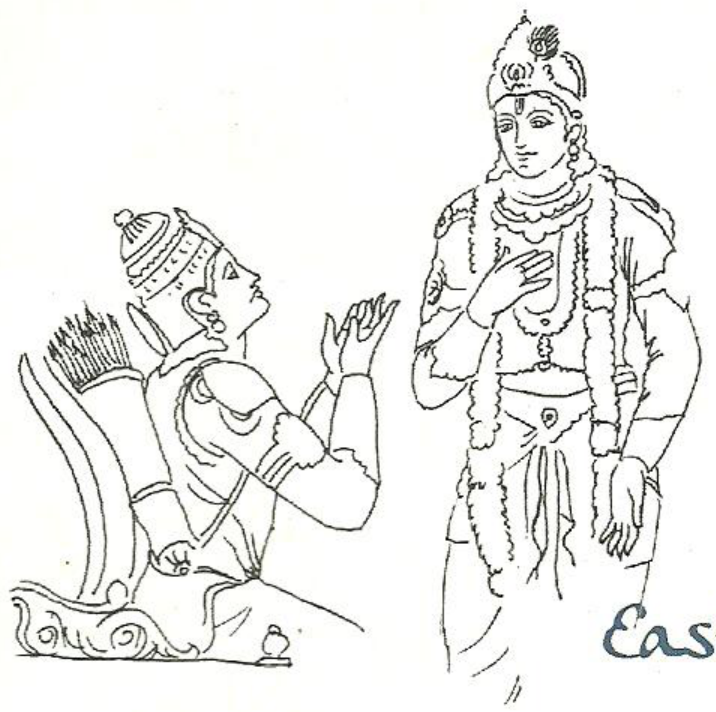

Bhagavad Gita
commentary by
Nithyananda
East before you are eaten - chapter 13
What constitutes the body and mind? What, if anything, exists beyond the body and mind?
Why do some see God in form while others can perceive Him as formless?
How can we directly experience that we are one with all Creation?
In chapter 13 of the Bhagavad Gita, Creation and Creator, Krishna talks about the body-mind as the Field, the creation and the energy behind the field as the Knower of the Field, the Creator. He explains how you can move beyond association with the Field to become the Knower of the Field.
Krishna answers these issues in the inimitable style that has made the Bhagavad Gita the ultimate source for all questions that we have about life, death and the supreme liberation.
Nithyananda, further guides with precision, how to shift our attention from the Field to see that we are actually the witnessing Consciousness, the Knower of the Field.
Ebook ISBN: 979-8-88572-038-0
PUBLISHED BY LIFE BLISS FOUNDATION