Verses Of Gita Chapter 2
This text was machine-transcribed from the printed book and may contain errors. Select the words and choose “Report a mistake”.
सञ्जय उवाच
तं तथा कृपयाविष्टमश्रुपूर्णाकुलेक्षणम्।
विषीदन्तमिदं वाक्यमुवाच मधुसूदनः।।२.१।।
Sanjaya uvaacha:
tam tathaa kripayaavishtam ashrupoorna akulekshanam visheedantam idam vaakyam uvaacha madhusoodanaha 2.1
sanjaya uvaacha: Sanjaya said; tam: to him; tatha: thus; kripayaa: by pity; aavishtam: overcome; ashru-poorna: full of tears; akula: agitated; ikshanam: (one with) eyes; visheedantam: sorrowing; idam: this; vaakyam: word; uvaacha: said; madhu-soodanah: the killer of Madhu
Sanjaya said:
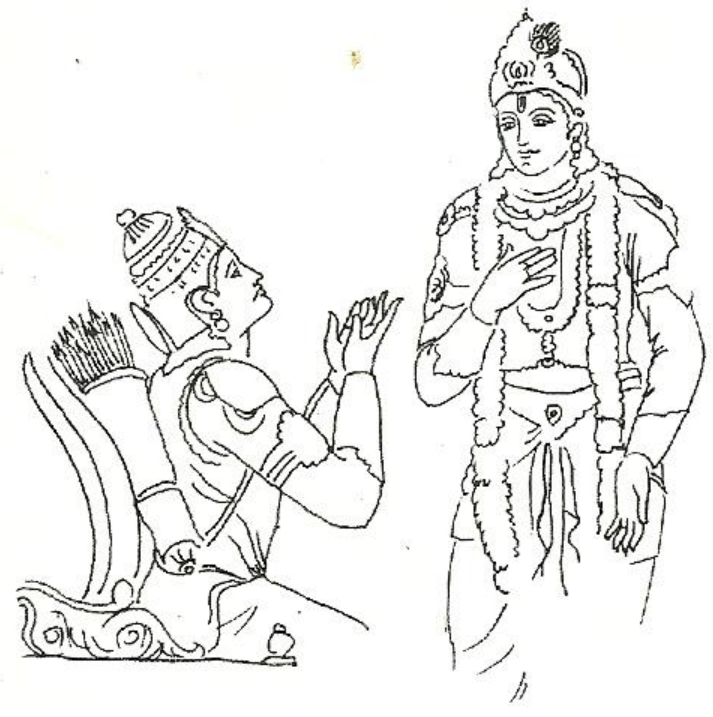
2.1 As Arjuna's eyes overflowed with tears of pity and despair, Krishna spoke to him thus
श्री भगवानुवाच
कुतस्त्वा कश्मलमिदं विषमे समुपस्थितम्।
अनार्यजुष्टमस्वर्ग्यमकीर्तिकरमर्जुन।।२.२।।
Shri Bhagavaan uvaacha:
kutastvaa kashmalam idam vishame samupasthitam
anaarya jushtam asvargyam akeertikaram arjuna 2.2
Shri Bhagavaan uvaacha: Lord said; kutah: why; tvaa: upon you; kashmalam: delusion; idam: this; vishame: in this critical time; samupasthitam: arrived; anaarya jushtam: unworthy of a noble soul; asvargyam: not leading to heaven; akeertikaram: disgraceful; arjuna: O Arjuna
2.2 Krishna said,
Where from has this dejection descended on you at this critical time, Arjuna!
You behave unlike a noble man and this will keep you away from realization.
क्लैब्यं मा स्म गमः पार्थ नैतत्त्वय्युपपद्यते।
क्षुद्रं हृदयदौर्बल्यं त्यक्त्वोत्तिष्ठ परन्तप।।२.३।।
klaibyam maa sma gamah paartha naitattwayyupapadyate
kshudram hrdaya daurbalyam tyaktvottishtha parantapa 2.3
klaibyam: impotence; maa: do not; sma gamah: yield; paartha: son of Partha; na: not; etat: this; tvayi: in you; upapadyate: is fitting; kshudram: mean; hrdaya daurbalyam: weakness of heart; tyaktvaa: after abandoning; uttishtha: get up; param-tapa: destroyer of enemies
2.3 Do not yield to fear, Partha! It does not befit you. Drop this faint-heartedness and stand up, Destroyer of enemies!
अर्जुन उवाच
कथं भीष्ममहं संख्ये द्रोणं च मधुसूदन।
इषुभिः प्रतियोत्स्यामि पूजार्हावरिसूदन।।२.४।।
arjuna uvaacha:
katham bheeshmam aham sankhye dronam cha madhusoodana ishubhihi pratiyotsyaami pujaarhau ari-soodana 2.4
arjuna uvaacha: Arjuna said; katham: how; bheeshmam: Bheesma; aham: I; sankhye: in battle; dronam: Drona; cha: also; madhu-soodana: O killer of Madhu; ishubhihi: with arrows; pratiyotsyaami: shall counterattack; puja-arhau: the two worthy of worship; ari-soodana: O killer of the enemies
2.4 Arjuna said:
O killer of Madhu, how can I oppose in battle, Bhishma and Drona who are worthy of my worship?
गुरून्हत्वा हि महानुभावान् श्रेयो भोक्तुं भैक्ष्यमपीह लोके।
हत्वार्थकामांस्तु गुरून्निहैव भुञ्जीय भोगान् रुधिरप्रदिग्धान्।।२.५।।
guroon ahatvaa hi mahaanubhaavaan shreyo bhoktum
bhaikshyamapeeha loke
hatvaartha kaamaanstu guroonihaiva bhunjeeya bhogaan
rudhirapradigdhaan 2.5
guroon: the elders; ahatvaa: not having killed; hi: indeed; mahaanubhaavaan: great souls; shreyah: it is better; bhoktum: to enjoy life; bhaikhsyam: begging; api: even; iha: in this life; loke: in this world; hatvaa: after killing; artha kaamaan: wealth and enjoyment; tu: but; guroon: elders; iha: in this world; eva: only; bhunjeeya: has to enjoy; bhogaan: enjoyable things; rudhira: blood; pradigdhaan: tainted with
2.5 I would rather beg for my food in this world than kill the most noble of teachers.
If I kill them, all my enjoyment of wealth and desires will be stained with blood.
न चैतद्विद्मः कतरन्नो गरीयो यद्वा जयेम यदि वा नो जयेयुः।
यानेव हत्वा न जिजीविषामस्तेऽवस्थिताः प्रमुखे धार्तराष्ट्राः ।।२.६।।
na chaitadvidmaha kataranno gareeyo yadwaa jayema yadi vaa
no jayeyuhu
yaaneva hatvaa na jijeevishaamaha tevaasthitaah pramukhe
dhaartaraashtraaha 2.6
na: nor; cha: also; etat: this; vidmah: do know; katarat: which; nah: us; gareeyah: better; yat: what; vaa: either; jayema: shall conquer; yadi: if; vaa: or; nah: us; jayeyuhu: shall conquer; yaan: those whom; eva: only; hatvaa: after killing; na: never; jijeevishaamaha: want to live; te: all of them; avasthitaah: assembled; pramukhe: in front of ; dhaartaraashtraaha: the sons of Dhritarashtra
2.6 I cannot say which is better; their defeating us or us defeating them. We do not wish to live after slaying the sons of Dhritharashtra who stand before us.
कार्पण्यदोषोपहतस्वभावः पृच्छामि त्वां धर्मसंमूढचेताः।
यच्छ्रेयः स्यान्निश्चितं ब्रूहि तन्मे शिष्यस्तेऽहं शाधि मां त्वां
प्रपन्नम् ।।२.७।।
kaarpanya doshopahata svabhaavaha prcchaami tvaam dharma sammoodha chetaaha yacchreyaha syaannishchitam broohi tanme shishyaste'ham shaadhi maam tvaam prapannam 2.7
kaarpanya: miserly; dosha: weakness; upahata: being inflicted by; svabhaavah: characteristics; prcchaami: I am asking; tvaam: you; dharma: religion; sammoodha chetaaha: bewildered; yat: what; sreyah: good; syat: may be; nishchitam: decidedly; broohi: tell; tat: that; me: unto me; shishyah: disciple; te: your; aham: I am; shaadhi: just instruct; maam: me; tvaam: you; prapannam: surrendered
2.7 My heart is overwhelmed with pity and my mind is confused about what my duty is. I beg of you, please tell me what is best for me. I am your disciple. Instruct me as I seek refuge in you.
न हि प्रपश्यामि ममापनुद्याद्यच्छोकमुच्छोषणमिन्द्रियाणाम्।
अवाप्य भूमावसपत्नमृद्धम् राज्यं सुराणामपि चाधिपत्यम्।।२.८।।
na hi prapashyaami mamaapanudyaad yacchokam ucchoshanam indriyaanaam avaapya bhoomaava asapatnamrddham raajyam suraanaamapi chaadhipatyam 2.8
na: do not; hi: indeed; prapashyaami: I see; mama: my; apanudyaat: can drive away; yat: that; shokam: lamentation; ucchoshanam: drying up; indriyaanaam: of the senses; avaapya: after achieving; bhoomau: on the earth; asapatnam: without rival; rddham: prosperous; raajyam: kingdom; suraanaam: of the demigods; api: even; cha: also; aadhipatyam: supremacy
2.8 Even if I were to attain unrivalled dominion and prosperity on Earth or even lordship over the Gods, how would that remove this sorrow that burns my senses?
सञ्जय उवाच
एवमुक्त्वा हृषीकेशं गुडाकेशः परन्तप।
न योत्स्य इति गोविन्दमुक्त्वा तूष्णीं बभूव ह।।२.९।।
sanjaya uvaacha:
evam uktvaa hrsheekesham gudaakeshaha parantapa
na yotsya iti govindam uktvaa tooshneem babhoova ha 2.9
sanjaya uvaacha: Sanjaya said; evam: thus; uktvaa: after speaking; hrsheekesham: unto Krishna, the Master of the senses; gudaakeshah: Arjuna; parantapah: destroyer of the enemies; na yotsye: I shall not fight; iti: thus; govindam: unto Krsihna, the giver of pleasure; uktvaa: after saying; tooshneem: silent; babhoova: became; ha: clearly
2.9 Sanjaya said:
Arjuna then said to Krishna, ‘Govinda, I shall not fight,’ and fell silent.
तमुवाच हृषीकेशः प्रहसन्निव भारत।
सेनयोरुभयोर्मध्ये विषीदन्तमिदं वचः॥२.१०॥
tam uvaacha hrsheekeshaha prahasanniva bhaarata
senayor ubhayor madhye visheedantam idam vachaha 2.10
tam: unto him; uvaacha: said; hrsheekeshah: the Master of the senses, Krishna; prahasan: smiling; iva: like that; bhaarata: O Dhritarashtra, descendant of Bharata; senayoh: of the armies; ubhayoh: of both; madhye: between; visheedantam: unto the lamenting one; idam: the following; vachah: words
2.10 Krishna, smilingly spoke the following words to the grief-stricken Arjuna, as they were placed in the middle of both armies.
श्री भगवानुवाच
अशोच्यानन्वशोचस्त्वं प्रज्ञावादांश्च भाषसे।
गतासूनगतासूंश्च नानुशोचन्ति पण्डिताः।।२.११।।
Shri Bhagavaan uvaacha
ashochyaan anvashochastvam prajnaavaadaamshcha bhaashase gataasoon agataasoonshcha naanushochanti panditaaha 2.11
shri bhagavaan uvaacha: the Lord said; ashochyaan: those worthy of lamentation; anvashochaha: you are lamenting; tvam: you; prajnaavaadaan: learned talks; cha: also; bhaashase: you are speaking; gata: lost; asoon: life; agata: not past; asoon: life; cha: also; na: never; anushochanti: lament; panditaaha: the learned
2.11 Bhagavan said:
You grieve for those that should not be grieved for and yet, you speak words of wisdom.
The wise grieve neither for the living nor for the dead.
न त्वेवाहं जातु नासं न त्वं नेमे जनाधिपाः।
न चैव न भविष्यामः सर्वे वयमतः परम्।।२.१२।।
na twevaa aham jaatu naasam na twam neme janaadhipaaha na chaiva na bhavishyaamaha sarve vayamataha param 2.12
na: not; tu: but; eva: only; aham: I; jaatu: at any time; na: not; aasam: existed; na: it is not so; tvam: yourself; na: not; ime: all these; jana-adhipah: kings; na: never; cha: also; eva: only; na: not like that; bhavishyaamah: shall exist; sarve: all of us; vayam: we; atah param: hereafter
2.12 It is not that at anytime in the past I did not exist. So did you and these rulers exist, and we shall not ever cease to be hereafter.
देहिनोऽस्मिन्यथा देहे कौमारं यौवनं जरा ।
तथा देहान्तरप्राप्तिर्धीरस्तत्र न मुह्यति ।।२.१३।।
dehino’sminyathaa dehe kaumaaram yauvanam jaraa tathaa dehaantarapraaptir dheerastatra na muhyati 2.13
dehinah: of the embodied soul; asmin: in this; yathaa: as; dehe: in the body; kaumaaram: boyhood; yauvanam: youth; jaraa: old age; tathaa: similarly; deha-antara: transference of the body; praptihi: achievement; dheerah: the brave; tatra: thereupon; na: never; muhyati: is deluded
2.13 Just as the spirit in this body passes through childhood, youth and old age, so does it pass into another body; the man centered in himself does not fear this.
मात्रास्पर्शास्तु कौन्तेय शीतोष्णसुखदुःखदाः।
आगमापायिनोऽनित्यास्तांस्तितिक्षस्व भारत।।२.१४।।
maatraa sparshaastu kaunteya sheetoshna sukhadukhadaaha aagamaapaayino'nityaas-taamstitikshasva bhaarata 2.14
maatraa: of the senses; sparshaah: contact; tu: only; kaunteya: O son of Kunti; sheeta: cold; ushna: hot; sukha: pleasure; dukkha-dah: giving pain; aagama: appearing; apaayinah: disappearing; anityaah: nonpermanent; tan: all of them; titikshasva: tolerate; bhaarata: O descendant of the Bharata dynasty
2.14 O son of Kunti, contact with sense objects causes heat and cold, pleasure and pain, and these have a beginning and an end. O Bharata, these are not permanent; endure them bravely.
यं हि न व्यथयन्त्येते पुरुषं पुरुषर्षभ।
समदुःखसुखं धीरं सोऽमृतत्वाय कल्पते।।२.१५।।
yam hi na vyathayantyete purusham purusharshabha samadukhasukham dheeram so'mrtatvaaya kalpate 2.15
yam: whom; hi: indeed; na: never; vyathayanti: are distressing; ete: all these; purusham: to a person; purusha- rshabha: O best among men; sama: equal; dukkha: sorrow; sukham: happiness; dheeram: brave; sah: he; amrtatvaaya: for liberation; kalpate: is fit
2.15 O best among men, the brave person to whom all these are not distressing, for whom sorrow and happiness are equal, is fit for liberation.
नासतो विद्यते भावो नाभावो विद्यते सतः।
उभयोरपि दृष्टोऽन्तस्त्वनयोस्तत्त्वदर्शिभिः॥२.१६॥
naasato vidyate bhaavo naabhaavo vidyate sataha ubhayorapi drshto'ntas-tvanayostattva darshibhihi 2.16
na: never; asatah: of the nonexistent; vidyate: there is; bhaavah: existence; na: never; abhaavah: non existence; vidyate: there is; satah: of the eternal; ubhayoh: of the two; api: verily; drshtah: observed; antah: essence; tu: but; anayoho: of them; tattva: truth; darshibhihi: by the seers
2.16 The nonexistent has no being; that which exists never ceases to exist. This truth about both is perceived by those who know the Truth.
अविनाशि तु तद्विद्धि येन सर्वमिदं ततम्।
विनाशमव्ययस्यास्य न कश्चित् कर्तुमर्हति॥२.१७॥
avinaashi tu tadviddhi yena sarvam idam tatam vinaasham avyayasya asya na kashchit kartum arhati 2.17
avinaashi: imperishable; tu: but; tat: that; viddhi: know it; yena: by whom; sarvam: all of the body; idam: this; tatam: pervaded; vinaasham: destruction; avyayasya: of the imperishable; asya: of it; na kashchit: no one; kartum: to do; arhati: is able
2.17 Know It to be indestructible by which all this body is pervaded. Nothing can destroy It, the Imperishable.
अन्तवन्त इमे देहा नित्यस्योक्ताः शरीरिणः।
अनाशिनोऽप्रमेयस्य तस्माद्युध्यस्व भारत।।२.१८।।
antavanta ime dehaa nityasyoktaaha shareerinaha anaashino'prameyasyatasmaadyudhyasva bhaarata 2.18
anta-vantah: perishable; ime: all these; dehaah: bodies; nityasya: eternal in existence; uktah: it is so said; shareerinah: the embodied soul; anaashinah: never to be destroyed; aprameyasya: immeasurable; tasmaat: therefore; yudhyasva: fight; bhaarata: O descendant of Bharata
2.18 These bodies of the material energy are perishable. The Energy itself is eternal, incomprehensible and indestructible. Therefore, fight, O Bharata.
य एनं वेत्ति हन्तारं यश्चैनं मन्यते हतम्।
उभौ तौ न विजानीतो नायं हन्ति न हन्यते।।२.१९।।
ya enam vetti hantaaram yashchainam manyate hatam ubhau tau na vijaaneeto naayam hanti na hanyate 2.19
yah: anyone; enam: this; vetti: knows; hantaaram: the killer; yah: anyone; cha: also; enam: this; manyate: thinks; hatam: killed; ubhau: both of them; tau: they; na: not; vijaaneetah: know ; na: never; ayam: this; hanti: kills; na: nor; hanyate: be killed
2.19 Neither understands; he who takes the Self to be the slayer nor he who thinks he is slain.
He who knows the truth understands that the Self does not slay, nor is It slain.
न जायते म्रियते वा कदाचिन्नायं भूत्वा भविता वा न भूयः।
अजो नित्यः शाश्वतोऽयं पुराणो न हन्यते हन्यमाने
शरीरे ।।२.२०।।
na jaayate mriyate vaa kadaachin-naayam bhootvaa bhavitaa vaa na bhooyaha ajo nityaha shaashvato'yam puraano na hanyate hanyamaane shareere 2.20
na: never; jaayate: takes birth; mriyate: dies; vaa: either; kadaachit: at any time (past, present or future); na: never; ayam: this; bhootvaa: having come into being; bhavitaa: will come to be; vaa: or; na: not; bhooyah: after; ajah: unborn; nityah: eternal; shaashvatah: permanent; ayam: this; puraanah: the oldest; na: never; hanyate: is killed; hanyamaane shareere: when the body is killed
2.20 Self is neither born nor does It ever die. After
having been, It never ceases not to be. It is Unborn, Eternal, Changeless and Ancient. It is not killed when the body is killed.
वेदाविनाशिनं नित्यम् य एनमजमव्ययम्।
कथं स पुरुषः पार्थ कं घातयति हन्ति कम्।।२.२१।।
veda avinaashinam nityam ya enam ajam avyayam katham sa purushaha paartha kam ghaatayati hanti kam 2.21
veda: knows; avinaashinam: indestructible; nityam: permanent; yah: one who; enam: this (soul); ajam: unborn; avyayam: immutable; katham: how; sah: he; purushah: person; paartha: O Partha (Arjuna); kam: whom; ghaatayati: hurts; hanti: kills; kam: whom
2.21 O Paartha, how can man slay or cause others to be slain, when he knows It to be indestructible, eternal, unborn, and unchangeable?
वासांसि जीर्णानि यथा विहाय नवानि गृह्णाति नरोऽपराणि।
तथा शरीराणि विहाय जीर्णान्य अन्यानि संयाति नवानि
देही।।२.२२।।
vaasaamsi jeernaani yathaa vihaaya navaani grhnaati naro'paraani tathaa shareeraani vihaaya jeernaany anyaani samyaati navaani dehee 2.22
vaasaamsi: garments; jeernaani: old and worn out; yathaa: as; vihaaya: after giving up; navaani: new garments; grhnaati: does accept; narah: a man; aparaani: others; tathaa: in the same way; shareeraani: bodies; vihaaya: after giving up; jeernaani: old and useless; anyaani: different; samyaati: accepts; navaani: new sets; dehee: the embodied soul
2.22 Just as man casts off his worn out clothes and puts on new ones, the Self casts off worn out bodies and enters newer ones.
नैनं छिन्दन्ति शस्त्राणि नैनं दहति पावकः।
न चैनं क्लेदयन्त्यापो न शोषयति मारुतः।।२.२३।।
nainam chindanti shastraani nainam dahati paavakaha na chainam kledayantyaapo na shoshayati maarutaha 2.23
na: not; enam: this (soul); chindanti: cut to pieces; shastraani: weapons; na: not; enam: this soul; dahati: burns; paavakah: fire; na: not; cha: also; enam: this soul; kledayanti: moistens; aapah: water; na: not; shoshayati: dries; maarutah: wind
2.23 Weapons do not cleave the Self, fire does not burn It water does not moisten It and wind does not dry It.
अच्छेद्योऽयमदाह्योऽयमक्लेद्योऽशोष्य एव च।
नित्यः सर्वगतः स्थाणुरचलोऽयं सनातनः।।२.२४।।
Achhedyo ay'madaahyo'yam akledyo'shoshya eva cha nithyaha sarvagataha sthaanur achalo'yam sanaatanaha 2.24
acchedyah: incapable of being cut; ayam: this soul; adahyah: cannot be burned; ayam: this soul; akledyah: insoluble; ashoshyah: cannot be dried; eva: certainly; cha: and; nithyah: everlasting; sarva-gatah: all-pervading; sthaanuh: unchangeable; achalah: immovable; ayam: this soul; sanaatanah: eternally the same
2.24 The Self cannot be broken nor burnt nor dissolved nor dried up. It is eternal, all-pervading, stable, immovable and ancient.
अव्यक्तोऽयमचिन्त्योऽयं अविकार्योऽयमुच्यते।
तस्मादेवं विदित्वैनं नानुशोचितुमर्हसि ।।२.२५।।
avyaktoyam achintyoyam avikaaryoyam uchyate tasmaadevam viditwainam na anushochitum arhasi 2.25
avyaktaha: unmanifest; ayam: this; achintyaha: unthinkable; ayam: this; avikaaryaha: immutable; ayam: this; uchyate: is spoken of; tasmaat: therefore; evam: as such; viditwaa: having known; enam: this; na: not; anushochitum arhasi : (you) should not grieve
2.25 The Self is said to be unmanifest, unthinkable and unchangeable and able. Knowing this to be such, you should not grieve.
अथ चैनं नित्यजातं नित्यं वा मन्यसे मृतम्।
तथापि त्वं महाबाहो नैवं शोचितुमर्हसि।।२.२६।।
atha chainam nithyajaatam nithyam vaa manyase mrtam tathaapi twam mahaabaaho naivam shochitum arhasi 2.26
atha: however; cha: also; enam: this soul; nithya-jaatam: always born; nithyam: forever; vaa: either; manyase: think; mrtam: dead; tathaa api: still; tvam: you; mahaa-baaho: O mighty-armed one; na: not; evam: like this ; shochitum arhasi: you lament
2.26 O mighty-armed, even if you should think of the soul as being constantly born and constantly dying, even then, you should not lament.
जातस्य हि ध्रुवो मृत्युर्ध्रुवं जन्म मृतस्य च।
तस्मादपरिहार्येऽर्थे न त्वं शोचितुमर्हसि।।२.२७।।
jaatasya hi dhruvo mrityurdhruvam janma mrtasya cha tasmaad aparihaarye’rthe na twam shochitum arhasi 2.27
jaatasya: one who has taken his birth; hi: indeed; dhruvah: certain; mrtyuhu: death; dhruvam: certain; janma: birth; mrtasya: of the dead; cha: also; tasmaat: therefore; aparihaarye: for that which is unavoidable; arthe: in the matter of; na: do not; tvam: you; shocitum arhasi: you lament
2.27 Indeed, death is certain for the born and birth is certain for the dead. Therefore, you should not grieve over the inevitable.
अव्यक्तादीनि भूतानि व्यक्तमध्यानि भारत।
अव्यक्तनिधनान्येव तत्र का परिदेवना।।२.२८।।
avyaktaadeeni bhootaani vyaktamadhyaani bhaarata
avyaktanidhanaanyeva tatra kaa paridevanaa 2.28
avyaktaadeeni: unmanifest in the beginning; bhootaani: living beings; vyakta: manifest; madhyaani: in the middle; bhaarata: O descendant of Bharata; avyakta nidhanaani: unmanifest after death; eva: like that; tatra: therefore; ka: what; paridevanaa: lamentation
2.28 O Bharata, being intangible in the beginning, being intangible again in their end, seemingly tangible in the middle, what are we grieving about?
आश्चर्यवत्पश्यति कश्चिद् एनम् आश्चर्यवद्वदति तथैव चान्यः।
आश्चर्यवच्चैनमन्यः शृणोति श्रुत्वाप्येनं वेद न चैव
कश्चित्।।२.२९।।
aascharyavat pashyati kashchid enam aascharyavad vadati
tathaiva chaanyaha
aashcharyavacchainamanyaha shrnoti shrtvaapyenam veda na
chaiva kashchit 2.29
aascharyavat: amazingly; pashyati: see; kaschit: some one; enam: this soul; aascharyavat: amazingly; vadati: speaks; tathaa: liked that; eva: only; cha: also; anyah: another; aascharyavat: amazingly; cha: also; enam: this soul; anyah: another; shrnoti: hear; shrtvaa: having heard; api: even; enam: this soul; veda: do know; na: not; cha: and; eva: only; kashchit: someone
2.29 One sees It as a wonder, another speaks of It as a wonder, another hears of It as a wonder. Yet, having heard, none understands It at all.
देही नित्यमवध्योऽयं देहे सर्वस्य भारत।
तस्मात्सर्वाणि भूतानि न त्वं शोचितुमर्हसि।।२.३०।।
dehee nithyam avadhyo'yam dehe sarvasya bhaarata tasmaat sarvaani bhootaani na tvam shochitum arhasi 2.30
dehee: the soul; nithyam: eternally; avadhyah: cannot be killed; ayam: this soul; dehe: in the body; sarvasya: of everyone; bhaarata: O descendant of Bharata; tasmaat: therefore; sarvaani: all; bhootaani: living entities (that are born); na: not; tvam: yourself; shochitum arhasi: should grieve
2.30 O Bharata, This that dwells in the body of everyone can never be destroyed; do not grieve for any creature.
स्वधर्ममपि चावेक्ष्य न विकम्पितुमर्हसि।
धर्म्याद्धि युद्धाच्छ्रेयोऽन्यत्क्षत्रियस्य न विद्यते॥२.३१॥
swadharmam api chaavekshya na vikampitum arhasi dharmyaaddhi yuddhaachreyo’nyat kshatriyasya na vidyate 2.31
svadharmam: one’s own duty; api: also; cha: and; avekshya: considering; na: not; vikampitum: to hesitate; arhasi: you deserve; dharmyaat yuddhaat: from righteous war; hi: indeed; shreyah: better; anyat: anything else; kshatriyasya: of the kshatriya; na: does not; vidyate: exist
2.31 You should look at your own duty as a kshatriya. There is nothing higher for a kshatriya than a righteous war. You ought not to hesitate.
यदृच्छया चोपपन्नं स्वर्गद्वारमपावृतम्।
सुखिनः क्षत्रियाः पार्थ लभन्ते युद्धमीदृशम्॥२.३२॥
yadrcchayaa chopapannam swarga dwaaram apaavrtam sukhinaha kshatriyaaha paartha labhante yuddham eedrsham 2.32 yadrcchayaa: by its own accord; cha: also; upapannam: arrived; svarga dvaaram: gate of heaven; apaavrtam: wide open; sukhinah: happy; kshatriyaah: the members of the royal order; paartha: O son of Prtha; labhante: achieve; yuddham: war; eedrsham: like this
2.32 O Partha, happy indeed are the kshatriya who are called to fight in such a battle without seeking. This opens for them the door to heaven.
अथ चेत्त्वमिमं धर्म्यं संग्रामं न करिष्यसि।
ततः स्वधर्मं कीर्तिं च हित्वा पापमवाप्स्यसि।।२.३३।।
atha chet tvam imam dharmyam sangraamam na karishyasi tatah swadharmam keertim cha hitvaa paapam avaapsyasi 2.33
atha: therefore; chet: if; tvam: you; imam: this; dharmyam: righteous; sangraamam: war; na: do not; karishyasi: you will perform; tatah: then; sva-dharmam: your duty; keertim: reputation; cha: also; hitvaa: having lost; paapam: sin; avaapsyasi: do gain
2.33 If you will not fight this righteous war, then you will incur sin having abandoned your own duty, and you will lose your reputation.
अकीर्तिं चापि भूतानि कथयिष्यन्ति तेऽव्ययाम्।
संभावितस्य चाकीर्तिर्मरणादतिरिच्यते।।२.३४।।
akeertim cha api bhootaani kathayishyanti te'vyayaam
sambhaavitasya cha akeertir maranaad atirichyate 2.34
akeertim: infamy; cha: also; api: also; bhootaani: all people; kathayishyanti: will speak; te: of you; avyayam: undying; sambhaavitasya: of a respectable man; cha: also; akeertiihi: ill-fame; maranaat: than death; atirichyate: becomes more than
2.34 People too will remember your everlasting dishonor and to one who has been honored, dishonor is worse than death.
भयाद्रणादुपरतं मंस्यन्ते त्वां महारथाः।
येषां च त्वं बहुमतो भूत्वा यास्यसि लाघवम्॥२.३५॥
bhayaad ranaad uparatam mamsyante tvaam mahaarathaaha
yeshaam cha tvam bahumato bhootva yaasyasi laaghavam
2.35
bhayaat: out of fear; ranaat: from war; uparatam: retired; mamsyante: will consider; tvaam: you; mahaa-rathaah: the great generals; yeshaam: of those who; cha: also; tvam: you; bahu-matah: in great estimation; bhootva: having become; yaasyasi: will get; laaghavam: decreased in value
2.35 The great generals will think that you have withdrawn from the battle because you are a coward. You will be looked down upon by those who had thought much of you and your heroism in the past.
अवाच्यवादांश्च बहून् वदिष्यन्ति तवाहिताः।
निन्दन्तस्तव सामर्थ्यं ततो दुःखतरं नु किम्।।२.३६।।
avaachya vaadaamshcha bahoon vadishyanti tavaahitaaha nindantastava saamarthyam tato dukkhataram nu kim 2.36
avaachya: unspeakable; vaadaan: words; cha: also; bahoon: many; vadishyanti: will say; tava: your; ahitaah: enemies; nindantah: while vilifying; tava: your; saamarthyam: ability; tatah: than that; dukkhataram: more painful; nu: of course; kim: what
2.36 Many unspeakable words would be spoken by your enemies reviling your power. Can there be anything more painful than this?
हतो वा प्राप्स्यसि स्वर्गं जित्वा वा भोक्ष्यसे महीम्।
तस्मादुत्तिष्ठ कौन्तेय युद्धाय कृतनिश्चयः।।२.३७।।
hato vaa praapsyasi svargam jitvaa vaa bhokhshyase maheem tasmaad uttishtha kaunteya yuddhaaya krtanishchayaha 2.37
hatah: being killed; vaa: either; praapsyasi: you will gain; svargam: heaven; jitvaa: after conquering; vaa: or; bhokshyase: you will enjoy; maheem: the world; tasmaat: therefore; uttishtha: get up; kaunteya: O son of Kunti; yuddhaaya: for war; krtanishchayah: determined
2.37 Slain, you will achieve heaven; victorious, you will enjoy the Earth. O son of Kunti, stand up determined to fight.
सुखदुःखे समे कृत्वा लाभालाभौ जयाजयौ।
ततो युद्धाय युज्यस्व नैवं पापमवाप्स्यसि।।२.३८।।
sukhadukkhe same krtvaa laabhaa alaabhau jayaa ajayau tato yuddhaaya yujyaswa naivam paapam avaapsyasi 2.38
sukhadukkhe: in happiness as well as in distress; same: equal; krtvaa: doing so; laabhaa-alaabhau: gain and loss; jayaa-ajayau: victory and defeat; tatah: thereafter; yuddhaaya: for war; yujyasva: get ready; na: not; evam: in this way; paapam: sin; avaapsyasi: you will gain
2.38 Pleasure and pain, gain and loss, victory and defeat - treat them all the same. Do battle for the sake of battle and you shall incur no sin.
एषा तेऽभिहिता सांख्ये बुद्धियोंगे त्विमां शृणु।
बुद्ध्यायुक्तो यया पार्थ कर्मबन्धं प्रहास्यसि।।२.३९।।
eshaa te'bhihitaa saankhye buddhir yoge twimaam shrnu buddhyaa yukto yayaa paartha karmabandham prahaasyasi 2.39
eshaa: all these; te: you; abhihitaa: described; saankhye: in the sankhya Yoga (Yoga of Knowledge); buddhihi: intelligence; yoge: in the Karma yoga of selfless action; tu: but; imam: this; shrnu: hear; buddhyaa: by intelligence; yuktah: equipped; yayaa: by which; paartha: O son of Prtha; karmabandham: bondage of action; prahaasyasi: you shall throw off
2.39 This which has been taught to you concerns the wisdom of Sankhya. Now, listen to the wisdom of Yoga. Having known this, O Partha, you shall cast off the bonds of action.
नेहाभिक्रमनाशोऽस्ति प्रत्यवायो न विद्यते।
स्वल्पमप्यस्य धर्मस्य त्रायते महतो भयात्॥२.४०॥
nehaa abhikrama naasho’sti pratyavaayo na vidyate swalpam apyasya dharmasya traayate mahato bhayaat 2.40
na: there is not; iha: in this path (of selfless action); abhikrama naashah: loss of effort; asti: there is; pratyavaayah: contrary result; na: not; vidyate: there is; swalpam: a little; api: also; asya: of this discipline; dharmasya: of this occupation; traayate: releases; mahatah: of very great; bhayaat: from fear
2.40 There is no wasted effort or dangerous effect from this. Even a little knowledge of this, even a little practice of Yoga, protects one from great fear.
व्यवसायात्मिका बुद्धिरेकेह कुरुनन्दन।
बहुशाखा ह्यनन्ताश्च बुद्धयोऽव्यवसायिनाम्॥२.४१॥
vyavasaayaatmikaa buddhirekeha kurunandana
bahushaakhaa hyanantaashcha buddhayo'vyavasaayinaam 2.41
vyavasaayaatmikaa: fixed resolve; buddhihi: intelligence; ekaa: only one; iha: in this (karma yoga); kuru-nandana: O son of the Kurus; bahu-shaakhaah: various branches; hi: indeed; anantaah: unlimited; cha: also; buddhayah: intelligence; avyavasaayinaam: of the undecided (ignorant men moved by desires)
2.41 Joy of the Kurus, all you need is single-pointed determination. Thoughts of the irresolute are many, branched and endless.
यामिमां पुष्पितां वाचं प्रवदन्त्यविपश्चितः।
वेदवादरताः पार्थ नान्यदस्तीति वादिनः।।२.४२।।
yaam imaam pushpitaam vaacham pravadanty avipashchitaha
vedavaadarataaha paartha naanyadasteeti vaadinaha 2.42
yaam imaam: all these; pushpitaam: flowery; vaacham: words; pravadanti: say; avipashchitah: ignorant men; veda- vaada-rataah: devoted to the letter of the Veda; paartha: O son of Partha; na: not; anyat: anything else; asti: there is; iti: thus; vaadinah: advocates
2.42 Foolish ones speak a lot, taking pleasure in the eulogizing words of Vedas, O Partha, saying, ‘There is nothing else.’
कामात्मानः स्वर्गपराः जन्मकर्मफलप्रदाम्।
क्रियाविशेषबहुलां भोगैश्वर्यगतिं प्रति॥२.४३॥
kaamaatmaanaha svargaparaaha janmakarmaphalapradaam kriyaa vishesha bahulaam bhogaishvarya gatim prati 2.43
kaama-atmaanah: desirous of sense gratification; svarga- parah: aiming at heaven as supreme goal; janma-karma-phala- pradaam: resulting in rebirth as the fruit; kriyaa-vishesha bahulaam: many rituals of various kinds; bhoga: sense enjoyment; aishvarya: opulence; gatim: way; prati: towards
2.43 Men of little knowledge are very much attached to the flowery words of the Vedas which recommend various fruitful activities for elevation to heavenly planets, resulting in good birth, power, and so forth. Being desirous of sense gratification and opulent life, they say that there is nothing more than this to living.
भोगैश्वर्यप्रसक्तानां तयापहृतचेतसाम्।
व्यवसायात्मिका बुद्धिः समाधौ न विधीयते॥२.४४॥
bhogaishwarya prasaktaanaam tayaa apahrtachetasaam vyavasaayaatmikaa buddhihi samaadhau na vidheeyate 2.44
bhoga: material enjoyment; aishvarya: opulence; prasaktaanaam: of those who are so attached; tayaa: by such words; apahrta-chetasaam: bewildered in mind; vyavasaaya- atmika: fixed determination; buddhihi: intellect; samaadhau: in the supreme goal; na: not; vidheeyate: centers on
2.44 Those whose minds are diverted and who are not determined are not fit for steady meditation and samadhi.
त्रैगुण्यविषया वेदा निस्त्रैगुण्यो भवार्जुन।
निर्द्वन्द्वो नित्यसत्त्वस्थो निर्योगक्षेम आत्मवान्।।२.४५।।
traigunyavishayaa vedaa nistraigunyo bhava arjuna nirdvandvo nityasattvastho niryogakshema aatmavaan 2.45
trai-gunya vishayaah: pertaining to the three modes of material nature and the means of achieving them; vedaah: Vedic literature; nistrai-gunyah: indifferent to the material enjoyments and their means; bhava: be; arjuna: O Arjuna; nirdvandvah: free from the pairs of opposites; nitya-sattva- sthah: ever remaining in sattva (eternal existence); niryoga- kshemah: free from (the thought of) acquisition and preservation; aatmavaan: established in the Self
2.45 O Arjuna! Be you above the three attributes that the Vedas deal in; free yourself from the pairs-of- opposites and be always in sattva (goodness), free from all thoughts of acquisition or preservation and be established in the Self.
यावानर्थ उदपाने सर्वतः संप्लुतोदके।
तावान्सर्वेषु वेदेषु ब्राह्मणस्य विजानतः।।२.४६।।
yaavaan artha udapaane sarvataha samplutodake
taavaan sarveshu vedeshu braahmanasya vijaanataha 2.46
yaavaan: how much; arthah: means; uda-paane: in a well of water; sarvatah: on all sides sampluta-udake: in a great reservoir of water; taavaan: that much; sarveshu: in all; vedeshu: in the Veda; braahmanasya: of the man who knows the Supreme Brahman; vijaanatah: of one who has achieved enlightenment
2.46 The sage who has known the Self has little use for the Vedic scriptures as these are like a pool of water in a place which is already in flood.
कर्मण्येवाधिकारस्ते मा फलेषु कदाचन ।
मा कर्मफलहेतुर्भूर्मा ते सङ्गोऽस्त्वकर्मणि ॥२.४७ ॥
karmanye vaa adhikaaraste maa phaleshu kadaachana
maa karmaphala hetur bhoor maa te sango'st vakarmani 2.47
karmani: in the duties; eva: only; adhikaarah: right; te: of you; maa: never; phaleshu: in the fruits; kadaachana: at any time; maa: never; karma-phala: in the result of action; hetuhu: cause; bhoohu: let be; maa: never; te: of you; sangah: attachment; astu: be there; akarmani: in inaction
2.47 You have a right only to work, but never to its outcome. Let not the outcome be your motive; but do not move into inaction.
योगस्थः कुरु कर्माणि सङ्गं त्यक्त्वा धनञ्जय।
सिद्ध्यसिद्ध्योः समो भूत्वा समत्वं योग उच्यते।।२.४८।।
yogasthaha kuru karmaani sangam tyaktvaa dhananjaya
siddhya asiddhyoho samo bhootvaa samatvam yoga uchyate
2.48
yoga-sthah: steadfast in yoga; kuru: perform; karmaani: duties; sangam: attachment; tyaktvaa: having abandoned; dhananjaya: O Dhananjaya; siddhi-asiddhyoh: success and failure; samah: the same; bhootvaa: having become; samatvam: evenness of mind; yogah: yoga; uchyate: is called
2.48 O Dhananjaya! Do what you have to do with no attachment to outcome, being centered in Yoga. Be balanced in success and failure. Evenness of mind is Yoga.
दूरेण ह्यवरं कर्म बुद्धियोगाद्धनञ्जय।
बुद्धौ शरणमन्विच्छ कृपणाः फलहेतवः।।२.४९।।
doorena hyavaram karma buddhiyogaat dhananjaya
buddhou sharanam anviccha krpanaaha phala hetavaha 2.49
doorena avaram: far superior; karma: activities; buddhi- yogaat: based on the Yoga of Knowledge; dhananjaya: O conqueror of wealth; buddhau: in such wisdom; sharanam: full surrender; anviccha: desire; krpanaah: wretched; phala- hetavah: those desiring fruit of action
2.49 O Dhananjaya, beyond the Yoga of wisdom, is action. Wretched are those whose motive is the outcome; surrender yourself to wisdom.
बुद्धियुक्तो जहातीह उभे सुकृतदुष्कृते।
तस्माद्योगाय युज्यस्व योगः कर्मसु कौशलम् ।।२.५०।।
buddhiyukto jahaateeha ubhe sukrtadushkrte
tasmaad yogaaya yujyasva yogaha karmasu kaushalam 2.50
buddhi-yuktah: even minded person; jahaati: gives up; iha: in this life; ubhe: in both; sukrta-dushkrte: in good and bad results; tasmaat: therefore; yogaaya: for the sake of yoga; yujyasva: be so engaged; yogah: in yoga; karmasu: in all activities; kaushalam: art (of freeing the Self from the bondage of action)
2.50 Endowed with the wisdom of evenness of mind, move away from both good and evil deeds in this life. Devote yourself to Yoga. Skill in action is Yoga.
कर्मजं बुद्धियुक्ता हि फलं त्यक्त्वा मनीषिणः।
जन्मबन्धविनिर्मुक्ताः पदं गच्छन्त्यनामयम् ।।२.५१।।
karmajam buddhiyuktaa hi phalam tyaktvaa maneeshinaha
janmabandha vinirmuktaaha padam gacchantya anaamayam 2.51

karma-jam: born of action; buddhi-yuktaah:even minded ones; hi: indeed; phalam: results; tyaktvaa: after giving up; maneeshinah: sages; janmabandha vinirmuktaah: free from the bondage of birth; padam: position; gacchati: reach; anaamayam: without ills
2.51 Having given up the results born of action, the wise, even-minded ones are free from the bondage of birth and they reach the state beyond ills.
यदा ते मोहकलिलं बुद्धिर्व्यतितरिष्यति।
तदा गन्तासि निर्वेदं श्रोतव्यस्य श्रुतस्य च॥२.५२॥
yadaa te mohakalilam buddhir vyatitarishyati tadaa gantaasi nirvedam shrotavyasya shrutasya cha 2.52
yadaa: when; te: your; moha kalilam: slough of delusion; buddhihi: understanding; vyatitarishyati: will pass through; tadaa: at that time; gantaasi: you shall attain; nirvedam: cheerlessness; shrotavyasya: all that is to be heard; shrutasya: all that is already heard; cha: also
2.52 When your wisdom takes you beyond delusion, you shall be indifferent to what has been heard and what is yet to be heard.
श्रुतिविप्रतिपन्ना ते यदा स्थास्यति निश्चला।
समाधावचला बुद्धिस्तदा योगमवाप्स्यसि॥२.५३॥
shrutivipratipannaa te yadaa sthaasyati nishchalaa samaadhaav achalaa buddhistadaa yogam avaapsyasi 2.53
shrutivipratipannaa: confused by much hearing; te: this; yadaa: when; sthaasyati: rests; nishchalaa: steady; samaadhau: on God; achalaa: unflinching; buddhihi: intellect; tadaa: at that time; yogam: self-realization; avaapsyasi: you will achieve
2.53 When you are not confused by what you have heard and your wisdom stands steady and unmoving in the Self, you shall attain Self-realization.
अर्जुन उवाच
स्थितप्रज्ञस्य का भाषा समाधिस्थस्य केशव।
स्थितधीः किं प्रभाषेत किमासीत व्रजेत किम्॥२.५४॥
Arjuna uvaacha:
sthitaprajnasya kaa bhaashaa samaadhisthyasya keshava sthitadheehi kim prabhaasheta kimaaseeta vrajeta kim 2.54
arjunah uvaacha: Arjuna said; sthita-prajnasya: of one who is of secure mind; kaa: what; bhaasha: language; samaadhi- sthasya: of one established in the tranquility of mind; keshava: O Krishna; sthita-dheehi: one with stable mind; kim: how; prabhaasheta: speak; kim: how; aaseeta: sits; vrajeta: walks; kim: how
2.54 O Kesava! What is the description of one who stays in the present moment and is merged in the awareness of truth and wisdom? How does one of steady wisdom speak, how does he sit, how does he walk?
श्री भगवानुवाच
प्रजहाति यदा कामान् सर्वान् पार्थ मनोगतान्।
आत्मन्येवात्मना तुष्टः स्थितप्रज्ञस्तदोच्यते।।२.५५।।
Shri Bhagavaan uvaacha:
prajahaati yadaa kaamaan sarvaan paartha manogataan aatmany eva aatmanaa tushtaha sthitaprajnastadochyate 2.55
shri-bhagavaan uvaacha: The Lord said; prajahaati: gives up; yadaa: when; kaamaan: desires; sarvaan: of all varieties; paartha: O son of Pritha; manogataan: existing in mind; aatmani: in the soul; eva: only; aatmanaa: by the self; tushtah: satisfied; sthita-prajnah: one of secure understanding; tadaa: at that time; uchyate: is said
2.55 Sri Bhagavan said:
O Partha, a man who casts off completely all the desires of the mind and is satisfied in the Self by the Self, He is said to be one of steady wisdom.
दुःखेष्वनुद्विग्नमनाः सुखेषु विगतस्पृहः।
वीतरागभयक्रोधः स्थितधीर्मु्निरुच्यते।।२.५६।।
dukkheshva anudvigna manaaha sukheshu vigatasprhaha veeta raaga bhaya krodhaha sthitadheer munir uchyate 2.56
dukkheshu: in sorrow; anudvigna-manaah: without being agitated in mind; sukheshu: in happiness; vigata-sprhah: without being interested; veeta: free from; raaga: passion; bhaya: fear; krodhah: anger; sthita-dheehi: one who is steady in mind; munihi: a sage; uchyate: is called
2.56 He whose mind is not disturbed by adversity and who, in prosperity, does not go after other pleasures, he who is free from attachment, fear or anger is called a sage of steady wisdom.
यः सर्वत्रानभिस्नेहस्तत्तत्प्राप्य शुभाशुभम्।
नाभिनन्दति न द्वेष्टि तस्य प्रज्ञा प्रतिष्ठिता।।२.५७।।
yah sarvatra anabhisnehas tat tat praapya shubhaa ashubham na abhinandati na dveshti tasya prajnaa pratishthitaa 2.57
yah: one who; sarvatra: everywhere; anabhisnehah: without affection; tat: that; tat: that; praapya: after achieving; shubha: good; ashubham: evil; na: not; abhinandati: rejoices; na: not; dveshti: resents; tasya: his; prajnaa: knowledge; pratishthitaa: fixed
2.57 His wisdom is fixed who is everywhere without attachment, meeting with anything good or bad and who neither rejoices nor hates.
यदा संहरते चायं कूर्मोऽङ्गानीव सर्वशः।
इन्द्रियाणीन्द्रियार्थेभ्यस्तस्य प्रज्ञा प्रतिष्ठिता॥२.५८॥
yadaa samharate cha ayam koormo'ngaaneeva sarvashaha indriyaaneendriyaa arthebhyas tasya prajnaa pratishthitaa 2.58
yadaa: when; samharate: withdraws; cha: also; ayam: this; koormah: tortoise; angaani: limbs; iva: like; sarvashah: altogether; indriyaani: senses; indriya-arthebhyah: from the sense objects; tasya: his; prajnaa: consciousness; pratishthitaa: fixed
2.58 As the tortoise withdraws its limbs from all sides, when a person withdraws his senses from the sense- objects, his wisdom becomes steady.
विषया विनिवर्तन्ते निराहारस्य देहिनः।
रसवर्जं रसोऽप्यस्य परं दृष्ट्वा निवर्तते॥२.५९॥
vishayaa vinivartante niraahaarasya dehinaha rasavarjam raso'pyasya param drshtvaa nivartate 2.59
vishayaah: sense objects; vinivartante: turn away; niraahaarasya: of one who does not enjoy them with his senses; dehinah: of the embodied; rasa-varjam: yearning, persisting; rasah: yearning; api: although there is; asya: his; param: the supreme; drshtvaa: after seeing; nivartate: returns
2.59 From the body, the sense objects turn away, but the desires remain; his desires also leave him on seeing the Supreme.
यततो ह्यपि कौन्तेय पुरुषस्य विपश्चितः।
इन्द्रियाणि प्रमाथीनि हरन्ति प्रसभं मनः।।२.६०।।
yatato hyapi kaunteya purushasya vipashchitaha
indriyaani pramaatheeni haranti prasabham manaha 2.60
yatatah: while endeavoring; hi: indeed; api: also; kaunteya: O son of Kunti; purushasya: of the man; vipashchitah: the wise; indriyaani: the senses; pramaatheeni: turbulent; haranti: carry away; prasabham: by force; manah: the mind
2.60 O son of Kunti, the turbulent senses carry away the mind of a wise man, though he is striving to be in control.
तानि सर्वाणि संयम्य युक्त आसीत मत्परः।
वशे हि यस्येन्द्रियाणि तस्य प्रज्ञा प्रतिष्ठिता।।२.६१।।
taani sarvaani samyamya yukta aaseeta matparaha
vashe hi yasyendriyaani tasya prajnaa pratishthitaah 2.61
taani: those senses; sarvaani: all; samyamya: keeping under control; yuktah: yogi; aaseeta: sitting; mat-parah: devoted to Me; vashe: in full subjugation; hi: indeed; yasya: one whose; indriyaani: senses; tasya: his; prajnaa: mind; pratishthitaa: stable
2.61 Having restrained them all, he should sit steadfast, intent on Me. His mind is steady in the present whose senses are under control.
ध्यायतो विषयान्पुंसः सङ्गस्तेषूपजायते।
सङ्गात् संजायते कामः कामात्क्रोधोऽभिजायते ।।२.६२।।
dhyaayato vishayaan pumsaha sangasteshoo upajaayate sangaat sanjaayate kaamaha kaamaat krodho'bhijaayate 2.62
dhyaayatah: contemplating; vishayaan: sense objects; pumsah: of the person; sangah: attachment; teshu: in these sense objects; upajaayate: develops; sangaat: from attachment; sanjaayate: develops; kaamah: desire; kaamaat: from desire; krodhah: anger; abhijaayate: ensues
2.62 When a man thinks of objects, it gives rise to attachment for them. From attachment, desire arises; from desire, anger is born.
क्रोधाद्भवति संमोहः संमोहात्स्मृतिविभ्रमः।
स्मृतिभ्रंशाद् बुद्धिनाशो बुद्धिनाशात्प्रणश्यति ।।२.६३।।
krodhaad bhavati sammohaha sammohaat smrti vibhramaha smrti bhramshaad buddhinaasho buddhinaashaat pranashyati 2.63
krodhaat: from anger; bhavati: takes place; sammohah: illusion; sammohaat: from illusion; smrti: of memory; vibhramah: loss; smrti-bhramshaat: from loss of memory; buddhi-naashah: loss of reason; buddhi-naashaat: from loss of reason; pranashyati: perishes
2.63 From anger arises delusion, from delusion, loss of memory, from loss of memory, the destruction of discrimination, from destruction of discrimination, he perishes.
रागद्वेषवियुक्तैस्तु विषयानिन्द्रियैश्चरन्।
आत्मवश्यैर्विधेयात्मा प्रसादमधिगच्छति।।२.६४।।
raagadvesha viyuktaistu vishayaan indriyaishcharan aatmavashyair vidheyaatmaa prasaadam adhigacchati 2.64
raagadvesha: likes and disklikes; viyuktaihi: by those free from such things; tu: but; vishayaan: sense objects; indriyaihi: by the senses; charan: enjoying; aatma-vashyaihi:by the disciplined; vidheya-atma: self controlled; prasaadam: placidity of mind; adhigacchati: attains
2.64 The self-controlled man, moving among objects with his senses under control, free from both attraction and repulsion, attains peace.
प्रसादे सर्वदुःखानां हानिरस्योपजायते।
प्रसन्नचेतसो ह्याशु बुद्धिः पर्यवतिष्ठ ते।।२.६५।।
prasaade sarva dukkhaanaam haanir asyopajaayate prasanna chetaso hyaashu buddhihi paryavatishthate 2.65
prasaade: with achieving peace of mind; sarva: of all; dukkhaanaam: of miseries; haanihi: destruction; asya: his;
upajaayate: takes place; prasanna-chetasah: of the happy-minded; hi: indeed; aasu: very soon; buddhihi: intelligence; paryavatishthate: firmly established
2.65 All pains are destroyed in that peace, for the intellect of the tranquil-minded soon becomes steady.
नास्ति बुद्धिरयुक्तस्य न चायुक्तस्य भावना।
न चाभावयतः शान्तिरशान्तस्य कुतः सुखम्।।२.६६।।
naasti buddhir ayuktasya na cha ayuktasya bhaavanaa na cha abhaavayataha shaantir ashaantasya kutaha sukham 2.66
naasti: there is not; buddhihi: wisdom; ayuktasya: of one who is not connected to Self ; na: neither; cha: and; ayuktasya: of one devoid of Self awareness; bhaavanaa: devotion; na: neither; cha: and; abhaavayatah: for the indisciplined; shantihi: peace; ashaantasya: of the indisciplined; kutah: how; sukham: happiness
2.66 A person not in self awareness cannot be wise or happy or peaceful. How can there be happiness to one without peace?
इन्द्रियाणां हि चरतां यन्मनोऽनुविधीयते।
तदस्य हरति प्रज्ञां वायुर्नावमिवाम्भसि।।२.६७।।
indriyaanaam hi charataam yanmano'nuvidheeyate
tadasya harati prajnaam vaayur naavam iva ambhasi 2.67
indriyaanaam: of the senses; hi: indeed; charataam: moving among objects; yat: that; manah: mind; anu: with; vidheeyate: joined; tat: that; asya: his; harati: takes away; prajnaam: discrimination; vaayuhu: wind; naavam: a boat; iva: like; ambhasi: on the water
2.67 He loses his awareness of the present moment when his mind follows the wandering senses, just as the wind carries away a boat on the waters.
तस्माद्यस्य महाबाहो निगृहीतानि सर्वशः।
इन्द्रियाणीन्द्रियार्थेभ्यस्तस्य प्रज्ञा प्रतिष्ठिता।।२.६८।।
tasmaad yasya mahaabaaho nigrheetaani sarvashaha
indriyaaneendriyaarthebhyas tasya prajnaa pratishthitaa 2.68
tasmaat: therefore; yasya: of one's; maha-baho: O mighty-armed one; nigrheetaani: so curbed down; sarvashah: in all respects; indriyaani: the senses; indriya-arthebhyah: from the sense objects; tasya: his; prajnaa: intelligence; pratishthitaa: fixed
2.68 O Mighty-armed one, his knowledge is therefore steady whose senses are completely detached from sense objects.

या निशा सर्वभूतानां तस्यां जागर्ति संयमी।
यस्यां जाग्रति भूतानि सा निशा पश्यतो मुनेः।।२.६९।।
yaa nishaa sarva bhootaanaam tasyaam jaagarti samyamee yasyaam jaagrati bhootaani saa nishaa pashyato munehe 2.69
yaa: what; nishaa: is night; sarva: all; bhootaanaam: of living entities; tasyaam: in that; jaagarti: wakeful; samyamee: the self-controlled; yasyaam: in which; jagrati: awake; bhootaani: all beings; saa: that is; nishaa: night; pashyatah: for the seer; munehe: for the sage
2.69 The self-controlled man lies awake in that which is night to all beings. That in which all beings are awake is the night for the sage who sees.
आपूर्यमाणमचलप्रतिष्ठं समुद्रमापः प्रविशन्ति यद्वत्।
तद्वत्कामा यं प्रविशन्ति सर्वे स शान्तिमाप्नोति न
कामकामी।।२.७०।।
aapooryamaanam achala pratishtham samudram aapaha pravishanti yadvat tadvat kaamaa yam pravishanti sarve sa shaantim aapnoti na kaamakaamee 2.70
aapooryamaanam: always filled; achala-pratistham: steadily established; samudram: the ocean; aapah: water; pravishanti: enter; yadvat: as; tadvat: so; kaamaah: desires; yam: one; pravishanti: enter; sarve: all; sah: that person; shaantim: peace; aapnoti: achieves; na: not; kaamakaamee: one who cherishes longings
2.70 Just as all waters enter the ocean, he attains peace into whom all desires enter, which when filled from all sides, remains unmoved; not the desirer of desires.
विहाय कामान्यः सर्वान्पुमांश्चरति निःस्पृहः।
निर्ममो निरहंकारः स शांतिमधिगच्छति।।२.७१।।
vihaaya kaamaan yaha sarvaan pumaamsh charati nihsprhaha nirmamo nirahankaaraha sa shaantim adhigacchati 2.71
vihaaya: after giving up; kaamaan: desires for sense gratification; yah: the person; sarvaan: all; pumaan: a person; charati: moves; nihsprhah: desireless; nirmamah: without a sense of proprietorship; nirahankaarah: without false ego; sah: he; shaantim: peace; adhigacchati: attains
2.71 The man who moves about abandoning all desires, without longing, without the sense of I and mine, attains peace.
एषा ब्राह्मी स्थितिः पार्थ नैनां प्राप्य विमुह्यति।
स्थित्वाऽस्यामन्तकालेऽपि ब्रह्मनिर्वाणमृच्छति।।२.७२।।
eshaa braahmee sthitihi paartha nainaam praapya vimuhyati sthitvaa’syaam antakaale’pi brahmanirvaanam rcchati 2.72 eshaa: this; braahmee: God-realised soul; sthitihi: situation; paartha: O son of Pritha; na: not; enaam: this; praapya: after achieving; vimuhyati: get deluded; sthitvaa: being so situated; asyaam: in this state; anta-kaale: at the end of life; api: also; brahmanirvaanam: passing into one with the ultimate Reality; rcchati: attains
2.72 O Partha, this is the state of Brahman; none is deluded after attaining this. Even at the end of life, one attains oneness with Brahman when established in this state.
commentary by N i t h y a n a n d a
Your are God
- chapter 2
Why don't we find fulfillment even after years of working for success in the world? Even though we face and solve numerous challenges, why do more await us?
How do we cope with the loss of loved ones? What happens to us after we die? How do we overcome the ultimate fear of death that influences every minute of our lives?
In a completely refreshing way, Nithyananda captures the essence of the second chapter of the Bhagavad Gita called Sankhya Yoga, Transcendental Knowledge, and answers these questions. Here Krishna describes the true nature of the Self, and Nithyananda brings it to life with modern, relevant interpretations.
With incisive clarity, he provides the answers that we need, and points us in the direction of our own enlightenment - the path of Self-discovery, just as Krishna, the Master of Masters, leads Arjuna.
^® Ebook ISBN: 979-8-88572-073-1 PUBLISHED BY LIFE BLISS FOUNDATION