Verses For Gita Chapter 18
This text was machine-transcribed from the printed book and may contain errors. Select the words and choose “Report a mistake”.
अर्जुन उवाच
संन्यासस्य महाबाहो तत्त्वमिच्छामि वेदितुम्।
त्यागस्य च हृषीकेश पृथक्केशििनिषूदन।।१८.१।।
arjuna uvaca
sannyasasya maha-baho tattvam icchami veditum
tyagasya ca hrsikesa prthak kesi-nisudana 18.1
arjunah uvaca: Arjuna said; sannyasasya: monkhood; mahabaho: O mighty-armed one; tattvam: truth; icchami: I wish; veditum: to understand; tyagasya: of renunciation; ca: also; hrsikesa: O master of the senses; prthak: differently; kesinisudana: O killer of the Kesi demon.
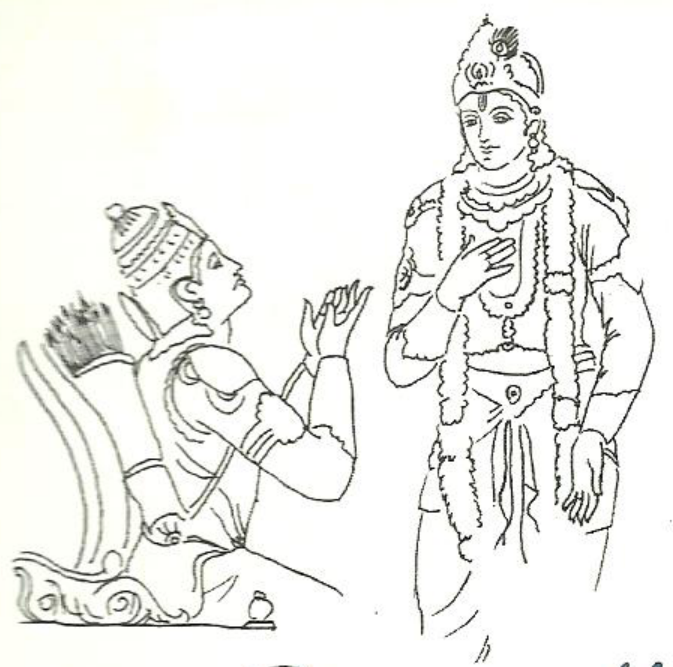
18.1 Arjuna said, 'Krishna, killer of the demon Kesi, I wish to understand what the purpose of renunciation is and about monkhood, and the difference between the two.'
श्री भगवानुवाच
काम्यानां कर्मणां न्यासं संन्यासं कवयो विदुः।
सर्वकर्मफलत्यागं प्राहुस्त्यागं विचक्षणाः।।१८.२।।
sri-bhagavan uvaca
kamyanam karmanam nyasam sannyasam kavayo viduh
sarva-karma-phala-tyagam prahus tyagam vicaksanah 18.2
sri-bhagavan uvaca: Sri Bhagavan said; kamyanam: with desire; karmanam: activities; nyasam: renunciation; sannyasam: renounced order of life; kavayah: the learned; viduh: know; sarva: of all; karma: activities; phala: of results; tyagam: renunciation; prahuh: call; tyagam: renunciation; vicaksanah: the experienced.
18.2 Krishna said, the wise say that the purpose of monkhood as giving up all selfish work based on desire, and renunciation as the freedom from all attachment to the results of one's actions.
त्याज्यं दोषवदित्येके कर्म प्राहुर्मनीषिणः।
यज्ञदानतपःकर्म न त्याज्यमिति चापरे।।१८.३।।
tyajyam dosa-vad ity eke karma prahur manisinah
yajna-dana-tapah-karma na tyajyam iti capare 18.3
tyajyam: must be given up; dosa-vat: like sins; iti: thus; eke: one group; karma: work; prahuh: said; manisinah: of great thinkers; yajna: sacrifice or service; dana: charity; tapah: penance or auterity; karma: work; na: never; tyajyam: is to be given up; iti: thus; ca: certainly; apare: others.
18.3 Some learned men say that all kinds of result-based activities are sins and should be given up, but there are yet other sages who maintain that acts of service, charity and austerity should never be given up.
निश्चयं शृणु मे तत्र त्यागे भरतसत्तम।
त्यागो हि पुरुषव्याघ्र त्रिविधः संप्रकीर्तितः ॥१८.४॥
niscayam srnu me tatra tyage bharata-sattama
tyago hi purusa-vyaghra tri-vidhah samprakirtitah 18.4
niscayam: certainty; srnu: hear; me: from Me; tatra: there; tyage: in the matter of renunciation; bharata-sat-tama: O best of the Bharatas; tyagah: renunciation; hi: certainly; purusa- vyaghra: O tiger among human beings; tri-vidhah: three kinds; samprakirtitah: is declared.
18.4 Arjuna, here is what I say about renunciation. There are three kinds of renunciation explained.
यज्ञदानतपःकर्म न त्याज्यं कार्यमेव तत्।
यज्ञो दानं तपश्चैव पावनानि मनीषिणाम् ॥१८.५॥
yajna-dana-tapah-karma na tyajyam karyam eva tat
yajno danam tapas caiva pavanani manisinam 18.5
yajna: sacrifice; dana: charity; tapah: penance; karma: activities; na: never; tyajyam: to be given up; karyam: must be done; eva: certainly; tat: that; yajnah: service; danam: charity; tapah: austerity; ca: also; eva: certainly; pavanani: purifying; manisinam: even of the great souls.
18.5 Acts of service, charity and austerity are not to be given up; they should be performed. Even the sages are purified by sacrifice, charity and penance.
एतान्यपि तु कर्माणि सङ्गं त्यक्त्वा फलानि च।
कर्तव्यानीति मे पार्थ निश्चितं मतमुत्तमम्।।१८.६।।
etany api tu karmani sangam tyaktva phalani ca kartavyaniti me partha niscitam matam uttamam 18.6
etani: all this; api: certainly; tu: must; karmani: activities; sangam: association; tyaktva: renouncing; phalani: results; ca: also; kartavyani: as duty; iti: thus; me: My; partha: O son of Prtha; niscitam: definite; matam: opinion; uttamam: the best.
18.6 Arjuna, all these actions of duty must also be performed without any expectation of result. That is My considered opinion.
नियतस्य तु संन्यासः कर्मणो नोपपद्यते।
मोहात्तस्य परित्यागस्तामसः परिकीर्तितः।।१८.७।।
niyatasya tu sannyasah karmano nopapadyate
mohat tasya parityagas tamasah parikirtitah 18.7
niyatasya: prescribed duties; tu: but; sannyasah: renunciation; karmanah: activities; na: never; upapadyate: is deserved; mohat: by illusion; tasya: of which; parityagah: renunciation; tamasah: in the mode of ignorance; parikirtitah: is declared.
18.7 Prescribed duties should never be renounced. If one gives up his prescribed duties through the illusion of renunciation, this is said to be in the state of ignorance.
दुःखमित्येव यत्कर्म कायक्लेशभयात्त्यजेत्।
स कृत्वा राजसं त्यागं नैव त्यागफलं लभेत् ॥१८.८॥
duhkham ity eva yat karma kaya-klesa-bhayat tyajet
sa krtva rajasam tyagam naiva tyaga-phalam labhet 18.8
duhkham: unhappy; iti: thus; eva: certainly; yat: that which; karma: work; kaya: body; klesa: troublesome; bhayat: out of fear; tyajet: gives up; sah: that; krtva: after doing; rajasam: in the mode of aggression; tyagam: renunciation; na eva: certainly not; tyaga: renounced; phalam: results; labhet: gain.
18.8 Anyone who gives up prescribed duties as troublesome, or out of fear,is said to be in the state of aggression, does not benefit from renunciation.
कार्यमित्येव यत्कर्म नियतं क्रियतेऽर्जुन।
सङ्गं त्यक्त्वा फलं चैव स त्यागः सात्त्विको मतः॥१८.९॥
karyam ity eva yat karma niyatam kriyate 'rjuna sangam tyaktva phalam caiva sa tyagah sattviko matah 18.9
karyam: must be done; iti: thus; eva: thus; yat: that which; karma: work; niyatam: prescribed; kriyate: performed; arjuna: O Arjuna; sangam: association; tyaktva: giving up; phalam: result; ca: also; eva certainly; sah: that; tyagah: renunciation; sattvikah: in the mode of goodness; matah: in My opinion.
18.9 But he who performs what is prescribed, as a matter of duty, without expectation or attachment to the results, his renunciation is of the nature of satva, goodness, O Arjuna.
न द्वेष्ट्यकुशलं कर्म कुशले नानुषज्जते।
त्यागी सत्त्वसमाविष्टो मेधावी छिन्नसंशयः॥१८.१०॥
na dvesty akusalam karma kusale nanusajjate tyagi sattva-samavis to medhavi chinna-samsayah 18.10
na: never; dvesti: hates; akusalam: inauspicious; karma: work; kusale: in the auspicious; na: nor; anusajjate: becomes attached; tyagi: the renouncer; sattva: goodness; samavistah: absorbed in; medhavi: intelligent; chinna: cut up; samsayah: all doubts
18.10 Those who neither hate disagreeable work nor are attached to pleasant work are in a state of intelligence, goodness and reunciation, free of all doubts.
न हि देहभृता शक्यं त्यक्तुं कर्माण्यशेषतः।
यस्तु कर्मफलत्यागी स त्यागीत्यभिधीयते।।१८.११।।
na hi deha-bhrta sakyam tyaktum karmany asesatah
yas tu karma-phala-tyagi sa tyagity abhidhiyate 18.11
na: never; hi: certainly; deha-bhrta: of the embodied; sakyam: possible; tyaktum: to renounce; karmani: activities of; asesatah: altogether; yahtu: anyone who; karma: work; phala: results; tyagi: renouncer; sa tyagi: the renouncer; iti: thus; abhidhiyate: it is said.
18.11 Human beings cannot give up all activities. Therefore the one who has renounced the fruits of such activity is one who has truly renounced.
अनिष्टमिष्टं मिश्रं च त्रिविधं कर्मणः फलम्
भवत्यत्यागिनां प्रेत्य न तु संन्यासिनां क्वचित्।।१८.१२।।
anistam istam misram ca tri-vidham karmanah phalam
bhavaty atyaginam pretya na tu sannyasinam kvacit 18.12
anistam: leading to hell; istam: leading to heaven; misram ca: or mixture; tri-vidham: three kinds; karmanah:
work; phalam: result; bhavati: becomes; atyaginam: of the renouncer; pretya: after death; na tu: but not; sannyasinam: of the renounced order; kvacit: at any time.
18.12 For one who is not renounced, the three kinds of fruits of action—desirable, undesirable and mixed—ccrue after death, but not to one who has renounced.
पञ्चैतानि महाबाहो कारणानि निबोध मे।
सांख्ये कृतान्ते प्रोक्तानि सिद्धये सर्वकर्मणाम्॥१८.१३॥
अधिष्ठानं तथा कर्ता करणं च पृथग्विधम्।
विविधाश्च पृथक्चेष्टा दैवं चैवात्र पञ्चमम्॥१८.१४॥
pancaitani maha-baho karanani nibodha me
sankhye krtante proktani siddhaye sarva-karmanam 18.13
adhisthanam tatha karta karanam ca prthag-vidham
vividhas ca prthak cesta daivam caivatra pancamam 18.14
panca: five; etani: all these; maha-baho: O mighty-armed one; karanani: cause; nibodha: just understand; me: from Me; sankhye: in the sankhya philosophy; krta-ante: after performance; proktani: said; siddhaye: perfection; sarva: all; karmanam: actuated. adhisthanam: place; tatha: also; karta- - worker; karanam ca: and instruments; prthak-vidham: different kinds; vividhah ca: varieties; prthak: separately; cestah: endeavor; daivam: the Supreme; ca: also; eva: certainly; atra: here; pancamam: five.
18.13,14 Learn from Me Arjuna, the five causes that bring about the accomplishment of all action, as described in Sankhya philosophy. These are: physical body that is the seat of action; the attributes of nature or guna, which is the Doer; the eleven organs of perceptions and action by the life forces and finally the Divine.
शरीरवाङ्मनोभिर्यत्कर्म प्रारभते नरः।
न्याय्यं वा विपरीतं वा पञ्चैते तस्य हेतवः॥१८.१५॥
sarira-van-manobhir yat karma prarabhate narah
nyayyam va viparitam va pancaite tasya hetavah 18.15
sarira: body; vak: speech; manobhih: by the mind; yat: anything; karma: work; prarabhate: begins; narah: a person; nyayyam: right; va: or; viparitam: the opposite; va: or; panca: five; ete: all these; tasya: its; hetavah: causes.
18.15 These five factors are responsible for whatever right or wrong actions a man performs by deed, word and thoughts.
तत्रैवं सति कर्तारमात्मानं केवलं तु यः।
पश्यत्यकृतबुद्धित्वान्न स पश्यति दुर्मतिः॥१८.१६॥
tatraivam sati kartaram atmanam kevalam tu yah
pasyaty akrta-buddhitvan na sa pasyati durmatih 18.16
tatra: there; evam: certainly; sati: being; kartaram: of the worker; atmanam: the self; kevalam: only; tu: but; yah: anyone; pasyati: sees; akrta-buddhitvat: due to unintelligence; na: never; sah: he; pasyati: sees; durmatih: foolish.
18.16 Those who think they, their body and spirit, are the doers, are ignorant and do not see things as they are.
यस्य नाहंकृतो भावो बुद्धिर्यस्य न लिप्यते।
हत्वापि स इमाँल्लोकान् हन्ति न निबध्यते॥१८.१७॥
yasya nahankrto bhavo buddhir yasya na lipyate hatvapi sa imal lokan na hanti na nibadhyate 18.17
yasya: of one who; na: never; ahankrtah: ego; bhavah: nature; buddhih: intelligence; yasya: one who; na: never; lipyate: is attached; hatva api: even killing; sah: he; iman: this; lokan: world; na: never; hanti: kills; na: never; nibadhyate: becomes entangled.
18.17 One who is egoless, whose intelligence is not of attachment, though he may kill, is not the slayer and is never bound by his actions.
ज्ञानं ज्ञेयं परिज्ञाता त्रिविधा कर्मचोदना।
करणं कर्म कर्तेति त्रिविधः कर्मसंग्रहः॥१८.१८॥
jnanam jneyam parijnata tri-vidha karma-codana
karanam karma karteti tri-vidhah karma-sangrahah 18.18
jnanam: knowledge; jneyam: objective; parijnata: the knower; tri-vidha: three kinds; karma: work; codana: impetus; karanam: the senses; karma: work; karta: the doer; iti: thus; tri-vidhah: three kinds; karma: work; sangrahah: accumulation.
18.18 Knowledge, object of the knowledge and the subject of the knowledge, the knower, are the three factors that stimulate action; the senses, the action and the performer comprise the three components of action.
ज्ञानं कर्म च कर्ता च त्रिधैव गुणभेदतः।
प्रोच्यते गुणसंख्याने यथावच्छृणु तान्यपि॥१८.१९॥
jnanam karma ca karta ca tridhaiva guna-bhedatah
procyate guna-sankhyane yathavac chrnu tany api 18.19
jnanam: knowledge; karma: work; ca: also; karta: worker; ca: also; tridha: three kinds; eva: certainly; guna-bhedatah: in terms of different modes of material nature; procyate: is said; guna-sankhyane: in terms of different modes; yatha-vat: as they act; srnu: hear; tani: all of them; api: also.
18.19 According to the guna theory of Sankhya, there are three types in knowledge, action, and performers of action. Listen as I describe them.
सर्वभूतेषु येनैकं भावमव्ययमीक्षते।
अविभक्तं विभक्तेषु तज्ज्ञानं विद्धि सात्त्विकम्।।१८.२०।।
sarva-bhutesu yenaikam bhavam avyayam iksate avibhaktam vibhaktesu taj jnanam viddhi sattvikam 18.20
sarva-bhutesu: in all living entities; yena: by whom; ekam: one; bhavam: situation; avyayam: imperishable; iksate: does see; avibhaktam: undivided; vibhaktesu: in the numberless divided; tat: that; jnanam: knowledge; viddhi: know; sattvikam: in the mode of goodness.
18.20 That knowledge by which one imperishable reality is seen in all Existence, undivided in the divided, is knowledge in the state of goodness.
पृथक्त्वेन तु यज्ज्ञानं नानाभावान्पृथग्विधान्।
वेत्ति सर्वेषु भूतेषु तज्ज्ञानं विद्धि राजसम्।।१८.२१।।
prthaktvena tu yaj jnanam nana-bhavan prthag-vidhan vetti sarvesu bhutesu taj jnanam viddhi rajas am 18.21
prthaktvena: because of division; tu: but; yat jnanam: which knowledge; nana-bhavan: various situations; prthak- vidhan: differently; vetti: one who knows; sarvesu: in all; bhutesu: living entities; tat jnanam: that knowledge; viddhi: must be known; rajasam: in terms of aggression.
18.21 The knowledge by which one sees different realities of various types among all beings as separate from one another; such knowledge is in the mode of aggression.
यत्तुकृत्स्नवदेकस्मिन्कार्ये सक्तमहैतुकम् ।
अतत्त्वार्थवदल्पं च तत्तामसमुदाहृतम् ॥ १८.२२ ॥
yat tu krtsna-vad ekasmin karye saktam ahaitukam atattvartha-vad alpam ca tat tamasam udahrtam 18.22
yat: that which; tu: but; krtsna-vat: all in all; ekasmin: in one; karye: work; saktam: attached; ahaitukam: without cause; atattva-arthavat: without reality; alpam: very meager; ca: and; tat: that; tamasam: in the mode of darkness; udahrtam: is spoken.
18.22 The irrational, baseless, and worthless knowledge by which one clings to one single effect as if it is everything, such knowledge is in the mode of darkness of ignorance
नियतं सङ्गरहितमरागद्वेषतः कृतम् ।
अफलप्रेप्सुना कर्म यत्तत्सात्त्विकमुच्यते ॥ १८.२३ ॥
niyatam sanga-rahitam araga-dvesatah krtam aphala-prepsuna karma yat tat sattvikam ucyate 18.23
niyatam: regulative; sanga-rahitam: without attachment; araga-dvesatah: without love or hatred; krtam: done; aphala- prepsuna: without fruitive result; karma: acts; yat: which; tat: that; sattvikam: in the mode of goodness; ucyate: is called.
18.23 Obligatory duty performed without likes and dislikes and without selfish motives and attachment to the fruit, is in the mode of goodness.
यत्तु कामेप्सुना कर्म साहङ्कारेण वा पुनः।
क्रियते बहुलायासं तद्राजसमुदाहृतम्॥१८.२४॥
yat tu kamepsuna karma sahankarena va punah kriyate bahulayasam tad rajasam udahrtam 18.24
yat: that which; tu: but; kama-ipsuna: with fruitive result; karma: work; sa-ahankarena: with ego; va: or; punah: again; kriyate: performed; bahula-ayasam: with great labor; tat: that; rajasam: in the mode of passion; udahrtam: is said to be.
8.24 Action performed with ego, with selfish motives, and with too much effort, is in the mode of aggression.
अनुबन्धं क्षयं हिंसामनपेक्ष्य च पौरुषम्।
मोहादारभ्यते कर्म यत्तत्तामसमुच्यते॥१८.२५॥
anubandham ksayam himsam anapeksya ca paurusam mohad arabhyate karma yat tat tamasam ucyate 18.25
anubandham: future bondage; ksayam: destruction; himsam: violence; anapeksya: without consideration of
consequences; ca: also; paurusam: distressing to others; mohat: by illusion; arabhyate: begun; karma: work; yat: which; tat: that; tamasam: in the mode of ignorance; ucyate: is said to be.
18.25 Action that is undertaken because of delusion, disregarding consequences, loss, injury to others, as well as one's own ability, is in the mode of ignorance.
मुक्तसङ्गोऽनहंवादी धृत्युत्साहसमन्वितः।
सिद्ध्यसिद्ध्योर्निर्विकारः कर्ता सात्त्विक उच्यते।।१८.२६।।
mukta-sango 'naham-vadi dhrty-utsaha-samanvitah
siddhy-asiddhyor nirvikarah karta sattvika ucyate
mukta-sangah: liberated from all material association; anaham-vadi: without false ego; dhrti-utsaha: with great enthusiasm; samanvitah: qualified in that way; siddhi: perfection; asiddhyoh: failure; nirvikarah: without change; karta: worker; sattvikah: in the mode of goodness; ucyate: is said to be.
18.26 The performer who is free from attachment, non- egotistic, endowed with resolve and enthusiasm, and unperturbed in success or failure is called good.
रागी कर्मफलप्रेप्सुर्लुब्धो हिंसात्मकोऽशुचिः।
हर्षशोकान्वितः कर्ता राजसः परिकीर्तितः।।१८.२७।।
ragi karma-phala-prepsur lubdho himsatmako 'sucih
harsa-sokanvitah karta rajasah parikirtitah 18.27
ragi: very much attached; karma-phala: to the fruit of the work; prepsuh: desiring; lubdhah: greedy; himsa-atmakah: and always envious; asucih: unclean; harsa-soka-anvitah: complicated, with joy and sorrow; karta: such a worker; rajasah: in the mode of passion; parikirtitah: is declared.
18.27 The performer who is impassioned, who desires the fruits of work, who is greedy, violent, impure, and affected by joy and sorrow, is called aggressive.
अयुक्तः प्राकृतः स्तब्धः शठो नैष्कृतिकोऽलसः।
विषादी दीर्घसूत्री च कर्ता तामस उच्यते।।१८.२८।।
ayuktah prakrtah stabdhah satho naiskrtiko 'lasah
visadi dirgha-sutri ca karta tamasa ucyate 18.28
ayuktah: without reference to scriptural injunctions; prakrtah: materialistic; stabdhah: obstinate; sathah: deceitful; naiskrtikah: expert in insulting others; alasah: lazy; visadi: morose; dirgha-sutri procrastinating; ca: also; karta: worker; tamasah: in the mode of ignorance; ucyate: is said to be.
18.28 The performer who is undisciplined, vulgar, stubborn, wicked, malicious, lazy, depressed, and procrastinating is called ignorant.
बुद्धेर्भेदं धृतेश्चैव गुणतस्त्रिविधं शृणु।
प्रोच्यमानमशेषेण पृथक्त्वेन धनञ्जय।।१८.२९।।
buddher bhedam dhrtes caiva gunatas tri-vidham srnu
procyamanam asesena prthaktvena dhananjaya
buddheh: of intelligence; bhedam: differences; dhrteh: of steadiness; ca: also; eva: certainly; gunatah: by the modes of material nature; tri-vidham: the three kinds of; srnu: just hear; procyamanam: as described by Me; asesena: in detail; prthaktvena: differently; dhananjaya: O winner of wealth.
18.29 Now hear Me explain, fully and separately, the threefold division of intellect and resolve, based on modes of material Nature, O Arjuna.
प्रवृत्तिं च निवृत्तिं च कार्याकार्ये भयाभये।
बन्धं मोक्षं च या वेत्ति बुद्धिः सा पार्थ सात्त्विकी।।१८.३०।।
pravrttim ca nivrttim ca karyakarye bhayabhaye
bandham moksam ca ya vetti buddhih sa partha sattviki
pravrttim: the path of work; ca: also; nivrttim: the path of renunciation; ca: and; karya: work that is to be done; akarye: prohibited action; bhaya: fearful; abhaye: fearlessness; bandham: obligation; moksam ca: and liberation; ya: that which; vetti: knows; buddhih: understanding; sa: that; partha: O son of Prtha; sattviki: in the mode of goodness.
18.30 O Arjuna, that intellect is in the mode of goodness which understands the path of work and the path of renunciation, right and wrong action, fear and fearlessness, bondage and liberation.
यया धर्ममधर्मं च कार्यं चाकार्यमेव च।
अयथावत्प्रजानाति बुद्धिः सा पार्थ राजसी।।१८.३१।।
yaya dharmam adharmam ca karyam cakaryam eva ca ayathavat prajanati buddhih sa partha rajasi 18.31
yaya: by which; dharmam: right conduct; adharmam: what is not right conduct ca: and; karyam: work; ca: also; akaryam: what ought not to be done; eva: certainly; ca: also; ayatha-vat: not perfectly; prajanati: knows; buddhih: intelligence; sa: that; partha: O son of Prtha; rajasi: in the mode of passion.
18.31 That intellect is in the mode of passion that cannot distinguish between principles of right conduct and wrong doing, and right and wrong action, O Arjuna.
अधर्मं धर्ममिति या मन्यते तमसाऽऽवृता।
सर्वार्थान्विपरीतांश्च बुद्धिः सा पार्थ तामसी।।१८.३२।।
adharmam dharmam iti ya manyate tamasavrta
sarvarthan viparitams ca buddhih sa partha tamasi 18.32
adharmam: what is not right conduct ; dharmam: right conduct; iti: thus; ya: which; manyate: thinks; tamasa: by ignorance; avrta: covered; sarva-arthan: all things; viparitan: the wrong direction; ca: also; buddhih: intelligence; sa: that; partha: O son of Prtha; tamasi: the mode of ignorance.
18.32 That intellect is in the mode of ignorance that accepts unrighteousness as righteousness and thinks everything to be that which it is not, O Arjuna.
धृत्या यया धारयते मनःप्राणेन्द्रियक्रियाः ।
योगेनाव्यभिचारिण्या धृतिः सा पार्थ सात्त्विकी ।।१८.३३।।
dhrtya yaya dharayate manah-pranendriya-kriyah
yogenavyabhicarinya dhrtih sa partha sattviki 18.33
dhrtya: determination; yaya: by which; dharayate: continued; manah: mind; prana: life energy; indriya: senses; kriyah: activities; yogena: uniting with God; avyabhicarinya: without any break; dhrtih: such determination; sa: that; partha: O son of Prtha; sattviki: in the mode of goodness.
18.33 Consistant and continuous determination in controlling mind, breath and senses to for uniting with the Divine is goodness, Arjuna
यया तु धर्मकामार्थान् धृत्या धारयतेऽर्जुन।
प्रसङ्गेन फलाकाङ्क्षी धृतिः सा पार्थ राजसी।।१८.३४।।
yaya tu dharma-kamarthan dhrtya dharayate 'rjuna prasangena phalakanksi dhrtih sa partha rajasi 18.34
yaya: by which; tu: but; dharma-kama-arthan: for the three goals in life, right conduct, sense pleasure and wealth; dhrtya: by determination; dharayate: continuously; arjuna: O Arjuna; prasangena: for that; phala-akanksi: desiring fruitive results; dhrtih: determination; sa: that; partha: O son of Prtha; rajasi: in the mode of passion.
18.34 Craving for results of action while clinging to goals of proper conduct, pleasure and wealth is the state of passion
यया स्वप्नं भयं शोकं विषादं मदमेव च।
न विमुञ्चति दुर्मेधा धृतिः सा पार्थ तामसी।।१८.३५।।
yaya svapnam bhayam sokam visadam madam eva ca na vimuncati durmedha dhrtih sa partha tamasi 18.35
yaya: by which; svapnam: dream; bhayam: fearfulness; sokam: lamentation; visadam: moroseness; madam: delusion; eva: certainly; ca: also; na: never; vimuncati: is liberated; durmedha: unintelligent; dhrtih: determination; sa: that; partha: O son of Prtha; tamasi: in the mode of ignorance.
18.35 Ignorant resolve which cannot go beyond dreaming, fear, grief, despair and, delusion—such is in darkness, Arjuna
सुखं त्विदानीं त्रिविधं शृणु मे भरतर्षभ।
अभ्यासाद्रमते यत्र दुःखान्तं च निगच्छति।।१८.३६।।
यत्तदग्रे विषमिव परिणामेऽमृतोपमम्।
तत्सुखं सात्त्विकं प्रोक्तमात्मबुद्धिप्रसादजम्।।१८.३७।।
sukham tv idanim tri-vidham srnu me bharatarsabha abhyasad ramate yatra duhkhantam ca nigacchati 18.36
yat tad agre visam iva pariname ‘mrtopamam tat sukham sattvikam proktam atma-buddhi-prasada-jam 18.37
sukham: happiness; tu: but; idanim: now; tri-vidham: three kinds; srnu: hear; me: from Me; bharata-rsabha: O best amongst the Bharatas; abhyasat: by practice; ramate: enjoyer; yatra: where; duhkha: distress; antam: end; ca: also; nigacchati: gains. yat: that which; tat: that; agre: in the beginning; visam iva: like poison; pariname: at the end; amrta: nectar; upamam: compared to; tat: that; sukham: happiness; sattvikam: in the mode of goodness; proktam: is said; atma: self; buddhi: intelligence; prasada-jam: satisfactory.
18.36,37 And now hear from Me, O Arjuna, about three kinds of pleasure. The pleasure that one enjoys from spiritual practice results in cessation of all sorrows. The pleasure that appears as poison in the beginning, but is like nectar in the end, comes by the grace of Self- knowledge and is in the mode of goodness.
विषयेन्द्रियसंयोगाद्यत्तदग्रेऽमृतोपमम् ।
परिणामे विषमिव तत्सुखं राजसं स्मृतम् ॥ १८.३८ ॥
visayendriya-samyogad yat tad agre ‘mrtopamam pariname visam iva tat sukham rajasam smrtam 18.38
visaya: objects of the senses; indriya: senses; samyogat: combination; yat: which; tat: that; agre: in the beginning; amrta-upamam: just like nectar; pariname: at the end; visam iva: like poison; tat: that; sukham: happiness; rajasam: in the mode of passion; smrtam: is considered.
18.38 Sensual pleasures that appear as nectar in the beginning, but become poison in the end, are in the mode of passion.
यदग्रे चानुबन्धे च सुखं मोहनमात्मनः।
निद्रालस्यप्रमादोत्थं तत्तामसमुदाहृतम् ॥ १८.३९ ॥
yad agre canubandhe ca sukham mohanam atmanah nidralasya-pramadottham tat tamasam udahrtam 18.39
yat: that which; agre: in the beginning; ca: also; anubandhe: by binding; ca: also; sukham: happiness; mohanam: illusion; atmanah: of the self; nidra: sleeping; alasya: laziness; pramada: illusion; uttham -produced of; tat: that; tamasam: in the mode of ignorance; udahrtam: is said to be.
18.39 Pleasure that is delusion from beginning to end and born out of sleep, laziness and illusion is said to be of the nature of ignorance.
न तदस्ति पृथिव्यां वा दिवि देवेषु वा पुनः।
सत्त्वं प्रकृतिजैर्मुक्तं यदेभिः स्यात्त्रिभिर्गुणैः॥१८.४०॥
na tad asti prthivyam va divi devesu va punah
sattvam prakrti-jair muktam yad ebhih syat tribhir gunaih
18.40
na: not; tat: that; asti: there is; prthivyam: within the universe; va: or; divi: in the higher planetary system; devesu: amongst the demigods; va: or; punah: again; sattvam: existence; prakrti-jaih: under the influence of material nature; muktam: liberated; yat: that; ebhih: by this; syat: so becomes; tribhih: by three; gunaih: modes of material nature.
18.40 No one, either here or among the celestials in the higher planetary systems, is free from these three states of material nature.
ब्राह्मणक्षत्रियविशां शूद्राणां च परंतप।
कर्माणि प्रविभक्तानि स्वभावप्रभवैर्गुणैः॥१८.४१॥
brahmana-ksatriya-visam sudranam ca parantapa
karmani pravibhaktani svabhava-prabhavair gunaih 18.41
brahmana: the brahmanas; ksatriya: the ksatriyas; visam: the vaisyas; sudranam: the sudras; ca: and; parantapa: O subduer of the enemies; karmani: activities; pravibhaktani: are divided; svabhava: own nature; prabhavaih: born of; gunaih: by the modes of material nature.
18.41 Brahmanas, ksatriyas, vaisyas and sudras are divided in the work they do based on their nature, Arjuna.
शमो दमस्तपः शौचं क्षान्तिरार्जवमेव च।
ज्ञानं विज्ञानमास्तिक्यं ब्रह्मकर्म स्वभावजम्॥१८.४२॥
samo damas tapah saucam ksantir arjavam eva ca
jnanam vijnanam astikyam brahma-karma svabhava-jam 18.42
samah: peacefulness; damah: self-control; tapah: austerity; saucam: purity; ksantih: tolerance; arjavam: honesty; eva: certainly; ca: and; jnanam: knowledge; vijnanam: wisdom; astikyam: belief in God; brahma: of a brahmana; karma: duty; svabhava-jam: born of his own nature.
18.42 The nature of Brahmana is characterized by their calmness, discipline, austerity, tolerance, honesty, knowledge, wisdom and belief in God.
शौर्यं तेजो धृतिर्दाक्ष्यं युद्धे चाप्यपलायनम्।
दानमीश्वरभावश्च क्षात्रं कर्म स्वभावजम्।।१८.४३।।
sauryam tejo dhrtir daksyam yuddhe capy apalayanam
danam isvara-bhavas ca ksatram karma svabhava-jam 18.43
sauryam: heroism; tejah: power; dhrtih: determination; daksyam: resourcefulness; yuddhe: in battle; ca: and; api: also; apalayanam: not fleeing; danam: generosity; isvara: leadership; bhavah: nature; ca: and; ksatram: ksatriya; karma: duty; svabhava-jam: born of his own nature.
18.43 Kshatriya are characterized by their qualities of heroism, vigor, firmness, dexterity, steadfastness in battle, leadership and generosity.
कृषिगौरक्ष्यवाणिज्यं वैश्यकर्म स्वभावजम्।
परिचर्यात्मकं कर्म शूद्रस्यापि स्वभावजम्।।१८.४४।।
krsi-go-raksya-vanijyam vaisya-karma svabhava-jam
paricaryatmakam karma sudrasyapi svabhava-jam 18.44
krsi: plowing; go: cows; raksya: protection; vanijyam: trade; vaisya: vaisya; karma: duty; svabhava-jam: born of his
own nature; paricarya: service; atmakam: nature; karma: duty; sudrasya: of the sudra; api: also; svabhava-jam: born of his own nature.
18.44 Those who are good at cultivation, cattle rearing, and trade are known as Vaisya. Those who are very good in service are classed as sudra.
स्वे स्वे कर्मण्यभिरतः संसिद्धिं लभते नरः।
स्वकर्मनिरतः सिद्धिं यथा विन्दति तच्छृणु।।१८.४५।।
sve sve karmany abhiratah samsiddhim labhate narah sva-karma-niratah siddhim yatha vindati tac chrnu 18.45
sve: own; sve: own; karmani: in work; abhiratah: following; samsiddhim: perfection; labhate: achieves; narah: a man; sva-karma: by his own duty; niratah: engaged; siddhim: perfection; yatha: as; vindati: attains; tat: that; srnu: listen.
18.45 One can attain the highest perfection by devotion to one's natural work. Listen to Me how one attains perfection while engaged in one's natural work.
यत: प्रवृत्तिर्भूतानां येन सर्वमिदं ततम्।
स्वकर्मणा तमभ्यर्च्य सिद्धिं विन्दति मानवः।।१८.४६।।

yatah pravrttir bhutanam yena sarvam idam tatam
sva-karmana tam abhyarcya siddhim vindati manavah
18.46
yatah: from whom; pravrttih: the emanation; bhutanam: of all living entities; yena: by whom; sarvam: all; idam: this; tatam: is pervaded; sva-karmana: in his own duties; tam: Him; abhyarcya: by worshiping; siddhim: perfection; vindati: achieves; manavah: a man.
18.46 One attains perfection by worshipping the Supreme Being from whom all beings originate and by whom all this universe is pervaded through performance of one's natural duty for Him.
श्रेयान्स्वधर्मो विगुणः परधर्मात्स्वनुष्ठितात्।
स्वभावनियतं कर्म कुर्वन्नाप्नोति किल्बिषम्।।१८.४७।।
sreyan sva-dharmo vigunah para-dharmat sv-anusthitat
svabhava-niyatam karma kurvan napnoti kilbisam 18.47
sreyan: better; sva-dharmah: one's own rightful conduct; vigunah: imperfectly performed; para-dharmat: another's conduct; su-anusthitat: perfectly done; svabhava-niyatam: prescribed duties according to one's nature; karma: work; kurvan: performing; na: never; apnoti: achieve; kilbisam: sinful reactions.
18.47 It is better to engage in one's rightful conduct, even though one may not perform it to perfection, rather than to accept another's conduct and perform it perfectly. Duties prescribed according to one's nature, are never affected by sinful reactions.
सहजं कर्म कौन्तेय सदोषमपि न त्यजेत्।
सर्वारम्भा हि दोषेण धूमेनाग्निरिवावृताः॥१८.४८।।
saha-jam karma kaunteya sa-dosam api na tyajet sarvarambha hi dosena dhumenagnir ivavrtah 18.48
saha-jam: born simultaneously; karma: work; kaunteya: O son of Kunti; sa-dosam: with fault; api: although; na: never; tyajet: to be given up; sarva-arambhah: any venture; hi: certainly; dosena: with fault; dhumena: with smoke; agnih: fire; iva: as; avrtah: covered.
18.48 Every work has some defect, just as fire is covered by smoke. One should not give up the work that is born of his own nature, even if such work is full of fault, Arjuna.
असक्तबुद्धिः सर्वत्र जितात्मा विगतस्पृहः।
नैष्कर्म्यसिद्धिं परमां संन्यासेनाधिगच्छति ।।१८.४९।।
asakta-buddhih sarvatra jitatma vigata-sprhah naiskarmya-siddhim paramam sannyasenadhigacchati 18.49 asakta-buddhih: unattached intelligence; sarvatra: everywhere; jitaatma: control of the mind; vigata-sprhah: without material desires; naiskarmya-siddhim: perfection of non-reaction; paramam: supreme; sannyasena: by the renounced order of life; adhigacchati: attains.
18.49 One whose mind is always free from selfish attachment, who has controlled the mind and who is free from desires, he, by renunciation, attains perfection of freedom from selfish attachment to the fruits of work.
सिद्धिं प्राप्तो यथा ब्रह्म तथाप्नोति निबोध मे।
समासेनैव कौन्तेय निष्ठा ज्ञानस्य या परा ॥१८.५०॥
siddhim prapto yatha brahma tathapnoti nibodha me samasenaiva kaunteya nistha jnanasya ya para 18.50
siddhim: perfection; praptah: achieving; yatha: as; brahma: the Supreme; tatha: so; apnoti: achieves; nibodha: try to understand; me: from Me; samasena: summarily; eva: certainly; kaunteya: O son of Kunti; nistha: stage; jnanasya: of knowledge; ya: which; para: transcendental.
18.50 Understand from Me how one can achieve the state of Truth, Brahman, by acting in the way I shall now summarize, Arjuna.
बुद्ध्या विशुद्धया युक्तो धृत्याऽऽत्मानं नियम्य च।
शब्दादीन् विषयांस्त्यक्त्वा रागद्वेषौ व्युदस्य च।।१८.५१।।
विविक्तसेवी लघ्वाशी यतवाक्कायमानसः।
ध्यानयोगपरो नित्यं वैराग्यं समुपाश्रितः।।१८.५२।।
अहङ्कारं बलं दर्पं कामं क्रोधं परिग्रहम्।
विमुच्य निर्ममः शान्तो ब्रह्मभूयाय कल्पते।।१८.५३।।
buddhya visuddhaya yukto dhrtyatmanam niyamya ca
sabdadin visayams tyaktva raga-dvesau vyudasya ca
vivikta-sevi laghv-asi yata-vak-kaya-manasah
dhyana-yoga-paro nityam vairagyam samupasritah
ahankaram balam darpam kamam krodham parigraham
vimucya nirmamah santo brahma-bhuyaya kalpate 18.51-53
buddhya: by the intelligence; visuddhaya: fully purified; yuktah: such engagement; dhrtya: determination; atmanam: self; niyamya: regulated; ca: also; sabda-adin: the sense objects, such as sound, etc.; visayan: sense objects; tyaktva: giving up; raga: attachment; dvesau: hatred; vyudasya: having laid aside; ca: also; vivikta-sevi: living in a secluded place; laghu-asi: eating a small quantity; yata-vak: control of speech; kaya: body; manasah: control of the mind; dhyana- yoga-parah: always absorbed in trance; nityam: twenty-four hours a day; vairagyam: detachment; samupasritah: taken shelter of; ahankaram: false ego; balam: false strength; darpam: false pride; kamam: lust; krodham: anger; parigraham: acceptance of material things; vimucya: being delivered; nirmamah: without proprietorship; santah: peaceful; brahmabhuyaya: to become self-realized; kalpate: is understood.
18.51,52,53 Endowed with purified intellect; subduing the mind with firm resolve; turning away from objects of the senses; giving up likes and dislikes; living in solitude; eating lightly; controlling the mind, speech, and organs of action; ever absorbed in meditation; taking refuge in detachment; and relinquishing egotism, violence, pride, lust, anger, and proprietorship, one becomes peaceful, free from the notion of "I" and "mine", and fit for attaining oneness with the Supreme Being
ब्रह्मभूतः प्रसन्नात्मा न शोचति न काङ्क्षति ।
समः सर्वेषु भूतेषु मद्भक्तिं लभते पराम् ॥ १८.५४ ॥
brahma-bhutah prasannatma na socati na kanksati
samah sarvesu bhutesu mad-bhaktim labhate param 18.54
brahma-bhutah: being one with the Absolute; prasanna- atma: fully joyful; na: never; socati: laments; na: never; kanksati: desires; samah: equally disposed; sarvesu: all; bhutesu: living entities; matbhaktim: My devotion; labhate: gains; param: transcendental.
18.54 Absorbed in the Supreme Being, the serene one neither grieves nor desires. Becoming impartial to all beings, one obtains My highest devotional love.
भक्त्या मामभिजानाति यावान्यश्चास्मि तत्त्वतः।
ततो मां तत्त्वतो ज्ञात्वा विशते तदनन्तरम् ॥१८.५५॥
bhaktya mam abhijanati yavan yas casmi tattvatah
tato mam tattvato jnatva visate tad-anantaram 18.55
bhaktya: by pure devotional service; mam: Me; abhijanati: one can know; yavan: as much as; yah ca asmi: as I am; tattvatah: in truth; tatah: thereafter; mam: Me; tattvatah: by truth; jnatva: knowing; visate: enters; tat-anantaram: thereafter.
18.55 By devotion one truly understands what and who I am in essence. Having known Me in essence, one immediately merges with Me.
सर्वकर्माण्यपि सदा कुर्वाणो मद्व्यपाश्रयः।
मत्प्रसादादवाप्नोति शाश्वतं पदमव्ययम् ॥१८.५६॥
sarva-karmany api sada kurvano mad-vyapasrayah
mat-prasadad avapnoti sasvatam padam avyayam 18.56
sarva: all; karmani: activities; api: although; sada: always; kurvanah: performing; mat: under My; vyapasrayah: protection; mat: My; prasadat: mercy; avapnoti: achieves; sasvatam: eternal; padam: abode; avyayam: imperishable.
18.56 My devotee occupied in everyday life still reaches under My protection the imperishable ultimate abode through my mercy, through devotion to Me.
चेतसा सर्वकर्माणि मयि संन्यस्य मत्परः।
बुद्धियोगमुपाश्रित्य मच्चित्तः सततं भव।।१८.५७।।
cetasa sarva-karmani mayi sannyasya mat-parah buddhi-yogam upasritya mac-cittah satatam bhava 18.57
cetasa: by intelligence; sarva-karmani: all kinds of activities; mayi: unto Me; sannyasya: giving up; mat-parah: My protection; buddhi-yogam: devotional activities; upasritya: taking shelter of; mat-cittah: consciousness; satatam: always; bhava: just become.
18.57 While being engaged in activities just depend upon Me, and being fully conscious of Me, work always under My protection.
मच्चित्तः सर्वदुर्गाणि मत्प्रसादात्तरिष्यसि।
अथ चेत्त्वमहङ्कारान्न श्रोष्यसि विनङ्क्ष्यसि।।१८.५८।।
mac-cittah sarva-durgani mat-prasadat tarisyasi
atha cet tvam ahankaran na srosyasi vinanksyasi 18.58
mat: My; cittah: consciousness; sarva: all; durgani: impediments; mat: My; prasadat: My mercy; tarisyasi: you will overcome; atha: therefore; cet: if; tvam: you; ahankarat: by false ego; na: not; srosyasi: do not hear; vinanksyasi: then lose yourself.
18.58 When your mind becomes fixed on Me, you shall overcome all difficulties by My grace. But if you do not listen to Me due to ego, you shall perish.
यदहङ्कारमाश्रित्य न योत्स्य इति मन्यसे।
मिथ्यैष व्यवसायस्ते प्रकृतिस्त्वां नियोक्ष्यति।।१८.५९।।
yad ahankaram asritya na yotsya iti manyase
mithyaisa vyavasayas te prakrtis tvam niyoksyati 18.59
yat: therefore; ahankaram: false ego; asritya: taking shelter; na: not; yotsye: shall fight; iti: thus; manyase: think; mithya esah: this is all false; vyavasayah te: your determination; prakrtih: material nature; tvam: you; niyoksyati: will engage you.
18.59 If due to ego you think: 'I shall not fight,' your resolve is useless, and your own nature will compel you.
स्वभावजेन कौन्तेय निबद्धः स्वेन कर्मणा।
कर्तुं नेच्छसि यन्मोहात्करिष्यस्यवशोऽपि तत्।।१८.६०।।
svabhava-jena kaunteya nibaddhah svena karmana
kartum necchasi yan mohat karisyasy avaso ‘pi tat 18.60
svabhava-jena: by one’s own nature; kaunteya: O son of Kunti; nibaddhah: conditioned; svena: by one’s own; karmana: activities; kartum: to do; na: not; icchasi: like; yat: that; mohat: by illusion; karisyasi: you will act; avasah: imperceptibly; api: even; tat: that.
18.60 O Arjuna, you are controlled by your own natural conditioning. Therefore, you shall do even against your will, what you do not wish to do out of delusion.
ईश्वरः सर्वभूतानां हृद्देशेऽर्जुन तिष्ठति।
भ्रामयन्सर्वभूतानि यन्त्रारूढानि मायया।।१८.६१।।
isvarah sarva-bhutanam hrd-dese ‘rjuna tisthati
bhramayan sarva-bhutani yantrarudhani mayaya 18.61
isvarah: the Supreme Lord; sarva-bhutanam: of all living entities; hrtdese: in the location of the heart; arjuna: O Arjuna; tisthati: resides; bhramayan: causing to travel; sarva- bhutani: all living entities; yantra: machine; arudhani: being so placed; mayaya: under the illusion
18.61 The Supreme Lord resides in everyone's heart, O Arjuna, and is directing the activities of all living entities who are acting as machines under the illusion of the material world.
तमेव शरणं गच्छ सर्वभावेन भारत।
तत्प्रसादात्परां शान्तिं स्थानं प्राप्स्यसि शाश्वतम्॥१८.६२॥
tam eva saranam gaccha sarva-bhaavena bhaarata tat-prasaadat paraam santim sthaanam praapsyasi saasvatam 18.62
tam: unto Him; eva: certainly; saranam: surrender; gaccha: go; sarvabhavena: in all respects; bharata: O son of Bharata; tat-prasadat: by His grace; param: Supreme; santim: in peace; sthanam: abode; prapsyasi: you will get; sasvatam: eternal.
18.62 Surrender to Him completely. By His grace you will attain Supreme peace and the eternal abode.
इति ते ज्ञानमाख्यातं गुह्याद्गुह्यतरं मया।
विमृश्यैतदशेषेण यथेच्छसि तथा कुरु॥१८.६३॥
iti te jnanam akhyatam guhyad guhyataram maya vimrsyaitad asesena yathecchasi tatha kuru 18.63 iti: thus; te: unto you; jnanam: knowledge; akhyatam: described; guhyat: confidential; guhya-taram: still more confidential; maya: by Me; vimrsya: by deliberation; etat: that; asesena: fully; yatha: as you; icchasi: you like; tatha: that; kuru: perform.
18.63 I have explained the knowledge that is the secret of secrets. After fully reflecting on this, do as you wish.
सर्वगुह्यतमं भूयः शृणु मे परमं वचः।
इष्टोऽसि मे दृढमिति ततो वक्ष्यामि ते हितम्॥१८.६४॥
sarva-guhyatamam bhuyah srnu me paramam vacah
isto ‘si me drdham iti tato vaksyami te hitam 18.64
sarva-guhya-tamam: the most confidential of all; bhuyah: again; srnu: just hear; me: from Me; paramam: the supreme; vacah: instruction; istah asi: you are very dear to Me; me: of Me; drdham: very; iti: thus; tatah: therefore; vaksyami: I am speaking; te: for your; hitam: benefit.
18.64 Because you are My dear friend, I express this truth to you. This is the most confidential of all knowledge. Hear this from Me. It is for your benefit.
मन्मना भव मद्भक्तो मद्याजी मां नमस्कुरु।
मामेवैष्यसि सत्यं ते प्रतिजाने प्रियोऽसि मे॥१८.६५॥
man-mana bhava mad-bhakto mad-yaji mam namaskuru
mam evaisyasi satyam te pratijane priyo 'si me 18.65
man-manah: thinking of Me; bhava: just become; mat- bhaktah: My devotee; mat-yaji: My worshiper; mam: unto Me; namaskuru: offer your obeisances; mam: unto Me; eva: certainly; esyasi: come; satyam: truly; te: to you; pratijane: I promise; priyah: dear; asi: you are; me: Mine.
18.65 Always think of Me and become My devotee. Worship Me and offer your homage unto Me. Thus you will certainly attain to Me. This I promise you because you are My very dear friend.
सर्व धर्मान्परित्यज्य मामेकं शरणं व्रज।
अहं त्वां सर्वपापेभ्यो मोक्षयिष्यामि मा शुचः ।।१८.६६।।
sarva-dharman parityajya mam ekam saranam vraja
aham tvam sarva-papebhyo moksayisyami ma sucah 18.66
sarva-dharman: all principles of right conduct; parityajya: abandoning; mam: unto Me; ekam: only; saranam: surrender; vraja: go; aham: I; tvam: you; sarva: all; papebhyah: from sinful reactions; moksayisyami: deliver; ma: not; sucah: worry.
18.66 Abandon all principles and concepts of right conduct and simply surrender unto Me. I shall deliver you from all sinful reaction. Have no worry.
इदं ते नातपस्काय नाभक्ताय कदाचन।
न चाशुश्रूषवे वाच्यं न च मां योऽभ्यसूयति॥१८.६७॥
idam te natapaskaya nabhaktaya kadacana
na casusrusave vacyam na ca mam yo 'bhyasuyati 18.67
idam: this; te: you; na: never; atapaskaya: one who is not austere; na: never; abhaktaya: one who is not a devotee; kadacana: at any time; na: never; ca: also; asusrūsave: one who is not engaged in devotional service; vacyam: to be spoken; na: never; ca: also; mam: unto Me; yah: anyone; abhyasuyati: envious.
18.67 This knowledge should never be spoken by you to one who is devoid of austerity, who is without devotion, who does not desire to listen, or who speaks ill of Me.
य इमं परमं गुह्यं मद्भक्तेष्वभिधास्यति।
भक्तिं मयि परां कृत्वा मामेवैष्यत्यसंशयः॥१८.६८॥
ya idam paramam guhyam mad-bhaktesv abhidhasyati
bhaktim mayi param krtva mam evaisyaty asamsayah 18.68
yah: anyone; idam: this; paramam: most; guhyam: confidential; mat: Mine; bhaktesu: amongst devotees of; abhidhasyati: explains; bhaktim: devotional service; mayi: unto Me; param: transcendental; krtva: having
done; mam: unto Me; eva: certainly; esyati: comes; asamsayah: without doubt.
18.68 One who communicates the Supreme Secret to the devotees performes the highest devotional service to Me, and at the end he will without doubt, come back to Me.
न च तस्मान्मनुष्येषु कश्चिन्मे प्रियकृत्तमः।
भविता न च मे तस्मादन्यः प्रियतरो भुवि॥१८.६९॥
na ca tasman manusyesu kascin me priya-krttamah
bhavita na ca me tasmad anyah priyataro bhuvi 18.69
na: never; ca: and; tasmat: therefore; manusyesu: among mankind; kascit: anyone; me: My; priya-krt-tamah: more dear; bhavita: will become; na: nor; ca: and; me: My; tasmat: than him; anyah: other; priya-tarah: dearer; bhuvi: in this world.
18.69 No other person shall do a more pleasing service to Me, and no one on the earth shall be more dear to Me.
अध्येष्यते च य इमं धर्म्यं संवादमावयोः।
ज्ञानयज्ञेन तेनाहमिष्टः स्यामिति मे मतिः॥१८.७०॥
adhyesyate ca ya imam dharmyam samvadam avayoh
jnana-yajnena tenaham istah syam iti me matih 18.70
adhyesyate: will study; ca: also; yah: he; imam: this; dharmyam: sacred; samvadam: conversation; avayoh: of ours; jnana: knowledge; yajnena: by sacrifice; tena: by him; aham: I; istah: worshiped; syam: shall be; iti: thus; me: My; matih: opinion.
18.70 I say that One who studies this sacred dialogue worships Me by sacrifice of his intelligence.
श्रद्धावाननसूयश्च शृणुयादपि यो नरः।
सोऽपि मुक्तः शुभाँल्लोकान्प्राप्नुयात्पुण्यकर्मणाम्।।१८.७१।।
sraddhavan anasuyas ca srnuyad api yo narah
so 'pi muktah subhal lokan prapnuyat punya-karmanam 18.71
sraddha-van: faithful; anasuyah ca: and not envious; srnuyat: does hear; api: certainly; yah: who; narah: a man; sah: he; api: also; muktah: being liberated; subhan: auspicious; lokan: planets; prapnuyat attains; punya-karmanam: of those with merit.
18.71 One who listens with faith and without envy becomes free from sinful reactions and attains to the planets where those of merit dwell.
कच्चिदेतच्छ्रुतं पार्थ त्वयैकाग्रेण चेतसा।
कच्चिदज्ञानसंमोहः प्रनष्टस्ते धनञ्जय ।।१८.७२।।
kaccid etac chrutam partha tvayaikagrena cetasa kaccid ajnana-sammohah pranastas te dhananjaya 18.72
kacchit: whether; etat: this; srutam: heard; partha: O son of Prtha; tvaya: by you; eka-agrena: with full attention; cetasa: by the mind; kaccit: whether; ajnana: ignorant; sammohah: illusion; pranastah: dispelled; te: of you; dhananjaya: O conqueror of wealth (Arjuna).
18.72 O Arjuna, did you listen to this with single- minded attention? Has your delusion born of ignorance been completely destroyed?
अर्जुन उवाच
नष्टो मोहः स्मृतिर्लब्धा त्वत्प्रसादान्मयाच्युत।
स्थितोऽस्मि गतसन्देहः करिष्ये वचनं तव ।।१८.७३।।
Arjuna uvaca
nasto mohah smrtir labdha tvat-prasadan mayacyuta sthito 'smi gata-sandehah karisye vacanam tava 18.73
arjunah uvaca: Arjuna said; nastah: dispelled; mohah: illusion; smrtih memory; labdha: regained; tvat-prasadat: by
Your mercy; maya: by me; acyuta: O infallible Krishna; sthitah: situated; asmi: I am; gata: removed; sandehah: all doubts; karisye: I shall execute; vacanam: order; tava: Your.
18.73 Arjuna said: O Lord, my illusion is now gone. I have regained my memory by Your mercy, and I am now firm and free from doubt and ready to obey you
सञ्जय उवाच
इत्यहं वासुदेवस्य पार्थस्य च महात्मनः।
संवादमिममश्रौषमद्भुतं रोमहर्षणम्।।१८.७४।।
Sanjaya uvaca
ity aham vasudevasya parthasya ca mahatmanah samvadam imam asrausam adbhutam roma-harsanam 18.74
sanjayah uvaca: Sanjaya said; iti: thus; aham: I; vasudevasya: of Krishna; parthasya: of Arjuna; ca: also; maha- atmanah: two great souls; samvadam: discussing; imam: this; asrausam: heard; adbhutam: wonder; roma-harsanam: hair standing on end.
18.74 Sanjaya said: Thus have I heard the conversation of two great souls,
Krishna and Arjuna. And so wonderful is that message that my hair stands on end.
व्यासप्रसादाच्छ्रुतवानेतद्गुह्यमहं परम् ।
योगं योगेश्वरात्कृष्णात्साक्षात्कथयतः स्वयम् ।। १८.७५ ।।
vyasa-prasadac chrutavan etad guhyam aham param yogam yogesvarat Krishnat saksat kathayatah svayam 18.75
vyasa-prasadat: by the mercy of Vyasadeva; srutavan: heard; etat: this; guhyam: confidential; aham: I; param: the supreme; yogam: mysticism; yoga-isvarat: from the master of all mysticism; Krishnat: from Krishna; saksat: directly; kathayatah: speaking; svayam: personally.
18.75 By the mercy of Vyasa, I have heard these most confidential words directly from Krishna, the Master of all mysticism, who was speaking personally to Arjuna.
राजन्संस्मृत्य संस्मृत्य संवादमिममद्भुतम् ।
केशवार्जुनयोः पुण्यं हृष्यामि च मुहुर्मुहुः ।। १८.७६ ।।
rajan samsmrtya samsmrtya samvadam imam adbhutam kesavarjunayoh punyam hrsyami ca muhur muhuh 18.76 rajan: O King; samsmrtya: remembering; samsmrtya: remembering; samvadam: message; imam: this; adbhutam: wonderful; kesava: Lord Krishna; arjunayoh: and Arjuna; punyam: pious; hrsyami: taking pleasure; ca: also; muhuh muhuh: always, repeatedly.

18.76 O King, as I repeatedly recall this wondrous and holy dialogue between Krishna and Arjuna, I take pleasure, being thrilled every moment.
तच्च संस्मृत्य संस्मृत्य रूपमत्यद्भुतं हरेः।
विस्मयो मे महान् राजन् हृष्यामि च पुनः पुनः।।१८.७७।।
tac ca samsmrtya samsmrtya rupam aty-adbhutam hareh vismayo me mahan rajan hrsyami ca punah punah 18.77
tat: that; ca: also; samsmrtya: remembering; samsmrtya: remembering; rupam: form; ati: great; adbhutam: wonderful; hareh: of Lord Krishna; vismayah: wonder; me: my; mahan: great; rajan: O King; hrsyami: enjoying; ca: also; punah punah: repeatedly.
18.77 O King, when I remember the wonderful form of Lord Krishna, I am struckwith even greater wonder, and I rejoice again and again.
यत्र योगेश्वरः कृष्णो यत्र पार्थो धनुर्धरः।
तत्र श्रीर्विजयो भूतिर्ध्रुवा नीतिम॑तिर्मम।।१८.७८।।
yatra yogesvarah krsno yatra partho dhanur-dharah tatra srir vijayo bhutir dhruva nitir matir mama 18.78 yatra: where; yoga-isvarah: the master of mysticism; Krishnah: Lord Krishna; yatra: where; parthah: the son of Prtha; dhanuh-dharah: the carrier of the bow and arrow; tatra: there; srih: opulence; vijayah: victory; bhutih: exceptional power; dhruva: certain; nitih: morality; matih mama: is my opinion.
18.78 Wherever there is Krishna, the Master of all mystics, and wherever there is Partha, the supreme carrier of bow and arrow, there will certainly be opulence,victory, extraordinary power, and morality. That is my opinion.
Bhagavad Gita
commentary by
Nithyananda
Drop everything and Surrender
- Chapter 18
Drop everything and surrender. Not only is this the gist of the final chapter of the Bhagavad Gita, but it is also the essence of the entire Gita. In addition, throughout the ages it has been the basis of all spiritual teachings and spiritual Masters. 'Drop your mind and you will be aware. You will realize your true potential as a human.'
Krishna concludes the Gita with one subject: Liberation Through Renunciation.
Even knowledge about God creates bondage when it is intellectually based because we will only know about God. We will not know God. Knowing about God is not the same as knowing God. When we completely surrender everything, we will not even have the idea that we know God. We will simply merge with Him.
Lord Krishna gives Arjuna the master key to experience enlightenment. Nithyananda beautifully explains what surrender is and what it isn't!
Special additions to this chapter include step-by-step instructions for Guru Puja and Nithya Dhyaan, the complete meditation cognized by Nithyananda for individual and global transformation.
® Ebook ISBN: 979-8-88572-074-8 Published by Life Bliss Foundation