INTRODUCTION
This text was machine-transcribed from the printed book and may contain errors. Select the words and choose “Report a mistake”.
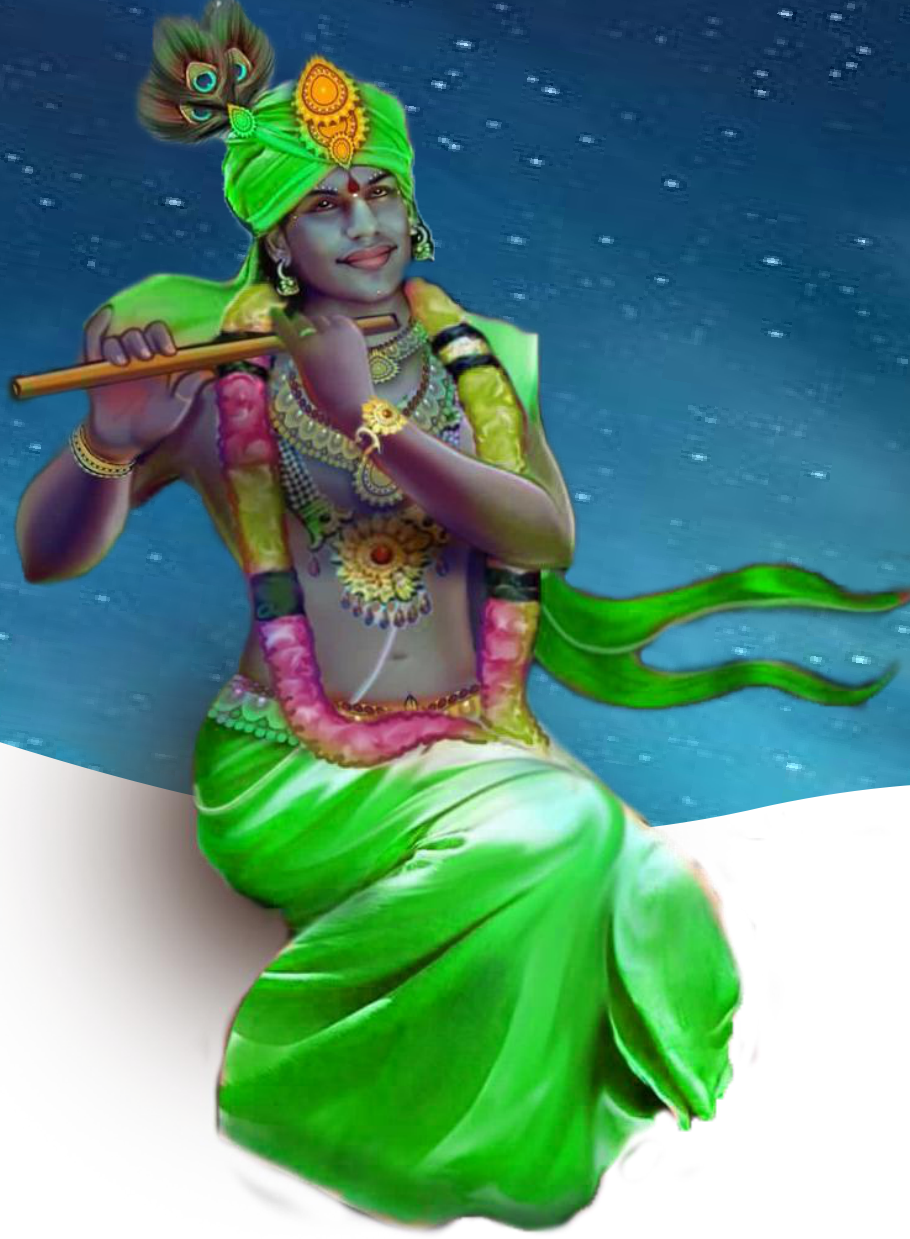
Krsna speaks about bhakti or devotion in these verses. You see, devotion can be one of the most powerful ways to reach God. Many saints showed the world the path of devotion. Caitanya Mahaprabhu was devoted to Krsna. He sang songs and danced in ecstasy while singing about Krsna. Mira was another devotee of Krsna who was in love with Him. Mira's devotional songs, Mira bhajans, are sung even today to show her devotion towards Krsna.
Devotion is one of the most powerful ways to reach God, however, it depends on how we express devotion. Many people go to temples. Some people have a habit of going to a particular temple every week. Going to temples becomes a fashion statement. Making mechanical visits to the temple is just a sort of ego. We mostly go to temples to ask for something. We make business deals with God. As long as God gives what we want, he is our God, otherwise, He is no longer God. Our prayers should express our devotion, gratitude, and love to God. All great devotees of Krsna and Rama showed complete gratitude and love. When devotion reaches that state, they reach the ultimate consciousness.
Prayers are powerful, however, we should not get stuck at prayers. They are good for initial stages. When we pray, we are stuck in words. We should go beyond words. Our devotion should help us see the ultimate energy behind the idol of Krsna or Rama. Actually, complete devotion puts us in a completely different plane. When we show our devotion to someone, we surrender ourselves to him or her.
Krsna continues to explain to Arjuna the ways in which people worship Him. Here he talks about the path of jnana, knowledge: those following the path of knowledge try to worship Me by acquiring and propagating knowledge. Understand, mere accumulation of knowledge only increases ego. It does not give enlightenment. Internalize the knowledge by meditation and contemplation, and relate it to experiential wisdom. Then the breeze of joy will flow into your life. Many people read many books and scriptures. Many people discuss spirituality and have debates over this subject. Debates are not wrong, but the motive with which they discuss should be correct. If they discuss to show others how much they know, then they are debating purely out of ego. Please be very clear, if we show off our knowledge to show how much we know, there is no use of that knowledge.
The only way knowledge in the
scriptures helps us is through
experience. Instead of debating,
apply it in day-to-day activities. See
the results on yourself first. Only
when we experience it, we have
the right to speak about it to
others. Till then, they are mere
words. Meditation helps us here,
especially in the path of jnana or
knowledge. You see, in the path of
devotion all we have to do is pray
to some form. We must completely
surrender. Actually that is difficult.
In the path of devotion at least we
have someone to whom we can
pray and look up to. In the path of
knowledge, there is no reference
point. There is nothing called you
and He. In the path of devotion,
there is a clear separation between
Krsna and us. Here, Krsna says that
everything is Krsna. Everything is
one.
© 2020 Sri Nithyananda Paramashivam. All Rights Reserved
When we meditate, we connect to our inner space. The scriptures, the Upanisad, talk about microcosm and macrocosm. Actually, they are one and the same. If we talk about this knowledge without experience, all our knowledge is only words. The difference happens when we experience that truth. During meditation, we merge with the cosmic energy. We enter that space where our inner space merges with the outer space. In the path of devotion, even if we meditate on the form, after a point we will see that there is no form. We experience the same thing as in the path of knowledge. Nothing is better than the other.
GOALS:
To allow the child to cognize
various paths to worship and
determine which method helps
them to feel most connected to
the divine.
© 2020 Sri Nithyananda Paramashivam. All Rights Reserved
ASSESSMENTS

- What are two (2) main ways in which one can offer worship?
- How do you prefer to worship to best feel connected to the divine?
- What do you understand by worshipping beyond form?
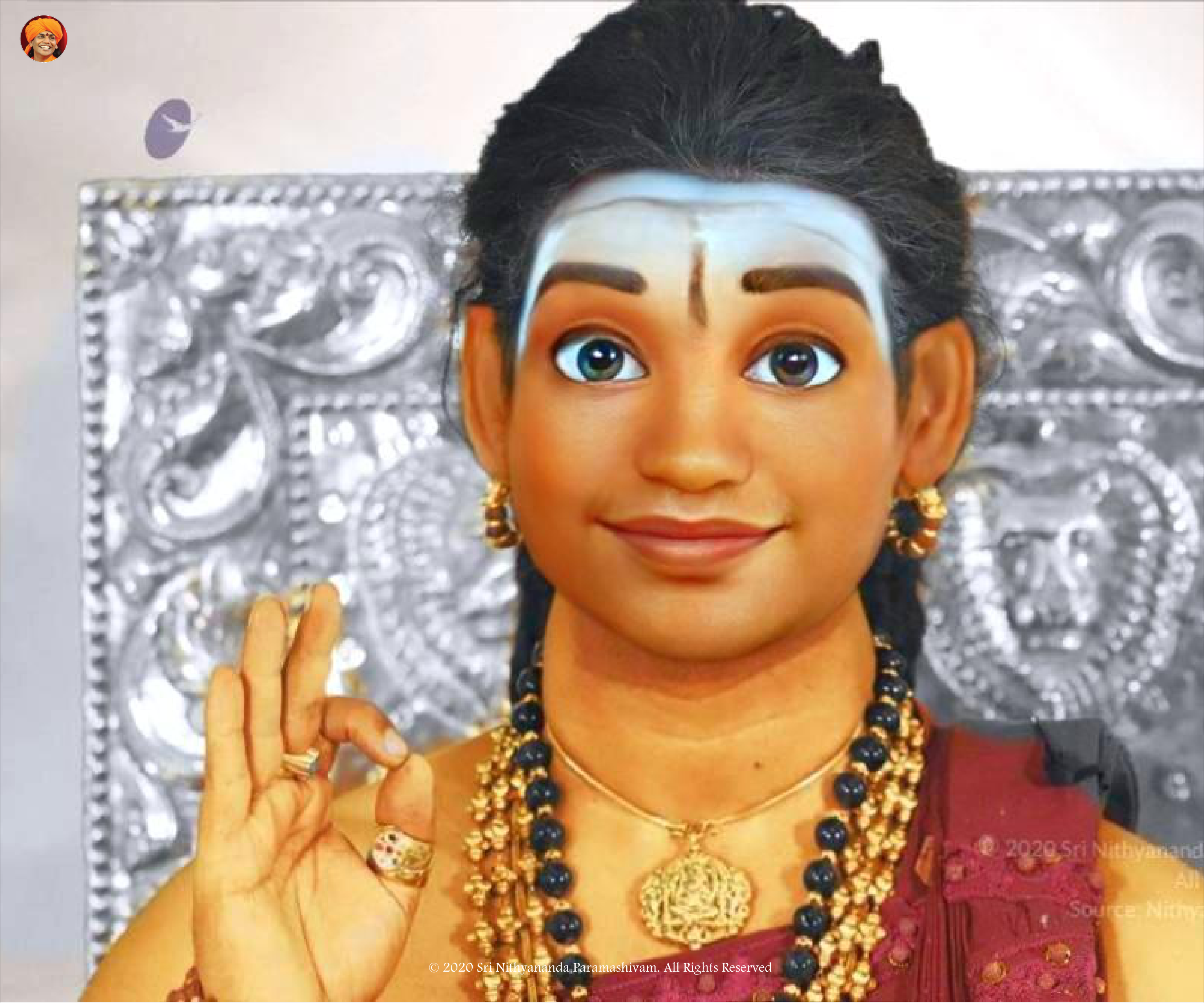
© 2020 Sri Nithyananda, Paramashivam. All Rights Reserved
ART OF
THE DAY
© 2020 Sri Nithyananda Paramashivam. All Rights Reserved
ART OF THE DAY:
DRAW YOUR IDEA OF DEVOTION
MATERIALS NEEDED:
- Colour pens
- Art Sheet
PROCEDURE:
Encourage children to paint an example of devotion. Let them discuss their ideas. They may want to draw something from their puja set, a musical instrument to play devotional tunes, people singing songs of devotion, prayering, or dancing. Or they may draw the object of their devotion, their guru, their favourite deity, so on.
INFERENCE:
Bhakti, devotion can be expressed in many forms
ACTIVITY OF THE DAY
© 2020 Sri Nithyananda Paramashivam. All Rights Reserved
ACTIVITY OF THE DAY:
DA, DA DANCE
Procedure:
Have someone demonstrate and teach the children some basic classical Indian dance movements. Alternative is to practice the Karanas in the Yoga Prathama Vinyasa Krama 108 Asana Sequence.

INFERENCE:
Bhakti can be expressed in movement
WORKSHOP OF THE DAY
© 2020 Sri Nithyananda Paramashivam. All Rights Reserved
[Figure: Portrait of Nithyananda]
WORKSHOP OF THE DAY: VAAKYARTHA SADHAS

PROCEDURE:
1. Encourage the children to hold Vaakyartha Sadhas on meditation and bhakti. Discuss how meditation helps bhakti, how chakti is a form of meditation. Even contemplating a beautiful scenery or flower like a rose, when done from a quiet inner space, can be a meditation.
CONCLUSION: There are many different ways people worship the Divine. We have customized paths for our personal growth. So naturally wherever one is, one can grow and reach the level we are supposed to reach.
© 2020 Sri Nithyananda Paramashivam. All Rights Reserved
© 2020 Sri Nithyananda Paramashivam. All Rights Reserved