INTRODUCTION
This text was machine-transcribed from the printed book and may contain errors. Select the words and choose “Report a mistake”.
We are now at the halfway mark of the Bhagavad Gita. Arjuna started in total confusion and dilemma. His questions were varied and repetitive. It was as if he did not listen to what Krsna told him. As I said, questions arise from inner violence. They arise from the ego to prove one’s correctness.
These questions gradually morph into doubts. Doubts are essential for any seeker. Doubt and faith are two sides of the same coin. Without doubt, we cannot develop faith. Blind faith is based upon social conditioning and will collapse under pressure. Real faith develops in the seeker when he sincerely questions spiritual truths. Raising sincere doubts before an enlightened master actually does a lot to integrate a person and strengthen his faith.
Krsna sees the change happening within Arjuna. He feels Arjuna’sinner violence and conflict is clearing up and that his individual consciousness is opening. The master is ready to change gears now and take the dialogue to the next level that is needed to address this change in Attitude. Now Krsna reveals to Arjuna the greatest of all secrets, the secret about Himself.
Here Krsna says, ‘Because you are never jealous, never envious of My status and Me, I give you the ultimate secret of this state.’ And I tell you,this is the ultimate secret. And He says, ‘Knowing which, you shall be relieved of the miseries of material existence.
’What are the miseries of material existence? Whether we have something or not, it is misery. If we don’t have, then the misery is, ‘I don’t have.’ If we have, then we have the misery, ‘I must protect it.’
Yoga means achieving.
Ksema means protecting or
preserving. Both are miseries.
Whether we have or not, it is
misery. Krsna says that the
miseries of having wealth
and not having wealth, both
disappear by knowing this
secret. This is the ultimate
secret that needs to be
understood. Knowledge of
this secret liberates you.
He says, 'This knowledge is the king of all knowledge. The greatest secret of all secrets, it is the purest knowledge and because it gives direct perception of the Self by realization, it is the perfection of religion. It is everlasting and it is joyfully performed.'
See, religion or a spiritual path should have three characteristics. First,it should clearly describe the goal of life. Next, it should clearly give you the path to achieve the goal. Third, it should make you happy to travel in that path. The path itself should be joyful.
In this chapter Krsna says, 'I am something more than God. Whatever you think of as God rests in Me. All created beings rest in Me.' But He is not crucified, because He declares this truth to a person who understands and accepts it. We need to see whether a person is mature enough to receive the truth before we share it.
© 2020 Sri Nithyananda Paramashivam. All Rights Reserved
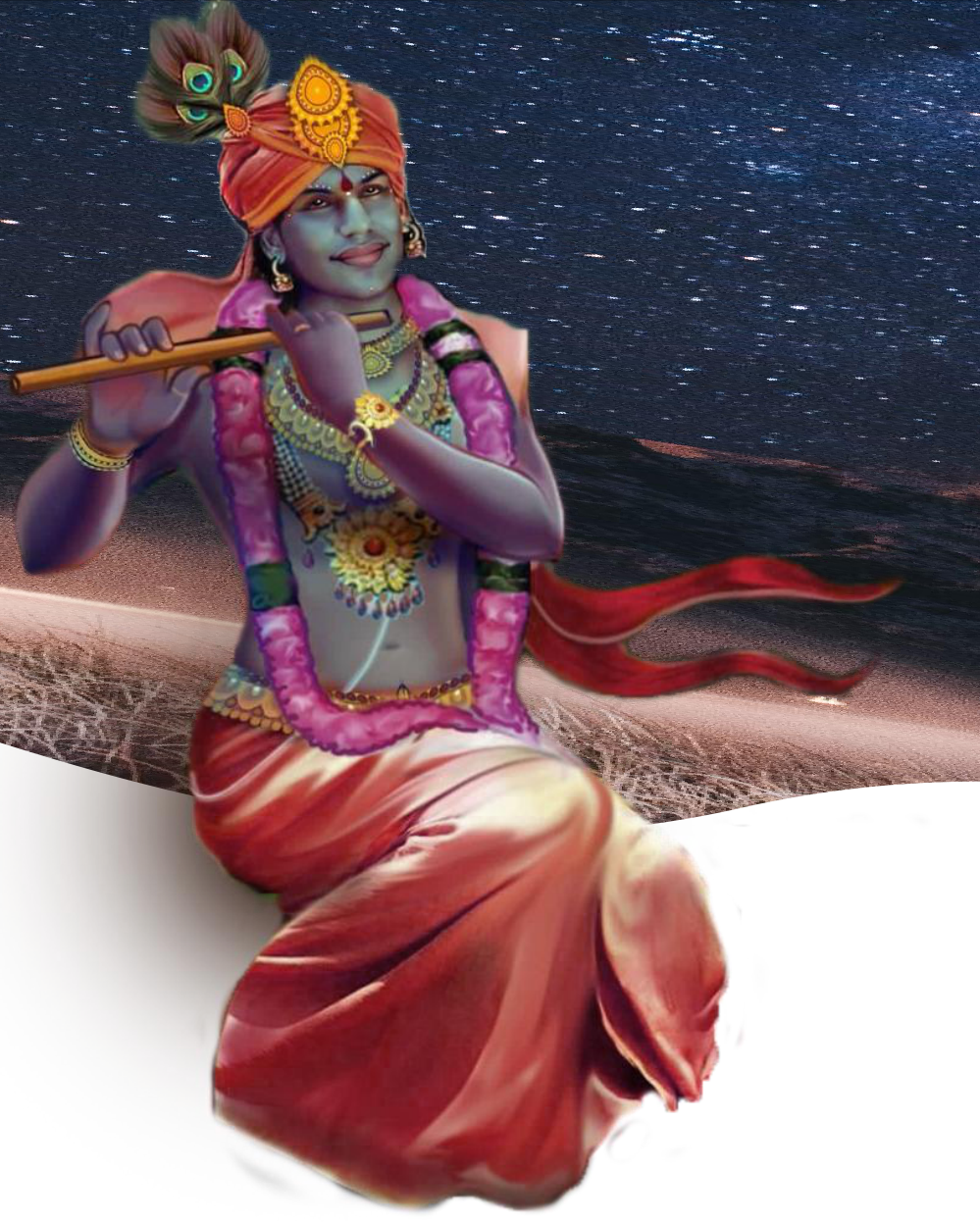
Here, Krsna says it is a secret, because it can be delivered only to a person qualified to receive it. However, these chapters are intimate secrets delivered only from the master to a qualified disciple who really wants the knowledge.
Here Krsna gives the qualification of people who can attain Him. When I say ‘Him’, it is the universal energy I am referring to. In the first two verses Krsna says, ‘It is a great truth that I am going to tell and it is a secret that I am revealing to you.’ Now He lets Arjuna know what kind of people can know the secret.
© 2020 Sri Nithyananda Paramashivam. All Rights Reserved
He says people who do not have
faith in His teachings go back to
the path of rebirth without
attaining Him. He says the
qualification required is to have
faith in His teachings. Only those
people can come out of the
vicious cycle of birth and death.
Faith is one of the most
important things, especially in
the spiritual path. Whenever an
enlightened master speaks, every
word he utters is the Absolute
Truth.
© 2020 Sri Nithyananda Paramashivam. All Rights Reserved Here, Krsna talks about faith in dharma, His teachings. When Krsna says dharma, He means anything that leads us to a higher level of consciousness. Man without consciousness is an animal, a danava. In Hindu epics there are two types of people: manava and danava, humans and non-humans. The first category has faith in dharma and a higher level of consciousness. Danava are animals. They do not have faith in any dharma, so their level of consciousness is low.
The only difference between man and an animal is the seed of consciousness implanted in us. We must water this seed and allow it to germinate. We must nurture this sapling to flower into a fully-grown tree. We need faith in dharma for this tree of consciousness to happen in us. Krsna clearly says that we must allow consciousness to flower in us, and in order to do that we must have faith in dharma.
© 2020 Sri Nithyananda Paramashivam. All Rights Reserved
GOALS:
To help the child realize some of
the truths of existence as shared
by Krsna, so that they can build
a strong foundation in allowing
their consciousness to blossom.
© 2020 Sri Nithyananda Paramashivam. All Rights Reserved
ASSESSMENTS
- Why does Krsna feel confident in revealing these sacred truths to Arjuna?
- What is the truth of material existence?
- What is the meaning of Yoga and Ksema?
- What is the required qualification to understanding the secrets shared by Krsna?
- What is dharma?
© 2020 Sri Nithyananda Paramashivam. All Rights Reserved
ART OF THE DAY
© 2020 Sri Nithyananda Paramashivam. All Rights Reserved
ART OF THE DAY:
PAIR DRAWING
MATERIALS NEEDED:
- Paper
- Pencils
PROCEDURE: Make the children sit in pairs, one child will draw half of the picture and other child will complete it. After the picture is complete both the children will talk about their picture.
INFERENCE:
What Krsna means through jnana yajnya is the spiritual path that leads one to Self-realization. This realization of the deepest truths about oneself happens through a combination of two things: understanding about similar spiritual experiences by observing others, and our own efforts to contemplate upon these experiences so that they are reproduced within. Review how this exercise helps us to observe others and ourselves in relation to this sacred truth shared by Krsna.
ACTIVITY OF THE DAY
© 2020 Sri Nithyananda Paramashivam. All Rights Reserved
ACTIVITY OF THE DAY: UNMUSICAL CHAIRS
Materials Needed: Chairs
Procedure:
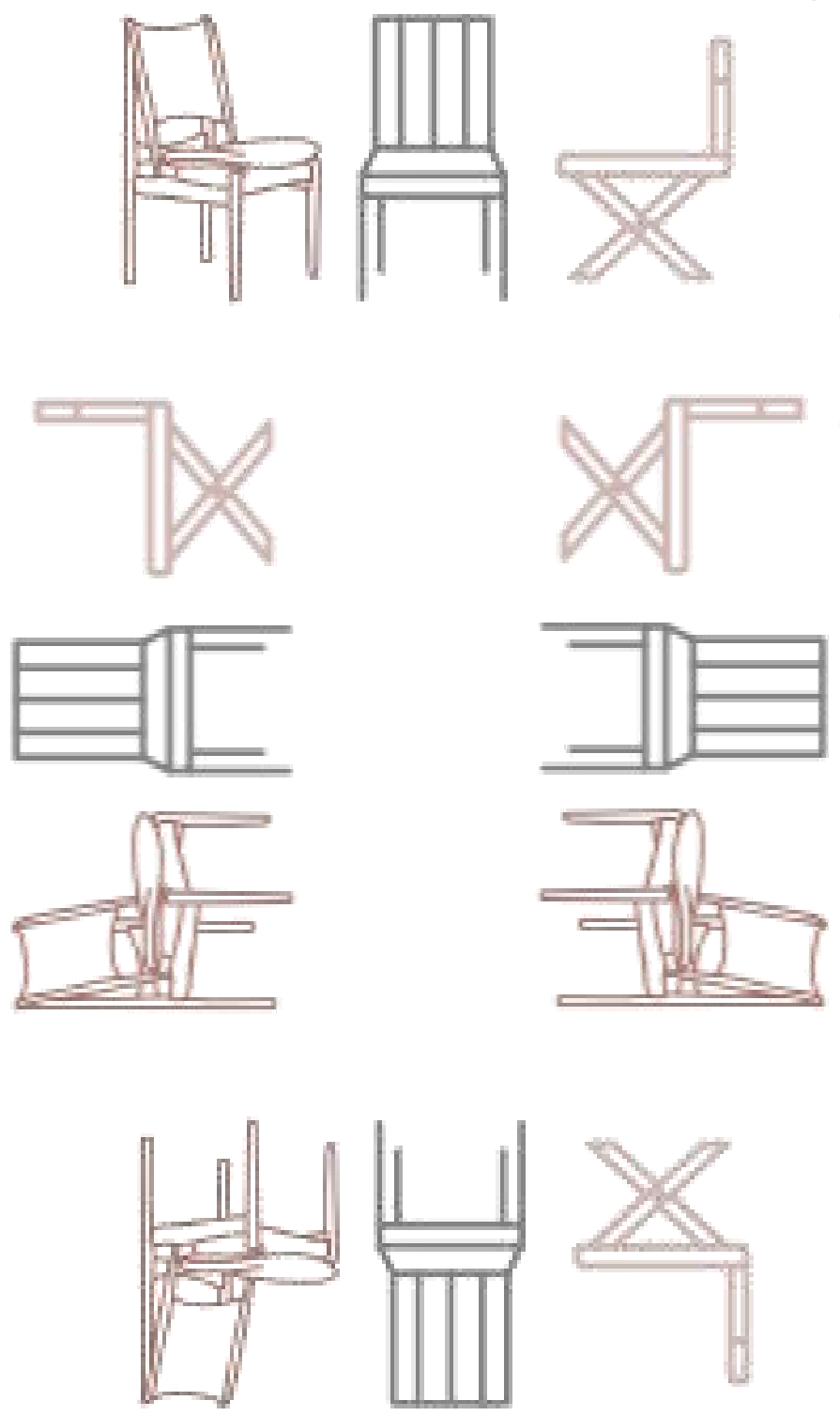
1. This easy listening game works great with young learners. Arrange chairs as if to play musical chairs. Students will walk around them, but in this case they won't be listening to a song. They will listen to a conversation. As always, give them the context and ask them a question: What is Tom's favorite food? Students walk around the chairs as you play the audio and the student/s who hear the answer to the question sit/s down.
2. Pause the audio. Those who are seated answer the question, and if it's correct they will remain seated. If several students sit down at the same time, that's fine, but ask them to whisper the answer in your ear to make sure they all heard the answer from the audio.
© 2020 Sri Nithyananda Paramashivam. All Rights Reserved
ACTIVITY OF THE DAY:
UNMUSICAL CHAIRS
Procedure:
3. Ask another question (whose answer will come up next in the audio). The students who were left standing now walk around the chairs till they hear the answer. Go on asking questions and giving students the opportunity to secure a seat. The last student left standing, like the usual game of musical chairs is left out of the next round. A chair is removed from the circle and so it continues until you have one chair and two students competing to answer the final question.
4. It's convenient to have the script of the audio so it's easier for you to ask the questions. You can use one of Swamiji's satsangs. Also, bear in mind you will play longer with a longer audio, but you can also play with several short ones. The game will go much faster if several students sit down (have the answer) at the same time, but only those who got it right should remain seated.

ACTIVITY OF THE DAY:
UNMUSICAL CHAIRS
INFERENCE:
Just as we collect things for the outer space, we need to collect knowledge for our inner space: life solutions. If we feel depressed or if we face some adverse situation, how are we to react? We need knowledge of the inner space to handle it. Collecting life solutions is what Krsna calls jnana yajnya. What is nitya (eternal) and what is anitya (temporary)? What is satya (truth) and what is asatya (falsehood)? Acquiring all this understanding is jnana yajnya . Review how this activity opens up the mind to receiving knowledge and reacting accordingly.

WORKSHOP OF THE DAY
© 2020 Sri Nithyananda Paramashivam. All Rights Reserved
[Figure: Nithyananda]
WORKSHOP OF THE DAY:
VAAKYARTHA SADHAS
MATERIALS NEEDED:
1. Pen
2. Paper
PROCEDURE:
Who have we given up on?
1. Make two lists - lists of people who we have NOT given up on. And list of people who we have given up on.
2. Sit and contemplate - what part of the other person have we given up on?
3. How does that correspond to an incompletion within you?
4. Observe how you have given up on that part of yourself.
5. Write down how by enriching the other person you will be enriching your own life. Now make a resolution to not give up on the other person.
6. Create a plan for how you are going to enrich the other person
7. Share your plan with the class
[Figure: Image of Nithyananda]
WORKSHOP OF THE DAY: VAAKYARTHA SADHAS
PROCEDURE: Enriching Your Teamily: So now we will do a process to complete with our Power of Living.
- Make a list of the top ten relationships in your life.
- Recall any incident or incidents you remember where you could have enriched the other person, but did not.
- Now, complete with those incidents by declaring that you will enrich those relationships now onwards. Note down at least five new ways in can you enrich each of your top relationships. These could be new thoughts words or actions that you are now going to engage in, to enrich and expand these people and relationships.

WORKSHOP OF THE DAY:
VAAKYARTHA SADHAS
INFERENCE:
When we have internalized Krsna's dharma in everything that we do, our consciousness automatically blossoms. When we reach that state of consciousness, we merge with universal consciousness and then we are free from the cycle of birth and death.
CONCLUSION:
Krsna says people who do not have faith in His teachings go back to the path of rebirth without attaining Him. He says the qualification required is to have faith in His teachings. Only those people can come out of the vicious cycle of birth and death, therefore we ought to cognize how to bring us to a space of dropping the inner violence within us so that we can have more trust and faith in these divine teachings. Krsna clearly says that we must allow consciousness to flower in us, and in order to do that we must have faith in dharma.
© 2020 Sri Nithyananda Paramashivam. All Rights Reserved