How To Control The Monkey Mind ?
This text was machine-transcribed from the printed book and may contain errors. Select the words and choose “Report a mistake”.
Authored by
THE SPH NITHYANANDA PARAMASHIVAM
अर्जुन उवाच ।
योऽयं योगस्त्वया प्रोक्तः साम्येन मधुसूदन ।
एतस्याहं न पश्यामि चञ्चलत्वात्स्थितिं स्थिराम्
॥६-३३॥
arjuna uvāca yoyaṁ yogastvayā proktaḥ
sāmyena madhusūdana etasyāhaṁ na
paśyāmi cañcalatvātsthitiṁ sthirām
Arjuna says: O Madhusūdana, I am not able to see this system of yoga as told by You in the situation of the mind being restless and not steady
POWERFUL COGNITION
Detachment from the ego or the identities will lead to detachment from desires. This is detachment from the past and future. This is being 'Unclutched
6.34
चञ्चलं हि मनः कृष्ण प्रमाथि बलवद् दृढम् ।
तस्याहं निग्रहं मन्ये वायोरिव सुदुष्करम्
॥६-३४॥
cañcalaṁ hi manaḥ kṛṣṇa pramāthī
balavad dṛḍham tasyāhaṁ nigrahaṁ
manye vāyoriva suduṣkaram
O Kṛṣṇa, the wavering mind is agitated, strong and firm. I think it is difficult to control the mind like it is difficult to control the wind
POWERFUL COGNITION
The moment we categorize something as easy or difficult, we have made it that way
श्रीभगवानुवाच ।
असंशयं महाबाहो मनो दुर्निग्रहं चलम् ।
अभ्यासेन तु कौन्तेय वैराग्येण च गृह्यते
॥ ६-३५ ॥
śrībhagavānuvāca asaṁśayaṁ mahābāho
mano durnigrahaṁ calam abhyāsena tu
kaunteya vairāgyeṇa ca gṛhyate
Bhagavān says: O mighty-armed
Kaunteya (son of Kuntī), it is
undoubtedly difficult to control the
wavering mind but by practice and
detachment, it can be controlled
POWERFUL COGNITION
Persevere with authenticity until we experience the Truth
INTRODUCTION
Arjuna introduces the word ‘difficult or
su-duṣkaram’ here. Be very clear, the
moment we categorize something as
easy or difficult, we have made it that
way. Understand that the ego can be
fulfilled only through difficult things.
Simple things cannot satisfy the ego.
After listening to Kṛṣṇa about
controlling the mind, Arjuna expresses
his doubts about being able to still the
mind. His question is not just an
individual’s question. The questions are
the fundamental quest of the individual
and the answers are the eternal Truth.

Arjuna addresses to Kṛṣṇa his concerns about the mind being so strong that it sometimes overcomes the intelligence. The first and foremost thing is to accept that we have a problem, we have a root pattern. The next thing is to understand how the root pattern is created.
That is what Arjuna does here. It is only then that we can overcome the root pattern. If we ignore or run away from the pattern we can never resolve and complete with the pattern. Here, Kṛṣṇa has to answer from the same plane that Arjuna asks the question. Kṛṣṇa has to give a technique for the mind to play with.
THE PATH TO SELF-REALIZATION
Masters give meditation techniques so that we try all these and ultimately realize we are bliss, and that meditation is our natural state, and that there is nothing to be achieved.
The mind cannot believe something so simple.
Kṛṣṇa emphasizes perseverance and penance. Don't think penance means leaving home, going to the Himalayas and sitting in meditation while fasting. Penance is persevering with authenticity until we experience the Truth. Whether we say ego or mind, it is just the collection of thoughts. Thoughts can exist only in relationship to our identity and the past or the future. The mind moves only because it is attached to the identities that we carry. The mind becomes so attached to these identities that it is constantly reviewing the past incidents or it is constantly planning the future to either protect or develop these identities. If we look deeply, staying in the present moment of completion means total insecurity. It requires us to be ready to embrace the present without planning for the future or reviewing the past. This seems like a great danger for our ego.
Any identity that we create about ourselves that is less than the idea of our being God, is a false identity. If we consider ourselves to be anything less than God, we suffer from an inferiority complex. If we have the courage to detach ourselves from the certificates of society, if we have the courage to drop these false identities, then we can embrace the Divine.
Detachment is the direct technique that Kṛṣṇa is suggesting here. Detachment from the ego or the identities will lead to detachment from desires. This is detachment from the past and future. This is being 'Unclutched
When we realize the
infinity of everyone, we
will express our
unconditional love and
compassion towards
everyone without
discrimination, because
we know that all
discrimination is baseless
and false. Our very walk
and talk will start
radiating so much bliss
that our very presence
will start healing others.
We will become a
blessing for planet Earth
and the people who
experience our presence.
Goals: Understanding the mind, thoughts, and unclutching
ASSESSMENTS
- When we categorize something as easy or difficult, what happens?
- What is the first thing we need to do to overcome our root pattern?
- Why do Enlightened Masters have to give meditation techniques?
- What does penance mean?
- Can thoughts exist by themselves?
✓ What Is the mind attached to?
✓ What does staying in the present moment of completion mean to us?
✓ What seems like a great danger for our ego?
✓ What do we need courage for?
✓ What is the technique that Kṛṣṇa suggests to Arjuna?
ART OF THE DAY
ART OF THE DAY:
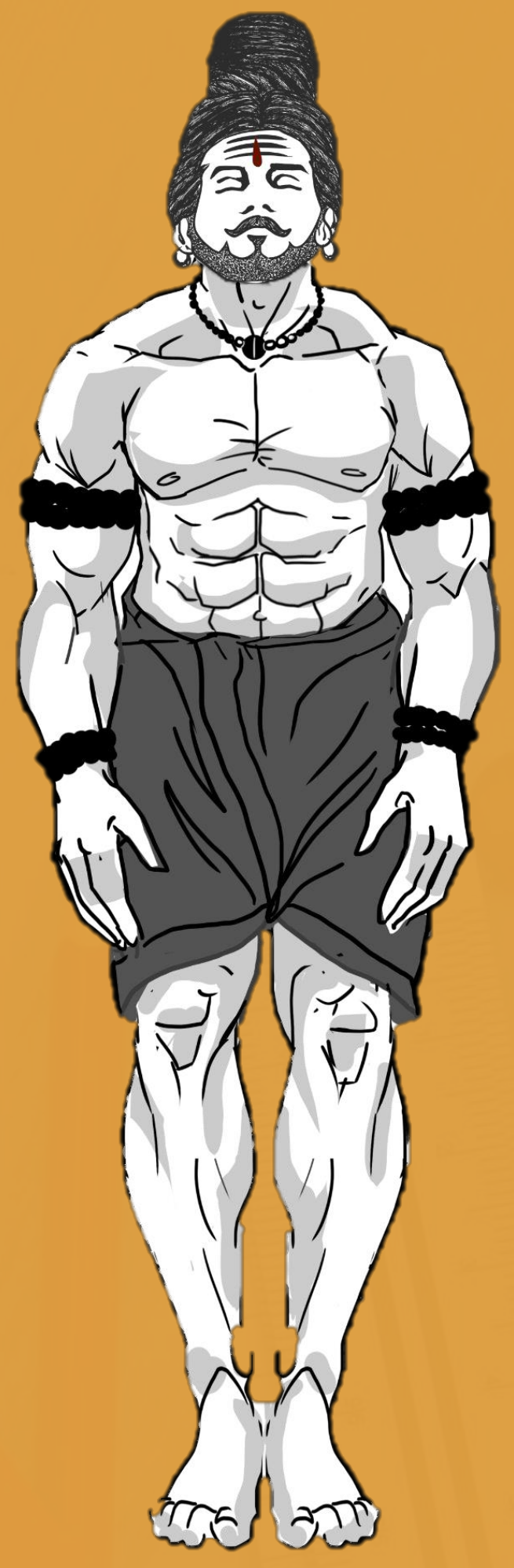
DECORATE PERSON
MATERIALS NEEDED:
- Each child to get a piece of paper with the outline of a person on it
- A variety of bits of string, wool, button scraps of material, sequins and so on
- Glue
- Scissors
PROCEDURE Challenge the children to decorate their person as complicated as possible
INFERENCE Simple things cannot satisfy the ego. The mind finds it is easy to go beyond simple.
ACTIVITY OF THE DAY
ACTIVITY OF THE DAY:
IDENTIFY THE TRUTH

MATERIALS
- Paper
- Pens
PROCEDURE Each child writes two things on their piece of paper without showing it to the other children. One of these things must be true and one must be false. For example, “I go to dance classes” is true and “I go to swimming classes” is false. Then the children take turns to read out their two statements, and the other children have to ask questions until they know which is true and which is false.
The questions can only be answered by yes or no, and cannot use any of the words of the statement. For example, if a child says they go to swimming classes, the questions cannot use “swimming” or “class”. Instead, they can ask about the pool, for example, is it big, is it small, or if the classes are every week.
Note: Help young children to do the writing and reading.
INFERENCE Persevere with authenticity until we get to the Truth
WORKSHOP OF THE DAY
WORKSHOP OF THE DAY
VAARKYARTHA SAADHAS
Do Vaakyartha Sadhas on this topic:
Say there are two trees in a forest. Now, if one tree falls on the other, we can say that the tree on which the other tree has fallen feels the impact or the pain of a falling tree. Now, say the tree actually feels the entire forest as a part of its own self. Can we say that it will feel 'another' tree falling on it? When everything is a part of its own self, where is the idea of 'other'? When the idea of 'other' disappears, then where is the pain?
CONCLUSION
Our mind cannot believe we are bliss, and that meditation is our natural state, and that there is nothing to be achieved - so simple!

- BHAGAVAD GITA -
BOOK VI, VOLUME IX