A Yogi Is A Balanced Person
This text was machine-transcribed from the printed book and may contain errors. Select the words and choose “Report a mistake”.
Authored by
THE SPH NITHYANANDA PARAMASHIVAM
युञ्जन्नेवं सदात्मानं योगी नियतमानसः ।
शान्तिं निर्वाणपरमां मत्संस्थामधिगच्छति
॥ ६-१५ ॥
yuñjannevaṃ sadātmānaṃ yogī
niyatamānasaḥ śāntiṃ nirvāṇa paramāṃ
mat-saṃsthām adhigacchati
Always practising control over the mind and situated in the Self, the yogi attains peace, the supreme liberation and My kingdom
POWERFUL COGNITION
The word yoga means uniting with the Divine.
6.16
नात्यश्नतस्तु योगोऽस्ति न चैकान्तमनश्नतः ।
न चातिस्वप्नशीलस्य जाग्रतो नैव चार्जुन ॥
॥ ६-१६ ॥
nātyaśnatastu yogosti na
caikāntamanaśnataḥ na cāti swapnaśīlasya
jāgrato naiva cārjuna
Yoga is neither eating too much nor eating too little; it is neither sleeping too much nor sleeping too little, Oh Arjuna
POWERFUL COGNITION
To be balanced in whatever we do is the path of a Yogī.
6.17
युक्ताहारविहारस्य युक्तचेष्टस्य कर्मसु ।
युक्तस्वप्नावबोधस्य योगो भवति दुःखहा
॥ ६-१७ ॥
yuktāhāra vihārasya yuktaceṣṭasya
karmasu yukta-svapnāvabodhasya yogo
bhavati duḥkhahā
One who is regulated in food, rest,
recreation and work, sleep and
wakefulness, can reduce misery
POWERFUL COGNITION
A Yogī acts according to their body intelligence
६.१८
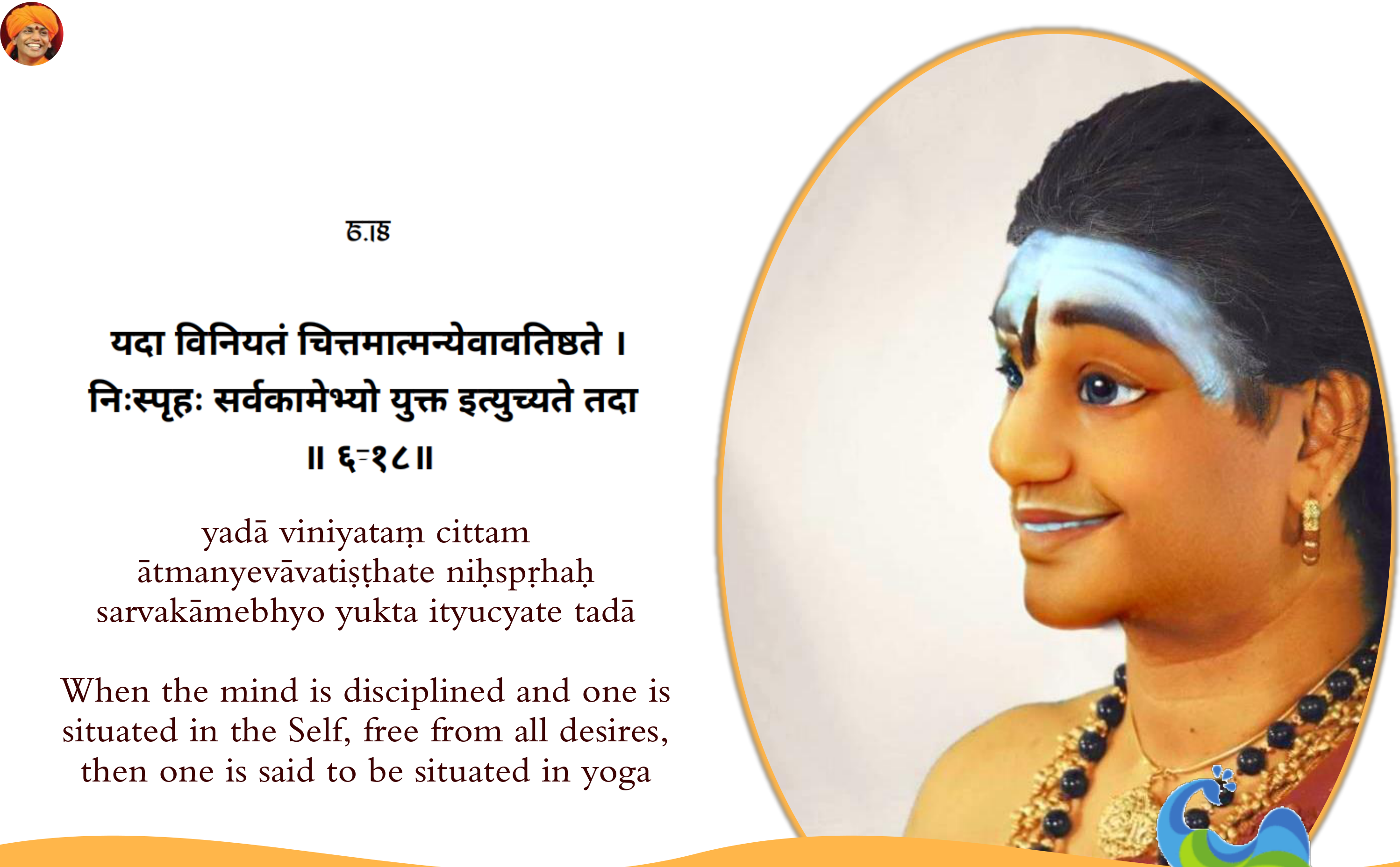
यदा विनियतं चित्तमात्मन्येवावतिष्ठते ।
निःस्पृहः सर्वकामेभ्यो युक्त इत्युच्यते तदा
॥ ६=१८ ॥
yadā viniyataṃ cittam
ātmanyevāvatiṣṭhate niḥspṛhaḥ
sarvakāmebhyo yukta ityucyate tadā
When the mind is disciplined and one is situated in the Self, free from all desires, then one is said to be situated in yoga
POWERFUL COGNITION
The main aim of all our yoga and meditation techniques is to be in in ‘nitya ānanda’ or ‘eternal bliss
यथा दीपो निवातस्थो नेङ्गते सोपमा स्मृता ।
योगिनो यतचित्तस्य युञ्जतो योगमात्मनः
॥ ६-१९ ॥
yathā dīpo nivātastho neṅgate sopamā
smṛ tā yogino yatacittasya yuñjato
yogamātmanaḥ
a lamp in a place without wind does
not waver, so also the yogi, whose mind
is controlled remains steady, engaged in
yoga, in the Self
POWERFUL COGNITION
The moment we decide to stay in the present space of completion, the mind stops flickering

INTRODUCTION
Yoga is cessation of the mind. The word yoga means uniting with the Divine. To reach the Ultimate, the goal and the path is the practice of Yoga. We have two lives in us. One is the life we want to live – the dream. The other is the life in reality – the life we are living. The meeting of these two lives is what is called Yoga.
The goal is uniting with the
Ultimate or experiencing the
ultimate spiritual energy, or the
Divine and realizing our inherent
nature. The path is dropping the
mind, which means going beyond
thoughts. We are spiritual beings
having a human experience; we are
not human beings having a spiritual
experience. This is the truth. Bliss
is our very nature.
The mind pulls us
towards the temporary
happiness that we
experienced by pursuing
sense pleasures. For
example, we may like a
particular sweet. We are
attracted to its taste.
When we sit down to eat
it, for a few minutes our
mind seems to stop
thinking about it. There
is a sense of peace when
we are eating the sweet.
Actually, we are at peace
because the number of
thoughts has come down
for those few minutes.
But we think the peace
we experience is due to
the sweet its
Understand that there is nothing wrong with liking the taste of the sweet. But if we think that the sweet is the cause of our fulfillment, then the problem starts, because the next time the same sweet may not give us the same experience of fulfillment.
We do not trust our inherent body intelligence. We run our body according to the mind or according to our desires and senses. Otherwise, why would we stay up in the night watching television when our body is begging for some sleep? Why would we overeat? Has anyone seen any animal ever overeat?
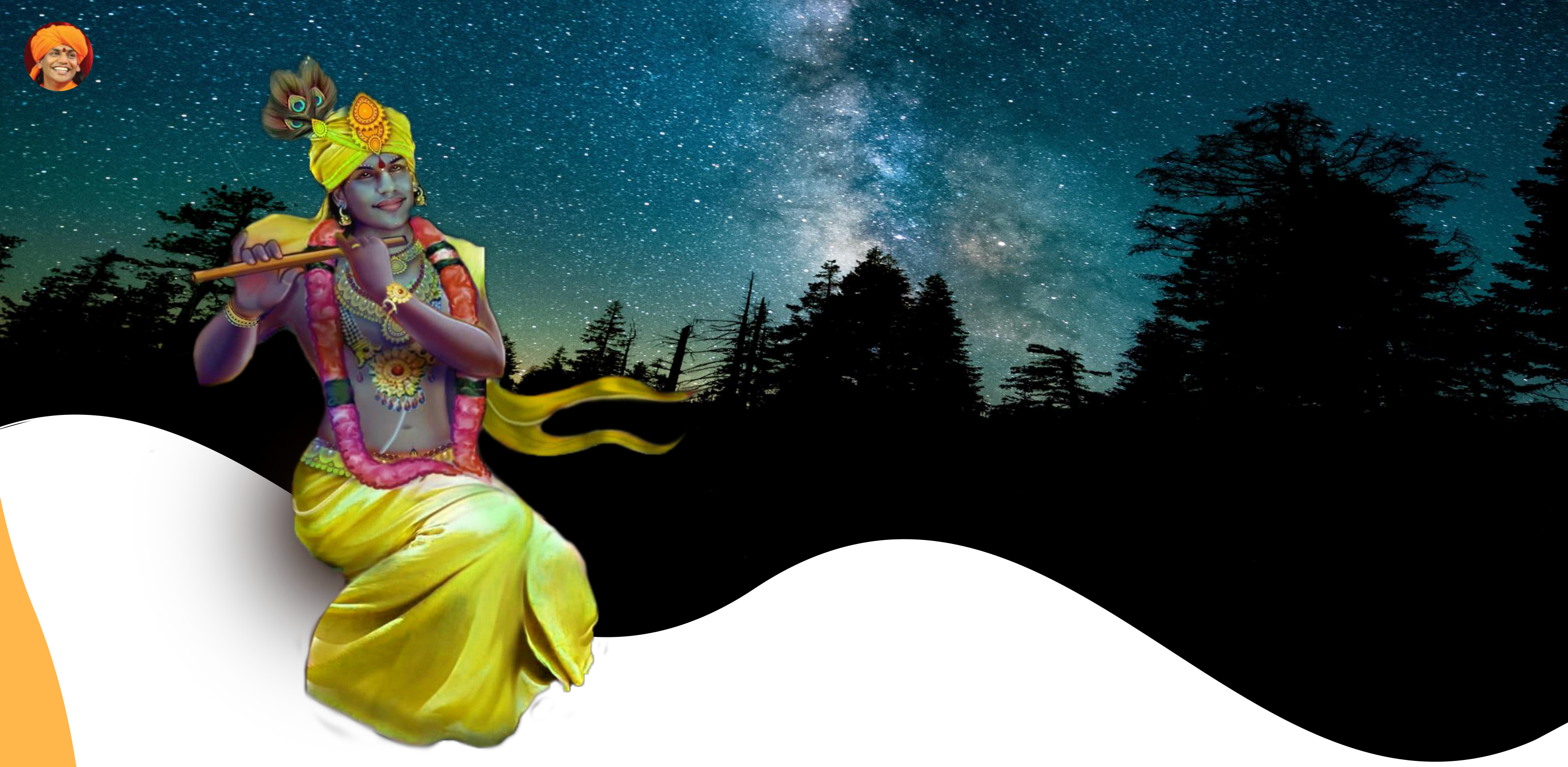
They eat according to their body intelligence. When the body signals that it needs food, they eat. When the body signals that it needs sleep, they sleep. We have forgotten how to relate with our own body intelligence.
We do not need to sleep for as long as most of us do. There are periods in our sleep — the dream and deep sleep states. It is the deep sleep state that gives us energy and rejuvenates us. This state can be achieved through meditation as well. In the course of an eight-hour sleep cycle, we are in the deep sleep state only for a couple of hours. That is why even a few minutes of meditation can actually refresh us as much as a few hours of sleep
BE IN THE PRESENT TO BE COMPLETE
Our mind is like a lake. When we throw a stone in a lake, many ripples will be created. If we want to stop these ripples, we cannot put our hand in the lake to try to smoothen out the ripples. Instead if we just watch the lake, and ensure no more stones are thrown in, the ripples will disappear and the lake will become still. If we just relax and watch our mind with complete awareness, then no new thoughts will be created.
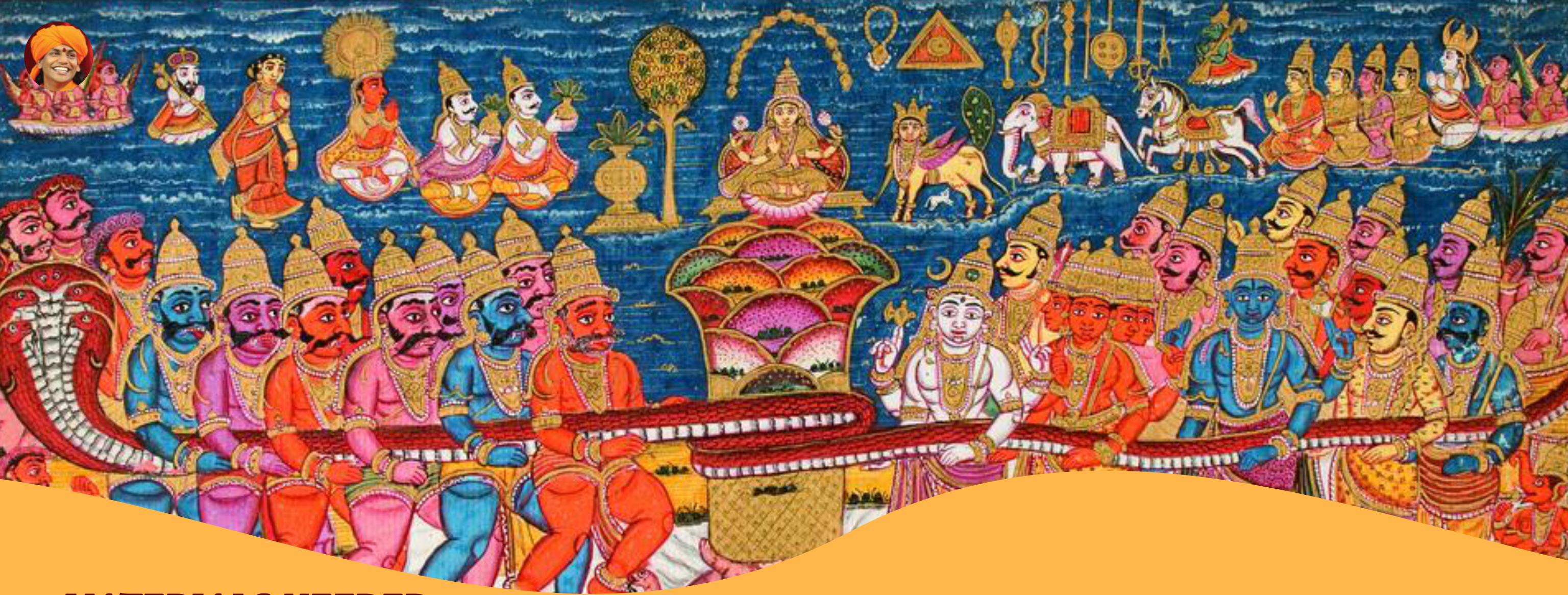
There is a beautiful story described in Śrīmad Bhāgavatam. Devatā, the demigods were oppressed by the demons and appealed to Bhagavān Viṣṇu for help. According to His directions, the demigods were to churn the ocean of milk. During the churning, many products emerged out of the ocean of milk including a deadly poison. Bhagavān Śiva came to their rescue. He drank the poison but did not completely take it in. He just held it in His throat.
Listen. When the churning of the milky ocean started, everyone was waiting only for the nectar. That is why, when the poison emerged, it was a suffering for them. But Bhagavān Śiva was waiting for the poison also, that is why it could not bring suffering to Him.
Life is like the churning of the ocean of milk where we are churned, pulled towards the desires and pushed away from the fears. There are various products that emerge out of the churning, out of the decisions and choices we make in life. Some of these products appear pleasing while others appear dangerous like poison.
When we exist with responsibility without taking in the poison or throwing it out, meaning without running towards the desires or running away from the fears, we become Śiva and live life blissfully irrespective of what comes our way.
ASSESSMENTS
- What are the two lives living in us?
- What does Kṛṣṇa say is the goal?
- What does Kṛṣṇa say is the path?
- What is one way for the number of thoughts to come down for a few minutes?
- Is it wrong to like the taste of the sweet?
- Is our body intelligence the same as our mind and senses?
- What are the 2 forms of sleep?
- The rejuvenation we get from meditation, is it the same as what the dream sleep gives us or what the deep sleep gives us?
- How do we ensure no new thoughts are created in our mind?
- Why were the Devatā, the demigods, churning the ocean of milk?
- When the churning of the milky ocean was happening, why was Śiva different to the Devatā?
- Why is life like the churning of the ocean of milk?
ART OF THE DAY
ART OF THE DAY:
CHURNING OF THE MILKY OCEAN
MATERIALS NEEDED:
- 4 large sheet of paper
- Coloring pens.
PROCEDURE As a group, decide on four scenes from the story on the churning of the milky ocean. Then split the children into 4 groups, with each group getting allocated one of the scenes that they will draw on their sheet of paper. The children in each group need to coordinate how they will do their drawing. At the end, bring the papers together and lay them out like a comic storyline.
INFERENCE Powerful stories have many powerful messages. Life is like the churning of the ocean of milk
ACTIVITY OF THE DAY
ACTIVITY OF THE DAY:
BROKEN TELEPHONE
MATERIALS NEEDED A small piece of jaggery per child in a cup or small bowl. The pieces should all be the same size.
PROCEDURE The children put their piece in their mouth at the same time and have to try to make the sweetness last as LONG as possible. No talking until their sweet is finished. When they are done, the children can talk about holding the sweetness
INFERENCE The number of thoughts in the mind can change
CONCLUSION When we have less thoughts then we are more blissful
WORKSHOP OF THE DAY
WORKSHOP OF THE DAY:
VAAKYARTHA SADHAS
Hold Vaakyartha sadhas on what in life appears dangerous like poison. For each example, discuss some options on how to live without taking in the poison or throwing it out.
For example, you see a snake. ❖ You could Approach the snake with the risk that it bites you - that would be like Śiva swallowing the poison ❖ Scream and run and make everyone else panic - that would be like Śiva spitting out the poison and putting others into danger ❖ Or you can “live without taking in the poison or throwing it out” by quickly stepping away from the snake while shouting: “Watch out, a snake!” to warn others to not go close while the snake has a chance to move away from everyone
Live like Paramaśiva, be prepared for the poison also and let it not bring suffering to you When the number of thoughts has come down we experience bliss Listen to body intelligence rather than the mind and senses The Yogī whose mind is controlled remains steady as a lamp in a place without wind
- BHAGAVAD GITA -
BOOK VI, VOLUME V