Avoid Unfulfilled Desires To Avoid Karma
This text was machine-transcribed from the printed book and may contain errors. Select the words and choose “Report a mistake”.
Authored by
THE SPH NITHYANANDA PARAMASHIVAM
चातुर्वर्ण्यं मया सृष्टं गुणकर्मविभागशः ।
तस्य कर्तारमपि मां विद्ध्यकर्तारमव्ययम्
॥ ४=१३ ॥
cāturvarṇyaṁ mayā sṛṣṭaṁ
guṇakarma vibhāgaśaḥ I tasya
kartāram api māṁ
viddhyakartāramavyayam
Depending upon the distribution
of the three attributes or guṇas
and action, I have created the
four castes Yet, I am to be known
as the non-doer, the
unchangeable
POWERFUL COGNITION
The present day narrative about the evil caste system of ancient India is a myth and a concocted lie. The truth is that the system of classification is based on the predominant guṇa (sattva, rajas, tamas) in a person and not dependent on his birth.

4.14
न मां कर्माणि लिम्पन्ति न मे कर्मफले स्पृहा ।
इति मां योऽभिजानाति कर्मभिर्न स बध्यते
॥ ४=१४॥
na māṁ karmāṇi limpanti na me
karmaphale spṛhā I iti māṁ
yo'bhijānāti karmabhirna sa badhyate
I am not affected by any work; nor do
I long for the outcome of such work
One who understands this truth about
me also does not get caught in the
bondage of work
POWERFUL COGNITION
The desires we carry from a previous birth, have the innate energy and intelligence capable of fulfilling itself without acquiring karma.
4.15
एवं ज्ञात्वा कृतं कर्म पूर्वैरपि मुमुक्षुभिः ।
कुरु कर्मैव तस्मात्त्वं पूर्वैः पूर्वतरं कृतम्
॥ ४=१५॥
evamṁ jñātvā kṛtaṁ karma pūrvairapi
mumukṣubhiḥ I kuru karmaiva
tasmāttvaṁ pūrvaiḥ pūrvataraṁ kṛtam
All the wise and liberated souls of
ancient times have acted with this
understanding and thus attained
liberation Just as the ancients did,
perform your duty with this
understanding
POWERFUL COGNITION
Have no unfulfilled desires, no incompletion, and no attachments, you will have no karma.
4.16
किं कर्म किमकर्मेति कवयोऽप्यत्र मोहिताः ।
तत्त्ते कर्म प्रवक्ष्यामि यज्ज्ञात्वा मोक्ष्यसेऽशुभात्
॥ ४=१६॥
kiṁ karma kimakarmeti kavayo'pyatra
mohitāḥ I tat te karma pravakṣyāmi yaj
jñātvā mokṣyase'śubhāt
What is action and what is inaction, even the wise are confused. Let me explain to you what action is, knowing which you shall be liberated from all ills
POWERFUL COGNITION
Work from your needs, not from your wants.
4.17
कर्मणो ह्यपि बोद्धव्यं बोद्धव्यं च विकर्मणः ।
अकर्मणश्च बोद्धव्यं गहना कर्मणो गतिः
॥ ४=१७॥
karmaṇo hyapi boddhavyaṁ
boddhavyaṁ ca vikarmaṇaḥ |
akarmaṇaśca boddhavyaṁ gahanā
karmaṇo gatiḥ
The complexities of action are very
difficult to understand Understand
fully the nature of proper action by
understanding the nature of wrong
action and inaction
POWERFUL COGNITION
Proper action can be understood by understanding what comprises inaction and wrong action.
4.18
कर्मण्यकर्म यः पश्येदकर्मणि च कर्म यः ।
स बुद्धिमान्मनुष्येषु स युक्तः कृत्स्नकर्मकृत्
॥ ४=१८ ॥
karmaṇyakarma yaḥ paśyedakarmaṇi ca
karma yaḥ I sa buddhimān manuṣyeṣu sa
yuktaḥ kṛtsnakarmakṛt
He who sees inaction in action and action in inaction is wise and a yogi, Even if engaged in all activities
POWERFUL COGNITION
Your joy is no longer dependent on what society says or thinks about you, because you are complete in yourself.
4.19
यस्य सर्वे समारम्भाः कामसङ्कल्पवर्जिताः ।
ज्ञानाग्निदग्धकर्माणं तमाहुः पण्डितं बुधाः
॥ ४=१९॥
yasya sarve samārambhāḥ
kāmasaṅkalpavarjitāḥ I
jñānāgnidagdhakarmāṇaṁ tam āhuḥ
paṇḍitaṁ budhāḥ
He who is determined and devoid of all desires for sense gratification he is of perfect knowledge. The sages declare such a person wise whose actions are burnt by the fire of knowledge
POWERFUL COGNITION
In the process of Unclutching, you transcend both action and inaction, karmaṇi and akarmaṇi.
4.20
त्यक्त्वा कर्मफलासङ्गं नित्यतृप्तो निराश्रयः ।
कर्मण्यभिप्रवृत्तोऽपि नैव किञ्चित्करोति सः
॥ ४-२०॥
tyaktvā karmaphalāsaṅgaṁ nityatṛpto nirāśrayaḥ I karmaṇyabhipravṛtto'pi naiva kiñcitkaroti saḥ
Having given up all attachment to the results of his action, always satisfied and independent, the wise man does not act, though he is engaged in all kinds of action.
POWERFUL COGNITION
Be involved completely in the action yet be detached, independent and satisfied within.
INTRODUCTION
Now we come to the controversial topic of the caste system. Kṛṣṇa says, 'I have created the four castes depending upon the distribution of the three guṇas or attributes.' Guṇa means 'attribute' or 'quality' that we are born with.
It is a reflection of the prārabdha karma, the vāsana, and the mindset with which we are born. There are three basic guṇas: satva or purity, rajas or activity and tamas or inactivity.
The varṇa system was four-fold. Brāhmaṇas were the scholars and priests, intellectually inclined. Kṣatriyas were the soldiers and kings, ambitious and physically strong. Vaiṣyas were the business community with strong commercial acumen. Śudras were the workers, physically able and skillful.
Based on their guṇas, their skill sets and not birth, the children in ancient Gurukul were trained into their vocations, their varṇa or caste. Over time, this system was manipulated. Those who believed that they had a better varṇa, caste, decided to make it a hereditary right. Earlier, the son of a brāhmaṇa could not to be a priest, if he was unsuitable or the son of a kṣatriya to be a warrior if he was inadequate. Kṛṣṇa states very clearly that only the one who transcends these three guṇas can reach His state, can reach the higher levels of consciousness. To reach Kṛṣṇa one has to be a triguṇa rahita, beyond the three guṇas. Then, one becomes a non-doer, a no-caste, no-attribute person.
When a desire is fulfilled, it no longer creates ripples in the mind. Desires that get fulfilled are the basic needs one is born with, which are the result of the carry- over vāsanā, the prārabdha karma. We acquire all other desires by comparing ourselves with others. These are wants, not needs. Existence has no way of fulfilling such wants.
UNCLUTCH
TO BE FREE AND
LIBERATED

When one works out of basic need, he acquires no karma. These possessions born out of our wants can never be fulfilled or enjoyed. Once acquired, we seek the next acquisition. The cycle goes on.
Being ‘Unclutched’ is the state where you are free and liberated. Let me expand on the word ‘Unclutching.’ If you observe your mind keenly, you will see that you are constantly connecting all your thoughts and creating links in your mind.
You connect all painful memories, create a pain shaft and conclude, ‘My life is suffering, my life is pain.’ Now when you start believing your whole life is suffering, you have created a pain shaft and you are waiting only for painful incidents in your life so that you can elongate that shaft.
CREATE YOUR REALiTY
Whatever you believe is what you
create within you and outside
you. You will see that
manifesting in your life
over and over again.
That is why vedic ṛṣis, sages, say
that you create what you want.
By seeing, you create. You will
wait unconsciously for painful
incidents to strengthen that
belief, that life judgment.
Second thing, whenever you add
the painful incidents
unconsciously, you will be
elongating that shaft, even
though you may want to
consciously end the pain by
breaking it.
If you believe your whole life is a shaft of joyful experiences, which we do very rarely, constantly you are in fear about whether the joy will continue. If you believe life is a shaft of painful incidents, you do two things:
1. Unconsciously you gather more and more incidents and strengthen your faith about how your life is painful, and consciously you try to break the pain shaft!
2. If you believe life is a chain of joyful incidents, unconsciously you will be in fear that it will end, and consciously you will try to prolong it.
These are two big dramas we are continuously enacting with ourselves. You forget that you can neither break the shaft nor elongate it because the shaft itself does not exist! The shaft itself is your own imagination.
ORiGiNAL
SiN
When you believe that your
mind is logical, you have
created the first 'original sin' for
yourself. Understand, by your
very nature you are unclutched.
Every moment you are
renouncing the thoughts by
your very nature. A new
thought can appear only when
the old thought has been
renounced. But even after
renouncing them you try to
pick up the thoughts from the
dustbin and try to create a shaft
with them.
GATHER ENERGY
BY UNCLUTCHING
Kṛṣṇa says to understand what action is, you need to understand what inaction is. When you unclutch, you are seemingly in inaction or akarma. However, the removal of the various shafts of pain, pleasure, fantasies etc., releases so much energy within you that you are now actively passive. You are at the height of potential energy, ready to release that energy for whatever purpose you decide in that moment. If instead, you are actively daydreaming, caught in pain and pleasures shafts, then you are seemingly active and busy, but totally useless. In fact, you are counterproductively busy, pushing yourself deeper into more suffering.
LIFE IS A CELEBRATION
When we are blissful and complete within ourselves, we would never see anything disturbing outside. That is what Kṛṣṇa says here: Be involved completely in the action yet be detached, independent and satisfied within. Then you can function spontaneously, flowing in tune with Existence. Life then becomes a celebration. Every single thing you do is an act of joy and an expression of the loving energy in you. Your joy is no longer dependent on what society says or thinks about you, because you are complete in yourself.

GOALS:
Make the Child understand that
unfulfilled desires,
incompletions, and attachments,
lead to karma. Our desires
should be based out of our
needs and not our wants. If we
practice completion and
immerse ourselves in Krishna
Consciousness, we will be
liberated.
Help the child understand that it
is important to rest in the
present moment, in the space of
completion, in the state of no-
mind. In this state you can be
completely involved in action
yet detached.
ASSESSMENTS
- What is the commonly told narrative about the indian caste system?
- What is the basis of the caste system prescribed by Krishna?
- What happens to the desires that are unfulfilled at the time of death?
- What happens to the desires we acquire in the present lifetime?
- Are our thoughts connected?
- Are our thoughts logical?
- What is the pitfall in connecting thoughts and creating a memory shaft?
- What is daydreaming?
- When we day-dream are we caught in imaginary pain and pleasures shafts?
- What is the state of no-mind?
ART OF THE DAY
ART OF THE DAY:
VARNASHRAMA DHARMA
MATERIALS NEEDED:
- Paper
- Colour pens
- Crayons
PROCEDURE
Draws a picture of a person
belonging to any one varna. Example
you can draw a picture of a Kshatriya.
Then write down all the qualities you
expect to see in a Kshatriya.
INFERENCE
The Varana system of classification is
based on the predominant guna
(sattva, rajas, tamas) in a person.
ACTIVITY OF THE DAY
ACTIVITY OF THE DAY:
VARNASHRAMA DHARMA
MATERIALS NEEDED:
- Paper
- Pen or pencil
PROCEDURE:
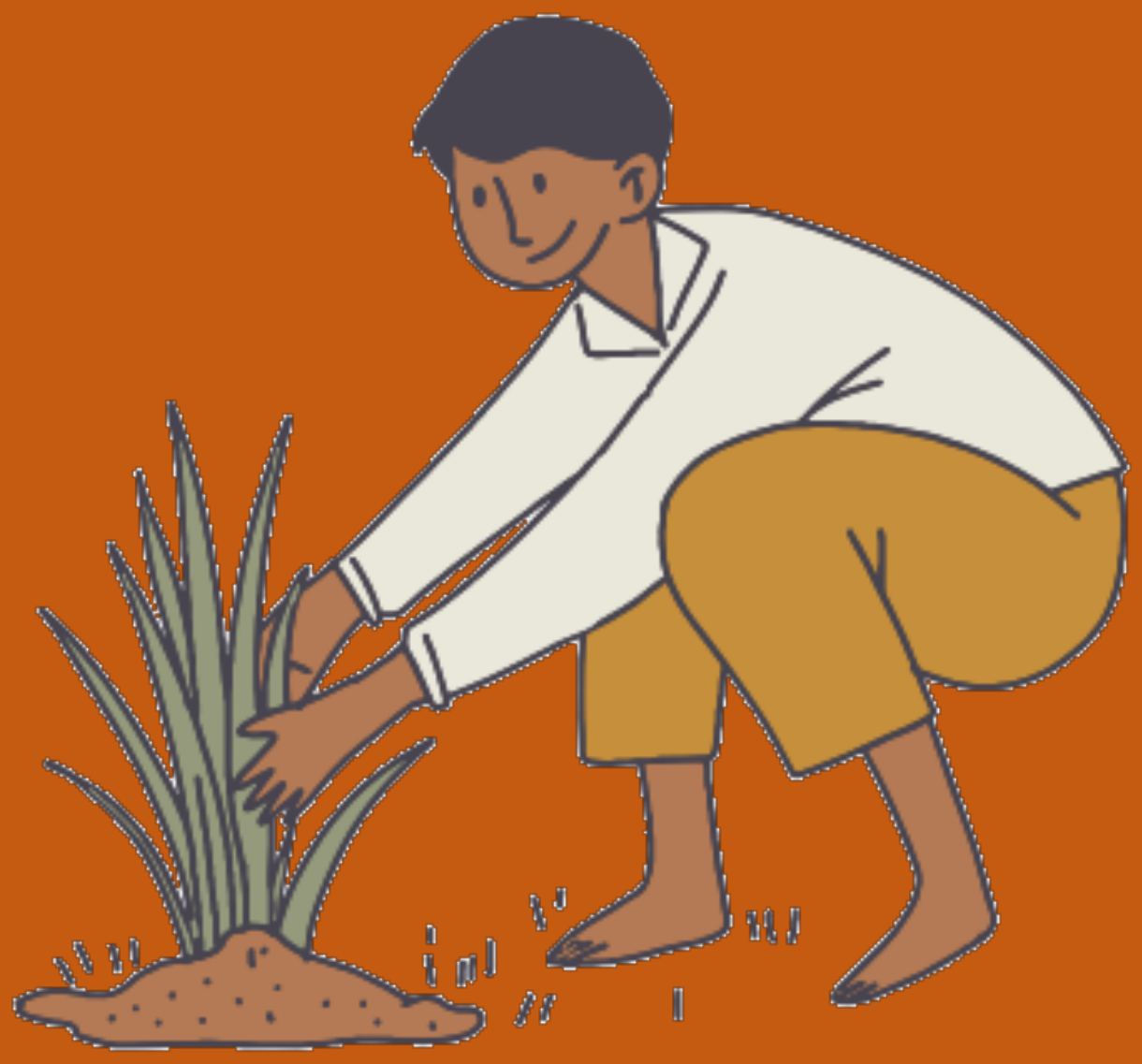
Ask each child to write down their own qualities on a paper. Ask the children to imagine that they have formed a country on a remote island. Now the children need to take on the responsibility of running the country. The country will need soldiers to be protected from enemies, it will need artisans and traders to sell consumer goods in the domestic market and to export to other countries, it will need farmers to grow food for feeding the nation, it will also need teachers and priests to run schools and temples to serve the people.

ART OF THE DAY:
VARANASHRAMA DHARMA
Ask the children to showcase how the caste system worked in ancient India by dividing themselves into groups based on their best qualities so that all responsibilities can be performed with the highest quality. Each varna/group shall give a presentation introducing their members and describing how their work is essential to the national well being.
INFERENCE
Varna system of classification was
based on the gunas of each individual,
with the aim of creating highest
quality professionals who were
naturally best suited for each
responsibility.
WORKSHOP OF THE DAY
WORKSHOP OF THE DAY:
VAAKYARTHA SADHAS
Procedure:
Topic of debate is “the merits and
de-merits of a caste system based
on gunas versus having a caste
system based on birth.”
Conclusion:
The Varana system of classification
prescribed in the Bhagavad Gita is
not based on birth of a person.
Varna system was intended to be
an economic system to achieve
national excellence.