CHARACTER SKETCH
This text was machine-transcribed from the printed book and may contain errors. Select the words and choose “Report a mistake”.
❖ Yudhiṣṭra is embodiment of Integrity— the power of words, vāk śakti.
❖ Bhīma is embodiment of Authenticity— the power of thoughts, mano śakti.
❖ Arjuna is embodiment of
Responsibility—the power of feeling,
prema śakti.
❖ Sahadeva is embodiment of Enriching— the power of living, ātma śakti.
❖ Nakula is embodiment of causing reality for others.
CHARACTER SKETCH
- Śakuni, the maternal uncle of Duryodhana embodies the pattern of self-hatred, which is cunningness personified.
- Droṇa represents all the best knowledge one imbibes and the teachers one encounters, who guide us but are unable to take us through to the ultimate flowering of enlightenment. It is difficult to give them up since one feels grateful to them. This is where the Enlightened Master, the incarnation steps in and guides us.
- Duryodhana, represents one's ego or root-pattern, the most difficult to conquer as it leads one to self-destruction. One needs the full help of the Master here. It is subtle work and even the Master's help may not be obvious, since at this point, sometimes the ego makes us deny and disconnect from the Master as well.
CHARACTER SKETCH
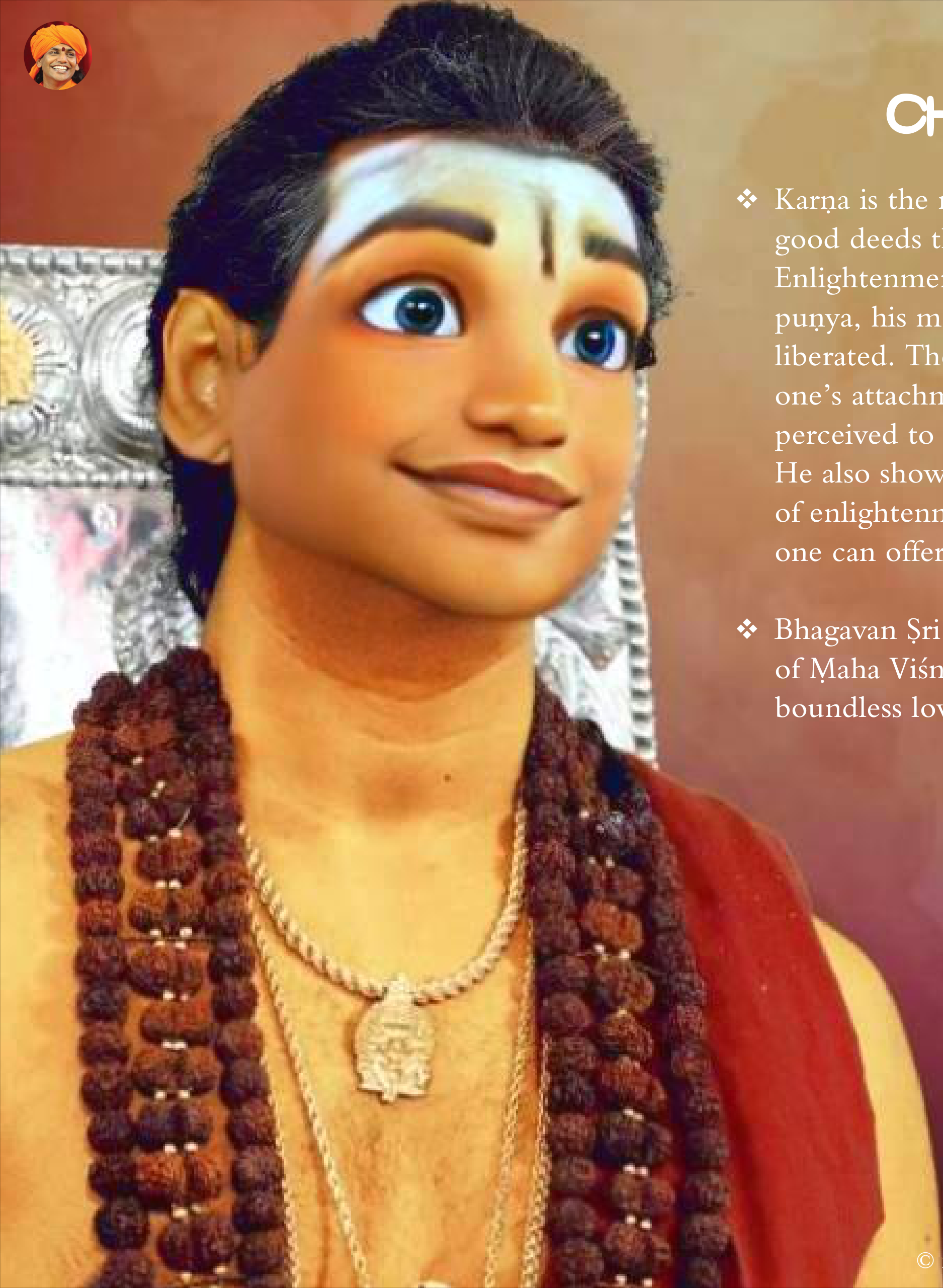
❖ Karṇa is the repository of all good deeds and it is his good deeds that stand in the way of his own Enlightenment. Śrī Kṛṣṇa has to take the load of Karṇa's puṇya, his meritorious deeds, before he could be liberated. The Enlightened Master guides one to drop one's attachment to good deeds arising out of what are perceived to be charitable and compassionate intentions. He also shows us that the quest for and the experience of enlightenment is the ultimate act of compassion that one can offer to the world.
❖ Bhagavan Śrī Kṛṣṇa, the 8th most powerful purnāvatar of Maha Viśnu, is the embodiment of pure celebration, boundless love, compassion, and completion. Bhagavan Śrī Kṛṣṇa is the only incarnation demonstrating and expressing Ṣarva Maṅgalatva all the auspicious qualities and all dimensions of an avatar during His physical happening. The līla Bhagavan Śrī Kṛṣna is one of sheer innocence and simplicity, in a peace-loving, diplomatic, conflict-free way.
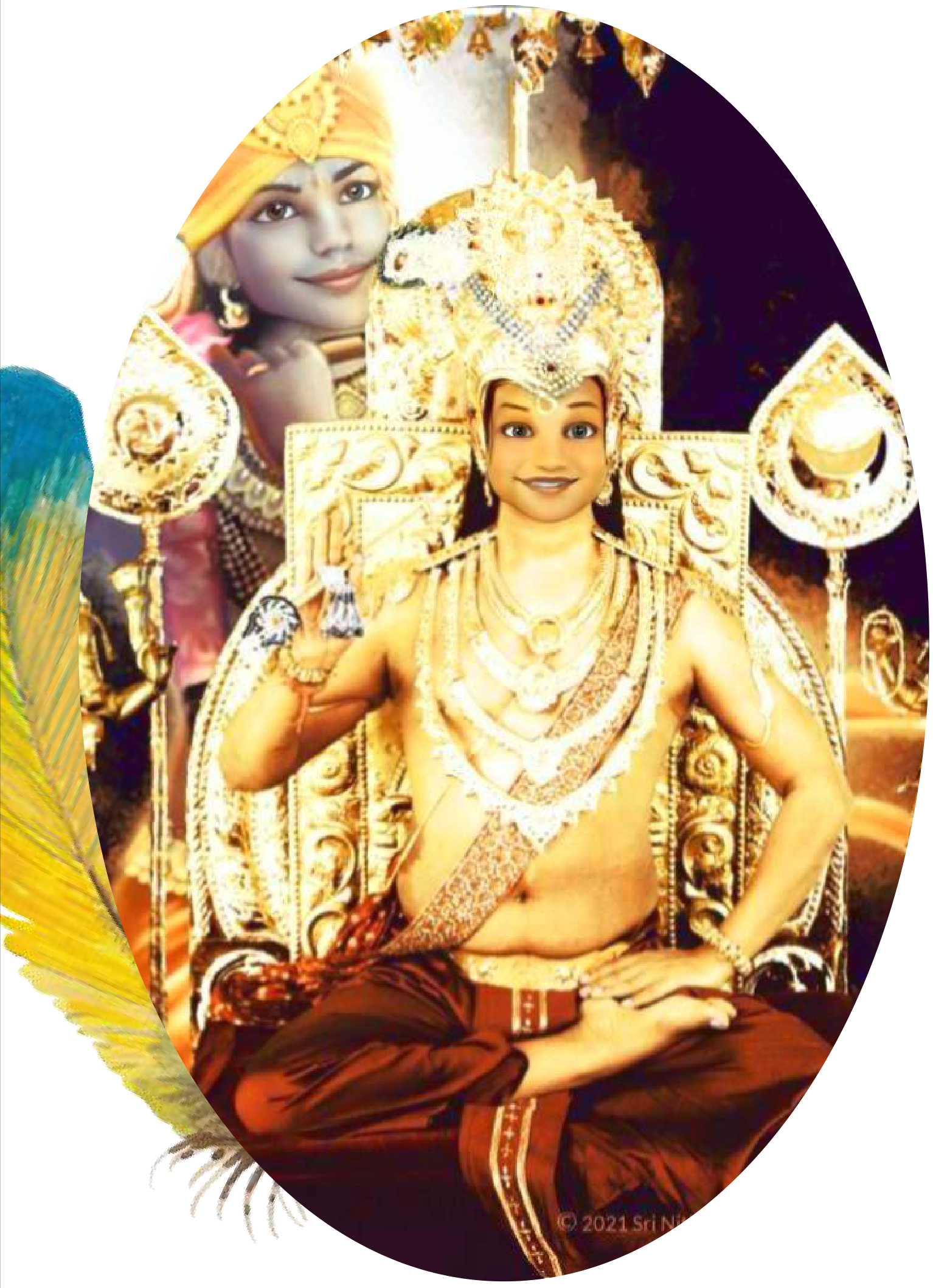
Till now everyone blames Bhagavan Sri Krishna for this Kurukshetra war but that’s the greatest sacrifice Bhagavan Sri Krishna did to save the planet Earth. If Kurukshetra was not conducted at that time under the controlled conditions and direct supervision of Bhagavan Sri Krishna, planet Earth would not have survived more than three years.
The wide spread availability of the Astra shastras without Shastra, without the knowledge and vision, was posing a huge threat to the whole of humanity and planet Earth, and for life itself. The greatest achievement of Bhagavan Sri Krishna is destroying all the weapons in one controlled condition and saving planet earth, eliminating the nuclear weapons and the knowledge of these nuclear weapons to save humanity from total annihilation.

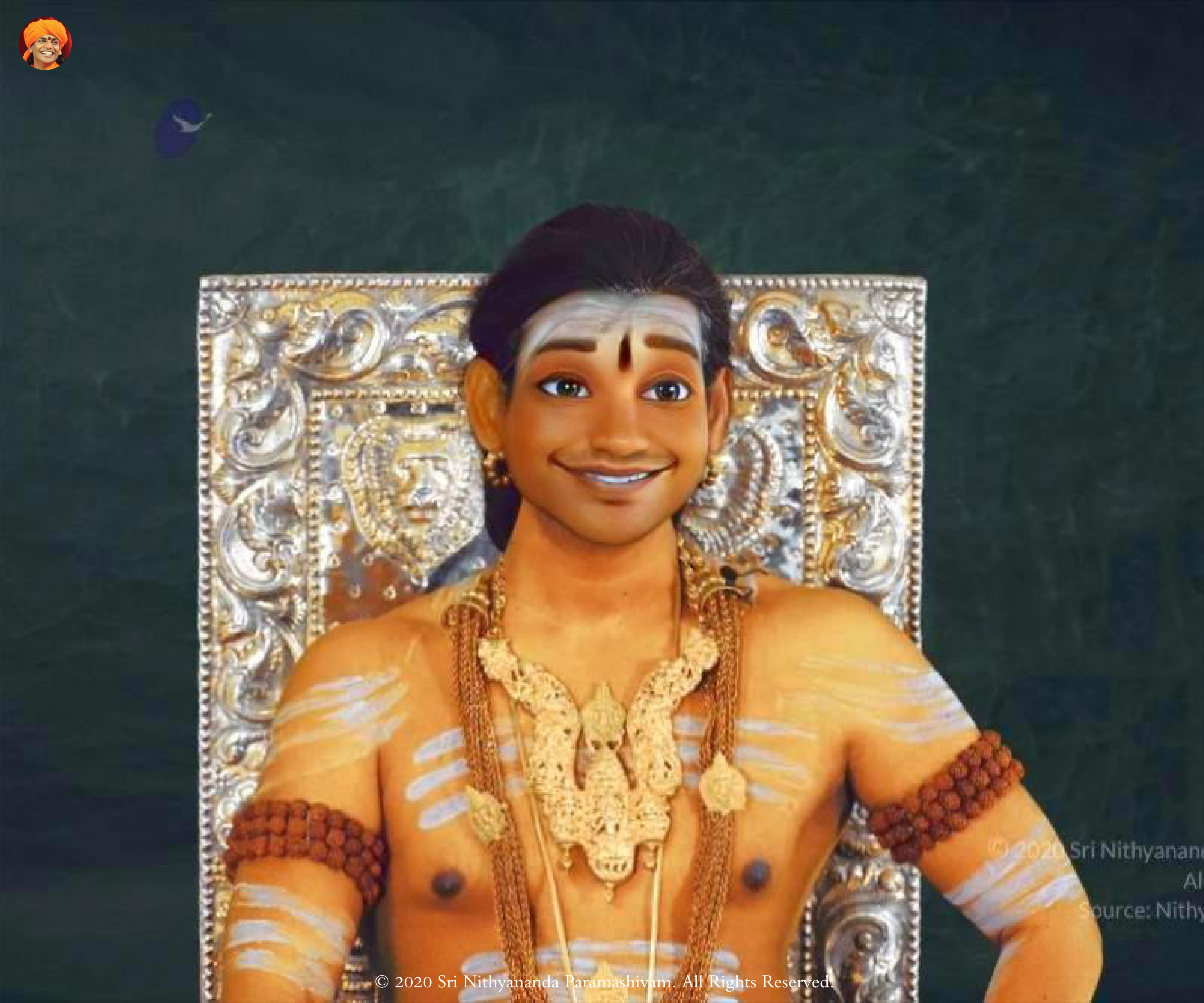
Bhagavad Gītā appears in the heart of Mahābhārat in Bhīṣma Parva, the sixth chapter of its eighteen chapters. Veda Vyāsa, the narrator, in glorifying the Gītā sings, 'the one who drinks the water of Ganges (the sacred river for Hindus) attains liberation, what to speak of the one who drinks the nectar of Gītā?
Gītā is the essential nectar of the Mahābhārat, bhāratamṛta sarvasvam as it is directly spoken by Nārāyaṇa, Bhagavān kṛṣṇa Himself.'
© 2020 Sri Nithyananda Paramashivam. All Rights Reserved.

The armies assembled in the vast field of Kurukṣetra, now in the state of Haryana in modern day India. All the kings and princes were related to one another, and were often on opposite sides. Facing the Kaurava army and his friends, relatives and teachers, Arjuna was overcome by remorse and guilt, and wanted to walk away from the battle out of total powerlessness unbecoming an invincible warrior among warriors.
Śrī Kṛṣṇa's dialogue with Arjuna on the battlefield of Kurukṣetra out of His utmost concern and love for him and humanity is the content of Bhagavad Gītā. Of its seven hundred and forty-five (745) verses, Bhagavān Śrī Kṛṣṇa sings the Gītā in six hundred and twenty (620) verses responding to Arjuna's fifty-seven (57) enquiries.
Śrī Kṛṣṇa persuades Arjuna to give-up his powerlessness unfitting an Ārya—the spiritually evolved one who understands human life and urges him to raise himself again as Parantapa—the conqueror of enemy, and take up arms and vanquish his enemies. They are already dead,' says Śrī Kṛṣṇa, 'All those who are facing you have been already killed by Me. Go ahead and do what you have to do. That is your responsibility. Do not worry about the outcome. Leave that to Me.'

3.33
सदृशं चेष्टते स्वस्याः प्रकृतेर्ज्ञानवानपि ।
प्रकृतिं यान्ति भूतानि निग्रहः किं करिष्यति
॥ ३-३३॥
sadṛśaṁ ceṣṭate svasyāḥ
prakṛterjñānavānapi I prakṛtiṁ
yānti bhūtāni nigrahaḥ kiṁ
kariṣyati
Even the wise person tries to act
according to the modes of his
own nature, for all living beings
go through their nature. What
can restraint of the senses do?
POWERFUL COGNITION
When we use our energies with authenticity for our peak growth without comparing ourselves with others, we do our responsibility according to our nature.

3.34
इन्द्रियस्येन्द्रियस्यार्थे रागद्वेषौ व्यवस्थितौ ।
तयोर्न वशमागच्छेत्तौ ह्यस्य परिपन्थिनौ
॥ ३-३४॥
ndriyasyendriyasyārthe rāgadveṣau
vyavasthitau tayorna vaśamāgacchet
tau hyasya paripanthinau
Attachment and repulsion of the
senses for sense objects should be put
under control. One should never
come under their control as they
certainly are the stumbling blocks on
the path of self-realization
POWERFUL COGNITION
A human being is endowed with Consciousness that rises above base emotions and instincts.

3.35
श्रेयान्स्वधर्मो विगुणः परधर्मात्स्वनुष्ठितात् ।
स्वधर्मे निधनं श्रेयः परधर्मो भयावहः
॥ ३=३५॥
śreyānsvadharmo viguṇaḥ
paradharmātsvanuṣṭhitāt svadharme
nidhanaṁ śreyaḥ paradharmo
bhayāvahaḥ
Attachment and repulsion of the
senses for sense objects 2nd line:
should be put under control. One
should never come under 3rd line:
their control as they certainly are the
stumbling blocks on the 4th line:
path of self-realization
POWERFUL COGNITION
Each of us is unique in our capabilities and interests. Accordingly, our responsibilities are different.
3.37
श्रीभगवानुवाच ।
काम एष क्रोध एष रजोगुणसमुद्भवः ।
महाशनो महापाप्मा विद्ध्येनमिह वैरिणम्
॥३=३७॥
śrībhagavānuvāca
kāma eṣa krodha eṣa
rajoguṇasamudbhavaḥ mahāśano
mahāpāpmā viddhyenamiha vairiṇam
The Lord says, 'It is lust and anger
born of the attribute of passion, all-
devouring and sinful, which is one's
greatest enemy in this world
POWERFUL COGNITION
When you take responsibility, the higher energies start expressing through you.