POWERFUL COGNITION
This text was machine-transcribed from the printed book and may contain errors. Select the words and choose “Report a mistake”.
ALL is INFINITE.

कामात्मानः स्वर्गपरा जन्मकर्मफलप्रदाम् ।
क्रियाविशेषबहुलां भोगैश्वर्यगतिं प्रति
॥ २=४३॥
kāmātmānaḥ svargaparā
janmakarmaphalapradāṁ kriyā-viśeṣa-
bahulāṁ bhogaiśvarya-gatiṁ prati

Look upon and recommend various
fruitful actions for elevation to
heavenly planets, resulting in high
birth, power, and so forth. Thus being
desirous of sense gratification and
opulent life they say that there is
nothing more than this to living
POWERFUL COGNITION
Śruti meaning, ‘that which was heard internally, not as an external expression.

अव्यक्तादीनि भूतानि व्यक्तमध्यानि भारत ।
अव्यक्तनिधनान्येव तत्र का परिदेवना
॥ २=२८॥
bhogaiśvarya-prasaktānāṁ
tayāpahṛtacetasām
vyavasāyātmikā buddhiḥ
samādhau na vidhīyate
Those whose minds are
attached to sense pleasures and
lordship,, who are diverted by
such teachings, for them, the
determination for steady
meditation and samādhi, fixed
intelligence does not happen
POWERFUL COGNITION
Experiential knowledge.
त्रैगुण्यविषया वेदा निस्त्रैगुण्यो भवार्जुन ।
निर्द्वन्द्वो नित्यसत्त्वस्थो निर्योगक्षेम आत्मवान्
॥ २=४५॥
traiguṇyaviṣayā vedā nistraiguṇyo
bhavārjuna nirdvandvo nityas-attva-stho
niryogakṣema ātmavān
O Arjuna! Be you above the three guṇas (attributes) that the Vedas deal in: free yourself from the pairs-of-opposites and be always in satva (goodness), free from all thoughts of acquisition (yoga) or preservation (kṣema), and be established in the Self
POWERFUL COGNITION
Be established in a state where you are no longer concerned about creation, preservation and destruction

यावानर्थ उदपाने सर्वतः सम्प्लुतोदके ।
तावान्सर्वेषु वेदेषु ब्राह्मणस्य विजानतः
॥ २=४६॥
yāvānartha udapāne sarvataḥ
saṁplutodake tāvānsarveṣu
vedeṣu brāhmaṇasya vijānataḥ
The Brāhmaṇa (sage), who has
known the Self, has little use
for the vedic scriptures, as
these are like a pool of water
in a place that is already in
flood, overflowing with a great
water reservoir
POWERFUL COGNITION
The state of Parabrahman.

The Vedas, the collection of knowledge as directly experienced by the great sages, the Ṛṣis, was conveyed for generations by word of mouth and was referred to as Śruti meaning, ‘that which was heard internally, not as an external expression.’
The moment an experience is expressed, it is no longer the truth of that experience. All the great scriptures, Vedas, Upaniṣads and Gītā, exist at different levels of understanding, seven levels, to be precise, depending on the energy level that one dwells in. At the highest level one understands that all that there is, is INFINITE, each one infinitely powerful. There is no experiencer, experienced or experience as separate entities at the highest energy level;

© 2020 Sri Nithyananda Paramashivam. All Rights Reserved.
ALL is INFINITE.
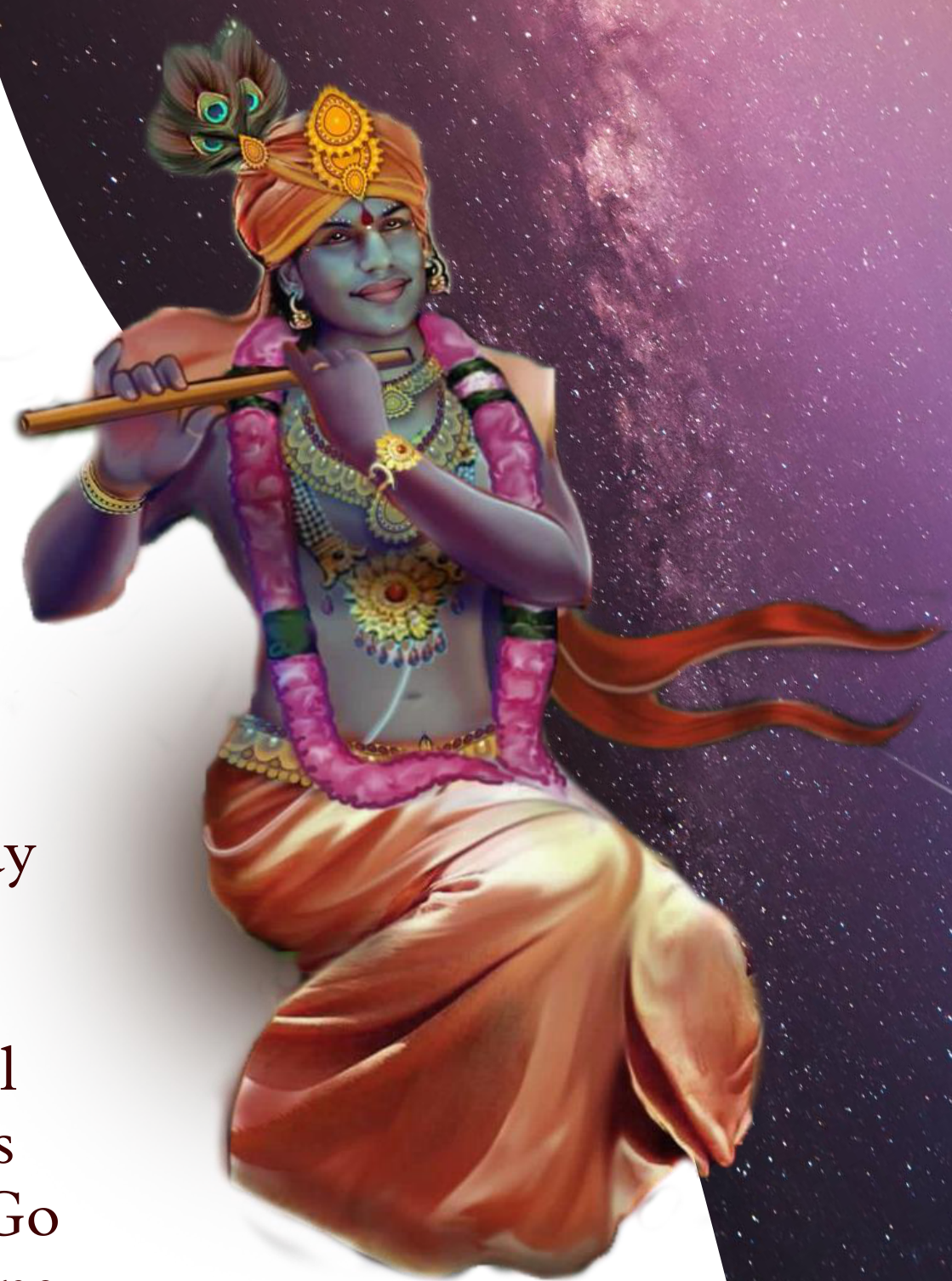
Kṛṣṇa refers to that truth here in these verses, the truth of the highest energy. ‘Do not be carried away by the apparent ritualistic approach of the Vedas as propounded by half learned scholars,’ the Master says, ‘go beyond; go beyond duality, nirdvando. All these seem to bring joy but are transient; that joy is the brief intermission between periods of sorrow. Go beyond the three attributes, nistrai-guṇyo bhavārjuna and seek the firm truth of the Infinite, the Union, that is Yoga,’ He says to Arjuna. Kṛṣṇa finally says, ‘Once you understand and realize Brahman, all the knowledge of the Vedas that you quote so passionately, will be of as much relevance to you as a lake in the midst of an ocean.’ Kṛṣṇa is leading Arjuna step by step as if teaching a baby to walk. One by one the Master demolishes Arjuna’s conflicting patterns, arguments and fears, dispelling his dilemma. These first baby steps address Arjuna’s intellect, for that’s all Arjuna has been using till now. Kṛṣṇa shows Arjuna how meaningless his intellectual knowledge is. It is all borrowed, with no experiential backing. He now leads him into experiential knowledge.

© 2020 Sri Nithyananda Paramashivam. All Rights Reserved