CHARACTER SKETCH
This text was machine-transcribed from the printed book and may contain errors. Select the words and choose “Report a mistake”.
❖ Yudhiṣṭra is embodiment of Integrity— the power of words, vāk śakti.
❖ Bhīma is embodiment of Authenticity— the power of thoughts, mano śakti.
❖ Arjuna is embodiment of
Responsibility—the power of feeling,
prema śakti.
❖ Sahadeva is embodiment of Enriching— the power of living, ātma śakti.
❖ Nakula is embodiment of causing reality for others.
CHARACTER SKETCH
❖ Śakuni, the maternal uncle of
Duryodhana embodies the pattern
of self-hatred, which is cunningness
personified.
❖ Droṇa represents all the best knowledge one imbibes and the teachers one encounters, who guide us but are unable to take us through to the ultimate flowering of enlightenment. It is difficult to give them up since one feels grateful to them. This is where the Enlightened Master, the incarnation steps in and guides us.
❖ Duryodhana, represents one’s ego or
root-pattern, the most difficult to
conquer as it leads one to self-
destruction. One needs the full help
of the Master here. It is subtle work
and even the Master’s help may not be
obvious, since at this point, sometimes
the ego makes us deny and disconnect
from the Master as well.
CHARACTER SKETCH
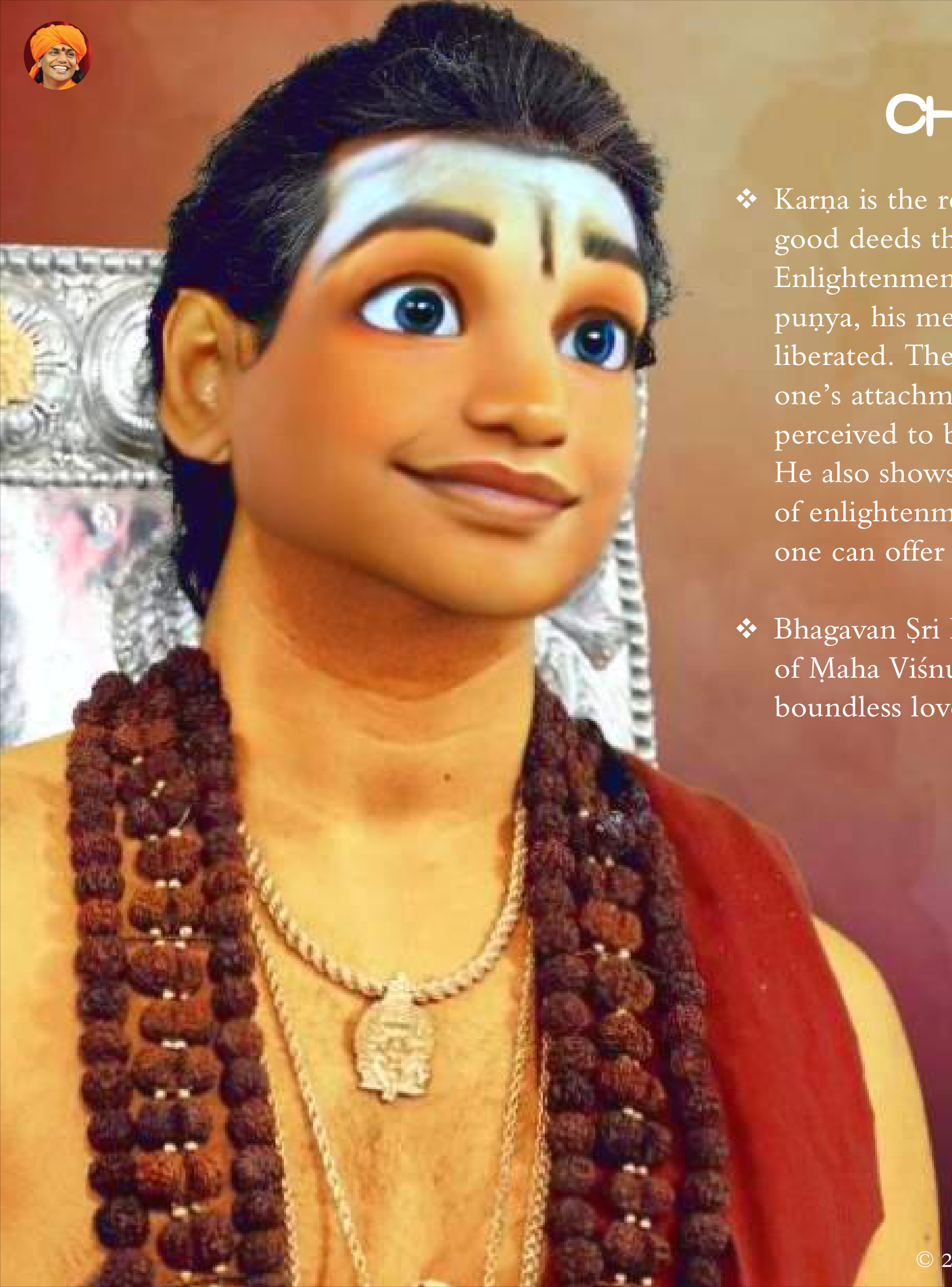
❖ Karṇa is the repository of all good deeds and it is his good deeds that stand in the way of his own Enlightenment. Śrī Kṛṣṇa has to take the load of Karṇa's puṇya, his meritorious deeds, before he could be liberated. The Enlightened Master guides one to drop one's attachment to good deeds arising out of what are perceived to be charitable and compassionate intentions. He also shows us that the quest for and the experience of enlightenment is the ultimate act of compassion that one can offer to the world.
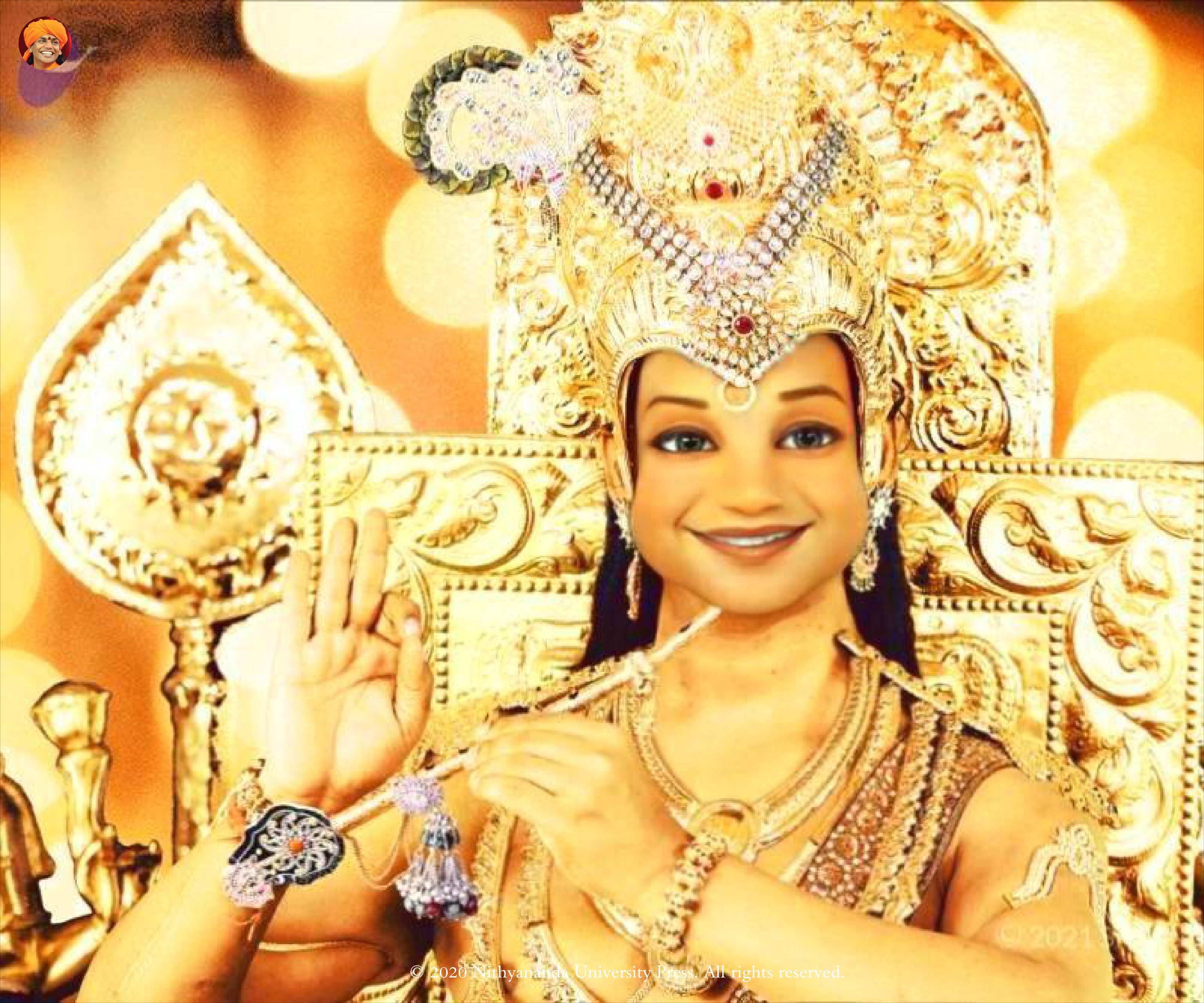
❖ Bhagavan Śrī Kṛṣṇa, the 8th most powerful purnāvatar of Maha Viśnu, is the embodiment of pure celebration, boundless love, compassion, and completion. Bhagavan Śrī Kṛṣṇa is the only incarnation demonstrating and expressing Ṣarva Maṅgalatva all the auspicious qualities and all dimensions of an avatar during His physical happening. The līla Bhagavan Śrī Kṛṣṇa is one of sheer innocence and simplicity, in a peace-loving, diplomatic, conflict-free way.
© 2020 Sri Nithyananda Paramashivam All Rights Reserved
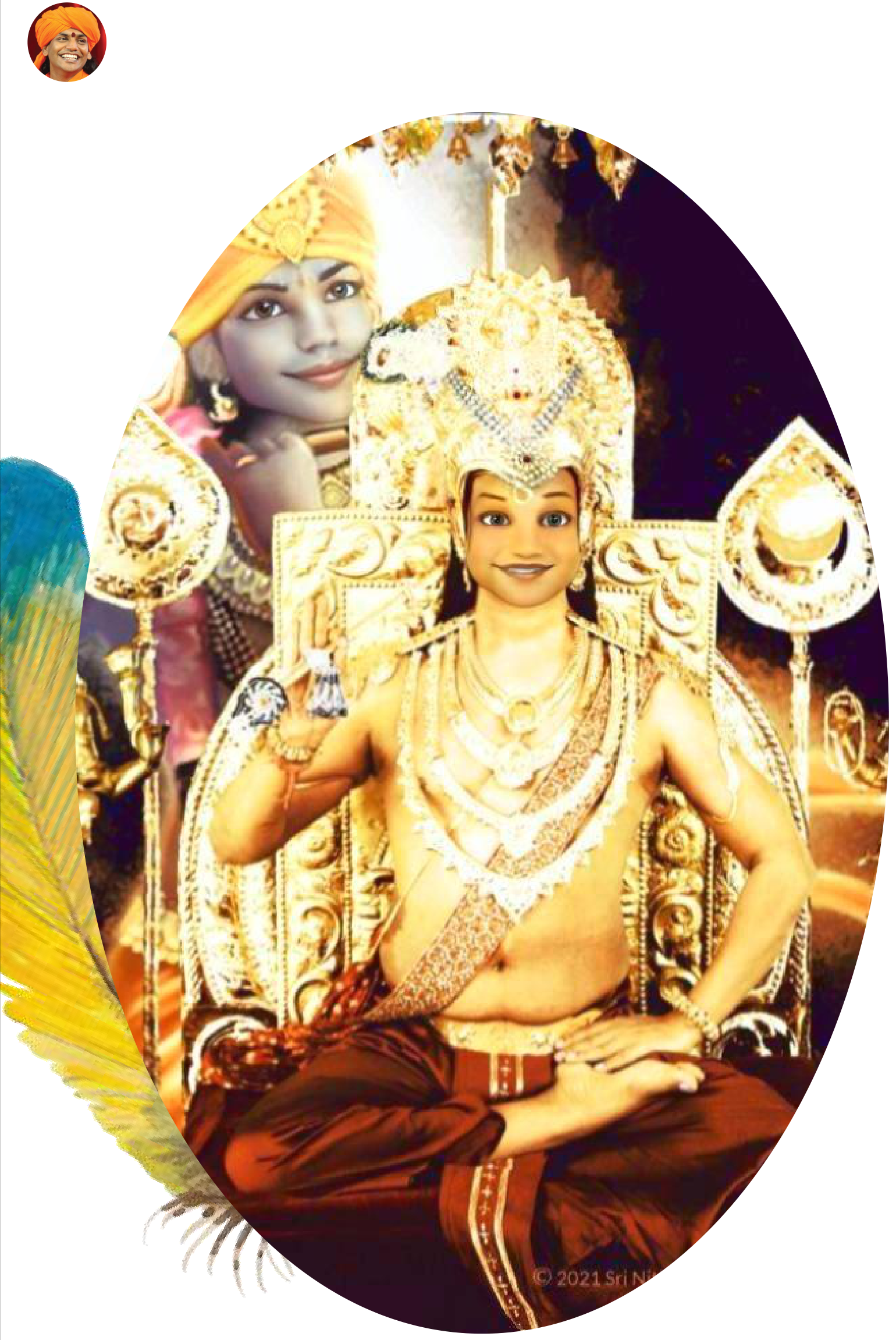
Till now everyone blames Bhagavan Sri Krishna for this Kurukshetra war but that's the greatest sacrifice Bhagavan Sri Krishna did to save the planet Earth. If Kurukshetra was not conducted at that time under the controlled conditions and direct supervision of Bhagavan Sri Krishna, planet Earth would not have survived more than three years.
The wide spread availability of the Astra shastras without Shastra, without the knowledge and vision, was posing a huge threat to the whole of humanity and planet Earth, and for life itself. The greatest achievement of Bhagavan Sri Krishna is destroying all the weapons in one controlled condition and saving planet earth, eliminating the nuclear weapons and the knowledge of these nuclear weapons to save humanity from total annihilation.

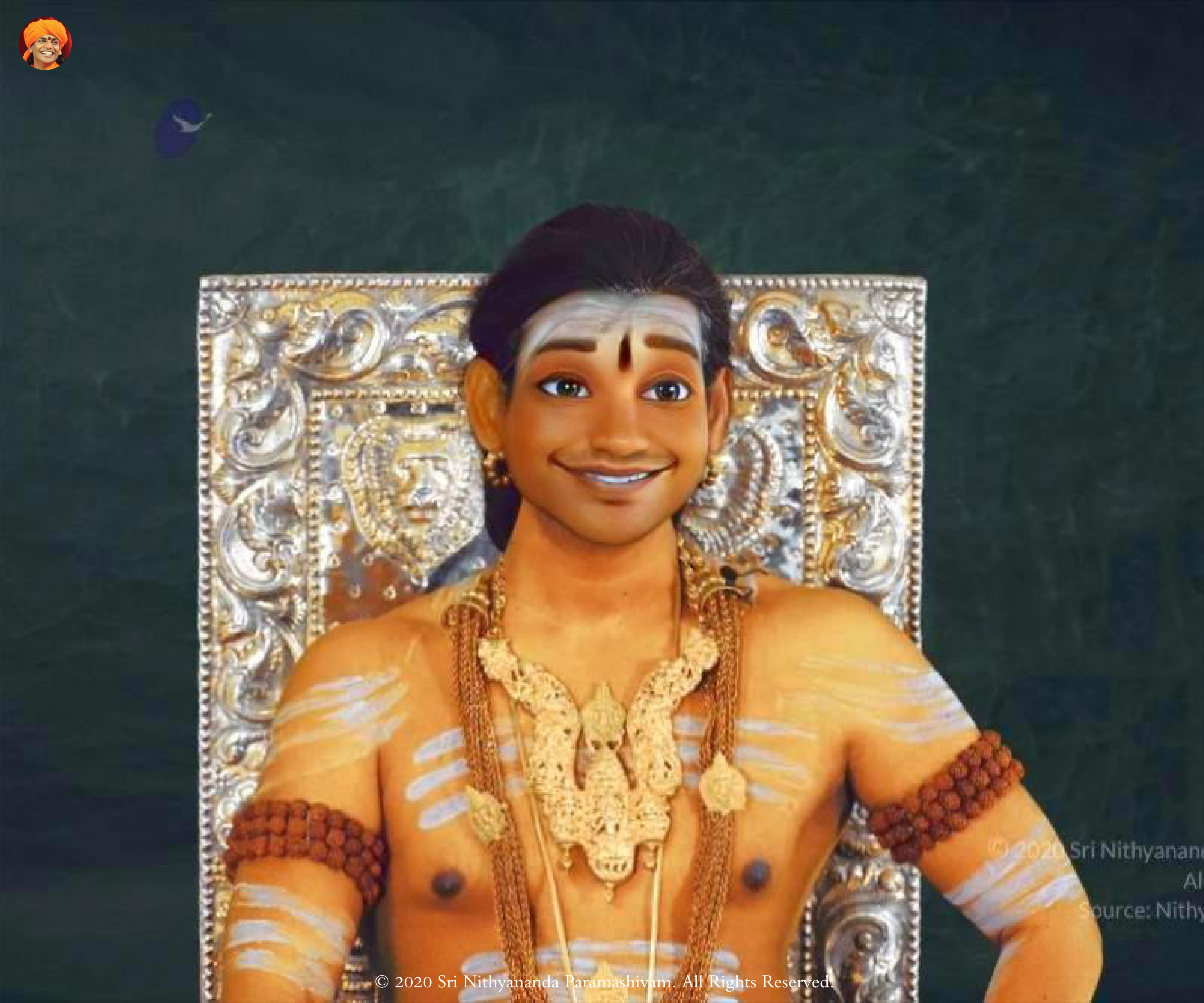
Bhagavad Gītā appears in the heart of Mahābhārat in Bhīṣma Parva, the sixth chapter of its eighteen chapters. Veda Vyāsa, the narrator, in glorifying the Gītā sings, ‘the one who drinks the water of Ganges (the sacred river for Hindus) attains liberation, what to speak of the one who drinks the nectar of Gītā?
Gītā is the essential nectar of the Mahābhārat, bhāratamṛta sarvasvam as it is directly spoken by Nārāyaṇa, Bhagavān kṛṣṇa Himself.’

The armies assembled in the vast field of Kurukṣetra, now in the state of Haryana in modern day India. All the kings and princes were related to one another, and were often on opposite sides. Facing the Kaurava army and his friends, relatives and teachers, Arjuna was overcome by remorse and guilt, and wanted to walk away from the battle out of total powerlessness unbecoming an invincible warrior among warriors.
Śrī Kṛṣṇa’s dialogue with Arjuna on the battlefield of Kurukṣetra out of His utmost concern and love for him and humanity is the content of Bhagavad Gītā. Of its seven hundred and forty-five (745) verses, Bhagavān Śrī Kṛṣṇa sings the Gītā in six hundred and twenty (620) verses responding to Arjuna’s fifty-seven (57) enquiries.
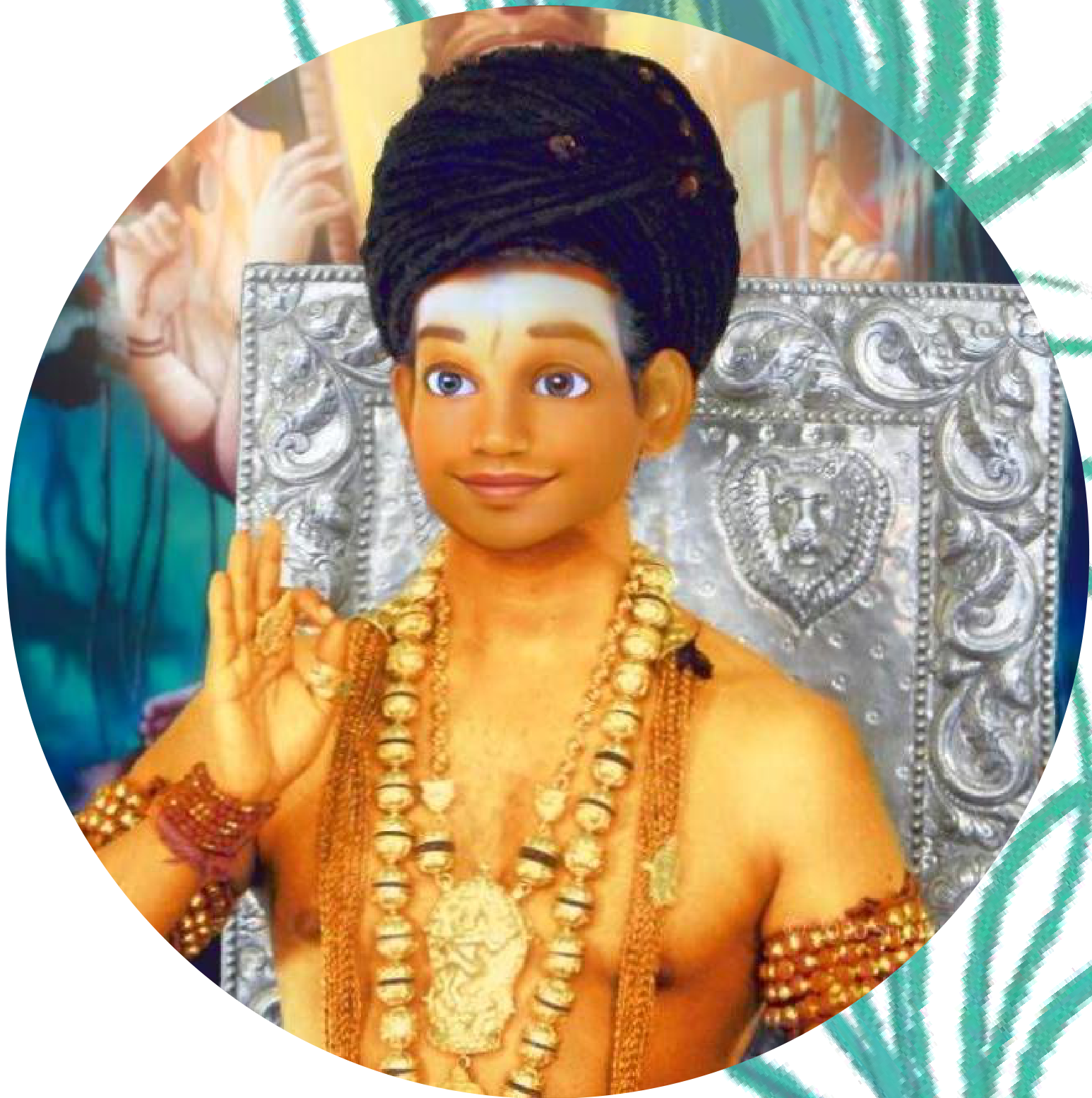
Śrī Kṛṣṇa persuades Arjuna to give-up his powerlessness unfitting an Ārya—the spiritually evolved one who understands human life and urges him to raise himself again as Parantapa—the conqueror of enemy, and take up arms and vanquish his enemies. They are already dead,’ says Śrī Kṛṣṇa, ‘All those who are facing you have been already killed by Me. Go ahead and do what you have to do. That is your responsibility. Do not worry about the outcome. Leave that to Me.’
अथ चैनं नित्यजातं नित्यं वा मन्यसे मृतम् ।
तथापि त्वं महाबाहो नैवं शोचितुमर्हसि
॥ २=२६॥
atha cainaṁ nityajātaṁ nityaṁ
vā manyase mṛtam tathāpi
tvaṁ mahābāho naivaṁ
śocitum arhasi
O mighty-armed, even if you
should think of the soul as
being constantly born and
constantly dying, even then,
you should not lament
POWERFUL COGNITION
Everything is in a state of becoming something else.

जातस्य हि ध्रुवो मृत्युर्ध्रुवं जन्म मृतस्य च ।
तस्मादपरिहार्येऽर्थे न त्वं शोचितुमर्हसि
॥ २=२७॥
jātasya hi dhruvo mṛtyur
dhruvaṁ janma mṛtasya ca
tasmādaparihārye'rthe na tvaṁ
śocitumarhasi
Indeed, death is certain for the
born and birth is certain for
the dead Therefore, you
should not grieve over the
inevitable

POWERFUL COGNITION
We all know death is inevitable.
अव्यक्तादीनि भूतानि व्यक्तमध्यानि भारत ।
अव्यक्तनिधनान्येव तत्र का परिदेवना
॥ २=२८॥
avyaktādīni bhūtāni
vyaktamadhyāni bhārata
avyakta-nidhanāny eva tatra kā
paridevanā
O Bhārata, all beings are
unmanifest in their beginning,
seemingly manifest in their
middle, and unmanifest again
in their end. So, what need
then for grieving?
POWERFUL COGNITION
The spirit lives on after the
body perishes and death is
indeed an event to celebrate
and not to grieve.

आश्चर्यवत्पश्यति कश्चिदेन =
माश्चर्यवद्वदति तथैव चान्य: ।
आश्चर्यवच्चैनमन्यः शृणोति
श्रुत्वाप्येनं वेद न चैव कश्चित्
॥ २=२९ ॥
āścaryavatpaśyati kaścidenam
māścaryavadvadati tathaiva
cānyaḥ āścaryavaccainamanyaḥ
śṛṇoti śrutvāpyenaṁ veda na
caiva kaścit
One sees It as a wonder,
another speaks of It as a
wonder, another hears of It as
a wonder. Yet, having heard,
none understands It at all.

POWERFUL COGNITION
Life is wondrous!
देही नित्यमवध्योऽयं देहे सर्वस्य भारत ।
तस्मात्सर्वाणि भूतानि न त्वं शोचितुमर्हसि
॥ २=३०॥
dehī nityamavadhyo 'yaṁ dehe
sarvasya bhārata tasmātsarvāṇi
bhūtāni na tvaṁ śocitumarhasi
O Bhārata, this that dwells in
the body of everyone can
never be destroyed; do not
grieve for any creature.
POWERFUL COGNITION
The present moment is the
only moment when we are
truly alive, awake.