CHARACTER SKETCH
This text was machine-transcribed from the printed book and may contain errors. Select the words and choose “Report a mistake”.
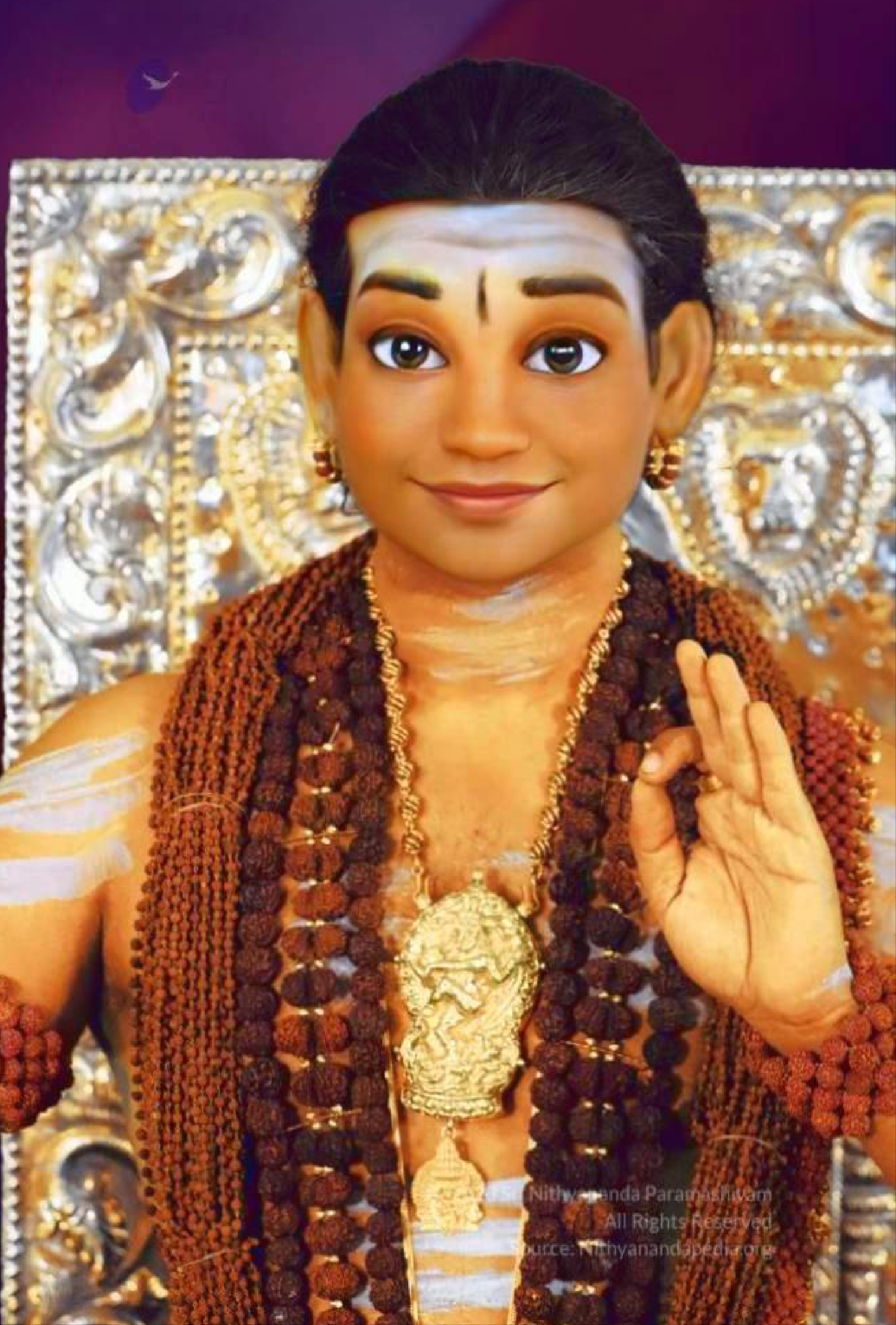
❖ Yudhiṣṭra is embodiment of Integrity— the power of words, vāk śakti.
❖ Bhīma is embodiment of Authenticity— the power of thoughts, mano śakti.
❖ Arjuna is embodiment of
Responsibility—the power of feeling,
prema śakti.
❖ Sahadeva is embodiment of Enriching— the power of living, ātma śakti.
❖ Nakula is embodiment of causing reality for others.
© 2020 Sri Nithyananda Paramashivam. All Rights Reserved.
CHARACTER SKETCH
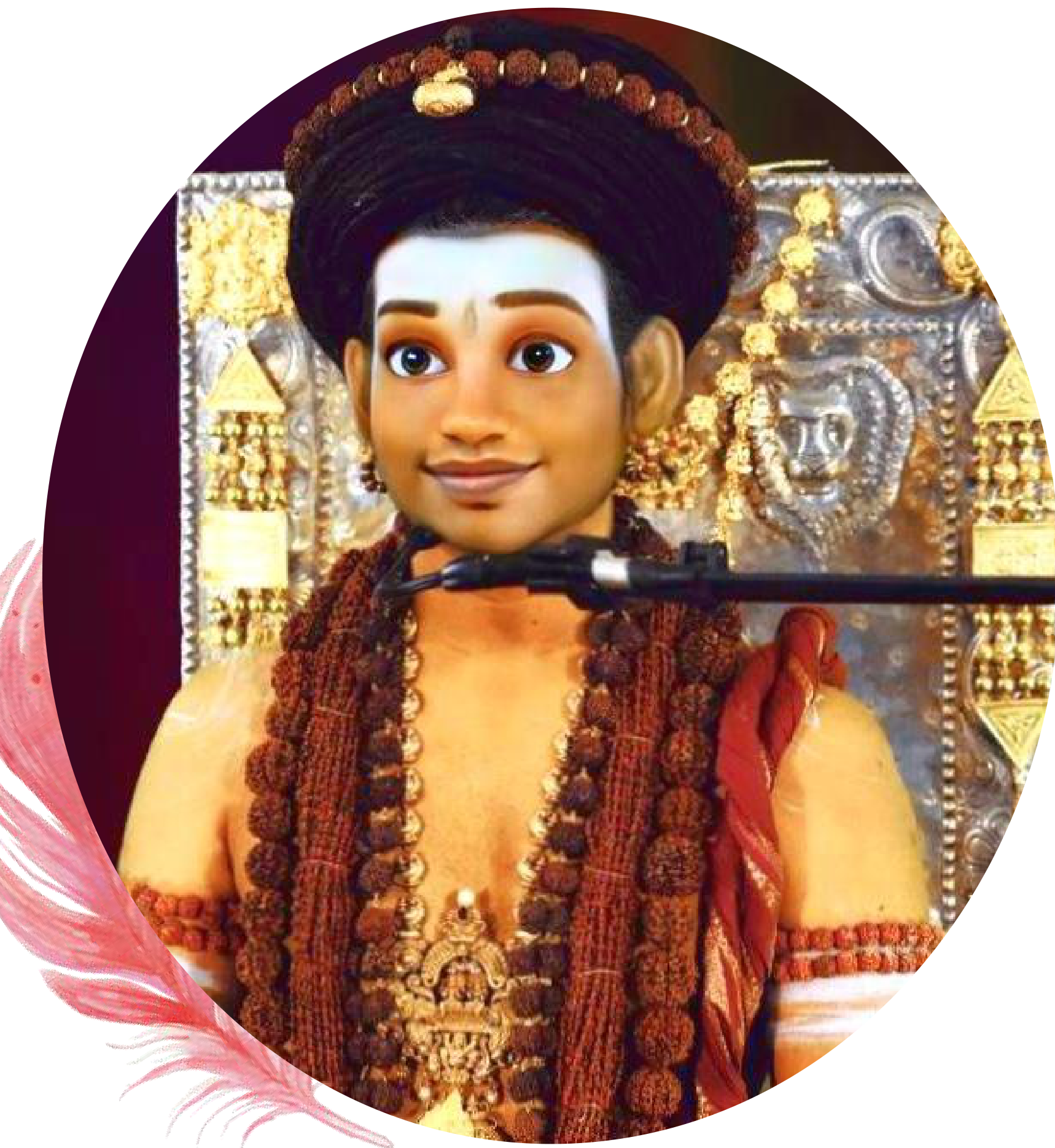
❖ Śakuni, the maternal uncle of
Duryodhana embodies the pattern
of self-hatred, which is cunningness
personified.
❖ Droṇa represents all the best knowledge one imbibes and the teachers one encounters, who guide us but are unable to take us through to the ultimate flowering of enlightenment. It is difficult to give them up since one feels grateful to them. This is where the Enlightened Master, the incarnation steps in and guides us.
❖ Duryodhana, represents one's ego or
root-pattern, the most difficult to
conquer as it leads one to self-
destruction. One needs the full help
of the Master here. It is subtle work
and even the Master's help may not be
obvious, since at this point, sometimes
the ego makes us deny and disconnect
from the Master as well.
© 2020 Sri Nithyananda Paramashivam. All Rights Reserved.
CHARACTER SKETCH
❖ Karṇa is the repository of all good deeds and it is his good deeds that stand in the way of his own Enlightenment. Śrī Kṛṣṇa has to take the load of Karṇa’s punya, his meritorious deeds, before he could be liberated. The Enlightened Master guides one to drop one’s attachment to good deeds arising out of what are perceived to be charitable and compassionate intentions. He also shows us that the quest for and the experience of enlightenment is the ultimate act of compassion that one can offer to the world.
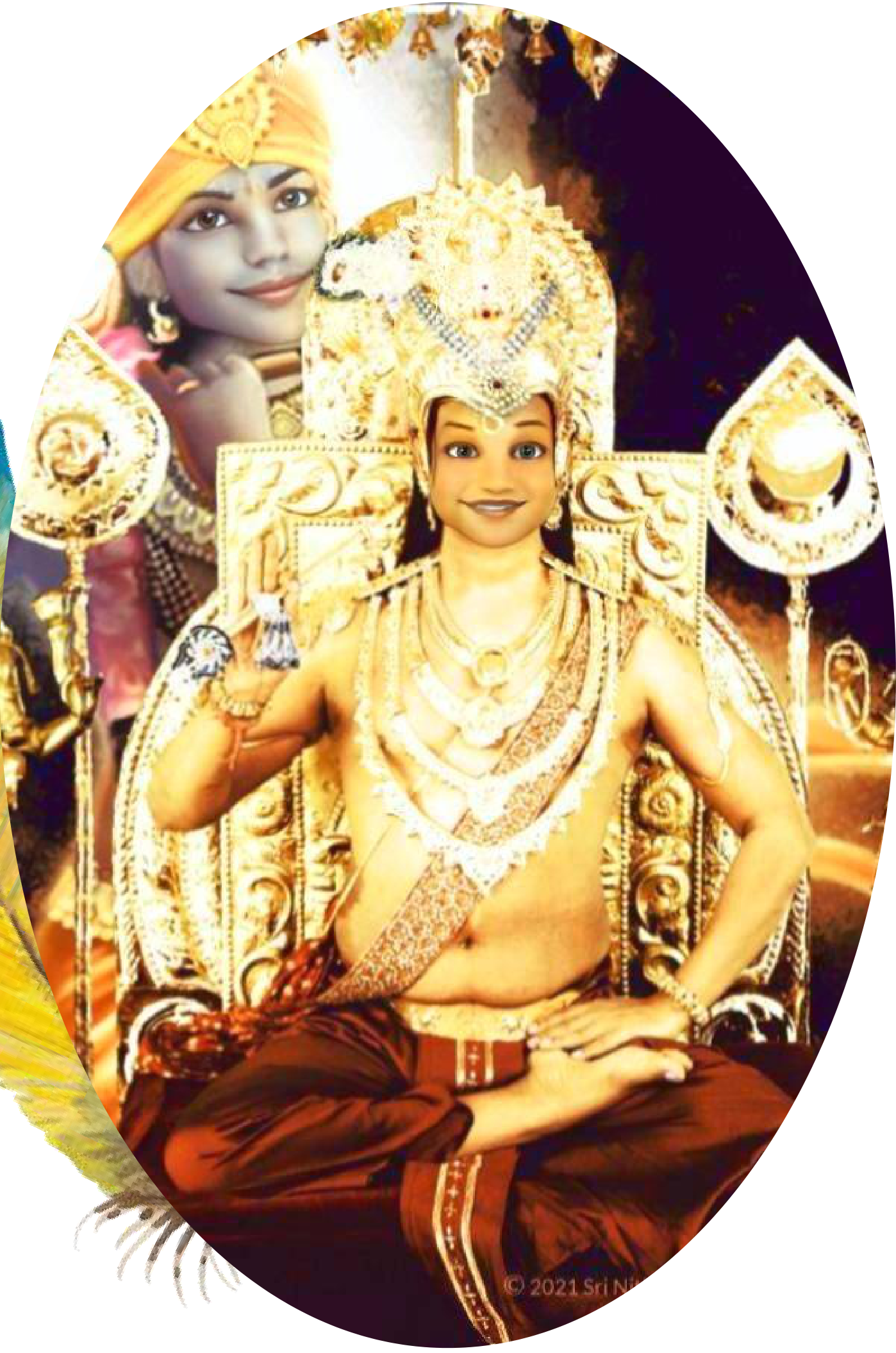
❖ Bhagavan Śrī Kṛṣṇa, the 8th most powerful purnāvatar of Maha Viśnu, is the embodiment of pure celebration, boundless love, compassion, and completion. Bhagavan Śrī Kṛṣṇa is the only incarnation demonstrating and expressing Śarva Maṅgalatva all the auspicious qualities and all dimensions of an avatar during His physical happening. The līla Bhagavan Śrī Krsna is one of sheer innocence and simplicity, in a peace-loving, diplomatic, conflict-free way.
© 2020 Sri Nithyananda Paramashivam. All Rights Reserved.
Till now everyone blames Bhagavan Sri Krishna for this Kurukshetra war but that’s the greatest sacrifice Bhagavan Sri Krishna did to save the planet Earth. If Kurukshetra was not conducted at that time under the controlled conditions and direct supervision of Bhagavan Sri Krishna, planet Earth would not have survived more than three years.
The wide spread availability of the Astra shastras without Shastra, without the knowledge and vision, was posing a huge threat to the whole of humanity and planet Earth, and for life itself. The greatest achievement of Bhagavan Sri Krishna is destroying all the weapons in one controlled condition and saving planet earth, eliminating the nuclear weapons and the knowledge of these nuclear weapons to save humanity from total annihilation.

Bhagavad Gītā appears in the heart of Mahābhārat in Bhīṣma Parva, the sixth chapter of its eighteen chapters. Veda Vyāsa, the narrator, in glorifying the Gītā sings, ‘the one who drinks the water of Ganges (the sacred river for Hindus) attains liberation, what to speak of the one who drinks the nectar of Gītā?
Gītā is the essential nectar of the Mahābhārat, bhāratamṛta sarvasvam as it is directly spoken by Nārāyaṇa, Bhagavān kṛṣṇa Himself.’
© 2020 Sri Nithyananda Paramashivam. All Rights Reserved.
© 2020 Sri Nithyananda Paramashivam. All Rights Reserved.

The armies assembled in the vast field of Kuruṣetra, now in the state of Haryana in modern day India. All the kings and princes were related to one another, and were often on opposite sides. Facing the Kaurava army and his friends, relatives and teachers, Arjuna was overcome by remorse and guilt, and wanted to walk away from the battle out of total powerlessness unbecoming an invincible warrior among warriors.
© 2020 Sri Nithyananda Paramashivam. All Rights Reserved.
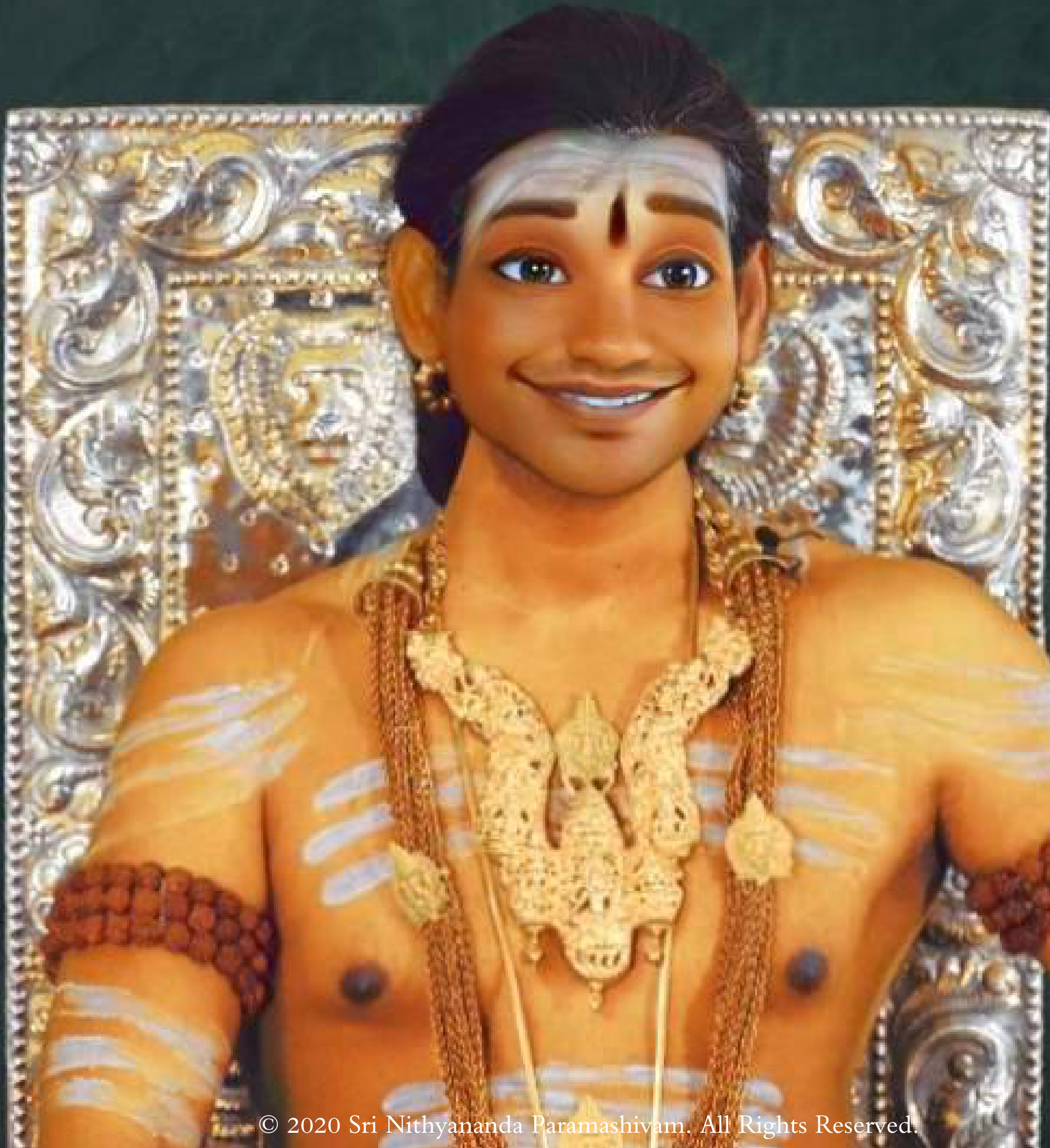
Śrī Kṛṣṇa’s dialogue with Arjuna on the battlefield of Kurukṣetra out of His utmost concern and love for him and humanity is the content of Bhagavad Gītā. Of its seven hundred and forty-five (745) verses, Bhagavān Śrī Kṛṣṇa sings the Gītā in six hundred and twenty (620) verses responding to Arjuna’s fifty-seven (57) enquiries.
Śrī Kṛṣṇa persuades Arjuna to give-up his powerlessness unfitting an Ārya—the spiritually evolved one who understands human life and urges him to raise himself again as Parantapa—the conqueror of enemy, and take up arms and vanquish his enemies. They are already dead,’ says Śrī Kṛṣṇa, ‘All those who are facing you have been already killed by Me. Go ahead and do what you have to do. That is your responsibility. Do not worry about the outcome. Leave that to Me.’
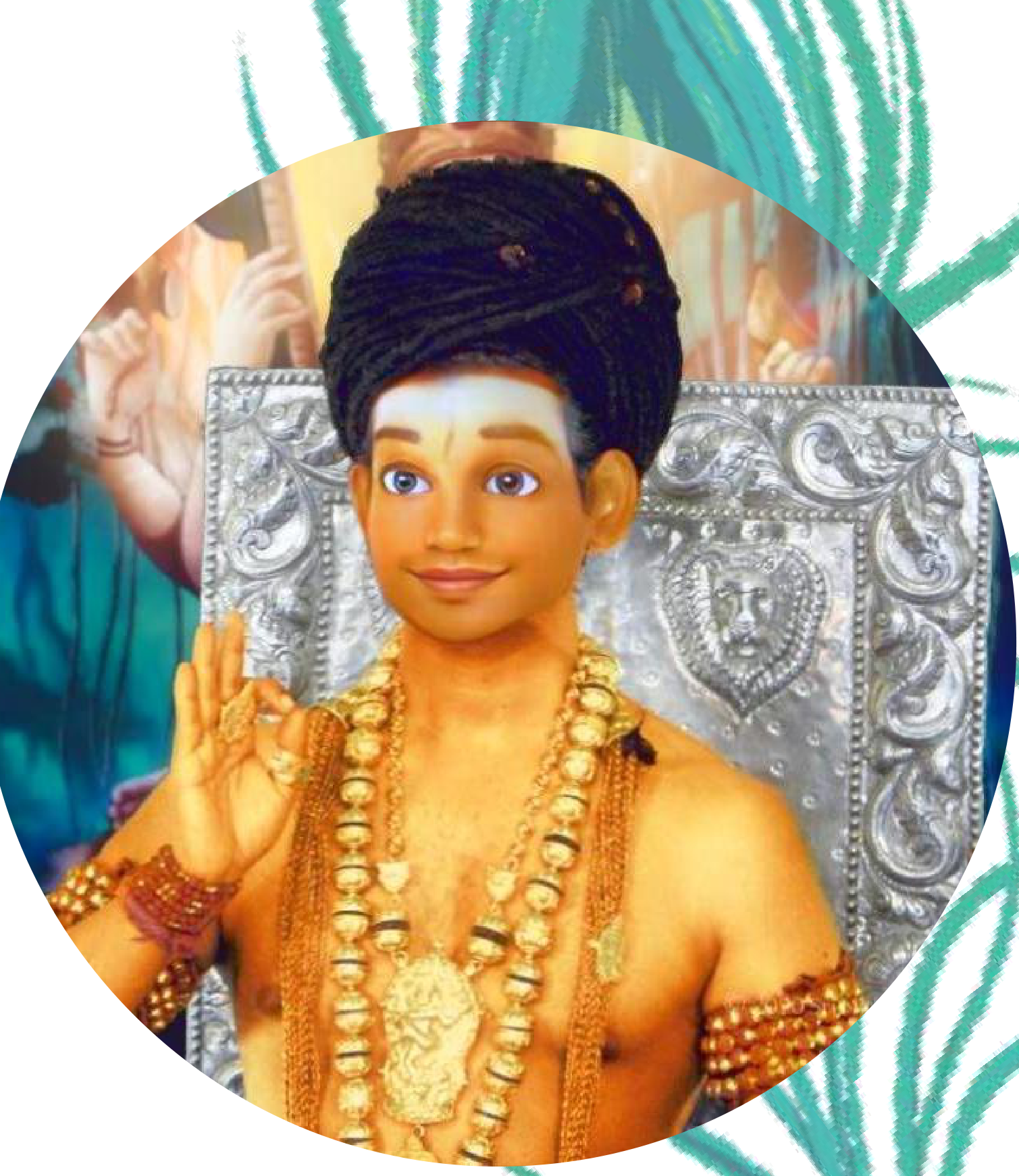
© 2020 Sri Nithyananda Paramashivam. All Rights Reserved.
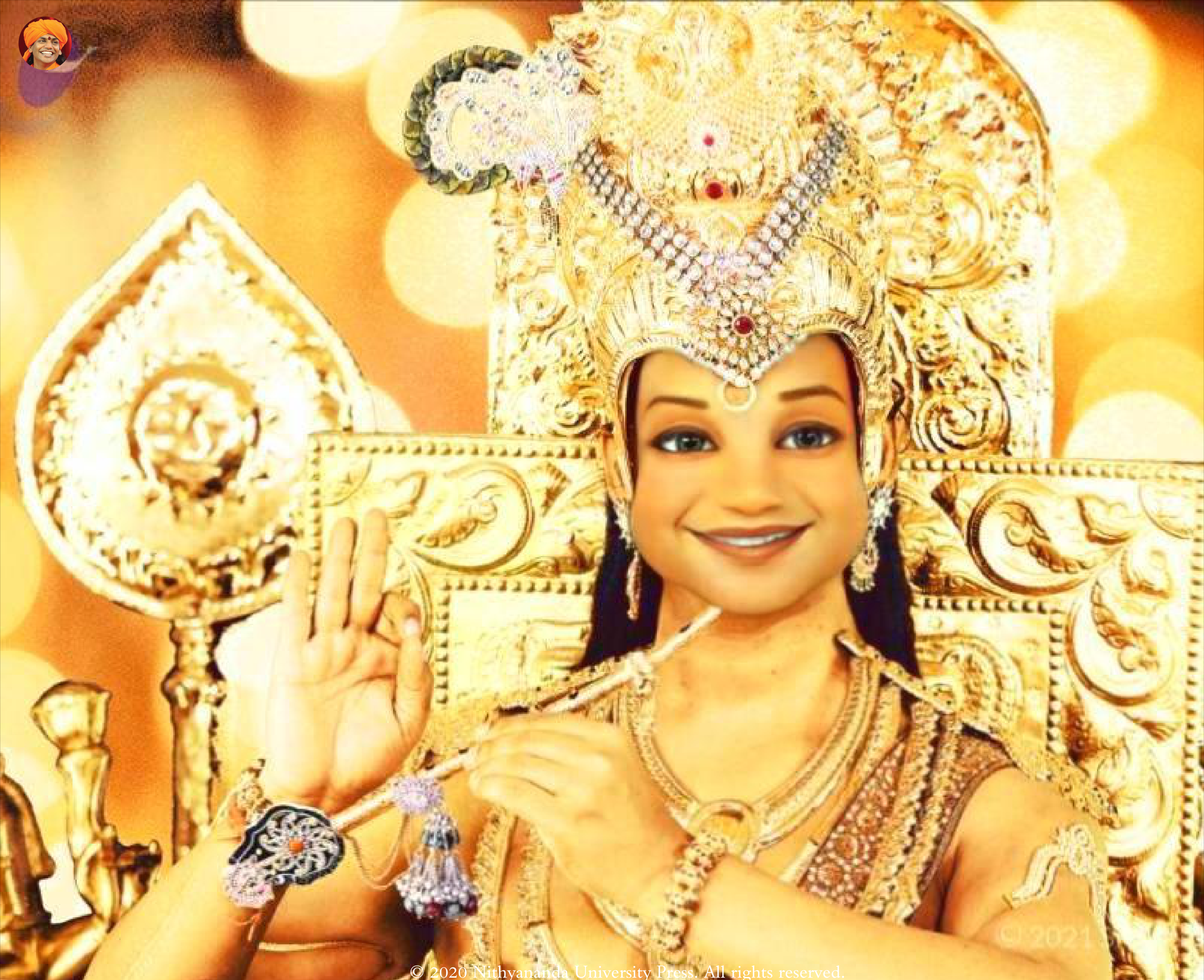
© 2020 Nithyananda University Press. All rights reserved.
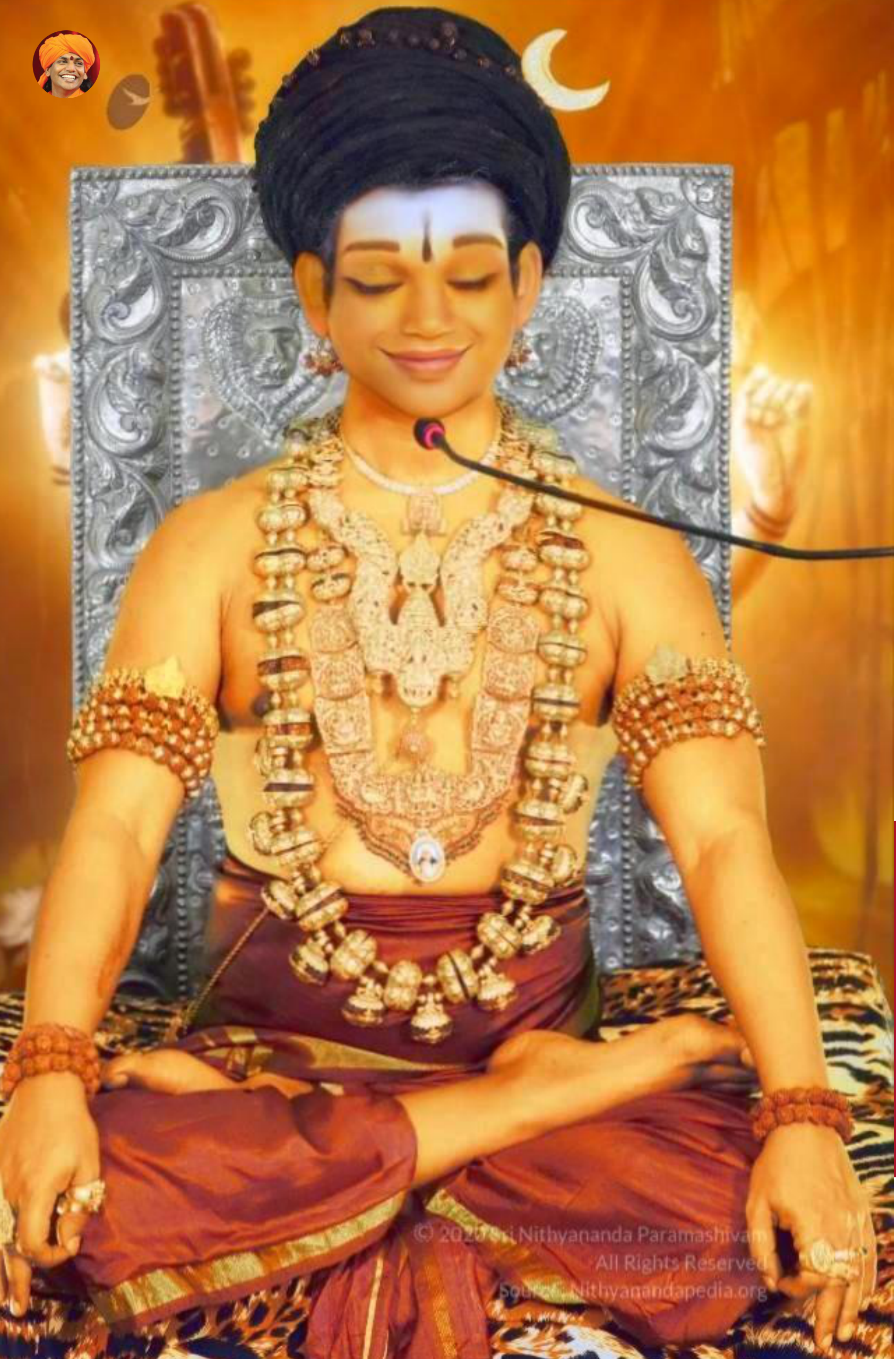
पञ्चैतानि महाबाहो कारणानि निबोध मे ।
साङ्ख्ये कृतान्ते प्रोक्तानि सिद्धये सर्वकर्मणाम्
॥१८-१३॥
pañcai'tāni mahābāho
kāraṇāni nibodha me I
sāṅkhye kṛtānte proktāni
siddhaye sarvakarmaṇām
Learn from Me Arjuna, the
five causes that bring about
the accomplishment of all
action, as described in
Sāṅkhya philosophy.
POWERFUL COGNITION
The Master again and again tries to show that you are God.
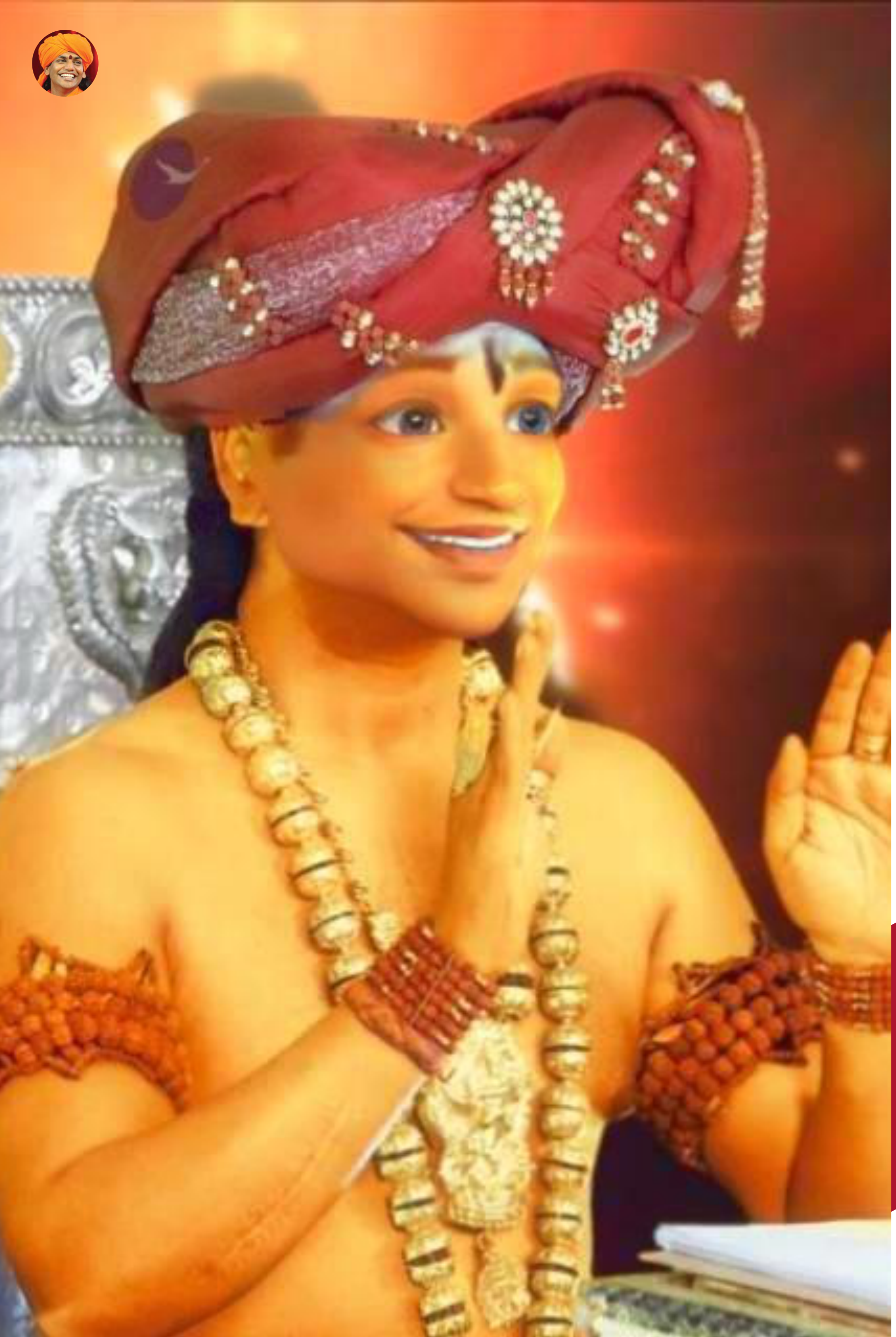
अधिष्ठानं तथा कर्ता करणं च पृथग्विधम् ।
विविधाश्च पृथक्चेष्टा दैवं चैवात्र पञ्चमम्
॥१८-१४॥
adhiṣṭhānaṁ tathā kartā
karaṇaṁ ca pṛthagvidham
vividhāśca pṛthakceṣṭā daivaṁ
caivātra pañcamam
These are: physical body that is
the seat of action; the
attributes of nature or guṇa,
which is the doer; the eleven
organs of perception and
action by the life forces and
finally the Divine.
POWERFUL COGNiTiON
The Master stands for the idea that you are the infinite.
शरीरवाङ्मनोभिर्यत्कर्म प्रारभते नरः ।
न्याय्यं वा विपरीतं वा पञ्चैते तस्य हेतवः
॥ १८-१५॥
śarīra-vāṅ-manobhir yat karma
prārabhate naraḥ nyāyyaṁ vā
viparītaṁ vā pañcai ‘te tasya
hetavaḥ
These five factors are
responsible for whatever right
or wrong actions a man
performs by deed, word and
thought.
POWERFUL COGNITION
Waking up to the Truth is Surrender.
तत्रैवं सति कर्तारमात्मानं केवलं तु यः ।
पश्यत्यकृतबुद्धित्वान्न स पश्यति दुर्मतिः
॥ १८=१६॥
tatraivaṁ sati kartāram
ātmānaṁ kevalaṁ tu yaḥ
paśyatyakṛtabuddhitvān na sa
paśyati durmatiḥ
Those who think they, their
spirit, are the doers, are
ignorant and do not see things
as they are.
POWERFUL COGNITION
Final Surrender Itself is Enlightenment.