The Way To Worship
This text was machine-transcribed from the printed book and may contain errors. Select the words and choose “Report a mistake”.
Authored by
THE SPH NITHYANANDA PARAMASHIVAM
अर्जुन उवाच ।
ये शास्त्रविधिमुत्सृज्य यजन्ते श्रद्धयान्विताः ।
तेषां निष्ठा तु का कृष्ण सत्त्वमाहो रजस्तमः
॥ १७=१ ॥
arjuna uvāca ye śāstravidhim utsṛjya
yajante śraddhayānvitāḥ teṣāṁ niṣṭhā tu
kā kṛṣṇa sattvamāho rajastamaḥ
Arjuna says: What is the mode of
devotion of those who perform spiritual
practices with authenticity, but without
following the scriptural injunctions, O
Kṛṣṇa? Is it in the mode of goodness,
aggression or ignorance?
POWERFUL COGNITION
Each form of worship or sacrifice is based upon one's aptitude and inclination.
iNTRODUCTiON
Arjuna asks a beautiful question.
Arjuna asks: ‘Kṛṣṇa, those who
discard the ordinances of the
scriptures, śāstras and perform
sacrifices, what is their position? Is
it sātvic, rājasic or tāmasic? What is
the state of people who don’t
follow the instructions of the
scriptures, the ancient books, and
instead worship with śraddhā,
authenticity according to their own
beliefs? Is it rajas, tamas or satva?
Are they in a peaceful (sātvic) state,
restless (rājasic) state or an
ignorant (tāmasic) state?’
Persevere and See Kṛṣṇa In Everything
At another level of energy, one may
perform fire sacrifices such as yajña
or homa. These are related to the
fire energy. Typically the energy of
the fire is transferred to water pots
that are placed around the sacrificial
fireplace. This water, which is
ergized by the ritual, is then
poured over idols, or sprinkled over
people or upon the earth to
energize them.
The energy of air, vāyu can be
accessed through breathing
techniques such as prāṇāyāma or
chanting of verses. In the first nine
verses of Śiva Sutra, Lord Śiva
explains these types of techniques to
Devi, His disciple.
It is possible to access the etheric energy, ākāśa through meditation, though this requires understanding and awareness.
Each form of worship or sacrifice is based upon one's aptitude and inclination. Each of these is guided by scriptural instructions on how to perform the worship, when and where, etc.
Arjuna asks, 'How important is it to follow these instructions? What happens when one follows one's own inclinations and worships?'
Many Masters have followed their inclination when worshipping their favorite deity god, Iṣṭa Devatā. Scriptures never stood in their way of worship. However, these Masters were completely authentic in what they were doing. They had śraddhā. That is important. Arjuna's query is in this connection.
GOALS:
Helping the students understand
the 5 energies (earth, water, fire,
air, ākāśa). -Helping the
students practice śraddha,
having no gap between their
convictions and their day-to-day
lives.
ASSESSMENTS
- What is the connection between worship and our energy levels?
- How can we access the different energies (earth, water, fire, air, ākāśa)?
- What is each form of worship or sacrifice based on?
- What is an Iṣṭa Devatā?
- What happens when one follows one's own inclinations and worships?
ART OF THE DAY
ART OF THE DAY:
ORIGAMi BOOKMARKS: THE 5 ENERGiES
MATERIALS NEEDED:
- Squares of paper. Around 6 inches / 15 centimetres is a good size but you can make your bookmarks a little larger or smaller if you wish.
- Markers, nature stickers, paper scraps for decoration, colourful ribbons.
- Scissors
- Glue
- Any book (to see how the origami bookmark looks on it).
ART OF THE DAY:
ORIGAMi BOOKMARKS: THE 5 ENERGiES

MATERIALS NEEDED:
❖ Tell the students that they will be creating their own origami bookmarks representing the 5 elements. ❖ Lay a square of paper on the table top in a diamond position. ❖ Fold the diamond in half, taking the bottom corner to the top to form a triangle. ❖ With the triangle pointing up, The child can then take the bottom left point up to meet the center point at the top and crease firmly. Glue in place. ❖ Repeat with the right corner. The paper should now be a smaller, folded diamond. ❖ Flip the diamond over. ❖ Taking the top layer of paper only, invite the child to fold the bottom point up to the top point and crease and then unfold. ❖ She will then fold the same point under, tucking it into the pocket formed as she gently squeezes the outer corners.
ART OF THE DAY:
ORIGAMi BOOKMARKS: THE 5 ENERGiES
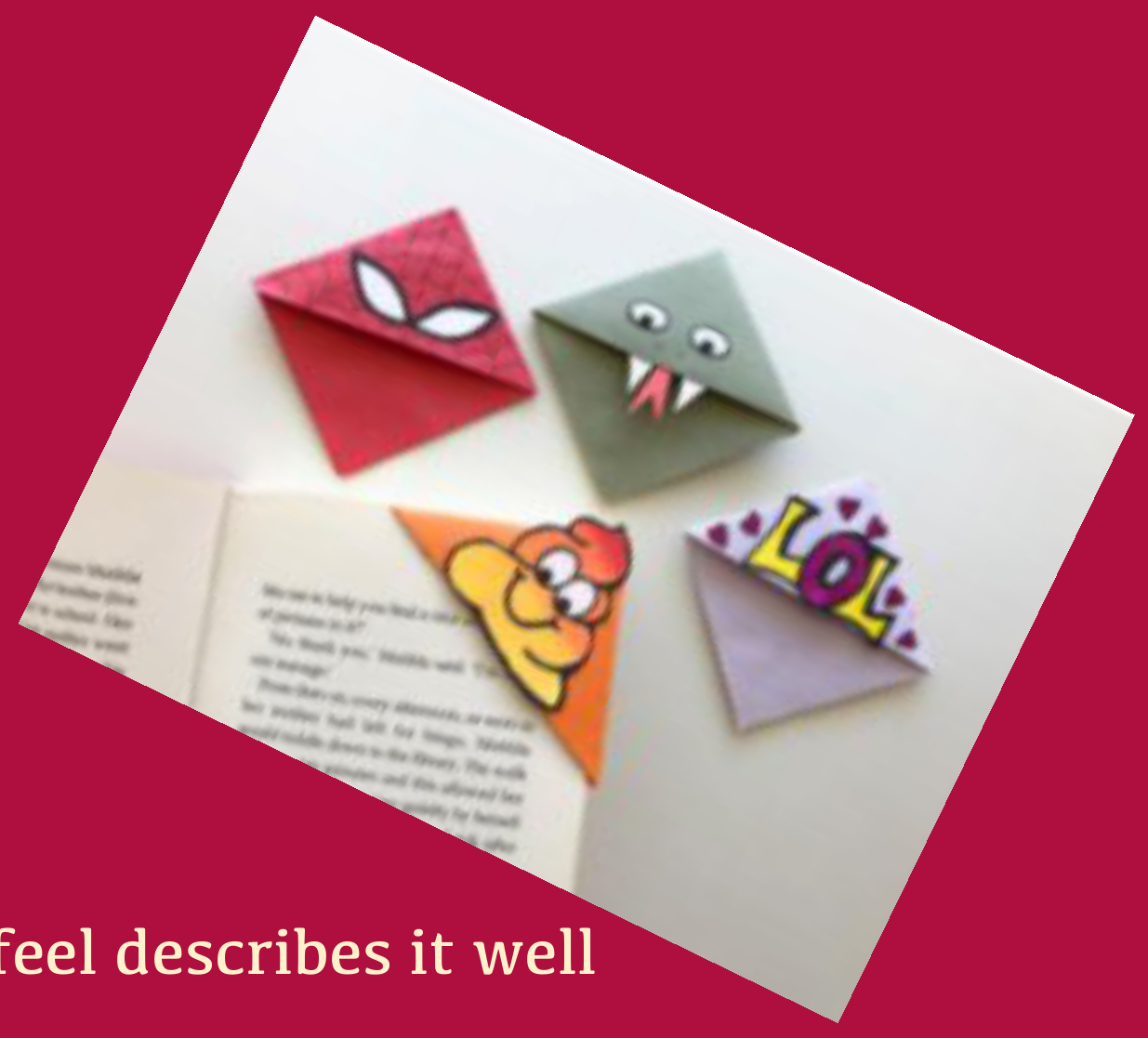
MATERIALS NEEDED: ❖ Write the element name and one more word that you feel describes it well (you can do the writing in the back). ❖ Decorate the completed bookmark with markers, paper scraps, ribbans or stickers. ❖ Ask the students to share about which energy they connect to most and what is their favorite way of worshipping their Iṣṭa Devatā.
Source: https://www.scholastic.com/parents/books-and-reading/raise-a-reader-blog/how-to-fold-an-origami-bookmark.html
INFERENCE: Worship can occur at many levels. Arjuna's question is based upon the three attributes or guṇas. Worship is also dependent on our energy levels.
ACTIVITY OF THE DAY
ACTIVITY OF THE DAY:
WHAT IS TRUE FOR YOU
MATERIALS NEEDED
- Paper
- Pen
- Pencil
- Eraser
PROCEDURE • Ask the students to write down their convictions, what is true for them in their lives. • Then tell the students to share and ask them to discuss whether everyone should agree on what is true. • Finally, ask them to discuss how to know whether something is true or not, and whether something is authentic or not.
INFERENCE Many Masters have followed their inclination when worshipping their favorite deity god, Iṣṭa Devatā. Scriptures never stood in their way of worship. However, these Masters were completely authentic in what they were doing. They had śraddhā.
WORKSHOP OF THE DAY

WORKSHOP OF THE DAY:
VAAKYARTHA SADHAS
PROCEDURE:
Read the following to the students and then ask them to write a short essay analyzing it in the light of what they learned in this lesson. Once they are done, students can share their answers and engage in a discussion about their understanding about these kinds of worshipping acts. Ensure that the discussion comes to the topic of the importance of having authenticity.
A Small Story:
A saint named Kannappan in Tamil Nadu worshipped Śiva with such intensity that he cut out his eyes and placed them on the Śiva liṅga. Other Masters placed all kinds of material at the altar including raw meat. Rāmakṛṣṇa placed a thread under the nose of Kālī's deity to check whether She was breathing before he offered Her the ritual food!"
Then read Arjuna's initial questions to them and ask them to share out loud what they would now answer. "What is the state of people who don't follow the instructions of the scriptures, the ancient books, and instead worship with śraddhā, authenticity according to their own beliefs? Is it rajas, tamas or satva? Are they in a peaceful (sātvic) state, restless (rājasic) state or an ignorant (tāmasic) state?

WORKSHOP OF THE DAY:
VAAKYARTHA SADHAS
CONCLUSION:
Each form of worship or sacrifice is based upon one's aptitude and inclination. Each of these is guided by scriptural instructions on how to perform the worship, when and where, etc.