INTRODUCTION
This text was machine-transcribed from the printed book and may contain errors. Select the words and choose “Report a mistake”.
All actions done out of arrogance, out of pride, out of ego, for name and fame, and for power, are demonic in nature. Such actions are performed out of ignorance, and ultimately lead to their own downfall. The instinct to survive is what is called 'I', and the instinct to possess is what is referred to as 'mine'. The person who understands that both are illusions is a complete person. Such a person realizes that the instinct to survive does not help, and no matter what one may have, one still cannot survive forever. The instinct to survive is pure illusion. Suffering is from arrogance, never from sensitivity. A person who is sensitive never suffers. We suffer from words when we stop them, when we resist them, when we make our own meaning out of them. When we do not make meanings out of words, we do not suffer.
[Figure: Nithyananda]
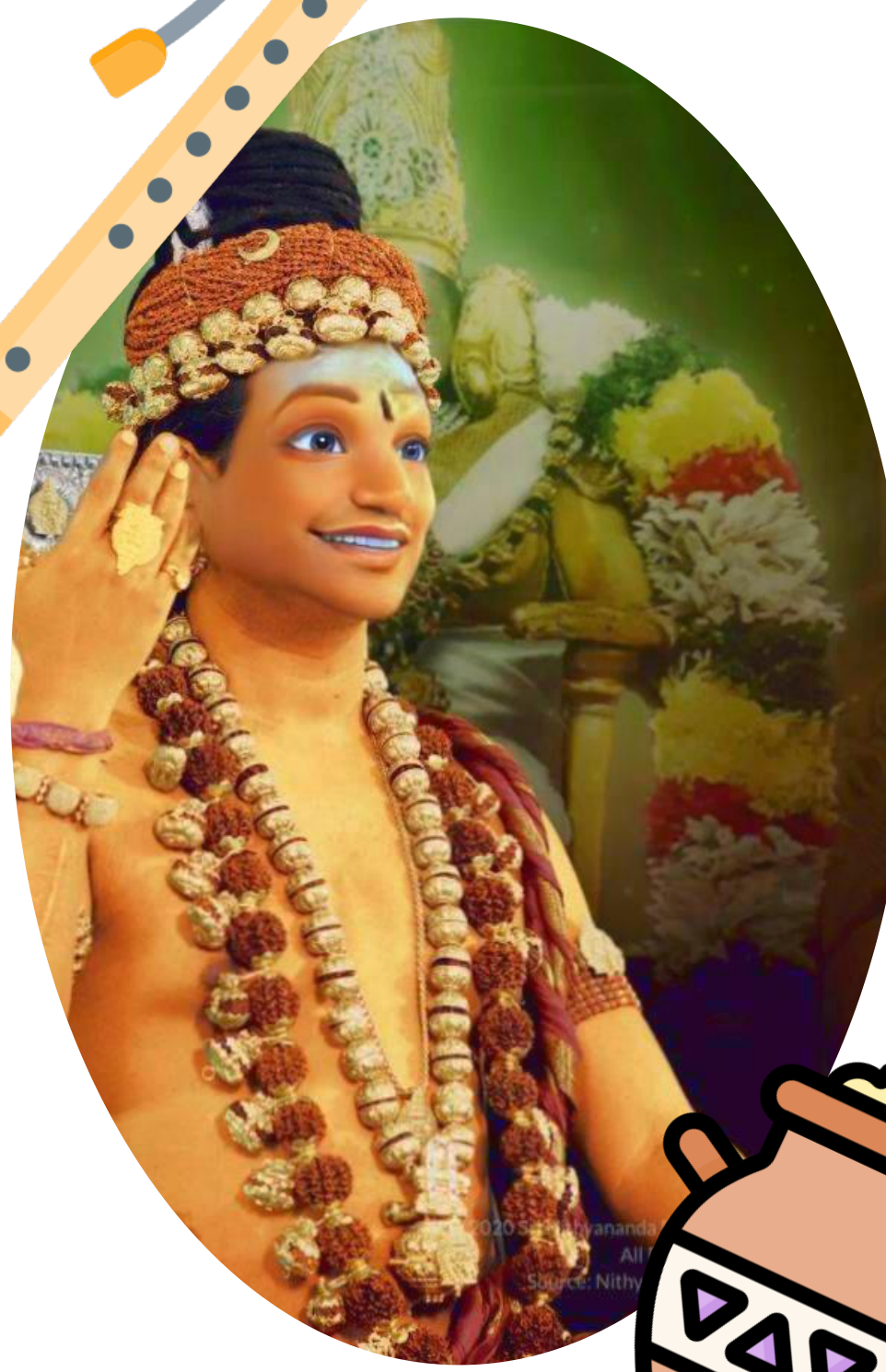
Only when we face the instinct to survive and the instinct to possess and experience completion, will we enter the space of fearlessness. Try this simple experiment: Try living for others' sake out of gratitude for just one week. Try to live with the new root-cognition of 'You'. We live all our life with this 'āsuri sampat,' what Kṛṣṇa calls demonic nature, the inauthentic attitude of 'me, me, me'. When you don't give attention to 'me', you will never be 'in tension'. When you replace your root cognition of 'me' with 'You', a deep inner healing, a deep completion happens in you. Whenever you become a hollow bamboo, you are a flute in the hands of the Divine. Whatever happens through you will be divine; you will imbibe the divine nature.
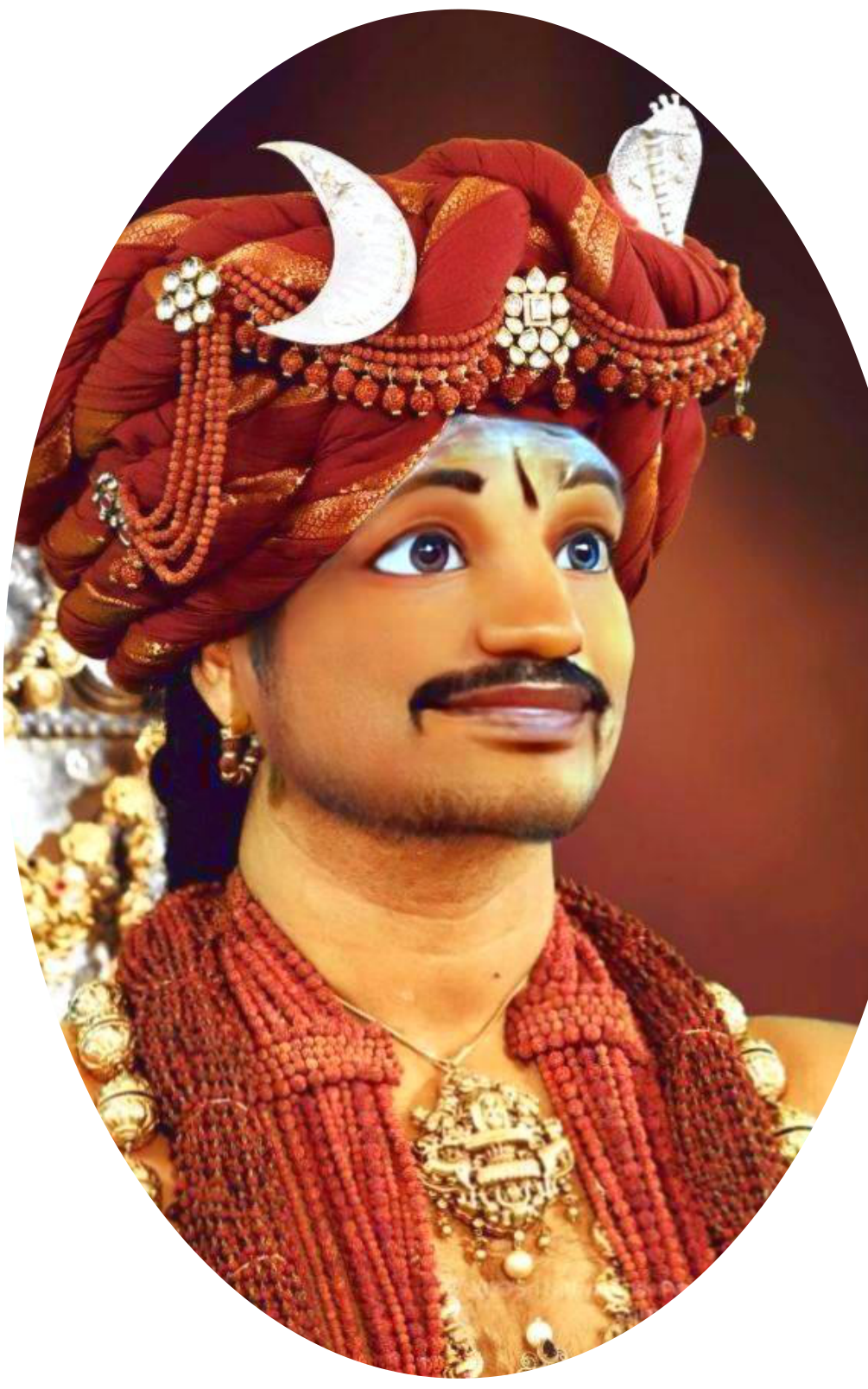
the root cognition happens in us keeping the ‘I’ as the center; He gives a simple technique to replace the ‘I’ with ‘You’ so that the cognitive shift happens. This same system will be used for the Divine nature. Enrich others with the space of ‘You’ which will naturally make you express these divine qualities in life. Enriching will be just your lifestyle. You will understand that enriching the ‘You’ enriches the ‘I’ back. Enriching others enriches you back. Experientially you will understand that ‘you’ is one with others, others are one with you. Automatically you will become blissful, free from anger and full of dhārmic (righteous) qualities. Above all, you will feel tremendous fulfillment, what I call the space of completion. Anything you do with the space of ‘you’ will make you radiate these beautiful, divine qualities.
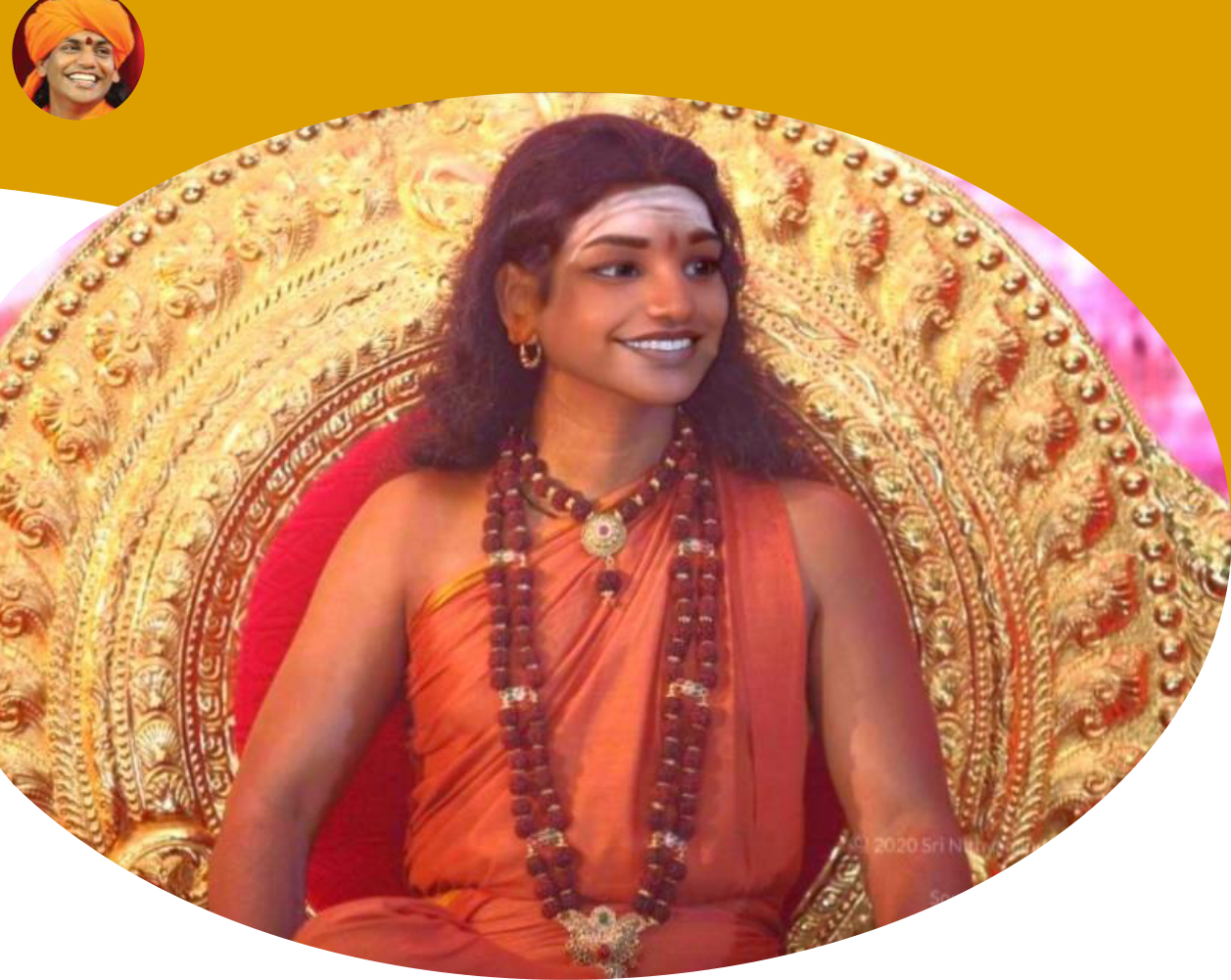
There are four muktis or levels of liberation: sālokya mukti, sārūpya mukti, sāmīpya mukti and sāyujya mukti. Sālokya means ‘same place’; it means we will be allowed to stay in Vaikuṇṭa, Viṣṇu’s abode. We will have a residence in heaven. Sārūpya means we will have the same form as the Lord. For example, we can see Jaya-Vijaya, the gatekeepers of heaven; they have the same śaṅkh (conch), cakra (discus), gadā (mace), padma (lotus)—all the accessories of Viṣṇu in the same svarūpa (form). Sāmīpya (being near) is being in the inner circle; the cakra that Viṣṇu is carrying has achieved sāmīpya mukti! Becoming enlightened oneself is sāyujya mukti. Sāmīpya mukti is the best Enlightenment because we can enjoy Him forever! It is like an ant forever enjoying the sugar candy. Sāyujya mukti is like becoming the sugar candy. This is for all the ṛṣis. For devotees, the ultimate state is sāmīpya mukti. Even if they run after the Divine, people with the root cognition of ‘I’ can never reach the Divine, because the Divine runs away from them.
How we are centered and where our inner space is focused is what makes our life demonic or divine. The person who is ready to look into his mind, the person who is afraid about whether he is living rightly or wrongly, always lives rightly. Only the person who is arrogant is demonic. The person who is demonic never considers whether he does right or wrong. He thinks that he is always right. Lord Kṛṣṇa explains that living with transcendental qualities, that is the right space of ‘you’, one achieves liberation or Enlightenment— nivṛtti. By living with the space of ‘I’ we create more bondage. The demonic qualities make for bondage, meaning pravṛtti. A person who is divine tries to chisel or correct himself, whereas a person who is demonic tries to correct others. Please understand that when we live with the root cognition of ‘You, You, You’, we completely forget ourselves; we disappear into Existence. We are in bliss. If you throw away the ‘me’, that alone liberates you, and if you start working on ‘You’, you experience tremendous bliss.
© 2020 Sri Nithyananda Paramashivam. All Rights Reserved
When you drop 'me', you
experience peace and completion;
when you start working with
'You', you experience peace and
bliss. This is the straight path to
peace and bliss.
People of this nature are so deeply
immersed in their attachment and
aversion that they no longer feel
themselves separated from these
qualities. They are so much in
bondage to their senses that they
can no longer know they are in
bondage. The problem with most
people however, is that their
caring is a business transaction.
They care when there is something
in it for them. Whether the
transaction is with mother, father,
spouse, son, daughter, relative or
friend, there is a 'What's in it for
me?' attitude.

© 2020 Sri Nithyananda Paramashivam. All Rights Reserved
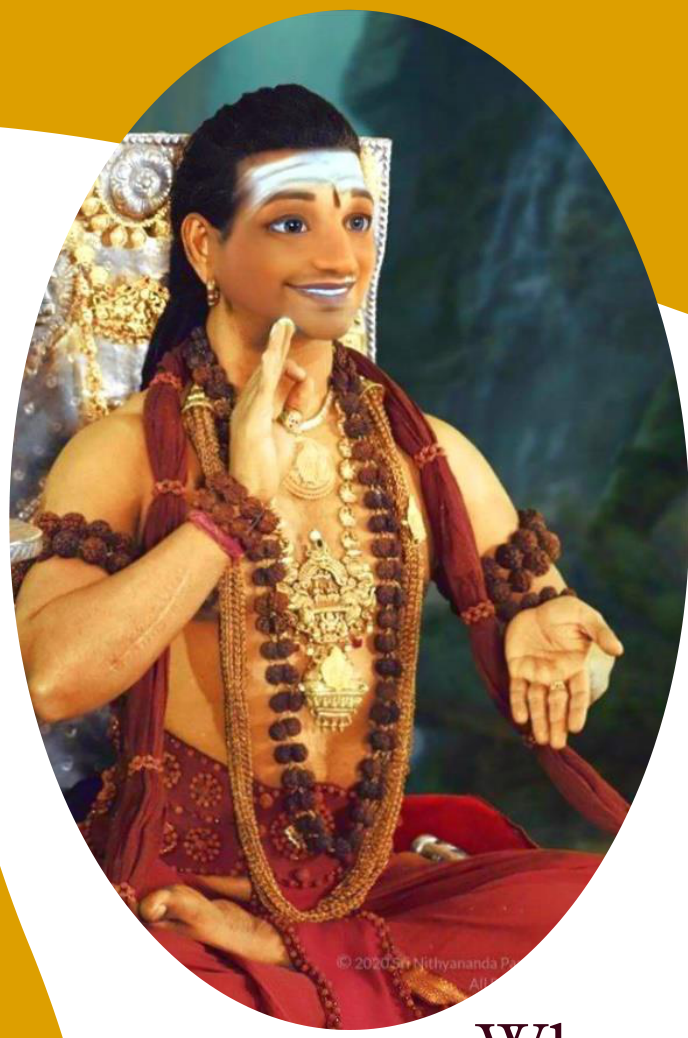
When the focus is on ‘you,’ as in caring for enriching someone with no expectation, with no conditions, we slip into a state of bliss. This state of bliss is our natural state. When we are in a blissful moment, when we feel blessed by Existence, let us be enriched that moment. That is when we are closest to God. Let that moment be of gratitude, prayer, and meditation. In that moment, remember God existentially, not verbally. Let your whole being feel the vibration and become overwhelmed with the beyond. Don’t lose that moment. It is precious. Everybody is born ready for divinity. If we miss it, it is totally our responsibility. We miss it because we never look within.
GOALS:
Encourage the students to look within and try to feel the divine vibrations within. Students must internalize the understanding that when we focus on the well-being of others without expectations and conditions, we relax and our tensions disappear, and we slip into a state of bliss.