LIFE VS LIFE NOW
This text was machine-transcribed from the printed book and may contain errors. Select the words and choose “Report a mistake”.
In the case of Śrī Kṛṣṇa, He is the Master, the Complete Incarnation. Why then the difference? The difference is not to do with Him. It is to do with us.
In Vedic tradition, we narrate hundreds of Purāṇas, the recorded historical happenings, where Māhadeva Himself comes, where Kṛṣṇa appears to give victory and protection, to their devotees.
What is the gap between the life during Vedic times and now? Surely, our Masters are very logical, scientific people, never spreading superstition. But, in the modern days, all these things are thought to be superstitious. Why is it that all which happened at that time, is not happening now? Why is there so much gap? The only gap, why it was happening then and why it is not happening now, the answer is — Incompletions!
When you complete, complete,
and complete, then everything
what you read in the Vedic
tradition becomes reality. It can
be reality. Completion is the
bridge to reach the Vedic
tradition, to reach extraordinary
powers, to experience Divine
expressions in your life.
Completion is life at every level.
The only difference between
you and Śrīnivāsan Rāmānujan,
the genius mathematician is the
level of completion. The only
difference between you and Ādi
Śaṅkara is the level of
completion. The only difference
between Arjuna and Parabrahma
Kṛṣṇa is the level of completion.
With completion you start living
with God directly!
The frequency of Parabrahma
Kṛṣṇa is not visible to and
approachable by mortals. That is
why Arjuna had to be given the
Divine vision to perceive
Parabrahma rūpa or viśvarūpa. In
order for humans to perceive Him
and interact with Him, Parabrahma
Kṛṣṇa must become Vāsudeva
Kṛṣṇa. To a certain extent He must
subject Himself to the play of the
guṇas. When an Enlightened being
has merged with the Universal
energy and incarnates in human
form, that Incarnation must have
some satva guṇa infused into Him
in order to take human form.
Within some time, this satva guṇa
also disappears, leaving the being
beyond the three guṇas and once
again in an Enlightened state.
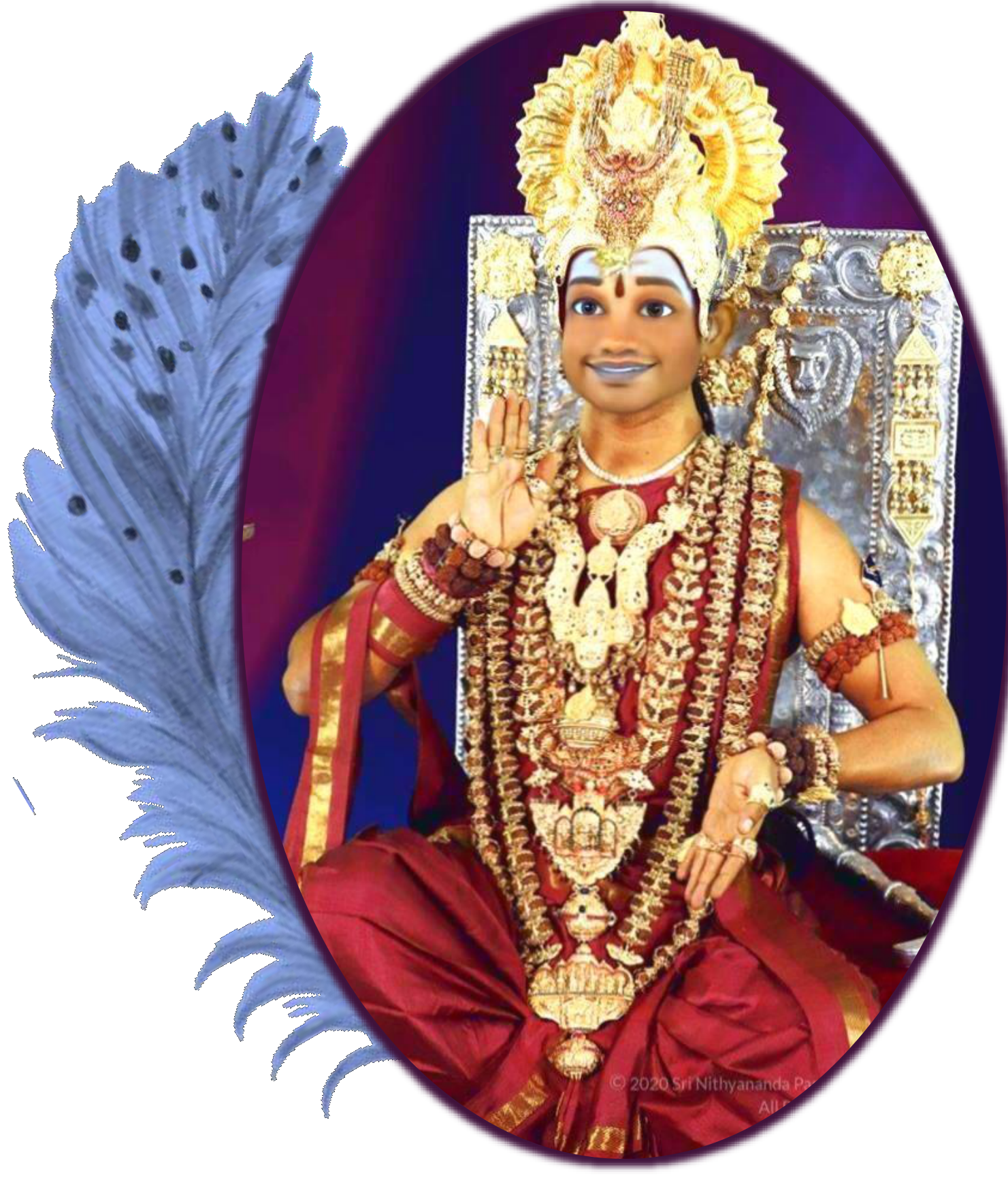
Each Enlightened Master, each Incarnation is unique in His expression of the experience as the Divine. Some express experiences and some don't. Our scriptures say that if two enlightened masters say the same thing, one is a fake! The experience is the same, yet the expression is different. Kṛṣṇa is different from Buddha and Śiva. Each has the same theme of compassion, yet the way the compassion is expressed is different. Buddha expressed it as contemplation and Kṛṣṇa in joyous loving completion. So we choose a Master based upon how we vibrate to His expression. If our path is devotion, we gravitate to Kṛṣṇa; He is lovable. If we are the meditative type, we go to Śiva, the Master who teaches in vibrating, alive silence.
SURRENDER OUT OF COMPLETION IS REAL SURRENDER
It does not matter who our Master is. What matters is our faith, trust and the attitude or space of surrender. Our Master can be an unenlightened being. If we trust him, we can become enlightened, even though he may not be. What matters more is our attitude and feeling connection based on the level of our completion, our guṇa, and not the Master’s state. Even if we worship a stone and surrender to it from a complete inner space, cognizing it to be our ultimate savior, we will be liberated. It is true.
When you practice the right reason, right results come. When you practice even the same values with smaller reasons, only the small results come. More than what actions you do, what matters is the space from which the actions are done. If you do not have the right context, even when you worship a deity or a God, it is useless. Because even while you pray, if you strengthen the space that you are poor, you are weak, if that gets strengthened more and more, even your prayer will make you weak.
SURRENDERING NOT EVEN
BOTHERING TO WHOM YOU ARE
SURRENDERING, AS A QUALITY OF
SURRENDERING iS
ENLiGHTENMENT
Understand, humbleness as a fact not as a quality is the right context, the right space. Humbleness as a quality can bring ego, incompletion. ‘I am very humble, I am very humble’. No! Humbleness as an effect of the space of completion, this is the way—‘I am in humbleness without feeling humiliated.’ These are different qualities, guṇas.
© 2020 Sri Nithyananda Paramashivam. All Rights Reserved

I can surrender in front of any stone, I have no problem at all. Not just here, at any temple, anywhere, any deity, any stone. You can see very clearly, that is one job I do very sincerely. Because I have the space of surrender, I can surrender to Śiva, I can surrender to Viṣṇu. I can surrender to my own Pādukas (sacred foot-sandal of master)
- The SPH Nithyananda Paramashivam
So, don't even bother to
whom you are surrendering. It
is the joy of surrender, the
celebration of surrender.
In Vedic tradition, we can
surrender to even a tree or a
tulasi plant (holy basil plant).
In Indian houses, even door-
frames are worshipped, one
lamp is worshipped.
The faith and the surrender
help us transcend the nature
of all activities. We surrender
the result of our actions to
that Master, whomsoever He
may be, whomsoever It may
be. We do everything
meditating on that Master and
surrender it all at His feet.
That space of completion
alone liberates us.
This is what Kṛṣṇa means by devotion, which is unfailing in all circumstances. Nothing more is needed. Kṛṣṇa is not talking about the flute-playing, yellow-robed Kṛṣṇa. Anyone that we surrender to totally, is Kṛṣṇa and we then fall into Kṛṣṇa consciousness, the Consciousness of Completion.
GOALS:
Impress on the students
that through devotion,
surrender and faith one
is able to transcend the
three gunas or natural
qualities and attain our
true nature or cosmic
consciousness.
ASSESSMENTS
❖ What is the difference between
Parabrahma Kṛṣṇa (Ultimate
Consciousness) and Vāsudeva
Kṛṣṇa?
❖ What is the difference between a seeker and an Enlightened Master?
© 2020 Sri Nithyananda Paramashivam. All Rights Reserved
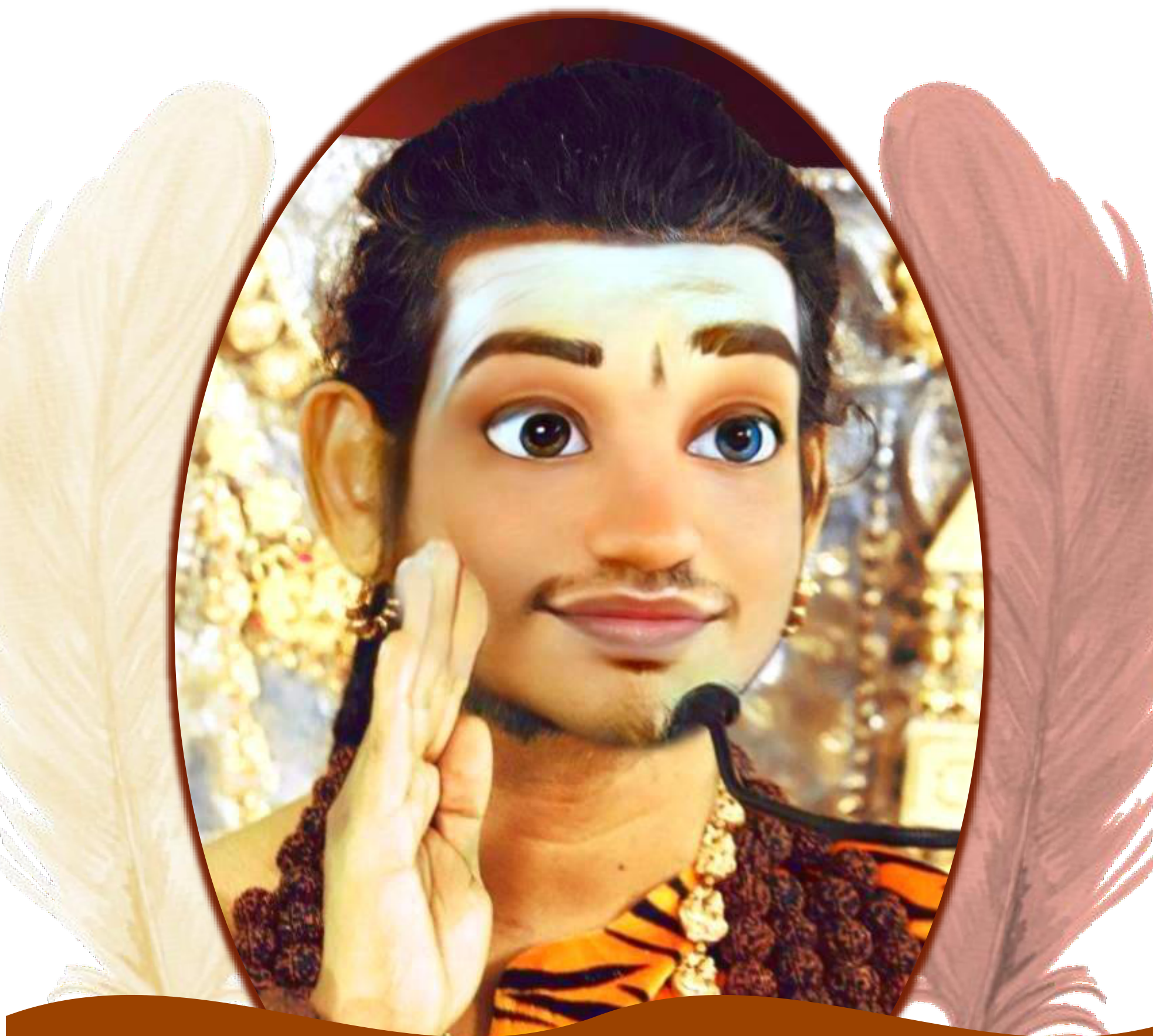
ART OF THE DAY
© 2020 Sri Nithyananda Paramashivam. All Rights Reserved
ART OF THE DAY:
DIVINE EXPRESSIONS
MATERIALS NEEDED:
- Paper
- Pencil
- Eraser
- Crayons
PROCEDURE
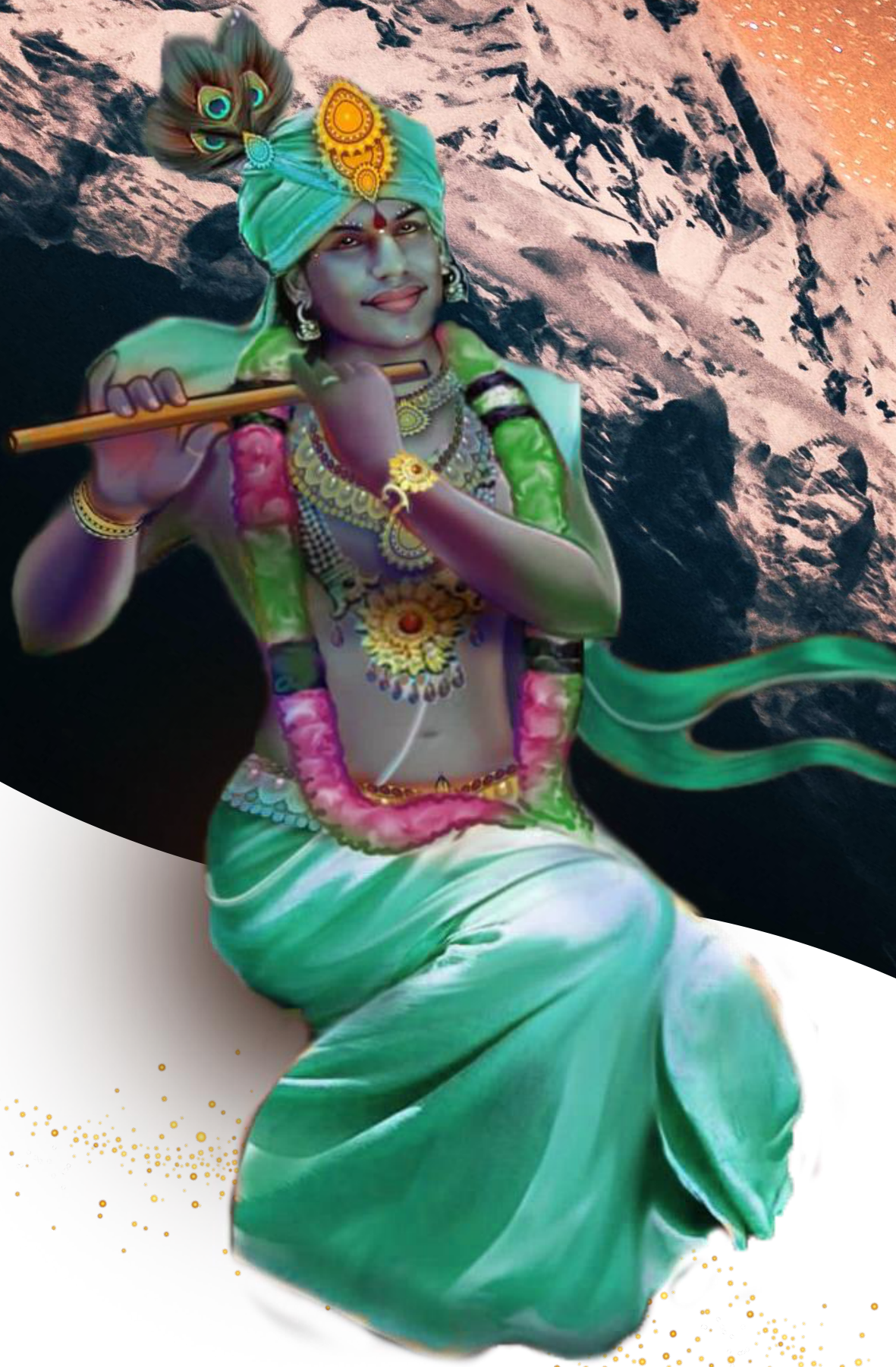
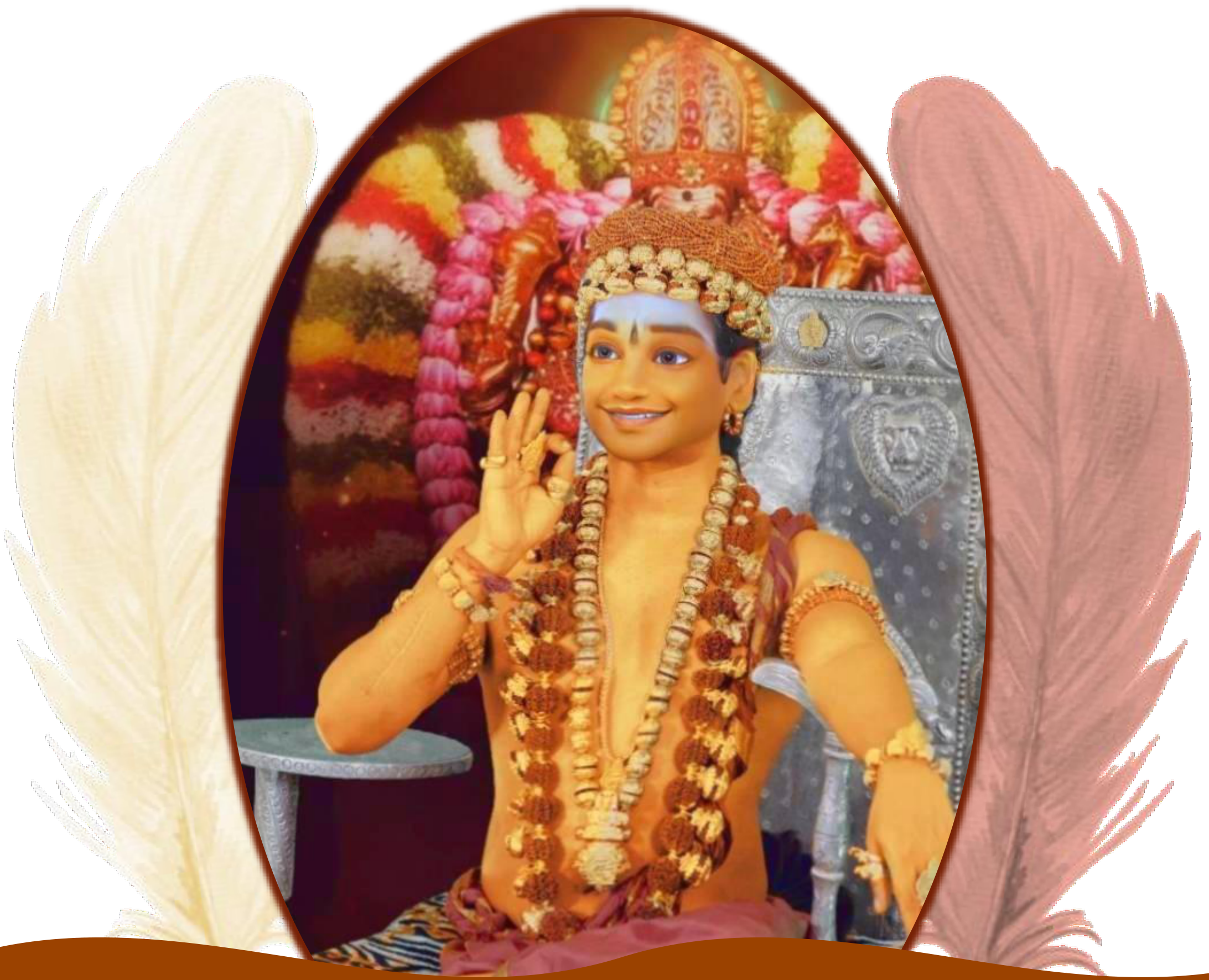
Let us draw a picture based on one of the following themes: Krishna expressing joyous love; or Shiva's alive silence.
INFERENCE
Each Enlightened Master, each Incarnation is unique in His expression of the experience as the Divine.

ACTIVITY OF THE DAY
© 2020 Sri Nithyananda Paramashivam. All Rights Reserved
ACTIVITY OF THE DAY: STORY TIME
PROCEDURE: Let us narrate to you a short story from the Epic Ramayana to understand the concept of Surrender. In Rāmāyaṇa, the great Hindu epic history of Lord Śrī Rāma’s incarnation, Lakṣman is the younger brother of Lord Rāma, who devoted his whole life in selflessly serving the feet of Śrī Rama and Mātā Sītā.
When Sītā is kidnapped by Rāvaṇa, some of the vānaras (monkeys) who went in search of her, gathered some of the jewels thrown by her as she was being taken away and bring it back to Rāma for identifying them. Lakṣman could only recognize the anklets of Sītā.
Rāma asked, ‘why are you not able to recognize the jewelry?’ Lakṣman said, ‘No. I have never seen Mother Sita above her feet. I look at both of you only when I do nāmaskār (surrendering salutation), but I never looked directly or intensely.’
Lakṣman never ever saw the upper jewelry of Mātā Sītā. Lakṣman did not even know whose feet he was falling at, he just saw the feet. He was clear in his realization that he was not that big; he felt humbleness without humility the power of concentration in both the reciter and the listener.
© 2020 Sri Nithyananda Paramashivam. All Rights Reserved
ACTIVITY OF THE DAY: STORY TIME
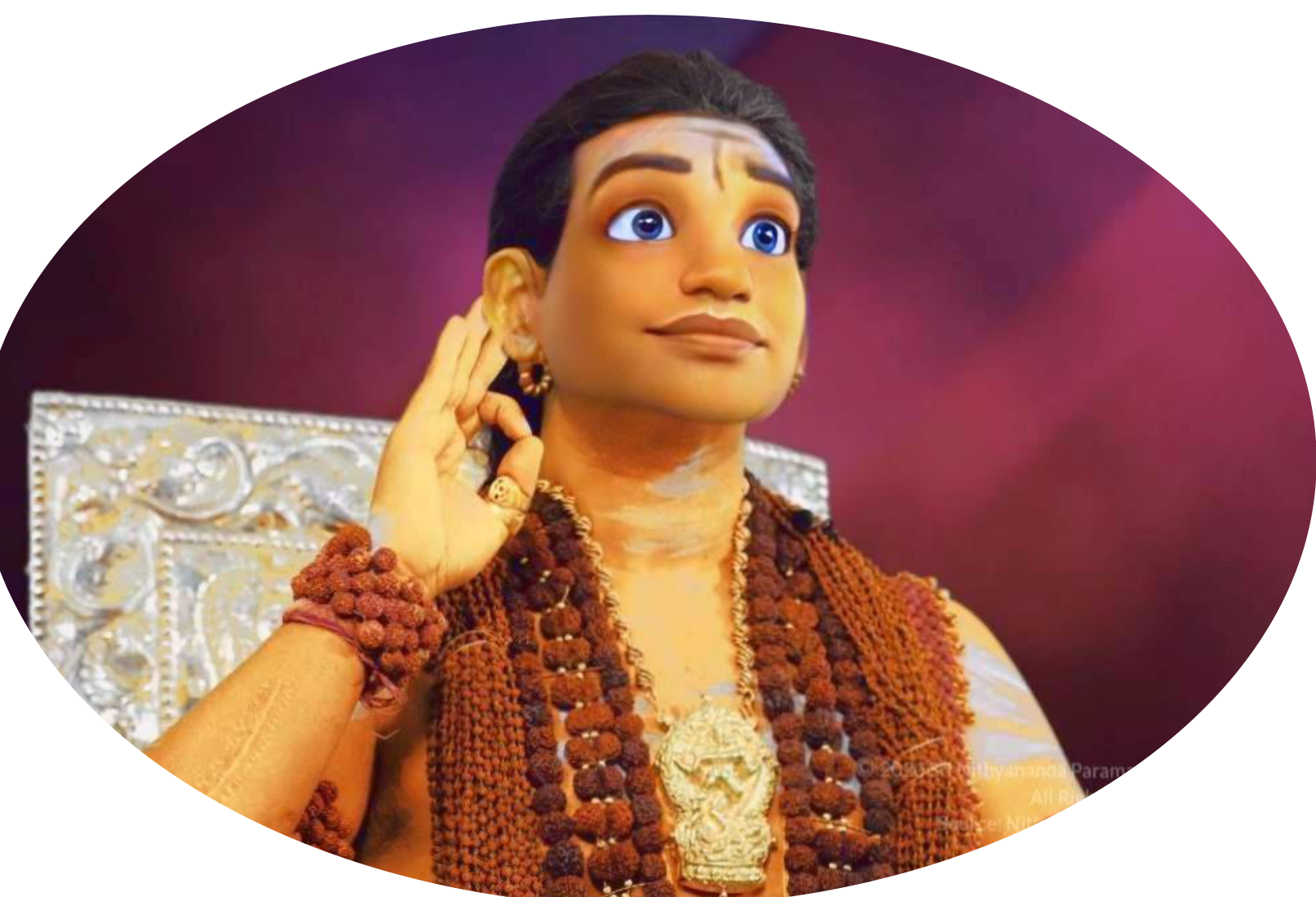
INFERENCE:
Lakṣman’s surrender to Rama and Sita rose out of his completion.
© 2020 Sri Nithyananda Paramashivam. All Rights Reserved
WORKSHOP OF THE DAY
© 2020 Sri Nithyananda Paramashivam. All Rights Reserved
WORKSHOP OF THE DAY: VAAKYARTHA SADHAS

PROCEDURE The topic of discussion is: "It does not matter to what we surrender but the attitude of surrender leads us to liberation".
CONCLUSION What matters is our faith, trust and the attitude or space of surrender. If we can surrender to anyone or anything totally, it takes the form of Kṛṣṇa for us and we then fall into Kṛṣṇa consciousness, the Consciousness of Completion
© 2020 Sri Nithyananda Paramashivam. All Rights Reserved