INTRODUCTION
This text was machine-transcribed from the printed book and may contain errors. Select the words and choose “Report a mistake”.

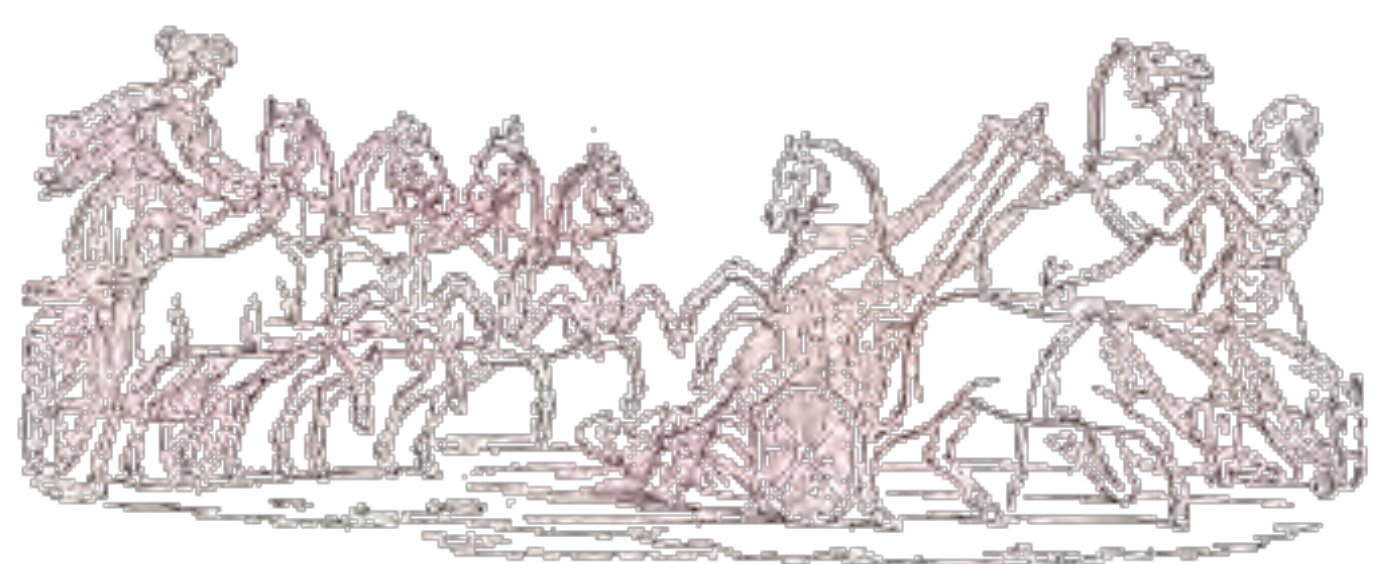
Kṛṣṇa delivers the Bhagavad Gītā to Arjuna standing in a chariot on the battlefield of kurukṣetra. If you look a little deeper, this is a beautiful picture of each of us. Kṛṣṇa represents the Self, the charioteer, knower of the field, kṣetrajña, the one who runs the show. If the charioteer does not know how to take charge, the horses start to pull the chariot in different directions.
These horses symbolize the senses and the mind pulling us to different places as they please, thus leaving us in a state of confusion in everything that we do. If we are not ready to control the horses, the horses will control us. This is what happens in our lives. Due to our lack of understanding about how to drive the chariot, we conveniently give the horses the authority
BEYOND THE BODY AND MIND
The very understanding about the kṣetra, meaning the material things around us, teaches us how to control them. The minute we understand the kṣetra, the body-mind, we realize we are not the kṣetra! If we are the kṣetra, then how can we understand it? You see, we can read this book because we are not the book. There is a separation between the book and us. In the same way, only when we understand the kṣetra, do we understand that we are not the kṣetra. This understanding that we are not the kṣetra brings with it the understanding that we are the kṣetrajña. When we realize that we are the kṣetrajña, we have transcended the kṣetra.
LIFE IS A DREAM
Actually, there is no such thing as kṣetra. It is a projection of the mind, just like a dream. You see, when we go to bed we know that we are so-and-so. We know our whole identity with solid clarity when we go to sleep. We know that even if we have dreams, they are not real. We will wake up the next day and continue our life.
But the minute we drift into the dream state, we start to think that the dream is real. The more we get into the dream, the more our identity completely changes to suit the role in the dream. What happens in the dream may not be related to what we do in real life. Yet we start to believe it all. If a lion in the dream attacks us, we feel fear and worry and we may even sweat as though it is really happening to us! In the same way, we think this life is real. If I tell you now that the life that you are leading is nothing but a creation of your mind, will you believe me? No! You are so immersed in this dream that you think is real.
See, when we wake up from a dream, why do we suddenly understand that it was not real? It is because suddenly we perceive a separation between the dream and us. The understanding that it was merely a dream, puts us into reality. Similarly, the understanding that this world is nothing but a projection of the mind, the understanding that this is not our real identity, will put us into reality
Let us say we dream of
winning some award in front
of thousands of people. The
mind is so powerful that it can
create the entire picture
including every detail of the
auditorium, all the thousand
people sitting and clapping,
the speeches, everything that
we would normally see in an
auditorium. The mind is so
powerful to be able to give life
to the scene around us and
not just to our identity in the
dream. This is what the mind
does in the so-called real
world also. The only
difference is that we wake up
easily from our night dreams.
However, we do not know
how to wake up from this
bigger day dream that we now
think is reality.
WE ARE THE DIRECTORS OF OUR LIFE
Only an enlightened Master who has experienced the truth can awaken us to reality. Out of their compassion, these masters descend on planet Earth to tell us that everything we see around us is a projection of our minds.
The understanding of the kṣetra, the illusory world created by our minds, is important in helping us to differentiate between reality and non-reality. Kṛṣṇa says that we need to understand what kṣetra and kṣetrajña to realize the truth. Until then we blindly believe that the projection of our mind, the drama, is reality. We have created our own drama and are acting in it. By and by, we forget that we created the drama. We forget that we are not the roles or characters we enact on stage. We start judging and reacting to everything about it.
If a child is constantly reminded about the divinity within right from birth, it grows up to be a jīvan mukta, liberated while still in the body. This is how children were brought up in the vedic tradition. That is why the level of consciousness was so high.
When we fall into the present moment, we fall into eternity and that eternity is a combination of past, present and future. There is no distinction. In this state we become the witness of all time and space-related happenings. We become the witnessing consciousness. We become the knower and we witness the field or kṣetra with complete detachment. We realize that everything in the outer world is a drama or a dream, and anything that we attempt to do in our lives is housekeeping in this dream.
© 2020 Sri Nithyananda Paramashivam. All Rights Reserved
THOUGHTS ARE
LIKE CLOUDS
Any effort that we make is another act
in this dream. The whole idea is to
not become entangled or emotionally
attached to the housekeeping in this
dream. The idea is to enjoy it and
watch it by becoming one with our
true self.
Witness the consciousness that is
witnessing. When you watch, detach
from the thoughts, sit back, relax and
watch. Do not try to create nourish or
destroy the thoughts. The ultimate
consciousn- ess that witnesses is
beyond Brahma (Creator), Viṣṇu
(Sustainer) or Śiva (Rejuvenator).
When we learn to welcome thoughts
and allow them to complete, they
merely come and go.

It is like watching clouds in the sky.
Even if there is a thought saying
that you are witnessing, watch that
thought also. Watch the witnessing
until that thought also disappears.
Go beyond and beyond, deep into
your being. Go beyond the thought
that you are witnessing. Please
listen. As long as you think in your
mind that you are witnessing, you
are not witnessing. When the
thought that you are witnessing
exists, you are not witnessing. You
are now caught in the thought, 'I
am witnessing.' Drop that!
This last thought that you are witnessing is like a bridge between you and God, between you and the thoughtless space. Initially, when you try to witness your actions and your thoughts, it is natural to think that you are watching. Let it be. Having this thought is better than having a hundred incomplete thoughts bombarding your inner space. But go beyond. Do not stop there. Witness the thought that you are witnessing. Then the pure, uncorrupted and untouched complete inner space happens in you. It is only in the uncorrupted and pure inner space of completion that God manifests and the Divine consciousness is perceived. Understand, Completion is God.
GOALS:
To understand that we are
kṣetrajña not kṣetra, the Self not
the body-mind That just like we
know our identity when we
wake from sleep, so we can
wake from life as a dream To
understand the technique of
witnessing
ASSESSMENTS
❖ What is prāṇa śakti?
❖ What is the simple tattva we need to understand?
❖ What is cakṣu?
❖ Define puruṣa and prakṛti.
❖ How does an Enlightened Master see truth?
❖ How can the Master see 360 degrees?
❖ What is the cause of our incompletions?
❖ How can we dispel darkness?
❖ When does the ego disappear?

ART OF THE DAY
© 2020 Sri Nithyananda Paramashivam. All Rights Reserved
ART OF THE DAY:
ILLUSTRATING THE BODY & MIND
MATERIALS NEEDED:
- Paper
- Colour Pens
PROCEDURE:
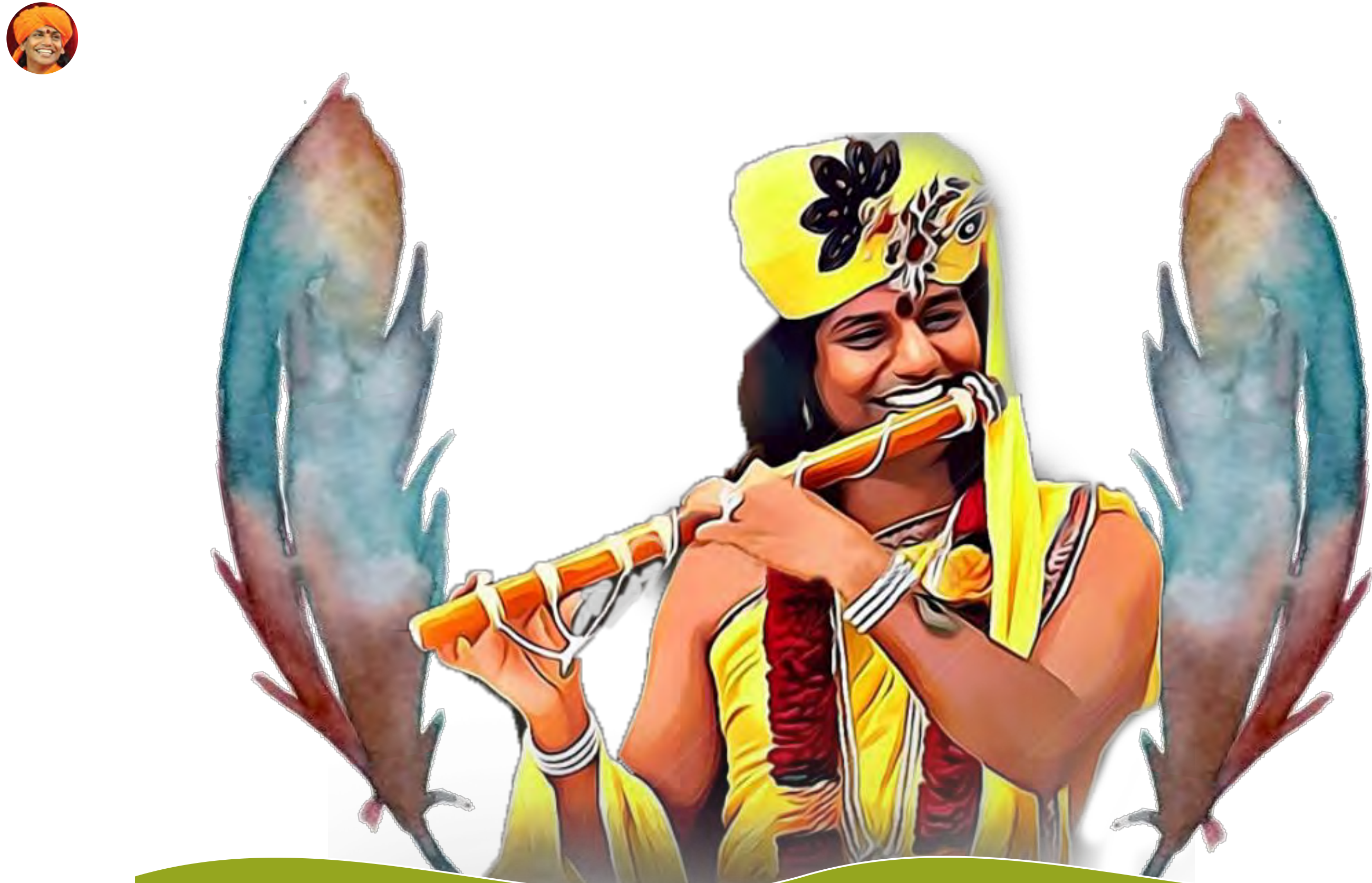
Kṛṣṇa describes kṣetra in many different ways. These are some ways: ➤ the material things around us ➤ the body-mind ➤ the illusory world created by our minds ➤ the field (symbolized by the battlefield of Kurukṣetra)
Kṣetrajña is also described in several ways: ➤ the Self the charioteer ➤ the knower of the field ➤ the one who runs the show
- Encourage the children to draw how they understand kṣetra and that we are kṣetrajña not kṣetra.
ART OF THE DAY: ILLUSTRATING THE BODY & MIND
INFERENCE:
Kṛṣṇa says that we need to understand kṣetra and kṣetrajña to realize the truth. Until then we blindly believe that the projection of our mind, the drama, is reality. We have created our own drama and are acting in it.
ACTIVITY OF THE DAY
© 2020 Sri Nithyananda Paramashivam. All Rights Reserved
ACTIVITY OF THE DAY:
MATERIALS NEEDED:
- String
- Scissors
PROCEDURE:
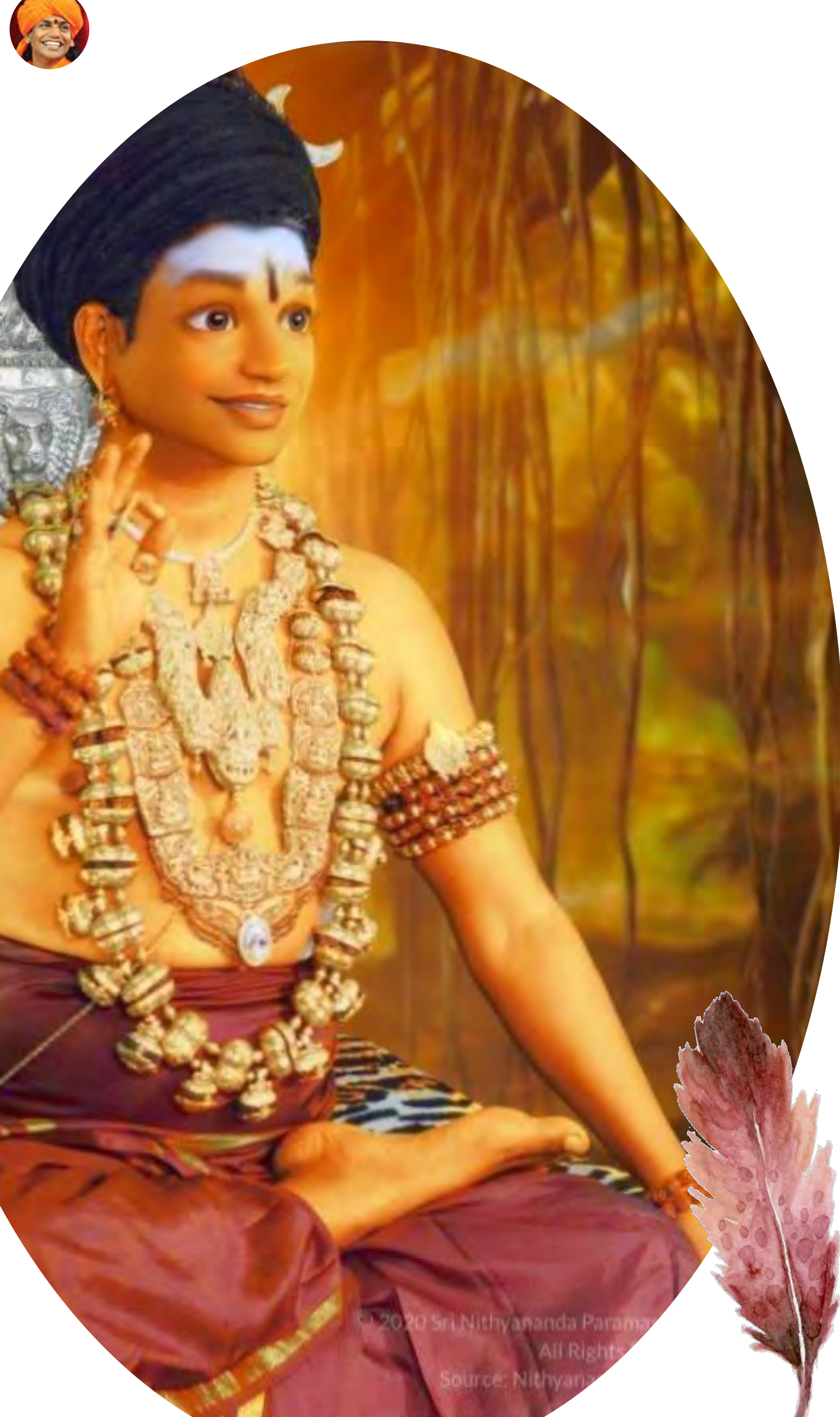
- Have the children reenact how Kṛṣṇa and Arjuna drive onto the battlefield, hold the Bhagavad Gita then drive off again.
- Many of the children can be the horses. Have them stand in front of the child playing Arjuna, then cut pieces of string long enough that a child who is a horse can hold one end and the child representing Kṛṣṇa holds the other end. Each horse can decide what they symbolize, maybe one of the senses, or the mind, or something from the material world like a car.
© 2020 Sri Nithyananda Paramashivam. All Rights Reserved
ACTIVITY OF THE DAY:
PROCEDURE:
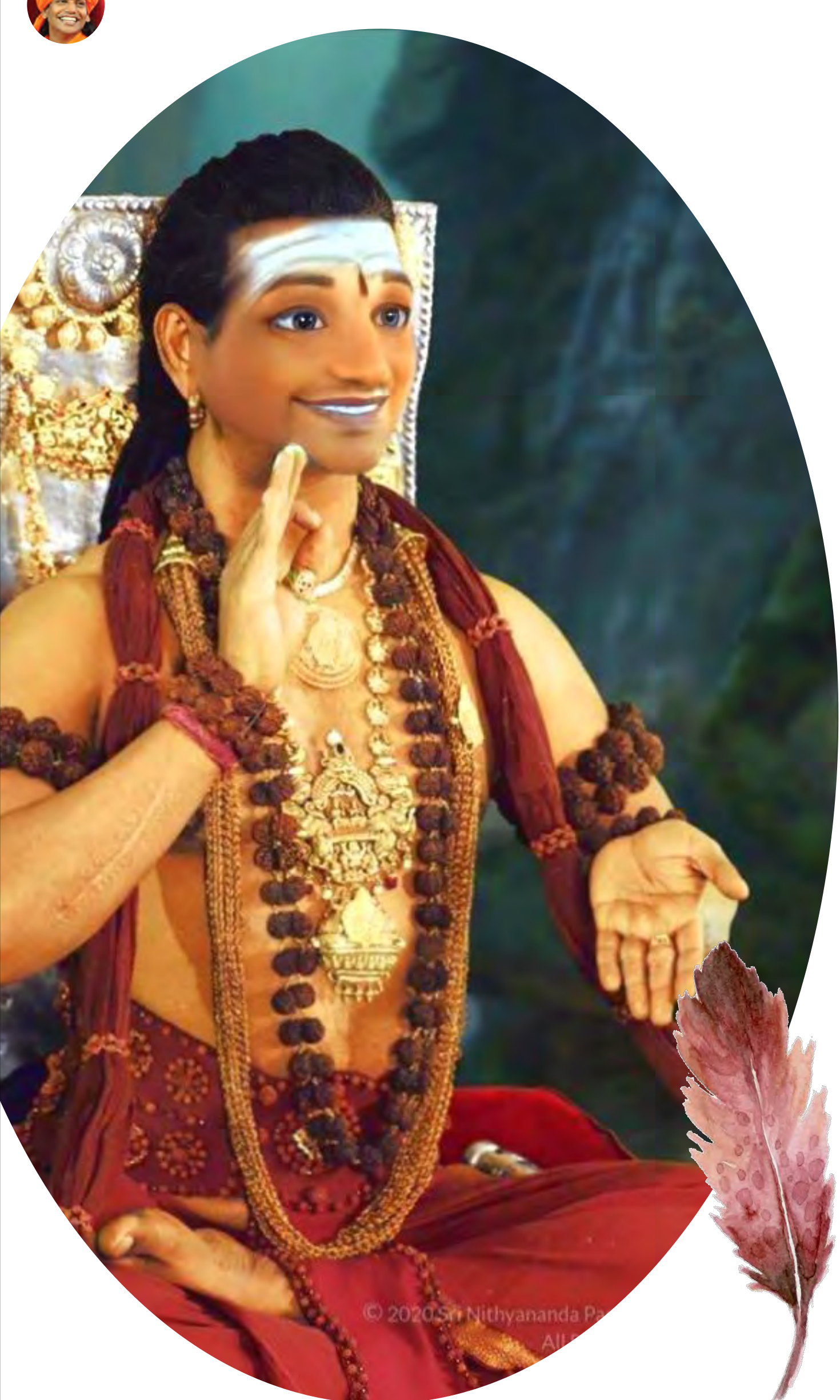
- The “horses” always hold on to their end of the string but are allowed to move freely in any direction until Kṛṣṇa says “I am Kṛṣṇa”. Then all the “horses” must obey Kṛṣṇa completely but for only about 5 seconds. The teacher may need to count out the seconds. After the 5 seconds of obedience is up then they can start moving around freely again. Throughout this activity, the “horses” and Kṛṣṇa keep holding onto their end of the string. Only if all horses are moving forward can the children being Arjuna and Kṛṣṇa move forward.
ACTIVITY OF THE DAY:
PROCEDURE:
- Arjuna walks behind Kṛṣṇa. In the interest of time Kṛṣṇa and Arjuna say only 1 or 2 sloka each when they are in the middle of the battlefield, then Kṛṣṇa gets the horses” to turn the chariot and pull it back to where they came from.
- Repeat the enactment and this time the child who was the most difficult horse to manage has to be Kṛṣṇa.
- To make the reenactment more interesting, Kṛṣṇa can only say “I am Kṛṣṇa” for example 2-3 seconds after the “horses” are allowed to move freely. Just like how it can take us a few moments to realise we are kṣetrajña.
© 2020 Sri Nithyananda Paramashivam. All Rights Reserved
ACTIVITY OF THE DAY:
INFERENCE:
Kṛṣṇa delivers this discourse of the Bhagavad Gītā to Arjuna standing in a chariot on the battlefield of kurukṣetra. If you look a little deeper, this is a beautiful picture of each of us. Kṛṣṇa represents the Self, the charioteer, knower of the field, kṣetrajña, the one who runs the show. If the charioteer does not know how to take charge, the horses start to pull the chariot in different directions.
© 2020 Sri Nithyananda Paramashivam. All Rights Reserved
WORKSHOP OF THE DAY
© 2020 Sri Nithyananda Paramashivam. All Rights Reserved

WORKSHOP OF THE DAY:
VAAKYARTHA SADHAS
Topic Of Discussion:
Hold Kaakyarths Sadhas on “life is a dream”. Stimulate the discussion with questions such as What does it mean to be separate from kṣetra? How does understanding that we are separate help us to wake up?
Conclusion:
The minute we realize this world is not real, we create a distance between the suffering and us. Only an enlightened Master who has experienced the truth can awaken us to reality. Out of their compassion, these masters descend on planet Earth to tell us that everything we see around us is a projection of our minds.


BHAGAVAD GITA BOOK XIII, VOLUME VII
Your Cognition
Is
Transformable
Authored by THE SPH NITHYANANDA PARAMASHIVAM
पुरुषः प्रकृतिस्थो हि भुङ्क्ते प्रकृतिजान्गुणान् ।
कारणं गुणसङ्गोऽस्य सदसद्योनिजन्मसु
॥ १३-२२॥
puruṣaḥ prakṛtistho hi bhuṅkte
prakṛti-jān-guṇān kāraṇaṁ
guṇasaṅgosya sadasadyonijanmasu
The living entity in the material nature follows the way of life, enjoying the moods of nature. Due to association with the material nature it meets the good or evil among various species