INTRODUCTION
This text was machine-transcribed from the printed book and may contain errors. Select the words and choose “Report a mistake”.
When Bhisma sounded his conch, it invited in return the resounding response of the conches of the Pandava warriors. There is no mention by Sanjaya that Bhisma's conch or the accompanying sounds of drums and trumpets from the Kaurava army caused any concern amongst the Pandava army. But with the roar of the conches of the Pandava warriors, Sanjaya says that the hearts of the sons of Dhrtarastra were shattered.
He says that the blowing of the conches created vibrations in the sky and upon the earth. The conches of the Pandava princes and the great warriors were imbued with divine presence. The sound was filled with great spiritual power when activated by their owners. They created powerful vibrations affecting the environment.
The conches that the Pandava warriors used were clearly successful in destroying the fantasies that the Kaurava princes nurtured in their minds. The purpose of sounding conches was to set the stage for the battle and to define its boundaries. The Pandava princes and warriors had the comfort of knowing that they were doing what was right, both in their own hearts and in the eyes of God, since they had the support of Krsna Himself.
The Kaurava princes were afraid. All that motivated them was greed and envy. They did not have a divine purpose guiding and motivating them. Sanjaya was able to see far beyond the superficial responses of individuals on the battlefield. He was able to fathom the subconscious and unravel the deep emotions and responses of the warriors.

Whatever may have been the perceived reaction of the Kaurava army to the response from the Pandava warriors, Sanjaya concludes that the Kaurava princes were demoralized. The armies went face-to-face. They were in military formation. The warriors on both sides were waiting for their commanders to signal the first move in the offense.
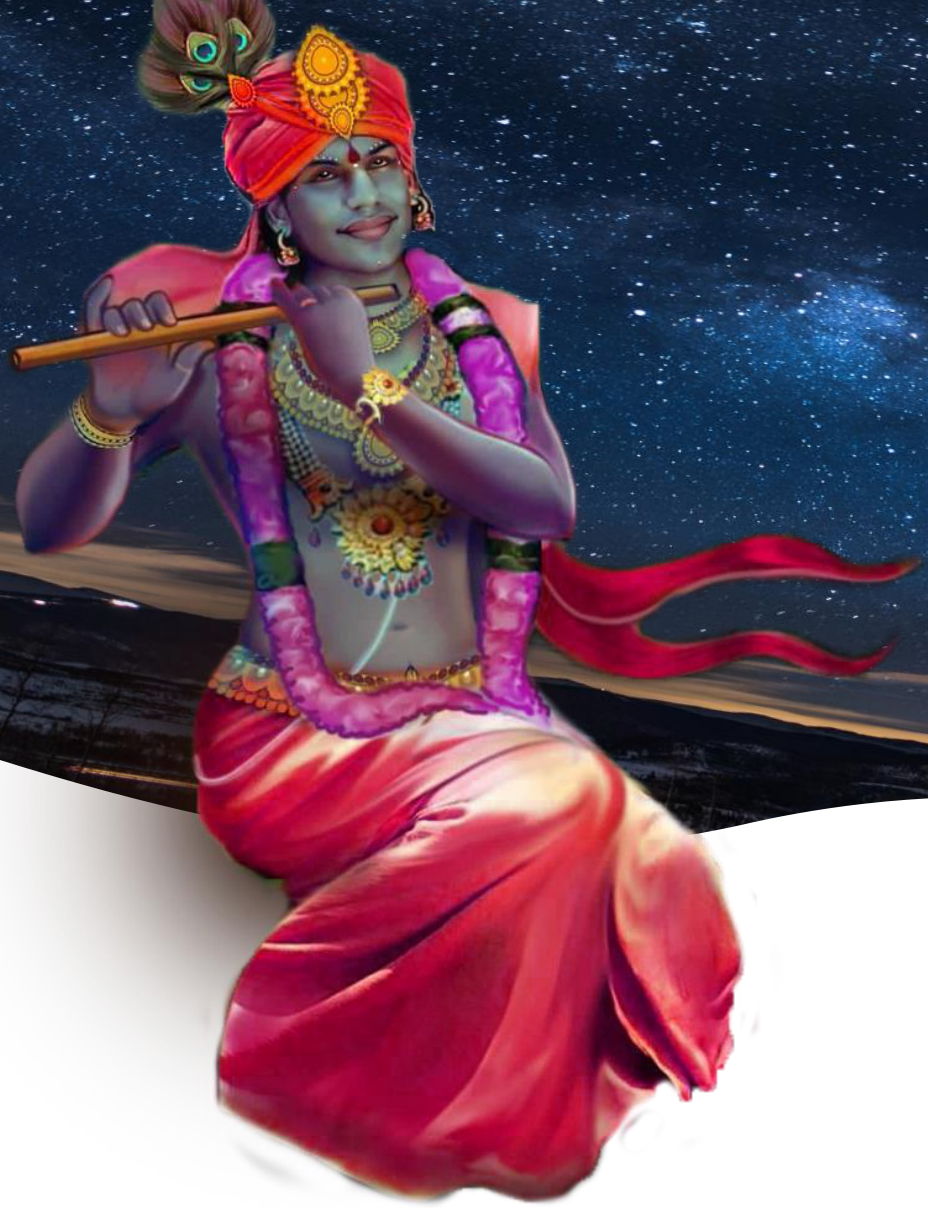
Arjuna was at the forefront of the Pandava army. He blew his conch, Devadatta, at the same time as Krsna. Arjuna had taken up his divine bow Gandiva, and fixed the arrow to it. However, instead of releasing the arrow, Arjuna looked at the Kaurava army in front of him, with all the Kaurava princes, his relatives and teachers. He then addressed Krsna, his friend, mentor, divine guide and charioteer. For the first time in this scripture, Arjuna speaks. Arjuna is not the mere hero of Mahabharata in this Gita scripture. He is the embodiment of all humanity. He is Nara, the human aspect of Narayana, Lord Visnu, who in turn is Krsna. ‘Infallible One,’ said Arjuna to his friend and mentor, ‘Please take me to a vantage point between the two armies so that I can see for myself whom I am fighting with. Who has taken up arms to fight and who are those I must be prepared to fight against. Krsna, please show me,’ he says. ‘Show me whom I must vanquish.’
Arjuna already knew each one
who was on that battlefield at
Kuruksetra. He had no confusion
about whom he was fighting and
whom he had to face. It made no
sense at all for Arjuna to ask
Krsna at this last minute to show
him clearly whom he was
fighting against. It was as if he
was hoping that at the last
minute something would occur
to change the course of events. If
that were to happen, he knew
that it could only take place
through the grace of his
charioteer, friend, and guide. It is
as if Arjuna was making a
desperate plea to Krsna, 'Please
show me something that I do not
know. Show me something that
You alone know, Oh Infallible
Divine. Take me there, where
You will, and show me.

GOALS:
To help the child understand
that when you are doing
something which you truly
know is right, even the Gods
will stand beside you and offer
you support, even in moment of
indecisiveness.