INTRODUCTION
This text was machine-transcribed from the printed book and may contain errors. Select the words and choose “Report a mistake”.
Completing Self-doubt in any field is Education. In the next few verses, Kṛṣṇa says that there is no happiness for those who always have self-doubts and who have no knowledge and authenticity. He uses the word 'always.' He does not say that from the beginning itself you should not have any doubts. Having doubts is natural; as long as you have the mind, you will have doubts. But you can go beyond it by completing with your self-doubts. Kṛṣṇa warns, 'The one without the wisdom and without authenticity, who always has doubts, is destroyed.
When you convince others with your strong outer image, and your inner image starts questioning you; your inner image questioning you is self-doubt. That is where the self-doubt starts. In any field if you carry self- doubt, you will continue to be powerless. In any field if you complete with your self-doubt, you are educated.
If you complete with self-doubt in any field, suddenly that non-mechanical part of the brain will immediately be awakened. A deep passive waiting without knowing what is going to happen is passive surrender. Just allow the Master to do the surgery and give you back your true Self, and automatically you will drop what you are not.
STAGES OF
MASTER-DISCIPLE RELASHIONSHIP
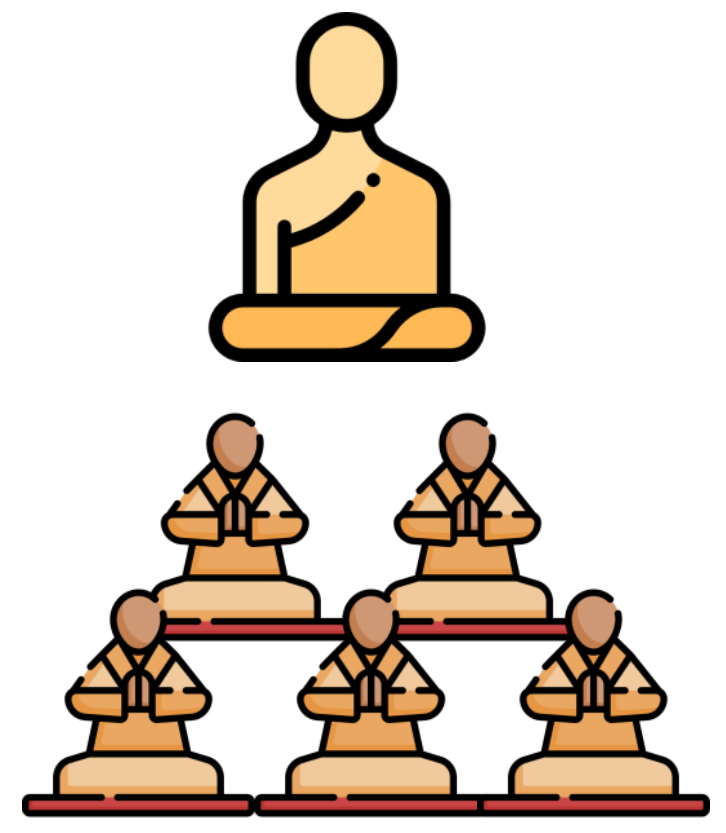
Kṛṣṇa refers to the stages in the Master-disciple relationship. The first level is purely intellectual, doubt-based. ‘Doubt-based’ refers to the negative self-doubts, which are purely intellectual.
The next step is intelligence; from intellect to intelligence. Then, if you continue to start looking in, first from intellect to intelligence, then from intelligence to intelligence with emotion, like 60% intelligence, 40% emotion, that is the time you will feel like a friend

Towards the Master. After that, it becomes 60% emotion and 40% intelligence. That is the time you will feel like the Master is like an elder, like a father or mother or lord or teacher. You feel respectful towards him. And then, the relationship becomes pure emotion. You will feel a deep connection like a mother and son.
Then, after that, it is neither emotion nor intellect nor intelligence. It is a being-level relationship. It is the deep connection of a beloved, the madhura bhāva. And suddenly, you will see, he is not even the beloved, he is beyond the beloved. You start experiencing the mahā bhāva, what is called the Guru-disciple experience, experiencing yourself as the Master. That is what is called —‘Tat Tvam Asi.’
Tat Tvam Asi means That art thou. It means you are the Master.

GOALS:
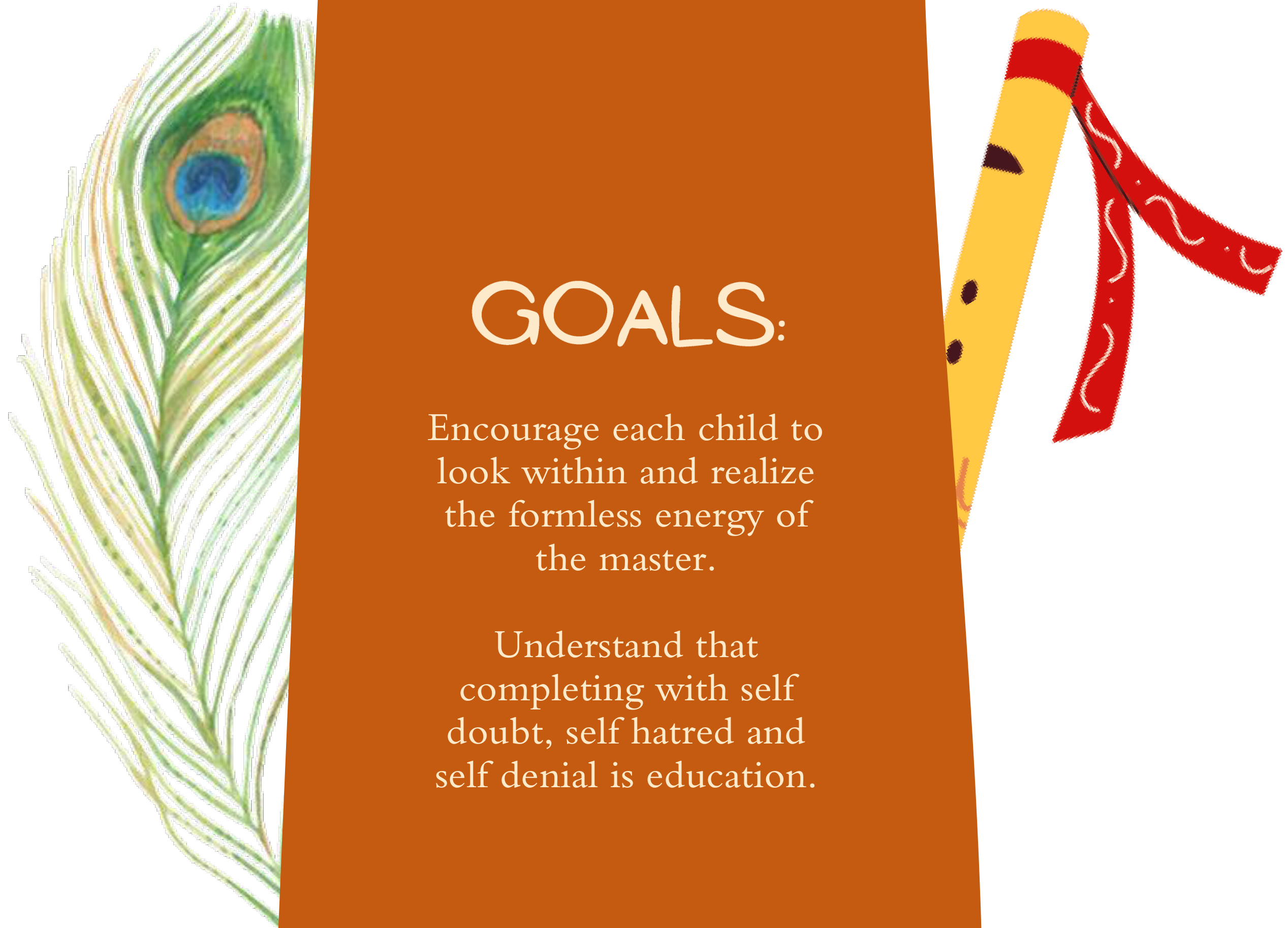
Encourage each child to
look within and realize
the formless energy of
the master.
Understand that
completing with self
doubt, self hatred and
self denial is education.