DAY : 5
This text was machine-transcribed from the printed book and may contain errors. Select the words and choose “Report a mistake”.
Topic: Talk about oceans, rivers, glaciers and lakes
Vocabulary: glacier, reservoir, irrigation
Material required: pictures and books
Presentation: ● A lake is an inland body of water surrounded by land ● Lakes are natural reservoirs of water. They are important to us because they are a source of drinking water, irrigation, transporting goods etc ● Oceans are large, salt water bodies. The very large and deep areas of water are called oceans. The smaller areas of water are called seas ● All the oceans of the world are connected to each other. The pacific, Atlantic, Indian, Arctic and Southern oceans form the major oceans ● Rivers are large bodies of fresh water that flow through land. Rivers mostly originated from a mountain or hill and fall into a sea ● A river can originate from a spring, a melting snowfield or a lake. They receive water continuously from different sources like streams, rainfall or other river ● Amazon river is the largest river in the world and the Nile is the longest river in the world ● Glaciers are large, slow moving rivers of ice and snow. They are formed in the high mountain valleys and in polar regions, where the snow falls but never melts
Assessment: ● Which is the natural reservoir of water? ● What is a lake? ● In what ways lakes are important? ● What are oceans? ● Name the important oceans ● What are rivers? ● From where do the rivers receive water? ● Which is the largest and longest river in the world? ● What are glaciers? ● Where do the glaciers formed?
Closing: To make them understand the different types of water forms
Evaluation: ● Receptive and language expressive skills ● Auditory skills ● Cognitive skills
DAY 1: ART
PAPER MACHE PAINTING Material required: Uncolored art sheet, newspaper, different poster colors. Procedure: Children are asked to Mache the paper and then dip the Mache paper in to the different poster colors and print it on the given art sheet using it. They can observe the impression on the paper. Skills developed: Develop their fine motor skills, cognitive skills of understanding cause and effect
PENCIL SHADING Material required: Pencil and pictures related to the theme/ plain paper. Procedure: Give each child a pencil and picture related to the theme for shading. They can shade inside the picture using pencil or draw a picture on a plain paper and shade it using pencil. Skills developed: Tripod grasp, eye hand coordination, pre writing skills.
DAY 1: ACTIVITY
MAKING HILL USING SEMOLINA Goals: To improve fine motor skills, eye hand coordination, sensory skills, creativity. Vocabulary: Hill, slope Material required: Semolina, Water, Plates, food color. Introduction and Presentation: Get all the materials ready and have each child sit at a table. Explain about Hill Explain that we are going to make a hill. Give each child a plate and pour half or quarter cup of semolina on each plate. Demonstrate how to make a hill with hands and fingers, making a hill like shape with the semolina and a bit of water. If required add color to the rava. Assessment: • What happens when you mix rava and water? • What is the change in the texture after mixing rava with water? • When color is mixed to rava what happens? • What is hill? • How does the hill look like? • Name some hilly area. Closing: Ask them to make mountain with semolina and water. Skills developed : Tactile skills, sensory skills, eye hand coordination,
MIXING COLOR TO SEMOLINA Goals: To improve their fine motor, cognitive skills of exploring cause and effect, sensory skills. Vocabulary: Color names, Change, Texture, semolina, Wet/ dry, Grainy Material required: Semolina, Food color, Plates, Water Preparation: Have all the materials ready for the activity. Give each child a plate and make them sit at the table. Presentation: Put a small amount of semolina on each plate. Ask them to feel it. Add a small amount of powdered food coloring and ask them to mix. Add a bit of water and tell them to mix it with their fingers observing the color change, and feeling the texture. Assessment: • What happened when we added the food color to semolina? • What is the color of semolina? • Did the texture change when we add water? Evaluation: Evaluate their ability to mix semolina with water and food color. Skills developed: Fine motor skills, language expressive skills, and sensory awareness. Variation: Add essence, sand, rocks, pine cone, paper and other material to see what happens and feel the texture and smell.
DAY 1: GYM
BALANCING CONE
Goal: To improve their balance.
Presentation: Give the child a cone and ask the child to keep the cone on the head. Ask the child not to hold the cone with their hand. Ask the child to hold their hands behind and walk a distance. Observe how well they can balance the cone on the head.
Skills Developed: This game helps in developing their co-ordination, balancing skills, their ability to sustain attention.
BOWLING
Goal: To develop their fine motor skills, gross motor skills, eye hand coordination, focusing on an object.
Presentation: Plastic bottles can be filled with different colored water and arranged in row, one after the other or in a particular pattern. Children are asked to come one by one and roll a ball and bowl the bottle. Whoever bowls more bottles will be applauded.
Skills developed: Eye hand coordination, Fine motor skills, focusing on an object, Gross motor skills.
DAY 2: ART
MAKING SCENERY
Goals: To develop their creativity, fine motor skills, eye hand coordination.
Material required: Plain sheet, different color poster colors like blue, green, yellow, orange, white, black, brown etc, paint brushes, paint pallet.
Presentation: Children are provided with required material. They can paint a plain sheet with light blue or black on the whole page and let it dry. Once it is dried, use other colors to draw like a mountain using brown, orange, red or yellow for sun or white for moon etc or create their own imaginary pictures.
Skills developed: develops their creativity, fine motor skills, eye hand coordination.
THREAD PAINTING
Material required: Thread of varying length, different poster colors, uncolored art sheet or plain sheet.
Procedure: Children can dip the thread in the paint and keep it on the art sheet and fold the art sheet holding firmly on the table with one hand and pull the thread out after moving the thread in various directions with the other hand.
Skills developed: Develops their fine motor skills of tripod grasp, eye hand coordination, cognitive skills of cause and effect.
DAY 2: ACTIVITY
TYING KNOTS
Activity: To tie simple knot using ropes
Goal: To improve their fine motor skill and eye hand coordination
Vocabulary: Knot, rope, loop
Material required: Rope
Introduction and presentation: Present the activity by placing the rope on the ground. Take one end of the rope and place it on the other side like a loop. Then show how to insert one end of rope under the loop and take it out. Then pull both the ends forming a simple knot. Assessment: • What material do you use to tie a knot? • Why do we tie knot?
Closing: Make them to tie a knot and ask them to show how to tie knot.
Evaluation: Evaluate each child's ability to tie knot, their coordination involved in tying and their language skills.
DISPLACEMENT ACTIVITY
Activity: To show them the same quantity of materials in different containers.
Goals: To improve their cognitive skills of comparing, measuring, sustaining attention, language skills.
Vocabulary: Quantity, displacement, more, less, equal
Material required: Rice/ flour, different shape and size bowl or glass.
Introduction and presentation: To present the activity keep the materials ready. Take a bowl of rice and show them the quantity, then take the same quantity of rice and pour it in a glass. Show them the rice kept in different vessels and ask the child which is more/ less/ or whether it is equal.
Assessment: • What happens when same quantity of rice is kept in two different size vessels. • Will there be any change in the quantity.
Closing: Make the children to do the activity. Explain them that the quantity is same only the size of the vessel differs and it takes the shape of the container.
Evaluation: Evaluate each child whether they understood the displacement of the same quantity of rice. Evaluate their cognitive skills of comparing and measuring, language skills.
Variation: To do the activity we can use water, flour, rava etc.
DAY 2: GYM
BLIND FOLD GAME
Goal: To stimulate their balance, social skills, emotional skills of showing trust, spatial awareness skills.
Presentation: One child's eyes have to be closed and that child has to keep his/ her body loose. Another child will hold that child's shoulder and drive or move him/ her in different direction. The child whose eyes have been covered has to move flexibly as the driver moves him or her.
Skills developed: Spatial awareness skills. Social/ emotional skills of trusting others. Balancing.
SIDE WALL ROLLING
Goals: To improve their spatial awareness and gross motor skills.
Presentation: Children are asked to roll on the safety mat forward and backward. They can also do rolling sideways on the wall. Children can do rolling towards right or left listening to the instructions alternatively.
Skills developed: Develops their spatial awareness, gross motor skills and listening skills.
DAY 3: ART
BUBBLE WRAPS PRINTING
Material required: Uncolored art sheet, bubble wrap paper, different poster colors.
Procedure: Children are asked to dip the bubble wrap in the different poster colors and print it on the given art sheet. They can observe the impression on the paper.
Skills developed: Develop their fine motor skills, cognitive skills of understanding cause and effect.
MAKING A MODEL OF PLAINS
Material required: Chart paper, scissors, color paper (green), brown, and glue
Preparation: Take a chart paper and cut it in square shape. Cut the brown color paper in to small bits. Cut the green color paper in to thin long stripes.
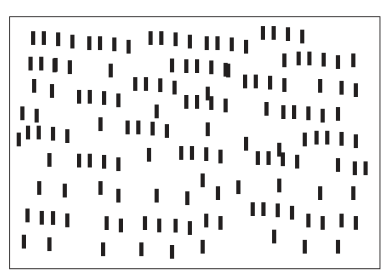
Procedure: Step:1 Take the square chart paper and apply glue on it.
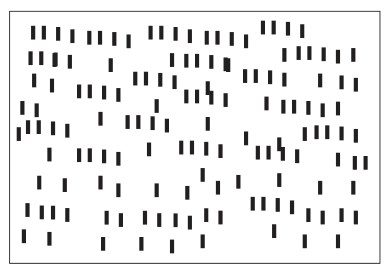
Step:2: Take the brown color paper bits and sprinkle all over the chart paper in the glue.
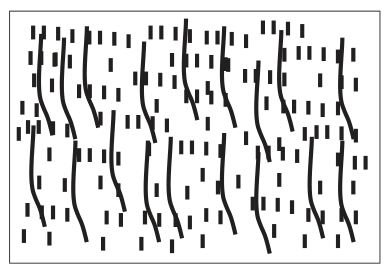
Step:3: Take the thin long strips of green paper, apply glue over the brown color bits and stick the long green strips on it
DAY 3: ACTIVITY
TRANSFERRING RICE USING TONGS, LADLES, SPOONS
Goals: To improve their pre math skill of measuring and comparing, fine motor skills, cognitive skills, eye hand coordination Vocabulary: Ladle, Measure, Tongs, Compare, Transfer, Quantity Material required: Grains, Tongs, Ladles, Bowls Presentation: Place the grains, tongs, ladles, and bowls on the table Transfer the grains from one bowl to another using tongs. Measure the quantity of the grains being transferred. Transfer the grains from one bowl to other using ladles, measure the quantity and compare the quantity of grains of 2 bowls. Assessment: • How much grain can you transfer using tong, more or less? • How much grain can you transfer using ladle more or less? • Why only less grain comes when you use tong for transferring and why more grain comes when you use ladle? Skills developed: Pre-math skills, Estimation, Predicting, Comparing, Fine motor skills, Eye hand coordination Conclusion: By this activity we can improve their fine motor skills and whole hand grasp.
WATCHING VOLCANO
Activities: Making a volcano with vinegar, baking soda and soap solution. Goals: To improve their cognitive skills of observing, thinking, understanding cause and effect. Content: Vocabulary: volcano, vinegar, lather, baking soda, pungent smell, pit, soap solution Material required: Disposable cups, Baking soda, Vinegar, Soap solution, Red food color Presentation: Place one cup with baking soda and one cup with soap solution. Mark them as A and B. Add Vinegar and Add Red food color to both the cups. Observe the lather formation. Lather formation with be more in the cup a with soap solution. Assessment: • What is a volcano? • How does vinegar smell? • What color will volcano be in? • Why does it fume when we add baking soda and vinegar together? Evaluation: To evaluate child's ability to do the activity and their understanding of cause and effect. Skills developed: Cause and effect Language skills Conclusion: To make them understand what happens when we mix base and acid together.
DAY 3: GYM
GENERAL EXERCISE
COLOR, COLOR GAME
Goal: To develop their cognitive skills of learning colors and their gross motor skills, social skills.
Presentation: One child who volunteers to be catcher will be made to tie or close their eyes. And the catchers will be asked "color, color, what color do you choose". The catcher will name a color. All others should find and touch that color will be the catcher.
Skills developed: Gross motor skills, Cognitive skills, Social skills.
DAY 4: ART
SKETCH PEN BLOW PAINTING
Material required: Sketch pen of different colors, sketch pen blower, uncolored art sheet.
Procedure: Each child is given a sketch pen fixed with a blower and they are asked to blow keeping it directly just above the art sheet which has to be colored. Children can observe the paint spreading on the paper while they blow.
Skills developed: Oral-motor skills, cognitive skills of understanding cause and effect.
STICKING COTTON
Material required: Cotton, plain sheet, glue.
Procedure: Give cotton for each child and they can peel the cotton in to small pieces. Draw the outline of a picture (according to the theme) on the plain sheet, apply glue on the picture and they can stick the cotton on it.
Skills developed: Develops their fine motor skills, eye hand coordination.
DAY 4: ACTIVITY
FILLING CUP USING EYE-DROPPER
Goals: To develop their whole hand grasp, fine motor, cognitive skills of exploring cause and effect.
Vocabulary: Eye dropper, empty, full, half, water, cup.
Material required: Cup, Eye dropper, water
Presentation: Invite the children to the activity. Show them how to hold and press eye dropper in the water and then release it and show and explain them how the water went inside the eye dropper and then press the eye dropper in to the empty cup to fill it with water. Encourage them to do the same until to fill the cup with water.
Assessment: What happens when we press the eye dropper in to the water? What happens when we release the eye dropper in to the cup? What is the color of water? What is the opposite of full?
Skills Developed: Develops their whole hand grasp, fine motor skills, cognitive skills of exploring cause and effect.
POURING WATER FROM CUP TO ANOTHER
Goals: To help them to impart development of fine motor skills and eye hand coordination.
Vocabulary - Pouring, transferring, bowl, liquid, full, half, empty, quarter, more, less.
Material required: Cups, measuring cups, water.
Presentation: Children can transfer or pour water from one container to another and they can learn which is; more, less, full, empty, half, full, quarter. Ask them which is full, half, empty etc.
Assessment: • Can we lift a bowl with one finger? • Is it possible to carry water in hand without spilling? • Can we pick water if it spills? • Which is more, half cup or full cup? • Can we fill an empty cup and make it full? • What is the shape of water? • What is the color of water?
Evaluation: Evaluate how each kid is transferring with or without spilling, record the results for further analysis. Evaluate the terms they learnt.
Skills developed: Develop their whole hand grasp, concept of displacement, Develops fine motor skills.
DAY 4: GYM
SIMON SAYS
Goal: To develop their auditory skills, observing skills, following oral instructions and receptive language skills; gross motor skills.
Presentation: Children are given oral instruction like "Simon says to do flying action". They have to listen carefully and follow the action. Instruction can be anything to stimulate children's interest.
Skills developed: Auditory skills, Receptive language skills, Gross motor skills.
BALL GATHERING
Goal: To develop their eye hand coordination, coordination in changing from one position to another.
Presentation: Draw two circles or keep two hoops away from each other. Place more balls in one circle and keep the other circle empty.
Each child has to gather the balls fast from one circle to another (carrying only one ball at a time) within a given time.
Skills developed: Eye hand coordination. Gross motor skills. Fine motor skills. Persistence in accomplishing a task. Pre math skills of estimating. Coordination involved in changing from one position to another.
Variation: They can play gathering game with balloons, stuff animal toys, vegetables depending upon the
DAY 5: ART
MAKING SCRAP BOOK
Goals: To develop their eye hand coordination, fine motor skills, logical thinking skills.
Material required: Any materials, pictures related to the theme can be chosen, a small book with plain sheet has to be made, glue, crayons.
Introduction and presentation: Children are given one book each and they can be explained about theme and they can stick the pictures or materials or children can draw related to the theme in their book.
Skills developed: Develops their eye hand coordination, fine motor skills, logical thinking skills.
SPONGE PRINTING
Material required: Uncolored art sheet, paints of various colors, sponge cut in to various shapes.
Procedure: The children are asked to dip the sponge in the paint and do the sponge printing on the given picture. They can do printing with various shape or size or design sponges dipped in different colors. Encourage the children to do the printing only inside the picture.
Skills developed: fine motor skills, sensory skills, cognitive skills of knowledge of various colors and cause and effect.
DAY 5: ACTIVITY
ICE PLAY
Activity: To add color to ice cubes.
Goals: To improve their knowledge of cause and effect, sensory awareness.
Vocabulary: Colors, Cold, Wet, Frozen / Melt, Salt.
Material required: Ice cubes, Food coloring (different colors), Salt (a bit), Plates, Eye droppers
Presentation: Take the food color and add a little water to make a concentrated color.
Ask the children to sit and give each a plate and an ice cube. Have the salt and food color ready. Ask them to feel the ice cubes; can they describe whether it is hot or cold? Each can take a pinch of salt and sprinkle it on to their ice cube and observe it melting making pores in to the ice. Explain how salt creates a melting action in the ice and makes little holes inside. Give each child an eye dropper and demonstrate how it is used to fill with the liquid when it is pressed. They then add a couple of drops of color to their ice cubes and observe how the colors go inside the ice cube transforming the color of the ice cube. They can also add two different colors combined to make a new color (example: red + blue = purple, yellow + blue = green).
Assessment: • What happens when salt is added? • What change occurs when color is added to the ice cube? • What color is the ice cube now? • How does the ice cube change its color? • What happens when red and blue is mixed?
Variation: Add small plastic toys to be frozen. If a small thread is placed on the ice cube it will stick to it and the kids can lift the ice cube.
Evaluation: To evaluate the following skills
Skills developed: Cognitive skills of cause and effect, Logical thinking skills, Sensory development, Color combinations, Visual discrimination.
Conclusion: This activity helps the kids to understand the concepts of water freezing to make ice, and develops their sensory awareness.
SALTY STUFF
Activity: Hanging ice cube with a thread.
Goals: To help them to understand the concept of freezing point of water and salt lowers the freezing point of ice cube and melts it. The cold water re freezes the ice cube.
Vocabulary: Freezing point, melt, re freezes, trap, and plop- slowly drop.
Material required: Ice cube, glass of cold water, sewing thread, and salt.
Introduction and Presentation: Gently plop ice cube in to the glass of water, carefully place one end of the thread across the top of the floating cube. Where the thread touches the ice, sprinkle salt over it with a spoon. Wait for about 30 seconds and carefully lift the string. The ice cube will also come along with the thread.
Observation: Observe the changes occurring after adding salt to the ice cube which is in the cold water.
Reason: Salt lowers the freezing point of water, it melts thrice a little. Then thread sinks in to the little pool of water which re freezes, trapping the thread.
Assessment: • Why does ice melt? • What happened to thread? • How did ice cube get stuck to the thread? • Why did it refreeze?
Skills developed: Visual skills, Cause and effect, Logical thinking, Language skills of receptive and expressive.
Conclusion: Conclude by giving explanation of freezing point and melting point.
DAY 5: GYM
IN THE POND ON THE BANK
Goals: To develop their gross motor skills and balancing skills, auditory skills.
Presentation: Make children stand in a circle and place hoola hoop in the middle or draw a circle and make them stand around the circle. When we say in the pond all have to jump inside the circle and when we say on the pond all have to jump outside the circle.
Skills developed: develops their gross motor skills, balancing skills, auditory skills.
I SEND A LETTER
Goal: To stimulate their alertness, auditory skills, gross motor skills, social skill of participating in group play.
Presentation: Children are asked to sit in a circle. One person will have an object and will be walking around the circle for the song. When he/she hears drop it they can drop the object to one of them in the circle. The person who has the object should run and catch the person who dropped the object to him/her. The runner can sit in catchers place. The catcher now can pass the object to another person. Like that each one in the circle will get turn to be the catcher at the end of the game.
Skills developed: This game improves their alertness, auditory skills, gross motor skills, social skill of participating in group play.
Song:
I sent a letter, to my father
On the way, I dropped it.
Post man came and, picked it up
And put it, in his pocket.