DAY : 5
This text was machine-transcribed from the printed book and may contain errors. Select the words and choose “Report a mistake”.
Topic: Welcome the children to the topic of beach castle.
Vocabulary: Beach, sand, beach castle, temporary, stable, unstable, waves, water, huge, small, giant, sand statue.
Material required: Sand, water, pictures of beach castle.
Presentation: ● Talk to the children about the process of making beach castle. ● Discuss about how the sand castle is unstable- once the waves reach the shore it washes away the sand castle. ● Talk about that we need wet sand to make beach castle efficiently. ● We can make castle, other simple statues or models also with wet sand. ● Beach castle is only a temporary structure. ● We must not get upset if the beach castle gets washed away. We can built an another one.
Assessment: ● What are the materials we need for building a sand castle? ● Is sand castle a stable structure? ● What happens to the beach castle when the waves reach it? ● Can you built a beach castle without sand? ● Have you ever built a beach castle? ● What is the color of the sand?
Closing: Recall the details and discuss about the children experiences of building a beach castle.
Evaluation: Evaluate their texture skills, fine motor skills, involved in building a sand castle. Cause and effect relationship of why sand castle is not stable.
Extension: Children can have a cooperative play and build a huge sand caste in the outdoor gym and decorate it.
DAY 1: ART
SMELL PAINTING
Material required: Coffee powder or vinegar or different essence e.g. vanilla, different aromatic substance, poster colors, uncolored picture, paint brush.
Procedure: Children are asked to paint the picture with the poster colors mixed with coffee powder or vanilla essence etc. encourage the children to paint inside the picture. After the paint dries they can smell the picture and identify the smell. Children can paint with brush or fingers.
MAGIC COLORING
Material required: Paper, water, different poster colors
Procedure: Children are asked to wet the paper and paint the paper with different poster colors with brush. Children can observe the paint spreading because of the water in the paper.
Skills developed: Develops their fine motor skills, cognitive skills of understanding cause and effect.
DAY 1: ACTIVITY
BEACH CASTLE WITH RAVA
Goals: To improve fine motor skills, eye hand coordination, sensory skills, creativity.
Vocabulary: Ants- insects, hill
Material required: Rava, Water, Plates, Food color (optional).
Introduction and Presentation: Get all the materials ready and have each child sit at a table. Explain that we are going to make a, a beach castle with rava. Give each child a plate and pour half or quarter cup of rava on each plate. Demonstrate how to make a beach castle of rava with your hands and fingers, making a castle like shape with the rava and a bit of water. If required add color to the rava.
Assessment: • What happens when you mix rava and water? • How do you feel after mixing rava with water? • When color is mixed to rava what happens? • What is beach castle? • How does the beach castle look like?
Closing: Ask them to make a beach castel with rava and water. Explain about the team effort in building a beach castel.
Skills developed: Tactile skills, sensory skills, eye hand coordination,
Variation: They can even use flour, sand. Add vinegar or vanilla to the rava. Add some small rocks to the rave making it a bit difficult to build smoothly.
SPINNING TOPS
Goals:To improve their fine motor skills, tripod grasp, eye-hand coordination and to expand their vocabulary by asking open ended questions.
Vocabulary: Spin, rotate, top, round, action, stop, irregular, surface.
Material required: Tops
Presentation: Present to the kids how to hold and spin the top. Show them the tripod grasp (three fingers grasp). Show them to spin the top by using both the hands. Spin by using right hand, spin-by using the left hand. Ask them to observe the spinning movement.
Assessment: • What is the color of the top? • What is the shape of the top? • Why the top is not flat at the bottom? • Can we spin the top on and irregular surface? • Why does a top spin?
Skills developed: Fine motor skill, Eye-hand coordination, Language skills, Cause and effect
Conclusion: Ask the kids to observe the spinning movement, and work on using their grasp correctly.
Variation: Spin the beads, balls.
DAY 1: GYM
MUSICAL CHAIR
Presentation: Arrange chairs in two rows back to back or in a circle. Use one less chair than the number of children playing the game e.g. if 8 children then place 7 chairs. Start some music and have the children run around the chairs. When you stop the music, the children quickly find a chair and sit down. The child left without a chair is out. Continue the game, removing one chair each round, until there are two children and one chair left. The child who gets the last chair wins.
Skills developed: Auditory skills, gross motor skills
FLOOR SWIMMING
Goal: To stimulate their gross motor skills.
Presentation: Children are asked to lie down on the floor on their tummy. Ask the children to move their hands and legs faster simultaneously and ask them to pretend like swimming.
Skills Developed: This activity develops their gross motor skills.
DAY 2: ART
WATER BOTTLE CRAFT
Material required: Use and throw cups (21), plain papers, cello tape, paints.
Procedure:
Step: 1:- As the size of 2 cups, roll the plain paper in to cylindrical shape and stick it with the glue.
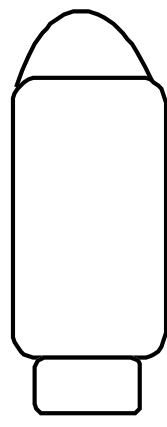
Step: 2:- Take the cups and put inside two ends of cylindrical shape and stick it with cello tape. (open part of the cup should go inside paper) and color.
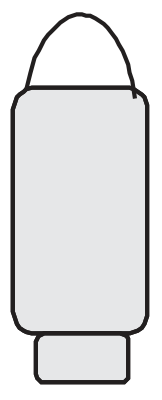
Step: 3:- Take a long stripe of paper and stick on each side
Preparation: Take cups and cut out the hard part of mouth color the plain paper with blue (light blue).
Variation: Instead of paper for the handle you can use thread of thin ribbon.
COLLAGE WITH GLASS PAPER
Goals: To develop their fine motor skills, pincer grasp, eye hand coordination, spatial awareness, and tactile skills.
Material required: Glue, uncolored art sheet, different color glass paper.
Procedure: Keep the required materials ready before starting an activity. Explain to the children about the art sheet. Encourage them to apply glue inside the picture and ask them to pick the cutouts of glass paper and stick on the glue inside the picture.
Skills developed: Fine motor skills, pincer grasp, eye hand coordination, spatial awareness, tactile skills.
DAY 2: ACTIVITY
SCRUB THE TABLE
Goal: To improve their whole hand movement, fine motor, self help skills, pre math skills of grouping. Vocabulary: Scrubber, dust pan, broom brush, table Material required: Toy broom, dust pan, bits of paper, scrubber. Presentation: Drop bits of paper on the table and scrub it using toy dustpan and brush or scrubber. Closing: Ask them to try the same. Evaluation: Evaluate their self help skills and fine motor and whole hand movement and record the observation. Skills Developed: Gross motor skills, Fine motor skills, Sensorial, problem solving and language skills.
SQUEEZE SPONGE
Goals: To improve their intrinsic hand muscle power, their fine motor skills to develop their texture sense. Vocabulary: Squeezing, crushing, sponge, hard, soft, powdery, sticky Material required: Sponge, water. Presentation: Keep water tub with water and sponge before starting an activity. Make all the children to sit near the table and show them how to soak sponge in the water and squeeze it. Tell them what happens when sponge soaks in water. Tell them how sponge absorbs water and while squeezing how water goes out. Encourage them to do the same activity. Assessment: • Can we squeeze a hard material? • What happens when we keep sponge in water? • What happens when we squeeze a sponge soaked in water? • What goes out when we squeeze a sponge? Skills developed: Fine motor skills, cognitive skills of cause and effect.
DAY 2: GYM
BEACH BALL
Goal: To develop their social skills, eye hand coordination, auditory skills. Presentation: Children will sit in a circle form and they pass the ball to each other and when the music stops whoever has the ball has to get up and do the action, or sing rhymes and then again they pass the ball and other child will get turn.. Skills developed: Auditory skills, Eye hand coordination, Concentration, Social skills Variation: They can pass different items according to the theme.
HIDE AND SEEK IN SAND
Explanation of the game: In this game of hide and seek, one child counts to a certain number while all the other children hide. At the end of the count, the child who counts gives a warning by saying, "Ready or not, here I come" and then seeks out the hiders. Skills developed: Gross motor skills, visual skills, spatial awareness, pre math skills of counting, auditory skills. Variation: You may hide different objects and make the children to seek it. Hide a musical toy just out of sight and make the children find it.
DAY 3: ART
TEXTURE PAINTING
Goal: To develop their creativity, fine motor skills, tactile skill, cognitive skills of understanding and exploring cause and effect. Material required: Uncolored art sheet related to the theme, sand or rava or salt, poster colors, texture toys (like small tyres etc). Introduction and presentation: Encourage children to sit for the art and present them the ways to do the texture painting. Children can also use texture toys to paint the pictures. They can observe the painting and touch and feel the texture after the paint has dried. Skills developed: Develops their creativity, fine motor skills, tactile skills, cognitive skills of understanding cause and effect.
MINI BOOK
Goals: To develop their eye hand coordination, fine motor skills, logical thinking skills. Material required: Any materials, pictures related to the theme can be chosen, a small book with plain sheet has to be made, glue, crayons. Introduction and presentation: Give each child a book, explain the theme and ask them to stick the pictures or materials in the book, they can also draw pictures related to the theme in their book. Skills developed: Develops their eye hand coordination, fine motor skills, logical thinking skills.
DAY 3: ACTIVITY
FOLDING TOWEL
Goals: To develop their fine motor skills. pincer grasp and eye hand coordination. Vocabulary: Fold, towel. Material required: Towel Introduction and Presentation: Ask them to fold the towel first one fold and then repeat it multiple times. Children can now unfold the towel. They can also fold the towel in multiple ways and models by seeing a model. Assessment: • Is it easy to fold the towel? • Is towel hard or soft? • What are the uses of towel? • What is the texture of towel? Evaluation: Evaluate the fine motor skills, eye hand coordination. Skills developed: Fine motor skills, Eye hand coordination, Pincer grasp, Pre math skills of estimating, predicting, Cognitive skills of cause and effect.
PACKING PICNIC BAG
Goals: To improve their intrinsic hand muscles, fine motor skills, eye hand coordination, to make them independent in practical life activities and to know about their belongings. Vocabulary: Clothes, shirt, pant, tops, sleeve etc. Material required: collection of their clothes and bag. Introduction and presentation: Encourage children to fold their own clothes towel etc and ask them to arrange it inside the bag. Ask them to zip the back. Assessment: • Which are your favorite clothes? • Why do we pack bag? • What should be kept inside the bag? • Who helps you in packing? Closing: Encourage the effort made by each child and ask them to try as much as they can. Evaluation: They an evaluate each child's fine motor skills, eye hand coordination, note the recording for further observation.
DAY 3: GYM
BEACH DANCE PARTY
Goals: To develop their social skills and physical skills.
Introduction and Presentation: All children can be dressed up with towel tied around them. Music need to be on. They can dance in a circle or they can dance with their partner for the music.
Skills developed: Social skills. Physical skills.
HEEL, TOE RACE
Topic: Walking on the toes and heels.
Goal: to develop their gross motor skills, balancing skills.
Presentation: Ask the children to raise their heel and stand on their toes. They are directed to move on their toes for a distance. They can catch their friend walking on the toes.
Skills developed: Develops their gross motor skills, balancing skills.
Variation: Children can play this game by raising their toes and moving on heel
DAY 4: ART
SHELL PRINTING
Material required: Uncolored art sheet, bubble wrap paper, different poster colors, shells with more crest on it.
Procedure: Children are asked to dip the shell in different color poster colors and make the print on the given sheet. Children can observe the impressions formed on the paper and also the texture of shell.
Skill developed: fine motor skills, texture skills, cognitive skills of understanding cause and effect.
ORIGAMI (PAPER BOAT)
Goals: To improve fine motor skills, eye hand coordination.
Material required: Origami paper or plane paper.
Introduction and Presentation: Children are encouraged to sit and each child is given a paper and directed to do paper folding related to the topic or theme carried out.
Skills developed: Develops their eye-hand coordination, fine motor skills.
DAY 4: ACTIVITY
DISCOVER STRENGTH OF AIR
Activity: To demonstrate the power and strength of air.
Goals: To help them understanding the concept how air can be used to add strength to an object that has little strength of its own.
Vocabulary: Strength, air, plunge, force, seal, grasp, compresses.
Material required: Washed raw potato, two straight plastic drinking straws (use good quality for better result), and paper towel.
Introduction and Presentation: Place the paper towel on a table. Place the potato in the center of the paper towel Grasp one of the straws and hold it vertically 4 inches above the potato. Do not cover either end of the straw. Forcefully plunge the straw in to the potato. Grasp the other straw and hold it vertically about 4 inches above the potato. Place a thumb over the top opening of the straw to seal it. Plunge this straw forcefully in to the potato, ensure that thumb continues to seal the straw's top opening.
Observation: Observe carefully that unsealed straw barely cuts in to the potato. The sealed straw cuts deeply in to the potato. Reason: The thumb covering the straws opening traps the air inside the sealed straw. When this straw strikes the potato, the air inside the straw compresses, giving the straw more strength and enabling the straw to cut in to the potato.
Assessment: ● How did the straw cut the potato deep second time? ● Why should we seal the straw opening? ● Can we see the air? ● How do we know air gives strength to the straw?
Skills developed: Visual skills, Gross motor skills, Cause and effect, Logical thinking, Language skills of receptive and expressive.
Conclusion: Conclude by giving explanation about strength of air.
WRAPPING, UNWRAPPING WITH GLASS PAPER
Goals: To improve their fine motor skills, eye hand coordination, sensory awareness,
Vocabulary: Wrap, unwrap,
Material required: Glass paper, small objects
Introduction and Presentation: Present the activity by wrapping any object with glass paper and then show how to unwrap gently and slowly. They can identify the objects which are wrapped blindfolded.
Tell them for what occasion or purpose we wrap objects.
Assessment: ● Can we see the objects which are wrapped? ● With what you can wrap things? ● Can you name the objects?
Closing: Tell them to wrap and unwrap the objects. Talk about how we wrap gifts using color paper.
Evaluation: Evaluate each child's ability to wrap, unwrap and their coordination involved in the activity, and their creativity.
DAY 4: GYM
WALK UNDER STRING
Goals: To develop their gross motor skills.
Introduction and Presentation: Take a long string; ask two mentors to hold on either side first to the children's height. Ask the children to stand in a line and one by one can walk under string. Slowly we can lower the string so that they can squat under the string.
Skills developed: Gross motor skills.
Extension: They can try crawling and creeping under the string.
BUILD BEACH CASTLE
Goal: To develop their fine motor skills, symbolic thinking, texture skill, social skills.
Presentation: Children are asked to build beach castle with sand. They can build the castle according to their imagination. Children can also build the castle as a group.
Skills developed: Fine motor skills, Eye hand coordination, Symbolic thinking, Texture skills, Social skills.
DAY 5: ART
CRAYON COLORING
Material required: uncolored art sheet, various color crayons.
Procedure: The children are asked to hold the crayon firmly and color inside the given picture if possible, they can use various colors of their choices related to the given picture.
Skills developed: Tripod grasp, pre writing skills, eye hand coordination.
CARBON PAPER TRACING
Goal: To develop their pre writing skills, cognitive skills of exploring cause and effect.
Material required: Carbon paper, pencil, plain sheet, shapes or alphabets blocks.
Presentation: Give each child a paper and carbon sheet. Guide them to place carbon sheet in right position, placing the ink side on the paper. Ask children to choose their shapes or alphabets, ask them to place it on the carbon sheet and trace it. Show them the impressions seen on the white sheet.
Skills Developed: Develops their pre writing skills, cognitive skills of exploring cause and effect.
DAY 5: ACTIVITY
ICE PLAY
Material required: Ice cubes, Food coloring (different colors),Salt (a bit), Plates, Eye droppers
Vocabulary: Colors, Cold, Wet, Frozen / melt, Salt
Preparation: Take the food color and add a little water to make a concentrated color. Ask the children to sit and give each a plate and an ice cube. Have the salt and food color ready.
Presentation: Ask them each to feel the ice cubes; they can describe whether it is hot or cold? Each can take a pinch of salt and sprinkle it on to their ice cube and observe it melting pores in to the ice. Explain how salt creates a melting action in the ice and makes little holes inside. Give each child an eye dropper and demonstrate how it is used to fill with the liquid when it is pressed. They then add a couple of drops to their ice cubes and observe how the colors go inside the ice cube transforming the color. They can also add two different colors combined to make a new color (example: red + blue = purple, yellow + blue = green).
Assessment: • Ask what happened when the salt was added? • When the color was applied? • What color is the ice cube now?
Skills developed: Cognitive skills of cause and effect, logical thinking skills, sensory development, color combination.
Extension: Add small plastic toys to be frozen. If a small thread is placed on the ice cube it will stick to it and the kids can lift the ice cube.
MAGNETIC FISHING
Activity: To do fishing with toy using magnetic rod.
Goals: To develop their fine motor skills, eye hand coordination, cause and effect relationships.
Vocabulary: Fishing, magnet, water, swimming, attraction, rod.
Material required: Toy fishes with magnets attached, magnetic, stalk, big bowl of water.
Introduction and Presentation: Make the children sit in a circle give each child turn to hold the magnetic fishing stalk and catch the magnetic fishes. They have to move the stalk according to the position of the toy fishes in water in order to catch the fishes. We can make the children understand how fish swims in water. Children can actually feel the force of attraction with the magnetic stalk and the toy fishes.
Assessment: ● Where do fishes live? ● Have you seen real fishes? ● Will a plastic be attracted by magnetic? ● Can fishes walk? Why? ● In this activity why fishes are attracted to the magnetic stalk? ● Can fishes live out of water?
Evaluation: Evaluate how well they understood the cause and effect relationship.
Skills developed: Develops their fine motor skills, Eye hand coordination, Cause and effect relationships.
DAY 5: GYM
FRISBEE
Goals: To develop their whole hand grasping and releasing skills, eye hand coordination, gross motor skills.
Introduction and Presentation: Children are asked to throw the Frisbee disc for a distance, or at a particular target.
Skills developed: Develops their whole hand grasping and releasing skills. Eye hand coordination and gross motor skills.
PASSING THE SECRET
Goals: To develop their auditory, observing, social skills.
Introduction and Presentation: Children are asked to sit in a circle and one child can tell any statement or facts related to the theme in the ears of the other child sitting next to her. They should pass the information only by whispering in their friends ears not louder. At the end the last person will tell the secret louder.
Skills developed: Auditory skills. Social skills.