Chapter 12: Realigning Human Physiology
This text was machine-transcribed from the printed book and may contain errors. Select the words and choose “Report a mistake”.
The Mind of the Cell
The human being is not a single entity. He is a conglomerate of at least 50 trillion individual cells, all attached to each other, working in coherence as a symphony.
Imagine being in a large auditorium enjoying the New York philharmonic, where even a single musician out of tune will disrupt the harmony of the entire composition! Exactly the same thing happens in a human being, where small disruptions of an individual cell or a group of cells can lead to an obvious disharmony, which we label as disease.
Though there is a tendency to think that intelligence is a specified attribute of the brain, it is far from the truth. The brain merely is a processor of signals and storehouse of memory and functions like a biological CPU with billions of neurons connected to each other in billions of ways. In effect, it is nothing but a quantum computer for processing data.
On the other hand, every cell by itself is a living individual organism with a life force and intelligence to process information internally as well as that from the outer environment. The intelligent cell makes decisions in nanoseconds to manufacture new proteins, enzymes and whatever is needed in order to nurture and protect itself and also to constantly repair any ongoing mechanical damage in its complex yet versatile system.
The energy for ‘doing’ is produced constantly by an organelle called mitochondria, which creates pure energy in the form of ATP. Thus, the mitochondria is also known as the powerhouse or the battery of the cell.
Inside the cell is a structure called the nucleus, which houses the entire blueprint of the human race including inherited memories and traits passed through generations. This structure is called the Gene, and structurally called DNA.
Significantly, the DNA contains, in a seed form, the blueprints of all the species that we have existed as, before we took this human body.
This is amply demonstrated by the human fetus, which mimics its entire life-story while in the womb - from breathing through gills like a fish in the early stages, to sporting a hairy body resembling a monkey in the seventh month of pregnancy.
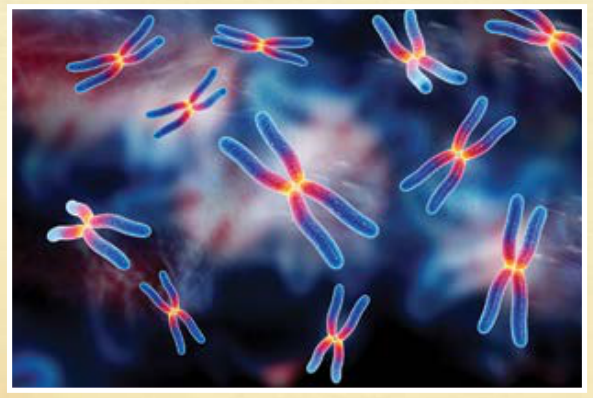
There are a very large number of genes, called the genome, present in the individual cell which is made up of approximately 30,000 genes. They are neatly folded into structured entities called chromosomes so as to conserve space.
There are 46 chromosomes in every somatic cell of the human being and each chromosome is protected by a cap-like structure called the telomere. As the DNA replicates to produce proteins,
The Need for Medical Research in Inner
Awakening®
Since the first Inner Awakening® program happened in 2008, many of the seekers who came from around the world seeking spiritual solace reported amazing health recoveries as one of the main benefits of attending the program.
This discovery, in addition to increased energy levels, set the stage for scientific research to validate these observations. The study was structured to quantify the changes and statistically evaluate their benefits.
The intent is to determine the physiology behind these changes through appropriate scientific studies, so that more in-depth examination can be done in future programs by external researchers.
We would like to share the health benefits experienced by the participants in recent days. These results are based on pre- and post- program questionnaires answered by the participants.
Health Recoveries as a result of Inner
Awakening®
The Study
- Physical and physiological parameters
- MTT assay
- Genetic studies
- qEEG studies
- Materialization studies
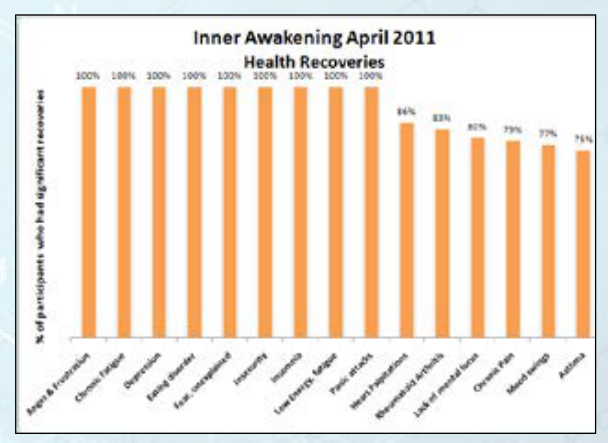
*Note: Some research findings are based on information polled from program participants and are subjective in nature.
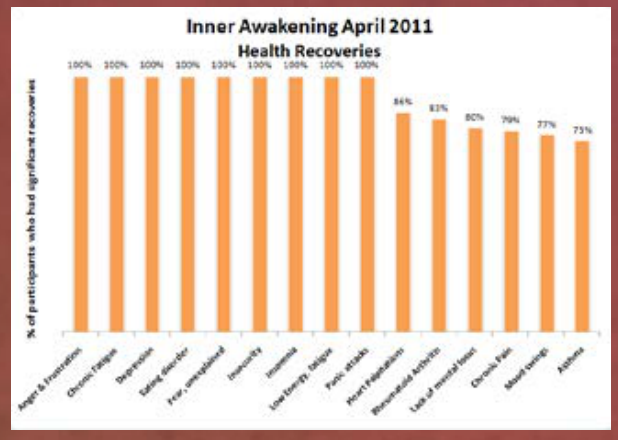
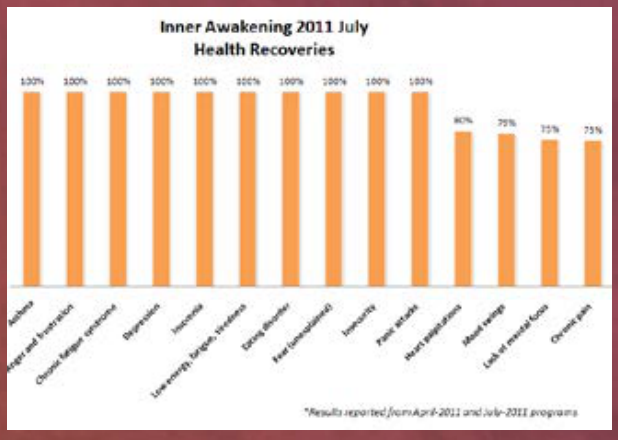
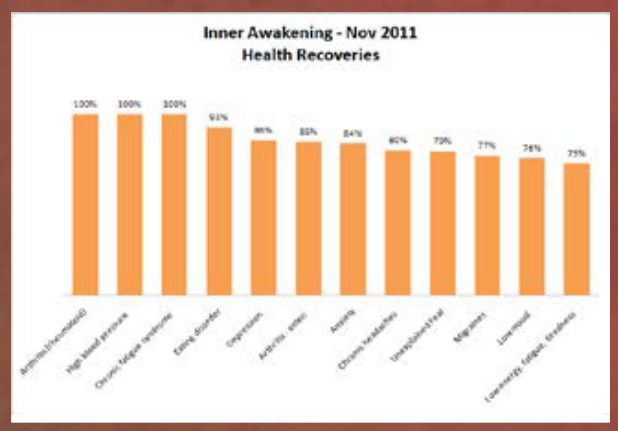
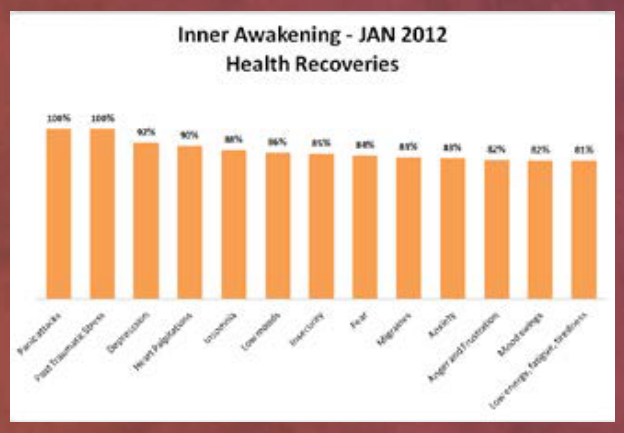
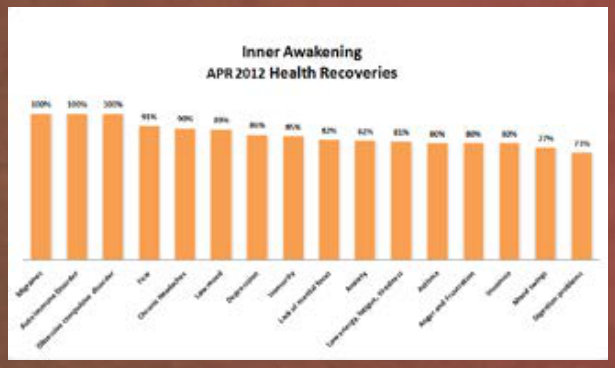
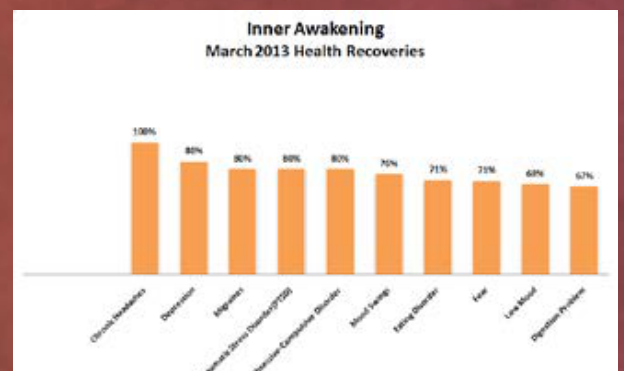
Note: Some research findings are based on information polled from program participants and are subjective in nature.
Inner Awakening® and Cellular Transformation
The Science of Mitochondrial Function
The human body is essentially an assembly of 50 trillion individual cells living in unison, working towards a common goal. Each cell is by itself a complete living entity with its own processes for sustenance of life, reproduction and so on. Most of the components of the cells are common to all, fulfilling basic common needs, yet each has its own specialized departmental work, be it secreting hormones, enzymes and so on. All these cells are powered by a single battery within the cell called the mitochondrion.
molecule of the cell. Without mitochondria, the cell can produce only 2 ATPs per glucose molecule. The mitochondrion, on the other hand, can produce 32 ATPs per molecule of glucose, which is a 1700% increase in efficiency. Mitochondria are also involved in other cell processes such as cell division and growth, as well as cell death.
Mitochondria have their own set of DNA, which allows them to function independently. Unlike the DNA in the nucleus of the cell, which is covered by a protective layer of histones, the mitochondrial DNA is naked and thus exposed to increased possibilities of damage.
As it is, the repair mechanism of the mitochondrial DNA is not as efficient as that of the nuclear DNA. As we age, significant errors creep into the mitochondrial DNA which go unrepaired or insufficiently repaired. This leads to malfunction in the electron transfer chain of the mitochondria. Instead of producing pure energy in the form of ATP, a non-productive oxygen species called reactive oxygen species (ROS) is produced. This ROS damages cellular structures including the exposed mitochondrial DNA,
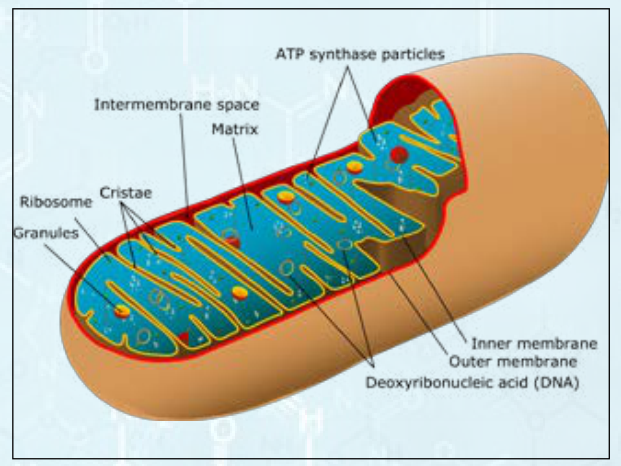
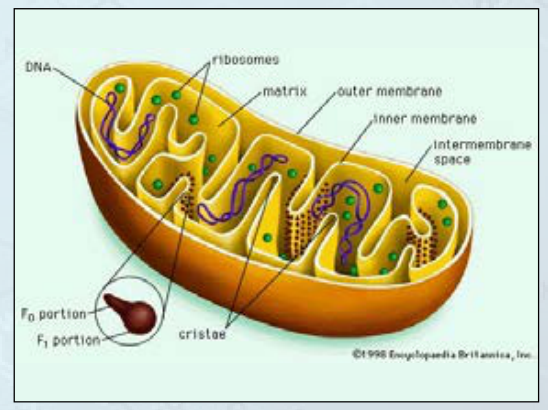
The mitochondrion is an interesting structure, only 1 micron in length, situated outside the nucleus in the cytoplasm of the cell. Mitochondria are the cell’s power producers. They convert energy into forms that are usable by the cell. They are the sites of cellular respiration which ultimately generate fuel for the cell’s activities. Their function is to optimize the utilization of energy-producing substances like glucose, and to produce ATP which is the energy
leading to a vicious cycle of dysfunction and aging, which in turn leads to cell death. 1. Dilute buffy coats 1:4 (v/v) or heparinized blood samples 1:2 (v/v) with Dulbecco's Phosphate buffered saline (PBS) without Ca2⁺ and Mg²⁺.
2. To a 10 ml centrifuge tube add 2 ml of defibrinated or anticoagulant treated blood and an equal volume of balanced salt solution (final volume 4 ml).
3. Mix the blood and buffer by inverting the tube several times or by drawing the mixture in and out of a pipette.
Procedure for Isolation of Mononuclear Cells
1. Invert the Ficoll-Paque media bottle several times to ensure thorough mixing.
2. Using aseptic techniques, add Ficoll-Paque media (3 ml) to the centrifuge tube.
3. Carefully layer the diluted blood sample (4 ml) onto the Ficoll-Paque media solution.
4. Centrifuge at 400 g for 30 to 40 minutes at 18°C to 20°C (brake should be turned off).
5. Draw off the upper layer containing plasma and platelets using a sterile pipette, leaving the mononuclear cell layer undisturbed at the interface.
6. Transfer the layer of mononuclear cells to a sterile centrifuge tube using a sterile pipette.
Washing the Cell Isolate
1. Estimate the volume of the transferred mononuclear cells. Add at least 3 volumes (- 6 ml) of balanced salt solution to the mononuclear cells in the centrifuge tube.
2. Suspend the cells by gently drawing them in and out of a pipette.
3. Centrifuge at 400 to 500 × g for 10 to 15 minutes at 18°C to 20°C.
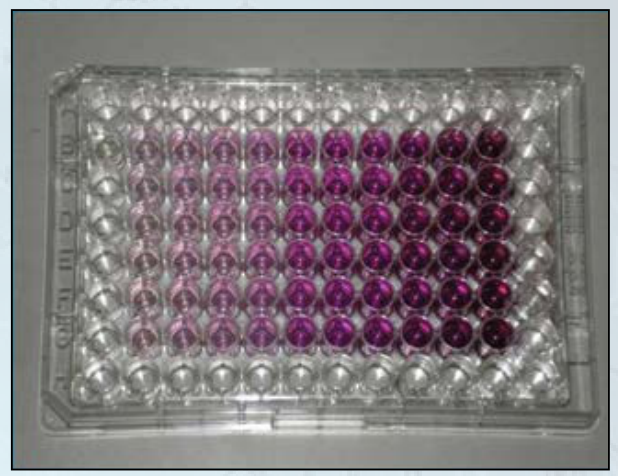
A Micro-titer Plate after MTT Assay
Tetrazolium salts are converted by metabolically active cells to formazan, which can be quantified by measuring absorbance at 570 nm.
4. Remove the supernatant.
5. Re-suspend the mononuclear cells in 6 to 8 ml balanced salt solution.
6. Centrifuge at 400 to 500 × g (or 60 to 100 × g for removal of platelets) for 10 min at 18°C to 20°C.
7. Remove the supernatant.
8. For cell counts, dilute first 1:10 in supplemented RPMI -1640, and then 1:2 with 0.1% trypan blue solution, and count the cells with a Hemocytometer.
Conclusion
♦ The effective transmission of healing energy to participants by an adept healer through the process of energy darshan leads to Kundalini awakening to a statistically significant degree. ♦ The addition of yoga and meditation along with energy darshan leads to greater increase in cellular energy.
Increase In
Mitochondrial Activity During Inner Awakening
| MTT Assay | ||||||
|---|---|---|---|---|---|---|
| Sample No | Day 0 | Day 20 | ||||
| Reading 1 | Reading 2 | Average | Reading 1 | Reading 2 | Average | |
| 1 | 0.28 | 0.148 | 0.214 | 1.787 | 1.316 | 1.5515 |
| 2 | 0.242 | 0.109 | 0.1755 | 1.567 | 0.747 | 1.157 |
| 3 | 0.041 | 0.211 | 0.126 | 1.864 | 0.952 | 1.408 |
| 4 | 0.121 | 0.123 | 0.122 | 1.942 | 0.728 | 1.335 |
| 5 | 0.021 | 0.157 | 0.068 | 1.521 | 0.796 | 1.1585 |
| 6 | 0.04 | 0.156 | 0.098 | 1.495 | 0.722 | 1.1085 |
| 7 | 0.007 | 0.308 | 0.1575 | 1.533 | 0.763 | 1.148 |
| 8 | 0.011 | 0.363 | 0.187 | 1.177 | 0.468 | 0.8225 |
| 9 | 0.019 | 0.019 | 0.019 | 1.486 | 1.064 | 1.275 |
| 10 | 0.054 | 0.099 | 0.0765 | 0.553 | 0.658 | 0.6055 |
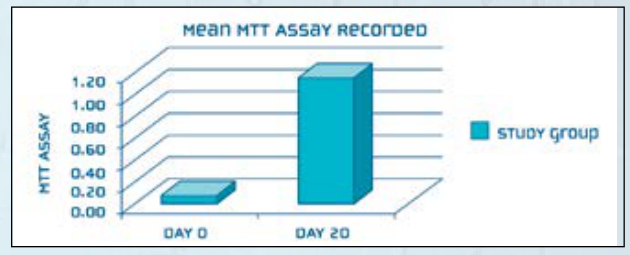
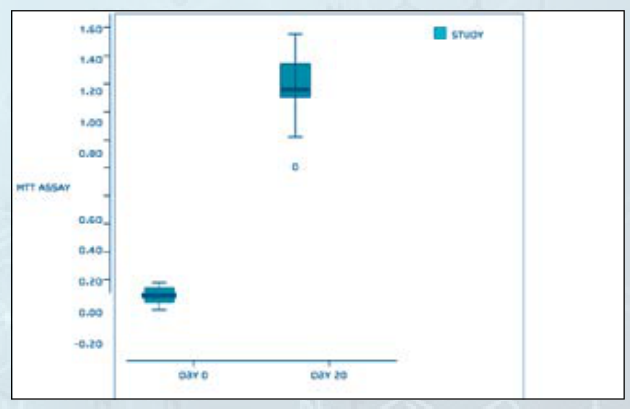
| Average | 0.1 2435 | 1.15695 |
My relationships have been beautifully healed

Legal name: Sarah Goldblatt
Spiritual name: Ma Nithya Deepthananda
Location: Port Washington, New York, United States
When I left to attend the Inner Awakening program in March 2013, my husband was enraged that I was leaving my family at time that was quite tumultuous at home. He felt that I was abandoning him and my four children. I left for India in fear. I had always let fear run my life. I returned from India fearless.
My experience at Inner Awakening was the best and most profound of my life - beyond marriage and childbirth. I experienced so many emotional shifts and mystical moments. When I returned back home, I could see that I was much more equipped to handle all situations in my life. I used to be an angry person who typically saw the downside of situations. But after IA, have gained intense confidence, focus and patience and the ability to consistently be in the positive.
I no longer yelled at my children, and was able to authentically listen to them. My older daughter of 15, who is adopted and never showed me affection, began hugging me and wanting to hang out.
My husband, though still claiming to be upset that I was gone for 24 days, consistently commented on the change in me. In fact, one day he said, "I like you so much more now, I really, really do." I too am much happier with the new me. I feel so strong and joyful inside.
I should also mention that as a yoga teacher, I am experiencing so much growth since attending my first Inner Awakening. I have been able to enrich my students in a new way, to help them cognize and internalize that life is possibility. Again, it is not a coincidence that my yoga classes are growing.
Expansion brings expansion!!!
I used to feel like a failure. Now I see that I am divine and blessed. I have so much gratitude to Swamiji and Nithyananda sangha!
I am liberated from psoriasis-arthritis
Legal name: Roy Vlemincx
Location: Gent, Belgium
Email: [email protected]
I had been suffering from psoriasis-arthritis with several infected joints and tendons. In December 2013, I attended the Inner Awakening program in Bali. I experienced healing a lot of healing through the darshans of my Master Swamiji. It was very gentle, intense, sometimes subtle, but definitely effective!!
At first I had to sit on a chair during the satsangs, because of too much knee pain, but soon I could sit on the ground and felt lighter and lighter, and then the knee pain disappeared!
I learned that this psoriasis-arthritis is nothing but carrying a wrong idea of myself. During every darshan, I felt as if Swamiji operated on me with such precision and unconditional love. Every day it was deeper and deeper healing, opening all my chakras, awakening my kundalini energy, every day a little higher.
Also, my thoughts became less, and more positive. My self-doubt, hatred and denial patterns became clear, and deeper restful awareness was introduced into my bio memory, muscle memory and inner space. Super!
This was strengthened by early morning yoga and a Nirahari (liquid) diet, my favorite way to break my food pattern!
Whenever Swamiji puts his hand on my head, I felt healing energy flowing down my spine. It was so liberating! Everything looked so bright, everybody was radiating bliss. "It is possible" came back into my inner space!!
Amazing experience with Guru! Thank you Swamiji!
I have been healed of my fear of public speaking
Name: Sathiyan Kutty
Spiritual name: Sri Nithya Poornananda
Location: California, USA
Email: sri.nithya.poornananda@gmail. com
I am an IT professional living in San Francisco Bay Area.
In 2012 December I attended a program called Inner Awakening with Paramahamsa Nithyananda on board a cruise ship in South East Asia.
Inner Awakening was the most profound spiritual experience for me and it healed years of emotional pain caused by my past failures in business and relationships.
At one time after Inner Awakening, I experienced a state of completion when all the heaviness in me caused by all my past negative emotions suddenly dropped in an instant. At that moment, I experienced deep inner peace, inner healing and bliss. Since then, I do not experience anxiety or depression. I am able to speak in public, something I could never do my whole life.
Even as I write this story, I sit with a beautiful smile on my face; thanks to the Master and his powerful techniques to overcome my own inhibitions.
My whole life has transformed and I am deeply grateful to the Master for healing me head to toe.
My lactose intolerance disappeared!

Name: Rose Li
Location: San Francisco, USA
Email: [email protected]
I have been very fortunate to have had a good physical health all my life.
The only health issue I had was being lactose intolerant for most of my life. I avoided all dairy products in my food intake, as I would have a stomach
upset and temporary hives on my face and neck.
It was during the Sarva Darshan one morning in November 2013, I asked Him for healing to cure my lactose intolerance. I had my doubts after the darshan, but I really didn't think about it much after that day.
In the following week, I went to Bali for Inner Awakening. During one morning breakfast, I decided to try drinking milk. It tasted yummy, pure and light; but to my surprise, I felt great afterwards! I couldn't believe it, so I started to drink 2 cups, and then 3 cups, and then I decided to try ice cream for dessert, and guess what, I still felt great afterwards!
All the years of my lactose intolerance symptoms have disappeared. It's been 6 months since Bali IA, and I have zero lactose issue.
Thank you Swamiji.
Impact of Kundalini Awakening
on Gene Function
Introduction
Health: Health is defined as not merely absence of illness, but also a sense of positive feeling in physical, physiological, psychological and emotional states.
It is a core process affecting all individual cells of the body (50 trillion cells) and their relationship with one another to function as a whole (human being). The relationship of this whole, its interaction with physical and environmental factors (society), and the influence of this interdependence on the collective consciousness (spiritual health) are likewise aspects of the domain of health.
There are four different aspects of health:
· Physical
· Physiological
· Psychological
· Spiritual
Life: The ability of any structure, whether molecule, organelle, cell or multi-cellular organism, to function in its environment by actively processing signals, responding to stimuli, preserving its systems, repairing damage and reproducing itself to further propagate its species, is known as Life. Life processes also include undergoing quantum adaptive changes to deal with a dynamic and changing environment.
The primordial universe consisted initially of sub atomic particles (energy), which combined together to form atoms, the smallest organized unit of life - for example, the atom of hydrogen. Hydrogen in turn can be further combined to form molecules through chemical bonds, for example, the molecule of water and so on, which is hydrogen bonded to oxygen.


Genome
The complete set of chromosomes (with their genes) in an organism is called its "Genome".
The Human Genome contains between 25,000 and 30,000 genes similar to that of a mouse and less than a grain of rice, which contains 50-60,000 genes. Hence it is clear that it is not the number of genes, but what a gene can do that determines the complexity of a living organism.
Genes not only transmit information from generation to generation, but also act on a minute-to-minute basis, reacting to external needs, synthesizing amino acids and proteins which carry out the various functions of the body, whether structural, enzymatic or defensive mechanisms.
Comparative Genomics
The human and chimpanzee genomes are 96% identical. The 4% gap makes a profound difference in the physical and psychological presentation (phenotype) of these two species.
For example, language, which is unique to humans, has been tracked down to a double mutation in a gene called 'FOX P2'. This single factor forms the entire basis for verbal communication in the human species.
Genes and Disease
Some diseases involve a single gene mutation such as sickle-cell anemia, which affects only a small subset of humanity.
Other diseases involve multiple genes. Over 100 genes are implicated in susceptibility to asthma and cancer, causing disease due to genomic instability often involving the mutation (change) of genes from their normally programmed behavior.
Gene-related metabolic pathways such as MAP-K, which stands for Mitogen Associated Protein Kinase, are implicated in the processing of long-term potentiation (LTP), the basis for learning and memory.
In human beings, DNA is present in:
- The nucleus of the cell as chromosomes, completely covered (protected) by a histone coat.
- The organelle called the mitochondrion, the powerhouse or energy-producing battery of the cell.
Mitochondrial DNA is naked, unprotected by the histone coat. This makes the mitochondrial DNA more susceptible to damage. Built-in mechanisms function to constantly repair the DNA when errors occur.
Gene Expression
It is estimated that only 10,000 of the 30,000 human genes are expressed at any given time (redundancy). Since many genes are repeated and many parts of the chromosomes do not contain genetic material, it is estimated that only 5% of the human genome is actively expressed and has functional genes.
There is a parallel to this in the Cosmos, where the sum total of all known matter makes up only 5% of the universe, the remaining 95% as yet unknown.
The objective of the study was to explore Indian traditional yoga and meditation techniques through new experimental biology and bioinformatics.
♦ Gene expression changes including up regulation and down regulation were assessed by micro array analysis, using affymetrix HG-U 133+ 2.O gene chips. ♦ Gene Ontology (GO) categories were identified using expression analysis systematic explorer (EASE Analysis).
Study Design & Labeling
In the study, we compared gene expression profiles in whole blood between Test and Control samples. Samples collected from volunteers before program were named as BIAY samples and after the program were named as AIAY samples. BIAY were considered as controls and AIAY were considered as test samples.
Sample numbers 1-10 were pooled in as BIAY1 matched against sample numbers 1-10 of after samples as AIAY1 and studied BIAY1 vs AIAY1
Similarly, samples 10-20, 20-30 and 30-40 were named and matched respectively as BIAY2 vs AIAY2, BIAY3 vs AIAY3 and BIAY4 vs AIAY4.
Human whole genome HG-U133_Plus_2 chips form affymetrix have been used for the study.
Materials and Methods
Blood sample collection and RNA storing:
Five milliliters of blood was collected from volunteers in EDTA vacutainers, mixed with 25ml of Erythrocyte Lysis Buffer, Qiagen, and incubated for 10 minutes on ice, then mixed by vortexing briefly 2 times during incubation and kept for 10-20 minutes and centrifuged at 4000 rpm for 10 minutes at 4°C and the supernatant was completely removed and discarded. After 10-20 minutes visible pellets were re-suspended in 10ml of solution.
RNA Precipitation Procedure:
1. Add 1/10 volume 3M NaOH, pH 5.2 and 2.5 volumes ethanol.
2. Mix and incubate at -20°C for at least 1 hour.
3. Centrifuge at ≥ 12,000 x g in a micro-centrifuge for 20 minutes at 4°C.
4. Wash pellet twice with 80% ethanol.
5. Air dry pellet. Check for dryness before proceeding.
6. Re-suspend pellet in DEPC-treated water.
Quantification of RNA Yield by
Spectrophotometric Analysis
Absorbance of the sample was checked in 260 and 280 nm. The ratio of A260/A280 was 1.9 which is in an acceptable range.
cDNA and cRNA Synthesis, Hybridization, Scanning, Data Extraction were done.
a) Single cycle labeling process with cDNA using a T4 promoter-dT24 oligonucleotide as primer and second strand cDNA synthesis and incubation with T4 DNA polymerase has been done and the products were purified using affymetrix clean up module. Biotinylated cRNA is made using affy IVT kit.
b) CRNA is purified using Qiagen, quantified and then fragmented by incubation at high temperature with Magnesium. Biotinylated cRNA is added to a total hybridization cocktail of 300 microliters and 200 microliters is hybridized to gene chip after adding control oligo-nucleotides, overnight.
c) Hybridization has been done at 45° C, 17 hours overnight with constant rotation. The hybridization mixture is then removed and the Gene Chips are washed, stained with phycoerythrin-labeled straptavidin, washed, incubated with biotinylated anti-streptavidin and then restrained with phycoerythrin-labeled straptavidin to amplify the signals.
d) Arrays are then scanned using dedicated scanner, controlled by GCOS software. Images are examined for defects. The Affy Micro Array Suite 5 (MAS%) algorithm analyzed the hybridization
intensity data of gene chip expression probe arrays checked normalized and CEL files were stored for further analysis.
e) Microarray Data Analysis was done using the latest version software Gene Spring 11.5. The CEL files are imported in Affymetrix Expression workflow using Technology for HG-U133_Plus_2.
Summarization: We opted for MAS 5 summarization. It also provides flag information for the probe sets. Baseline to median of all samples was applied for this data.
Analysis: A t test unpaired was used to identify the differentially expressing entities. Fold change analysis at the cut-off of 2 was performed. Hierarchical clustering on the output was performed. Gene Ontology Analysis was done by using fold change output. NCI to find significant pathways was used for pathway analysis.
Results
a) 420 Up regulated and 165 Down regulated entities are obtained.
b) Gene Ontology has shown significantly enriched GO terms, and pathway analysis has shown significant gene expression differences in the following 22 pathways: p38 signalling mediated by MAPKAP kinases, P38 MAPK signalling pathway, validate targets of C-MYC transcriptional activation, VEGFR1 specific signals, TNF alpha/NF-kB, TGFBR, Hypoxic and oxygen homeostasis, regulation of HIF-1-alpha, Endogenous TLR signalling, Direct Interactions, Cellular roles of Anthrax toxin, C-MYC pathway, BMP receptor signalling, Androgen Receptor Androgen-mediated signalling, ATF-2 transcription factor network, signalling mediated by p38-alpha and p38-beta, Regulation of p38-alpha and p38-beta, Regulation of Androgen receptor activity, NO cadherin signalling events, IL27-mediated signalling events and IL12-mediated signalling events.
c) GSEA analysis for the dataset wherein Kaposi Liver cancer Poor Survival was found to be significant.
d) Further analysis was done for cancer, autoimmune and neurotransmission related diseases and results are as below.
MeSH pathway analysis was done for the following terms:
a) Autoimmunity
b) Neurotransmitter: Neurotransmitter Uptake, Inhibitors, Receptors and Synaptic Transmission together. c) Cancer: Brain, Liver and Neoplastic Stem Cells separately.
We limited the network building to these terms because including all of the cancer MeSH terms leads to large network.
Following are the observations made:
Significant genes from Pathways which are two fold up or down regulated:
• with Autoimmunity: 18
• with Neurotransmitter: 17
• with Brain cancer: 40
• with Liver cancer: 59
• with Neoplastic Stem cells: 18
Interestingly 8 genes were common in all the cancer lists. 3 (EIF4E, BMI1, TMEF2) of these were significant in C-MYC pathway as well. 5 out of 59 significant genes from liver cancer network are also found in IL 12 mediated signalling pathways, 7 in BMP receptor signalling, 3 in IL27, 5 in TGFBR, 4 in Androgen receptor and 8 in c-myc pathway.
Discussion & Summary
1. The control group was the participants of Inner Awakening® on day 0, and the study group was the same participants post Inner Awakening®, day 21. Hence, human variations of gene expression between control and study groups have been completely avoided.
2. 420 up regulated and 165 down regulated entities have been demonstrated within a short period of 21 days. The shortest previous study done at Harvard Medical School was of 8 weeks duration.
3. Gene ontology studies and pathway analysis has shown significant gene expression differences in 22 pathways.
4. MeSH pathway analysis, further subdivided the GO pathways under the following:
· Auto Immunity
· Neurotransmitter
· Malignancy
· Androgen related
· Mitochondria
There is a 7-fold increase in pathways related to Immune modulation, Inflammation, Hypoxia regulation etc. This matches with the clinical relief of inflammatory symptoms in the Inner Awakening® participants, both in relation to autoimmune disorders like rheumatoid arthritis, fibromyalgia and other chronic pain conditions.
MAP-K signalling pathways are largely implicated in long term potentiation involved in learning and memory. Eight children participated in the Inner Awakening® for Kids program in parallel with the Inner Awakening® program for adults, and their memory and ability to recall were tested and recorded before and after 21 days. The significant improvement in memory correlates well with the MAP-K gene up regulation.
Almost 117 gene expression changes with relationship to various known malignancies were noticed following MeSH analysis; however none of the registered participants had any recorded malignant conditions during the Inner Awakening® processes.
There was more than a 7-fold increase in Androgen receptor activity and other Androgen mediated signalling events. It is well known in Vedic/yogic literatures that the intense practice of certain Kriyas and meditation can lead to a natural suppression of sex-related desires (Muladhara Chakra), which, similar to insulin resistance, would lead to up-regulation of androgen receptors in peripheral cells. The only other condition where such up-regulation of androgen receptors is seen is in prostate cancer. However, none of the participants had any history of cancer of the prostate.
Previous study on the mitochondrial activity of Inner Awakening® participants using the MTT assay techniques revealed a 967% increase of mitochondrial activity. This correlates well with the current finding of a significant increase of MAP-K and other related pathways, which are essential in increasing both the number and size of mitochondria.
Techniques of pranayama, which include various forms of bandhas and kumbhakas, would naturally be expected to affect oxygen homeostasis under hypoxic conditions, and the up regulation of the HIF-1-alpha signifies the same.
Further studies in collaboration with Medical Universities, may provide greater information on changes in mitochondrial activity in relation to age, health and disease.
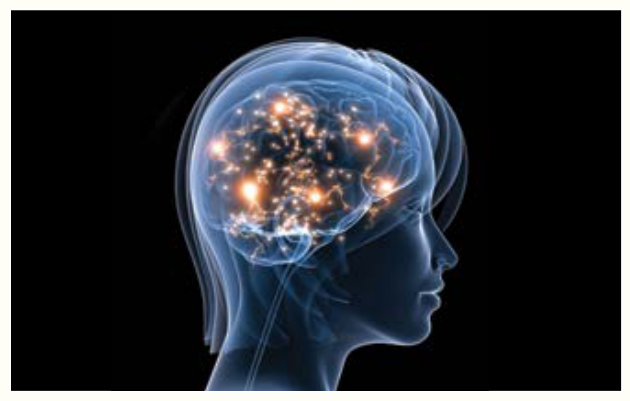
The waveforms recorded reflect the level of arousal of the person: delta activity (2-4 cps) accompanies deep sleep; theta (4-7cps) states of drowsiness; alpha (8-11 cps) relaxed states. Beta range activity reflects an engaged or active brain, and, with very fast beta activity, an excited or urgent/emergency state of mind.
qEEG Studies on devotees
QEEG studies were conducted on participants who had Kundalini awakening to study its effect on the brain. The qEEG’s were reported by Dr Kanak Pandey, Neurologist.1 The participants underwent a series of standardized tests, basic recordings were done with open eyes and closed eyes and also when the Kundalini energy was activated by the Master’s initiation. Data were analyzed; digitized data were subjected to an automatic artifact detection routine and supplemented by visual review and these were the observations made:
The values are dramatically high in most of the activated people. This may be indicative of very elevated, rapid, parallel processing. It may indicate enhanced cognitive and mental functioning; this can be calibrated by post activation assessment on various cognitive functions. These elevated changes may help a person develop better learning and executive abilities.
Positive impacts:
- Better focusing ability
- Better alertness and attentiveness
- Better short term memory
- Faster multi processing
- Better problem solving and decision making ability
- Warm and positive personality traits
and business concerns. She is trained and certified on EMDR (Eye Movement Desensitization and Reprocessing) from the Hong Kong Institute of EMDR. She is trained and certified in Biofeedback, Neuro-feedback, and qEEG (Quantitative EEG) from USA.
She is:
- an international affiliate of American Psychological Association (APA)
- member and a certified trainer of LMI international
- member of Indian Psychological Association
- member of Psycho-Linguistic Association of India
- member of International Society for Neuronal Regulation (ISNR)
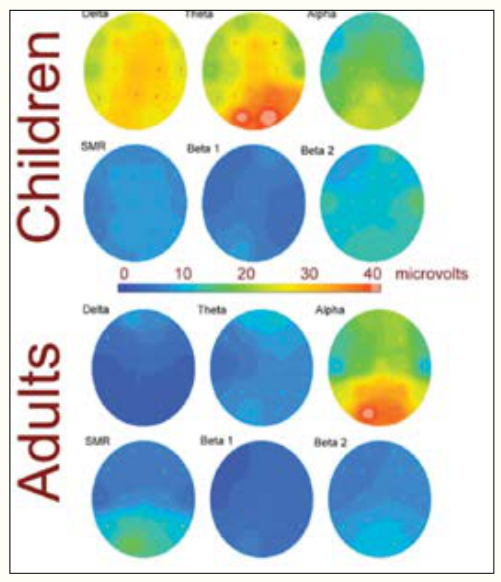
Figure: During eyes closed baseline rest, the theta rhythm (4-8 Hz) dominates the spectral energies of a child’s brain whereas the alpha rhythm (8-12 Hz) dominates adult brain.
Physiological Data and Statistics Report – My
Clinic
(qEEG recordings of participant)
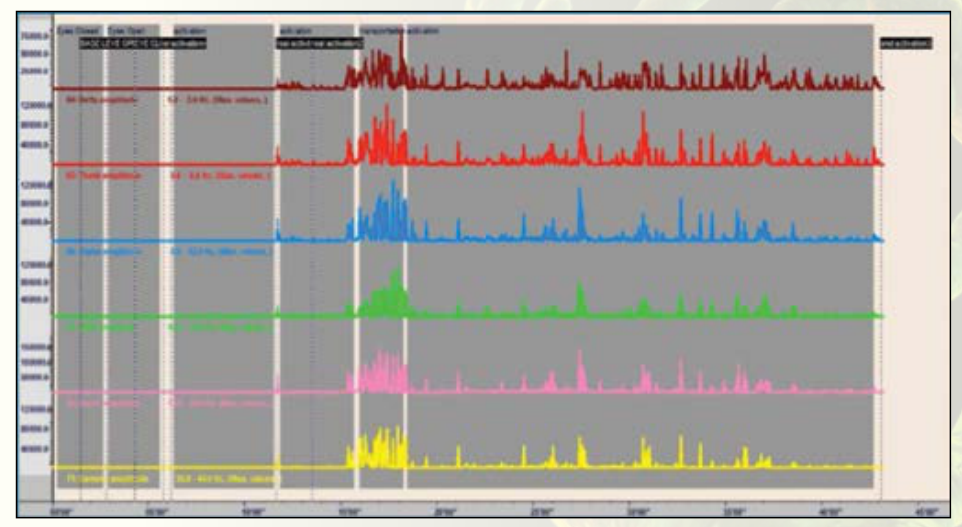
Concise Client and Session information: Client: [ID=00000045 ] Session: p4 Date Time: 09:17:43 14–07–2011 ; Duration: 43 min 17 sec.
In deep meditation, EEG studies have shown the simultaneous global presence of delta activity with increased beta presence in the pre frontal area. This signifies a state of ‘Restful Awareness’.
On the other hand, a direct transmission of Cosmic energy (Kundalini Shakti in Vedic literature) clearly demonstrates cessation of superficial cortical activity and the presence of multiple high amplitude spikes, not correlating with the known alpha, beta, delta and theta rhythms, suggesting that the EEG machine is picking up intense activity from sub cortical areas from hypothalamus and limbic systems.
1. Dr. Kanak Panday is the founder of Gunjan Human Karigar
and Maxcellence—Peak Performance Solutions. She is a trained psychologist having more than 23 years of experience as a behavioral psychological consultant with various reputed industrial
Continuing Breakthroughs in the new
Millennium
Paramahamsa Nithyananda has extended the horizon of human possibility. Working first with a close group of devotees, and later incorporating the technique into a public program, he successfully launched the Nirahara Samyama, a voluntary 21-day initiation process in the year 2012, in which the body requires no food to function. Participants have been able to carry out normal daily activities and work without weakness, despite no nutritional intake. Those who felt symptoms of hunger were mandated to eat, and some opted to consume juice when needed. Many, however, took nothing, not even water, without experiencing any ill effects. They have even been able to cook for others without wanting to eat.
This landmark event in itself is remarkable. What truly breaks new ground is that Paramahamsa Nithyananda has guided the public groups at a distance, and in unprecedented numbers. Some yogic masters have succeeded in the past with a few close disciples who live around them. But none has ever been known to sustain more than four hundred devotees over thousands of miles all over the world, solely by the power of their initiation, irrespective of the geographical distance.
Paramahamsa Nithyananda’s ability to heal and transmit initiation to those far away provides ever stronger evidence that energy is not limited by space, time or physical form. Furthermore, his capacity to awaken extraordinary powers in others proves the Vedic understanding that these siddhis are the birthright of all humans.
The research findings also confirm what the Hindu scriptures have declared for millennia: while siddhas, mystics or yogic masters may acquire these skills for themselves after long years of spiritual effort, or as a side-effect of enlightenment, only the rarest being known as the Avatar, by virtue of being established in the space of non-dual Oneness, can awaken these siddhis in others by the sheer power of His presence.
The world looks forward to a new evolutionary wave, guided by the wisdom and vision of Paramahamsa Nithyananda.
Conclusion
Paramahamsa Nithyananda continues to delve deeper into common Source of science and mysticism.
Planet Earth is pleading for a new way of life for all its inhabitants, a way of peaceful co-existence and joyous creativity. The solution lies at our fingertips: by opening to our own internal energy or kundalini shakti, we can resolve the world’s energy crisis and begin to savor our life instead of struggling through it. We have also the precious resource and grace of the Avatar who can bring our energy into bloom: His Holiness Paramahamsa Nithyananda.

Anti-aging Effects of
Inner Awakening® program
Anti-aging Effects of an Intensive Mind and Body
Therapeutic Program through Enhancement of Telomerase activity and Adult Stem cell Counts
Note: Results of these studies were published in the below journals: 1. Journal of Stem Cells, Volume 10, Issue 2 (pp. 107-125)
Link: https://www.novapublishers.com/ catalog/product_info.php?products_ id=56446&osCsid=5c086307d4ddb51ff5cfbe6d8498ee99
2. Journal: Advances in Aging Research, Vol. 4, No.3, May 2015
Paper: An Intensive Mind and Body Therapeutic Program Leads to Alteration in Gene Expression Critical to Aging Process in Peripheral Blood Stem Cells
Links: http://www.scirp.org/journal/aar http://dx.doi.org/10.4236/aar.2015.43011
Objective
Key modalities of integrative medicine known to rejuvenate the mind and body are meditation, yoga, completion process, energy initiation by Paramahamsa Nithyananda every day and unrestricted satvic diet.
It has been shown previously that intensive or prolonged mind and body therapies (MBT) may have beneficial effects on the well-being of both healthy people and patients. Telomerase activity and levels of peripheral blood adult pluripotent stem cells (PB-APSC) are reliable markers of long-term well-being that are known to decrease with age. The objective of this study is to understand the effect of our MBT program on telomerase activity and stem cells in blood collected from the participants.
Design
Here, we have investigated the effects of an intensive three-week Inner Awakening® spiritual program on telomerase activity and the peripheral blood stem cells in participants before and after the MBT. A total of 108 people were enrolled in the study; 38 men and 70 women (aged 18-90) randomly assigned for the study.
Introduction
Aging represents the accumulation of physiological, biological and associated alterations in a person for a longer period of time [1,2]. Aging is one of the most critical known risk factors for many human disease [3]. Roughly 0.1 million people worldwide die each day of age-related complications [4].
Integrative mind-body therapies (MBTs), which include meditation, pranayama, other kinds of breath control exercises, and yoga have gained importance and intense attention from the scientific community over the last two decades. Among the various types of MBTs, meditation has still been considered as one of the most common practiced techniques. Many scientific studies have been carried out to understand the efficacy of meditation on physical and mental well-being [5]. Meditation, yoga with breath control exercises, and controlled diet with right nutritional supplementation exert the best anti-aging effects including reduced anxiety and illness, slow-down of the aging process, and improved cognitive function [6,7,8].
During these years the scientific community has been consistently trying to understand the safety and efficacy of meditation on physical and mental well-being.
Recent studies show that meditation with breath and diet control, can lead to stable changes in brain pattern for a longer period of time as compared to non-meditating human beings, thereby indicating the importance of intentional practices. These studies may help in understanding the basic unifying mechanisms of the brain, mind and body that enhance our capacity to adapt to stressful and uncertain conditions [9].
Ethics Statement
The study protocol and the design have been approved by Institutional Ethics Committee. Informed consents in writing were obtained from all subjects prior to start-date of experimentation.
Intervention
On day 1 of the program, 5 ml of peripheral blood was collected from each subject in anticoagulant EDTA vacutainer (BD Biosciences, San Jose, USA). After 21 days (i.e., end of the program) again 5ml blood was collected in anticoagulant vacutainer and forwarded through validated clinical cold chain.
Stem cell isolation process
Viability measurement was done by using Trypan blue (0.4% Trypan blue stain, Invitrogen, Grand Island, NY, USA). Trypan blue exclusion method [30] was used to count viable PBMCs. Stem cell count was done using hemocytometry. Adult regenerative stem cell (ARSS) was collected from the peripheral blood by density gradient centrifugation [31] and sedimentation process [32]. Our approved protocol on the isolation of PMBC was initially established by examining key pluripotency markers such as OCT4, SOX2, NANOG by reverse transcriptase-polymerase chain reaction (RT-PCR) [33].
Telomerase activity measurement in PBMCs
Telomerase relative activity assessment was done as per the instruction of Millipore’s TRAPeze telomerase detection kit (Billerica, MA, USA) with each sample being analyzed in triplicate. These assays were done in the peripheral blood mononuclear cell (PBMC) counts. Protein estimation assay was done using Lowry method [34] and equal amount of protein lysate (0.4μg) was used for TRAP reaction.
PBMCs were isolated by centrifugation using Lympho-Ficoll (Ficoll-Paque Plus; GE Healthcare, Little Chalfont, UK) gradient density centrifugation for 30 minutes at 400g. The mononuclear layer was collected and washed 3 times in PBS supplemented with 2% FBS (Stemcell Technologies, Vancouver, BC. Canada), and finally an aliquot containing 0.2 million cells was transferred into an Eppendorf tube (Eppendorf, Hamburg, Germany) and centrifuged at 3000g for 5 min. The pelleted cells were preserved at -80°C until use. Heat-denatured telomerase was used as a negative control for TRAP reaction.
The positive control was done using one million telomerase positive cells supplied in the kit. The relative telomerase activity was calculated by taking negative control values as 1 and the data were normalized based on exact protein content of the samples.
Statistical Analysis
Each patient served as their own control. We tested the differences in pre and post values for stem cell and telomerase. Day 0 served as control for both telomerase and stemcell measurement and Day 21 post meditation program served as the test sample. We tested for differences in pre versus post using the Wilcoxon Signed Rank Test. We found that for both changes in stem cells and telomerase, there was a significant increase, P < 0.01.
Results
A proper randomization of patients was done before the start of the treatment.
As shown in Table 1 (page 148), all patients participated in this study were randomized in terms of age, sex, stem cells, and telomerase activity prior to meditation. The randomization was successful as evidenced by age-range, sex of the patients just to be sure increased telomerase activity in the treated group were not due to inclusion of more young people.
Mind-Body Therapy (MBT) program did not affect the viability of stem cells
Out of 110 patients, 2 patients' samples were found to be contaminated and hence rejected for the study. Using Trypan blue exclusion method 80-90% viability was observed in all subjects (101 - 208). The results are presented in Table 2 (page 150). A close examination of the table revealed that the retreat did not affect the viability of the stem cells among all subjects. Substantially large numbers of stem cells (80-90%) were found to be viable before and after the meditation.
MBT augmented stem cells numbers in peripheral blood isolated from the participants
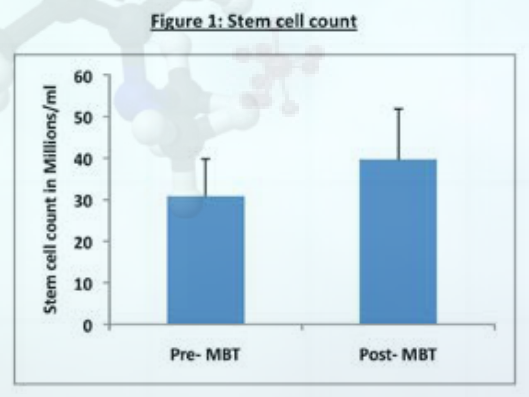
Having established that the retreat did not have much effect on the viability of stem cells, we asked the question whether meditation affected the number of total stem cell in subjects. Table 3 (page 151) shows the stem cell fold changes in subjects before and after the meditation. Thus program group participants showed higher fold changes in stem cell numbers, indicating a possible role of stem cells on the well-being of the subjects undergoing meditation. In addition, a substantial percentage of subjects (about 90%) exhibited increased stem cell counts after meditation as shown in Table 5 (page 154).
MBT augmented telomerase activity in stem cells isolated from peripheral blood from the participants
Furthermore, having established that meditation had a marked effect on the stem cell fold changes among the majority of the people undergoing MBT as opposed to pre-MBT group, we went on to investigate a key molecular parameter of well-being: telomerase activity. Table 4 (page 152-153) represents the telomerase activity fold changes in subjects before and after the meditation.
Thus telomerase activity was augmented in the majority of the subjects after MBT, thereby indicating better well-being status. In addition, as shown in Table 5, about 45% of people showed more than one-fold of telomerase activity after MBT. Furthermore, about 27% of people showed higher fold changes (2-fold) in telomerase activity after MBT retreat.
Discussion
Telomerase activity is critical to prevent early telomere shortening which can delay the aging process [21,14,15]. Interventions that can augment telomerase activity are clinically important because [27, 35, 36, 37, 38, 39] there are no known pharmacological or behavioral interventions that have this beneficial effect to date. Also there is an inverse relationship between telomerase activity and perceived stress [25] that can be reduced by meditative practice [40,41].
To our knowledge, ours is the first study to date where simultaneous investigation of the critical cellular and molecular parameters of measuring human well-being were investigated. Most earlier studies had looked at the effect of meditation on telomerase activity only. However, in this particular study we looked at the effect of the MBT on stem cell population along with telomerase activity.
Furthermore, in this study, we examined if there is any inter-relationship between the telomerase activity and the augmentation of stem cell counts in subjects.
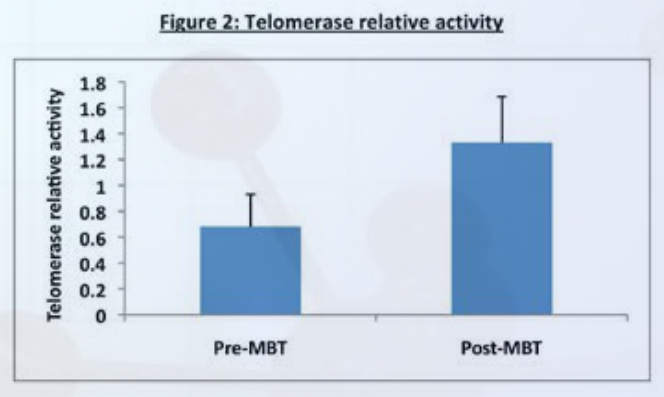
Since stem cells are responsible for new cell generation, higher stem cells could facilitate any age-related damaged tissue healing processes. We found after intensive MBT training, retreat participants had significantly higher telomerase activity compared to the premeditated group. Interestingly, increased telomerase activity among the program participants was associated with increased stem cells count in the blood, thereby indicating an inter-relationship between increased stem cells numbers and telomerase activity.
The reasons for the positive correlation between the increased stem cell count and increased telomerase activity could be two-fold.
First, increased telomerase activity could be due to intrinsic telomerase activity in the stem cells. So the higher the stem cell number the higher is the overall telomerase activity.
Second, since the stem cells have a potent healing capacity, they could migrate and home to the damaged tissue, due to age-related processes, and stabilize the telomere length by activating telomerase enzyme through an unknown mechanism. However, we don't know for sure whether the positive correlation between stem cell number and telomerase activity is direct or indirect.
Furthermore, a recent pilot study on early-stage prostate cancer patients [26], in which a modest increase in telomerase activity (2.22 as opposed to 2.0 before MBT) occurred in response to lifestyle changes including a small amount of meditation or yoga. This is consistent with the positive effect of MBT on the enhancement of telomerase activity.
This increase was due to a reduction in "intrusive thoughts" as reported by the patients. Given that meditative practice and negative impact of intrusive thoughts are inversely co-related, it is plausible that the increase in telomerase activity reported in that study might be in part due to meditation-induced changes. Importantly, the association between changes in control pre-MBT and post-retreat telomerase activity in the present study is consistent with the previous report showing an inverse relationship between perceived stress and immune cell telomerase activity in caregivers for their chronically ill children.
Conclusion
Statistical analysis reveals that more than 45% participants showed more than one-fold change post the Inner Awakening® program and more than 27% participants showed more than two-fold change post the Inner Awakening® program.
This is a significant increase in telomerase activity in as short a period as 3 weeks.
References
Bowen RL, Atwood CS. Living and Dying for Sex. Gerontology 2004; 50 (5): 265-290. 2.
Birbrair, A, Zhang T, Wang ZM, Messi ML, Mintz A, Delbono O. Type-1 peri-cytes participate in fibrous tissue deposition in aged skeletal muscle. AJP: Cell Physiology 2013; 305 (11): C1098.doi:10.1152/ajpcell.00171.
Dillin A, Gottschling DE, Nyström T. The good and the bad of being connect-ed the integrons of aging. CurrOpin Cell Biol; 2014; 26: 107-12 doi:10.1016/j. ceb.2013.12.003. 4.
De Grey, Aubrey DNJ. Life Span Extension Research and Public De-bate: Societal Considerations: Studies in Ethics, Law, and Technology. 2007;doi:10.2202/1941-6008. 1011.
Barrows KA, Jacobes BP. Mind body medicine, Med Clin North Am 2002; 86:11-35.
Scientific research on Maharishi's Transcendental Meditation, a review. Maharishi International University press. Fairfield USA, 1993;16.
Dhar HL. Meditation, health, intelligence and performance. Medicine up-date. APICON 2002; 202:1376-79.
Dharmasingh K. Meditation an anti-aging Medicine. http://www.wholefit-ness, com meditation html. 21.07.2005; 1-3.
Seminar on investigating mind. The science and clinical applications of Meditation. DARConstitution hall. Washington DC Nov. 8-10, 2005.
Carlos López-Otín, Maria A. Blasco, Linda Partridge, The Hallmarks of Aging. Cell. Author manuscript; available in PMC 2013 Nov 21
Blackburn, EH. Structure and function of telomeres. Nature 1991; 350 :569- 573.
Fossel M. Role of cell senescence in human aging. J Antiaging Med 2000; 3 (1): 91-98.
Chan SR, Blackburn EH. Telomeres and telomerase. Philos. Trans. R. Soc 2004; 359:109-121.
Frenck RW, Blackburn EH. The rate of telomere sequence loss in human leukocytes varies with age. Proc. Natl. Acad. Sci. USA. 1998; 95 (10): 5607- 5610.
Cawthon RK, Smith E, O'Brien E et al. Association between telomere length in blood and mortality in people aged 60 years of older. Lancet 2003; 361: 393- 395.
Epel ES. Telomeres in a life-span perspective: a new "psychobiomarker"? Curr. Dir. Psychol. Sci. 2009; 18 (1): 6-10.
Njajou OT, Hsueh WC, Blackburn EH, Newman, A.B., Wu, S.H.,Li, R., Si-monsick EM, Harris TM, Cummings SR et al. Association between telomere lengths, specific causes of death, and years of healthy life in health, aging, and body composition, a population- based cohort study. J. Gerontol. A Biol. Sci. Med. Sci. 2009; 64 (8): 860-864.
Epel ES, Daubenmier J, Moskowitz JT et al. Can meditation slow rate of cel-lular aging? Cognitive stress, mindfulness, and telomeres. In: Bushell, W.C., Olivo, E.L., Theise, N.D. (Eds.), Longevity, Regeneration, and Optimal Health: Integrating Eastern and Western Perspectives. Ann. N.Y.Acad. Sci. 1172, pp. 34-53.
Nordfja ·ll K, Svenson U, Norrback KF et al. The individual blood cell telo-mere attrition rate is telomere length dependent. PLoS Genet. 2009; 5 (2): e1000357.
Farzaneh-Far R, Lin J, Epel E et al. Telomere length trajectory and its deter-minants in persons with coronary artery disease: longitudinal findings from the heart and soul study. PLoS ONE 2009; 5 (1): e8612.
Blackburn EH. Telomere states and cell fates. Nature 2000; 408: 53-56.
Kim S-h, Han S, You Y et al. The human telomere-associated protein TIN2 stimulates interactions between telomeric DNA tracts in vitro. EMBO Re-ports 2003; 4: 685-691.
Serrano AL, Andres V, 2004. Telomeres and cardiovascular diseases: does size matter? Circ. Res. 2004; 94 (5): 575-584.
Lin J, Epel ES, Blackburn EH. Telomeres, telomerase stress and aging. In: Bernston GG, Cacioppo JT. (Eds.). Handbook of Neuroscience for the Be-havioral Sciences. 2009b: Wiley,New Jersey; chapter 65.
Epel ES, Blackburn EH, Lin J et al. Accelerated telomere shortening in re-sponse to life stress. Proc. Natl. Acad. Sci. U.S.A. 2004; 101:17312-17315.
Ornish E, Lin J, Daubenmier J et al. Increased telomerase activity and com-prehensive lifestyle changes. Lancet Oncol 2008; 9: 1048-1057.
Dalai L, Cutler HC. The Art of Happiness: A Handbook for Living, 10th Anni-versary Edition. Riverhead Books, New York. 2009.
Lisa B, Boyetteand Rocky ST. Adult stem cells and disease of aging. J Clin Med 2014; 3(1): 88-134.
Keisuke I, Toshio S. Metabolic requirements for the maintenance of self-re-newing stem cells. Nat Rev Mol Cell Biol 2014. Author manuscript; available in PMC Jul 14, 2014.
B.A. Avelar-Freitas VG, Almeida MCX, Pinto. Trypan blue exclusion assay by flow cytometry.Braz J Med Biol Res, 2014; 47(4): 307- 3015.
Claudia Po ·sel, Karoline M, Wenke FH. Density Gradient Centrifugation Compromises Bone Marrow Mononuclear Cell Yield, PLoS One, 2012; 7(12): e50293
Huaying Z, Chad A, Brautigam RG, Current Methods in SedimentationVe-locity and Sedimentation Equilibrium Analytical Ultracentrifugation, Cur-rProtoc Protein Sci. Author manuscript; available in PMC 2014 February 1.Published in final edited form as: CurrProtoc Protein Sci. 2013 February.
Shipeng Sun, ShuangMeng, Rui Zhang. Development of a new duplex re-al-time polymerase chain reaction assay for hepatitis B viral DNA detection, Virol J, 2011; 8: 227. Published online 2011 May 14.
MAK Markwell, SM Haas, LL Bieber, A modification of the Lowry procedure to program, simplify protein determination in membrane and lipoprotein samples- Analytical biochemistry, 1978 - Elsevier.
Fauce, S.R., Jamieson, B.D., Chin, A.C., Mitsuyasu, R.T., Parish, S.T., Ng,H.L., Kitchen, C.C., Yang, O.O., Harley, C.B., Effros, R.B., 2008.Telomerase-based pharmacologic enhancement of antiviral function of human CD8 T lym-phocytes. J. Immunol. 181, 7400-7406.
Uchiumi F, Watanabe T, Hasegawa S et al. The effect of resveratrol on the Werner syndrome RecQhelicase gene and telomerase activity. Curr Aging Sci. 2011; 4(1-7).
Rizvi S, Raza ST, Mahdi F et al. Telomere length variations in aging and age-related disease. Curr. Aging Sci. 2014;7(161-167).
Zole E, Pliss L, Ranka R et al. Dynamics of telomere length in different age groups in a Latvian population. Curr. Aging Sci. 2013; 6(244-250).
Mikhelson VM, Gamaley IA. Telomere shortening is a sole mechanism of aging in mammals. Curr Aging Sci. 2012; 3(203-208).
Brown, K.W., Ryan, R.M., 2003. The benefits of being present: mindfulness and its role in psychological well-being. J. Personal.Soc. Psychol. 84 (4), 822-848.
Nykli´c^ke, I., Kuijpers, M.A., 2008. Effects of mindfulness-based stress reduction intervention on psychological well-being and quality of life: Is increased mindfulness indeed the mechanism? Ann. Behav. Med. 35, 331.
Greider CW. 1998. Telomerase activity, cell proliferation, and cancer. Proc. Natl. Acad. Sci. 95, 90-92.
Shay, J.W. and Wright, W.E. 1996. Telomerase activity in human cancer. Curr. Opin. Oncol., 8,66
Shay, J.W. and Wright, W.E. 1996. The reactivation of telomerase activity in cancer progression. Trends Genet., 12,129-13.
Holt, S.E. and Shay, J.W. 1999. Role of telomerase in cellular proliferation and cancer. J. Cell Physiol., 180,10-18.
Izri A, Gunal A, Gunduz U, 2013. Significance of telomerase activity and gene expression in colorectal cancer. Research in brain cancer and tumor, 2,49- 56.
Figure Legends
Figure 1. Stem cells fold measurements in participants' blood before and after the MBT program. Viable stem cells were counted from participants' blood using trypan blue measurement. Fold changes were determined by comparing viable stem cell counts before and after the meditation.
Figure 2. Telomerase activity measurements in participants' blood before and after the MBT program. Fold changes in activities were determined by com-paring telomerase activity before and after the MBT program. Heat-denatured telomerase was used as a negative control for TRAP reaction. The positive con-trol was done using one million telomerase positive cells supplied in the kit. The relative telomerase activity was calculated by taking negative control values as 1 and the data were normalized based on exact protein content of the samples.
Table Legends
Table 1. Randomization of patient group in terms of age, gender, stem cells, and telomerase activity.
Table 2. Trypan blue measurement of viable stem cells count isolated from par-ticipants' peripheral blood in subjects (101-208).
Table 3. Stem cell fold-changes in participants (101-208) before and after the MBT program. Stem cells were isolated from peripheral blood collected from the participants. Fold changes were calculated by comparing stem cell counts before and after the MBT program.
Table 4. Telomerase relative activity fold-changes in subjects (101-208) before and after the MBT treatment. The relative telomerase activity was calculated by taking negative control values as 1 and the data were normalized based on exact protein content of the samples.
Table 5. Percentage of MBT subjects showing overall fold-changes in telomerase activity compared to pre-MBT subjects.
| Table 1 PRE-TREATMENT PATIENT DATA | ||||
|---|---|---|---|---|
| Sr.No | Gender | Age | Stem Cell count Millions/m (Pre) | Telomerase Relative activity (Pre) |
| 141 | M | 44 | 34 | 0.34 |
| 142 | M | 32 | 33 | 0.8 |
| 143 | M | 59 | 21 | 0.7 |
| 144 | F | 42 | 29 | 0.6 |
| 145 | F | 30 | 25 | 0.5 |
| 146 | M | 51 | 37 | 0.6 |
| 147 | M | 32 | 25 | 0.7 |
| 148 | F | 45 | 31 | 1 |
| 149 | M | 48 | 32 | 0.9 |
| 150 | M | 48 | 18 | 0.6 |
| 151 | F | 55 | 21 | 0.7 |
| 152 | F | 32 | 29 | 0.7 |
| 153 | F | 39 | 34 | 0.8 |
| 154 | M | 54 | 16 | 0.9 |
| 155 | F | 40 | 18 | 1.2 |
| 156 | F | 36 | 41 | 1 |
| 157 | M | 44 | 10 | 0.66 |
| 158 | M | 33 | 31 | 0.7 |
| 159 | F | 31 | 35 | 0.6 |
| 160 | F | 52 | 21 | 0.8 |
| 161 | M | 56 | 21 | 0.35 |
| 162 | M | 66 | 18 | 0.5 |
| 163 | F | 34 | 34 | 0.7 |
| 164 | F | 34 | 39 | 1 |
| 165 | F | 14 | 29 | 0.7 |
| 166 | F | 68 | 21 | 1.2 |
| 167 | F | 25 | 31 | 1 |
| 168 | F | 18 | 41 | 0.8 |
| 169 | F | 41 | 38 | 0.8 |
| 170 | M | 20 | 39 | 0.5 |
| 171 | M | 43 | 21 | 0.56 |
| 172 | F | 42 | 32 | 0.3 |
| 173 | F | 42 | 31 | 1.2 |
| 174 | F | 41 | 35 | 1.1 |
| 175 | F | 68 | 29 | 0.9 |
| 176 | F | 38 | 29 | 0.6 |
| 177 | F | 15 | 29 | 0.5 |
| 178 | M | 44 | 21 | 0.6 |
| 179 | F | 73 | 19 | 0.9 |
| 180 | M | 78 | 25 | 0.6 |
| Table 1 PRE-TREATMENT PATIENT DATA | ||||
|---|---|---|---|---|
| Sr.No | Gender | Age | Stem Cell count Millions/m (Pre) | Telomerase Relative activity (Pre) |
| 181 | F | 48 | 23 | 0.7 |
| 182 | F | 48 | 31 | 0.3 |
| 183 | F | 67 | 27 | 0.5 |
| 184 | M | 48 | --- | --- |
| 185 | F | 49 | 25 | 1.5 |
| 186 | M | 34 | 39 | 1 |
| 187 | F | 31 | 33 | 1.1 |
| 188 | F | 31 | 38 | 1.2 |
| 189 | M | 43 | 21 | 0.8 |
| 190 | F | 39 | 36 | 0.9 |
| 191 | M | 54 | 24 | 1.1 |
| 192 | F | 38 | 21 | 0.8 |
| 193 | F | 38 | 34 | 0.7 |
| 194 | F | 51 | 21 | 0.5 |
| 195 | M | 16 | 45 | 0.8 |
| 196 | F | 38 | 35 | 0.7 |
| 197 | M | 36 | 41 | 0.4 |
| 198 | F | 64 | 23 | 0.6 |
| 199 | M | 51 | 33 | 0.6 |
| 200 | M | 29 | 39 | 0.4 |
| 201 | F | 29 | 41 | 0.9 |
| 202 | F | 67 | 26 | 0.8 |
| 203 | M | 39 | 37 | 0.4 |
| 204 | F | 43 | 41 | 1.2 |
| 205 | F | 45 | 48 | 0.9 |
| 206 | M | 19 | 35 | 0.9 |
| 207 | F | 41 | 53 | 0.5 |
| 208 | F | 50 | 33 | 0.8 |
Table 2 STEM CELL COUNT & VIABILITY DATA
| Sr.No | Gender | Age | Stem Cell count Millions/ml (Pre-Treatment) | Viability % (Pre-Treatment) | Stem Cell count Millions/ml (Post-Treatment) | Viability % (Post-Treatment) |
|---|---|---|---|---|---|---|
| 180 | M | 78 | 25 | 80-90% | 55 | 80-90% |
| 181 | F | 48 | 23 | 80-90% | 30 | 80-90% |
| 182 | F | 48 | 31 | 80-90% | 39 | 80-90% |
| 183 | F | 67 | 27 | 80-90% | No sample | 80-90% |
| 184 | M | 48 | - | 80-90% | No sample | 80-90% |
| 185 | F | 49 | 25 | 80-90% | 34 | 80-90% |
| 186 | M | 34 | 39 | 80-90% | 50 | 80-90% |
| 187 | F | 31 | 33 | 80-90% | 44 | 80-90% |
| 188 | F | 31 | 38 | 80-90% | 48 | 80-90% |
| 189 | M | 43 | 21 | 80-90% | 30 | 80-90% |
| 190 | F | 39 | 36 | 80-90% | 44 | 80-90% |
| 191 | M | 54 | 24 | 80-90% | 18 | 80-90% |
| 192 | F | 38 | 21 | 80-90% | 32 | 80-90% |
| 193 | F | 38 | 34 | 80-90% | 42 | 80-90% |
| 194 | F | 51 | 21 | 80-90% | 25 | 80-90% |
| 195 | M | 16 | 45 | 80-90% | 52 | 80-90% |
| 196 | F | 38 | 35 | 80-90% | 47 | 80-90% |
| 197 | M | 36 | 41 | 80-90% | 32 | 80-90% |
| 198 | F | 64 | 23 | 80-90% | 34 | 80-90% |
| 199 | M | 51 | 33 | 80-90% | 42 | 80-90% |
| 200 | M | 29 | 39 | 80-90% | 41 | 80-90% |
| 201 | F | 29 | 41 | 80-90% | 50 | 80-90% |
| 202 | F | 67 | 26 | 80-90% | 32 | 80-90% |
| 203 | M | 39 | 37 | 80-90% | 46 | 80-90% |
| 204 | F | 43 | 41 | 80-90% | 23 | 80-90% |
| 205 | F | 45 | 48 | 80-90% | 52 | 80-90% |
| 206 | M | 19 | 35 | 80-90% | 40 | 80-90% |
| 207 | F | 41 | 53 | 80-90% | 62 | 80-90% |
| 208 | F | 50 | 33 | 80-90% | 43 | 80-90% |
| Table 3 STEM CELL COUNT WITH FOLD CHANGE | |||
|---|---|---|---|
| Sr.No | Pre-Treatment | Post-Treatment | Fold Change |
| 182 | 31 | 39 | less than 0.5 fold change |
| 183 | 27 | No sample | No change |
| 184 | - | No sample | No change |
| 185 | 25 | 34 | less than 0.5 fold change |
| 186 | 39 | 50 | less than 0.5 fold change |
| 187 | 33 | 44 | less than 0.5 fold change |
| 188 | 38 | 48 | less than 0.5 fold change |
| 189 | 21 | 30 | less than 0.5 fold change |
| 190 | 36 | 44 | less than 0.5 fold change |
| 191 | 24 | 18 | No change |
| 192 | 21 | 32 | less than 0.5 fold change |
| 193 | 34 | 42 | less than 0.5 fold change |
| 194 | 21 | 25 | less than 0.5 fold change |
| 195 | 45 | 52 | less than 0.5 fold change |
| 196 | 35 | 47 | less than 0.5 fold change |
| 197 | 41 | 32 | No change |
| 198 | 23 | 34 | less than 0.5 fold change |
| 199 | 33 | 42 | less than 0.5 fold change |
| 200 | 39 | 41 | less than 0.5 fold change |
| 201 | 41 | 50 | less than 0.5 fold change |
| 202 | 26 | 32 | less than 0.5 fold change |
| 203 | 37 | 46 | less than 0.5 fold change |
| 204 | 41 | 23 | No change |
| 205 | 48 | 52 | less than 0.5 fold change |
| 206 | 35 | 40 | less than 0.5 fold change |
| 207 | 53 | 62 | less than 0.5 fold change |
| 208 | 33 | 43 | less than 0.5 fold change |
| Table 4 | |||
|---|---|---|---|
| Sr.No | Pre-Treatment | Post-Treatment | Fold Change increase |
| 143 | 0.7 | 1.7 | 1 fold change |
| 144 | 0.6 | --- | No change |
| 145 | 0.5 | 1.34 | 1 fold change |
| 146 | 0.6 | 1.5 | 1 fold change |
| 147 | 0.7 | 1.2 | 0.5 fold change |
| 148 | 1 1. | 8 | 0.5 fold change |
| 149 | 0.9 | 1.8 | 1 fold change |
| 150 | 0.6 | 1.7 | 1 fold change |
| 151 | 0.7 | 1.3 | less than 1 fold change |
| 152 | 0.7 | 1.3 | less than 1 fold change |
| 153 | 0.8 | 1.5 | less than 1 fold change |
| 154 | 0.9 | 1.9 | 1 fold change |
| 155 | 1.2 | 1.4 | less than 0.5 fold change |
| 156 | 1 1. | 8 | less than 1 fold change |
| 157 | 0.66 | 1.34 | 1 fold change |
| 158 | 0.7 | 1.6 | 1 fold change |
| 159 | 0.6 | 1.2 | 1 fold change |
| 160 | 0.8 | 1 | less than 0.5 fold change |
| 161 | 0.35 | 1.7 | 2.5 fold change |
| 162 | 0.5 | 0.9 | less than 1 fold change |
| 163 | 0.7 | 1.2 | less than 1 fold change |
| 164 | 1 1. | 5 | 0.5 fold change |
| 165 | 0.7 | --- | No change |
| 166 | 1.2 | 1.5 | less than 0.5 fold change |
| 167 | 1 1. | 9 | less than 1 fold change |
| 168 | 0.8 | 1.2 | less than 1 fold change |
| 169 | 0.8 | 1.3 | less than 1 fold change |
| 170 | 0.5 | 1.5 | 1.5 fold change |
| 171 | 0.56 | 1.7 | 1.5 fold change |
| 172 | 0.3 | 0.5 | less than 0.5 fold change |
| 173 | 1.2 | 1.9 | less than 1 fold change |
| 174 | 1.1 | 1.8 | less than 1 fold change |
| 175 | 0.9 | 1.6 | less than 1 fold change |
| 176 | 0.6 | 1.6 | 1 fold change |
| 177 | 0.5 | 1.3 | 1 fold change |
| 178 | 0.6 | 0.9 | less than 0.5 fold change |
| 179 | 0.9 | 1.1 | less than 0.5 fold change |
| 180 | 0.6 | 1.5 | 1 fold change |
| 181 | 0.7 | 1.8 | 1 fold change |
| 182 | 0.3 | 0.8 | 1.5 fold change |
| 183 | 0.5 | --- | No change |
| 184 | --- | --- | No change |
| Table 5 PERCENTAGE OF POST-MBT SUBJECTS SHOWING OVERALL FOLD CHANGES IN TELOMERASE RELATIVE ACTIVITY COMPARED TO PRE-MBT SUBJECTS | |
|---|---|
| Fold change in the total study group | % of subjects showing change |
| Greater than 6 | 0.92 |
| Greater than 4 | 5.55 |
| Equivalent 4 | 0.92 |
| Greater than 3 | 5.55 |
| Equivalent 3 | 2.77 |
| Greater than 2 | 27.77 |
| Equivalent 2 | 5.55 |
| Greater than 1 | 45.37 |
| Equivalent 1 | 2.77 |
| No change | 5.55 |
Longevity and Health
♦ The ultimate goal of any life form is to preserve life, increase life span without reducing productivity. This can be achieved by the prevention of diseases most of which are lifestyle-related and by the reduction of stress and cellular inflammation.
♦ The detailed scientific studies conducted during the Inner Awakening® program, from December 2010 till date, have encompassed several different aspects of human molecular physiology. There is ample evidence in scientific literature that malfunctions of mitochondria, increase in pro-inflammatory genes and regulatory pathways, decrease in telomerase enzyme and decrease in the stem cell numbers in the body are responsible for premature ageing, diseases and death.
♦ The remarkable evidence gathered so far in Inner Awakening® studies indicate that Mitochondria levels increase several-fold.
♦ Pro-inflammatory genes are down regulated.
♦ Gene and signaling pathways which enhance production of mitochondria and stem cells are up regulated.
♦ The number of stem cells is increased.
♦ Telomerase activity is significantly increased.
♦ Questionnaire-based evaluations suggest significant decrease in lifestyle diseases, psychosomatic conditions and autoimmune diseases.
♦ The expected life span of a human was declared as 120 years in yogic scientific literature, which has now reduced due to poor lifestyle, etc.
♦ With programs like Inner Awakening®, involving powerful initiations from an Avatar, it is possible to reestablish the Vedic life span of 120 years, with an improved quality of life, and avoiding preventable diseases.
My sun allergy never came back

Name: Arthi Desai
Location: Sunnyvale, USA
Email: [email protected]
I used to have a sun allergy that would not allow me to step out into the sun for even a few minutes.
Even if I had a slight exposure to the sun, my skin would break out into terrible rashes.
When I attended Inner Awakening, I shared my problem with Swamiji and requested him to heal me.
Swamiji healed me and assured me that the allergy would not come back.
Since then, I frequently move around in the sun, but to my delight and gratitude, the rashes never came back!
From that day my sugar levels are normal

Name: Arun Manoharan
Spiritual name: Nithya Shakthidharan
Location: Florida, USA
Email: [email protected]
In 2011, I developed diabetes or sugar imbalance in the body.
While attending the Inner Awakening program, during one of the darshans, I asked Swamiji to heal me. Swamiji healed me and told me that I don't have diabetes and not to worry about it.
When I went back and checked my sugar levels, I found that they had returned to normal.
From that day, my sugar levels are normal.
Thank You very much Swamiji.