About the Master
This text was machine-transcribed from the printed book and may contain errors. Select the words and choose “Report a mistake”.
Is it necessary to renounce the world to realize the self? 06
How can I surrender the ego? 09
In your presence all questions disappear, but in your absence doubts creep in. Why? 11
Is it right to indulge in our natural passions? 13
Is skepticism a hindrance to learning? 15
What happens when love is not appreciated or returned? 17
Are you for or against rituals and idol worship? 21
What is Karma? 25
Is it necessary to drop the intellect in order to approach the divine? 28
When a relationship is not working out, should I hold on or let go? 32
What is suffering? Why do we suffer? 34
Dearest Swamiji,
is it necessary to
renounce the world to
realize the self?
To realize the self, there is only one thing you must be willing to renounce:
ignorance.
Self-realization has nothing to do with giving up the world. To run away from
the world is just as bad as clinging to it; in both cases it is evident that the
world is controlling your actions. Aversion to the wordly is as much a product
of ignorance as attachment to it, they are just two sides of the same coin.
A person can live in a cave in the mountains and be obsessed with sansar
(worldiness), while another can live in the world and yet be completely detached
from its pushes and pulls (sannyas). To take sannyas is not to renounce the world,
but simply to renounce both attachment and aversion to the world. The very
same life, when seen through the mist of ignorance, is sansar - and when seen
in the clear light of self awareness, becomes sannyas.
It is true, sannyasins always lead a simple life, untouched by sansar. But for
them, the renouncing of attachment and aversion is not an effort.. When self-
realization awakens, renouncement happens naturally.
The first step toward sannyas is to become aware of your inner conflict
between attachment and aversion. As you witness it, you become aware that
there is a core inside you that is beyond this conflict, a being that is completely
unconcerned with the questions of Yes and No. This is your Self, eternal and
immutable. In the blaze of this awakening, all that is superfluous simply drops
away like dead leaves from a tree. What remains is the completely essential -
this is sannyas.
True sannyas is to live like a lotus in a lake, perfectly at ease in the muddy
water, but untouched and unsullied by it.
A Zen story says that a master and his disciple were on their way from
one village to the next. At the border of the villages flowed a shallow
[Everybody
has to cross the
river of sansar.
The important thing
is not to get wet!]
stream, which they usually crossed by wading through it. This time, they
dicovered that due to heavy rains, the stream had swollen into a small river,
too deep to wade across.
The disciple was alarmed, and enquired of the master, “Should we attempt to
cross this river, Master?”
Replied the master with a twinkle in his eye, “Certainly you should cross the
river, my child. Just remember not to get your feet wet!”
This is the true meaning of sannyas. When you can cross the river of sansar,
but the sansar can no longer wet you, you have found sannyas.
Beloved Swamiji,
how can we surrender
the ego, when this
wanting to surrender
is itself an expression
of the ego?
A question to you: How are you going to surrender the ego, when it does not
exist?
Suppose you are sitting in a dark room. You want the darkness to go
out. But can you push it out? Can you fight darkness and force it to
leave the room? NO! No matter how long you keep on trying, you are
ultimately going to be defeated - and that too by something which does
not exist!
The ego is like darkness, it has no positive existence. Just like darkeness is
simply the absence of light, the ego is nothing but the absence of awareness. To
struggle to kill the ego is like struggling to push the darkness out of the room.
To really expel the darkness, what you need to do is to forget all about dealing
with the darkness. Focus your energy on Light instead. Just bring a small lamp
into the room, and you will find that the darkness has fled on its own! So, I tell
[Bring a lamp of
awareness into your
being. The ego will
flee on its own.]
you to forget all about the ego. Instead, focus on bringing a lamp of awareness
into your being. When your entire consciousness has become a flame, you will
find that the ego is no more.
The ego is an illusion. You cannot surrender it when you are unaware - because
you don't know how. Of course, you cannot surrender it when you become aware
either - because then you realize that there is nothing left to surrender!
What you have heard, read, been taught - 'Surrender the ego in order to
attain self-realization' - this is an utterly nonsensical idea. It can happen only the
other way round. Self-realization dawns, and suddenly you cannot find the ego
anymore. The surrender has aleady happened, just like that.
However, I am glad that the question has arisen in your being. The ego is the
root cause for all your anxieties, sorrows, tensions. It is your doorway to hell.
To actively feel that you want to drop the ego, to feel the the need to be rid
of this burden is itself a step towards awareness. It shows that you are stirring
from your sleep!
Dearest Swamiji,
whenever I am in
your presence all
questions disappear
and everything seems
possible. But when I
am away from you,
all the familiar
If a question disppears on its own in my presence, then it is time to realize
that it was not a true question at all; it was merely a play of the mind.
When you are with me, the mind is no more in control - you simply flow into
meditation. You become a loving, serene silence. In this state, only a question
that is truly your question, one that is completely relevant to you, will still
remain with you.
In my presence, you become so intensely aware, so completely present that
doubts creep in. Why
does this happen and
what can I do about
it?
there is no space for questions to arise. When you leave my presence, the mind
is free to impose the past and the future upon your present - for what else are
your questions but the play of the past and the future upon your present?
Just like the ego, there is no point in fighting with or condemning the mind.
It is a pointless struggle which you will be sure to lose. Instead, it is enough
to be aware that this is the very nature of the mind; it can be expected to behave
in no other way. It is bound to bring in anxiety, confusion, doubt. Just to be
conscious of this is enough. Do not pass judgement on the mind for its inane
activites - even to get angry with your mind is to lose your energy to it. As you
witness the workings of the mind, you will slowly become aware that you are
not the mind - you are more than the mind, you are the watcher. Once deprived
of your energy, the mind cannot go on! In the place of the chaos of thoughts
that you call your mind, a clear, intense consciousness will arise. At that
moment, all questions dissolve and the mind is no more.
This is the experience you find yourself having in my presence. And what I
have just told you is the way to make it stay with you always - even when you
are not with me! It is a slow process - give it time. It will happen.
Dear Swamiji,
you ask us not to
suppress our natural
passions. But is it
right to indulge these
passions?
This question points in the same direction as the earlier question on sansar vs.
sannyas. On this path, you will time and again come across apparent dualities:
good/bad, false/true, attachment/aversion, suppression/indulgence. In fact, raging
inside your being is this constant conflict of opposites. Whenever a duality
asserts itself, remember this thumbrule: Existence is nondual. Opposites do not
exist. To cling to either suppression or indulgence is a sign of ignorance. After
[Your path
is neither
indulgence nor
suppression.
It is the
unflinching
awareness
of both.]
all, suppression is nothing but a reaction to indulgence. What is essential is the
awareness of one's own tendencies. Recognise anger, recognise jealousy, recognise
lust and greed. Neither give in to these emotions nor try to suppress them.
Simply attempt to know them for what they are. Keep your distance, and view
your emotions as if they were strangers. You will be surprised to find that
without your support, they cannot exist, they simply drop away! This may not
make much sense to you when it is just someone else's experience - but through
constant practice you will experience the truth for yourself.
It is only this awareness that can awaken self-knowledge, and free you
of these concepts of indulgence/suppression, and of all dualities!
Dearest Swamiji, you
say that skepticism is
a big hindrance to
learning. But you
also urge us to voice
our doubts. Why?
You can raise questions due to either skepticism or doubt. But there is
a world of difference between the two.
Skepticism is a state where one refuses to believe in anything at all.
Just like that! The skeptic will raise arguments just for the sake of
raising them. In this sense, skepticism itself is an unconscious belief, it is
a foregone negative conclusion against anything and everything. The skeptic
has no opinions and no ideology of his own, he only has an argument
against whatever idea you place before him. He will argue against an idea
for hours, and if you present another idea that is just the opposite, he
will argue against it equally emphatically! Actually, he has already settled
into a permanent attitude of NO towards everything. In this sense, skepticism
marks the end of the journey for the learner, because with this attitude
it is impossible to get anywhere. The skeptic has closed himself to all
possibility of change.
[It is very easy
to say NO
to everything,
very difficult to say
YES!]
Doubt, on the other hand, is a state of openness and receptivity. Doubt
is an acceptance of 'I don’t know, but I can learn.' This marks the
beginning of the learner's pilgrimage. Doubt is the path of the seeker,
it simply seeks to eliminate all that is untrue in order to perceive the
Truth. A man with a doubt listens with respect, not with defiance. He
possesses the humility of the ignorant. His is the attitude of YES, he is
only waiting to experience so that he can trust.
When a person of sharp intellect turns to skepticism, it is a dangerous
sign - because it can be very ego-fulfilling to put down all ideas in an
effective manner. But ultimately, the skeptic is only burning his own
bridges. Especially with a master, if you adopt the attitude of skepticism,
there is just no way I can get through to you. There is no point in going
to a doctor just to question the value of every pill in his prescription, is
there?
So ask your questions, by all means. Just watch the attitude with
which you ask them!
Beloved Swamiji, you
tell us to ‘give our
all’ in love. But what
if the love is not
appreciated or
returned?
If you are truly in love, you will ‘give your all’ naturally. Love is an
unconditional outpouring. In love you don’t stop to ask yourself whether
the other person deserves your all. In fact, there is no question at all of
the other person’s worth. Love is a gift. If you were to measure the
other person’s worth and give an equal and exact measure of love in
[How long will
you Quantify love?
Transform it into a
Quality of
your being.]
return, that would simply be a bargain. It would be Business, not Love. In true
love, this question of 'Should I give my all?' would not be raised at all!
Now the issue of the love being appreciated. Tell me, what is your
reason for loving? Is love a performance for which you need to be
applauded? It is enough that you love. What is the need to look for any
further reward? To ask for a returning of love is to seek some kind of
control over your beloved. You refuse the other person the freedom not
to love you in return. This is a kind of possessiveness, where you cage
the other in the prison of your expectations. And as I keep repeating,
love can never, never blossom in captivity.
Listen carefullly: there are two kinds of love - love as a Quantity, and
love as a Quality.
When love is seen as a quantity, it results in the kind of selfish little
[Don't drop your
partner; drop your
ego. Let go of
your ego, and Love
will enter
that space.]
exchanges that most people make all their lives. You hold out a tightly
wrapped parcel of love to your man or woman, and expect them to promptly
return an equal-sized parcel to you. If your partner should choose to give
her parcel to someone else, or even to just open it and spread the love
around, you feel cheated and angry. You are both bound to each other by
a pact of reciprocation. You have to be Made for Each Other. Sooner or
later this kind of arrangement leaves you cramped and frustrated, and in
anger you withdraw your parcel and go off to find someone else to exchange
it with. Or else your partner does that. Sounds familiar?
Now the kind of love I would like you to grow towards is love
experienced as a quality of your very being. This kind of love is simply
an outpouring of one's joy and gratitude, just for being alive. It is a
fragrance of joy, it spreads itself around unconditionally. It does not need
an object, it does not need a return gift. This kind of love is like sunshine or
rain; it gives of itself unconditionally, and whomsoever stands within its circle can
experience the warmth or the freshness without question. This love always enriches;
it is the only kind of love that can be enjoyed without fear or guilt.
For Love to become your quality, you must be willing to surrender
yourself completely. Only in an egoless state can this love arise. This is
not easy, but you can make a beginning. You will discover that simply
through love and gratitude, you begin to let go of the ego, just a little.
And as you let go, more and more love enters into that space. Try practising
this in your relationships. There's no need to make a fuss about loving;
don't become serious in your love - just be totally sincere.
Beloved Swamiji,
in India we are
brought up on rituals
and idol worship.
Are you for or
against these?
First of all, I am neither for or against idol worship or rituals - or
anything, for that matter!
But there is a reason why idol worship is so common in India, and
elsewhere in the East. For a beginner on the spiritual journey, it is
difficult to even conceive of the Divine in the abstract. When given a
form, it is crystallised into something he understands and can relate to.
With an idol, he can commune with the Divine in the language that he
is familar with. Our thousands of deities are nothing but expressions of
the Divine. And yet anyone can talk to them, pray to or play with them,
seek solace or give thanks. The whole awesome, indefinable nature of the
Divine is scaled down to comforting proportions in the form of the
deity. It has to be this way; the Divine without form is simply too
terrifying a concept for the ordinary mind.
[An idol is nothing
but the formless
Divine, brought
within your reach.]
At a deeper, subtler level there is one more message being reinforced
- the idol before you is cast in the same form as yours, and yet it is divine. What does that say about you? Think about it.
Even if you are an idol worshipper, there is no need to condemn yourself.
As you grow spiritually, you will find yourself able to commune with the
Divine just as well without an idol. Just as children stop playing with dolls
as they grow older, you will drop the idols of your own accord when the
time comes. But right now if it gives you a sense of well-being to worship
your favourite deity, do so by all means. Spirituality is a vast, shoreless
ocean. When you are just learning to swim, it would certainly help your
confidence to hold onto a lifebuoy, something you can be sure of, something
that won't let you down. As you grow stronger and surer, you will naturally
shake off its hold and enter the deep waters, freely and fearlessly.
[Never think rituals
and mantras are
mere acts or words.
They are
embodiments of
energy.]
As for rituals, it has been scientifically proved that certain colours,
sounds and actions can deeply impact your state of mind, activate desired
areas of the brain, and expand your consciousness. Rituals have lost their
credibility today only because their true meaning has been lost upon the
masses over time. Only the shell of the ritual remains; the spirit has
departed. So even if they seem irrelevant to you today, never underestimate
the true potential of rituals. Rituals are the distillation of centuries of
wisdom and the tapas of innumerable enlightened masters. When performed
in the proper way, rituals have tremendous power to bring about
unimaginable levels of awareness and change.
In the ashram, you may often find me performing poojas and yagas. The
fact is, these mean nothing to me, I don't need a channel to commune
with the Divine. These are for my people. I do this to draw you all into
a familiar territory, a space where you feel secure and tranquil. In an
atmosphere that years of worship have sanctified, bowing before your
beloved deities and listening to the chanting of well-known mantras, a
silent, meditative state is naturally induced in you. At this time you are
completely open and surrendered, receptive to my energy. This is the
time when I can truly work upon you, without your knowledge and
without your resistance. Can you undertand me now?
(Of course, I have never given up being a child, and so I perfectly
enjoy my play with these beautiful dolls - but that is another matter!)
Beloved Swamiji,
what is Karma?
Let me give you an idea about karma.
Whenever an action has been started, but not fulfilled, there exists a force that
pulls you to fulfil it, to bring it to completion. This force is karma. Whatever you
have tasted, desired but not experienced ultimately, will continuously draw you to
repeat that very experience, till you feel fulfilment. You will keep repeating that
action till you actually become that experience. Because you are fulfilment. You
enter the body just to fulfil this action. In the course of fulfilment you meet all
these things, these 'troubles'.
This is the explanation which I give for karma. All the other words - it is
because of my bad karma that I got this disease / it is because of my good karma that I
met Swamiji - all these are just things we say after the event has happened.
Whatever has happened, we give it the name karma.
The word karma is much misunderstood. I am not giving you an explanation
[Any act that has
been started, but
left unfulfilled,
attracts karma.]
for karma as we understand it. I don't mean karma as fate or vidhi. According
to my experience, there is no such thing as vidhi. The future is left completely
open by existence. It is we who decide.
Ramakrishna tells a beautiful story which will give you intellectual clarity
on the subject. Of course, no one can give you existential, experiential clarity
on karma as it really is – that clarity comes only with enlightenment. And
when you are enlightened, you cannot express it!
Coming to the story on karma:
A cow is tied to a post with a 5-meter rope. Inside that perimeter it can sit,
stand, feed, do whatever it pleases. Our life is just the same. We have a limited
amount of freedom; the rest is in the hands of Existence. But Ramakrishna also
adds, if we use our 5-meter freedom intelligently, it is possible that Existence will
extend our rope, or even free us completely. That depends on both us and the
master, on Jiva and Shiva. You can choose whether to remain in bondage or
I am not giving you an explanation for karma as fate or
vidhi. According to my experience, there is no such thing
as vidhi. The future is left completely open by existence.
It is we who decide.
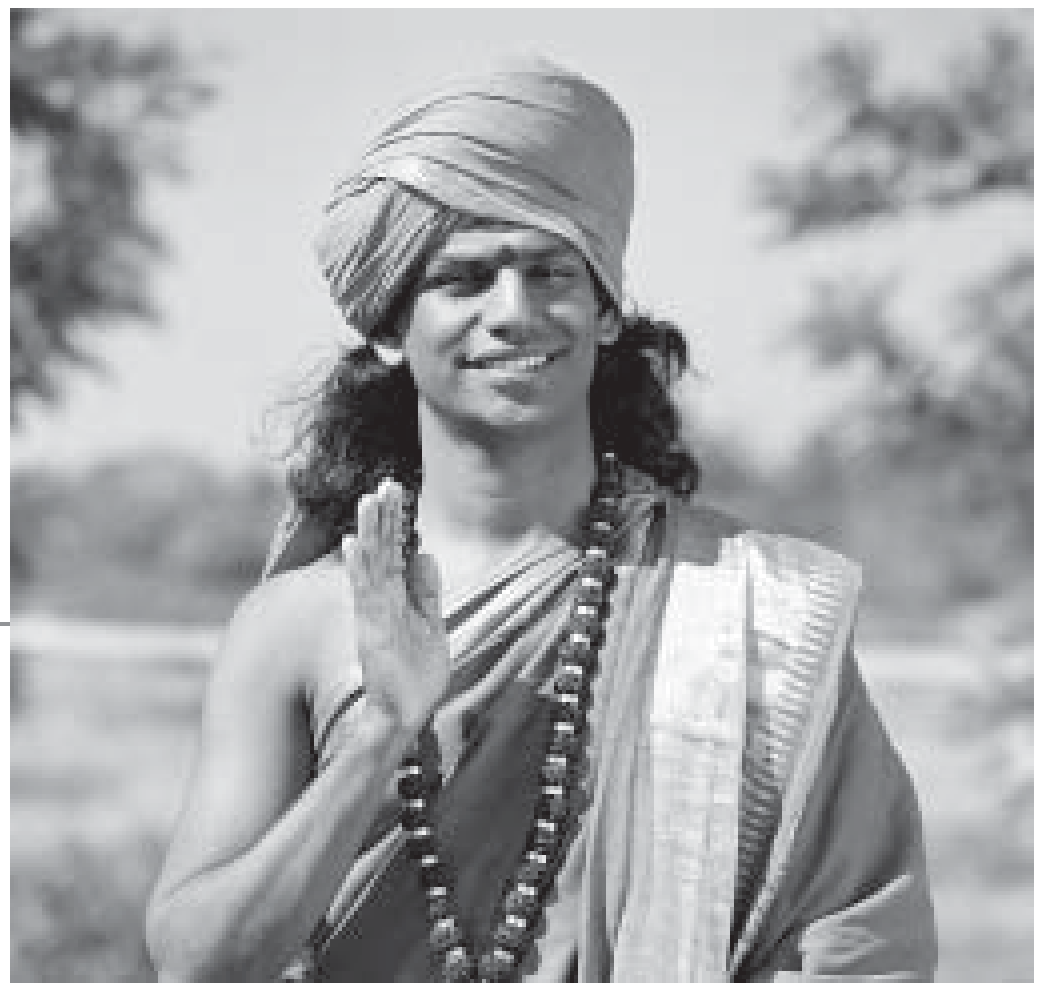
work towards being set free.
Someone once asked me, what if the cow learns to bite and break the rope?
First of all, do you know where the rope is? To which limb it is tied?
Where it begins and ends? Where to bite? How to bite? With an ordinary
cow and rope, the cow can see these things. You people don't even know what
or where your rope is! So whatever I can give you is only a glimpse, an
inspiration to enter into me, to enter into the experience.
Dearest Swamiji,
since the mind is
Before I can answer that, you need to understand the working of the mind.
The mind is a composite of 4 functions: manas (the part that recieves
information about the outer world from your senses), chitta (the memory or
record of cosmic knowledge), buddhi (intellect) and ahankaar (ego). Beyond
all these is the atman (self). All information is tracked through these areas
of the mind.
For instance, when you see a marigold flower, the nonverbal information,
‘yellow flower’ is absorbed by your manas from the eyes.
This information is sent to chitta, which matches it against all records
of flowers previously seen, and determines whether this particular flower
is a familiar one.
The file then passes to the buddhi, which concludes that the yellow
flower is a marigold, it is large, it is not a fragrant flower and so on.
The comes the turn of the ahankaar, which is in charge of generating
[When Intelligence
awakens, the ego
dies a natural
death.]
opinions based on self-interest, e.g. 'I like this flower', or 'I think the neighbours'
garden has better marigolds' or whatever. Based on the infomation supplied
by the ahankaar, the atman decides the Plan of Action: 'Pick the flower!' or
'Water the flower! or 'Throw it out!'
The unfortunate thing about this arrangement is that by the time the
information reaches the atman, it has already been filtered by the ahankaar
- with the result that what you see and act upon is not reality, but only a subverted version of reality that the ego wants you to see. No wonder you remain in ignorance and confusion, and come to the conclusion that inner chatter is all that the mind is capable of!
When intelligence awakens, the ego dies a natural death. For the first
time, the atman takes direct conrol of the situation. It's like President's
Rule! Tremendous sources of energy open up and become available. The
absorption of information no longer depends only on the five senses.
Consequently, information processing and decision-making become infinitely
swifter and more efficient - with the result that it appears miraculous to
ordinary eyes. This is the state in which yogis fly or teleport objects and
perform other such miracles. This is the magical state which is perceived
as being in harmony with the Divine.
So you see, to approach the Divine, what you should be willing to
drop is not the mind or the intellect, but only the ego. Don't make the
mistake of throwing out the baby with the bathwater!
Dearest Swamiji,
when a relationship
is not working out,
when should we
perservere and when
should we abandon it
and get on with our
lives?
I think what you are asking me is, just how much conflict should one be
prepared to put up with in a relationship? Right?
Love is the most dangerous path there is! Only those with great courage
dare tread this path. At any bend on this path you have to be prepared for great
joy, great pain, great beauty, great struggle, great understanding.
Yes, there is bound to be conflict in every relationship, because every
individual is unique, and no two personalities fit together so perfectly that no
rough edges remain.
If there is conflict, don't sweep it under the carpet out of fear that it will
destroy the relationship. On the contrary, ignoring it can do just that. Allow
the conflict. Examine it. See what you can learn from it. Is it stemming from
something in yourself that you are secretly unwilling to acknowledge?
It is only in an intimate relationship that you discover yourself. Your partner
is like a foil reflecting your true nature. After all, who else dares point out your
worst flaws with so much clarity!
So examine the nature of your conflict. Also remember, in every relationship,
there is a time to stay together and a time to move on. What kind of love do
you share? Are you really, truly, surely in love? Do you relate deeply with each
other, being to being?
Don't look for reasons and arguments, don't intellectualise the process -
simply turn the question inwards with complete honesty and trust. The answer
will arise on its own.
If your answer is Yes, then understand that the issues of conflict are mere
ripples on the surface of your relationship. These are just situations created by
the ego to counter the sense of 'no-self', of surrender, that comes with love.
Work around these situations with love and care.
If the answer you are hearing is No, then maybe it is time to move on. To
[There is a time
for holding on,
and a time for
moving on.]
remain in a relationship where there is no true relationship of being to being is
sacrilege, unfair to you both. Love, for you, may be elsewhere. Don’t search for
it; just be open to the possibility.
In the meantime, don’t let the conflict destroy the relationship, destroy you
both. Nobody deserves that. Accept that this is not the person for you, and
move away without resentment or bitterness. Don’t destroy your own capacity
for loving. To become bitter will only cause you more suffering, and destroy
your faith in Love itself. And that is the most dangerous thing that can happpen
to anyone.
Beloved Swamiji,
What is suffering?
Why do we suffer?
To start with, it will help to realise that suffering is not an event in your life
- it is a response to an event. Whether you suffer or not in a particular situation depends entirely on your reaction to that situation.
When do you undergo suffering? When you fall ill? When your neighbour
gets a new car? When your partner leaves you for someone else?
Well, suppose you decided to just accept these situations without anger or
resentment. Just as they are, so be it. Would you still suffer as much? After all,
there is nothing inherently painful about your neighbour getting a new car. Even
if there is pain in the moment, as when a loved one leaves, you cannot wish it
away. Try to accept the inevitability of the moment, without reaction. It is
ONLY your negative response to an experience that allows it to hurt you. Don't
you see, no one or nothing can make you suffer without your silent permission?
[Nothing can make
you suffer without
your permission.]
Make a habit of witnessing experiences minus your personal judgement.
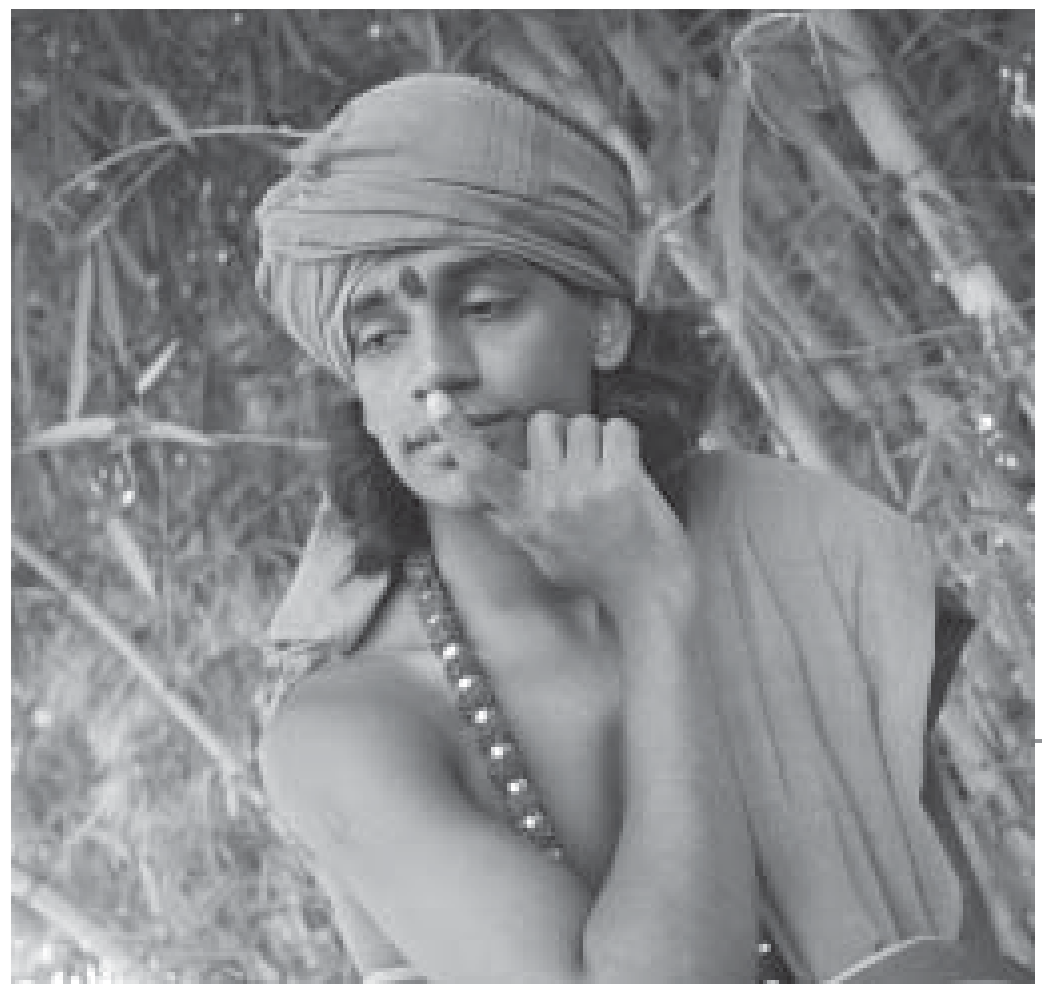
Pain is simply the response you've chosen to a particular
situation. And once you see that, how can you suffer anymore?
In consciously accepting your pain, you truly let go of it.
Learn to recognise with clarity the causes of your suffering - the obvious and the
subtle. The ability to do this will come, not in a day but certainly through
practice.
Once of the most deeply hidden reasons for suffering is: you could be
enjoying it! For example, falling ill can become a source of pleasure if it fetches
you the attention and care you have been craving. Examine why it sometimes
gives to pleasure to inflict pain on yourself, or on others. Is there a better
channel through which you can receive the same pleasure - without the suffering?
Become Aware - this is the first step.
The second is to Accept totally the Here and Now - without questions and
without reaction. Awareness with Acceptance - this is the only way out of suffering.
The second part of the question - is suffering essential?
Yes, in a way it is.
[Delighting in the
present is the best
form of sadhna!]
[Suffering can be a
shortcut to inner
growth!]
Because suffering can be a powerful catalyst to growth. Just like a seed first
has to rupture before a plant can grow and blossom, intense suffering can break
down the defenses of your ego, leaving you open and vulnerable to existence.
With your usual thought patterns shattered, you begin to see things as they
actually are. You begin to recognize a subtle distance betwen you and the pain
- that it is not 'your' pain, someting intrinsic to you. In fact, pain is simply the response you've chosen to that particular situation. And once you see that, how can you suffer anymore? In consciously accepting your pain, you truly let go of it.
Suffering is not necessarily the key to bliss. But if you learn your lesson well,
suffering can certainly open your eyes to the unreality of suffering. It can teach you
how unneccessary it is to suffer at all. This is what I call 'necessary suffering'!