24. Three Sources of Right Knowledge
This text was machine-transcribed from the printed book and may contain errors. Select the words and choose “Report a mistake”.
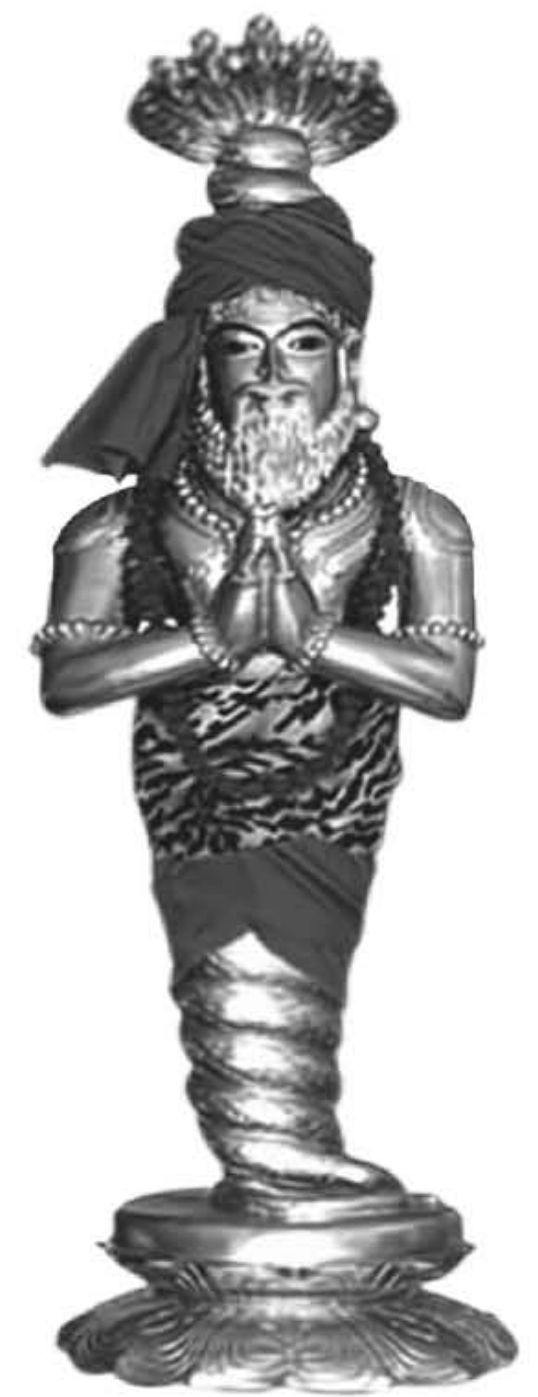
Now Patanjali expands beautifully on the three sources of right knowledge. Understand what is right knowledge: Pratyakṣa anumāna āgamāḥ pramāṇāni Direct perception, inference and competent evidence constitute right knowledge.
It is a beautiful sutra. It means: perceptions received through the senses, conclusions arrived at through the cognition, and the words of an enlightened Master – these are the three ways to gain right knowledge. Direct perception, inference, and competent evidence constitute right knowledge.
The first of these three ways is: perception through the senses. Please understand: whatever is grasped with fresh, alive, pure senses, can itself be a proof. But your senses should be pure and fresh, not perverted. If your senses are tired, overworked, overwhelmed, they cannot give you the right perception. If your senses are tired, the moment somebody enters the room, you will feel he is going to fight with you. If you are tired, you will always be expecting enemies. If you are alive, fresh, even your enemies will look like challenges to you. They won't look like enemies; you will feel it is just life, let us live it! If you are tired, if you are feeling dull, even your friend will look like an enemy; even if your friend enters your room, you will be wondering how to get rid of him quickly!
The second way to gain right knowledge is - by the cognition that happens through the senses. It is a very tricky thing. When you perceive through the senses, you analyze the data internally and come to a conclusion. That is what we call cognition. Receiving the information, processing it, coming to a conclusion and taking a decision is cognition. Cognition can be a scale to measure whether what you have is right knowledge or wrong knowledge. For example, if you are seeing me here - seeing is one proof; receiving this information and internally coming to the conclusion, 'Yes, I know him, I have heard him, I have experienced him' - this is another proof; it is also a source of right knowledge.
The third way to gain right knowledge, Patanjali says, are the words of an enlightened Master. They are the third source of right knowledge. Means, all the words of an enlightened Master - whether you perceive it with your senses or not, whether you cognize it through your mind or not - are right knowledge. It is a very powerful Truth. I can say, the whole tradition of guru-shisya parampara, the master-disciple relationship, is built on this one sutra. We will look at it more deeply.
> The words that come out
> of an enlightened Master
> are straight, complete,
> right knowledge.
when you get the expected solution, you know that your original hypothesis was right. But until you get to the solution, you need to have the patience to trust your hypothesis, to trust your assumption. When your teacher says, 'Let us assume x is equal to 2, if you start asking - 'Why not 3? Why not 1? Why should it be 2?', then you start fighting with the teacher, and you don't give him a chance to take you through the steps to prove what he is saying. The same way with the Master - you need to have patience till he concludes, till he proves what he is saying. Instead, the moment he starts the teaching, if you start fighting with him, if you think that he is cheating you, mesmerizing you, brainwashing you, then who will be the loser? Only you - because he already knows that x is equal to 2! He has already come to the conclusion. He has experienced it! He is trying to teach you in the language in which you will understand, so he has to say a few things like 'Let us assume', in the initial level. And if you say, 'No, no, I cannot assume; come on, prove it, only then I will let you go to the next step' - you are like the foolish person who protests when the math teacher says, 'Let us assume x is equal to 2'!
Transfer of knowledge, transfer of Truth, can never happen if you don't have the patience to wait till he comes to the conclusion, till he gives you the experience. Till you experience it, you need to have a little patience. That patience is what we call faith. Not even belief, just the simple faith that the Master has no vested interest in lying to you. But if you say that he has to prove every statement immediately before he can go further, is there any possibility? There is no way he can prove that statement immediately. You need to have patience till he comes to the third statement and the fourth statement and reached the conclusion. So here, when Patanjali says, 'The words of an enlightened Master are a way to gain right knowledge', he means, 'Relax. Till you experience, respect his words; go with them; they will become your experience.'
The words that come out of an enlightened Master are straight, complete, right knowledge. In the modern day, people can understand that perception through the senses is right knowledge, they can understand that the cognition arrived at through the senses is right knowledge, but they can't understand that the words of an enlightened master can be a source of right knowledge! They always demand proof! But please understand, all the traditions which accepted the words of an enlightened master as a source of right knowledge lived ecstatically; they radiated enlightenment. In mathematics, you start with a hypothesis and work on a problem, and
CONTEMPLATION
What is stopping from accepting the words of the enlightened Master as the straight, simple truth?